2027 Return on Investment (ROI) of an Accounting Degree Program

Co-Founder and Chief Data Scientist
Choosing an accounting degree is mostly a numbers decision: how much you will pay, how long you will study, and whether the degree can lead to earnings and advancement that justify the cost. The field has a practical advantage over many majors because accounting skills are used across public accounting, corporate finance, government, healthcare, technology, and nonprofit organizations. According to the U. S. Bureau of Labor Statistics, employment of accountants and auditors is projected to grow 7% from 2022 to 2032, faster than the average for all occupations.
This guide explains how to evaluate the return on investment of an accounting degree program before you enroll. It covers tuition and indirect costs, financial aid, online versus on-campus formats, salary expectations, promotion potential, industry differences, accreditation, and the situations where the degree is most likely to pay off.
Key Things to Know About Accounting Degree ROI
- Accounting graduates earn a median salary 20% higher than non-degree holders, with strong long-term salary growth driven by advanced certifications and experience.
- Job stability in accounting is robust due to consistent demand across sectors, including corporate finance, government, and non-profit organizations.
- Accounting skills offer flexibility, enabling career shifts into auditing, tax consulting, and financial analysis, broadening employment opportunities across various industries.
How Is ROI Calculated for a Accounting Degree Program?
ROI for an accounting degree compares the total cost of earning the degree with the financial benefits it can produce after graduation. A useful ROI estimate should look beyond tuition and include lost income, debt, completion time, salary growth, and whether the credential helps you qualify for better roles or professional certifications.
The basic question is simple: will the degree help you earn enough additional income over time to justify what you spent and gave up to complete it?
Core factors in an accounting degree ROI calculation
- Tuition and fees: Start with the direct price of attendance, including tuition, mandatory fees, books, accounting software, and required supplies. A lower sticker price improves ROI only if the program still has credible academic quality and employer recognition.
- Opportunity cost: If you reduce work hours or stop working while enrolled, the income you give up is part of the real cost. This can be especially important for adult learners who already have stable earnings.
- Time to completion: A shorter program can improve ROI by reducing tuition exposure and getting you into higher-paying work sooner. However, a compressed schedule may be harder to manage while working.
- Post-graduation salary outcomes: Starting pay matters because it determines how quickly you can repay loans and recover costs. Internships, location, industry, and school reputation can all affect early salary outcomes.
- Long-term earning potential: Accounting degrees often deliver their strongest value over time, especially when paired with experience, specialization, or credentials such as CPA eligibility where applicable.
A practical way to compare programs
| ROI factor | What to ask before enrolling | Why it matters |
| Total program cost | What will I pay after scholarships, grants, employer aid, and loans? | Net cost is more useful than advertised tuition. |
| Work flexibility | Can I keep earning income while studying? | Maintaining income can reduce opportunity cost and borrowing. |
| Career outcomes | Where do graduates work, and what roles do they enter? | Job placement quality affects early ROI. |
| CPA or certification alignment | Does the curriculum support my licensing or certification goals? | Certification readiness can influence long-term earnings. |
| Completion timeline | How long will it realistically take based on my schedule? | Delays can increase costs and postpone salary gains. |
If you are comparing ROI across very different professional paths, it can help to review cost and career structures in other programs, such as online SLP master's programs, and then compare them with the more finance-focused pathway of accounting.
How Much Does a Accounting Degree Program Cost?
The cost of an accounting degree includes more than tuition. To estimate ROI accurately, students should calculate the full price of attendance, the income they may lose while studying, and the debt they may carry after graduation. This matters because average graduate student loan debt in the U.S. surpasses $50,000, and borrowing can reduce the financial benefit of any degree if repayment is not manageable.
Costs to include in your estimate
- Tuition and fees: This is usually the largest cost. Prices vary by institution type, residency status, degree level, and whether the program is online or on campus.
- Books, software, and materials: Accounting students may need textbooks, calculators, tax research tools, spreadsheet software, or accounting platforms used in coursework.
- Living or relocation expenses: On-campus students may face housing, meal, parking, and relocation costs. These expenses can substantially change the real price of a degree.
- Opportunity cost: Students who leave a job or reduce hours should count lost wages as part of the investment. A program that allows continued employment may have a stronger ROI even if tuition is not the lowest.
- Hidden and indirect costs: Application fees, graduation fees, technology upgrades, exam preparation, certification fees, commuting, childcare, and professional association dues can add up.
How to avoid underestimating the cost
Before enrolling, build a two-part budget. First, list all direct education costs. Second, list life and career costs, including lost income, transportation, childcare, and loan interest. This gives you a more realistic break-even point than tuition alone.
A graduate of an accounting degree program described the cost as a “balancing act” between tuition payments and day-to-day expenses. Textbooks and software were predictable, but certification-related fees were not. The hardest adjustment was giving up a stable paycheck to focus on school: “It felt like the real cost wasn’t just the money spent but the time and opportunities I gave up.” That is why a strong ROI estimate should include both cash expenses and the value of time.
What Financial Aid Is Available for Accounting Degree Programs?
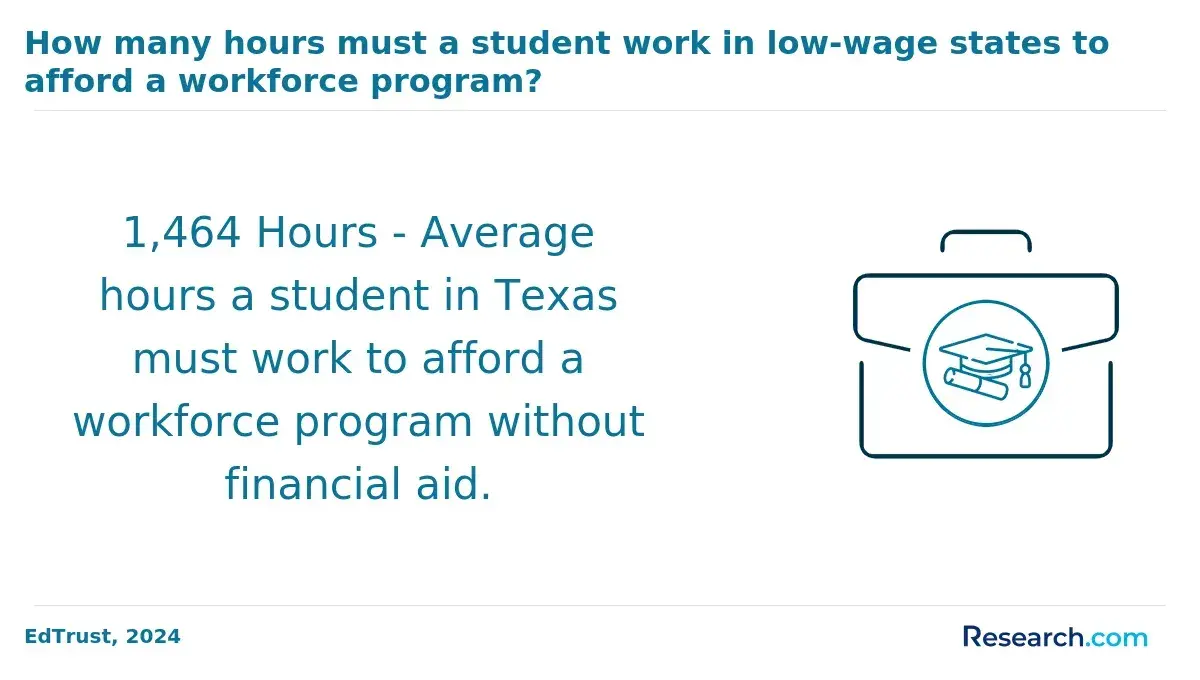
Financial aid can improve the ROI of an accounting degree by reducing what you pay out of pocket and limiting how much you borrow. Studies indicate that about 85% of graduate students in the U.S. rely on some form of financial assistance to support their education costs. The best funding mix usually prioritizes money that does not require repayment before loans.
Common financial aid options
- Scholarships: Scholarships may be awarded for academic performance, financial need, leadership, professional goals, or membership in accounting-related organizations. Because they do not require repayment, they directly lower the net cost of the degree.
- Grants: Grants are often need-based and may come from federal, state, institutional, or private sources. Like scholarships, they reduce debt and improve ROI.
- Fellowships: Fellowships are more common at the graduate level and may include tuition support, stipends, or research-related funding. They can be especially valuable for students pursuing advanced accounting study.
- Employer tuition assistance: Some employers reimburse tuition or pay a portion of education costs for employees developing accounting, audit, tax, or finance skills. Review service commitments carefully because some programs require you to remain with the employer for a set period.
- Federal loans: Loans can make a degree accessible, but they reduce ROI if borrowing is excessive. Federal loans generally offer borrower protections and repayment options, but students should still compare projected payments with expected post-graduation income.
Financial aid strategy for accounting students
Apply early and compare net price, not just aid amount. A large scholarship at an expensive school may still leave a higher balance than a modest award at a lower-cost institution. Students should also ask whether aid applies to summer courses, online courses, part-time enrollment, and prerequisite classes, since these details can affect the total cost to completion.
How Long Does It Take to Complete a Accounting Degree?
Completion time affects ROI because every extra term can mean additional tuition, fees, living expenses, and delayed earnings. A faster timeline can improve ROI, but only if the pace is realistic. Students who overload their schedule and withdraw from courses may end up spending more, not less.
Factors that influence completion time
- Enrollment status: Full-time students usually finish faster, while part-time students may take longer but continue working and reduce income disruption.
- Program format: Online and accelerated formats can offer more scheduling flexibility. They can be useful for working adults, but they require strong time management and consistent study habits.
- Transfer credits: Accepted transfer credits can shorten the path to graduation and lower costs. Before enrolling, ask for an official transfer evaluation rather than relying on a general estimate.
- Practical requirements: Internships, capstone projects, or thesis requirements may add time, but they can also improve employability and salary potential.
- Class scheduling: Evening, weekend, and asynchronous classes can help working students stay enrolled, though limited course availability may extend the timeline.
Choosing the right pace
The fastest program is not always the best value. A full-time schedule may be ideal for students who can afford to focus on school and enter the workforce quickly. A part-time or online schedule may offer stronger ROI for students who can keep earning income while completing the degree.
One accounting graduate explained that completion time was shaped by work and family obligations: “It wasn’t a straight path because I was working full-time and taking evening classes. Some semesters felt overwhelming, but seeing steady progress kept me motivated.” She also said an online accelerated course saved months, but only because she stayed disciplined without a traditional classroom structure. Her takeaway was practical: “The length of the program really depends on your circumstances and how flexible you can be.”
Is ROI Higher for Online or On-Campus Accounting Programs?
ROI can be higher for either online or on-campus accounting programs depending on cost, work flexibility, career support, and the student’s discipline. Online enrollment in undergraduate programs has increased by over 10% annually, reflecting demand for flexible formats. Still, format alone does not determine value; accreditation, curriculum quality, employer recognition, and career outcomes matter more.
Online vs. on-campus ROI comparison
| Factor | Online accounting programs | On-campus accounting programs |
| Cost | May reduce commuting, housing, and relocation expenses. | May involve higher living and campus-related costs. |
| Work flexibility | Often better for students who need to keep working. | May be harder to combine with full-time employment. |
| Networking | Depends heavily on virtual events, faculty access, and career services. | Often stronger for in-person recruiting, student organizations, and local employer relationships. |
| Time to completion | May offer accelerated or flexible pacing. | Often follows a more fixed academic calendar. |
| Best fit | Working adults, transfer students, and self-directed learners. | Students who want campus life, structured schedules, and face-to-face recruiting. |
Students comparing flexible accounting pathways may want to evaluate an online accounting and finance degree alongside campus-based options, using net cost, accreditation, course delivery, and career placement support as the main decision points.
Online education ROI questions are not unique to accounting. Similar affordability and flexibility issues appear in other fields, including CACREP-accredited online counseling programs. The key is to compare the program’s total cost with the career outcomes it realistically supports.
What Is the Average Salary After Earning a Accounting Degree?
Salary is one of the biggest drivers of accounting degree ROI. Early-career accounting graduates in the United States typically earn between $50,000 and $75,000 annually, while experienced professionals often exceed $90,000. Actual earnings vary by job title, location, employer type, specialization, and whether the graduate pursues advanced credentials.
What affects accounting graduate salaries?
- Industry: Public accounting, corporate finance, government, nonprofits, healthcare, technology, and financial services can offer different compensation levels and advancement timelines.
- Geographic location: Salaries are often higher in major metropolitan areas such as New York or San Francisco, though higher living costs can reduce the practical value of the increase.
- Prior experience: Internships, bookkeeping experience, tax preparation work, or finance-related roles can improve starting pay and make graduates more competitive.
- Specialization: Skills in tax, auditing, forensic accounting, cost accounting, financial reporting, or analytics can support stronger earnings over time.
- Career level: Entry-level salaries are only the starting point. ROI often improves as graduates move into senior accountant, manager, controller, audit, compliance, or finance leadership roles.
How to interpret salary data
Do not judge ROI by the highest salary you find online. Use a realistic range for your location and target role, then compare expected monthly income with loan payments and living costs. Students comparing educational investment across fields can also examine alternatives such as the cheapest online degree in psychology to understand how tuition, salary, and career pathways differ.
Breakdown of All 2-Year Online Title IV Institutions

Does a Accounting Degree Lead to Promotions?
An accounting degree can support promotions, especially in organizations where supervisory, audit, tax, finance, or management roles require formal education. The degree by itself does not guarantee advancement, but it can remove a credential barrier and signal readiness for more complex financial responsibilities.
How the degree can improve promotion potential
- Credential requirements: Many employers use a bachelor’s or graduate degree as a baseline requirement for senior accounting, finance, compliance, and management positions.
- Technical preparation: Accounting coursework builds knowledge in financial reporting, auditing, taxation, managerial accounting, and business law, which can support broader responsibilities.
- Leadership readiness: Advanced coursework, group projects, and applied case studies can help students practice analysis, communication, and decision-making.
- Employer tuition support: If an employer helps pay for the degree, the ROI can improve significantly because the employee gains a credential while reducing personal cost.
- Experience plus education: Promotions are most likely when academic training is combined with strong job performance, professional judgment, and practical experience.
For working adults, the best promotion-focused program is usually one that fits around employment and supports immediate application on the job. Students who need to qualify faster may compare standard schedules with accelerated online degrees, while also checking whether the pace is manageable and whether credits will meet employer or certification expectations.
Which Industries Offer the Best ROI for Accounting Graduates?
The best ROI for accounting graduates usually comes from industries that combine strong compensation, steady demand, clear advancement paths, and opportunities to specialize. A lower-paying first role can still produce strong long-term ROI if it builds high-value experience and leads to faster promotion.
Industries that often offer strong ROI
- Financial services: Banks, investment firms, insurance companies, and related employers often need accountants who understand reporting, controls, risk, and regulation. Compensation and bonus opportunities can be strong, but the work may be demanding.
- Technology: Technology companies often need accounting professionals who can support rapid growth, revenue recognition, compliance, and financial systems. These roles may reward candidates who combine accounting knowledge with data and systems skills.
- Healthcare: Healthcare organizations require accounting expertise for billing, reimbursement, compliance, budgeting, and cost control. Demand can be stable because financial oversight is essential in the sector.
- Public accounting and consulting: Public accounting can provide broad exposure to audit, tax, advisory, and client service. The workload can be intense, but the experience can accelerate skill development and future mobility.
- Manufacturing and industrial sectors: Cost accounting, inventory analysis, supply chain finance, and operational budgeting can create strong niche opportunities for accounting graduates.
How to choose an industry
Look beyond starting salary. Consider promotion speed, workload, training, certification support, job stability, and whether the industry’s accounting work aligns with your strengths. Graduates considering advanced credentials to improve ROI may also compare options such as 1 year master's programs online, especially if a shorter graduate pathway supports a specific career move.
Does Accreditation Affect ROI for a Accounting Degree?
Yes. Accreditation can affect the ROI of an accounting degree because it influences financial aid eligibility, credit transfer, employer confidence, and preparation for professional pathways. Accreditation is a formal review process that evaluates whether a school or program meets defined quality standards. For students, it is one of the most important credibility checks before enrolling.
Why accreditation matters for ROI
- Financial aid access: Accreditation is often tied to eligibility for federal financial aid, which can lower out-of-pocket costs and reduce reliance on more expensive funding sources.
- Employer recognition: Employers are more likely to trust degrees from accredited institutions because they signal that the education met recognized standards.
- Transferability: Credits from accredited schools are generally more likely to transfer, which matters if you change institutions or pursue graduate study.
- Certification and licensure pathways: Accreditation may affect whether coursework is accepted for professional requirements, including CPA-related education requirements where applicable.
- Graduate school options: Accredited degrees are more likely to be accepted by reputable graduate programs, which can support long-term career growth.
Students should verify accreditation directly through the school and recognized accrediting bodies before enrolling. A low-cost accounting program with weak recognition can become expensive if credits do not transfer, employers question the credential, or the coursework does not support professional goals.
Is a Accounting Degree Worth It?
An accounting degree can be worth it for students who want a practical business credential with broad career use, stable demand, and clear advancement pathways. The ROI is strongest when students control costs, choose an accredited program, gain relevant experience before graduation, and target roles where accounting knowledge is required or strongly preferred.
Traditional on-campus programs may involve higher costs than online or part-time formats, which can affect the initial investment. Most bachelor’s degrees in accounting typically take around four years to complete, and students may not earn a full-time salary during that period. After graduation, the median annual wage for accountants in the U.S. surpasses $70,000, with opportunities to increase earnings through certifications and experience.
When the degree is more likely to be worth it
- You want to work in accounting, audit, tax, finance, compliance, or business analysis.
- You can complete the degree without taking on unmanageable debt.
- The program is accredited and aligned with your career or certification goals.
- You plan to complete internships or gain related work experience while enrolled.
- You are interested in long-term advancement into senior or management roles.
When to be more cautious
- The program cost is high and salary outcomes are unclear.
- You are unsure whether you want accounting-related work.
- The program does not offer enough flexibility for your work or family responsibilities.
- The school cannot clearly explain accreditation, career services, transfer policies, or graduate outcomes.
The right decision depends on your target career, local labor market, available aid, and ability to finish the program. A careful ROI analysis should compare the real cost of attendance with realistic earnings, not best-case salary examples.
What Graduates Say About The ROI of Their Accounting Degree
- : "Choosing to pursue an accounting degree as a traditional student was a no-brainer for me given the strong long-term ROI. Despite the average cost of attendance being around $40,000, the investment truly paid off as I secured a high-paying position right after graduation. I’m genuinely enthusiastic about how this degree opened doors to financial stability and professional growth. Ryker"
- : "As an online student, I carefully weighed the costs—generally lower than traditional routes—and the time commitment against the benefits. Considering the accounting degree’s solid demand and prospects, I found the tuition affordable and the flexibility invaluable. This program had a significant impact on my career, allowing me to move into management within two years of finishing. Eden"
- : "Pursuing my accounting degree part-time was a strategic decision balancing work and study. Although it took longer and the total expense was slightly higher due to extended enrollment, the ROI remained positive. Completing the degree enhanced my professional credibility and led to multiple promotions, affirming that the investment was worthwhile. Benjamin"
Other Things You Should Know About Accounting Degrees
Yes. CPA licensure usually improves ROI by opening access to higher-paying roles such as audit manager, tax manager, and controller. Most states require 150 semester hours, passing all four sections of the Uniform CPA Examination, and one to two years of supervised experience.
Yes, certifications like the Certified Public Accountant (CPA) or Certified Management Accountant (CMA) typically increase the ROI by improving job prospects and salary potential. Holding these certifications signals professional competence and can open doors to higher-level positions, making the initial degree investment more profitable over time.
Skills gained from an accounting degree that improve 2027 ROI include proficiency in financial analysis, auditing, and tax preparation. These skills enhance job performance and increase employability, leading to higher salary potential and contributing positively to the degree's return on investment.
References
- CourseCareers https://coursecareers.com/compare/online-degree-programs
- Accounting Degree Program Guide | Accounting.com https://www.accounting.com/degrees/overview/
- Scholarships and financial assistance in accounting, finance: List compiled by the MNCPA https://www.mncpa.org/becoming-a-cpa/student-resources/accounting-scholarships/
- Which Accounting Degree Concentrations Pay the Most? https://www.accountingedu.org/which-accounting-degree-concentration-pays-the-most/
- How much to accountants really earn? | ICAEW Jobs https://jobs.icaew.com/article/how-much-do-accountants-really-earn-
- Which College Degrees Have the Best ROI? https://www.cpapracticeadvisor.com/2025/07/01/which-college-degrees-have-the-best-roi/164043/
- By The Numbers: Is an Accounting Degree Worth It? | UT Permian Basin Online https://online.utpb.edu/about-us/articles/business/by-the-numbers-is-an-accounting-degree-worth-it
- Does College Pay Off? A Comprehensive Return On Investment Analysis - FREOPP https://freopp.org/whitepapers/does-college-pay-off-a-comprehensive-return-on-investment-analysis/
- Accounting Careers & ROI | All Bachelor Degrees https://allbachelordegrees.com/degrees/business-management/accounting/accounting-degree-career-overview-and-roi/
- Accreditation and financial ROI | Woolf News & Updates https://woolf.university/news/accreditation-and-financial-roi