
2027 What Prerequisites Do You Need for an Accounting Degree? Entry Requirements, Credits & Eligibility Rules

Co-Founder and Chief Data Scientist
Accounting degree prerequisites can determine whether you are admitted directly into the program, placed into preparatory coursework, or delayed by missing credits. The challenge is that requirements are not identical across U.S. colleges: one school may admit first-year students with general university requirements, while another may expect prior coursework in math, economics, business, or introductory accounting.
This guide explains what students should check before applying to an accounting program in 2026, including high school preparation, college-level prerequisites, transfer-credit limits, standardized testing policies, online technology requirements, international student documentation, and the cost of completing prerequisite courses. Research indicates that only about 65% of applicants complete recommended prerequisite courses such as introductory accounting and college-level math, which can affect both admission readiness and early performance in accounting coursework.
Use this article as a practical checklist before you apply, transfer, or enroll. The goal is to help you avoid preventable delays, choose the right entry path, and understand which requirements are truly mandatory versus merely recommended.
Key Things to Know About the Prerequisites for a Accounting Degree
- Most accounting degree programs require foundational courses in mathematics, economics, and financial principles, ensuring students grasp core quantitative and analytical skills.
- Applicants typically need a minimum GPA of 2.5 to 3.0, reflecting academic competence critical for advanced accounting studies and professional readiness.
- Programs often demand completion of at least 60 college credits, including coursework in business communication and basic accounting, alongside proficiency in spreadsheet software.
Do Accounting Programs Require Specific High School Prerequisites?
Most accounting programs do not require a long list of accounting-specific high school courses. In many cases, students can apply with a standard high school diploma or equivalent. However, selective programs and business schools may review whether applicants have taken rigorous math, business, or economics courses because those subjects make the first year of accounting coursework easier to manage.
The safest approach is to treat high school prerequisites as preparation rather than a universal admissions rule. Even when a course is not required, it can strengthen your application and reduce the chance that you will need remedial or introductory coursework later.
- Mathematics: Algebra and geometry help students build the problem-solving skills used in financial calculations, cost analysis, budgeting, and accounting formulas.
- Statistics: Statistics supports later work in auditing, data interpretation, risk assessment, and financial decision-making.
- Economics: Economics introduces students to markets, supply and demand, incentives, and financial systems, all of which provide useful context for accounting.
- Business fundamentals: Introductory business courses help students understand organizations, management, basic finance terminology, and the role accounting plays in business operations.
Some colleges may specify minimum math levels or GPA thresholds, but these standards vary widely. Students should review the admissions page for both the university and the accounting department because the department may expect stronger preparation than the general admissions office requires.
If you are considering a faster start before transferring into a bachelor’s program, reviewing short online associate degree options can help you compare early pathways into business or accounting coursework.
What College-Level Prerequisites Are Required Before Starting a Accounting Degree?
College-level prerequisites are most important for transfer students, adult learners, and students applying directly into an upper-division accounting major. First-year applicants may be admitted to the university first and complete prerequisites during their first one or two years. Transfer applicants, however, are often expected to have already completed several foundational courses before full admission to the accounting major.
The most common college-level prerequisites include:
- Introductory accounting: Usually covers financial statements, debits and credits, the accounting cycle, and basic reporting principles. This course is the foundation for intermediate accounting and auditing.
- Statistics or college algebra: Builds quantitative reasoning for accounting analytics, tax calculations, budgeting, forecasting, and audit sampling.
- English composition: Prepares students to write clear reports, memos, audit documentation, and professional correspondence.
- Economics or business fundamentals: Explains how businesses operate and how accounting information supports decisions about markets, costs, pricing, and strategy.
Meeting these college-level prerequisites for accounting degree 2026 admission can reduce delays after enrollment. According to data, about 65% of undergraduate accounting students complete writing and statistics courses as part of their required credits and eligibility for accounting programs.
Before applying, compare three things: whether the course is required for admission, whether it is required before declaring the major, and whether it counts toward graduation. A course may help you qualify for the program but still not satisfy a major requirement if the school does not accept it as equivalent.
Students planning beyond the bachelor’s level may also want to understand graduate-study expectations. Comparing the most accessible master’s degree options can provide context for later business, accounting, or management pathways.
How Many Credits Can You Transfer Into a Accounting Degree?
Most U.S. schools allow students to transfer between 30 and 90 credits toward an accounting degree, but the exact amount depends on the institution, degree level, accreditation standards, and how closely previous courses match the accounting curriculum. Community colleges and transfer-friendly institutions may accept a larger number of lower-division credits, while universities often limit transfer credits to about 60% to 75% of the total program requirements.
Transfer credit is not guaranteed simply because a course appears on a transcript. Schools usually evaluate whether the previous institution was accredited, whether the course level is appropriate, whether the content matches the receiving school’s course, and whether the student earned a grade of C or better.
Students should pay close attention to residency requirements. Many schools require students to complete a minimum portion, typically 30 to 40 credits, directly through the degree-granting institution. This means that even a student with many transferable credits may still need to take core accounting courses at the new school.
What usually affects transfer approval?
- Accreditation: Credits from accredited institutions are more likely to be accepted.
- Course equivalency: Financial accounting may transfer easily, while specialized accounting courses may require syllabus review.
- Grade minimums: Many schools require a grade of C or better.
- Course age: Some programs may limit older coursework, especially in technology-heavy or regulation-based subjects.
- Residency rules: Students may need to complete a set number of credits at the institution awarding the degree.
- Major versus elective credit: A course may transfer as general elective credit but not satisfy an accounting major requirement.
One accounting student who transferred a substantial number of credits described the process as useful but complex. She had to provide syllabi, grades, and course descriptions before the school could determine which credits applied to the accounting major. Academic advisors helped clarify course matches and remaining requirements, but she said the experience taught her to start the transfer process early and keep detailed records of every previous course.
Do You Need SAT or ACT Scores to Get Into a Accounting Degree Program?
Most accounting degree programs in 2026 do not require SAT or ACT scores, especially at institutions using test-optional or test-free admissions policies. This reflects a broader admissions shift accelerated by the COVID-19 pandemic, with over 60% of U.S. colleges adopting more flexible approaches.
That said, test policies still vary. Some highly selective universities, honors colleges, public university systems, or scholarship programs may still request or consider SAT or ACT scores. Even where scores are optional, strong results may help an applicant demonstrate academic readiness, particularly if the transcript has gaps or if the student is applying for competitive merit aid.
If a school is test-optional, applicants should decide whether scores strengthen the overall application. Submitting scores may be useful when they are clearly aligned with or above the school’s admitted-student profile. Not submitting scores may be reasonable if the transcript, GPA, prerequisite coursework, essays, and recommendations already present a stronger case.
What matters when test scores are not required?
- High school or college GPA: Admissions offices often look closely at performance in math, business, and writing courses.
- Completed prerequisites: Introductory accounting, economics, algebra, statistics, and composition can show readiness.
- Application essays: Essays can explain motivation, career goals, and communication ability.
- Recommendations: Letters from teachers, supervisors, or advisors can support claims about reliability and analytical ability.
- Relevant achievements: Business clubs, internships, bookkeeping experience, or finance-related projects can help distinguish an applicant.
The best step is to check the school’s current admissions policy and scholarship rules separately. A program may be test-optional for admission but still use scores for certain awards or placement decisions.
What Essential Skills Do You Need Before Enrolling in a Accounting Degree Program?
You do not need to be an accounting expert before enrolling, but you should be ready for detail-oriented, quantitative, and communication-heavy coursework. Accounting is not only about recording numbers. Students must interpret financial information, apply rules accurately, use software, and explain conclusions clearly.
The most useful skills to build before enrollment include:
- Numeracy: Students should be comfortable with arithmetic, percentages, ratios, algebraic thinking, and basic financial calculations.
- Analytical thinking: Accounting requires identifying patterns, reconciling differences, checking assumptions, and tracing errors.
- Attention to detail: Small mistakes can change financial statements, tax calculations, or audit conclusions, so accuracy matters.
- Writing and communication: Accountants must explain financial information to managers, clients, auditors, regulators, and colleagues who may not have technical training.
- Ethical judgment: Students should be prepared to discuss confidentiality, compliance, fraud risk, professional responsibility, and conflicts of interest.
- Technology readiness: Excel, QuickBooks, and ERP systems are common tools in accounting education and practice.
- Time management: Accounting courses often include problem sets, projects, exams, and case work that require steady weekly effort.
A recent accounting graduate said the biggest adjustment was learning to connect technical skills with professional judgment. He spent extra time before classes strengthening Excel skills and becoming familiar with accounting software, which made early assignments less intimidating. He also noted that ethics became more meaningful once he worked through real-world case studies. In his words, the degree was not just about numbers; it required critical thinking and clear communication.
Students who feel underprepared should not assume they are disqualified. Instead, they can take a refresher course in algebra, complete an introductory Excel module, review basic financial statements, or meet with an academic advisor before the term begins.
Do You Need Professional Experience to Enter a Accounting Degree Program?
Most undergraduate accounting degree programs do not require professional experience. Students commonly enter bachelor’s programs directly from high school, after community college, or as career changers with little or no accounting work history. Admissions decisions for undergraduate programs usually focus on transcripts, prerequisite coursework, GPA, and general academic readiness.
Professional experience becomes more relevant for certain graduate, accelerated, or specialized programs. Some specialized or accelerated master’s programs may recommend or require 1 to 3 years of relevant experience in bookkeeping, auditing, tax preparation, financial analysis, payroll, or business operations.
Experience can help an applicant in several ways. It shows commitment to the field, helps students understand applied coursework, and can strengthen essays or interviews. It may also make group projects more valuable because experienced students can connect classroom concepts to workplace examples.
However, lack of experience should not stop most prospective undergraduate students from applying. If you do not have accounting work history, you can still demonstrate readiness through strong grades, math preparation, business coursework, volunteer bookkeeping, internships, campus leadership, or completion of introductory accounting classes.
For students aiming at CPA-related goals, professional exposure can be useful, but program admission and licensure requirements are separate issues. Always distinguish between what a college requires to admit you and what a state board may later require for certification or licensure.
What Tech Prerequisites Must You Meet Before Starting an Online Accounting Degree?
Online accounting students need reliable technology because coursework often includes spreadsheet modeling, accounting platforms, proctored exams, video meetings, file uploads, and learning management system activity. A weak setup can make the program harder than the accounting content itself.
Common technology prerequisites include:
- Hardware requirements: A computer with at least a dual-core processor, 8 GB of RAM, and ample storage is typically recommended so students can run accounting software, manage spreadsheets, and handle large files without frequent crashes or delays.
- Internet speed: Stable internet with minimum download speeds of 10 Mbps is typically recommended for streaming lectures, joining video conferences, submitting assignments, and using online testing tools.
- Spreadsheet proficiency: Students should be comfortable with Microsoft Excel or similar spreadsheet tools, including formulas, sorting, filtering, charts, and basic data analysis.
- Accounting software familiarity: Prior exposure to QuickBooks or similar platforms can help, even if the program teaches the software formally.
- Learning management systems: Students should be able to navigate platforms such as Blackboard or Canvas, download materials, submit assignments, and participate in discussions.
- Digital file management: Accounting students need to name, store, back up, and submit files carefully because version control and documentation matter.
- Basic troubleshooting: Students should know how to update software, manage passwords, use webcams and microphones, and contact technical support before a deadline becomes a crisis.
Students preparing for these tech prerequisites for online accounting degree 2026 should verify the school’s current device, software, webcam, browser, and proctoring requirements before classes begin. Requirements may differ by course, especially when specialized accounting applications are used.
For students thinking much further ahead, comparing advanced online study models such as an online doctorate with no dissertation can provide useful context on how online academic expectations change at higher degree levels.
What Prerequisites Do International Students Need for Accounting Programs?
International students usually must meet the same academic prerequisites as domestic applicants, plus additional documentation requirements related to language proficiency, credential evaluation, finances, and visa eligibility. Because accounting coursework depends heavily on technical vocabulary, written explanations, and regulatory concepts, schools often review both academic preparation and English-language readiness carefully.
Common prerequisites and application materials for international applicants include:
- Academic transcripts: Applicants must submit official records showing completion of secondary education equivalent to a U.S. high school diploma. College transfer applicants must also submit postsecondary transcripts.
- English translation and evaluation: Transcripts may need to be translated into English and evaluated for U.S. credential equivalency, especially when grading systems differ.
- English language proficiency: TOEFL or IELTS scores are commonly required unless the applicant qualifies for a waiver. Minimum scores vary by institution.
- Standardized tests: Some undergraduate programs may require or consider SAT or ACT scores. Graduate programs may request GRE or GMAT scores, depending on the institution and program level.
- Prerequisite coursework: Mathematics, economics, and basic accounting courses may be required before entry into upper-division accounting classes.
- Financial documentation: Proof of sufficient funding for tuition and living expenses is typically required for student visa processing. This documentation is critical in states like Alabama, where accounting education enrollment is growing among international students.
International students should start early because transcript evaluation, English testing, visa documentation, and prerequisite review can take longer than expected. It is also important to confirm whether prior accounting coursework aligns with U.S. accounting standards and the receiving school’s curriculum.
Students comparing U.S.-based online or hybrid options may use lists of the top online colleges as a starting point for researching accredited institutions, student support, and program delivery formats.
How Do Program-Specific Prerequisites Differ from General University Requirements?
General university requirements determine whether you can enter the institution. Program-specific accounting prerequisites determine whether you can enter, declare, or progress within the accounting major. Confusing the two is one of the most common planning mistakes students make.
General university admission requirements
- GPA thresholds: Most universities require a minimum GPA, typically between 2.5 and 3.0, to show overall academic readiness.
- English language proficiency: TOEFL or IELTS may be required for non-native English speakers.
- General education preparation: Schools may review completion of broad subjects such as English, math, science, and social science.
- Application materials: Applicants may need transcripts, essays, recommendations, test scores if required, and application fees.
Program-specific accounting prerequisites 2026
- Required math and finance courses: Many accounting programs expect college algebra, statistics, or related quantitative coursework.
- Introductory accounting coursework: Some programs require financial accounting before students can take intermediate accounting or formally enter the major.
- Business foundation courses: Economics, business law, management, information systems, or finance may be part of the business core.
- Technical readiness: Applicants may need familiarity with spreadsheets, databases, or business software.
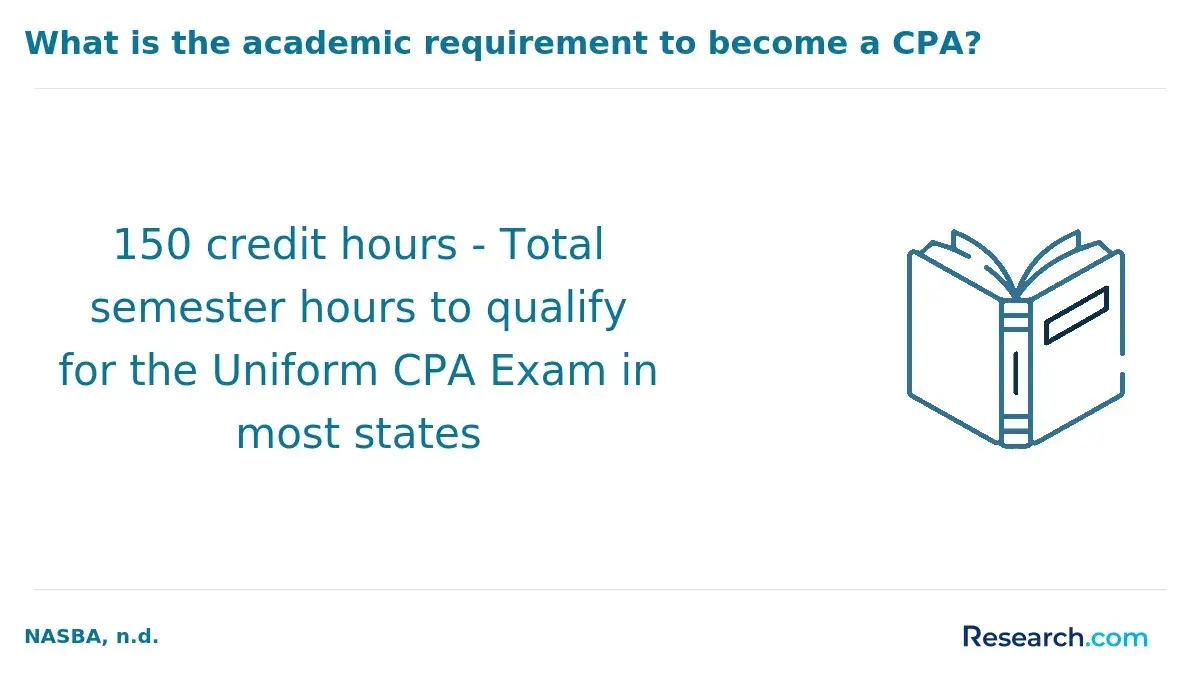
- Minimum credit hours: According to the National Association of State Boards of Accountancy (NASBA), certain programs require completion of specific credit hours in accounting and business before full admission.
- Portfolio or professional experience: Some programs request portfolios or documented work experience, particularly for transfer, adult, or non-traditional applicants.
A student can be admitted to the university and still be ineligible for the accounting major until additional courses are completed. This can affect graduation timelines, financial aid planning, and course sequencing. Before enrolling, ask the department whether prerequisites must be completed before admission, before major declaration, or before upper-division courses.
Students comparing academic choices with career fit may also find it useful to review career options suited to introverts, since accounting roles often vary in client interaction, analysis, teamwork, and independent work.
Do You Need to Pay for Prerequisite Courses Before Applying to a Accounting Program?
Yes, students generally must pay for prerequisite courses unless the courses are covered by financial aid, scholarships, employer benefits, transfer credits, or approved prior-learning options. If prerequisites are taken at the same institution that offers the accounting degree, they usually follow that school’s standard tuition and fee structure.
Many students reduce costs by completing prerequisites at a community college, where tuition tends to be more affordable, averaging about $135 per credit hour. Online accredited courses may also provide flexible scheduling, but students should confirm transferability before paying. A low-cost course is not useful if the accounting department will not accept it.
Before enrolling in a prerequisite course, ask the target school for written confirmation that the course will satisfy the requirement. This is especially important for transfer students, online students, and students using third-party or non-degree coursework.
Ways to reduce prerequisite costs include:
- Using transfer credits: Previously completed college courses may satisfy math, writing, business, or accounting requirements.
- Taking community college courses: These can be more affordable, but equivalency should be confirmed first.
- Applying financial aid: Aid may apply if the prerequisite is part of an eligible degree or approved preparatory coursework.
- Seeking scholarships: Some scholarships can cover general education or prerequisite classes.
- Using AP or exam credit: Advanced Placement or approved exams may reduce the number of courses needed.
- Testing out: Some schools allow placement exams or challenge exams for certain subjects.
Students comparing affordable pathways into the field may also want to review an accounting bachelor degree online to understand how tuition, transfer credits, and prerequisite policies can affect total cost.
What Graduates Say About the Prerequisites for Their Accounting Degree
- : "Getting into the accounting degree program required a solid foundation in high school math and business courses, but it was definitely worth the effort. Although the average cost of attendance was a bit steep, the investment paid off as I secured a lucrative position in finance soon after graduation. This degree truly opened doors for me professionally and gave me confidence in my skills. — Ryker"
- : "Reflecting on my journey, meeting the prerequisite requirements for the accounting degree was a challenge, but manageable with dedication. The cost, while somewhat high, was reasonable compared to similar professional degrees, and I feel it was money well spent. The impact on my career has been profound, allowing me to advance steadily in corporate accounting roles with a strong understanding of industry standards. — Eden"
- : "From a professional standpoint, completing the accounting degree meant carefully fulfilling prerequisite courses and managing tuition costs through scholarships. The typical expenses were balanced out by the clarity this education brought to my career path. I now approach financial matters with precision and authority, which I credit wholly to my time in the accounting program. — Benjie"
Other Things You Should Know About Accounting Degrees
Generally, coursework relevant to mathematics, economics, or business can fulfill prerequisites for accounting degrees. Unrelated subjects typically do not count toward accounting prerequisites, as foundational knowledge in quantitative and financial disciplines is essential. Some programs may accept elective credits, but core prerequisites usually focus on accounting-related content.
Many accounting programs require SAT or ACT scores for first-year admission, while some use test-optional policies. Transfer and graduate applicants may need GMAT or GRE scores. Minimum score requirements are set by each institution, so applicants should check the university’s admissions office before applying.
To be eligible for an accounting degree program in 2027, many universities require a minimum GPA of 2.5 to 3.0. However, competitive programs might demand higher GPAs. It's essential to check specific school requirements as they can vary.
References
- Accounting Major | University of Maryland Catalog https://academiccatalog.umd.edu/undergraduate/colleges-schools/business/accounting/accounting-major/
- What subjects will I do in high school to do apply for accounting in university? https://www.careervillage.org/questions/961106/what-subjects-will-i-do-in-high-school-to-do-apply-for-accounting-in-university
- How to Get Into a Career in Finance & Accounting in 2026 https://www.soeglobal.com/how-to-get-into-career-in-finance-accounting/
- CPA Ontario | Preparatory Enrolment and Fees https://www.cpaontario.ca/students/prerequisite-preparatory-courses/preparatory-enrolment-fees
- SAT Guide for Accounting Students | Accounting.com https://www.accounting.com/resources/sat-guide/
- University of Glasgow - Undergraduate study - 2026 Degree programmes A‑Z https://www.gla.ac.uk/undergraduate/degrees/accountancy/
- Essential Accounting Skills Every Accountant Should Master https://online.champlain.edu/blog/accountant-key-skills
- Finance and Accounting for Business - Bachelor’s Degree Program https://study.gov.pl/finance-and-accounting-business-bachelors-degree-program
- The Most Valuable Skills You'll Develop in an Online Accounting Program https://www.ucumberlands.edu/blog/most-valuable-skills-youll-develop-online-accounting-program
- Practical experience https://www.accaglobal.com/gb/en/student/practical-experience-per.html
- Hood, D. (2026. January 2). Accounting in 2026: The year ahead in numbers. Accounting Today. https://www.accountingtoday.com/list/accounting-in-2026-the-year-ahead-in-numbers
- BLS. (2024). May 2024 Occupational Employment and Wage Statistics. Occupational Employment and Wage Statistics Query System. Retrieved January 2026, from https://data.bls.gov/oes/#/industry/000000
- National Association of State Boards of Accountancy. (n.d.). How to get licensed. Retrieved January 2026, from https://nasba.org/licensure/gettingacpalicense/howtogetlicensed/
- National Student Clearinghouse Research Center. (2025). Clearinghouse Enrollment Insights Series: Final Fall Enrollment Trends. https://nscresearchcenter.org/final-fall-enrollment-trends/


