2027 Best Online Graphic Design Degree Programs

Co-Founder and Chief Data Scientist
If you are a visual storyteller passionate about expressing yourself through art, an online graphic design degree might be an endeavor worth pursuing. With 47% of marketers using images as the media format to promote businesses, an online bachelor’s degree in graphic design can help you become someone who produces valuable art. In this guide, I looked into the best online graphic design degree programs, potential costs, and career opportunities available for graduates.
What are the benefits of getting a degree in graphic design?
- A degree in graphic design can boost your professional image and give employers and clients more confidence in your abilities.
- A degree program follows a thorough curriculum designed to help prepare you for real-world challenges and can provide a creative environment with like-minded companions.
- Graduates of a graphic design degree have opportunities to acquire stable remote work and higher earning potential.
What can I expect from a graphic design degree?
A graphic design degree can open up a range of creative and design-related careers. Graduates can work as graphic designers, creative directors, UX designers, web designers, animators, illustrators, and more. Some graduates set up their own studios and work as exhibiting artists or as part of a studio.
Students pursuing a graphic design degree can expect to learn a wide range of topics and concepts. These include 2D and 3D design, proficiency in graphic design software, and developing the ability to solve real-world problems using images, graphics, and designs.
Where can I work with a graphic design degree?
Graphic designers work in various industries such as advertising firms, branding specialists, design consultancies and studios, media and communication companies, packaging companies, PR agencies, and publishing companies. You can also work in the public sector, such as museums, local authorities, schools, colleges, and hospitals. Additionally, you can set up your own studio and become a freelance artist.
How much can I make with a graphic design degree?
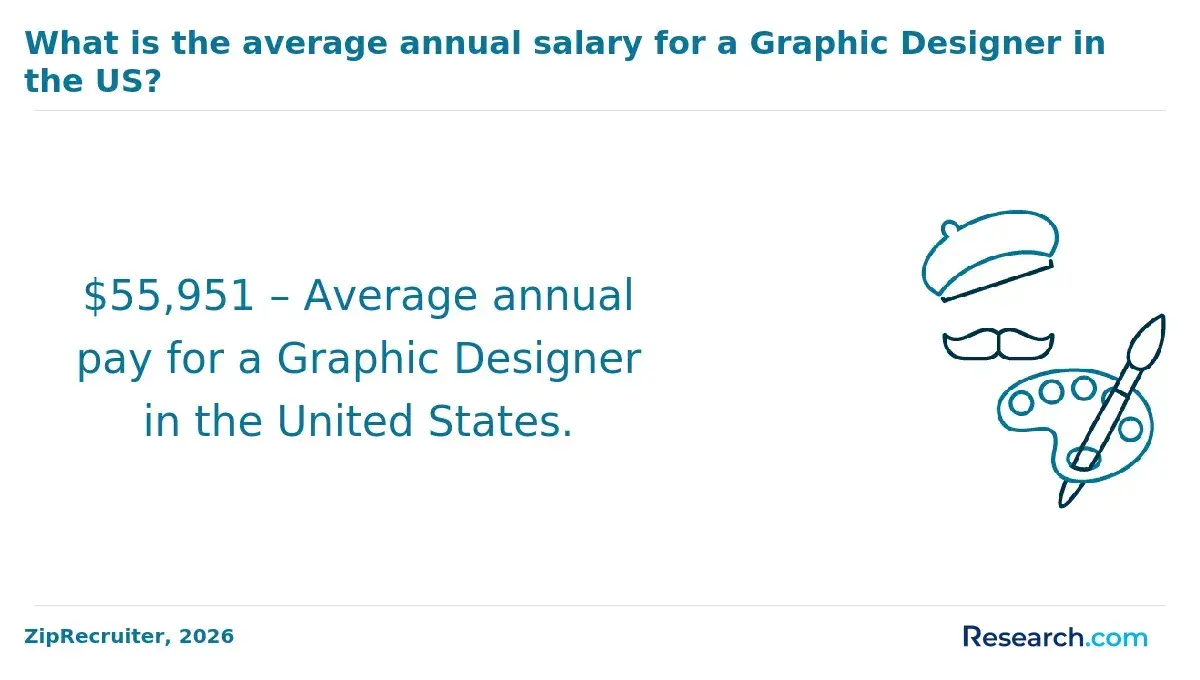
With a graphic design degree, you can expect to make a competitive salary depending on your experience, location, and specialized field. According to the Bureau of Labor Statistics, the median annual wage for graphic designers is $58,910, or approximately $28.32 per hour. However, salaries continue to vary significantly based on geographic region, years of experience, and the specific industry in which a designer practices.
- Best Online Graphic Design Programs for 2025 Best Programs
- How long does it take to complete an online graphic design program? Completion Time
- How does an online graphic design program compare to an on-campus program? On campus vs. Online
- What is the average cost of an online graphic design program? Average Cost
- What are the financial aid options for students enrolling in an online graphic design program? Financial Aid
- What are the prerequisites for enrolling in an online graphic design program? Prerequisites
- What courses are typically in an online graphic design program? What courses are typically in an online graphic design program?
- What are the key skills needed to succeed in a graphic design career? What are the key skills needed to succeed in a graphic design career?
- What types of specializations are available in online graphic design programs? What types of specializations are available in online graphic design programs?
- How do graphic design degrees align with other creative majors in college? How do graphic design degrees align with other creative majors in college?
- How to choose the best online graphic design degree program How to choose the best online graphic design degree program
- Is an online graphic design degree a smart financial investment? Is an online graphic design degree a smart financial investment?
- What career paths are available for graduates of online graphic design degree programs? What career paths are available for graduates of online graphic design degree programs?
- Is pursuing an accelerated online bachelor's program right for graphic designers? Is pursuing an accelerated online bachelor's program right for graphic designers?
- Are online graphic design degrees accredited and valued by employers? Are online graphic design degrees accredited and valued by employers?
- What is the job market for graduates with an online graphic design degree? What is the job market for graduates with an online graphic design degree?
- How do online graphic design programs support career development and networking opportunities? How do online graphic design programs support career development and networking opportunities?
- What career advancement opportunities are available with a graphics design master's degree? What career advancement opportunities are available with a graphics design master's degree?
- Can a short-term master's program boost my graphic design career? Can a short-term master's program boost my graphic design career?
- How can you transition from graphic design to UX/UI design? How can you transition from graphic design to UX/UI design?
- Can an affordable online associate degree serve as a stepping stone to a graphic design career? Can an affordable online associate degree serve as a stepping stone to a graphic design career?
- Are accelerated graphic design programs ideal for fast-tracking industry readiness? Are accelerated graphic design programs ideal for fast-tracking industry readiness?
- What challenges might you encounter in online graphic design programs? What challenges might you encounter in online graphic design programs?
Best Online Graphic Design Degree Programs for 2027
Choosing an online graphic design degree is not just about finding a creative major you can complete from home. The right program should help you build a strong portfolio, learn current design tools, understand branding and digital media, and prepare for roles in areas such as visual design, web design, UX/UI, advertising, publishing, and digital content. This guide is for students comparing online graphic design programs, working adults looking for a flexible path into design, and creatives deciding whether a full degree, certificate, associate pathway, or accelerated option makes the most sense.
Below, you will find a practical ranking of online graphic design programs, cost and time-to-completion details, admissions requirements, common courses, career outcomes, and decision factors that matter before enrolling. Research.com uses current public datasets and school-reported information where available; you can review our ranking methodology for more detail on how programs are evaluated.
Quick Answer: What Is the Best Online Graphic Design Degree?
The best online graphic design degree is the one that combines recognized accreditation, a portfolio-focused curriculum, strong faculty feedback, current software training, career support, and a total price you can justify based on your goals. Students who want a traditional bachelor’s path should compare 120-credit programs, while career changers who already hold a bachelor’s degree may benefit from a shorter certificate. If your goal is UX/UI, web design, motion graphics, or digital media, look closely at concentrations rather than choosing a general graphic design program by name alone.
How Research.com Ranked These Schools
Online graphic design programs require a meaningful investment of time, money, and creative effort. To help students compare options more clearly, Research.com reviewed available institutional data, online program details, accreditation information, cost indicators, and academic factors. Sources used in the ranking process include:
- IPEDS database
- Peterson’s database, including the Distance Learning Licensed Data Set
- College Scorecard
- National Center for Education Statistics
Online Graphic Design Programs at a Glance
| School | Credential or Program | Length | Credits | Listed Cost | Accreditation |
| Southern New Hampshire University | BA in Graphic Design and Media Arts | 4 years | 120 | $330 per credit | New England Commission of Higher Education (NECHE) |
| Academy of Art University | Online Graphic Design degree program | 4 years | 120 | $1,126 per credit | Western Association of Schools and Colleges (WASC), California Commission on Teacher Credentialing (CTC) |
| Bellevue University | BA in Graphic Design | 4 years | 127 | $449 per credit; $250 military preferred | Higher Learning Commission |
| Berkeley College | BFA in Graphic Design | 2.5 years | 120 | $13,450 per semester | Middle States Commission on Higher Education (MSCHE), United States Distance Learning Association (USDLA) |
| Maryland Institute College of Art | Graphic Design major | 3 years | 120 | $26,580 per semester | Middle States Commission on Higher Education (MSCHE) |
| Lesley University | Online Graphic Design certificate | 1 year | 18 | $495 per credit | New England Commission of Higher Education (NECHE) |
| Arizona State University | BS in Design in Graphic Design | 4 years | 120 | $634 per credit | Higher Learning Commission (HLC) |
| Maryville University of St. Louis | Online Bachelor’s in Digital Media | 4 years | 128 | $525 per credit | Higher Learning Commission (HLC) |
| Liberty University | BFA in Graphic Design | 3.5 years | 120 | $390 full-time; $455 part-time per credit | Southern Association of Colleges and Schools Commission on Colleges (SACSCOC) |
| Wilmington University | BS in Graphic Design | 4 years | 120 | $409 per credit | Middle States Commission on Higher Education (MSCHE) |
1. Southern New Hampshire University
Southern New Hampshire University offers an online Bachelor of Arts in Graphic Design and Media Arts designed for students who want flexibility and broad creative training. The program emphasizes the design process, digital media skills, and current design technologies. Because there are no fixed class meeting times, students can access coursework and learning resources around the clock.
- Program Length: 4 years
- Tracks/concentrations: User Experience Design, Web Design
- Cost per Credit: $330
- Required Credits to Graduate: 120
- Accreditation: New England Commission of Higher Education (NECHE)
2. Academy of Art University
The Academy of Art University provides an online Graphic Design degree program with a curriculum built for remote studio learning. Online students use learning modules and interact with instructors while developing visual literacy, conceptual thinking, creative problem-solving, and design execution skills similar to those expected in campus-based design study.
- Program Length: 4 years
- Cost per Credit: $1,126
- Required Credits to Graduate: 120
- Accreditation: Western Association of Schools and Colleges (WASC), California Commission on Teacher Credentialing (CTC)
3. Bellevue University
Bellevue University offers an online Bachelor of Arts in Graphic Design that connects creative production with business-oriented thinking. The curriculum is built around applied learning, performance goals, and repeated practice so students can strengthen core design skills while understanding how design supports organizational needs.
- Program Length: 4 years
- Cost per Credit: $449, $250 (Military preferred)
- Required Credits to Graduate: 127
- Accreditation: Higher Learning Commission
4. Berkeley College
Berkeley College offers a Bachelor of Fine Arts program that blends intensive creative practice with business education. Students work with current computer graphic software and can develop skills in digital publishing, animation, and web-focused design.
- Program Length: 2.5 years
- Tracks/concentrations: Web Design, Digital Publishing, Animation
- Cost per Semester: $13,450
- Required Credits to Graduate: 120
- Accreditation: Middle States Commission on Higher Education (MSCHE), United States Distance Learning Association (USDLA)
5. Maryland Institute College of Art (MICA)
Maryland Institute College of Art (MICA) offers a graphic design major that develops visual problem-solving abilities across multiple design contexts. Students can study areas such as publication design, branding, and UI/UX while preparing for professional creative work.
- Program Length: 3 years
- Tracks/concentrations: Publication Design, Branding, UI/UX
- Cost per Semester: $26,580
- Required Credits to Graduate: 120
- Accreditation: Middle States Commission on Higher Education (MSCHE)
6. Lesley University
Lesley University offers an 18-credit online Graphic Design certificate for working professionals and recent graduates who already hold a bachelor’s degree. The program covers studio practice, image-making, visual research, typography, and modern design history, making it a shorter option for learners who want to expand their design capabilities without completing another full bachelor’s degree.
- Program Length: 1 year
- Cost per Credit: $495
- Required Credits to Graduate: 18
- Accreditation: New England Commission of Higher Education (NECHE)
7. Arizona State University
Arizona State University (ASU) offers an online Bachelor of Science in Design in Graphic Design through its Design School. The program centers on strategic communication and uses a design process that includes research, analysis, concept development, planning, and final execution.
- Program Length: 4 years
- Cost per Credit: $634
- Required Credits to Graduate: 120
- Accreditation: Higher Learning Commission (HLC)
8. Maryville University of St. Louis
Maryville University of St. Louis offers an Online Bachelor’s in Digital Media that includes design-related study in UI/UX design, web design, and video game production. The program may appeal to students who want a broader digital media curriculum instead of a narrowly defined graphic design degree.
- Program Length: 4 years
- Cost per Credit: $525
- Required Credits to Graduate: 128
- Accreditation: Higher Learning Commission (HLC)
9. Liberty University
Liberty University offers a 100% online Bachelor of Fine Arts in Graphic Design. The program is designed to prepare students for creative work in areas such as branding, illustration, packaging, textile design, and user interface design through hands-on projects and practical coursework.
- Program Length: 3.5 years
- Cost per Credit: $390 (full-time), $455 (part-time)
- Required Credits to Graduate: 120
- Accreditation: Southern Association of Colleges and Schools Commission on Colleges (SACSCOC)
10. Wilmington University
Wilmington University offers a Bachelor of Science in Graphic Design in both online and on-campus formats. Students study fundamental design principles, work with design software, and build creative problem-solving skills that can be applied across digital and visual media roles.
- Program Length: 4 years
- Tracks/concentrations: Animation and 3D, Game Design and Development, Video and Film Production, Web Design
- Cost per Credit: $409
- Required Credits to Graduate: 120
- Accreditation: Middle States Commission on Higher Education (MSCHE)
How Long Does It Take to Earn an Online Graphic Design Degree?
Most online bachelor’s programs in graphic design are structured around 120 credits and typically take about four years of full-time study. Some programs are shorter: online Bachelor of Fine Arts options can be completed in as little as 3.5 years, and accelerated pathways may range from three years to as little as 16 months depending on the school, transfer credit policies, and course load.
Your actual timeline depends on several factors: whether you study full time or part time, how many transfer credits the school accepts, whether courses are offered year-round, and whether the program uses a fixed cohort model or a more flexible online schedule. A student entering with significant transfer credit may finish sooner than a first-time college student starting from zero credits.
Online vs. On-Campus Graphic Design Programs: What Changes?
Online and on-campus graphic design degrees often cover similar academic content: design principles, typography, visual communication, branding, digital tools, portfolio development, critique, and project-based assignments. The biggest differences are delivery format, interaction style, schedule structure, and access to campus facilities.
| Factor | Online Graphic Design Degree | On-Campus Graphic Design Degree |
| Schedule | May use asynchronous, synchronous, or hybrid formats; students should understand the difference between synchronous and asynchronous classes. | Usually requires attendance at set times for studio courses, critiques, labs, and discussions. |
| Studio experience | Critiques, collaboration, and portfolio reviews may happen through video, discussion boards, shared files, or digital workspaces. | Students often receive in-person critique and may have direct access to studios, labs, printers, and campus equipment. |
| Flexibility | Often better for working adults, caregivers, military students, and learners who cannot relocate. | Can be better for students who want structured routines and frequent face-to-face interaction. |
| Costs | May reduce costs tied to transportation, housing, and campus-based fees, although tuition varies widely. | May include additional expenses for commuting, housing, campus fees, and materials. |
| Best fit | Independent learners who can manage deadlines and request feedback proactively. | Students who learn best through in-person studio culture and direct peer interaction. |
Many students choose online education programs because they can continue working while studying. According to Pearson, a student can save up to 35% of college costs by enrolling in an online degree. Sixty-three percent of colleges charge less for online learning sites because online delivery can reduce expenses related to campus activities, facility use, maintenance, and security.
What Is the Average Cost of an Online Graphic Design Degree?
Online graphic design tuition varies sharply by institution, degree type, residency rules, transfer credits, and fees. When comparing public and private universities, online degrees are generally more affordable than in-person programs. For public four-year colleges, an online degree is $36,595 cheaper than an in-person degree. Private institutions charge $60,593 for an online degree and $129,800 for an in-person degree. A traditional college student also pays $1,360 for transportation, an expense many online students avoid.
For online graphic design programs in this guide, the per-credit cost generally ranges from $330 to $1,126. Based on those figures, a student can expect tuition for a full degree to fall around $38,400 to $128,640 before considering transfer credits, fees, materials, software, scholarships, or employer funding. Students should also budget for application fees, technology fees, required software, printing or production expenses, and portfolio-related costs.
The chart below compares the minimum and maximum tuition cost examples from Southern New Hampshire University and Academy of Art University:
Financial Aid Options for Online Graphic Design Students
Online graphic design students may qualify for several forms of financial aid, but eligibility depends on the school, accreditation status, enrollment level, degree type, and student circumstances. Before applying, confirm that the program participates in the aid programs you plan to use.
- Scholarships: Design students can look for scholarships from colleges, universities, professional associations, private foundations, and creative organizations. Some awards may require a portfolio, essay, or proof of enrollment in a design-related program.
- Federal and state aid: Students should begin with the Free Application for Federal Student Aid (FAFSA). Depending on eligibility, federal options may include Federal Pell Grants, federal loans, and the Federal Work Study Program. State-level options may also be available, including programs such as the Maine Graphic Arts Association Scholarship.
- Employer tuition support: Working adults should ask their HR department whether tuition reimbursement, professional development funding, or education benefits apply to graphic design coursework.
- Payment plans and education loans: Some schools offer installment plans. Students may also consider private loans, such as the Smart Option Student Loan offered by Sallie Mae, after comparing interest rates, repayment terms, and total borrowing costs.
- Military and veterans benefits: Active-duty service members, spouses, and veterans may qualify for tuition discounts, VA education benefits, and school-specific military support.
Admissions Requirements for Online Graphic Design Programs
Admissions requirements vary by school and credential level. A bachelor’s program for first-time college students will usually ask for different materials than a post-baccalaureate certificate or transfer-friendly degree pathway.
- Proof of graduation: Most bachelor’s programs require a high school diploma, GED, or equivalent credential. Some schools may also recognize a 30-credit hour completion certificate of the General Education Program (GED).
- Official transcripts: Applicants generally submit high school transcripts and, if applicable, transcripts from any college previously attended. Transfer students should ask how many credits can apply to the graphic design major and whether there is a minimum GPA requirement.
- SAT or ACT scores: Some colleges still consider standardized tests, while others are test-optional or do not require them. If a program lists testing requirements, review how the ACT and SAT differ before deciding which exam to submit.
- Portfolio, essay, or recommendations: Art and design programs may request a portfolio of visual work, a personal statement, letters of recommendation, or evidence of creative experience. International students may need TOEFL, IELTS, or equivalent proof of English proficiency.
Common Courses in an Online Graphic Design Degree
Graphic design degrees usually move from foundations to applied studio work. Students often study design history, typography, image-making, branding, digital tools, layout, web design, critique, and portfolio development. The exact course sequence depends on whether the program awards a BA, BS, BFA, digital media degree, or certificate.
- Graphic design history: Students examine how visual communication has evolved through symbols, posters, typography, branding, publishing, and digital media. This context helps designers understand current visual culture and avoid treating design as only software production.
- Typography: Typography teaches students how letterforms, spacing, hierarchy, readability, and style affect meaning. This skill matters in branding, packaging, digital interfaces, editorial design, and advertising. One reason typography receives close attention is that 72% of consumers say packaging design influences their purchasing decisions.
- Image making: Students learn how to create and manipulate visual content using core elements such as text, color, image, and composition. Coursework may include illustration, photography, collage, digital imaging, or experimental visual systems.
- Branding: Branding courses explore identity systems, audience perception, brand voice, visual consistency, emotional appeal, and customer experience. Students may create logo systems, campaigns, brand guidelines, and multi-platform design assets.
Skills You Need for a Graphic Design Career
Graphic design is both creative and technical. A strong portfolio matters, but employers and clients also look for communication, revision skills, deadline management, and the ability to connect design decisions to business or user goals.
- Design software proficiency: Students should become comfortable with tools such as Adobe Creative Suite, including Photoshop, Illustrator, and InDesign, as well as digital design platforms such as Figma and Sketch when relevant.
- Typography: Designers need to manage font selection, hierarchy, spacing, scale, and readability across print and digital formats.
- Color theory and composition: Effective design depends on contrast, balance, visual hierarchy, color relationships, and audience-appropriate styling.
- Creative concept development: Designers must turn abstract messages into clear visual ideas that support a purpose.
- Attention to detail: Small errors in alignment, spacing, file setup, accessibility, or brand consistency can weaken an otherwise strong project.
- Problem-solving: Design is not decoration alone; it is a process of solving communication, usability, and visual clarity problems within constraints.
- Communication and collaboration: Designers work with clients, marketers, developers, editors, creative directors, and other stakeholders.
- Time management: Creative professionals often balance multiple deadlines, rounds of feedback, and file delivery requirements.
- Adaptability: Designers need to accept critique, revise work, learn new tools, and adjust to changing project needs.
- Marketing and business awareness: Understanding audiences, campaigns, brand positioning, and conversion goals can make a designer more valuable.
If you already have a target role in mind, review the broader graphic design career path so you can prioritize the skills most relevant to that direction.
Graphic Design Specializations Available Online
Specializations help students align coursework with a specific career outcome. A student who wants to work in print branding may need a different portfolio than someone preparing for UX/UI, animation, or web design.
| Specialization | What It Emphasizes | Good Fit For |
| Graphic Design | Branding, advertising, layout, publication design, visual identity, and production skills. | Students who want a broad foundation for agency, in-house, freelance, or print/digital design roles. |
| Interactive Design | Web interfaces, user flows, digital interaction, and visual systems for screens. | Students interested in digital products, websites, apps, and interface design. |
| 3D Modeling | Three-dimensional objects, environments, visualization, and digital assets. | Students interested in games, product visualization, animation, or immersive media. |
| Web Design | Website layout, front-end concepts, user experience, visual design, and digital publishing. | Students who want a design-focused web career or may later pursue an online web design degree program. |
| Motion Graphics | Animation, title sequences, digital video graphics, and visual effects. | Students interested in social media, advertising, entertainment, and video content. |
| Animation | Character design, storyboarding, movement, visual effects, and animated storytelling. | Students who want to create moving visual content for entertainment, education, or marketing. |
| Multimedia Design | Digital media that may combine video, audio, graphics, and interactive content. | Students who want versatile creative skills across multiple media formats. |
How Graphic Design Compares With Other Creative Majors
Graphic design overlaps with digital media, fine arts, animation, web design, and UX/UI, but it is not identical to those majors. Graphic design is usually centered on visual communication: using type, image, color, layout, and systems to deliver a message or solve a communication problem. Fine arts programs may emphasize personal expression and studio practice, while animation programs focus more directly on movement, storyboarding, and time-based media.
Students who are still comparing creative fields should think about the kind of work they want to produce. If you enjoy logos, layouts, campaigns, packaging, editorial design, social graphics, and visual identity systems, graphic design may fit. If you are more interested in product usability, research, and interaction flows, UX/UI may be a stronger target. If you want a wider look at creative and practical academic options, review related majors in college before committing.
How to Choose the Best Online Graphic Design Program
Do not choose a design school based only on a familiar name or the lowest tuition. Unlike unrelated pathways such as a doctor of education leadership degree, graphic design programs must be judged heavily on creative work, portfolio outcomes, critique quality, and technology access. Use the checklist below before enrolling.
- Confirm delivery format: Ask whether the program is fully online, hybrid, or occasionally requires campus visits. Also ask whether courses are live, self-paced, or a mix of both.
- Check accreditation: Look for institutional accreditation and, where relevant, art and design recognition such as the National Association of Schools of Art and Design (NASAD). Accreditation can affect financial aid, credit transfer, and employer confidence.
- Review portfolio expectations: A good program should help you graduate with polished, job-ready work. Ask whether courses include critique, portfolio reviews, capstone projects, or industry-facing showcases.
- Compare software and equipment requirements: Find out whether students must pay separately for Adobe tools, Figma, hardware, drawing tablets, printers, fonts, or other creative resources.
- Evaluate faculty and feedback: Online design students need meaningful critique. Ask how often instructors review work, whether critiques are live or written, and how students collaborate with peers.
- Study transfer credit rules: If you have prior college credits, ask how many apply to general education, electives, and major requirements.
- Look at student support: Strong online programs should provide academic advising, technical support, career services, disability accommodations, library access, and tutoring.
- Compare financial aid carefully: Every year, 36.7% of undergraduates take out an average of $8,285 in federal loans, according to Education Data Initiative. Military students should also review military-friendly online schools and ask about tuition assistance.
Is an Online Graphic Design Degree Worth It?
An online graphic design degree can be a smart investment when it leads to a strong portfolio, relevant technical skills, career support, and a manageable debt level. It may not be worth it if the program is expensive, weak on critique, disconnected from current design tools, or does not help you produce work that employers and clients can evaluate.
To estimate value, compare total cost against likely career paths, expected time to completion, transfer credit savings, and whether the degree helps you move into related fields such as UX/UI, digital design, web design, or brand strategy. Students comparing design with other practical degree options may also want to review online degrees that pay well, but no degree guarantees a specific salary or job outcome.
Career Paths for Online Graphic Design Graduates
Graphic design graduates can work in agencies, in-house creative departments, publishing, specialized design services, technology companies, nonprofits, education, entertainment, and freelance businesses. The strongest candidates usually combine a degree or credential with a targeted portfolio.
- Graphic Designer: Creates visual concepts for print, digital, advertising, branding, packaging, and marketing materials.
- Web Designer: Designs the look, layout, and visual experience of websites, often working with developers or front-end tools.
- User Experience (UX) Designer: Studies user needs, builds personas, maps user journeys, and creates wireframes or prototypes to improve usability.
- User Interface (UI) Designer: Designs screens, visual components, buttons, menus, and interface layouts that support the intended user experience.
- Art Director: Oversees visual style and creative direction for campaigns, publications, productions, or brand systems.
- Brand Designer: Builds and maintains visual identity systems, including logos, typography, color palettes, imagery, and brand guidelines.
- Motion Designer: Uses animation and visual effects to bring static design concepts into motion for video, social, advertising, and digital platforms.
- Digital Designer: Creates visual assets for websites, apps, online ads, email campaigns, and other digital products.
- Product Designer: Works on the look, feel, and function of physical or digital products, often combining visual design with usability thinking.
- Content Strategist: Plans and manages written, visual, or multimedia content so it supports user needs and organizational goals.
Should Graphic Design Students Choose an Accelerated Online Bachelor’s Program?
An accelerated online bachelor’s program can make sense for students who already have transfer credits, can handle a heavier workload, and want to enter the workforce sooner. These programs often compress timelines while keeping a project-based curriculum, which can be helpful for motivated students building a portfolio quickly.
Acceleration is not the best choice for everyone. Design work requires revision, critique, experimentation, and time to mature visually. Students who are new to design, working full time, or balancing caregiving responsibilities should compare workload carefully before choosing accelerated online bachelor's programs.
Are Online Graphic Design Degrees Accredited and Respected by Employers?
Employers usually care about three things: whether the school is legitimate, whether the graduate has the skills required for the role, and whether the portfolio proves those skills. Accreditation helps establish institutional credibility, but a strong portfolio is often the deciding factor in design hiring.
Before enrolling, verify institutional accreditation, ask whether credits can transfer, and confirm that online students receive the same academic recognition as campus students. Students who want a shorter first step may also compare accelerated associate degrees, but should make sure any credits will apply toward a future bachelor’s program if that is the goal.
Job Market and Salary Outlook for Graphic Design Graduates
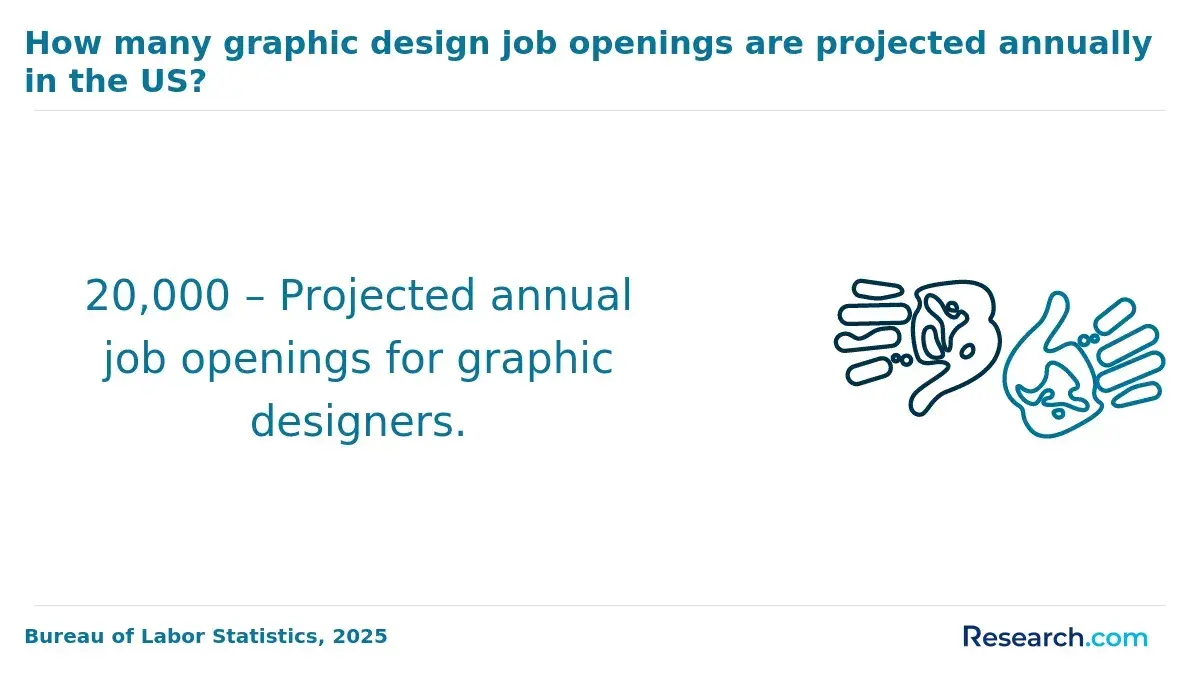
The job outlook for graphic designers is projected to grow by 2% from 2024 to 2034. There will be about 20,000 job openings for this position projected each year, on average, over a decade. These openings can come from new roles as well as the need to replace workers who transfer occupations or leave the labor force.
The broader design economy continues to include advertising, specialized design services, publishing, digital media, branding, and business communications. The global graphic design market is valued at approximately USD 56 billion as of 2025. At the same time, students should recognize that competition can be strong, especially for popular creative roles. Portfolio quality, software fluency, internships, and specialization can make a major difference.
According to Bureau of Labor Statistics data, median annual wages for graphic designers vary by industry:
| Industry | Annual Salary |
| Specialized design services | $61,510 |
| Advertising, public relations, and related services | $58,750 |
| Publishing industries | $51,660 |
| Printing and related support activities | $43,060 |
Career Development and Networking in Online Graphic Design Programs
Because graphic design is portfolio-driven, career support should be part of your program comparison. Strong online programs do more than assign projects; they help students present work professionally and connect with real industry expectations.
- Career services: Look for resume help, mock interviews, job search guidance, freelance business support, and advice on presenting a design portfolio.
- Portfolio development: The program should include structured portfolio courses, critique, revision, and possibly online showcases for student work.
- Internships or applied projects: Ask whether online students can access remote internships, local internships, client-based projects, or capstone experiences.
- Alumni and industry access: Guest lectures, alumni panels, online networking events, mentorship, and employer partnerships can help students understand hiring expectations.
Can a Graphic Design Master’s Degree Help With Advancement?
A graduate degree can be useful for designers who want to specialize, move into leadership, teach, or conduct advanced research. Possible advancement areas include branding, visual effects, UX design, design management, creative direction, and higher education. Students considering graduate study should compare costs, portfolio expectations, and career goals before enrolling. For role-specific planning, review career options with a graphics design master's degree.
Can a One-Year Master’s Program Strengthen a Design Career?
A short master’s program may help experienced designers update their strategic, technical, or leadership skills without stepping away from work for several years. This option is most useful for professionals who already have a portfolio and want focused advanced training rather than foundational design instruction. If speed is a priority, compare curriculum depth, faculty feedback, and project expectations in one year online masters programs.
How Can Graphic Designers Move Into UX/UI Design?
Graphic designers often have transferable skills for UX/UI work, including layout, typography, color, hierarchy, and visual communication. The main shift is that UX/UI design places greater emphasis on usability, user research, wireframes, prototyping, interaction design, accessibility, and testing.
To transition, start by learning user research basics, building wireframes, practicing prototyping tools, and redesigning portfolio projects to show process rather than only finished visuals. Students who want a structured pathway can compare a more affordable online UX design degree and evaluate whether it teaches research, interaction design, accessibility, and portfolio-based case studies.
Can an Affordable Online Associate Degree Lead Toward Graphic Design?
An online associate degree can be a lower-cost entry point for students who want foundational design, general education, and portfolio experience before committing to a bachelor’s program. It may also help students test their interest in design while reducing financial risk. Before enrolling, confirm that credits from affordable online associate degree programs can transfer into a bachelor’s degree if that is your long-term plan.
Are Accelerated Graphic Design Programs Good for Industry Readiness?
Accelerated design programs can help students move quickly through coursework, but speed should not replace practice, critique, and portfolio quality. The best fast-track options still require students to complete serious projects, revise work, learn current tools, and show evidence of professional growth. If you are comparing condensed pathways, review how accelerated programs balance pace with academic support.
Common Challenges in Online Graphic Design Programs
Online design study can be effective, but it requires discipline. Students must manage deadlines, learn software independently, request feedback, participate in critiques, and maintain reliable technology. Limited real-time interaction can also make some learners feel isolated, especially in studio courses where critique and collaboration matter.
| Common Mistake | Why It Can Hurt You | Better Approach |
| Choosing a program without checking accreditation | It may affect financial aid, credit transfer, and employer confidence. | Verify institutional accreditation before applying. |
| Looking only at tuition | Software, fees, hardware, materials, and time to completion can change the true cost. | Compare total cost of attendance, not just per-credit tuition. |
| Ignoring portfolio support | A degree without strong work samples may not help much in a design job search. | Ask about critiques, capstones, portfolio classes, and student showcases. |
| Assuming online means self-paced | Some online courses have live sessions, weekly deadlines, or cohort schedules. | Ask whether the format is asynchronous, synchronous, or mixed. |
| Skipping technology requirements | Weak hardware or unstable internet can slow down project work and submissions. | Review software, computer, storage, internet, and file-format requirements before enrolling. |
| Relying only on rankings | A highly ranked program may not match your specialization, budget, or schedule. | Use rankings as a starting point, then compare fit and outcomes. |
Some shorter pathways, such as a 6-month online associate degree, may offer structure and speed, but students should still evaluate quality, transferability, and support services before committing.
What Graduates Say About Online Graphic Design Study
- : "The online format made it possible for me to keep working while building a design portfolio. I learned from instructors with industry experience, completed practical projects, and used that work to apply for agency roles. The flexibility was the reason I could finish the program. Claudia D."
- : "Studying online helped me manage coursework around freelance projects. Collaborating with classmates in different locations pushed me to think beyond my usual style, and the feedback I received improved how I present work to clients. Thomas C."
- : "I did not think a design degree would fit my schedule, but the online structure gave me a realistic path. The projects helped me gain confidence, and I eventually used what I learned to launch my own design studio. Andy P."
Questions to Ask Before Enrolling
- Is the school institutionally accredited, and does the program have any design-specific recognition?
- Will my diploma or transcript identify the program as online?
- How many portfolio projects will I complete before graduation?
- How often will instructors critique my work?
- Are internships, client projects, or capstone experiences available to online students?
- What software, hardware, and subscriptions are required?
- How many transfer credits will the school accept?
- What is the total cost after fees, materials, software, and financial aid?
- Does the curriculum match my intended specialization, such as branding, web design, UX/UI, motion graphics, or digital media?
- What career services are available to online students and alumni?
References
- Academy of Art University. Cost of Attendance. AAU
- Bureau of Labor Statistics. Arts and Designs. U.S. BLS
- Bureau of Labor Statistics. Graphic Designers. U.S. BLS
- Education Data Initiative. Cost of Online Education vs. Traditional Education. EDI
- Education Data Initiative. Financial Aid Statistics. EDI
- HubSpot. 2026 state of marketing: Data from 1,500+ global marketers. HubSpot
- IBISWorld. Global Graphic Designers Market Size. IBISWorld
- McKinsey & Company. Demand for online education is growing. McKinsey
- MDG. Fonts 101: What Marketers Need to Know Infographic. MDG
- National Center for Education Statistics. Fast Facts. NCES
- Pearson. College on Your Terms. Pearson
- Piktochart. How Is Graphic Design Used in Businesses? Survey Results From 1100 Teams. Piktochart
- PRNewswire. Global e-learning market report. PRNewswire
- Southern New Hampshire University. Online Graphic Design Degree. SNHU
Key Insights
- The best online graphic design degree is not automatically the cheapest or fastest option; it is the program that helps you build a credible portfolio, receive useful critique, and graduate with skills that match your target role.
- Most bachelor’s programs require around 120 credits and take about four years, though accelerated options and transfer credits can shorten the timeline.
- Costs vary widely. In this guide, listed per-credit tuition ranges from $330 to $1,126, and full-degree tuition can fall around $38,400 to $128,640 before fees, aid, and transfer credits.
- Accreditation matters, but employers in design also judge candidates heavily on portfolio quality, software fluency, communication skills, and ability to revise work based on feedback.
- Online learning works best for self-directed students who can manage deadlines, maintain reliable technology, participate in critique, and ask for help when needed.
- Students interested in UX/UI, web design, animation, or motion graphics should choose programs with relevant concentrations or electives rather than assuming every graphic design degree covers those areas deeply.
- Before enrolling, ask about portfolio support, faculty feedback, internships, software costs, transfer policies, career services, and total cost of attendance.
Other Things You Should Know About Online Graphic Design Programs
Yes. Most 2027 online graphic design degree programs require a computer capable of running Adobe Creative Cloud, which typically means a recent multi-core processor, 16 GB of RAM, and a dedicated graphics card or strong integrated graphics. Programs also usually require a webcam, microphone, and reliable high-speed internet.
Most top online graphic design programs in 2027 require a portfolio showcasing original creative work. Requirements typically include 10–15 pieces, demonstrating skill in digital design tools, creativity, and conceptual thinking. Each program may have specific guidelines and types of projects they wish to see.
Students pursuing online graphic design degrees in 2027 need a reliable computer with high processing power, design software like Adobe Creative Cloud, a stable internet connection, and peripherals such as a stylus and graphic tablet. Ensuring these tools are up-to-date enhances productivity and keeps pace with industry requirements.