2027 Best Online Audio and Music Degree Programs

Co-Founder and Chief Data Scientist
An audiophile begins with a love for sound, but it's formal education that transforms that passion into practical, career-ready skills. From composing and producing to engineering, today's online music programs offer lucrative paths to professional careers. With the right degree, students can build a foundation in both theory and cutting-edge audio technology.
The best part? You don’t need to be in a studio or on-campus conservatory to learn the craft. Online audio and music degree programs now provide access to expert instruction, virtual labs, and collaboration tools that mirror the industry’s evolving landscape.
This guide highlights the best online audio and music degree programs for 2027. We looked at factors like curriculum, flexibility, cost, and career outcomes. Whether you're just starting or looking to refine your skills, there's a program here that fits your goals.
What are the benefits of getting an online audio and music degree?
- Audio-related careers average $84,456 in income annually, offering strong earning potential for creative professionals (ZipRecruiter, n.d.).
- The demand for sound technicians and audio engineers is growing steadily at 3%, keeping job prospects healthy (BLS, 2024).
- Online audio and music degrees let students build professional-grade portfolios and collaborate remotely.
What can I expect from an online audio and music degree?
The best online audio and music programs intersect science and art. These degrees don’t just teach you how to press record; they shape how you hear, create, and think about music in a digital world. Here’s what you can typically expect from an online audio and music degree:
- Core Courses: Learn the fundamentals of audio engineering, music production, and digital composition.
- Hands-On Projects: Build real-world experience through mixing sessions, scoring assignments, and production work.
- Industry Software: Get trained on tools like Pro Tools, Logic Pro, and Ableton Live used by professionals.
- Collaborative Opportunities: Work with peers and instructors remotely to simulate industry workflows.
- Capstone or Portfolio: Graduate with a polished body of work that showcases your technical and creative skills.
- Flexible Scheduling: Access course materials and complete assignments on your own time, perfect for working students or active musicians.
- Remote Access to Resources: Tap into virtual labs, cloud-based software, and streaming lectures from anywhere in the world.
Where can I work with an online audio and music degree?
An online audio and music degree can open doors to creative, technical, and entrepreneurial roles across a wide range of industries. From behind the scenes to center stage, the skills you gain are in demand wherever sound matters. Here are some of the most common fields:
- Film and TV Production: Edit dialogue, design soundscapes, or mix audio for streaming and broadcast content.
- Music Industry: Work as a producer, recording engineer, or mixing/mastering specialist for artists and labels.
- Gaming and Interactive Media: Create immersive audio for video games, apps, and virtual environments.
- Live Events and Venues: Manage sound for concerts, theater productions, conferences, and festivals.
- Advertising and Marketing: Produce jingles, voiceovers, or branded audio content for commercials and campaigns.
- Freelance or Entrepreneurship: Start your own studio, offer remote audio services, or build a brand as an independent artist or music producer.
How much can I make with an online audio and music degree?
Audio skills can translate into a profitable career—one that’s often underestimated. From mixing tracks in your bedroom to leading sound design on major productions, an online degree can be the bridge to high-paying opportunities.
The numbers speak for themselves:
- Top Earners: Make up to $151,500 annually, typically in senior or specialized roles.
- 75th Percentile: Earn around $113,000, often with several years of experience and a strong portfolio.
- Average Salary: Sits at $84,456, reflecting solid mid-level positions across the industry.
- 25th Percentile: Around $50,000, common for entry-level roles or those just starting out.
- List of the Best Online Audio and Music Degree Programs for 2027 List of Programs
- How long does it take to complete an online audio and music degree program? Completion Time
- How does an online audio and music degree compare to an on-campus program? How does an online audio and music degree compare to an on-campus program?
- What is the average cost of an online audio and music degree? Average Cost
- What are the financial aid options for students enrolling in an online audio and music degree? Financial Aid
- What are the prerequisites for enrolling in an online audio and music degree? Prerequisites
- What courses are typically in an online audio and music degree? What courses are typically in an online audio and music degree?
- What types of specializations are available in online audio and music degree programs? Specializations
- How to choose the best online audio and music degree? How to choose the best online audio and music degree?
- What career paths are available for graduates of online audio and music degrees? Career Paths
- What is the job outlook for graduates with an online audio and music degree? Job Outlook
- How Can Complementary Creative Disciplines Elevate Your Online Audio and Music Degree? How Can Complementary Creative Disciplines Elevate Your Online Audio and Music Degree?
- What Additional Certifications Can Boost Your Career in Online Audio and Music? What Additional Certifications Can Boost Your Career in Online Audio and Music?
Best Online Audio and Music Degree Programs for 2027
Choosing an online audio and music degree is not just about finding a school with creative branding or impressive studio photos. The better question is whether the program can help you build usable production skills, a credible portfolio, industry software fluency, and a realistic path into audio, music production, sound design, live sound, or media post-production.
This guide is for students comparing online audio production, music production, sound design, and related music technology programs. You will find ranked program options, cost and timeline comparisons, admissions expectations, common courses, specializations, career paths, job outlook details, and practical questions to ask before enrolling.
The goal is simple: help you choose a program that fits your budget, schedule, creative goals, and career direction without relying only on marketing claims or rankings.
Quick answer: What is the best online audio and music degree?
The best online audio and music degree is the one that matches your target role. Students focused on electronic music and synthesis may prefer Berklee College of Music - Online, while students interested in sound for film, games, or visual media may compare Academy of Art University, Los Angeles Film School, or Atlanta Institute of Music and Media. Students who want a broader art-and-music production curriculum may consider Rocky Mountain College of Art + Design.
For most students, the strongest program is accredited, teaches current digital audio workstation workflows, includes hands-on projects, supports portfolio development, and offers a cost and schedule that can be completed without taking on unnecessary debt.
How we ranked these schools
Research.com’s ranking is designed to help students compare online audio and music programs using transparent data rather than advertising language. Because a degree can require a major financial and time commitment, our review considers program availability, institutional information, cost indicators, distance learning data, and student-focused outcomes where available.
Our analysis uses established education data sources, including the Integrated Postsecondary Education Data System, Peterson’s database and its Distance Learning Licensed Data Set, the College Scorecard, and the National Center for Education Statistics.
For a fuller explanation of Research.com’s ranking process and weighting approach, review our methodology page.
Online audio and music degree programs at a glance
| Rank | School | Program | Program Length | Estimated Cost | Accreditation |
| 1 | Berklee College of Music - Online | Bachelor of Arts in Electronic Music Production and Sound Design | 4 years | $62,150 | New England Commission of Higher Education (NECHE) |
| 2 | Academy of Art University | Associate in Sound Design | 2 years | $34,053 | WASC Senior College and University Commission (WSCUC) |
| 3 | Rocky Mountain College of Art + Design | Bachelor of Fine Arts in Music Production | 4 years | $91,020 | Higher Learning Commission (HLC) |
| 4 | Los Angeles Film School | Bachelor of Science in Audio Production | 4 years | $66,900 | Accrediting Commission of Career Schools and Colleges (ACCSC) |
| 5 | Atlanta Institute of Music and Media | Associate of Applied Science in Music Production and Audio for Media | 18-30 months | $39,100 | Accrediting Commission of Career Schools and Colleges (ACCSC) |
1. Berklee College of Music - Online
Berklee College of Music - Online offers a Bachelor of Arts in Electronic Music Production and Sound Design for students who want structured training in electronic composition, synthesis, and modern sound creation. The curriculum emphasizes techniques such as subtractive, additive, FM, sampling, and granular synthesis, making it a strong fit for students interested in electronic music, sound design, and technology-based composition.
- Program Length: 4 years
- Tracks/concentrations: Electronic Music Production and Sound Design
- Estimated Cost: $62,150
- Accreditation: New England Commission of Higher Education (NECHE)
2. Academy of Art University
Academy of Art University offers an Associate in Sound Design that focuses on audio for visual storytelling, including film, games, and experimental media. Students work on recording, editing, and mixing while using tools such as Pro Tools and Logic. The program is especially relevant for students who want a shorter credential and a demo reel aimed at entertainment audio roles.
- Program Length: 2 years
- Tracks/concentrations: Sound Design
- Estimated Cost: $34,053
- Accreditation: WASC Senior College and University Commission (WSCUC)
3. Rocky Mountain College of Art + Design
Rocky Mountain College of Art + Design offers an online Bachelor of Fine Arts in Music Production that combines technical production training with creative and cultural study. Coursework includes music theory, composition, audio engineering, and music business, with attention to both established production tools and newer technologies. This option may appeal to students who want a broader creative arts environment along with music production training.
- Program Length: 4 years
- Tracks/concentrations: Music Production
- Estimated Cost: $91,020
- Accreditation: Higher Learning Commission (HLC)
4. Los Angeles Film School
The Los Angeles Film School offers an online Bachelor of Science in Audio Production built around digital media production workflows. Students study the audio production process and accelerated coursework related to interactive audio fields. The program is positioned for students interested in live events, video games, film sound, television post-production, and other media-focused audio roles.
- Program Length: 4 years
- Tracks/concentrations: Audio Production
- Estimated Cost: $66,900
- Accreditation: Accrediting Commission of Career Schools and Colleges (ACCSC)
5. Atlanta Institute of Music and Media
Atlanta Institute of Music and Media offers an Associate of Applied Science in Music Production and Audio for Media. The program centers on recording, sound design, engineering, and production for film, television, games, and digital media. Students in good standing may also have the opportunity to pursue Pro Tools Certification, which can help demonstrate technical readiness for audio production and post-production work.
- Program Length: 18-30 months
- Tracks/concentrations: Music Production, Audio for Media
- Estimated Cost: $39,100
- Accreditation: Accrediting Commission of Career Schools and Colleges (ACCSC)
How long does it take to complete an online audio and music degree program?
The time required depends mainly on whether you choose an associate degree or a bachelor’s degree. Online bachelor’s programs, including the options from Berklee Online and Los Angeles Film School, generally take 4 years and cover a wider mix of music theory, production, sound design, engineering, and career preparation.
Associate programs are shorter and may be better for students who want to enter the field faster or build a technical foundation before deciding whether to continue into a bachelor’s degree. For example, Atlanta Institute of Music and Media lists an Associate of Applied Science timeline of 18 months for full-time students or 30 months for part-time students.
Online formats can also make the timeline more manageable for students who are working, performing, freelancing, or building a home studio. If speed is a major factor, compare program calendars, credit loads, transfer policies, and the fastest online audio and music degree programs before enrolling.
| Credential | Typical timeline from listed programs | Best for | Trade-off |
| Associate degree | 18-30 months or 2 years | Students seeking faster technical training and a shorter route into portfolio work | May offer less general education, theory depth, or long-term academic flexibility than a bachelor’s degree |
| Bachelor’s degree | 4 years | Students who want broader study, more advanced projects, and a credential often used for long-term career mobility | Requires more time and usually a larger financial commitment |
How does an online audio and music degree compare to an on-campus program?
Online and campus-based audio programs can both teach production, recording, editing, mixing, sound design, and music theory. The difference is how you access equipment, collaborate with peers, receive feedback, and build a professional network.
Online programs work best for self-directed students who can maintain a home production setup and manage deadlines without a fixed campus routine. Campus programs may be stronger for students who need regular access to physical studios, live rooms, performance spaces, and in-person mentoring.
| Factor | Online audio and music degree | On-campus audio and music degree |
| Schedule | Often more flexible for working students, gigging musicians, and students with irregular hours | Typically follows a set academic schedule with required in-person attendance |
| Studio access | Depends on the student’s home equipment, software access, and virtual lab resources | May include direct access to campus studios, live rooms, consoles, microphones, and rehearsal facilities |
| Collaboration | Usually relies on cloud sessions, file sharing, online critiques, and virtual DAW workflows | Includes more spontaneous in-person collaboration, ensemble work, and studio sessions |
| Networking | Can include remote faculty feedback, online communities, and geographically broad peer networks | May provide stronger local networking through campus events, guest speakers, venues, and studio access |
| Best fit | Students who are disciplined, comfortable with technology, and able to create from a home or remote setup | Students who learn best in person and want frequent access to shared facilities and live collaboration |
Students building broader digital media skills sometimes compare audio programs with adjacent creative degrees. For example, top online UX design degrees can be useful for those interested in interactive products, while accelerated cinematography degrees online may fit students who want to combine sound with visual storytelling.
What is the average cost of an online audio and music degree?
Based on the listed bachelor’s programs, online audio and music bachelor’s degrees can range from $62,150 at Berklee Online to $91,020 at Rocky Mountain College of Art + Design. Using those two listed examples, the average cost of a 4-year bachelor’s degree is $76,585.
Associate degrees can cost less overall because they require less time. Among the listed programs, Academy of Art University reports an estimated cost of $34,053, while Atlanta Institute of Music and Media reports $39,100.
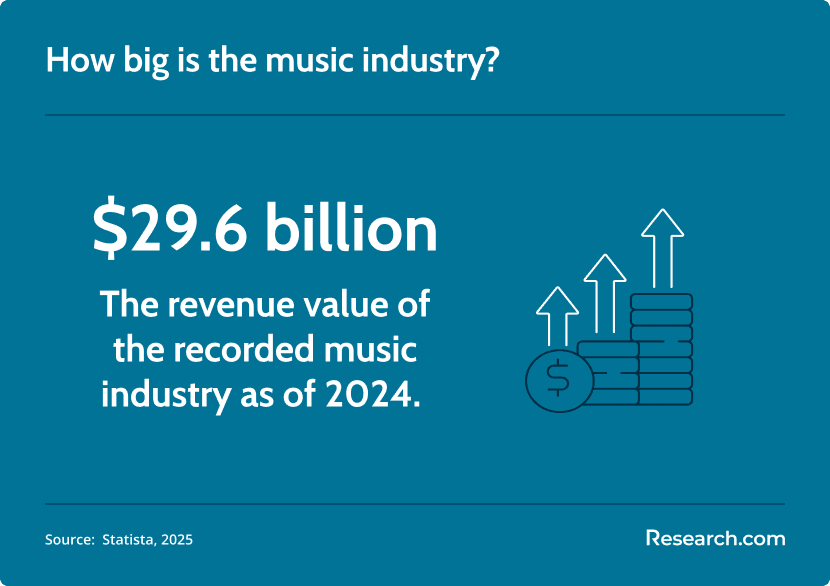
Online study may reduce relocation, commuting, and housing costs, but students should not assume it is automatically inexpensive. Audio programs can still require software, headphones, interfaces, microphones, storage, plugins, and other production tools. The recorded music market is large, with recorded music revenue reaching $29.6 billion, but individual earnings depend on skill, specialization, location, networking, portfolio quality, and the type of work pursued.
| Cost item | Why it matters | Question to ask before enrolling |
| Tuition | This is the largest published cost and varies widely by school and credential level | Is the quoted amount total program cost or an annual estimate? |
| Technology and software | Audio students may need DAWs, plugins, headphones, storage, and recording equipment | Which tools are included, discounted, loaned, or required out of pocket? |
| Fees | Online, technology, graduation, or course fees can change the true cost | What mandatory fees are not included in tuition? |
| Time away from work | Even flexible programs require project hours, revisions, and collaboration time | Can I realistically complete weekly production work with my job or gig schedule? |
| Transfer credits | Accepted transfer credits can reduce time and cost | How many credits will transfer, and will they apply to major requirements? |
What financial aid options are available for online audio and music students?
Students considering an online audio or music degree should compare federal aid eligibility, institutional scholarships, private scholarships, payment plans, employer support, and transfer-credit opportunities. Do not evaluate affordability by tuition alone; the better measure is total net cost after grants, scholarships, accepted credits, and required equipment.
Music-related scholarships may be based on need, talent, academic performance, field of study, location, or instrument. Examples include:
- SoundBetter Music Scholarship: Provides a $1,000 annual award to a US citizen or permanent resident enrolled in a music-related certificate or degree program. Applicants must be 18 or older and enrolled at least part-time in a recognized music field.
- The Nellie Love Butcher Music Scholarship: Offers a one-time award of up to $5,000 for students studying piano or voice, with preference for students attending the Duke Ellington School of the Arts.
- ESP Rock Guitar Scholarship: Sponsored by ESP Guitars, this $5,000-award supports intermediate or advanced rock guitar students enrolling in the AA or BM in Performance (Guitar) at Musicians Institute.
- Gospel Fest Music Arts Scholarship: Offered through the Saginaw Community Foundation for students pursuing musical arts. It is open to high school seniors, undergraduates, and graduate students who reside in Saginaw County. The scholarship amount varies.
- Sherrill L. Smith Music Scholarship: Designed for music majors with financial need who participate in extracurricular activities. Applicants must have a minimum 3.0 GPA and attend a Michigan college or university. The award amount varies.
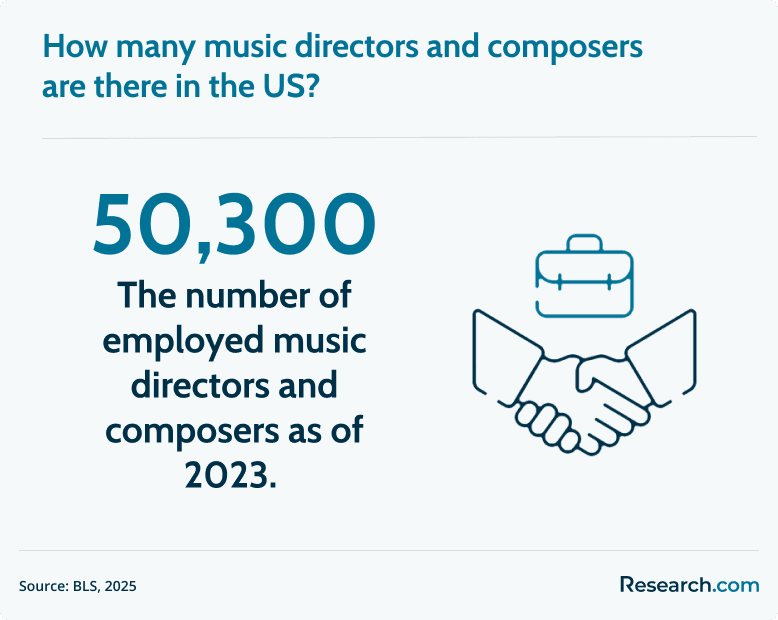
The US Bureau of Labor Statistics reports over 50,300 employed music directors and composers in the industry. Scholarships do not guarantee career outcomes, but reducing education costs can give students more room to invest in portfolio development, equipment, internships, and early career projects.
Students comparing cost-conscious options should also review the best value audio and music degree online programs.
What are the prerequisites for enrolling in an online audio and music degree?
Admissions requirements vary by school and credential level, but most online audio and music programs expect students to show academic readiness and a basic ability to work in a digital production environment. Some programs are open to beginners, while others may expect a portfolio, audition, or prior creative work.
- High School Diploma or Equivalent: Most associate and bachelor’s programs require a high school diploma, GED, or equivalent documentation.
- Basic Music Knowledge: Prior exposure to music theory, rhythm, chord progressions, scales, or instrumentation can make early coursework easier, even when it is not formally required.
- Digital Audio Workstation Experience: Familiarity with platforms such as Pro Tools, Logic Pro, Ableton Live, or similar software can help students start projects faster.
- Instrument or Vocal Ability: Programs with performance, composition, or songwriting elements may expect applicants to show basic to intermediate ability.
- Portfolio or Audition: Some schools may request original tracks, a demo reel, a performance video, or other creative samples.
- Ear Training Readiness: Recognizing intervals, rhythms, chords, and tonal relationships is especially useful for composition, mixing, and production coursework.
- Home Technology Setup: Online students should confirm computer specifications, internet needs, software access, headphones, microphones, interfaces, and storage requirements before the first term begins.
What courses are typically in an online audio and music degree?
Online audio and music programs usually combine creative development, technical production, ear training, and business knowledge. A strong curriculum should move beyond lectures and require students to produce, revise, mix, critique, and present actual work.
| Course area | What students learn | Why it matters professionally |
| Music Theory and Composition | Melody, harmony, rhythm, structure, arranging, and writing techniques | Supports songwriting, scoring, production decisions, and communication with musicians |
| Mixing and Mastering | Balancing tracks, EQ, compression, effects, loudness, and final polish | Essential for producers, engineers, and independent artists delivering finished audio |
| Sound Design | Creating, layering, editing, and manipulating sound for music and media | Used in games, film, television, advertising, podcasts, and immersive media |
| Music Business Fundamentals | Licensing, royalties, contracts, promotion, distribution, and monetization basics | Helps students understand the business side of creative work |
| Live Sound and Event Production | Stage setup, signal flow, microphones, mixers, PA systems, monitoring, and troubleshooting | Prepares students for concerts, theater, worship, events, and broadcast settings |
| Acoustics and Studio Design | How sound behaves in rooms and how recording environments can be improved | Useful for home studios, professional studios, podcasts, and location recording |
| AI and Emerging Technologies in Music | How newer tools may support editing, sound creation, workflow automation, and experimentation | Helps students evaluate technology without replacing core listening, writing, and production skills |
Students who want to pair production with more technical study may compare audio programs with fields such as a fast track industrial engineering online master's or review the shortest online artificial intelligence programs to understand how automation and systems thinking are shaping creative technology.
What types of specializations are available in online audio and music degree programs?
Specializations help students build a portfolio around a specific professional direction. This matters because an applicant for a live sound role, a game audio role, and a vocal production role will need different samples, vocabulary, software workflows, and technical strengths.
- Audio Engineering: Focuses on recording, editing, mixing, mastering, signal flow, studio tools, acoustics, and both live and recorded sound.
- Music Production: Emphasizes building songs and tracks from the ground up, including beats, arrangements, instrumentation, DAW workflows, and creative direction.
- Sound Design: Centers on sound effects, textures, sonic identities, field recording, synthesis, and audio manipulation for media, games, and immersive environments.
- Film and Game Scoring: Develops composition for visual and interactive media, including timing, emotional pacing, orchestration, cueing, and syncing music to picture or gameplay.
- Live Sound and Event Production: Trains students to set up, operate, and troubleshoot audio systems for concerts, festivals, theater, houses of worship, and live broadcasts.
- Music Business and Marketing: Covers artist management, copyright, licensing, distribution, branding, promotion, and revenue models. Students interested in the business side may also compare a fast-track MBA in marketing online.
- Voice and Vocal Production: Focuses on recording, comping, tuning, timing, editing, and processing vocals for music, podcasts, advertising, and other media.
Before choosing a specialization, review job descriptions for your target roles and compare them with the projects required in the program. A specialization should help you graduate with relevant work samples, not just a title on your transcript.
For reference, here are common skills for musicians for 2027:
How to choose the best online audio and music degree
A good online audio and music program should give you more than course access. It should help you create a credible body of work, learn current tools, get meaningful feedback, and understand how to enter a competitive creative labor market.
Key factors to compare before applying
- Accreditation and institutional legitimacy: Confirm that the school is accredited by a recognized accreditor and that the credential will be accepted for transfer, graduate study, or employer review where relevant.
- Curriculum fit: Match the courses to your intended path, whether that is audio engineering, music production, sound design, scoring, live sound, or music business.
- Faculty background: Look for instructors with practical experience in areas such as studio engineering, touring sound, film scoring, game audio, music business, or session work.
- Software and technology access: Ask whether the program uses Pro Tools, Ableton Live, Logic Pro X, FL Studio, Cubase, or other tools aligned with your goals.
- Hands-on production work: Prioritize programs that require tracks, mixes, sound effects, scores, session files, critiques, and portfolio pieces.
- Feedback quality: Online learning is strongest when students receive detailed critique, not only automated quizzes or discussion posts.
- Genre and media flexibility: If you care about EDM, hip-hop, film scoring, game sound, classical composition, podcasts, or live events, verify that the program supports that focus.
- Alumni and industry network: Ask about internships, mentor access, alumni activity, employer relationships, and portfolio showcases.
- Cost after aid: Compare total net price, not just tuition, and include gear, software, fees, and lost work time.
Questions to ask admissions before enrolling
| Question | Why it matters |
| Is the program fully online, or are any campus visits required? | Some students need a truly remote program because of work, location, or touring commitments. |
| What equipment and software must I purchase? | Hidden technology costs can change affordability. |
| How are recording, mixing, and studio projects completed online? | You need to know whether the program supports real production work, not only theory. |
| Will I graduate with a portfolio, demo reel, or completed tracks? | Creative employers and clients often evaluate samples of work. |
| Are internships, remote projects, or industry mentors available? | Practical experience can help bridge the gap between coursework and paid work. |
| How many of my credits can transfer? | Transfer policies can affect both timeline and cost. |
| What career services are available to online students? | Online students should receive more than a generic job board. |
Some students pair audio training with adjacent disciplines. For example, shortest sports psychology programs online may interest students focused on performance mindset, while a fast-track online bachelor's degree in entertainment business may fit students who want to work in management, promotion, licensing, or media entrepreneurship.
What career paths are available for graduates of online audio and music degrees?
Graduates can pursue creative, technical, and business-oriented roles across music, film, television, games, podcasts, events, advertising, education, and digital media. The degree can help, but hiring and freelance success usually depend heavily on portfolio quality, technical reliability, communication, credits, referrals, and the ability to solve real production problems.
| Career path | Typical responsibilities | Portfolio evidence that helps |
| Audio Engineer | Record, edit, mix, and master music, dialogue, podcasts, or other audio projects | Before-and-after mixes, session files, mastered tracks, and recording credits |
| Music Producer | Guide songs from concept through arrangement, recording, editing, and final mix | Completed songs, production credits, artist collaborations, and genre-specific tracks |
| Sound Designer | Create sound effects, atmospheres, impacts, transitions, and audio identities for media | Game audio reels, film scenes with redesigned sound, effects libraries, and field recordings |
| Film and Game Composer | Write music that supports emotion, pacing, story, and gameplay | Scored clips, cue sheets, mockups, orchestration examples, and interactive music demos |
| Live Sound Engineer | Set up and operate microphones, mixers, monitors, PA systems, and live audio workflows | Live event credits, stage plots, signal flow examples, and troubleshooting experience |
| Vocal Producer | Capture, edit, comp, tune, time-align, and creatively process vocal performances | Vocal production reels, polished vocal tracks, and session examples |
| Post-Production Audio Specialist | Edit dialogue, clean noise, balance ambience, place effects, and prepare audio for video | Dialogue edits, Foley examples, sound replacement scenes, and final mixes for picture |
| Broadcast Technician | Set up, monitor, and troubleshoot audio systems for live or recorded broadcasts | Broadcast credits, technical setup documentation, and examples of live production work |
For additional context, here are the best paying audio and music-related jobs in the US:
What is the job outlook for graduates with an online audio and music degree?
The job outlook depends on the specific role. Audio and music careers do not all move in the same direction: performance, composition, live sound, broadcast technology, and production each have different hiring patterns and levels of competition.
According to the US Bureau of Labor Statistics (2025), the outlook by focus area includes:
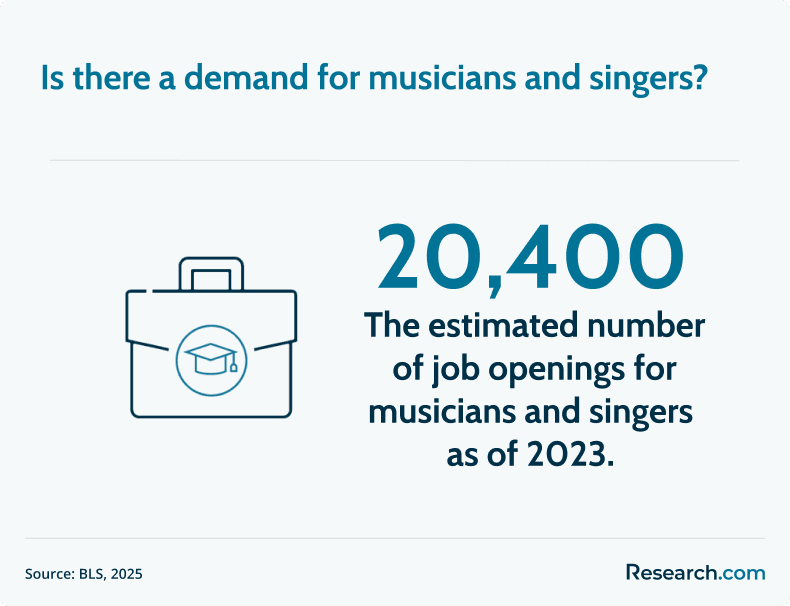
- Performance and Recording (Musicians and Singers): Employment is projected to grow 2% from 2023 to 2033, which is slightly slower than the national average across all occupations. About 20,400 job openings are expected each year, largely because workers leave the occupation.
- Composition and Direction (Music Directors and Composers): Employment is projected to grow 3% from 2023 to 2033, matching the national average. About 5,100 openings are projected each year due to new roles and turnover.
- Audio Engineering and Production (Sound Engineering Technicians): Employment for broadcast, sound, and video technicians is projected to grow 3% through 2033. About 12,900 openings are expected each year, largely due to retirements and career changes.
These figures suggest steady but not guaranteed opportunity. Students should prepare for a market where project work, freelancing, networking, specialization, and portfolio strength often matter as much as the credential itself.
How can complementary creative disciplines strengthen an online audio and music degree?
Audio work often supports a larger story, product, campaign, performance, or media experience. That is why complementary creative skills can make an audio graduate more versatile. Writing, visual design, cinematography, photography, marketing, and interactive media can all help students understand how sound functions within a complete creative project.
Creative writing can be especially useful for students interested in podcast production, concept albums, film scoring, game audio, and narrative sound design. Students exploring that route can compare audio training with options such as what can you do with a masters in creative writing or the cheapest online MFA creative writing programs.
Visual and digital disciplines can also support audio careers. Students interested in media production may compare best online digital photography degrees with audio programs if they want a broader creative production skill set.
How are internships and practical experiences handled in online audio and music programs?
Online audio programs can still include practical work, but students need to examine how each school makes that happen. Strong programs use project-based assignments, virtual collaboration, remote critique, portfolio reviews, faculty feedback, and sometimes industry partnerships or internship support.
Before enrolling, ask whether internship support is available to online students, whether remote internships count for credit, and whether the school helps students find production projects with artists, studios, media companies, or community organizations. If a program does not include formal internships, students should plan to build experience through freelance projects, local venues, student films, podcasts, church or community audio, game jams, or independent artist collaborations.
What additional certifications can boost an audio and music career?
Certifications can supplement a degree when they validate practical software or technical skills. They are most useful when connected to a specific role, such as Pro Tools-based studio work, live sound, post-production, or media technology. A certificate should not replace a portfolio, but it can help signal that you understand a tool or workflow used in professional settings.
When comparing options, look for certifications that match job postings in your target area. Students who want to evaluate credentials by career value can also review what certificate programs make the most money.
Common mistakes to avoid when choosing an online audio and music degree
| Mistake | Why it can hurt you | Better approach |
| Choosing based only on the school name | A recognizable brand does not guarantee the right curriculum, cost, or portfolio support for your goals | Compare courses, projects, faculty, software, cost, and graduate work samples |
| Ignoring accreditation | Accreditation can affect transfer credit, aid eligibility, graduate school options, and employer confidence | Verify the accreditor and check whether the credential fits your future plans |
| Underestimating equipment costs | Audio students may need hardware, software, plugins, headphones, and storage beyond tuition | Request a full technology and supply list before committing |
| Assuming online means easier | Production assignments can be time-intensive and require disciplined independent work | Review weekly workload expectations and project deadlines |
| Graduating without a portfolio strategy | Creative employers and clients often want proof of work, not only a transcript | Build a reel, finished tracks, mixes, sound design samples, and credits throughout the program |
| Not checking career support for online students | Some schools offer stronger support to campus students than remote learners | Ask specifically about online access to advising, internships, showcases, mentors, and alumni networks |
| Assuming salary outcomes are guaranteed | Music and audio careers vary widely by role, market, experience, and portfolio | Use labor data as context, then build skills and samples aligned with real job postings |
Is an online audio and music degree worth it?
An online audio and music degree can be worth it if you need structured training, faculty feedback, portfolio development, and a credential from an accredited institution. It can be especially valuable for students who cannot relocate, are already working in music, or need a flexible schedule while building technical skills.
It may not be the right choice if you only need a single software skill, already have strong industry experience, or would need to borrow more than you can reasonably manage. In those cases, shorter courses, certifications, apprenticeships, internships, or local studio experience may offer a better first step.
| Choose an online audio and music degree if... | Consider another path if... |
| You want a structured curriculum across theory, production, engineering, and business | You only need to learn one DAW or one narrow production skill |
| You need flexibility because of work, family, location, touring, or freelancing | You require daily access to large studios, live rooms, and in-person ensembles |
| You want faculty critique and a portfolio developed over multiple terms | You already have strong credits and mainly need targeted professional networking |
| You are comparing accredited programs with manageable total costs | The program cost would create debt that does not fit your expected career path |
Key Insights
- Program fit matters more than the title. Audio production, music production, sound design, scoring, and live sound require different portfolios and technical strengths.
- Costs vary widely. Listed bachelor’s options range from $62,150 to $91,020, while listed associate options range from $34,053 to $39,100.
- Timeline depends on credential level. Bachelor’s programs in this ranking take 4 years, while associate options take 18-30 months or 2 years.
- Accreditation should be verified before applying. It can affect transfer credit, financial aid, graduate study, and employer confidence.
- A portfolio is essential. Finished tracks, mixes, sound design reels, scoring clips, live sound experience, and production credits can carry significant weight in creative hiring.
- Online study works best for disciplined students. Flexibility is valuable, but remote audio students must manage software, equipment, collaboration, and production deadlines independently.
- Job growth is steady, not automatic. BLS projections show 2% growth for musicians and singers, 3% for music directors and composers, and 3% for broadcast, sound, and video technicians from 2023 to 2033.
- The best decision is financial and creative. Choose the program that gives you relevant skills, credible feedback, practical projects, manageable cost, and a realistic path toward the kind of audio work you want to do.
References:
- Academy of Art University. (n.d.). Sound design AA degree. Academyart.edu. Retrieved 22 July 2025.
- Atlanta Institute of Music and Media. (n.d.). Music production and audio for media degree. Aimm.edu. Retrieved 22 July 2025.
- Berklee Online. (n.d.). Electronic music production and sound design bachelor’s degree. Online.berklee.edu. Retrieved 22 July 2025.
- Los Angeles Film School. (n.d.). Bachelor’s in audio production (online). Lafilm.edu. Retrieved 22 July 2025.
- Rocky Mountain College of Art + Design. (n.d.). Online music production program. Rmcad.edu. Retrieved 22 July 2025.
- SoundBetter. (n.d.). Music scholarship opportunities. SoundBetter scholarship page; Soundbetter.com. Retrieved 22 July 2025.
- Statista. (2024). Global revenue of the music industry. Statista.com. Retrieved 22 July 2025.
- US Bureau of Labor Statistics. (n.d.). Broadcast and sound engineering technicians. Bls.gov. Retrieved 22 July 2025.
- US Bureau of Labor Statistics. (n.d.). Music directors and composers. Bls.gov. Retrieved 22 July 2025.
- ZipRecruiter. (n.d.). Audio salary statistics. Ziprecruiter.com. Retrieved 22 July 2025.
- Zippia. (2025). Musician skills overview. Zippia.com. Retrieved 22 July 2025.
Other Things You Need to Know About Online and Music Degree Programs
Most programs require a computer, digital audio workstation software, headphones or studio monitors, an audio interface, and a MIDI keyboard. Some courses also require a microphone and stable internet for file uploads, live critiques, and remote recording assignments in 2027.
Admission requirements typically include a high school diploma or equivalent, a completed application, and possibly an audition or portfolio. Some programs may also require SAT/ACT scores. Check specific school websites for unique prerequisites and deadlines for 2027.