
2027 Best Online Interior Design Degree Programs

Co-Founder and Chief Data Scientist
Choosing an online interior design degree is not just about finding a flexible program. It is about selecting training that can help you build a portfolio, understand codes and materials, use professional design software, and meet employer or licensing expectations in the market where you plan to work. The right program can prepare you for residential, commercial, hospitality, healthcare, retail, sustainable design, or related creative careers; the wrong one can leave you with credits that do not transfer, limited portfolio support, or coursework that does not align with professional standards.
This guide is for students comparing accredited online interior design programs, working adults who need remote study options, career changers building design skills, and professionals considering advanced credentials. You will learn what online interior design programs include, how long they take, what they cost, how online and campus formats compare, what to check before enrolling, and how to evaluate whether the investment makes sense for your goals.
Quick Answer: Is an Online Interior Design Degree Worth Considering?
An online interior design degree can be a practical option if the program is accredited, includes studio-based projects, teaches CAD and other industry tools, supports portfolio development, and fits your schedule and budget. It is especially useful for students who need flexibility but still want structured design training. However, students should confirm accreditation, internship options, software requirements, state licensing rules, total costs, and career support before enrolling.
What are the main benefits of earning an interior design degree online?
- Online study can make interior design education more accessible for students balancing work, family, or location constraints.
- The demand for interior designers is expected to increase by 3% from 2024 to 2034.
- Many online programs teach professional tools, design theory, code awareness, and portfolio-building through virtual studios and project critiques.
What can I expect from an online interior design degree program?
An online interior design program typically combines creative design training with technical, professional, and code-related coursework. Students usually study design principles, space planning, color theory, lighting, materials, sustainable design, building codes, and computer-aided design. Because interior design is a visual and spatial field, strong programs also require projects that show how students apply concepts to real interiors.
Online does not mean theory-only. Many programs use virtual studios, recorded demonstrations, live critiques, digital pinups, 3D modeling assignments, and portfolio reviews to help students practice the design process. You may be asked to complete concept boards, floor plans, rendered perspectives, furniture layouts, material schedules, and client-style presentations from home.
| Program feature | Why it matters | What to check before enrolling |
| Studio projects | Interior design employers often want to see applied work, not only completed coursework. | Ask whether projects become portfolio pieces and whether critiques are live, recorded, or asynchronous. |
| Software training | CAD, 3D modeling, rendering, and digital presentation skills are central to modern design practice. | Confirm which programs are used, whether licenses are included, and what computer specifications are required. |
| Codes and regulations | Designers must understand safety, accessibility, and building requirements. | Review whether courses cover building codes, accessibility standards, and professional practice. |
| Portfolio support | A polished portfolio can be more important than a transcript for entry-level hiring. | Look for formal portfolio courses, faculty reviews, and career-service feedback. |
| Accreditation | Accreditation can affect credibility, transferability, and preparation for professional pathways. | Verify the accreditor directly rather than relying only on marketing language. |
Where can I work with an online degree in interior design?
Graduates of online interior design programs can work in several design and built-environment settings, depending on their degree level, portfolio, technical ability, location, and experience. Common employment settings include:
- Interior design studios and full-service design firms
- Architecture firms with interiors departments
- Freelance, independent, or boutique design practices
- Furniture, home furnishings, showroom, and retail design companies
- Real estate development and staging-related businesses
- Corporate workplace, hospitality, healthcare, or commercial design teams
Students should match the program to the type of work they want. For example, someone aiming for commercial design should prioritize codes, contract documents, lighting, materials, sustainability, and team-based project workflows. Someone planning to freelance in residential design may need stronger coursework in client communication, budgeting, sourcing, presentation, and business practices.
How much can I make with an online degree in interior design?
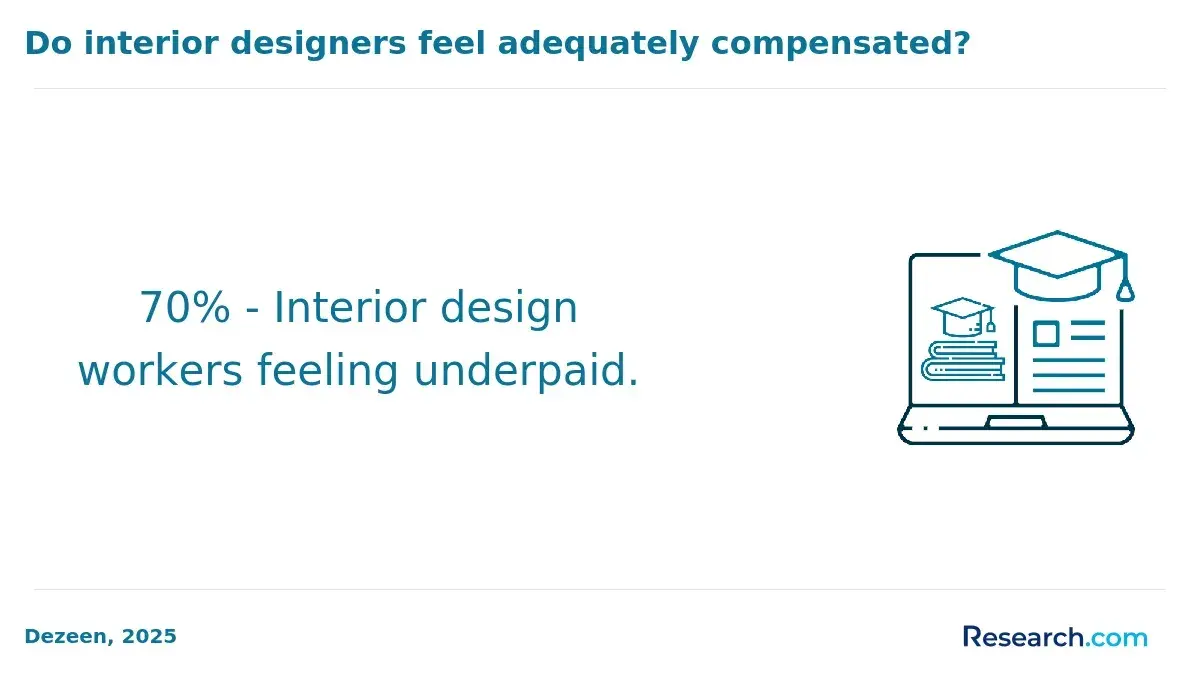
According to our research, interior designers earn an average salary of $62,510 per year. Earnings vary by experience, location, employer type, project sector, portfolio quality, software proficiency, and whether the designer works independently or for a firm. Entry-level roles commonly pay between $40,000 and $50,000 per year, especially in junior design, assistant design, or retail-related roles. Mid-level interior designers may earn between $50,000 and $70,000 annually. Senior designers and professionals in specialized areas such as corporate, hospitality, or high-end residential design may earn more, but salaries are never guaranteed by the degree alone.
- 2027 List of the Best Online Interior Design Programs
- How long does it take to complete an online interior design program?
- How does an online interior design program compare to an on-campus program?
- What is the average cost of an online interior design program?
- What are the financial aid options for students enrolling in an online interior design program?
- What are the prerequisites for enrolling in an online interior design degree program?
- What courses are typically in an online interior design program?
- What skills are essential for a successful career in interior design?
- What are the emerging trends influencing interior design education?
- What types of specializations are available in an online interior design program?
- What are the potential challenges of pursuing an online interior design degree?
- Can additional certifications boost my interior design career?
- How do I choose the best online interior design program?
- Can further academic pursuits accelerate my interior design career?
- How do online interior design programs ensure practical, hands-on skill development?
- Do online interior design programs offer internship or work placement opportunities?
- Is an Online Interior Design Degree a Worthy Investment?
- What career paths are available for graduates of online interior design degree programs?
- How can online interior design graduates accelerate long-term career advancement?
- What is the job market for graduates with an online degree in interior design?
- Can I Pursue Other Design Careers with Skills from an Online Interior Design Program?
- Is an Online Associate's Degree a Viable Fast-Track to a Career in Interior Design?
- What is the future outlook for online interior design education?
- How can data science insights drive innovative interior design solutions?
- Can online interior design programs boost entrepreneurial and business skills?
- What complementary online degrees can enhance my interior design career?
- What support and networking opportunities do online interior design programs offer?
- Do Online Interior Design Programs Prepare You for Licensing Requirements?
- Do Employers Value Online Interior Design Degrees?
- How can AI revolutionize interior design outcomes?
- How are technology and innovation shaping interior design?
2027 List of the Best Online Interior Design Programs
How do we rank schools?
Research.com evaluates schools and programs using a structured research process designed to help readers compare education options more confidently. Our ranking work follows our methodology and uses established education data sources, including:
- IPEDS database
- Peterson's database, including the Distance Learning Licensed Data Set
- College Scorecard database
- National Center for Education Statistics
Use this list as a starting point, not as the only basis for your decision. Accreditation, portfolio expectations, internship access, total cost, software requirements, and state licensing rules should all be reviewed before you apply.
| School | Program length | Cost per credit or tuition | Credits | Accreditation listed |
| New York School of Interior Design | Four Years | $1,300 per credit | 132 | Council for Interior Design Accreditation (CIDA) |
| Ohio University | Four Years | $319 (in-state), $324 (out-of-state). | 120 to 128 | CIDA |
| Berkeley College | Two to four years | $920 | 120 | CIDA |
| Rocky Mountain College of Art and Design | Four Years | $740 | 125 | CIDA |
| Yorkville University | Three to four years | $397 | 120 | CIDA |
| Academy of Art University | Four Years | $1,239 | 120 | CIDA |
| Savannah College of Art and Design | Four to five years | $914 | 180 | CIDA |
| Ball State University | Two to four years | $589 (in-state), $821 (out-of-state). | 33 to 73 | CIDA |
| De Montfort University | Three Years | You may contact the bursar’s office for the tuition costs. | 120 | Small Business Charter Accreditation |
| New York Institute of Art and Design | Four Years | $899 | 120 | Better Business Bureau |
1. New York School of Interior Design
The New York School of Interior Design (NYSID) offers undergraduate, graduate, and certificate pathways for students at different stages of design training. Its Bachelor of Fine Arts in Interior Design is built for students seeking a broad professional foundation, with coursework in design principles, spatial planning, technology, and applied studio work. The program is best suited for learners who want a design-focused institution and are prepared for a substantial credit load.
- Program Length: Four Years
- Tracks/concentrations: N/A
- Cost per Credit/Tuition: $1,300 per credit
- Required Credits to Graduate: 132
- Accreditation: Council for Interior Design Accreditation (CIDA)
2. Ohio University
Ohio University offers an Interior Architecture program that blends design thinking, technical instruction, and sustainability-focused coursework. Students study areas such as design analysis, programming, space planning, lighting design, and environmental impact. This option may appeal to students looking for a public university pathway with comparatively lower listed per-credit tuition.
- Program Length: Four Years
- Tracks/concentrations: N/A
- Cost per Credit/Tuition: $319 (in-state), $324 (out-of-state).
- Required Credits to Graduate: 120 to 128
- Accreditation: CIDA
3. Berkeley College
Berkeley College provides interior design options at the associate, bachelor’s, and certificate levels. The curriculum emphasizes design theory, studio application, computer-aided design, lighting, materials, space planning, and sustainability. Students who want more than one credential level to choose from may find this structure useful.
- Program Length: Two to four years
- Tracks/concentrations: N/A
- Cost per Credit/Tuition: $920
- Required Credits to Graduate: 120
- Accreditation: CIDA
4. Rocky Mountain College of Art and Design
Rocky Mountain College of Art + Design (RMCAD) offers an online interior design program that includes hand drafting, CAD, materials sourcing, codes, regulations, virtual studio assignments, and real-world-style design projects. Its sustainable design concentration may be useful for students who want to work with environmentally conscious materials and design strategies.
- Program Length: Four Years
- Tracks/concentrations: sustainable design
- Cost per Credit/Tuition: $740
- Required Credits to Graduate: 125
- Accreditation: CIDA
5. Yorkville University
Yorkville University offers an online Bachelor of Interior Design described as the only CIDA-accredited online degree in Canada that does not require residency. The program includes design theory, digital rendering, codes, sustainability, and an NCIDQ exam preparation course. It may be especially relevant for students interested in sustainable, health-conscious, and community-oriented design solutions.
- Program Length: Three to four years
- Tracks/concentrations: N/A
- Cost per Credit/Tuition: $397
- Required Credits to Graduate: 120
- Accreditation: CIDA
6. Academy of Art University
The Academy of Art University offers online study in Interior Architecture and Design, with coursework in architectural concepts, space planning, materials, and sustainable design. Students complete virtual studio work and design projects intended to build both technical and creative ability. The university also offers an online master of fine arts option for students planning graduate-level study.
- Program Length: Four Years
- Tracks/concentrations: architecture and design
- Cost per Credit/Tuition: $1,239
- Required Credits to Graduate: 120
- Accreditation: CIDA
7. Savannah College of Art and Design
Savannah College of Art and Design (SCAD) provides online interior design education with coursework in space planning, color, lighting, materials, sustainability, CAD, and 3D modeling. SCAD also offers an MFA in interior design and an MA in interior design, which may suit students who want to continue into graduate study or develop advanced portfolio work for residential, commercial, or hospitality design.
- Program Length: Four to five years
- Tracks/concentrations: N/A
- Cost per Credit/Tuition: $914
- Required Credits to Graduate: 180
- Accreditation: CIDA
8. Ball State University
Ball State University offers an online Master of Science in Interior Design for students or professionals seeking advanced study. The curriculum focuses on research-based design, sustainability, human-environment interaction, advanced design theory, and technology. Because it is a graduate option, applicants should compare the 33 to 73 required credits with their prior academic background and career goals.
- Program Length: Two to four years
- Tracks/concentrations: N/A
- Cost per Credit/Tuition: $589 (in-state), $821 (out-of-state).
- Required Credits to Graduate: 33 to 73
- Accreditation: CIDA
9. De Montfort University
De Montfort University (DMU) offers a BA in Interior Design with an emphasis on creative development, visual communication, drawing, 3D modeling, computing, CAD, video-model scope, and virtual reality. Students complete studio projects and design challenges tied to both residential and commercial interiors.
- Program Length: Three Years
- Tracks/concentrations: N/A
- Cost per Credit/Tuition: You may contact the bursar’s office for the tuition costs.
- Required Credits to Graduate: 120
- Accreditation: Small Business Charter Accreditation
10. New York Institute of Art and Design
The New York Institute of Art and Design (NYIAD) offers an online interior design course for students seeking flexible professional training. Topics include design theory, space planning, color schemes, furniture selection, and client communication. Because the listed accreditation differs from CIDA, prospective students should verify how the credential aligns with their employment or licensing goals.
- Program Length: Four Years
- Tracks/concentrations: N/A
- Cost per Credit/Tuition: $899
- Required Credits to Graduate: 120
- Accreditation: Better Business Bureau
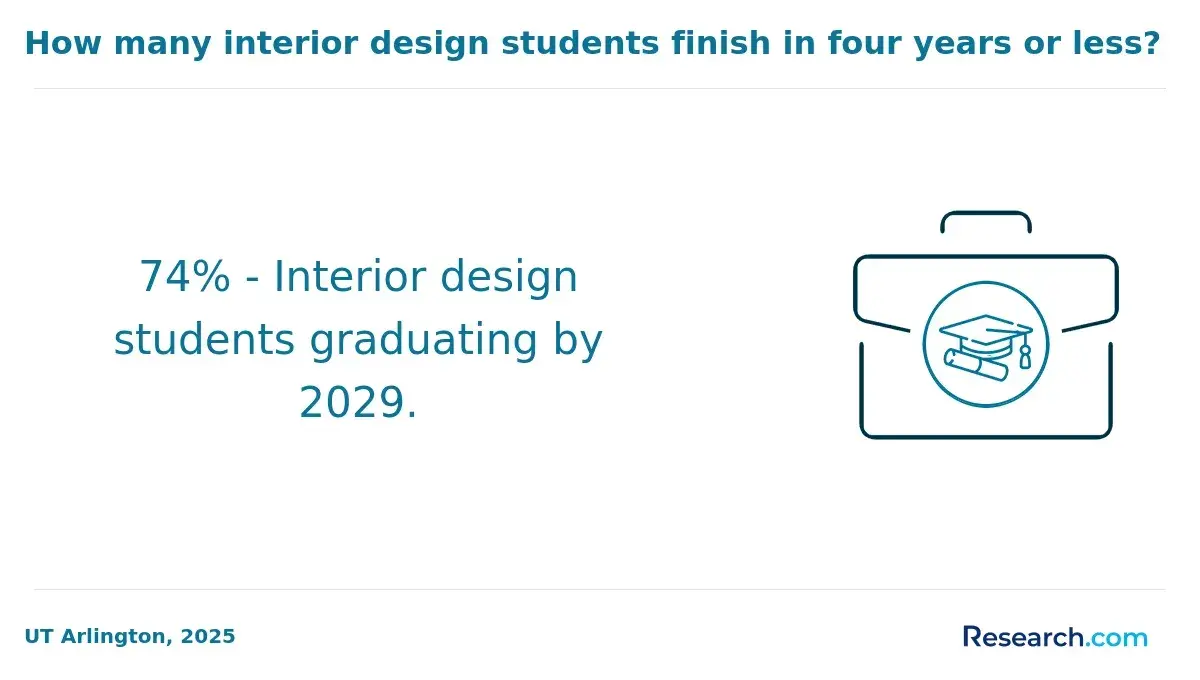
How long does it take to complete an online interior design program?
Completion time depends on credential level, enrollment status, transfer credits, course sequencing, and whether the program uses self-paced or cohort-based terms.
| Credential | Typical full-time length | Best for | Key trade-off |
| Certificate or nondegree course | Varies by provider | Students testing the field or adding targeted skills | May not carry the same weight as a degree for some employers or licensing pathways. |
| Associate degree | About two years | Students seeking a faster entry point into assistant, junior, retail, or portfolio-building roles | May provide less depth than a bachelor’s program. |
| Bachelor’s degree | Three to four years | Students seeking broader professional preparation and stronger portfolio development | Requires a larger time and financial commitment. |
| Master’s degree | One and a half to two years | Professionals pursuing advanced expertise, research, teaching, or leadership roles | Often requires prior college study and may not be necessary for every design career. |
Students comparing graduate-level online options often review costs across fields; for example, those researching the cheapest MPH programs online may use a similar cost-benefit framework when evaluating advanced interior design programs.
How does an online interior design program compare to an on-campus program?
Online and on-campus interior design programs can both be rigorous, but they suit different learning needs. The best choice depends on your schedule, learning style, access to studios, budget, and need for in-person collaboration.
| Factor | Online interior design program | On-campus interior design program |
| Flexibility | Often better for students who work, live far from campus, or need remote access. | Better for students who want fixed schedules and daily in-person structure. |
| Studio experience | Uses virtual critiques, digital submissions, remote collaboration, and home-based project work. | Offers direct access to physical studios, workshops, materials labs, and face-to-face critiques. |
| Cost considerations | May reduce commuting and housing expenses, although software and technology costs can be significant. | May involve housing, transportation, campus fees, and higher living costs. |
| Networking | Depends heavily on virtual events, alumni access, online critiques, and internship support. | Can make informal networking easier through studios, campus events, and local firm relationships. |
| Best fit | Self-directed learners who can manage deadlines and technology independently. | Students who prefer in-person accountability, materials access, and studio immersion. |
As with an MFA online degree, the online format can be cost-effective and flexible, but students should not choose it only because it is convenient. Interior design requires critique, iteration, and portfolio development, so the quality of the learning environment matters.
What is the average cost of an online interior design program?
Online interior design program costs vary widely by school, degree level, credit requirement, residency status, technology fees, and required supplies. Cost comparisons should include more than tuition, similar to evaluating how much does a liberal arts degree cost. At Ohio University, an online undergraduate program in interior design costs about $38,280, while the same program costs $92,500 at RMCAD and around $71,610 at Yorkville University. An online MA/MS in interior design at BSU costs $20,000 (in-state) and $27,000 (out-of-state).
Students should also budget for textbooks, software, computer hardware, drafting materials, sample materials, printing, portfolio tools, and possible travel for internships or events. Financial aid, scholarships, payment plans, employer support, and transfer credits may reduce out-of-pocket costs.
| Cost category | Why students overlook it | Question to ask |
| Software and technology | Design software may require a capable computer and paid access. | Are software licenses included in tuition or purchased separately? |
| Materials and samples | Online students may need to source supplies independently. | Does the school provide a materials list before enrollment? |
| Portfolio production | Final portfolios may require printing, hosting, photography, or presentation tools. | What portfolio platform or format does the program recommend? |
| Fees | Online, technology, graduation, or course fees may not appear in headline tuition. | Can the bursar provide a full estimated cost of attendance? |
| Time away from work | Studio courses can be time-intensive even when asynchronous. | How many hours per week should students expect per course? |
What are the financial aid options for students enrolling in an online interior design program?
Financial aid can make an online interior design program more manageable, but eligibility depends on the institution, credential type, enrollment status, citizenship or residency rules, and whether the program participates in aid programs. Common options include:
- Grants: Federal grants, including the Pell Grant, are typically need-based and do not require repayment. Students can begin by completing the Free Application for Federal Student Aid (FAFSA).
- Loans: According to statistics, the average public university student borrows $32,362 to obtain a bachelor’s degree in the U.S. Federal loan options may include Direct Subsidized Loans, Direct Unsubsidized Loans, and PLUS Loans. Loans must be repaid with interest.
- Institutional Scholarships: Schools may offer merit-based, need-based, program-specific, or demographic scholarships for online students.
- Federal Work-Study: Eligible students with financial need may be able to work part time through this program while enrolled.
- GI Bill: Veterans and active-duty service members may qualify for education benefits that help pay tuition and related costs. Students reviewing military-friendly online options may also compare cheap education degrees online for broader affordability research.
- Professional and Industry Grants: Interior design organizations such as the American Society of Interior Designers (ASID) or the International Interior Design Association (IIDA) may provide grants, scholarships, or student funding opportunities.
What are the prerequisites for enrolling in an online interior design degree program?
Admission requirements differ by school and degree level, but most online interior design programs ask for a combination of academic documents, application materials, and technology readiness. Common prerequisites include:
- High school diploma: Undergraduate programs generally require a high school diploma or GED. Some schools may prefer applicants with art, design, math, or visual communication coursework.
- Completed application form: Applicants usually submit personal information, education history, and program-specific responses.
- Non-refundable application fee: Some schools charge a processing fee when the application is submitted.
- Proof of English proficiency: Non-native English speakers may need TOEFL or IELTS scores, depending on institutional policy.
- Technical requirements: Online students need reliable internet access, basic computer skills, and often a computer capable of running design software.
- Undergraduate degree for graduate programs: Master’s applicants typically submit college transcripts and may need to meet minimum GPA or portfolio standards.
What courses are typically in an online interior design program?
Interior design curricula combine visual design, technical documentation, human-centered planning, and professional practice. While course names vary, students commonly encounter the following subjects:
- Design Theory and Practice: Introduces design methods, historical styles, composition, and the process of translating ideas into interior environments.
- Color Theory: Covers color relationships, psychology, mood, contrast, and how color affects spatial experience.
- Space Planning: Teaches students to organize rooms, circulation paths, furniture layouts, and functional zones.
- Materials and Finishes: Examines flooring, wall treatments, textiles, surfaces, durability, maintenance, and sustainability considerations.
- Lighting Design: Explores natural and artificial lighting, fixture selection, lighting plans, and the relationship between light and atmosphere.
- Computer-Aided Design (CAD): Builds technical drafting and digital documentation skills used in professional design workflows.
- Sustainable Design: Focuses on environmentally responsible materials, energy-aware planning, and resource-conscious design strategies. Related construction and sustainability concepts may also appear in construction trade school online programs.
- Building Codes and Regulations: Helps students understand safety, accessibility, egress, and code-related constraints affecting interior spaces.
What skills are essential for a successful career in interior design?
Interior designers need more than a good eye. They must translate client goals into safe, functional, attractive, and buildable spaces while managing budgets, timelines, materials, and communication with contractors or vendors.
- Creativity and visual judgment: Ability to develop concepts that are both original and appropriate for the client or space.
- Spatial awareness: Skill in understanding scale, circulation, proportion, furniture placement, and room function.
- Color, texture, and pattern knowledge: Ability to combine surfaces and finishes in balanced, intentional ways.
- Material knowledge: Understanding of durability, sustainability, cost, maintenance, and appropriate applications.
- CAD and 3D modeling proficiency: Ability to create drawings, renderings, models, and presentation visuals.
- Technical drawing: Skill in producing plans, elevations, sections, details, and documentation.
- Project management: Ability to coordinate timelines, budgets, deliverables, revisions, and stakeholder expectations.
- Communication skills: Clear writing, speaking, listening, and presentation ability when working with clients, faculty, vendors, and construction teams.
- Problem-solving: Capacity to adapt when budgets change, materials are unavailable, codes restrict a design, or clients revise priorities.
- Attention to detail: Precision in measurements, specifications, drawings, and installation-related decisions.
- Code and safety awareness: Understanding of building regulations, accessibility, and safety requirements.
- Client management and presentation skills: Ability to explain design choices, accept feedback, and guide decision-making professionally.
Many of these skills overlap with other creative fields. Students comparing design careers may also find value in reviewing the graphic design career path.
What are the emerging trends influencing interior design education?
Interior design education is shifting as clients, employers, and building users expect spaces to be healthier, more sustainable, more inclusive, and more technology-enabled. Strong online programs increasingly reflect these priorities in studio briefs, software training, research assignments, and professional practice courses.
Sustainability and resource-conscious design
Students are learning to evaluate materials, lifecycle impact, energy use, indoor environmental quality, and adaptive reuse. Sustainable design is no longer a niche concern; it increasingly shapes residential, commercial, hospitality, and institutional design conversations.
Health, wellness, and human-centered interiors
Programs are giving more attention to wellness, comfort, daylight, acoustics, air quality, ergonomics, and biophilic design. These concepts help designers create spaces that support how people live, work, recover, learn, and gather.
Inclusive and culturally responsive design
Interior design students are increasingly asked to consider accessibility, cultural context, aging populations, neurodiversity, and user needs across different communities. This approach helps graduates design for a wider range of people rather than relying on narrow assumptions about users.
Interdisciplinary creative pathways
Interior design overlaps with architecture, industrial design, digital media, product design, and visual communication. Students still exploring their academic direction may compare related options through Research.com’s guide to the best majors.
What types of specializations are available in an online interior design program?
Specializations help students align coursework and portfolio projects with a target market. Not every school offers every concentration, so review electives, studio themes, faculty expertise, and internship relationships before choosing a program.
- Residential Design: Focuses on homes, apartments, vacation properties, kitchens, baths, furniture layouts, finishes, and client lifestyle needs.
- Commercial Design: Covers offices, restaurants, retail, hotels, and other business settings where branding, function, circulation, and user experience are central.
- Hospitality Design: Prepares students for hotels, resorts, lounges, restaurants, entertainment venues, and guest-centered environments.
- Sustainable Design: Emphasizes green materials, energy-aware solutions, environmental responsibility, and resource-conscious design. Students interested in environmental topics may also explore a forestry degree online as a related sustainability-focused field.
- Healthcare Design: Addresses hospitals, clinics, senior living spaces, patient comfort, safety, accessibility, and operational efficiency.
- Retail Design: Focuses on store layouts, displays, brand experience, visual merchandising, customer movement, and product presentation.
- Lighting Design: Concentrates on functional, decorative, architectural, and mood-based lighting strategies.
What are the potential challenges of pursuing an online interior design degree?
Online interior design study can be effective, but it is demanding. Students must manage deadlines, technology, design revisions, critique feedback, and self-directed studio work without the daily structure of a physical campus. Limited face-to-face collaboration can also make networking harder unless the program intentionally offers virtual events, group projects, and mentor access.
| Common challenge | Why it matters | Better approach |
| Underestimating studio workload | Design projects often take more time than traditional reading-based courses. | Ask programs how many weekly hours students spend on studio assignments. |
| Weak technology setup | Design software may run poorly on basic computers. | Review hardware and software requirements before enrollment. |
| Limited critique participation | Feedback is essential for improving design work. | Choose programs with regular instructor, peer, and portfolio critiques. |
| Few networking opportunities | Connections can help with internships, freelance work, and first jobs. | Look for alumni groups, virtual events, faculty mentorship, and career services. |
| Choosing based only on convenience | A flexible program may still lack strong outcomes or accreditation alignment. | Compare accreditation, curriculum depth, portfolio quality, and career support. |
Students comparing creative remote programs may also review how project-based learning works in an online graphic design degree.
Can additional certifications boost my interior design career?
Additional certifications can strengthen an interior design resume when they verify relevant, marketable skills. They may be especially useful in areas such as software, sustainable design, project management, lighting, accessibility, or specialized materials. A certification does not replace a strong portfolio, but it can help show employers or clients that you have current technical knowledge.
When comparing credentials, prioritize certifications that are recognized by employers in your target niche. Students who want broader credential ideas can review Research.com’s guide to certifications you can get online.
How do I choose the best online interior design program?
The best online interior design program is the one that fits your career objective, budget, learning style, and credential needs. Do not rely on ranking position alone. Use the following checklist before applying:
- Verify accreditation: Confirm institutional accreditation and, when relevant to your goals, programmatic accreditation such as CIDA. Check the accreditor directly.
- Review the curriculum: Look for design theory, studio courses, space planning, materials, lighting, CAD, sustainability, codes, and professional practice.
- Assess faculty experience: Faculty with design, architecture, commercial, residential, or specialized practice backgrounds can provide practical critique and industry perspective.
- Compare full cost: Include tuition, fees, software, supplies, computer equipment, portfolio expenses, and lost work time.
- Ask about portfolio development: A program should help you graduate with work that demonstrates design process, technical documentation, and presentation ability.
- Check career services: Internship help, employer connections, alumni networks, mock interviews, and portfolio reviews can affect your transition into the field. Students evaluating career-service quality in other online fields may compare similar factors in online master degree programs in counseling.
| Question to ask | Why it matters |
| Is the program accredited, and by whom? | Accreditation can affect credibility, transfer options, financial aid, and licensing preparation. |
| What software will I learn? | Employers often expect digital drafting, modeling, rendering, and presentation skills. |
| How are studio critiques delivered online? | Regular critique is central to design growth. |
| Will I graduate with a portfolio? | Portfolio quality can influence internships, freelance opportunities, and hiring. |
| Does the program support internships or field experience? | Practical exposure can help students understand client work, construction coordination, and professional expectations. |
| Does the curriculum align with licensing rules in my state or country? | Interior design regulation varies, so students must verify local requirements. |
Can further academic pursuits accelerate my interior design career?
Further study can help interior designers move into specialized practice, research, teaching, management, or leadership roles. A graduate degree may be useful for professionals interested in advanced design theory, human-centered research, sustainable design, smart buildings, or academic work. However, it is not necessary for every interior design career, so compare the cost and time commitment against your goals.
Professionals seeking a shorter graduate pathway may explore options such as a one year online masters degree, while remembering that program fit and content matter more than speed alone.
How do online interior design programs ensure practical, hands-on skill development?
Quality online interior design programs use project-based learning to recreate core parts of the studio experience. Students may complete design briefs, measured drawings, digital models, concept presentations, material boards, lighting plans, and critique-based revisions. These assignments help students move from concept to documentation rather than only studying design vocabulary.
Some programs also use interdisciplinary tools and visual technologies that overlap with other digital design fields. For example, students interested in spatial visualization and interactive environments may compare creative technology approaches found in online game design classes.
Do online interior design programs offer internship or work placement opportunities?
Some accredited online interior design programs include internships, field experiences, studio collaborations, or employer-connected projects. Others expect students to find local opportunities independently. This difference is important because interior design students benefit from seeing how firms communicate with clients, specify materials, coordinate with contractors, document changes, and manage budgets.
Before enrolling, ask whether the school has national placement support, local employer contacts, remote internship options, or faculty-supervised professional projects. Students trying to reduce upfront application costs may also compare online universities with no application fee.
Is an Online Interior Design Degree a Worthy Investment?
An online interior design degree can be worth the investment if it leads to a strong portfolio, credible credential, software proficiency, practical experience, and access to career support at a cost you can manage. It may not be worth it if the program lacks accreditation, provides weak critique, does not support portfolio development, or does not align with your licensing or employment goals.
| An online interior design degree may be worth it if... | You may want another option if... |
| You need a flexible schedule but still want structured studio training. | You learn best through daily in-person studio interaction. |
| The program is accredited and transparent about outcomes, costs, and requirements. | The school is unclear about accreditation, software costs, or portfolio expectations. |
| You can build a professional portfolio through course projects. | The curriculum is mostly theory and offers little applied design work. |
| You are prepared for independent time management and technology-based collaboration. | You need hands-on materials labs, workshops, and campus facilities every week. |
| The cost fits your budget after aid, scholarships, and transfer credit evaluation. | You would need excessive borrowing without a clear career plan. |
Students comparing flexible, career-oriented online options may also review Research.com’s guide to degrees you can get online.
What career paths are available for graduates of online interior design degree programs?
Online interior design graduates can pursue multiple career directions, especially when they combine a degree with a strong portfolio, software skills, and practical experience.
- Interior Designer: Plans and designs residential, commercial, or public interiors, including layouts, finishes, furniture, lighting, and coordination with clients or contractors.
- Design Project Manager: Coordinates design projects, schedules, budgets, vendors, deliverables, and communication among stakeholders. Designers moving into leadership sometimes explore management-related education such as an online masters in HR.
- Residential Designer: Designs private living spaces tailored to client lifestyle, comfort, storage, aesthetics, and budget.
- Commercial Designer: Works on offices, retail spaces, restaurants, hotels, and other business environments where function and brand identity matter.
- Sustainable Design Consultant: Advises on eco-conscious materials, energy-aware strategies, and resource-efficient design decisions.
- Lighting Designer: Develops lighting concepts and plans that support function, atmosphere, safety, and visual impact.
- Design Educator: Teaches design concepts and skills in educational settings. Students considering teaching credentials may also compare a cheap online teaching degree.
Design-minded students may also consider related occupations. Architects earn around $93,310, art directors earn $106,500, fashion designers earn around $79,290, and industrial designers earn $76,250. These roles use creativity and design thinking in different ways, but each has its own education, portfolio, and professional requirements.
How can online interior design graduates accelerate long-term career advancement?
Long-term advancement usually comes from a combination of portfolio growth, project responsibility, specialization, client management, technical proficiency, and professional relationships. Graduates can strengthen their prospects by documenting finished projects, seeking mentorship, learning advanced software, joining professional organizations, pursuing certifications, and building expertise in areas such as sustainable design, smart buildings, healthcare interiors, or lighting.
Some designers also broaden their technical knowledge through adjacent disciplines. For example, those interested in building systems and technology may compare engineering-related pathways such as the cheapest online master's electrical engineering, although this is a different academic and professional route from interior design.
What is the job market for graduates with an online degree in interior design?
The job market for interior design graduates is shaped by residential renovation, commercial development, hospitality projects, workplace redesign, sustainability expectations, and demand for digitally skilled designers. The demand for interior designers is expected to grow by 3% from 2024 to 2034. This means there will be about 8,800 job openings each year, on average, over the decade.
Graduates with CAD, rendering, presentation, project coordination, materials, and code-awareness skills may be better positioned than those with only decorative or conceptual training. Students exploring skilled trades and built-environment careers from a different angle may also review how to be a locksmith.
Can I Pursue Other Design Careers with Skills from an Online Interior Design Program?
Yes. Interior design training can transfer into related creative and visual fields, especially when students build strong skills in composition, color, presentation, software, branding, user experience, and client communication. Some graduates move toward visual merchandising, set design, furniture sales, staging, product presentation, or graphic design-adjacent work.
If you are considering a shift into visual communication or branding, comparing the cheapest online graphic design degree may help you understand what additional coursework would be needed.
Is an Online Associate's Degree a Viable Fast-Track to a Career in Interior Design?
An online associate degree can be a faster route into entry-level design support, showroom, retail, staging, or assistant roles. It can also help students test the field before committing to a bachelor’s program. The trade-off is depth: associate programs may offer fewer advanced studios, less professional practice training, and fewer opportunities to specialize.
Students who want the quickest path should still evaluate quality, not just speed. Research.com’s guide to the fastest way to get an associate's degree online can help frame questions about acceleration, transfer credits, and workload.
What is the future outlook for online interior design education?
Online interior design education is likely to keep expanding as remote learning platforms, virtual critique tools, digital modeling, and immersive visualization become more common in design practice. The strongest programs will be those that combine flexibility with rigorous studio instruction, credible accreditation, portfolio development, and practical exposure to industry tools.
Students seeking flexible online options across fields may also compare the easiest online degree programs, while remembering that interior design requires substantial project work even when delivered remotely.
How can data science insights drive innovative interior design solutions?
Data can support better design decisions when used thoughtfully. Designers may analyze space usage, occupancy patterns, user feedback, material performance, energy behavior, or customer movement to create interiors that are more functional and responsive. In commercial and workplace settings, these insights can help support layout decisions, lighting strategies, and user-centered improvements.
Designers who want deeper analytics training may explore adjacent programs such as the cheapest data science master degree online, although that path serves a different career objective than interior design alone.
Can online interior design programs boost entrepreneurial and business skills?
Many interior designers eventually freelance, consult, or operate small design businesses, so business training matters. Useful online programs may include client communication, contracts, budgeting, estimating, sourcing, marketing, project scheduling, and professional ethics. These skills can help graduates manage expectations and avoid common problems such as scope creep, underpricing, or unclear deliverables.
Students interested in advanced academic leadership or research-oriented pathways may also compare options such as a 2-year online PhD, while confirming whether such study is relevant to their design goals.
What complementary online degrees can enhance my interior design career?
Complementary education can be useful when it directly supports your target niche. Business, construction management, architecture-related study, sustainability, lighting, digital media, UX/UI, health environments, or data analytics may strengthen a designer’s ability to solve complex problems. The best complementary degree is the one that fills a specific gap in your career plan.
For example, designers interested in healthcare environments, technology integration, and data-informed decisions may review an online health informatics bachelor's degree as one possible interdisciplinary route.
What support and networking opportunities do online interior design programs offer?
Support services vary widely. Strong online interior design programs may provide academic advising, software help, digital library access, virtual studio critiques, portfolio reviews, career counseling, alumni communities, guest lectures, professional association connections, and internship guidance. These services can make a major difference for students who do not have campus-based networking access.
Students planning continued education may also compare the quickest masters degree online, but should weigh speed against mentorship, portfolio quality, and career relevance.
Do Online Interior Design Programs Prepare You for Licensing Requirements?
Some accredited online interior design programs include coursework that supports licensing or professional exam preparation, including content related to codes, professional practice, ethics, accessibility, and the National Council for Interior Design Qualification (NCIDQ) exam. However, licensing and title regulation vary by state or country. Students should never assume that an online degree automatically qualifies them for licensure.
Before enrolling, contact the relevant licensing board or professional body in the location where you plan to work. Ask whether the degree, accreditation, supervised experience, and exam preparation align with current requirements. Professionals exploring graduate pathways for broader career leverage may also compare a highest paying masters degree, though salary outcomes depend on field, experience, and market conditions.
Do Employers Value Online Interior Design Degrees?
Employers may value an online interior design degree when it comes from a credible institution, includes rigorous studio work, and results in a strong portfolio. In many hiring situations, the portfolio, software skills, communication ability, internship experience, and professionalism carry significant weight. The word “online” is less important than whether the graduate can produce high-quality design work and collaborate effectively.
Students should be prepared to show evidence of their training: portfolio projects, process work, technical drawings, rendered presentations, materials knowledge, and client-style communication. Designers who want to expand technical knowledge in emerging tools may also review options such as a master en IA.
How can AI revolutionize interior design outcomes?
AI tools are beginning to influence interior design workflows by supporting ideation, rendering, space planning exploration, material comparison, image generation, and faster design iteration. These tools can improve efficiency, but they do not replace design judgment, code awareness, client communication, ethics, or technical documentation. Designers still need to evaluate whether AI-generated ideas are buildable, safe, accessible, original, and appropriate for the client.
Interior design students who want deeper technical preparation may explore AI-focused study, such as the fastest AI masters degree online, while recognizing that AI education is a separate specialization from interior design practice.
How are technology and innovation shaping interior design?
Technology now affects nearly every stage of interior design, from concept development to documentation, client presentation, and post-occupancy analysis. Online students should expect to work with digital tools because many employers value proficiency in CAD, Building Information Modeling (BIM), rendering platforms, digital presentation software, and collaboration systems.
Virtual reality and 3D visualization can help clients understand spatial decisions before construction or installation begins. Smart home and Internet of Things technologies also affect how designers plan lighting, climate control, security, entertainment, and energy-aware spaces. In some areas, 3D printing supports custom furniture, objects, models, or décor components.
These technologies do not eliminate the need for design fundamentals. Instead, they raise expectations. Graduates must combine creativity with technical fluency, code awareness, sustainability knowledge, and strong communication. Students interested in technology-centered design may also compare the cheapest UX design degree online to understand how user-centered thinking applies across digital and physical environments.
Common Mistakes to Avoid When Choosing an Online Interior Design Program
- Choosing only by tuition: A low per-credit rate may not include software, materials, fees, hardware, or portfolio costs.
- Ignoring accreditation: Accreditation can affect credibility, financial aid eligibility, transfer options, and professional pathways.
- Assuming online means easier: Studio work is time-intensive and requires repeated revisions.
- Not checking licensing rules: Interior design regulation varies by location, and not every program prepares students for every requirement.
- Overlooking portfolio quality: Employers often judge applicants by their design work, not just the name of the degree.
- Skipping software requirements: Students may need a computer capable of running demanding design applications.
- Relying only on rankings: Rankings can help narrow choices, but your best program depends on goals, cost, schedule, accreditation, and support.
- Not asking about internships: Practical experience can help students build confidence, contacts, and real-world understanding.
Key Insights
- An online interior design degree can be a strong option when it combines accreditation, studio-based projects, software training, portfolio development, and career support.
- The demand for interior designers is expected to increase by 3% from 2024 to 2034, with about 8,800 job openings each year, on average, over the decade.
- Program costs vary significantly, so compare total cost of attendance rather than tuition alone. Include software, supplies, fees, hardware, and portfolio expenses.
- Accreditation matters. If you plan to pursue licensure or professional recognition, verify requirements with the relevant board or professional organization before enrolling.
- A portfolio is central to career entry. Choose a program that provides critique, project variety, and guidance on presenting your best work.
- Online learning works best for self-directed students who can manage deadlines, technology, and independent studio work.
- The best program is not always the fastest or cheapest. It is the one that aligns with your career target, budget, learning style, and credential needs.
References:
- Ball State University. (2024). Tuition and Fees for Online Graduate Students. https://www.bsu.edu/academics/collegesanddepartments/online/costs/graduate
- Berkeley College. (2024). 2024 - 2025 Undergraduate Catalog. https://berkeleycollege.edu/catalogs/undergraduate-2024-2025/academics-programs/interior-design/interior-design-bfa/index.html
- Education Data Initiative. (2024). Student Loan Debt Statistics. https://educationdata.org/student-loan-debt-statistics
- Ohio University. (2024). OHIO Online Tuition and Fees. https://www.ohio.edu/bursar/undergraduate-tuition/ohio-online-tuition-fees
- Rocky Mountain College of Art and Design. (2024). TUITION & FEES. https://www.rmcad.edu/admissions/financial-aid-tuition/tuition-fees
- U.S. Bureau of Labor Statistics. (2024). Occupational Outlook Handbook: Interior Designers. https://www.bls.gov/ooh/arts-and-design/interior-designers.htm#tab-1
- Yorkville University. (2024). Tuition and Fees. https://www.yorkvilleu.ca/programs/bachelor-of-interior-design-online/#headline_tuition-and-fees
Other Things You Should Know About Online Interior Design Degree Programs
Look for accreditation from the Council for Interior Design Accreditation, or CIDA, for bachelor’s programs. Regional institutional accreditation is also important, because it affects credit transfer, graduate school admission, and employer recognition. CIDA-accredited bachelor’s programs usually include at least 132 semester credit hours.
For 2027's top online interior design degree programs, typical admission requirements include a high school diploma or equivalent, letters of recommendation, a personal statement, and possibly a portfolio showcasing creativity and previous work. Some programs might also require a minimum GPA or standardized test scores.


