2027 Best Online Digital Photography Degree Programs

Co-Founder and Chief Data Scientist
Every shutterbug would agree that one of the greatest inventions of the 20th century is digital photography. It transformed picture-taking from a slow, costly process into a dynamic, limitless art form. Now, the ability to study this craft in online schools has made the field even more accessible for aspiring visual storytellers.
Online digital photography degree programs aren’t just about learning to use a camera; they’re about mastering the visual art seen through a lens. Designed for flexibility, these programs let students balance creative study with work or personal commitments, making them ideal for aspiring photographers with busy schedules.
But with dozens of schools offering remote photography degrees, how do you know which one will frame your future just right? That’s where we come in. In this guide, we’ve handpicked the best online digital photography programs based on curriculum, flexibility, cost, and creative focus to help you find your perfect shot.
What are the benefits of getting an online digital photography degree?
- The demand for photographers is expected to grow steadily through 2033 at 4%, keeping pace with the national average and offering solid career potential for creatives (BLS, 2025).
- The average salary for photographers is $42,345 per year, with opportunities to earn more through specialization or freelance work (ZipRecruiter, n.d.).
- Online programs offer the flexibility to build a professional portfolio and gain real-world experience while completing your degree.
What can I expect from an online digital photography degree?
An online digital photography degree blends artistic development with technical training, all from the convenience of your own workspace. While programs vary, most offer a mix of creative exploration, hands-on projects, and industry tools to prepare you for a wide range of photography careers.
Here’s what you can typically expect when pursuing your degree online:
- Core Photography Skills: Learn the fundamentals of composition, lighting, camera operation, and editing through virtual lessons and assignments.
- Software Proficiency: Get hands-on experience with Adobe Creative Cloud tools via online tutorials and guided exercises.
- Portfolio Development: Create a professional portfolio remotely, with instructor feedback and peer reviews to refine your work.
- Art and Design Theory: Study visual storytelling, color theory, and design principles through online lectures and interactive projects.
- Specialized Tracks: Choose from online electives in areas like portrait, fashion, nature, or commercial photography to tailor your studies.
- Real-World Assignments: Work on projects that simulate client briefs, allowing you to gain practical experience without setting foot in a studio.
- Flexible Scheduling: Take asynchronous courses that let you balance school with work, travel, or freelance commitments.
Where can I work with an online digital photography degree?
An online digital photography degree can unlock a range of creative career paths across industries. Thanks to the flexibility of online programs, many students build professional networks and freelance portfolios even before graduating.
Here are some of the industries and workplaces where digital photography skills are in demand:
- Media and Publishing Companies: Newsrooms, magazines, and digital publications that rely on high-quality visuals for storytelling.
- Advertising and Marketing Agencies: Firms that require branded photography for campaigns, social media, and promotional content.
- E-commerce and Retail Brands: Online shops and major retailers that depend on product photography to drive sales.
- Film and Television Production Studios: Creative environments where cinematography and still photography intersect for visual storytelling.
- Art Galleries and Museums: Institutions that support fine art photographers through exhibitions, installations, and archival projects.
- Fashion and Beauty Industry: Studios, fashion houses, and brands that need editorial and product photography for lookbooks, campaigns, and ads.
- Corporate and Event Companies: Businesses that hire photographers for conferences, headshots, marketing materials, and internal content.
How much can I make with an online digital photography degree?
Earning your photography degree online doesn’t limit your income potential. In fact, it can open doors to flexible, high-earning opportunities in freelance, commercial, and creative roles. Here’s a breakdown of what you can expect to earn according to ZipRecruiter (n.d.):
- Top Earners: Around $58,000 annually, often through advanced skills, specialization, or successful freelance businesses.
- 75th Percentile: Approximately $45,000 per year, typically with a few years of experience and a strong portfolio.
- Average: About $42,345 annually, reflecting a mix of entry-level and mid-career professionals across the field.
- 25th Percentile: Around $32,000 per year, common for recent graduates or those just starting to build client work and experience.
- List of the Best Online Digital Photography Degree Programs for 2027 List of Programs
- How long does it take to complete an online digital photography degree? Completion Time
- How does an online digital photography degree compare to an on-campus program? Online vs. On-Campus
- What is the average cost of an online digital photography degree? Digital Photography Tuition
- What are the financial aid options for students enrolling in an online digital photography degree program? Financial Aid & Scholarships
- What are the prerequisites for enrolling in an online digital photography degree program? Prerequisites
- What courses are typically in an online digital photography degree program? What courses are typically in an online digital photography degree program?
- What types of specializations are available in online digital photography degree programs? Specializations
- How to choose the best online digital photography degree program? Selection Criteria
- What career paths are available for graduates of an online digital photography degree? Career Paths
- What is the job outlook for graduates with an online digital photography degree? What is the job outlook for graduates with an online digital photography degree?
- How can integrating creative writing enhance your digital photography career? How can integrating creative writing enhance your digital photography career?
- How do online digital photography programs facilitate industry networking and career advancement? How do online digital photography programs facilitate industry networking and career advancement?
- How does accreditation and certification influence career outcomes in online digital photography programs? How does accreditation and certification influence career outcomes in online digital photography programs?
Best Online Digital Photography Degree Programs for 2027: How to Compare Your Options
Choosing an online digital photography program is not just about finding a school that teaches camera settings. The better question is whether the program can help you build a credible portfolio, learn professional editing workflows, understand licensing and client work, and graduate with enough business knowledge to compete in a crowded creative field.
This guide is for students comparing online photography degrees, certificates, and career-focused programs. It explains how long programs take, what they cost, what courses and specializations to expect, how online study compares with campus learning, and what career paths may be available after graduation. It also highlights practical decision points: accreditation, equipment costs, software access, portfolio support, faculty expertise, and whether a full degree or shorter certificate is the better fit.
Quick answer: Is an online digital photography degree worth considering?
An online digital photography degree can be worth considering if you want structured training, portfolio feedback, editing practice, and business preparation without relocating for school. A bachelor’s degree is usually better for students seeking a broader art, design, or media education, while a certificate or short course may be more practical for beginners, working adults, or photographers who need targeted skill development. Before enrolling, verify accreditation, total cost, required equipment, portfolio expectations, and whether the program’s assignments match the type of photography career you want.
How we evaluated online digital photography programs
A creative degree is both an artistic investment and a financial decision. Research.com built this ranking to help students compare programs using factors that matter in real life: affordability, online access, graduation-related data, institutional credibility, and post-college outcomes where available.
Our evaluation draws on established education data sources, including the IPEDS database, Peterson’s database, the College Scorecard, and the National Center for Education Statistics. These sources help provide context around cost, distance learning availability, completion indicators, and student outcomes.
Rankings should be used as a starting point, not the only deciding factor. The right program depends on your budget, schedule, equipment access, preferred photography niche, and whether you need a full degree, a transfer-friendly pathway, or a short professional certificate. You can read more about our evaluation process in the Research.com methodology section.
Online digital photography programs at a glance
| School or provider | Credential or program focus | Program length | Cost information | Accreditation listed |
| Southern New Hampshire University | BA in Digital Photography | 4 years | $342 per credit | New England Commission of Higher Education (NECHE) |
| New York Institute of Art & Design | Fundamentals of Digital Photography | 18 months | Available upon request on their website | New England Commission of Higher Education (NECHE) |
| Cornell University | Digital Photography Cornell Certificate Program | 4 months | $1,599 | Middle States Commission on Higher Education |
| Savannah College of Art and Design | BFA in Photography | 4 years | $712 per credit | Southern Association of Colleges and Schools Commission on Colleges |
| Arizona State University | BFA in Photography | 4 years | $6,515/semester | Higher Learning Commission (HLC) |
| Rocky Mountain College of Art + Design | Online Bachelor's in Photography | 4 years | $740 per credit | Higher Learning Commission (HLC) |
| Columbus State Community College | Digital Photography Program | 2 years | $135.93-$361.24 per credit | Higher Learning Commission (HLC) |
| Lindenwood University | BFA in Art and Design with an Emphasis in Photography | 4 years | $495 per credit | Higher Learning Commission (HLC) |
| Maryland Institute College of Art | Photography program | 4 years | $2,354 per credit | Middle States Commission on Higher Education (MSCHE) |
| Sessions College | Online BFA in Digital Photography | 3-4 years | $300 per credit | Distance Education Accrediting Commission (DEAC) |
1. Southern New Hampshire University
Southern New Hampshire University offers a BA in Digital Photography for students who want a broad online bachelor’s program combining image-making, editing, and professional preparation. The curriculum includes digital camera use, lighting, post-production, entrepreneurship, branding, and legal rights, which makes it suitable for students planning to freelance or build a client-facing photography business.
- Program Length: 4 years
- Tracks/concentrations: Technical Photography
- Cost per Credit: $342
- Accreditation: New England Commission of Higher Education (NECHE)
2. New York Institute of Art & Design
New York Institute of Art & Design offers The Fundamentals of Digital Photography through its sister school, the New York Institute of Photography. This online option is built for beginners who want flexible pacing, guidance on camera settings and composition, and personalized feedback from professional mentors before committing to a longer degree path.
- Program Length: 18 months
- Tracks/concentrations: Fundamentals of Digital Photography
- Cost per Credit: Available upon request on their website
- Accreditation: New England Commission of Higher Education (NECHE)
3. Cornell University
Cornell University offers the Digital Photography Cornell Certificate Program for learners who want a short, focused credential rather than a full degree. The program emphasizes lighting, composition, camera control, and a final photography project that can support a portfolio or exhibition-style presentation.
- Program Length: 4 months
- Tracks/concentrations: Digital Photography
- Estimated Cost: $1,599
- Accreditation: Middle States Commission on Higher Education
4. Savannah College of Art and Design
Savannah College of Art and Design offers a BFA in Photography that combines historical photographic practices with modern digital tools. Students work on visual literacy, color, composition, and personal artistic direction, with preparation that can apply to fashion, fine art, media, and related creative fields.
- Program Length: 4 years
- Tracks/concentrations: Photography
- Cost per Credit: $712
- Accreditation: Southern Association of Colleges and Schools Commission on Colleges
5. Arizona State University
Arizona State University offers a BFA in Photography that uses projects and critique to help students develop visual literacy. Coursework explores digital methods, aesthetics, concept development, portraiture, and photobook-based work.
- Program Length: 4 years
- Tracks/concentrations: Digital Photography
- Estimated Cost: $6,515/semester
- Accreditation: Higher Learning Commission (HLC)
6. Rocky Mountain College of Art + Design
Rocky Mountain College of Art + Design offers an online Bachelor's in Photography for students seeking a career-oriented art and design education. The program focuses on technical development, business practices, and portfolio building, which are important for students planning to work independently or enter commercial photography roles.
- Program Length: 4 years
- Tracks/concentrations: Photography
- Cost per Credit: $740
- Accreditation: Higher Learning Commission (HLC)
7. Columbus State Community College
Columbus State Community College offers a Digital Photography Program that blends photography with digital design, marketing, and web development. Because the program length is 2 years, it may appeal to students who want a shorter and potentially more transfer-friendly route into the field.
- Program Length: 2 years
- Tracks/concentrations: Digital Photography
- Cost per Credit: $135.93-$361.24
- Accreditation: Higher Learning Commission (HLC)
8. Lindenwood University
Lindenwood University offers a BFA in Art and Design with an Emphasis in Photography. The program combines design foundations with photography, videography, and cross-media work, making it a fit for students who want a broader creative practice rather than a photography-only curriculum.
- Program Length: 4 years
- Tracks/concentrations: Photography
- Cost per Credit: $495
- Accreditation: Higher Learning Commission (HLC)
9. Maryland Institute College of Art
Maryland Institute College of Art offers a Photography program that includes both traditional darkroom work and contemporary digital methods. Students study technical foundations, photographic history, current practice, and personal artistic development.
- Program Length: 4 years
- Tracks/concentrations: Photography
- Cost per Credit: $2,354
- Accreditation: Middle States Commission on Higher Education (MSCHE)
10. Sessions College
Sessions College offers an online Bachelor of Fine Arts in Digital Photography designed for students who want a fully online creative degree. The 120-credit program can be completed in 10 semesters and emphasizes research, critical thinking, technical skill, and professional adaptability. It may work well for recent high school graduates as well as adult learners returning to school.
- Program Length: 3-4 years
- Tracks/concentrations: Digital Photography
- Cost per Credit: $300
- Accreditation: Distance Education Accrediting Commission (DEAC)
How long does it take to complete an online digital photography degree?
The timeline depends on the credential. A bachelor’s degree, such as the program at Southern New Hampshire University, typically takes 4 years because it includes photography coursework, general education requirements, portfolio development, and often business or media-related classes. Longer programs are better suited to students who want a full undergraduate credential and a deeper foundation in visual theory, editing, and professional practice.
Shorter options can be completed much faster. Cornell University’s photography certificate, for example, can be completed in 4 months with a weekly study commitment of 5–7 hours. A short certificate is usually a better fit if you already have a degree, want to test the field before committing to a bachelor’s program, or need focused training in composition, lighting, or digital workflow.
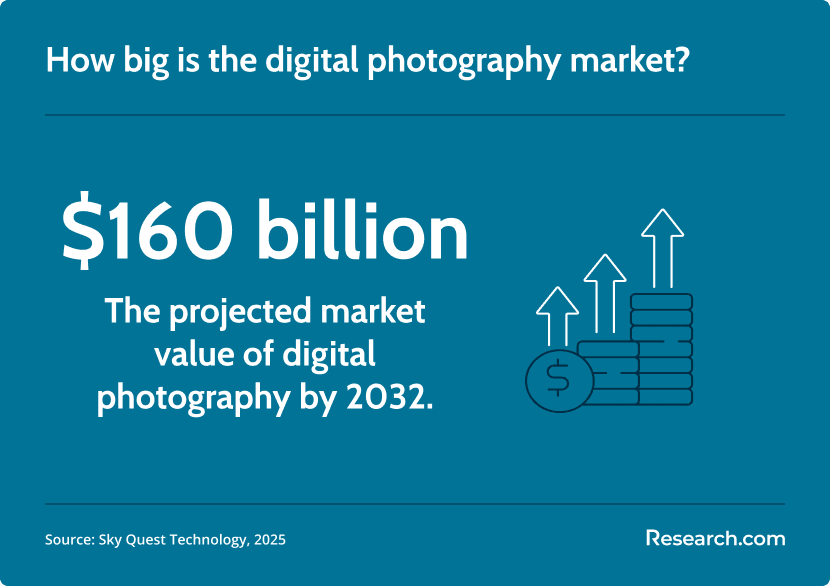
The market context also matters. With the digital photography market expected to surpass $160 billion by 2032, students may benefit from training that combines technical photography, editing, branding, and digital distribution. However, a longer program is not automatically the better choice. The best timeline is the one that matches your career goal, budget, and current skill level.
| Program type | Typical timeline from listed programs | Best for | Main trade-off |
| Certificate or short course | 4 months to 18 months | Beginners, hobbyists, working adults, or photographers seeking targeted skills | Less breadth than a full degree |
| Associate-level pathway | 2 years | Students seeking a shorter academic credential or transfer option | May not offer the same depth as a bachelor’s program |
| Bachelor’s degree | 3-4 years or 4 years | Students seeking a full undergraduate credential, portfolio development, and broader art or design training | Higher time and financial commitment |
How does an online digital photography degree compare to an on-campus program?
Online and campus-based photography programs can teach many of the same fundamentals, but the learning experience is different. Online programs are built around remote critique, digital submissions, independent shooting assignments, and home-based editing workflows. Campus programs often provide more immediate studio access, in-person critique, and shared equipment.
Neither format is automatically better. Online study works well for self-directed students who can create shoots independently and manage deadlines. Campus study may be better for students who need regular studio access, prefer face-to-face feedback, or want to work with school-owned lighting equipment and print labs.
| Factor | Online digital photography program | On-campus photography program |
| Editing and post-production | Often emphasizes digital workflows using tools such as Adobe Lightroom and Photoshop | May combine digital editing with access to campus hardware, labs, and print facilities |
| Portfolio development | Usually centers on web-ready portfolios for freelance platforms, social media, and digital presentation | May include gallery-style exhibits, printed work, and in-person reviews |
| Lighting practice | Often teaches students to use natural light, portable lighting, and home or location setups | May provide studio lighting rigs and controlled shooting spaces |
| Equipment access | Students commonly use their own DSLR or mirrorless camera and computer | Students may have access to a broader pool of school-owned cameras, lenses, and studio gear |
| Critique and feedback | Feedback is usually delivered through video, discussion boards, uploaded projects, or virtual meetings | Feedback happens in studio sessions, group critiques, and in-person meetings |
| Project style | Assignments often simulate remote client work, product shoots, location photography, and digital media production | Projects may include fine art, analog processes, studio portraiture, and physical exhibitions |
If your priority is flexibility and cost control, a low-cost online digital photography degree may be a practical way to build technical skill and a portfolio while reducing relocation, commuting, and housing expenses.
What is the average cost of an online digital photography degree?
Tuition varies widely across online photography programs. Among the programs listed here, Sessions College charges around $300 per credit, which totals roughly $36,000 for a full degree. At the higher end, Maryland Institute College of Art charges $2,354 per credit, which can reach about $226,000. These figures show why students should compare total program cost rather than looking only at a school’s reputation or per-credit price.
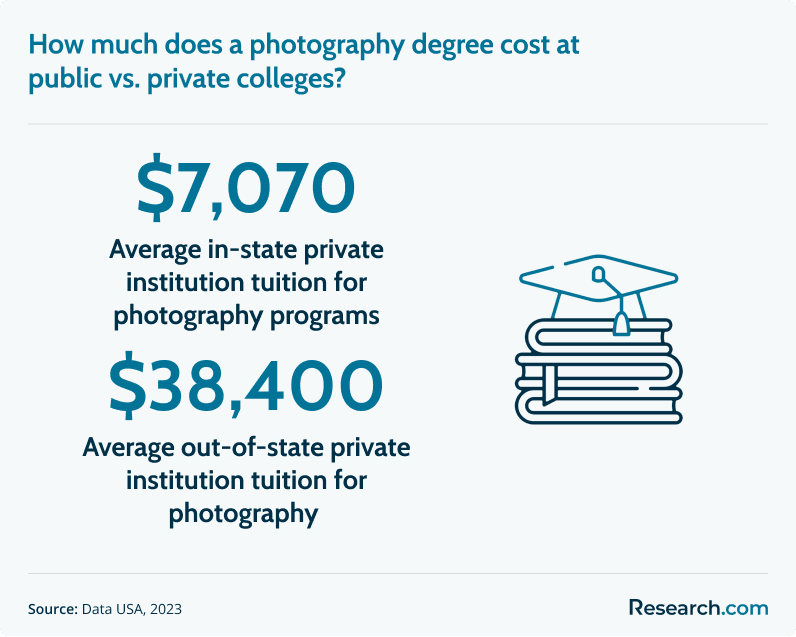
For broader context, the median in-state tuition at public colleges is $7,070, while the median for out-of-state private institutions is $38,400. Some online programs may be financially competitive with campus programs when students avoid relocation, commuting, and campus housing costs. However, online students may still need to pay for a camera, lenses, lighting, external storage, software subscriptions, printing, portfolio hosting, and computer upgrades.
Students comparing creative fields may also want to review the best audio and music online degrees, especially if they are interested in a broader media production career that combines sound, visuals, and digital storytelling.
| Cost item | Why it matters | Question to ask before enrolling |
| Tuition per credit | This is the most visible cost but not always the full cost | How many credits are required to graduate? |
| Fees | Online, technology, portfolio, or graduation fees can add to the bill | Are mandatory fees included in the published tuition estimate? |
| Equipment | Online students often need their own camera, computer, storage, and lighting | What exact camera and computer specifications are required? |
| Software | Editing tools can be essential for coursework and portfolio development | Does tuition include Adobe Creative Cloud or similar software access? |
| Portfolio support | A strong portfolio can matter more than the degree title in many photography roles | Will faculty review a final portfolio before graduation? |
| Career services | Career support can help with freelance pricing, client communication, and job searches | Are creative-industry career services available to online students? |
What financial aid options are available for online digital photography students?
Financial aid for photography students can come from federal aid, institutional aid, scholarships, creative competitions, and portfolio-based awards. Degree-seeking students at eligible accredited institutions may have more aid options than students in nondegree short courses, so it is important to ask each school whether the specific online program qualifies for financial aid.
Students building a broader digital creative portfolio may also compare photography with related programs such as the best online user experience design degrees, which can strengthen skills in visual design, user research, and digital product presentation.
Examples of photography-related scholarship and award opportunities include:
- College Photographer of the Year Award: Provides 87 awards of $5,000 each for undergraduate or graduate students worldwide who submit strong still photography, video, or multimedia work.
- Doodle for Google Scholarship: Offers up to $55,000 in scholarships for creative students who submit original doodles, including entries that may use digital art or photography-based concepts.
- James Alan Cox Foundation Scholarship: Awards $2,500 to college and graduate students focused on still or video photojournalism. High school students may also receive DSLR cameras.
- Nikon Storytellers Scholarship: Provides ten $10,000 scholarships for students in the U.S. or Canada pursuing photography, journalism, or multimedia degrees, with a portfolio required.
- Anchell International Documentary Photography Scholarship: Offers a $1,000 award for undergraduate or graduate students worldwide who submit documentary photography projects with social relevance.
Photojournalism students may benefit from stronger writing skills as well as visual skills. If you want to combine reporting, essays, captions, and visual storytelling, compare affordable writing options such as the cheapest online creative writing degree.
How to reduce the cost of an online photography program
- Confirm transfer credit policies: If you already have college credits, ask how many can apply toward the degree.
- Ask whether software is included: A lower tuition price may be less attractive if you must pay separately for required editing tools.
- Start with a certificate if uncertain: A shorter program can help you test your interest before committing to a full bachelor’s degree.
- Compare total cost, not only tuition: Include fees, equipment, computer upgrades, printing, and portfolio hosting.
- Use school-specific aid offices: Ask whether online students are eligible for the same scholarships and grants as campus students.
What are the prerequisites for enrolling in an online digital photography degree program?
Admissions requirements vary by school and credential level, but most online digital photography programs expect students to show academic readiness, basic digital literacy, and access to the equipment needed for remote coursework. Some programs welcome beginners, while more selective art schools may require a portfolio.
Students who are still comparing fields outside the arts may also review career-shifting options such as a fast-track online Christian ministry degree, but photography applicants should focus first on whether a program fits their creative, technical, and business goals.
- High School Diploma or GED: Associate and bachelor’s programs generally require proof of high school completion or an equivalent credential.
- Completed Application Form: Applications usually request personal details, prior education, and sometimes a short statement of purpose.
- Transcripts: Schools commonly ask for official high school transcripts or previous college transcripts for transfer applicants.
- Portfolio: Some programs require or recommend samples of photography or other creative work, especially at more competitive institutions.
- Basic Computer Skills: Online learning and digital editing require comfort with file management, uploads, software tools, and virtual communication.
- Access to Equipment: Students commonly need a DSLR or mirrorless camera, a reliable computer, stable internet, and editing software such as Adobe Creative Suite.
- Interest in Composition and Camera Operation: A strong eye for detail, light, framing, and visual storytelling can help students progress more quickly.
Students drawn to both still images and motion storytelling may also compare photography programs with the cheapest online cinematography degree programs, especially if they want to work in film, branded video, or documentary production.
What courses are typically included in an online digital photography degree?
Online digital photography programs usually combine technical camera instruction, editing practice, visual theory, professional ethics, and portfolio development. Strong programs do more than teach students how to take sharp images. They help students explain visual choices, manage files, edit consistently, understand copyright, and produce work for real clients or audiences.
- Digital Camera Techniques: Students learn exposure, focus, shutter speed, aperture, ISO, focal length, and composition using DSLR or mirrorless cameras.
- Lighting for Photography: Coursework covers natural light, artificial lighting, portrait lighting, product lighting, and environmental conditions.
- Photo Editing and Retouching: Students practice image correction, color adjustment, retouching, file export, and style development using tools such as Adobe Photoshop and Lightroom.
- History of Photography: This course places photography in artistic, cultural, technological, and social context.
- Studio and Location Photography: Students learn how to plan shoots in controlled spaces and adapt to unpredictable real-world environments.
- Legal and Ethical Issues in Photography: Topics may include copyright, licensing, model releases, consent, privacy, image manipulation, and professional conduct.
- Portfolio Development: Students assemble a coherent body of work that demonstrates technical range, visual identity, and readiness for clients or employers.
- Entrepreneurship for Creatives: Coursework may cover pricing, branding, marketing, contracts, client communication, and freelance business management.
Students interested in fashion photography often benefit from understanding styling, merchandising, and brand presentation. For that path, compare photography coursework with affordable fashion merchandising degree online programs.
The chart below gives additional context on industries with a high concentration of employment for digital photographers:
What specializations are available in online digital photography degree programs?
Specializations help students focus their portfolio and build skills for a specific market. A student interested in wedding photography needs different client management and event workflow skills than a student pursuing documentary work, real estate photography, or fine art exhibitions.
| Specialization | What you learn | Best fit for students who want to |
| Portrait Photography | Lighting, posing, expression, studio workflow, and personal branding images | Work with individuals, families, professionals, influencers, or studio clients |
| Photojournalism | Ethical documentation, news judgment, fast editing, captioning, and field practices | Cover events, social issues, public affairs, or human-interest stories |
| Nature and Wildlife Photography | Outdoor shooting, long lenses, natural light, patience, and field preparation | Photograph landscapes, wildlife, conservation topics, or travel environments |
| Event and Wedding Photography | Timeline planning, client communication, fast-paced shooting, and post-event editing | Photograph weddings, conferences, performances, and live gatherings |
| Architectural and Real Estate Photography | Perspective control, interior lighting, exterior shots, editing, and visual marketing | Create property, design, hospitality, or commercial space imagery |
| Film and Cinematography | Camera movement, scene lighting, sound awareness, editing, and motion-based storytelling | Move into video, film, commercials, or documentary projects |
Students focused on property, interior, or architectural imagery may also benefit from understanding the real estate industry. Research.com’s list of affordable real estate degree programs online can help students compare options if they want to pair photography with property marketing or real estate knowledge.
Choosing a specialization should come after you review sample courses, faculty portfolios, student work, and the type of final portfolio the program expects. The skills chart below can help you think about the capabilities most digital photographers need in today’s creative labor market:
How should you choose the best online digital photography degree program?
The best program is the one that fits your goals, schedule, budget, and learning style. A well-known art school may be valuable for some students, but a lower-cost online program with strong critique, flexible pacing, and portfolio support may be the smarter choice for others. Do not choose based on brand name alone.
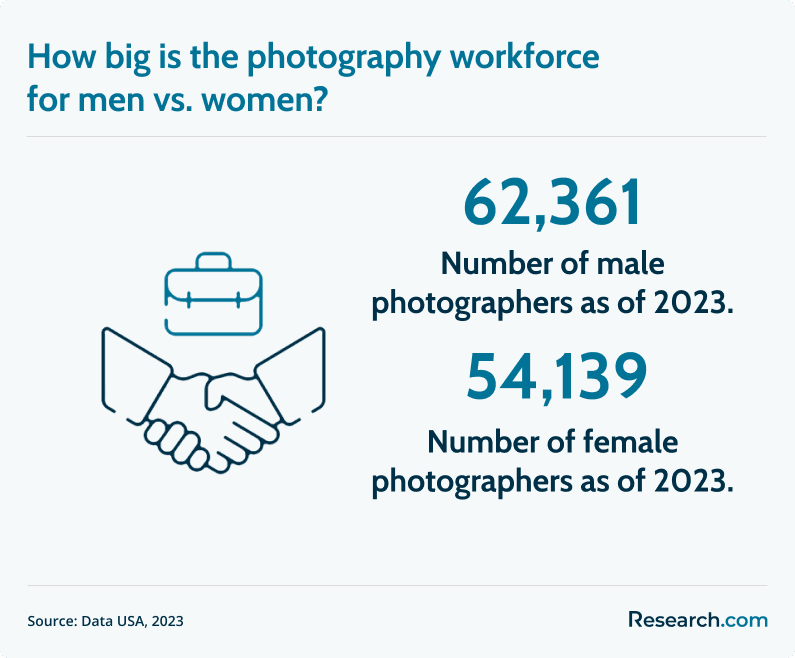
Labor market context is also important. The photography workforce included over 116,000 professionals in 2023 and has shown 17% growth since 2014. Data USA also reports 62,361 men, representing 53.5%, and 54,139 women, representing 46.5%, in the field. These figures show that photography remains an active field, but students should still expect competition and should graduate with both creative and business skills.
If you are comparing photography with a completely different professional direction, you may also review options such as an accelerated post master’s certificate pediatric nurse practitioner online. For photography decisions specifically, prioritize the factors below.
- Accreditation: Confirm that the institution is accredited by a recognized accrediting body, especially if you plan to use financial aid or transfer credits.
- Faculty Expertise: Review instructor biographies, portfolios, exhibitions, client work, publications, or industry experience.
- Portfolio Development: Look for required portfolio courses, faculty critique, capstone projects, and examples of graduate work.
- Specializations: Choose a program that supports your intended niche, such as photojournalism, commercial work, portraiture, or cinematography.
- Online Learning Platform: Make sure the program offers recorded lectures, project uploads, critique tools, peer discussion, and accessible instructor feedback.
- Software Access: Ask whether professional editing tools such as Adobe Creative Cloud are included or discounted.
- Equipment Requirements: Request a full list of required camera bodies, lenses, lighting, computer specifications, and storage needs before enrolling.
- Business Preparation: Strong programs should address contracts, pricing, licensing, branding, client management, and marketing.
Questions to ask admissions before you apply
| Question | Why it matters |
| Is this specific online program eligible for financial aid? | Not every course or certificate qualifies for the same aid as a degree program. |
| What equipment and software do I need before the first term? | Photography programs can require significant up-front purchases. |
| Can I transfer previous college credits? | Transfer credit can reduce both time and tuition. |
| How often will instructors critique my work? | Feedback is central to improving as a photographer. |
| Will I graduate with a completed portfolio? | Many photography opportunities depend heavily on portfolio quality. |
| Are internships, client projects, or industry partnerships available online? | Experience can help students move from coursework to paid work. |
| What career services are available to online students? | Online learners should receive support with resumes, portfolios, freelance strategy, and job searches. |
Common mistakes to avoid
- Choosing a program without checking accreditation: Accreditation can affect financial aid, transfer credit, and institutional credibility.
- Looking only at tuition: Camera gear, software, fees, and portfolio costs can change the true price of attendance.
- Assuming online means easier: Online photography requires independent shooting, self-discipline, and consistent project management.
- Ignoring portfolio outcomes: A degree title matters less if your final portfolio does not show professional-level work.
- Skipping business training: Many photographers freelance, so pricing, contracts, licensing, and client communication are essential.
- Relying only on rankings: Rankings can narrow your search, but your best-fit program depends on your goals and constraints.
What career paths are available after an online digital photography degree?
Photography graduates can pursue creative, commercial, editorial, technical, and entrepreneurial roles. Many photographers freelance, while others work for media organizations, brands, studios, hospitals, cultural institutions, real estate companies, or production teams. Career outcomes are not guaranteed, so students should treat the degree as one part of a larger career strategy that includes portfolio building, networking, internships or client projects, and continuous skill development.
| Career path | Typical work | Useful preparation |
| Commercial/Product Photographer | Create images for advertising, packaging, catalogs, and e-commerce | Lighting, retouching, client briefs, studio workflow, and brand consistency |
| Photojournalist | Document news, events, communities, and human stories | Ethics, caption writing, fast editing, field reporting, and media law |
| Event and Wedding Photographer | Photograph weddings, conferences, performances, and live gatherings | Client management, fast shooting, backup systems, editing workflow, and contracts |
| Cinematographer | Shoot video for films, documentaries, commercials, or branded content | Lighting, composition, camera movement, editing, and collaboration with directors |
| Forensic Photographer | Document crime scenes, evidence, and investigations | Accuracy, procedure, legal awareness, and technical documentation skills |
| Museum/Gallery Photographer | Photograph artwork, exhibitions, events, and archival materials | Color accuracy, preservation standards, lighting, and image cataloging |
| Travel Photographer | Create destination, culture, landscape, and lifestyle images | Location planning, storytelling, editing, licensing, and publication strategy |
| Stock Photographer | Build and license image libraries through stock platforms | Keywording, market research, release forms, and high-volume production |
| Medical Photographer | Capture clinical, surgical, educational, or documentation images | Precision, confidentiality, technical lighting, and healthcare environment awareness |
| Creative Director | Lead visual strategy for campaigns, brands, media, or production teams | Photography, design, storytelling, leadership, and campaign planning |
Students interested in investigative or legal documentation work can also explore related forensic science specialties to understand how photography may connect with evidence, documentation, and public safety careers.
What is the job outlook for graduates with an online digital photography degree?
The photography field is competitive, but demand continues in areas such as media, advertising, real estate, fashion, e-commerce, medical documentation, and forensic work. Students with strong digital editing skills, a polished online portfolio, and the ability to work with clients may be better prepared for current market expectations.
According to the US Bureau of Labor Statistics, employment for photographers is projected to grow 4% from 2023 to 2033, which is in line with the average for all occupations. The BLS also reports that about 13,700 photography-related job openings are expected each year, largely because of workers leaving the occupation or retiring.
- Growth is moderate: A 4% projection means opportunities exist, but students should expect competition.
- Openings are recurring: The 13,700 expected annual openings reflect replacement needs as well as new demand.
- Industries are varied: Photography skills can apply to editorial work, advertising, real estate, medicine, forensic documentation, and independent client services.
- Digital portfolios matter: Employers and clients often evaluate photographers through online samples before reviewing credentials.
- Remote work is possible in some areas: Editing, product photography workflows, stock photography, and digital delivery can support flexible work arrangements.
How can creative writing strengthen a digital photography career?
Photography is visual, but many photography careers also require strong writing. Captions, artist statements, grant applications, client proposals, social media posts, editorial pitches, and documentary narratives all depend on clear language. Students who pair photography with writing can often explain their work more convincingly and create stronger multimedia projects.
This combination is especially useful for photojournalists, documentary photographers, travel photographers, and artists preparing exhibitions or grant proposals. If you are considering advanced creative study, Research.com explains what you can do with a creative writing MFA and how writing-focused graduate education may support broader creative careers.
How do online digital photography programs support networking and career advancement?
Strong online photography programs do not leave students to build careers alone. They may use virtual critiques, faculty mentoring, online exhibitions, alumni networks, portfolio reviews, guest speakers, and career services to connect students with the professional world. Some programs also include real-world projects or internship-style experiences that help students understand client expectations.
Networking in an online program requires initiative. Students should participate in critiques, ask for faculty feedback, connect with classmates, attend virtual events, share polished work professionally, and build a portfolio website before graduation. Students planning to pursue advanced creative education after a photography degree may also compare the cheapest MFA online programs.
Graduate Perspectives on Online Digital Photography Programs
- Vienna: "Learning photography online let me keep moving while still building a serious body of work. I could shoot wherever I was, upload projects for critique, and use the same laptop for editing, branding, and client communication. The flexibility helped me balance school with paid assignments, and by graduation I had a portfolio that opened doors."
- Liam: "I was unsure whether an online format could work for such a hands-on subject, but the critiques were more detailed than I expected. Instructors pushed me to think about lighting, licensing, composition, and the business side of the field. The online discussions also helped me build creative relationships with classmates in different places."
- Mallory: "The program helped me move from a corporate role into creative work without relocating or putting my life on hold. I could apply each module to freelance assignments, then bring those results back for feedback. The flexibility was important, but the real value came from learning to shoot independently, manage deadlines, and evaluate my own work more honestly."
How do accreditation and certification affect online digital photography career outcomes?
Accreditation matters because it signals that an institution has been reviewed against academic quality standards. It can also affect eligibility for financial aid, transfer credit, and graduate school admission. Before enrolling, students should verify both the school’s accreditation and whether the specific online photography program is covered by that institution’s accreditation status.
Certification is different from accreditation. A certificate can document focused training in a skill area such as digital editing, documentary work, or professional photography practice. It may help demonstrate commitment and technical growth, but it does not replace a strong portfolio. Students considering short credentials in other fields can review Research.com’s guide to certification programs for careers that pay well.
| Credential factor | What it tells you | Why students should care |
| Institutional accreditation | The school has undergone external academic review | Can affect aid, transfer, credibility, and future education options |
| Program curriculum | The courses align with technical, creative, and professional goals | Determines whether the program teaches the skills you actually need |
| Certificate | You completed focused training in a specific area | Can support skill development but should be paired with portfolio evidence |
| Portfolio | You can produce coherent, professional-quality work | Often the most important proof of readiness for clients or employers |
Other education paths to compare before committing
Some students begin with photography and later decide they want a broader creative, technical, or professional direction. If you are still exploring, compare photography with adjacent fields such as UX design, audio and music production, cinematography, fashion merchandising, real estate, creative writing, or MFA study. If your interests shift entirely outside creative media, reviewing unrelated options can also clarify whether photography is the right commitment.
- Online audio and music degree programs
- Online UX design degree programs
- Affordable online creative writing degree programs
- Fast online Christian ministry degree programs
- Affordable online cinematography degree programs
- Affordable online fashion merchandising degree programs
- Affordable online real estate degree programs
- Accelerated online pediatric nurse practitioner graduate certificate programs
- Affordable online MFA programs
Key Insights
- A full degree is not always necessary: Choose a bachelor’s program if you want broad academic training, a complete undergraduate credential, and structured portfolio development. Choose a certificate if you need targeted skills faster.
- Portfolio quality is central: Employers and clients often care more about the strength, consistency, and relevance of your work than the program name alone.
- Online study works best for self-directed learners: You need discipline, access to equipment, and the ability to complete shoots independently.
- Costs vary sharply: Listed program costs range from $300 per credit to $2,354 per credit, so compare total cost, not just tuition.
- Accreditation should be verified before enrollment: It can affect financial aid, transfer credit, and the credibility of your credential.
- Business skills matter: Many photographers freelance, so contracts, licensing, pricing, branding, and client communication should be part of your education.
- The job outlook is steady but competitive: BLS projects 4% growth from 2023 to 2033 and about 13,700 openings each year, so students should graduate with digital skills, a polished portfolio, and a clear niche.
References
- Arizona State University. (n.d.). Art - BFA in digital photography. ASU Online. Asuonline.asu.edu. Retrieved 15 July 2025.
- Columbus State Community College. (n.d.). Digital photography AAS. Explore.cscc.edu. Retrieved 15 July 2025.
- College Photographer of the Year. (n.d.). Announcements. Cpoy.org. Retrieved 15 July 2025.
- Data USA. (n.d.). Photography. Datausa.io. Retrieved 15 July 2025.
- Data USA. (n.d.). Photographers. Datausa.io. Retrieved 15 July 2025.
- Google. (n.d.). Doodle for Google: Prizes. Doodles.google.com. Retrieved 15 July 2025.
- James Alan Cox Foundation. (n.d.). Apply. Jamesalancoxfoundation.org. Retrieved 15 July 2025.
- Lindenwood University. (n.d.). Art and design BA/BFA: Photography. Lindenwood.edu. Retrieved 15 July 2025.
- Rocky Mountain College of Art + Design. (n.d.). Online photography. Rmcad.edu. Retrieved 15 July 2025.
- Savannah College of Art and Design. (n.d.). Photography. Scad.edu. Retrieved 15 July 2025.
- Sessions College. (n.d.). Bachelor’s in digital photography. Sessions.edu. Retrieved 15 July 2025.
- SkyQuest Technology. (2024). Digital photography market report. Skyquestt.com. Retrieved 15 July 2025.
- Southern New Hampshire University. (n.d.). BA in digital photography. Snhu.edu. Retrieved 15 July 2025.
- The New York Institute of Art and Design. (n.d.). Fundamentals of digital photography. Nyiad.edu. Retrieved 15 July 2025.
- US Bureau of Labor Statistics. (2024). Occupational outlook handbook: Photographers. Bls.gov. Retrieved 15 July 2025.
- US Bureau of Labor Statistics. (2024). Occupational employment and wage statistics: Photographers. Bls.gov. Retrieved 15 July 2025.
- Zippia. (n.d.). Digital photographer skills. Zippia.com. Retrieved 15 July 2025.
- ZipRecruiter. (n.d.). Digital photographer salary. Ziprecruiter.com. Retrieved 15 July 2025.
Other Things You Need to Know About Online Digital Photography Degree Programs
In 2027, online digital photography programs often offer specializations such as portrait photography, commercial photography, photojournalism, and digital imaging. These specializations allow students to tailor their studies to match their career interests and enhance their job prospects in specific photography domains.
Most programs require a DSLR or mirrorless camera, a tripod, external storage, and a computer that can run Adobe Photoshop and Lightroom. Many courses also expect access to a scanner or printer for critique work, plus stable internet for file uploads, live reviews, and portfolio submission.
Graduates in 2027 can pursue careers such as commercial photographer, photo editor, creative director, or digital content creator. Opportunities exist in media, advertising, and arts industries. Some roles may require additional certifications or experience, especially for advanced positions like photojournalist or art director.