
2027 How to Become a Licensed Therapist (LPC) in Richmond, VA

Co-Founder and Chief Data Scientist
Becoming a Licensed Professional Counselor (LPC) in Richmond means planning for graduate school, supervised clinical experience, state licensure, and a local job market that includes hospitals, community agencies, nonprofits, schools, and private practices. The path is rewarding, but it is also regulated. Missing one requirement—such as the wrong degree accreditation, an unapproved supervisor, or incomplete documentation—can delay your license.
This guide explains how the LPC process works in Richmond under Virginia rules. You will learn what degree to earn, how supervised experience works, where to look for local training opportunities, what salaries can look like, which employers commonly hire LPCs, and how to decide whether Richmond is the right place to build your counseling career.
Quick answer: How do you become an LPC in Richmond?
To become an LPC in Richmond, you generally need a qualifying graduate degree in counseling or a closely related field, supervised clinical experience that meets Virginia Board of Counseling requirements, a passing score on the National Counselor Examination (NCE) or approved equivalent, and a fingerprint-based background check. Virginia requires at least 3,400 hours of supervised counseling experience over a minimum of 24 months under a qualified supervisor.
| Step | What you need to do | Why it matters |
| 1. Earn the right graduate degree | Complete at least a master’s degree in counseling or a closely related field from a regionally accredited school. | Your degree must satisfy Virginia’s academic foundation for LPC licensure. |
| 2. Complete required coursework and clinical training | Study counseling theories, ethics, assessment, human development, and other required areas. | These courses prepare you for supervised practice, licensure exams, and ethical client care. |
| 3. Register and complete supervision | Accumulate 3,400 hours of supervised counseling experience over at least 24 months. | Supervision helps you build clinical judgment before independent practice. |
| 4. Pass the required exam | Take the National Counselor Examination (NCE) or an approved equivalent. | The exam verifies core counseling knowledge required for licensure. |
| 5. Submit final documentation | File your application, fees, supervision verification, and fingerprint-based background check. | The Virginia Board of Counseling uses these materials to determine license eligibility. |
Key things to know before pursuing LPC licensure in Richmond
- Richmond can be a practical location for LPC candidates because it has community mental health agencies, health systems, nonprofit providers, and private practice opportunities.
- The average salary for LPCs in Richmond is approximately $71,170 annually, though actual earnings vary by employer, caseload, specialization, and experience.
- Noteworthy employers include VCU Health, Bon Secours Health System, and the Richmond Behavioral Health Authority, all of which are connected to behavioral health or healthcare services in the region.
- Licensure is not automatic after graduation. You must complete supervised experience, pass the required exam, and meet Virginia Board of Counseling documentation standards.
- Before enrolling in a program, confirm that it aligns with Virginia’s LPC educational requirements. Do not assume every counseling-related master’s degree qualifies.
- What education do you need to become an LPC in Richmond?
- How do you apply for counselor licensure in Richmond?
- Which Richmond-area schools offer LPC preparation programs?
- Where can counseling students find practicum or internship experience in Richmond?
- How much do LPCs earn in Richmond?
- What are Virginia’s supervision requirements for LPC candidates?
- Is Richmond a strong market for LPC careers?
- Can Richmond LPCs specialize in substance abuse counseling?
- How competitive is the LPC job market in Richmond?
- Can an LPC move into teaching in Richmond?
- What obstacles do new LPCs commonly face?
- Do additional certifications help LPCs advance?
- Which counseling associations support Richmond LPCs?
- Which employers commonly hire LPCs in Richmond?
- How can LPCs continue developing professionally?
- Professional development checklist for Richmond LPCs
What education do you need to become an LPC in Richmond?
Richmond LPC candidates follow Virginia’s counselor licensure rules, so the most important early decision is choosing a graduate program that fits state expectations. A counseling-related degree may sound relevant, but you still need to verify that the curriculum, clinical training, and accreditation status support LPC eligibility.
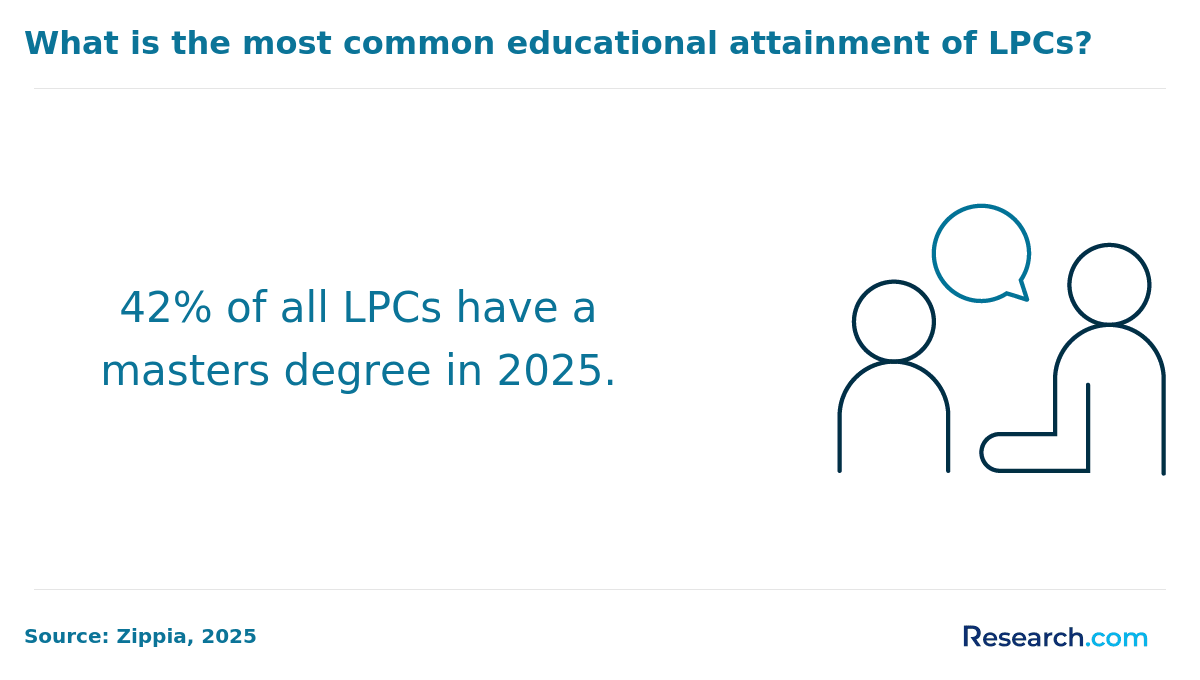
At minimum, you should plan to complete a master’s degree in counseling or a closely related field from a regionally accredited institution. Your program should include graduate-level study in areas such as human development, counseling theory, ethical practice, assessment methods, diagnosis, treatment planning, and clinical skills.
- Earn at least a master’s degree in counseling or a closely related field from a regionally accredited school.
- Review the curriculum carefully to confirm it includes human development, counseling theories, ethics, assessment, and clinical practice preparation.
- Ask the program directly whether its graduates meet Virginia Board of Counseling academic requirements for LPC licensure.
- Complete required field experiences, including practicum and internship components, as part of your clinical preparation.
- Plan for Virginia’s required 3,400 hours of supervised counseling experience over a minimum of 24 months after the academic preparation stage.
- Consider local options such as Virginia Commonwealth University’s School of Education, and compare them with in-state programs such as James Madison University and the University of Virginia if you are open to studying outside Richmond.
| Program factor | What to check before enrolling | Why it affects LPC eligibility |
| Institutional accreditation | Confirm the school is regionally accredited. | Virginia requires graduate education from an acceptable accredited institution. |
| Counseling curriculum | Compare courses with Virginia Board of Counseling expectations. | Missing required content can create licensure problems later. |
| Clinical training | Ask how practicum and internship placements are arranged. | Strong placements help you build skills and prepare for supervised residency. |
| Licensure alignment | Request written confirmation that the program is designed for LPC preparation in Virginia. | Program titles can be misleading; licensure alignment matters more than the name of the degree. |
| Format | Compare campus, hybrid, and online delivery options. | Online coursework may be convenient, but field placement and state eligibility still need verification. |
How do you apply for counselor licensure in Richmond?
LPC licensure in Richmond is handled through Virginia, not through a separate city-level licensing office. That means Richmond candidates submit materials to the Virginia Board of Counseling and must follow the same core process used across the state.
The application process requires more than sending a transcript. You need documentation of supervised counseling experience, exam completion, fees, and a fingerprint-based background check. Because supervision records are often where delays happen, keep copies of forms, dates, hours, supervisor credentials, and approval documents throughout the process.
Virginia requires at least 3,400 hours of supervised counseling experience over a minimum of 24 months under a qualified licensed supervisor. Before you start counting hours, confirm that your supervisor meets state rules. If the supervisor is not approved or the documentation is incomplete, your hours may not be accepted.
You will also need to pass the National Counselor Examination (NCE) or an approved equivalent. If your long-term interests include bereavement, trauma, hospice, or loss-related work, you may also want to review Research.com’s guide on how to become a grief counselor to understand how specialization can fit into a counseling career.
- Submit the required application and fees to the Virginia Board of Counseling.
- Document 3,400 hours of supervised counseling experience completed over at least 24 months.
- Use a supervisor who meets Virginia’s qualification standards.
- Pass the National Counselor Examination (NCE) or approved equivalent.
- Complete the required fingerprint-based background check.
- Keep organized records so you can respond quickly if the board requests clarification.
Which Richmond-area schools offer LPC preparation programs?
Richmond students have local and nearby options for counseling graduate education, but program fit should be evaluated carefully. The best choice is not always the closest campus or the lowest tuition. Your priority should be whether the program supports Virginia LPC eligibility, provides solid clinical placement support, and fits your schedule and budget.
| School | Program noted | What to verify |
| Virginia Commonwealth University (VCU) in Richmond | Master of Education in Counseling | The program is CACREP-accredited and includes counseling theories, assessment, ethics, and clinical practice aligned with LPC preparation. |
| Liberty University in nearby Lynchburg | Master of Arts in Clinical Mental Health Counseling | The program is CACREP-accredited and emphasizes diagnosis, treatment planning, multicultural counseling, and applied clinical skills. |
| University of Richmond | Graduate programs with counseling-related components | Confirm the exact program’s accreditation status and whether it satisfies Virginia LPC academic requirements. |
When comparing programs, ask each admissions office direct licensure questions rather than relying only on marketing language. For example: “Does this degree meet Virginia LPC educational requirements?” and “Where have recent students completed practicum and internship placements?” If you want a broader national comparison, Research.com’s guide to the top mental health counseling graduate programs can help you evaluate program features beyond the Richmond area.
The chart below provides additional context on the types of institutions—public, private for profit, and private not for profit—that offer CACREP-accredited counseling programs in the Richmond area.
Where can counseling students find practicum or internship experience in Richmond?
Practicum and internship placements are where counseling students begin translating coursework into client-facing skills. In Richmond, placements may be available through community behavioral health providers, housing organizations, child and family agencies, schools, hospitals, and private practices.
These experiences are valuable for two reasons. First, they help you complete degree requirements. Second, they help you test which populations, settings, and clinical issues fit your strengths before you enter post-graduate supervised practice.
- Richmond Behavioral Health Authority: Students may gain exposure to intake, treatment planning, case coordination, individual counseling, and group services.
- Virginia Supportive Housing: Placements may involve work with adults experiencing homelessness, case management collaboration, mental health support, and substance use-related services.
- ChildSavers: Training experiences may focus on children and adolescents, trauma-informed care, school-based support, and family-centered services.
| Placement setting | Best fit for students interested in | Questions to ask before accepting |
| Community mental health | Crisis work, severe mental illness, care coordination, and public behavioral health systems | What supervision is provided, and how are client safety concerns handled? |
| Child and family services | Trauma-informed care, adolescent counseling, family support, and school collaboration | Will I receive training on mandated reporting, child development, and family systems? |
| Substance use treatment | Addiction counseling, relapse prevention, group counseling, and co-occurring disorders | What addiction-specific training and supervision will be available? |
| Private practice | Outpatient therapy, client retention, documentation, and practice management | Will the placement provide enough client contact and structured feedback? |
Clinical training can be emotionally demanding, especially when working with trauma, crisis, addiction, or high-need populations. A strong placement should provide supervision, clear boundaries, documentation guidance, and a process for debriefing difficult cases.
How much do LPCs earn in Richmond?
LPC income in Richmond varies widely because counselors work in different settings and serve different client populations. Based on recent figures, salaries range from as low as $34,637 to as high as $112,819 annually. Most LPCs fall within the middle 50% of earners, making between $57,900 and $79,200 per year, while the top 10% can earn up to $99,952.
The average salary for LPCs in Richmond is approximately $71,170 annually. Treat that number as a planning benchmark, not a guarantee. Your actual income may depend on whether you work for a nonprofit, health system, government agency, school, group practice, or your own private practice.
| Salary factor | How it can affect earnings | Decision tip |
| Experience | Experienced LPCs often qualify for higher-paying roles, leadership duties, or private practice opportunities. | Ask employers how compensation changes after full licensure or additional years of practice. |
| Education and credentials | Advanced training or specialized certifications may support stronger job applications. | Choose credentials tied to your target client population, not random résumé additions. |
| Specialization | Areas such as trauma, addiction, family therapy, and assessment may improve marketability. | Look for specialties with local demand and adequate supervision opportunities. |
| Work setting | Hospitals and private practice may pay differently from nonprofits, schools, or public agencies. | Compare salary with benefits, caseload expectations, documentation load, and supervision quality. |
| Client base and caseload | Private practice income depends heavily on referrals, retention, billing, and payer mix. | Do not assume private practice income will be stable immediately after licensure. |
If you are still comparing graduate study options, Research.com’s overview of the best rated online masters in mental health counseling degree program can help you think through program format, flexibility, and career preparation before investing in a degree.
What are Virginia’s supervision requirements for LPC candidates?
Supervision is one of the most important stages in the LPC process. It is where you move from graduate-level preparation into closely guided clinical work. In Virginia, LPC candidates must complete 3,400 hours of supervised clinical experience before becoming fully licensed.
This experience must occur over a minimum of 24 months and must be supervised by a qualified licensed professional who meets Virginia’s standards. The hours can include direct client work and related professional responsibilities such as documentation, treatment planning, consultation, and supervision meetings, depending on board rules and approved supervision arrangements.
Richmond candidates may complete supervised experience in community mental health centers, hospitals, outpatient clinics, schools, agencies, substance use treatment programs, or private practices. The setting matters less than whether the work is appropriate, the supervisor is qualified, and the documentation meets Virginia Board of Counseling requirements.
| Supervision requirement | What to confirm | Common risk |
| Total hours | You must complete 3,400 hours of supervised counseling experience. | Not tracking hours consistently can create problems when applying. |
| Minimum timeline | The experience must occur over at least 24 months. | Trying to finish too quickly may result in hours that do not count. |
| Supervisor qualifications | Your supervisor must meet Virginia’s licensing and approval standards. | Working under an ineligible supervisor can delay licensure. |
| Practice setting | The site should provide appropriate counseling duties and supervision. | A job may be mental-health related but still not satisfy LPC supervision expectations. |
| Documentation | Maintain accurate records of hours, dates, duties, and supervision. | Incomplete forms are a common source of application delays. |
Is Richmond a strong market for LPC careers?
Richmond can be a good place to work as an LPC if you want access to a mix of clinical settings. The city and surrounding region include public behavioral health services, hospitals, nonprofits, private practices, school-connected programs, and substance use treatment providers. That variety can help early-career counselors explore different client populations before narrowing their specialty.
The market also has real challenges. Some clients face barriers to care because of cost, transportation, insurance coverage, or provider availability. LPCs working in community settings may manage high caseloads, complex documentation, and emotionally demanding cases. Private practice can offer more autonomy, but it also requires business skills, referral building, billing knowledge, and risk tolerance.
- Demand exists, but setting matters: Opportunities may look different in hospitals, nonprofits, community mental health, schools, and private practice.
- Access barriers affect clinical work: Income inequality and insurance limitations can shape who receives care and how LPCs are reimbursed.
- Healthcare growth can create openings: Expanding behavioral health awareness may support employment opportunities, but desirable roles can still be competitive.
- Licensure provides credibility: Fully licensed counselors often have stronger options than unlicensed applicants because employers can bill for more services and assign broader responsibilities.
Can Richmond LPCs specialize in substance abuse counseling?
Yes. LPC licensure provides broad preparation for mental health counseling, and many Richmond counselors build additional expertise in substance use disorders. This can be especially useful if you want to work in addiction treatment programs, recovery-focused nonprofits, community behavioral health, hospitals, or practices serving clients with co-occurring mental health and substance use concerns.
Specializing usually means pursuing additional coursework, supervised experience, continuing education, or a substance abuse counseling credential that matches Virginia requirements. Training may cover addiction assessment, relapse prevention, motivational interviewing, group counseling, family impact, trauma, and the biological and social dimensions of substance use disorders. For a focused overview, see Research.com’s guide on how to become a drug counselor in Richmond.
How competitive is the LPC job market in Richmond?
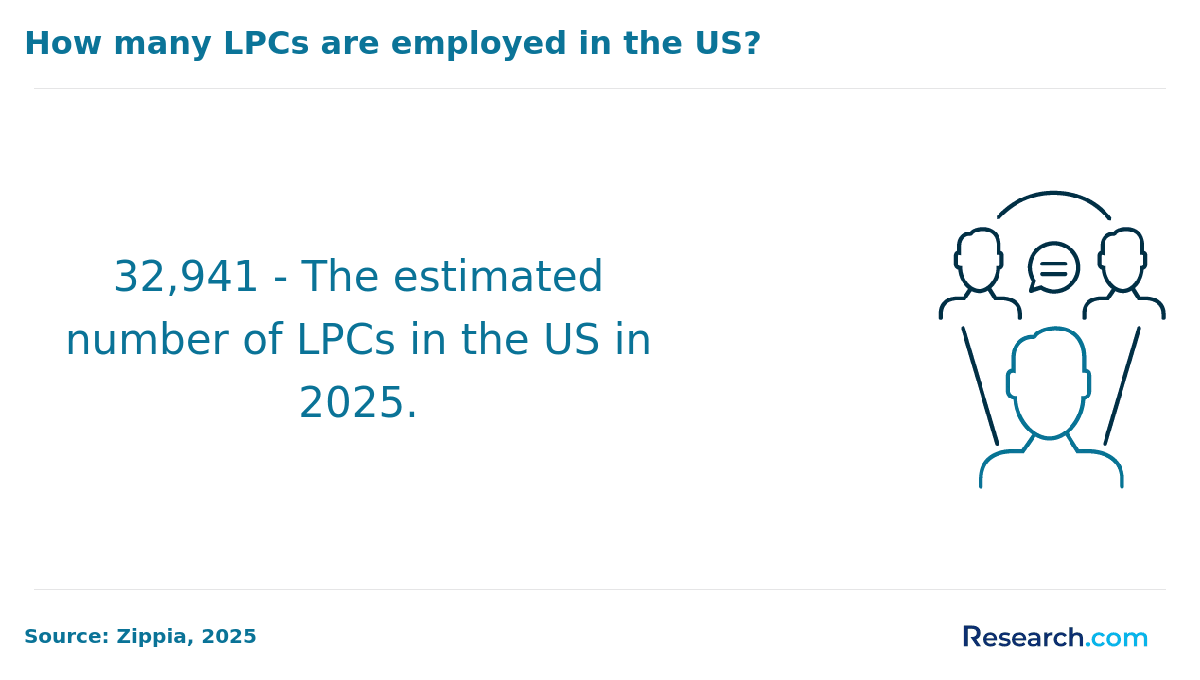
The Richmond LPC market is competitive, but licensed candidates with strong supervision experience, a clear specialty, and comfort working with diverse populations can be well positioned. Statewide, there were approximately 15,000 LPCs employed in 2022. That number is projected to increase to 18,370 by 2032, reflecting a 23% growth over the decade. With an estimated 1,710 job openings each year due to growth and turnover, the need for qualified mental health professionals remains high.
Licensure gives counselors an advantage over applicants who do not hold a professional license. Employers often prefer LPCs because they have met formal education, supervision, examination, and ethical practice standards. However, entry-level candidates still need to prove readiness through internships, supervised experience, documentation skills, and references.
- Specialized preparation in trauma, substance use, child and adolescent counseling, or family work can improve job prospects.
- The market favors fully licensed professionals, but supervised residents can still find roles if they have strong clinical placement experience.
- Public behavioral health needs, population changes, and mental health awareness contribute to ongoing demand.
- Competition may be higher for roles with better pay, lower caseloads, strong benefits, or high-quality supervision.
If cost is a major concern while preparing for licensure, review Research.com’s guide to the cheapest online master's in counseling and compare affordability alongside accreditation, field placement support, and Virginia licensure alignment.
The chart below shows common employment settings for therapists and can help you think about where LPC roles may be concentrated.
Can an LPC move into teaching in Richmond?
Teaching can be a realistic career extension for some LPCs, but it depends on the setting. A counselor may teach workshops, train staff, supervise interns, provide psychoeducation, or teach as an adjunct if they meet institutional qualifications. Moving into K-12 classroom teaching is a different path and usually requires a teaching credential or alternative certification route.
This option may appeal to LPCs who enjoy curriculum development, group instruction, prevention education, or school-based mental health. It can also be a way to diversify income while staying connected to counseling practice. If you are considering the classroom route, compare the cheapest way to become a teacher in Richmond with your current licensure, career goals, and time available for additional requirements.
What obstacles do new LPCs commonly face?
New LPC candidates in Richmond often struggle less with motivation and more with logistics. The difficult parts include finding qualified supervision, managing heavy caseloads, understanding insurance rules, documenting hours correctly, and staying emotionally healthy while working with clients who have complex needs.
| Common mistake | Why it causes problems | Better approach |
| Choosing a graduate program without checking licensure alignment | A counseling-related degree may not meet Virginia LPC requirements. | Ask the program for written confirmation of LPC preparation in Virginia. |
| Focusing only on tuition | A cheaper program may offer weak placement support or create delays. | Compare total cost, accreditation, field placement help, completion timeline, and licensure outcomes. |
| Assuming all online programs work for Virginia licensure | State requirements differ, especially for clinical training. | Confirm Virginia eligibility before enrolling in any online or out-of-state program. |
| Starting supervision without verifying the supervisor | Hours may not count if the supervisor does not meet board standards. | Check supervisor eligibility before logging hours. |
| Waiting until the end to organize paperwork | Missing documentation can delay your application. | Track hours, supervision dates, duties, and forms from the beginning. |
| Ignoring burnout risk | Early-career counselors may face intense emotional demands. | Use supervision, peer consultation, boundaries, and realistic caseload planning. |
For a broader step-by-step view of entering the field locally, Research.com’s guide on how to become a mental health counselor in Richmond can help you compare counseling roles and early-career requirements.
Do additional certifications help LPCs advance?
Additional certifications can strengthen an LPC career when they match your clinical goals. The key is to choose credentials that support the population you want to serve, not certifications that simply add letters after your name.
Useful specialization areas may include trauma counseling, addiction counseling, play therapy, marriage and family work, behavior analysis, crisis intervention, or telehealth practice. For LPCs interested in interdisciplinary work with behavioral interventions, Research.com’s overview of BCBA certification requirements in Richmond can help you understand how behavior analysis training differs from counseling licensure.
| Career goal | Certification or training direction to consider | When it makes sense |
| Work with clients affected by addiction | Substance use disorder counseling training | Best for LPCs seeking roles in recovery programs, community agencies, or co-occurring disorder treatment. |
| Serve children and families | Trauma-informed care, play therapy, family systems training | Useful for school-connected, nonprofit, and child-focused clinical work. |
| Support couples or family systems | Marriage and family therapy-related training | Helpful if your caseload includes relationship conflict, parenting, or family transitions. |
| Expand behavioral intervention skills | Behavior analysis education | Relevant for interdisciplinary work, especially in settings serving clients with behavioral support needs. |
Which counseling associations support Richmond LPCs?
Professional associations can help Richmond LPCs stay connected to continuing education, ethical updates, advocacy, supervision networks, and referral relationships. They are especially useful for students, residents in counseling, and newly licensed professionals who are still building a local network.
- Virginia Counselors Association (VCA): This statewide organization supports counselors through advocacy, professional development, conferences, and updates relevant to Virginia practice.
- American Counseling Association (ACA): ACA provides national resources, ethical guidance, continuing education, practice tools, and advocacy information for counseling professionals.
- Counseling Alliance of Virginia (CAVA): CAVA is a Richmond-area clinical community focused on mental health services, collaboration, and professional support.
Joining an association does not replace licensure requirements, but it can make the process less isolating. If you are still comparing graduate degree pathways, Research.com’s explanation of an online master's in counseling can help you understand how counseling degree types differ.
Which employers commonly hire LPCs in Richmond?
Richmond LPCs may work in public agencies, hospitals, nonprofits, residential programs, outpatient clinics, group practices, and private practice. The right employer depends on your preferred population, tolerance for documentation, need for supervision, salary expectations, and long-term career plan.
- Richmond Behavioral Health Authority (RBHA): LPCs may work as clinical therapists, case managers, or behavioral health providers serving adults, children, veterans, and people with complex mental health needs.
- Virginia Department of Behavioral Health and Developmental Services (DBHDS): LPCs may work through community service boards, state hospitals, or related public behavioral health settings, often providing assessment, individual therapy, group services, and team-based care.
- The Healing Place of Virginia: This nonprofit focuses on substance abuse recovery and may employ counselors for individual support, group counseling, relapse prevention education, and case management.
| Employer type | Advantages | Trade-offs |
| Community behavioral health agency | Strong exposure to diverse cases, public service mission, possible supervision structure | High caseloads and extensive documentation are common. |
| Hospital or healthcare system | Interdisciplinary teams, benefits, and medically connected behavioral health roles | Workflows may be fast-paced and highly regulated. |
| Nonprofit provider | Mission-driven work with underserved populations | Funding limitations may affect pay and staffing levels. |
| Private or group practice | More autonomy and potential schedule flexibility | Income depends on referrals, billing, insurance, and client retention. |
| School-connected setting | Opportunities to support children, families, and prevention programs | Role boundaries and credential requirements must be reviewed carefully. |
What Richmond LPCs should expect in day-to-day practice
LPC work in Richmond can look very different from one setting to another. A counselor in a nonprofit may spend much of the week coordinating care, supporting clients with housing or crisis needs, and documenting services for grant or public funding requirements. A private practice LPC may spend more time on intake calls, treatment planning, insurance panels, client retention, and business operations.
Across settings, the core responsibilities are similar: assess client needs, build therapeutic relationships, create treatment plans, provide counseling, document services, consult with other professionals when appropriate, and maintain ethical boundaries. The emotional weight of the work is real, so supervision, peer support, continuing education, and manageable caseload planning are not optional career extras. They are part of sustainable practice.
How can LPCs continue developing professionally?
LPCs in Richmond can keep building expertise through continuing education, advanced supervision, consultation groups, conferences, specialized certifications, and interdisciplinary training. The strongest development plan is tied to a clear clinical direction: who you want to serve, what problems you want to treat, and which settings you want to work in.
For example, an LPC interested in relationship systems may explore training related to how to become a marriage and family therapist in Richmond. That does not mean every LPC needs a separate license, but understanding family therapy pathways can help counselors decide whether additional training or credentialing fits their goals.
| Professional development action | Why it helps | Best timing |
| Join a professional association | Builds referral, mentorship, and continuing education connections. | During graduate school or supervised residency. |
| Choose a clinical niche | Makes your résumé and referral profile more focused. | After gaining broad practicum or early supervision experience. |
| Attend specialized trainings | Improves competence in areas such as trauma, addiction, couples work, or child counseling. | Once you know which client populations you want to serve. |
| Find consultation or peer support | Reduces isolation and improves clinical decision-making. | Throughout supervision and independent practice. |
| Track outcomes and client fit | Helps you identify which services are effective and sustainable. | During early practice and when considering private practice. |
Related Articles for Nearby Cities
- 2027 How to Become a Licensed Therapist (LPC) in Norfolk, VA
- 2027 How to Become a Licensed Therapist (LPC) in Chesapeake, VA
- 2027 How to Become a Licensed Therapist (LPC) in Virginia Beach, VA
- 2027 How to Become a Licensed Therapist (LPC) in Washington, DC: Counselor License Requirements
- 2027 How to Become a Licensed Therapist (LPC) in Baltimore, MD: Counselor License Requirements
- 2027 How to Become a Licensed Therapist (LPC) in Durham, NC: Counselor License Requirements
- 2027 How to Become a Licensed Therapist (PC) in Raleigh, NC: Counselor License Requirements
- 2027 How to Become a Licensed Therapist (LPC) in Greensboro, NC
- 2027 How to Become a Licensed Therapist (LPC) in Winston-Salem, NC
- 2027 How to Become a Licensed Therapist (LPC) in Philadelphia, PA: Counselor License Requirements
References:
- CACREP. (2024). CACREP 2023 Vital Statistics Report: Council for Accreditation of Counseling and Related Educational Programs. Cacrep.org. Retrieved 14 May 2025.
- ChildSavers. (n.d.). Child development training. Childsavers.org. Retrieved 14 May 2025.
- Counseling Alliance of Virginia. (n.d.). About. Cavahelps.com. Retrieved 14 May 2025.
- Counseling.org. (n.d.). Who we are - American Counseling Association. Counseling.org. Retrieved 14 May 2025.
- DHP Virginia. (n.d.). LPC applicant information - Virginia Department of Health Professions. Dhp.virginia.gov. Retrieved 14 May 2025.
- O*NET Online. (n.d.). Local employment trends for 21-1014.00 - Mental Health Counselors in Virginia. Onetonline.org. Retrieved 14 May 2025.
- RBHA. (n.d.). Internships - Richmond Behavioral Health Authority. Rbha.org. Retrieved 14 May 2025.
- SupportWorks Housing. (n.d.). About us. Supportworkshousing.org. Retrieved 14 May 2025.
- US Bureau of Labor Statistics. (2023). Occupational Employment and Wages, May 2023: 29-1129 Therapists, all other. U.S. Department of Labor. Bls.gov. Retrieved 14 May 2025.
- VCACounselors.org. (n.d.). About Virginia Counselors Association. Vcacounselors.org. Retrieved 14 May 2025.
- Virginia Commonwealth University. (n.d.). M.Ed. in counseling. School of Education. Soe.vcu.edu. Retrieved 14 May 2025.
- ZipRecruiter. (n.d.). Licensed Professional Counselor salary in Richmond, VA. Ziprecruiter.com. Retrieved 14 May 2025.
Key insights
- Richmond LPC candidates must follow Virginia licensure rules, including a qualifying graduate degree, supervised experience, the required exam, and a fingerprint-based background check.
- Virginia requires 3,400 hours of supervised counseling experience over at least 24 months, so choosing an eligible supervisor and tracking documentation from the beginning is essential.
- Program selection matters. Before enrolling, confirm regional accreditation, counseling curriculum requirements, practicum and internship support, and alignment with Virginia LPC standards.
- LPC salaries in Richmond vary widely, with reported annual pay ranging from $34,637 to $112,819 and most LPCs earning between $57,900 and $79,200 per year.
- The job market is promising but not effortless. Candidates with licensure, supervised clinical experience, documentation skills, and focused specialties such as trauma or substance use counseling are better positioned.
- Richmond offers varied work settings, including public behavioral health, hospitals, nonprofits, substance use recovery programs, schools, and private practice. Each has different pay, workload, supervision, and burnout considerations.
- The most common mistakes are choosing a program without checking licensure fit, starting supervision under an unqualified supervisor, focusing only on tuition, and assuming salary or private practice income is guaranteed.
Other Things You Need to Know About Becoming an LPC in Richmond
LPCs in Richmond, VA must complete 20 hours of continuing education each year, including two hours in ethics, to renew their license in 2027. Courses must be approved by the Virginia Board of Counseling.
In 2027, to become a Licensed Professional Counselor (LPC) in Richmond, VA, you must pass the National Counselor Examination (NCE). The state board might also require passing a jurisprudence exam. These exams ensure that candidates possess the necessary counseling knowledge and understanding of Virginia's laws.
The Virginia Board of Counseling issues LPC licenses for Richmond counselors. Applicants must meet Virginia’s education, supervised experience, and exam rules before the board approves licensure. The board also handles renewals, continuing education standards, and license verification for professional counselors across the state.


