2027 Online Cybersecurity Degrees With the Best Cost Transparency

Co-Founder and Chief Data Scientist
Choosing an online cybersecurity degree is partly a career decision and partly a financial-risk decision. The FBI's Internet Crime Complaint Center reported more than $16 billion in cybercrime losses in 2024, which helps explain why employers continue to need trained security talent.
This guide is for students comparing online cybersecurity programs and trying to avoid unclear tuition pages, hidden fees, weak accreditation, or poor career fit. You will learn how to evaluate cost transparency, degree levels, admissions, curriculum, timelines, certifications, and job outcomes before enrolling.
Key Things You Should Know
- The clearest online cybersecurity degree programs publish total credits, per-credit tuition, mandatory fees, transfer-credit rules, residency pricing, and estimated total program cost before requiring an admissions call.
- Cost transparency matters because published tuition alone can be misleading; College Board's 2024 data shows average published tuition and fees of $11,610 for in-state public four-year colleges and $43,350 for private nonprofit four-year colleges.
- Cybersecurity can lead to strong labor-market opportunities, but outcomes vary; the BLS lists information security analysts at a May 2024 median pay of $124,910 and projects 29% growth from 2024 to 2034.
What are the key benefits of choosing an online cybersecurity degree with clear, upfront pricing?
Online cybersecurity degrees with clear, upfront pricing are easier to compare because they reduce the guesswork around what you will actually pay. For working adults, transfer students, military learners, and first-generation college students, transparency can be the difference between choosing a manageable program and committing to costs that appear only after enrollment.
The biggest benefit is not simply finding the cheapest tuition. It is being able to estimate return on investment, compare formats, and decide whether a degree, certificate, or employer-funded option makes the most sense for your goal.
| Transparent program feature | Why it helps students | Red flag to watch for |
| Total program cost estimate | Lets you compare schools using the full degree price, not just one course or one term | Only monthly payment examples are shown |
| Per-credit tuition and required credits | Makes it possible to calculate cost after transfer credits | Credit requirements are hidden in a catalog that is hard to find |
| Mandatory fee disclosure | Reveals technology, graduation, lab, proctoring, and course-material charges | Fees are described as "variable" without examples |
| Transfer-credit policy | Shows how prior college, certifications, military training, or exams may reduce cost | The school promises transfer savings before reviewing transcripts |
| Financial aid and refund information | Helps students understand net price, borrowing, and withdrawal risk | Admissions pressure focuses only on loans or fast enrollment |
Clear pricing also makes conversations with admissions advisors more productive. Instead of asking "How much is the program?" you can ask targeted questions about fees, transfer credits, exam vouchers, internship costs, software subscriptions, and whether tuition changes while you are enrolled.
How can students verify accreditation and program quality for online cybersecurity degrees?
Accreditation is the first quality checkpoint for any online cybersecurity degree. In the U.S., students should start by confirming institutional accreditation from an agency recognized by the U.S. Department of Education or the Council for Higher Education Accreditation because this affects federal financial aid, transfer credit acceptance, graduate school eligibility, and employer confidence.
Program quality goes beyond accreditation. Cybersecurity is a technical field, so students should also review whether the curriculum aligns with current employer needs, includes hands-on security work, and supports industry certification preparation.
Use this verification sequence before applying, especially if the program advertises low tuition or unusually fast completion:
- Search the institution in the U.S. Department of Education's Database of Accredited Postsecondary Institutions and Programs or confirm accreditation through the accreditor's own site.
- Check whether the cybersecurity program is housed in computer science, information technology, engineering, business, or criminal justice, because that home department often shapes the technical depth of the degree.
- Look for recognized cybersecurity designations or curriculum alignment, such as NSA Centers of Academic Excellence participation, ABET accreditation for computing programs where applicable, or documented mapping to NICE Framework competencies.
- Review recent course descriptions for labs in network defense, cloud security, scripting, incident response, digital forensics, and secure systems rather than only broad policy topics.
- Ask for career-services details, employer partnerships, internship options, virtual lab access, and graduate outcomes, but treat salary claims cautiously unless the school explains its methodology.
A common mistake is assuming "online" means lower quality or, conversely, assuming a strong university brand automatically means the online program is well supported. The better test is evidence: accreditation, curriculum recency, faculty expertise, student support, lab access, and whether the school is transparent about outcomes and costs.
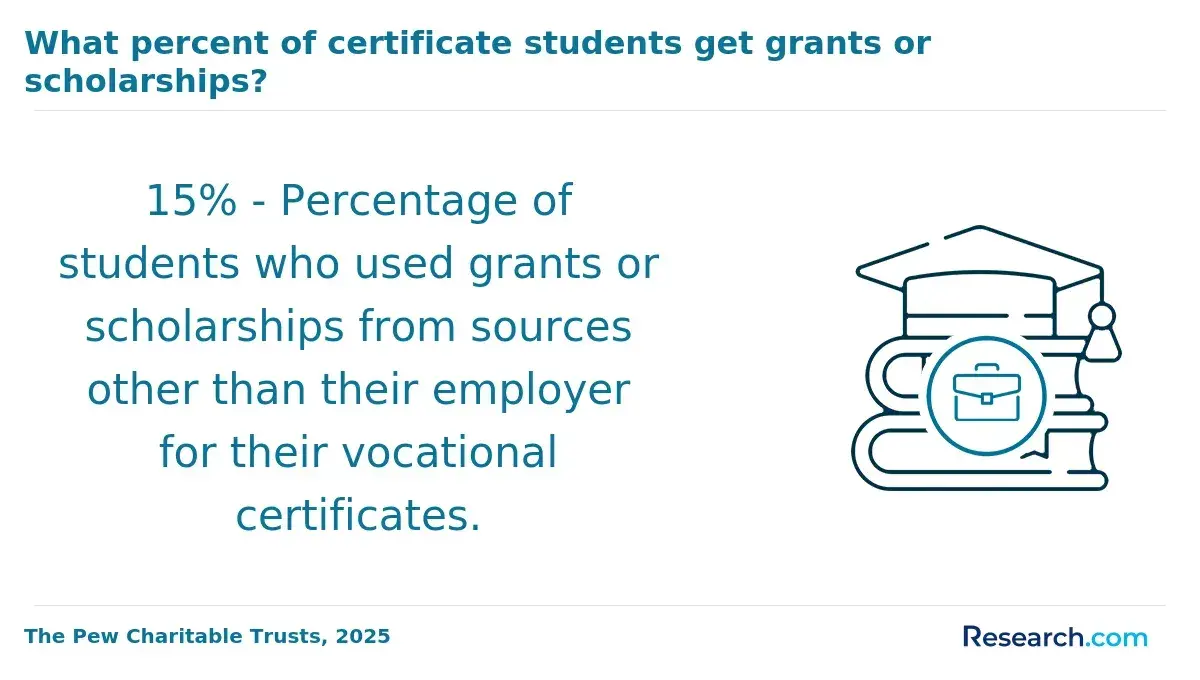
What is cost transparency in cybersecurity programs, and why does it matter for online students?
Cost transparency means the school gives students enough information to estimate the full cost of attendance before committing. For online cybersecurity students, that includes tuition, required credits, fees, textbooks or digital materials, lab platforms, proctoring, certification exams, hardware expectations, travel requirements, and whether tuition differs by state residency.
This matters because cybersecurity programs often require technical resources that may not be obvious from a basic tuition page. A degree that appears inexpensive can become less affordable if students must pay separately for virtual labs, exam vouchers, software subscriptions, background checks, or repeated course fees.
Before enrolling, request or locate the following cost details and save copies for your records:
- Total credits required for the credential and the exact per-credit tuition rate that applies to online students.
- Mandatory fees for technology, student services, graduation, identity verification, proctoring, labs, course materials, and portfolio platforms.
- Whether certification exam vouchers, cloud-lab access, textbooks, and security tools are included or billed separately.
- Transfer-credit maximums, minimum residency credits, prior-learning assessment fees, and limits on applying industry certifications for credit.
- Tuition-lock policies, refund deadlines, satisfactory academic progress rules, and the financial impact of withdrawing from an accelerated term.
The strongest programs make these items visible in tuition pages, catalogs, student handbooks, and net price calculators. If an advisor avoids written answers or encourages enrollment before costs are documented, treat that as a warning sign.
What types of online cybersecurity degrees are available, and which level fits my goals?
Online cybersecurity credentials range from short undergraduate certificates to doctoral programs. The right level depends on your current education, work experience, target role, timeline, and whether you need a broad degree or a focused credential.
The table below compares common online cybersecurity degree levels. Use it to match the credential to your starting point rather than assuming the highest degree is always the best investment:
| Credential level | Typical fit | Common goal | When it may not fit |
| Undergraduate certificate | Students testing the field or adding cyber basics to an existing role | Entry-level support, help desk security tasks, or preparation for a later degree | When the target employer requires a bachelor's degree |
| Associate degree | New students seeking an affordable first credential | Security technician, IT support, network support, or transfer into a bachelor's program | When credits do not transfer cleanly to a four-year institution |
| Bachelor's degree | Students seeking broad preparation for entry-level and early-career cybersecurity roles | Security analyst, SOC analyst, systems security, digital forensics, or compliance roles | When the student already has a bachelor's and only needs specialization |
| Graduate certificate | Professionals with a bachelor's degree who need focused cyber skills | Career pivot, promotion, or certification preparation | When a master's is required for the desired leadership or research role |
| Master's degree | IT professionals, military learners, analysts, or career changers with prior academic preparation | Security engineering, governance, risk, cloud security, management, or advanced analyst roles | When the student lacks prerequisite computing knowledge and needs foundational coursework first |
| Doctorate | Experienced professionals pursuing research, university teaching, or senior technical leadership | Cybersecurity research, policy, strategy, or executive-level expertise | When the goal is immediate entry into the field |
Cybersecurity also overlaps with adjacent fields such as blockchain security, fintech risk, fraud analytics, and secure distributed systems. Students interested in that intersection may compare a cybersecurity pathway with a degree in cryptocurrency to see whether their goals are more security-focused, finance-focused, or software-focused.
As a rule of thumb, choose a certificate if you need targeted upskilling, an associate degree if you want a lower-cost transfer route, a bachelor's degree if you need a full entry-level credential, and a master's degree if you already have technical or professional experience and want advancement.
How do online cybersecurity programs compare with campus-based options in flexibility and total cost?
Online cybersecurity programs can be more flexible than campus-based options, but they are not automatically cheaper. The total cost depends on tuition model, transfer credits, residency rules, fees, commuting, housing, technology requirements, and whether the student can continue working while enrolled.
The comparison below highlights practical differences that affect both learning experience and total cost. It is most useful when you are choosing between a local campus program and a fully online or hybrid option:
| Factor | Online cybersecurity degree | Campus-based cybersecurity degree |
| Schedule | Often asynchronous or evening-friendly, better for working adults | More fixed class times, better for students who want in-person structure |
| Direct education costs | May charge online tuition, technology fees, virtual lab fees, and proctoring fees | May charge campus fees, lab fees, transportation, parking, and housing costs |
| Hands-on learning | Uses virtual labs, cloud environments, simulations, and remote collaboration | May offer physical labs, in-person mentoring, clubs, and local employer events |
| Networking | Depends heavily on online career services, cohort design, and faculty engagement | Often easier to access campus events, student organizations, and local recruiters |
| Best fit | Students who need flexibility, have work or family obligations, or live far from a strong program | Students who learn best face-to-face or want a traditional campus experience |
The smartest comparison is total cost after aid, not sticker price. Students comparing technology degrees may also find it useful to review broader computer science cost patterns because cybersecurity, IT, and computer science programs often share pricing structures, lab fees, and transfer-credit rules.
Online is usually the better choice when flexibility lets you keep earning income, avoid relocation, or attend a stronger program than the one nearby. Campus may be better when you need structured support, direct access to labs, or local internship networks.
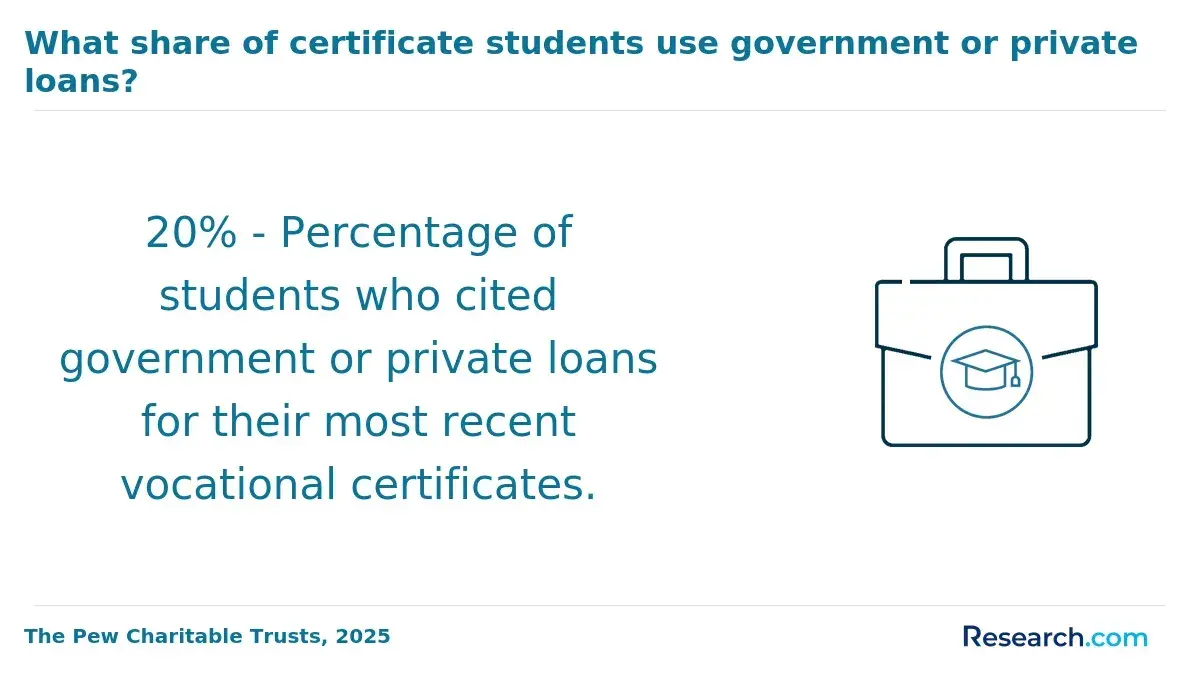
What courses and technical skills are typically included in an online cybersecurity curriculum?
A strong online cybersecurity curriculum should combine computing foundations, security theory, legal and ethical context, and repeated hands-on practice. Programs that rely only on lectures or policy readings may not provide enough technical preparation for analyst, engineering, or incident-response roles.
Most online cybersecurity degrees include some version of the following subject areas. The exact mix varies by whether the program is housed in computer science, IT, business, engineering, or criminal justice:
- Networking fundamentals, operating systems, Linux administration, and cloud infrastructure.
- Programming or scripting with languages such as Python, PowerShell, Bash, Java, or C-based foundations.
- Security principles, cryptography, access control, identity management, and secure architecture.
- Threat detection, security operations, vulnerability assessment, penetration-testing concepts, and incident response.
- Digital forensics, malware analysis foundations, log analysis, SIEM tools, and evidence handling.
- Risk management, governance, compliance, privacy, cyber law, ethics, and security policy.
- Capstone projects, virtual labs, team simulations, or portfolio-based assignments that demonstrate applied skills.
AI is also changing the skill mix. Security teams increasingly use automation for log triage, phishing detection, vulnerability prioritization, and incident workflows, but students still need human judgment to validate alerts, understand systems, and communicate risk.
Students who enjoy security analytics, machine learning, or large-scale threat data may also compare cybersecurity with analytics-focused graduate programs. A guide to the best data science masters can help clarify whether the better fit is cyber defense, data science, or a hybrid security analytics path.
What are typical admission requirements for online cybersecurity degrees at U.S. colleges?
Admission requirements vary by degree level and school, but most U.S. online cybersecurity programs use a combination of academic history, prerequisites, identity verification, and English-language or placement requirements. Competitive programs may also review professional experience, certifications, essays, or recommendations.
Use the following list to prepare before contacting admissions. Having these items ready can speed up transcript review and prevent surprise prerequisite delays:
- High school diploma, GED, or prior college transcripts for undergraduate admission.
- Bachelor's degree from an accredited institution for most master's programs.
- Minimum GPA requirement, often with conditional admission options for applicants below the preferred threshold.
- Prerequisites in math, statistics, programming, networking, computer systems, or information technology.
- Resume, statement of purpose, recommendations, or proof of relevant work experience for some graduate programs.
- Transfer-credit evaluation, prior-learning assessment, military transcript review, or certification review when applicable.
- Technology requirements such as reliable internet, webcam, updated computer, virtualization capability, or access to cloud labs.
Avoid applying only because a school says "no prerequisites" or "fast admission." Those features can be helpful, but they may also mean the program begins with broad introductory courses that add time and cost. Ask whether prerequisite gaps can be filled through lower-cost community college courses, challenge exams, or accepted certifications.
Students changing careers should be especially careful with graduate programs. A master's in cybersecurity can be valuable, but if you have no background in networking, operating systems, or programming, a bridge certificate or foundational bachelor's-level coursework may be a better first step.
How long do online cybersecurity degrees usually take, and what do they really cost?
Completion time depends on degree level, transfer credits, course load, term length, and whether the program is competency-based, semester-based, or accelerated. Cost depends on all of those factors plus tuition rates, fees, financial aid, employer tuition assistance, and whether students can reduce credits through transfer or prior learning.
The table below gives a practical planning view rather than a promise. Individual schools may be faster or slower, and the lowest sticker price is not always the lowest total cost if few credits transfer:
| Program type | Common completion range | Main cost drivers | Best affordability strategy |
| Undergraduate certificate | Several months to about 1 year | Per-credit tuition, lab fees, exam vouchers, course materials | Choose stackable credits that can apply to a later degree |
| Associate degree | About 2 years full time; longer part time | Tuition rate, transfer pathway, general education courses, fees | Use a transfer agreement with a four-year school before enrolling |
| Bachelor's degree | About 4 years full time; shorter with transfer credits | Total credits, residency requirement, online fees, repeated courses | Maximize accepted transfer credits and compare total remaining credits |
| Graduate certificate | Several months to about 1 year | Graduate tuition rate, number of courses, lab platforms | Pick certificates that articulate into a master's program if you may continue |
| Master's degree | About 1 to 3 years depending on pace | Graduate tuition, prerequisites, capstone or practicum fees | Confirm whether bridge courses add cost before admission |
For context, College Board's 2024 published tuition and fee averages show why students should compare net price rather than relying on school type alone. Public institutions can be lower-cost for in-state students, but private nonprofit and private for-profit programs may offer scholarships, accelerated formats, employer partnerships, or transfer policies that change the actual price.
Before choosing a program, calculate your likely cost in this order:
- Start with required credits remaining after transfer evaluation, not the catalog's full program credits.
- Multiply remaining credits by the correct online tuition rate for your residency or student category.
- Add mandatory fees, course materials, virtual labs, proctoring, certification exam costs, and graduation fees.
- Subtract grants, scholarships, employer assistance, military benefits, tuition discounts, and cash payments.
- Estimate borrowing only after calculating the net cost and reviewing repayment obligations.
The best cost-transparent cybersecurity programs make this calculation easy. If you cannot estimate your total cost after transcript review and aid information, keep comparing options.
What cybersecurity careers, roles, and industries can online degree graduates pursue?
Online cybersecurity degree graduates can pursue roles in security operations, risk management, cloud security, digital forensics, compliance, consulting, government, finance, healthcare, insurance, retail, manufacturing, defense contracting, and technology services.
The best role depends on your technical depth, certifications, internship experience, clearance eligibility, communication skills, and prior IT background.
The table below summarizes common career directions. Use it to connect degree choices with job functions rather than assuming every cybersecurity program prepares students for the same work:
| Career path | Typical responsibilities | Helpful preparation |
| SOC analyst or security analyst | Monitor alerts, investigate incidents, analyze logs, escalate threats, document findings | Networking, SIEM tools, incident response labs, scripting basics |
| Vulnerability analyst | Scan systems, prioritize weaknesses, coordinate remediation, report risk | Operating systems, networking, vulnerability tools, risk communication |
| Digital forensics analyst | Preserve evidence, analyze devices or logs, support investigations, write technical reports | Forensics coursework, legal and ethical training, evidence handling |
| Cloud security specialist | Protect cloud infrastructure, identity controls, configurations, workloads, and data | Cloud platforms, identity management, automation, secure architecture |
| Governance, risk, and compliance analyst | Assess controls, support audits, map policies to frameworks, communicate business risk | Risk management, compliance frameworks, policy writing, communication |
| Penetration-testing associate | Test systems with authorization, document weaknesses, recommend fixes | Networking, scripting, web security, ethics, supervised labs |
Cybersecurity also pairs with other regulated information fields. For example, students comparing cyber roles with healthcare data governance or privacy work may review health information management bachelor degree salary information to understand how healthcare IT, compliance, privacy, and security careers can overlap.
Entry-level cybersecurity roles are not always truly entry-level. Many employers prefer candidates with IT support, networking, systems administration, military cyber experience, internships, or portfolios. If you are new to technology, a realistic plan may start with help desk, network support, or junior systems roles before moving into security operations.
What salaries, certifications, and job outlook can online cybersecurity graduates expect?
Salary and job outlook are important, but they should be used as planning inputs rather than guarantees. Pay varies by region, industry, clearance requirements, experience, education, certifications, and whether the role is technical, managerial, or compliance-focused.
The BLS reports a May 2024 median pay of $124,910 for information security analysts and projects 29% employment growth from 2024 to 2034. For students, the key takeaway is that demand is strong, but the most competitive applicants usually combine a degree with hands-on experience, projects, internships, certifications, and clear communication skills.
Certifications can help validate specific skills, especially when paired with a degree. The table below explains common certification categories without implying that every student needs all of them:
| Certification category | Examples | Best use |
| Entry-level security | CompTIA Security+, Google Cybersecurity Certificate, ISC2 Certified in Cybersecurity | Building baseline vocabulary and qualifying for junior roles or internships |
| Networking and systems | CompTIA Network+, Cisco CCNA, Linux certifications | Strengthening foundations for SOC, infrastructure, and cloud-security work |
| Cloud security | AWS, Microsoft Azure, Google Cloud, and vendor-specific security credentials | Targeting cloud administrator, cloud security, or DevSecOps-adjacent roles |
| Advanced security | CISSP, CISM, GIAC credentials, OSCP | Advancement after relevant experience; some require or strongly assume professional practice |
| Audit and risk | CISA, CRISC, governance and compliance credentials | Risk, audit, compliance, privacy, and security management pathways |
AI and automation are reshaping cybersecurity work, but they are not eliminating the need for skilled professionals. Instead, employers increasingly value people who can interpret automated alerts, verify AI-generated findings, secure cloud environments, explain risk to nontechnical leaders, and adapt as attackers use automation too.
A practical career strategy is to build in layers: earn the degree or credential that fits your starting point, complete labs and portfolio projects, pursue one certification aligned with your target role, get internship or IT experience if possible, and keep a record of measurable projects such as detection rules, incident reports, scripts, or secure cloud configurations.
Other Things You Should Know About Cybersecurity
Often, they do not, but policies vary by school. Ask the registrar whether the diploma and transcript list the delivery format, campus, or program modality before enrolling if this matters to you.
Many students do, especially in asynchronous or part-time programs. The safer approach is to start with a manageable course load, confirm weekly lab expectations, and avoid accelerated terms until you understand the workload.
In 2027, universities like Western Governors University (WGU) and University of Maryland Global Campus (UMGC) are recognized for their online cybersecurity degrees with clear cost transparency. They offer detailed breakdowns of tuition and fees, available financial aid, and other associated costs, empowering students to make informed financial decisions.
Not always, but basic scripting and comfort with operating systems are helpful. If you are new to coding, look for programs with introductory programming, tutoring, and hands-on labs rather than assuming you can skip technical foundations.
References
- Taking an online Cybersecurity Course https://lumifylearn.com/blog/what-should-i-ask-myself-before-taking-an-online-cybersecurity-course/
- Cyber Security Salary: 7 Highest-Paid Cyber Security Jobs | NEIT https://www.neit.edu/blog/cyber-security-salary
- Online Bachelor's Degree: Cybersecurity Technology https://www.umgc.edu/online-degrees/bachelors/cybersecurity-technology
- Cybersecurity Career Pathway https://www.cyberseek.org/pathway.html
- What Degree Do I Need for a Career in Cybersecurity? | Cyber Degrees https://www.cyberdegrees.org/resources/degree-required-for-cybersecurity-career/
- Advanced AI & LLM Security Training | ModernSecurity.io https://www.modernsecurity.io/pages/blog
- 25 Best Online Cybersecurity Bachelor’s Degree Programs https://programs.com/programs/online-bs-cybersecurity/
- What to Expect During an Online BS in Cybersecurity Program https://www.umassglobal.edu/blog-news/expect-during-online-bs-cybersecurity-program
- How to Choose an Online Cybersecurity Degree | SANS.edu https://www.sans.edu/insights/online-cybersecurity-degree-cost-vs-quality