2027 Best Online Bachelor's in Cybersecurity With Career Services

Co-Founder and Chief Data Scientist
Choosing an online bachelor's in cybersecurity is a career and cost decision, not just a school search. The FBI Internet Crime Complaint Center reported more than $16.6 billion in potential cybercrime losses in its 2024 report, showing why employers need trained security talent.
This guide is for transfer students, working adults, first-time undergraduates, and career changers comparing online programs. You will learn how to evaluate accreditation, curriculum, costs, career services, internships, salaries, and job demand so you can choose a program that fits your goals and budget.
Key Things You Should Know
- The strongest online cybersecurity bachelor's programs combine institutional accreditation, hands-on labs, cloud and AI-aware security coursework, employer-connected career services, and clear transfer-credit policies.
- College Board's 2024 pricing data lists average published tuition and fees of $11,610 for in-state public four-year colleges and $43,350 for private nonprofit four-year colleges, before aid.
- The BLS projects 29% growth for information security analysts from 2024 to 2034, so students should build portfolios, certifications, internships, and interview-ready technical skills before graduation.
What makes the best online bachelor's in cybersecurity programs stand out today?
The best online bachelor's in cybersecurity programs stand out because they help students move from theory to employable skills. A strong program should teach how networks, systems, applications, cloud platforms, and human behavior create security risks, then give students structured practice detecting, preventing, and responding to those risks.
Program quality is especially important because cybersecurity hiring is skills-based. A degree can help you meet baseline education requirements, but employers often want evidence that you can use tools, explain risk, document findings, and work under pressure.
Military-connected students should also check whether schools offer credit for training, deployment-friendly scheduling, and VA benefit support; specialized guides to cybersecurity programs online for veterans can help narrow that search.
The table below summarizes the features that usually separate a career-focused cybersecurity bachelor's program from a program that only lists technical courses. Use these criteria when comparing schools, admissions pages, and conversations with advisors.
| Standout feature | Why it matters | What to verify before enrolling |
| Hands-on cyber labs | Students need practice with networks, operating systems, vulnerability scanning, incident response, and secure configuration. | Ask whether labs are remote, cloud-based, simulation-based, or tied to real tools used by employers. |
| Career services built into the program | Cybersecurity hiring often depends on resumes, portfolios, interviews, internships, and networking, not coursework alone. | Look for cybersecurity-specific resume help, mock interviews, employer events, and internship guidance. |
| Current technical coverage | Security work now involves cloud platforms, identity systems, automation, AI-assisted threats, and compliance obligations. | Review the catalog for cloud security, scripting, threat intelligence, secure software, and governance topics. |
| Clear transfer-credit pathway | Many online students bring community college, military, workplace, or prior university credits. | Request an official transfer evaluation before committing, not just a verbal estimate. |
| Recognized quality signals | Accreditation and external designations help confirm that a school follows academic quality standards. | Confirm institutional accreditation and check whether the program has ABET accreditation or CAE-CD designation where relevant. |
A good "best" choice is not always the most famous or most expensive program. It is the program that matches your starting point, schedule, career target, transfer credits, financial aid eligibility, and need for structured career support.
How do online bachelor's in cybersecurity compare to campus-based degrees?
An online bachelor's in cybersecurity can be academically comparable to a campus-based degree when it comes from an accredited school, uses rigorous assessments, and includes real technical practice. The biggest difference is not necessarily quality; it is how you learn, network, access support, and manage your time.
Online learning is often the better fit for working adults, parents, military students, and students who cannot relocate. Campus learning may be stronger for students who want face-to-face labs, residential life, local recruiting events, or a more structured weekly routine.
If you are still deciding between security, software, and broader computing pathways, comparing cybersecurity with an online computer science degree can clarify whether you want a security-specialized or more general technical foundation.
The table below compares online and campus cybersecurity bachelor's programs across the decision points that usually matter most to students.
| Decision factor | Online bachelor's in cybersecurity | Campus-based bachelor's in cybersecurity |
| Schedule flexibility | Often stronger, especially if courses are asynchronous or offered in multiple terms per year. | Usually more fixed, with scheduled class meetings and location-based attendance. |
| Hands-on learning | Can be strong if the program uses virtual labs, cloud environments, and remote security tools. | May offer physical labs, in-person troubleshooting, and easier access to faculty during lab hours. |
| Networking | Depends heavily on virtual events, discussion boards, alumni groups, and employer partnerships. | Often easier through student clubs, campus recruiting, hackathons, and informal peer interaction. |
| Cost control | Can reduce relocation, commuting, and housing costs, but tuition varies by school. | May include higher living and transportation costs, though in-state public options can be affordable. |
| Best fit | Self-directed students who need flexibility and can stay organized without daily in-person structure. | Students who learn best in person or want a traditional college environment. |
The main risk of online study is isolation. Before enrolling, ask how the program keeps students connected to instructors, lab support, tutoring, peer groups, and employers. A flexible format is only valuable if you can still get help when technical assignments become difficult.
Which accreditation and quality standards should online cybersecurity programs meet?
Accreditation is one of the first things to check because it affects transfer credit, financial aid eligibility, employer recognition, and graduate school options. For most students, the baseline requirement is institutional accreditation from an accreditor recognized by the U.S. Department of Education or the Council for Higher Education Accreditation.
Cybersecurity programs may also carry program-level quality signals. ABET accreditation can indicate that a computing-related program meets discipline-specific academic standards.
The National Security Agency's Centers of Academic Excellence in Cyber Defense, often called CAE-CD, is not the same as accreditation, but it can signal that a school's cybersecurity curriculum aligns with recognized cyber defense knowledge units.
Use the following checks before applying or accepting an offer. These steps help you avoid programs that sound technical but may not support your long-term education or career goals:
- Confirm institutional accreditation directly through the accreditor or the U.S. Department of Education database, not only through marketing pages.
- Check whether the cybersecurity major, concentration, or school of computing has ABET accreditation or CAE-CD designation if those signals matter for your goals.
- Ask whether online students receive the same transcript and diploma wording as campus students.
- Review transfer policies for community college credits, military credits, prior university coursework, and industry certifications.
- Look for required hands-on assessments rather than programs that rely mostly on discussion posts and multiple-choice exams.
Common red flags include vague accreditation language, pressure to enroll before receiving a transfer evaluation, unclear tuition and fee disclosures, no access to technical labs, and career services that appear generic rather than technology-focused.
What courses and technical skills are typically taught in an online cybersecurity major?
An online cybersecurity bachelor's degree usually blends computing fundamentals, security theory, hands-on defense skills, risk management, and communication. The goal is to prepare students to understand how systems fail, how attackers operate, and how organizations reduce risk without stopping normal business operations.
Students should expect technical breadth. Cybersecurity is not only "hacking"; it includes secure system design, governance, incident response, forensics, cloud security, scripting, user behavior, legal issues, and business risk.
Students interested in threat detection, anomaly analysis, or security analytics may also compare cybersecurity with online data science programs, especially if they later want graduate-level analytics training.
The list below shows common course areas and why each one matters for employability. Exact course titles vary by school, so compare learning outcomes rather than names alone:
- Networking and systems administration: teaches how devices, servers, protocols, and operating systems communicate and where vulnerabilities can appear.
- Programming and scripting: builds the ability to automate tasks, read code, understand software weaknesses, and work with tools such as Python, Bash, or PowerShell.
- Cyber defense and threat analysis: covers monitoring, intrusion detection, vulnerability management, malware concepts, and defensive strategy.
- Digital forensics and incident response: teaches how to preserve evidence, analyze attacks, document findings, and help organizations recover.
- Cloud and identity security: focuses on access control, cloud configurations, shared responsibility models, and misconfiguration risks.
- Governance, risk, and compliance: explains policies, audits, frameworks, privacy obligations, and how security decisions connect to business needs.
- Ethical hacking or penetration testing: introduces controlled testing methods, reporting, and legal boundaries for offensive security work.
- Capstone or applied project: gives students a portfolio-ready way to demonstrate practical skills to employers.
AI is changing the skill mix but not eliminating the need for fundamentals. Security teams increasingly use automation for log review, alert triage, and threat hunting, while attackers use AI to improve phishing and social engineering. Students should therefore learn both tool use and judgment: how to validate outputs, document evidence, and explain risk clearly.
What are common admission requirements for online bachelor's in cybersecurity?
Admission requirements depend on whether you are a first-time college student, transfer student, adult learner, or second-degree applicant. Most online bachelor's programs require proof of high school completion or prior college coursework, but selective programs may also review math readiness, computing experience, GPA, and prerequisite courses.
The table below outlines common applicant categories and what schools usually ask for. Use it to prepare documents early and avoid enrollment delays.
| Applicant type | Common requirements | What to prepare |
| First-time undergraduate | High school diploma or equivalent, transcripts, application form, and sometimes test scores or placement assessments. | High school transcripts, identity documents, financial aid materials, and any AP or dual-enrollment records. |
| Transfer student | College transcripts, minimum transferable credits, minimum GPA, and prerequisite review. | Official transcripts from every college attended and syllabi for technical courses if credit evaluation is uncertain. |
| Adult learner | Prior college records, work history, personal statement, or placement testing depending on the school. | Resume, transcripts, documentation for prior learning, and a realistic weekly study plan. |
| Military-connected student | Standard admission materials plus military transcript review when applicable. | Joint Services Transcript, Community College of the Air Force transcript, VA benefit documentation, and deployment schedule considerations. |
Students without a technical background can still pursue cybersecurity, but they should not skip foundations. If placement results show weak math, writing, or computing readiness, taking bridge courses can prevent frustration in programming, networking, and systems classes.
Before applying, take these practical steps to reduce surprises during admission and enrollment:
- Request an unofficial transfer-credit estimate before paying deposits or registering for classes.
- Ask whether certifications such as CompTIA A+, Network+, Security+, or Cisco credentials can count toward credit.
- Check whether the program requires calculus, discrete math, statistics, or specific programming prerequisites.
- Confirm the minimum technology requirements for labs, including operating system, RAM, virtualization support, and broadband needs.
- Ask whether admission to the university automatically means admission to the cybersecurity major or whether there is a separate progression requirement.
How long do online cybersecurity bachelor's programs take, and what do they cost?
A traditional bachelor's degree usually requires about 120 credits and takes four years of full-time study. Online students often vary more: transfer students may finish faster, while working adults may choose part-time enrollment and take longer. Accelerated terms can shorten the calendar, but they also increase weekly workload.
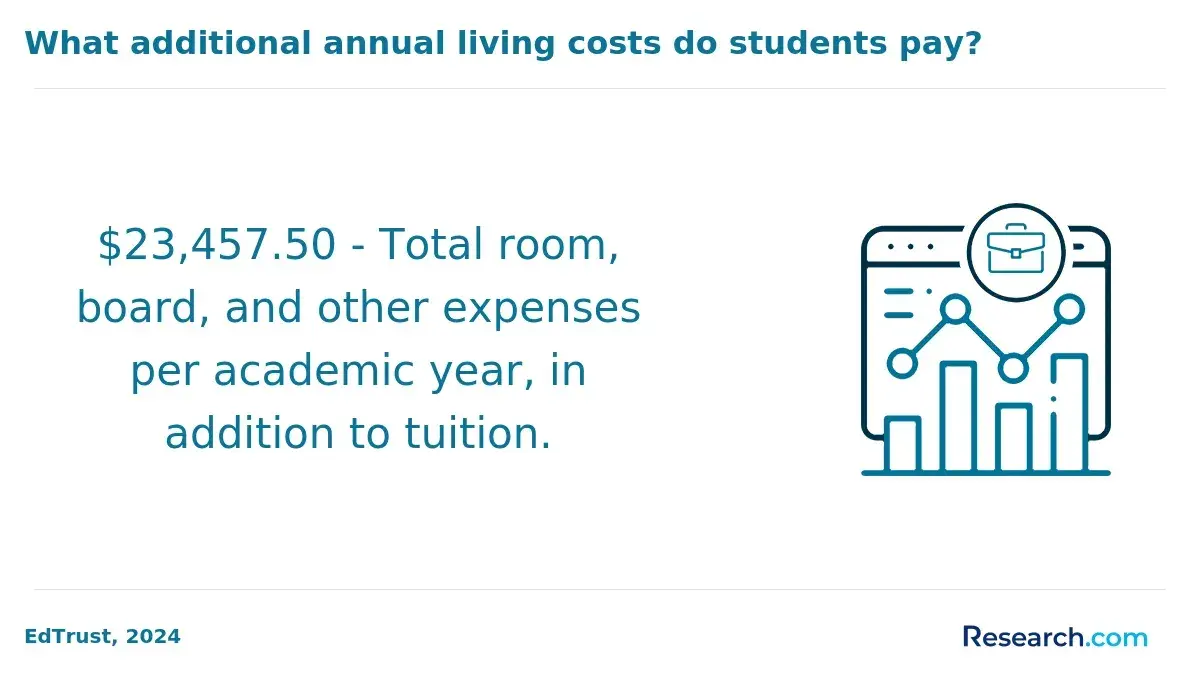
Cost should be evaluated as total cost of attendance, not tuition alone. College Board's 2024 figures show average published tuition and fees of:
- $11,610 for in-state students at public four-year institutions
- $30,780 for out-of-state students at public four-year institutions
- $43,350 for students at private nonprofit four-year institutions
Those published prices are not the same as your net price after grants, scholarships, employer tuition benefits, military education benefits, or transfer credits. For online students, the biggest savings often come from transferring lower-cost credits, choosing in-state online tuition when available, and avoiding excess credits that do not apply to the degree.
The table below shows common timeline and cost variables. It can help you compare programs beyond the advertised tuition rate.
| Factor | How it affects time or cost | Decision tip |
| Transfer credits | Can reduce the number of credits you must complete and lower tuition costs. | Get a written evaluation showing which credits apply to general education, major, and elective requirements. |
| Full-time vs. part-time enrollment | Full-time study can shorten time to graduation; part-time study may be more manageable for working adults. | Estimate weekly study hours before choosing an accelerated schedule. |
| Per-credit tuition | Online programs often price tuition per credit, and rates may differ for residents and nonresidents. | Multiply tuition by remaining credits and add required fees. |
| Technology and lab fees | Cybersecurity programs may require software, virtual lab access, cloud environments, or proctoring. | Ask for a full fee list before enrolling. |
| Certification vouchers | Some programs include certification preparation or exam vouchers; others require students to pay separately. | Confirm whether certification costs are included, optional, or outside tuition. |
The most affordable option is not always the best value if it lacks technical depth or career support. A higher-cost program may be reasonable if it accepts more transfer credit, includes industry labs, offers strong employer connections, or helps you finish faster without sacrificing learning quality.
What cybersecurity careers can you pursue with an online bachelor's degree?
An online bachelor's in cybersecurity can prepare students for technical, analytical, and risk-focused roles. Entry-level titles vary because employers use different naming conventions, but many graduates begin in security operations, systems support, network defense, compliance, or junior analyst positions before moving into specialized roles.
Cybersecurity also connects with industries beyond traditional IT, including healthcare, finance, energy, transportation, defense contracting, education, and state or local government. Students interested in protecting mapping systems, utilities, emergency response platforms, or location-based infrastructure may also explore geospatial technology pathways such as the best GIS schools alongside cybersecurity training.
The table below summarizes common roles and the type of work associated with each. Use it to match a program's curriculum with the career direction you want.
| Career path | Typical responsibilities | Skills to build during the degree |
| Security operations center analyst | Monitor alerts, investigate suspicious activity, escalate incidents, and document findings. | Log analysis, SIEM tools, networking, incident response, and clear written communication. |
| Cybersecurity analyst | Assess vulnerabilities, support controls, review risks, and help improve security practices. | Risk assessment, vulnerability scanning, security frameworks, scripting, and reporting. |
| Network security specialist | Protect network infrastructure, configure devices, manage access, and troubleshoot security issues. | TCP/IP, firewalls, VPNs, routing, segmentation, and secure configuration. |
| Digital forensics technician | Collect and analyze digital evidence, preserve chain of custody, and support investigations. | Forensic tools, operating systems, evidence handling, documentation, and legal awareness. |
| Governance, risk, and compliance analyst | Support audits, policies, control testing, privacy reviews, and compliance documentation. | Frameworks, policy writing, risk registers, communication, and business process knowledge. |
| Penetration testing associate | Assist with authorized testing, identify weaknesses, and write remediation-focused reports. | Ethical hacking methods, scripting, web security, Linux, and professional reporting. |
A bachelor's degree is often enough to compete for entry-level roles, but specialized positions may require experience, certifications, security clearance, or graduate study. Students should treat the degree as the foundation and use projects, internships, competitions, and certifications to show job readiness.
What salary ranges and earning potential can cybersecurity graduates expect?
Cybersecurity salary potential depends on role, location, employer, industry, clearance requirements, certifications, and experience. The most reliable national benchmark is the BLS category for information security analysts, which reported a median annual wage of $124,910 in May 2024. This median is useful because it shows the strong earning potential of established analysts, but it should not be treated as an entry-level promise.
New graduates often start in support, operations, or junior analyst roles before reaching mid-career analyst compensation. Higher pay is more common when professionals develop scarce skills such as cloud security architecture, application security, incident response leadership, security engineering, or governance in regulated industries.
The table below explains how earning potential typically changes across career stages without implying guaranteed salaries. Use it to set realistic expectations and plan skill development.
| Career stage | Common role examples | What usually affects pay |
| Entry level | SOC analyst, IT security support, junior GRC analyst, network support with security duties. | Internships, certifications, lab portfolio, location, shift work, and ability to explain technical findings. |
| Early to mid-career | Cybersecurity analyst, vulnerability analyst, incident response analyst, network security specialist. | Hands-on experience, tool fluency, cloud exposure, industry knowledge, and measurable project results. |
| Advanced specialist | Cloud security engineer, application security analyst, penetration tester, forensics specialist. | Specialized expertise, certifications, complex projects, consulting experience, and employer demand. |
| Leadership track | Security manager, risk manager, security architect, later director-level roles. | Communication, budgeting, policy, team leadership, business risk judgment, and strategic planning. |
To evaluate return on investment, compare your expected net cost with realistic first roles, not only with senior-level salaries. Ask schools for career outcome data by major, but read it carefully: outcomes may reflect only survey respondents and may combine online and campus students.
What is the job outlook and employer demand for cybersecurity professionals?
Employer demand for cybersecurity talent remains strong because organizations rely on cloud systems, remote access, software platforms, connected devices, and third-party vendors. The BLS projects 29% employment growth for information security analysts from 2024 to 2034, which is much faster than the average for all occupations. For students, this indicates a favorable field, but not an automatic job offer.
Hiring is also becoming more selective. Employers increasingly look for candidates who can combine technical skills with documentation, business awareness, and teamwork. AI-assisted security tools may reduce some repetitive tasks, but they also increase the need for analysts who can validate alerts, interpret context, and make judgment calls.
Students can improve competitiveness by building evidence of skill before graduation. The following actions are more useful than relying on the degree alone:
- Complete hands-on projects that show network defense, incident response, vulnerability management, or cloud security skills.
- Join cybersecurity competitions, capture-the-flag events, or student security clubs to practice under realistic constraints.
- Pursue internships, apprenticeships, part-time IT roles, or help desk work that creates a bridge into security responsibilities.
- Earn certifications aligned with your target role, such as foundational security, networking, cloud, or governance credentials.
- Practice explaining technical risk to nontechnical audiences, because many cybersecurity roles require written recommendations.
The job outlook is best used as a signal of broad opportunity, not as a guarantee. Your outcome will depend on market location, job search strategy, portfolio quality, networking, and how well your program connects students with employers.
How do online cybersecurity programs support students with career services and internships?
Career services can be the difference between completing courses and actually entering the cybersecurity workforce. The best online programs do not wait until the final semester; they help students build resumes, portfolios, employer relationships, interview skills, and internship plans throughout the degree.
Online students should look for career support designed for remote learners. A general university career center may be helpful, but cybersecurity students often need more specialized preparation, such as technical interview practice, lab portfolio review, security clearance guidance when relevant, and introductions to employers hiring for analyst or operations roles.
Ask each school the following questions before enrolling. The answers will reveal whether career services are active, measurable, and relevant to cybersecurity students:
- Does the program offer cybersecurity-specific resume reviews, mock interviews, and portfolio feedback?
- Are online students eligible for the same internships, career fairs, employer events, and alumni networks as campus students?
- Does the school help students find remote, local, or hybrid internships if they cannot relocate?
- Are capstone projects designed around real security problems that students can discuss with employers?
- Does the program publish career outcomes by major, modality, or student type, and how is that data collected?
- Are faculty or career staff connected to local employers, federal contractors, managed security service providers, or industry advisory boards?
Be cautious if a school promises job placement, guarantees salary outcomes, or cannot explain how online students access internships. Strong career services create opportunities and preparation, but students still need to apply consistently, network, practice interviews, and demonstrate skills.
Other Things You Should Know About Cybersecurity Degrees
For 2027, students pursuing an online bachelor's in cybersecurity should have a computer with at least an Intel Core i5 processor or AMD equivalent, 8GB RAM (16GB recommended), and 256GB SSD. An internet connection of at least 10 Mbps is essential, and a reliable antivirus program is recommended to protect sensitive coursework data.
You do not need to start as a math expert, but you should be comfortable building quantitative and logical reasoning skills. Networking, cryptography concepts, scripting, statistics, and risk analysis all require careful problem-solving.
A bachelor's degree is usually better for students who want a broad academic foundation and roles requiring a four-year credential. A bootcamp may fit learners who already have IT experience and need focused skill practice, but it is less likely to replace degree requirements for some employers.
References
- Internship Program – Carolina Cyber Network https://carolinacybernetwork.net/internship-program/
- Students & Recent Graduates Employment Opportunities | CISA https://www.cisa.gov/careers/students-recent-graduates-employment-opportunities
- How to Start a Career in Cybersecurity: Degrees, Internships and More https://www.albany.edu/cehc/communications/start-a-cybersecurity-career
- The Value of an Accredited Cybersecurity Program - ABET https://www.abet.org/the-value-of-an-accredited-cybersecurity-program/
- Start Your Career with Our Cyber Security Program https://www.capitalonecareers.com/start-your-career-with-our-cyber-security-program-students-cdev
- Should I Get My Bachelor’s Degree in Cybersecurity Online? | CSU Global https://csuglobal.edu/blog/should-i-get-my-bachelors-degree-cybersecurity-online
- Best Online Cybersecurity Bachelor's Degrees | CyberDegrees.org https://www.cyberdegrees.org/listings/best-online-cyber-security-bachelors-degrees/
- Cybersecurity Career Pathway https://www.cyberseek.org/pathway.html