2027 Best Online Master's in Cybersecurity for Security Analysts

Co-Founder and Chief Data Scientist
Choosing an online master's in cybersecurity is a high-stakes decision because the field is growing quickly, but programs vary widely in cost, rigor, and career fit. The U.S. Bureau of Labor Statistics projects information security analyst employment to grow 29% from 2024 to 2034, far faster than average.
This guide is for aspiring or current security analysts who want a practical way to compare programs, understand admissions and costs, evaluate accreditation, and decide whether a master's degree is the right investment for their next cybersecurity role.
Key Things You Should Know
- The strongest online cybersecurity master's programs for security analysts combine technical depth, hands-on labs, recognized accreditation, and courses aligned with detection, incident response, risk management, cloud security, and threat intelligence.
- NCES data published in 2024 shows average graduate tuition and required fees were about $12,600 at public institutions and about $29,900 at private nonprofit institutions, before program-specific fees and living expenses.
- BLS reports a $124,910 median annual wage for information security analysts in May 2024, but outcomes depend on experience, certifications, location, employer, clearance eligibility, and technical portfolio.
What is an online master's in cybersecurity for security analysts and who is it for?
An online master's in cybersecurity for security analysts is a graduate degree that teaches how to identify, investigate, and reduce cyber risk across networks, cloud systems, applications, data environments, and enterprise operations.
Unlike a broad IT management degree, this program usually emphasizes security monitoring, digital forensics, incident response, governance, secure systems design, and risk-based decision-making.
For security analyst roles, the degree is most valuable when it builds both technical ability and judgment. Analysts are not only expected to read alerts; they must decide which events matter, communicate risk to nontechnical teams, document evidence, and recommend controls that fit the organization's business needs.
This degree is usually a good fit for several types of learners. The right path depends on your current experience and the kind of cybersecurity work you want to do after graduation.
- Working IT professionals who already have experience in networking, systems administration, help desk escalation, cloud operations, or software development and want to move into security analysis.
- Early-career cybersecurity workers who want a stronger foundation for security operations center, incident response, vulnerability management, or risk analyst roles.
- Military-affiliated learners and veterans who want to translate technical, intelligence, communications, or operations experience into civilian cybersecurity roles; those comparing flexible military-friendly options can also review an online cyber security degree for veterans.
- Career changers with strong technical preparation who have completed prerequisite coursework, certifications, bootcamps, or hands-on projects and need a credential that signals readiness for advanced security work.
It may not be the best first step if you have no computing background at all. In that case, a bachelor's degree, post-baccalaureate certificate, CompTIA Network+ or Security+ preparation, or hands-on home lab work may be more practical before committing to a graduate program. A master's degree can deepen expertise, but it does not replace the need to understand networks, operating systems, scripting, and core security tools.
How do online and on-campus cybersecurity master's programs for security analysts compare?
Online and on-campus cybersecurity master's programs can lead to similar academic credentials, but the learning experience is different. The best choice depends on your schedule, preferred learning style, access to labs, need for campus recruiting, and ability to balance school with work.
The table below compares the main decision factors. Use it to identify which format supports your career plan rather than assuming one format is automatically better.
| Factor | Online master's | On-campus master's | Best fit |
| Schedule | Often asynchronous or evening-based, with weekly deadlines | More fixed class times and physical attendance expectations | Online is usually better for full-time workers or caregivers |
| Hands-on labs | Uses virtual labs, cloud ranges, simulations, and remote security tools | May offer in-person labs, hardware access, and campus security centers | Either can work if labs are rigorous and assessed |
| Networking | Requires more intentional participation in forums, group projects, and professional events | Offers easier access to faculty, classmates, campus events, and local employers | Campus may help learners who need intensive relationship-building |
| Employer compatibility | Easier to keep current job and apply learning immediately | May require relocation or reduced work hours | Online often fits professionals already in IT or cybersecurity |
| Cost considerations | May reduce commuting and relocation costs, but technology and proctoring fees can apply | May include campus fees, housing, transportation, and parking | Compare total cost, not just tuition |
Online programs are not automatically easier. Strong programs often require frequent labs, group incident-response exercises, secure coding assignments, research papers, proctored exams, and capstone projects. The key is to look for evidence of applied work: security operations simulations, SIEM analysis, malware or forensics labs, cloud security projects, and policy-to-technical-control assignments.
On-campus programs can be worthwhile if you want access to a university cyber range, faculty research labs, government contractors near campus, or structured recruiting pipelines. However, an online program from an accredited institution may be the better return if it lets you stay employed, avoid relocation, and build experience while studying.
What are the admission requirements for an online master's in cybersecurity for security analysts?
Admission requirements vary by university, but most online cybersecurity master's programs look for evidence that you can handle graduate-level computing, security, and analytical work. A computer science degree is helpful, but it is not always required if you can show technical preparation through coursework, work experience, certifications, or bridge classes.
The table below summarizes common requirements and how applicants can strengthen their profile. Requirements vary, so always verify details with the admissions office before applying.
| Requirement | What schools commonly ask for | How to strengthen your application |
| Bachelor's degree | A regionally accredited bachelor's degree, often in computing, engineering, information systems, mathematics, or a related field | If your degree is unrelated, complete prerequisite courses in networking, programming, databases, and operating systems |
| GPA | Many programs prefer a minimum undergraduate GPA, often around a B average | Use recent technical coursework or certificates to show improvement if your GPA is weaker |
| Technical prerequisites | Programming, discrete math, networking, systems administration, or computer architecture may be expected | Ask whether the school offers bridge courses or conditional admission |
| Professional experience | Some programs prefer IT, security, military, or technical operations experience | Highlight incident handling, access control, scripting, compliance, cloud, or infrastructure work |
| Test scores | Many online programs have made GRE scores optional or do not require them | If scores are optional, submit them only if they strengthen your application |
| Application materials | Resume, statement of purpose, recommendations, transcripts, and sometimes an interview | Connect your goals clearly to the program's security analyst curriculum and hands-on opportunities |
Applicants from nontechnical backgrounds should be especially careful. A program that admits you without any prerequisites may sound convenient, but it can become difficult if early courses assume comfort with TCP/IP, Linux, Python, command-line tools, and basic security concepts.
Before applying, take these practical steps to reduce the risk of choosing the wrong program:
- Compare the program's prerequisites with your current skills and identify any gaps in networking, scripting, operating systems, or statistics.
- Ask whether foundational courses count toward the degree or add extra time and cost.
- Request sample syllabi for core security analysis courses, not just a course catalog description.
- Check whether admissions advisors can explain how students without a computer science background are supported.
- Look for evidence that students complete applied projects, not only readings and discussion boards.
What courses and specializations are typical in a cybersecurity master's focused on security analysis?
A cybersecurity master's focused on security analysis should teach students how to investigate threats, interpret security data, evaluate controls, and communicate risk. The curriculum should not be limited to general management or compliance if your goal is a technical analyst role.
The table below outlines typical courses and why they matter for security analyst work. Course names vary by institution, but the competencies should be visible in the curriculum.
| Course area | What it covers | Why it matters for security analysts |
| Network security | Protocols, firewalls, intrusion detection, segmentation, VPNs, and secure architecture | Analysts need to understand normal and abnormal network behavior |
| Security operations | SIEM workflows, alert triage, log analysis, escalation, and incident documentation | This maps directly to SOC and incident-response work |
| Digital forensics | Evidence handling, disk and memory analysis, timelines, and investigative reporting | Analysts often preserve and interpret evidence after suspicious activity |
| Cloud security | Identity, configuration, monitoring, container security, and shared-responsibility models | Employers increasingly need analysts who understand cloud-native risks |
| Secure software and application security | Threat modeling, vulnerability testing, code review concepts, and secure development practices | Analysts often work with developers to prioritize and explain vulnerabilities |
| Risk, governance, and compliance | Security frameworks, audits, policy, privacy, and business risk communication | Technical findings must be translated into decisions leaders can act on |
| Threat intelligence | Adversary tactics, indicators of compromise, intelligence sources, and reporting | Analysts use context to distinguish routine noise from meaningful threats |
| Capstone or practicum | Applied project, simulation, research, or employer-based problem | A strong capstone can become portfolio evidence for employers |
Specializations can help if they align with your target role. Common options include digital forensics, cloud security, cyber defense, cyber policy, penetration testing, secure software, industrial control systems, and cyber risk management. If you are drawn to analytics-heavy security work, compare cybersecurity coursework with adjacent data science programs to see whether you need stronger statistics, machine learning, or data engineering preparation.
Artificial intelligence is also changing security analysis. Analysts increasingly encounter AI-assisted phishing, automated vulnerability discovery, and security tools that use machine learning for anomaly detection. A strong master's program should teach students how to validate tool output, reduce false positives, and apply human judgment instead of treating automation as a substitute for analysis.
When reviewing curricula, watch for these red flags:
- The program lists cybersecurity topics but offers few labs, simulations, or technical assessments.
- Most courses are broad policy courses even though the program markets itself as analyst-focused.
- There is no clear coverage of cloud security, identity and access management, incident response, or log analysis.
- The capstone is optional or vague, with no indication of deliverables that could support a portfolio.
- Electives sound current, but core courses have not been updated to address modern cloud, zero trust, ransomware, or AI-related risks.
How long does an online cybersecurity master's take and how is it structured for working adults?
Most online cybersecurity master's programs require about 30 to 36 graduate credits. Full-time students may finish in about one to two years, while part-time students often take two to three years. Accelerated programs can be attractive, but they are demanding because security labs, technical reading, and project work take focused time outside scheduled class sessions.
Program structure matters as much as total length. Working adults should look at pacing, course load, term length, lab access, and whether classes are synchronous, asynchronous, or hybrid.
| Structure | How it works | Trade-off |
| Full-time | Usually two or more courses per term | Faster completion, but harder to balance with full-time work |
| Part-time | Usually one course per term or a reduced course load | More manageable for working adults, but extends time to graduation |
| Accelerated | Shorter terms or heavier course sequencing | Can reduce calendar time, but may leave less room for deep lab practice |
| Cohort-based | Students move through courses together | Stronger peer network, but less flexibility if life or work changes |
| Self-paced or competency-based | Students progress after demonstrating mastery | Flexible for experienced learners, but requires strong discipline and clear assessment standards |
For working adults, the best structure is usually the one you can sustain. A slower program that lets you keep your job, build projects, and pursue certifications may be more valuable than a rushed format that leaves little time for practice.
Before enrolling, estimate your weekly time commitment realistically. Technical graduate courses may require reading, lab work, troubleshooting, writing, and team coordination. If you travel for work, have on-call duties, or manage family responsibilities, ask whether the program allows temporary reduced course loads without financial or academic penalties.
What does accreditation mean for online cybersecurity master's programs and why does it matter?
Accreditation is a quality assurance process that evaluates whether a college, university, or specific program meets recognized academic standards. For online cybersecurity master's degrees, institutional accreditation is the baseline. It affects credit transfer, federal financial aid eligibility, employer recognition, and admission to some doctoral programs.
There are two main accreditation and recognition layers to understand. They are related, but they are not the same.
| Type | What it means | Why it matters |
| Institutional accreditation | The college or university is reviewed by a recognized accrediting agency | Often required for federal financial aid, transfer credit, and broad employer recognition |
| Programmatic accreditation or recognition | A specific program or cyber unit meets standards from a field-specific body or government-recognized initiative | May signal stronger alignment with cybersecurity education standards, though not every good program has it |
| NSA Center of Academic Excellence designation | A federal designation for institutions meeting cyber defense or related cybersecurity education criteria | Can indicate curriculum alignment with recognized cyber competencies, especially for defense-oriented students |
For cybersecurity, students often look for institutional accreditation and may also value recognition such as the National Centers of Academic Excellence in Cybersecurity designation. This designation is not the same as accreditation, but it can be a useful signal when comparing programs that otherwise look similar.
To verify accreditation, do not rely only on a school's marketing page. Use these steps before applying:
- Search the institution in the U.S. Department of Education's recognized accreditation database or the accreditor's official directory.
- Confirm that the online campus or online program is covered by the institution's accreditation.
- Ask whether credits are transcripted the same way as campus courses.
- Verify whether the program has any cybersecurity-specific recognition, and ask what that recognition actually covers.
- Check whether employers in your target sector, especially government or defense contractors, prefer specific designations or certifications.
A common mistake is choosing a program because it has a strong-sounding cybersecurity name without confirming institutional accreditation. Another mistake is assuming that accreditation alone guarantees job outcomes. Accreditation helps establish legitimacy, but curriculum quality, lab experience, career services, and your own portfolio still matter.
How much does an online master's in cybersecurity cost and what financial aid is available?
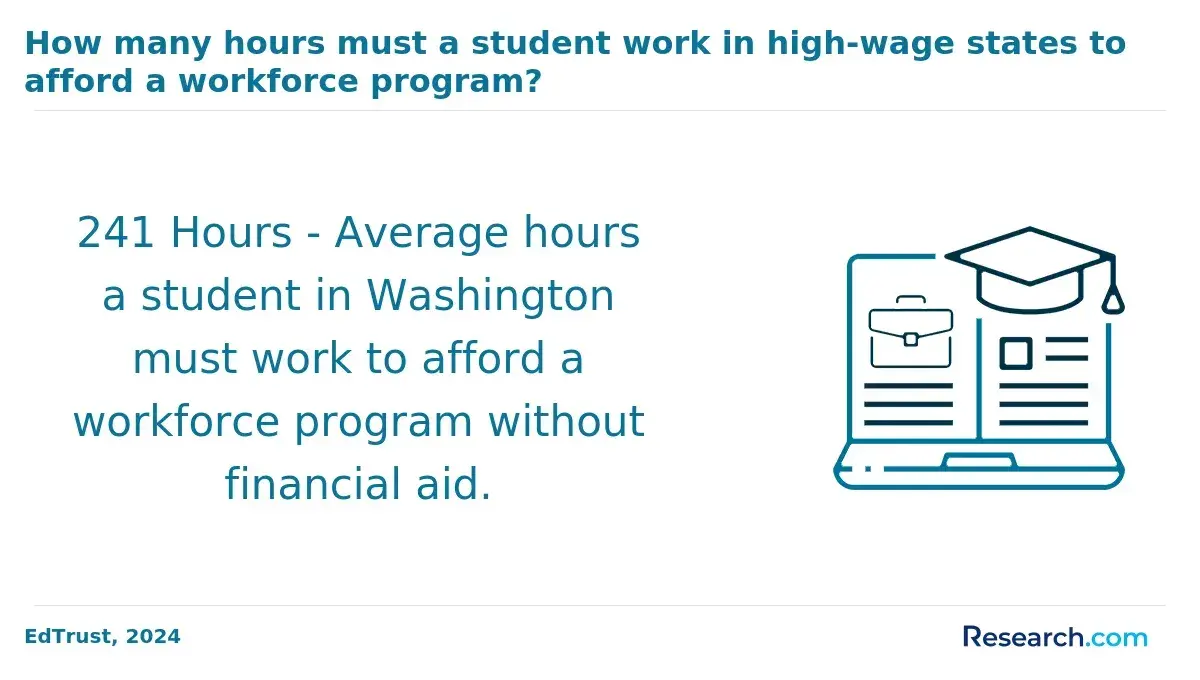
The cost of an online master's in cybersecurity depends on tuition per credit, number of credits, residency rules, university fees, books, software, exam proctoring, labs, and the amount of time you spend out of the workforce. NCES data published in 2024 reported average graduate tuition and required fees of about $12,600 at public institutions and about $29,900 at private nonprofit institutions, but individual cybersecurity programs can fall below or above those averages.
When schools publish tuition by credit, calculate the full degree cost rather than comparing only the per-credit number. A 30-credit program and a 36-credit program can have meaningfully different total costs even if the per-credit price looks similar.
- A 30-credit program at $700 per credit equals $21,000 in tuition before fees.
- A 36-credit program at $900 per credit equals $32,400 in tuition before fees.
- A 30-credit program at $1,200 per credit equals $36,000 in tuition before fees.
These examples are not promises of what any specific university charges. They show why total credits, required fees, and course sequencing matter when comparing programs.
Financial aid options may include federal loans, employer tuition assistance, scholarships, assistantships, military education benefits, workforce grants, and payment plans. For federal aid, graduate students may be eligible for up to $20,500 per academic year in Direct Unsubsidized Loans under current Federal Student Aid rules, with additional borrowing sometimes available through Grad PLUS Loans after credit review.
Use the following checklist to compare affordability in a way that reflects your real cost:
- Calculate total tuition by multiplying required credits by tuition per credit.
- Add mandatory fees, technology fees, lab fees, proctoring fees, graduation fees, and books.
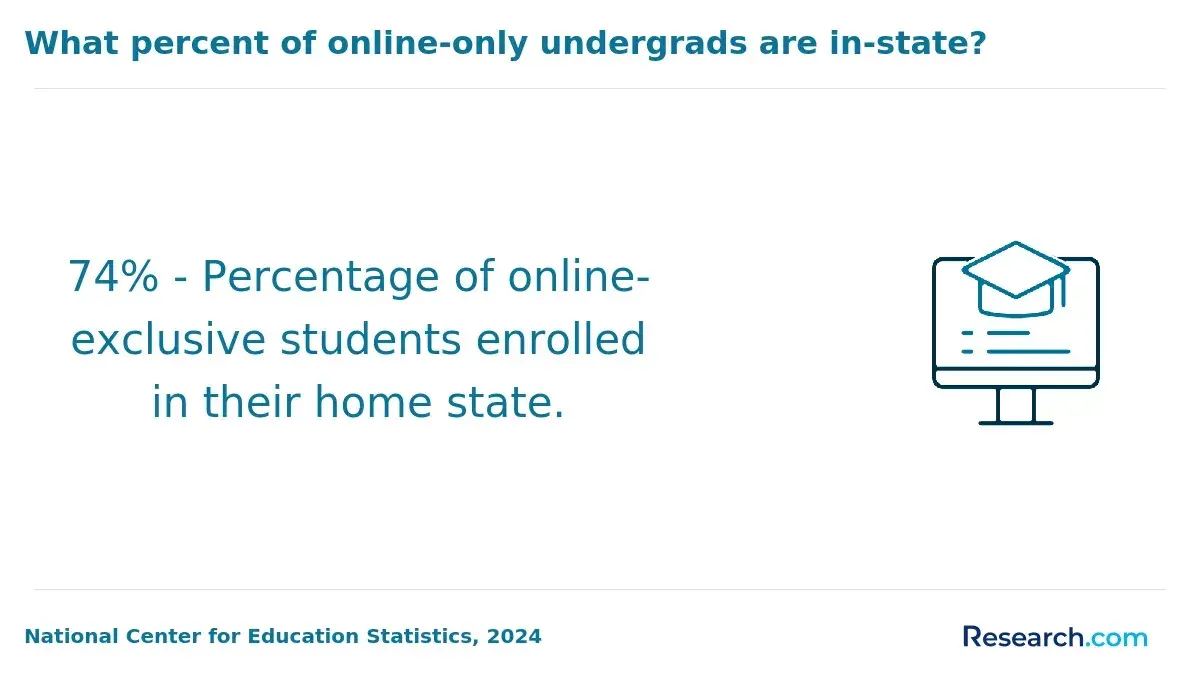
- Ask whether online students pay in-state, out-of-state, or separate online tuition.
- Confirm whether employer reimbursement requires minimum grades, continued employment, or approved course lists.
- Compare the cost of finishing faster with the risk of reducing work hours or rushing through technical labs.
- Ask how many students receive scholarships or assistantships and whether online students are eligible.
The lowest-cost program is not always the best value, and the most expensive program is not automatically stronger. Value comes from the relationship between total cost, curriculum quality, accreditation, flexibility, career support, employer recognition, and your ability to complete the program without taking on unsustainable debt.
What security analyst careers can this degree lead to and what skills will you gain?
An online cybersecurity master's can support several security analyst and cyber defense career paths. It is especially useful for roles that require technical investigation, risk assessment, communication, and the ability to connect security events to business impact.
The table below summarizes common roles connected to a security-analysis-focused master's degree. Job titles vary by employer, and some roles may require certifications, security clearance, or several years of experience.
| Role | Typical responsibilities | Skills a master's program can strengthen |
| Information security analyst | Monitor systems, analyze alerts, investigate incidents, recommend controls, and document findings | Incident response, log analysis, network security, risk communication |
| SOC analyst | Triage alerts, escalate suspicious activity, tune detections, and support incident response | SIEM use, threat intelligence, detection logic, evidence handling |
| Cyber threat intelligence analyst | Track adversary behavior, analyze indicators, and produce intelligence reports | Threat modeling, research methods, writing, adversary tactics |
| Vulnerability management analyst | Assess weaknesses, prioritize remediation, validate fixes, and report risk | Risk scoring, scanning tools, application security, stakeholder communication |
| Digital forensics analyst | Collect and analyze evidence from systems, networks, cloud environments, or endpoints | Forensics methods, chain of custody, malware basics, technical reporting |
| Cloud security analyst | Review cloud configurations, identity controls, monitoring, and incident response processes | Cloud architecture, identity and access management, automation, compliance |
| GRC or cyber risk analyst | Map controls to frameworks, assess risk, support audits, and communicate security posture | Governance, risk assessment, policy, metrics, business communication |
The degree can also help experienced analysts move toward security engineering, security architecture, incident response leadership, or cyber risk management. However, advancement usually depends on a combination of education, experience, certifications, and demonstrated ability to solve real security problems.
Important skills gained in a strong program include both technical and professional capabilities. Security analysts who can only use tools may struggle when incidents become ambiguous; analysts who can interpret evidence and explain trade-offs are more valuable to employers.
- Technical analysis: network traffic interpretation, endpoint investigation, vulnerability assessment, cloud security review, scripting, and security tool configuration.
- Incident response: triage, containment planning, evidence preservation, escalation, reporting, and post-incident lessons learned.
- Risk thinking: prioritizing threats based on likelihood, impact, exploitability, asset value, and business context.
- Communication: writing clear incident reports, presenting risk to leaders, and translating technical findings for nontechnical teams.
- Ethical judgment: handling sensitive data, following legal boundaries, and documenting decisions responsibly.
AI is becoming part of the cybersecurity toolset, but it does not remove the need for analysts. Learners interested in the broader AI side of security, automation, and intelligent systems may also compare career paths connected to an AI degree. For cybersecurity students, the practical goal is to learn how to use AI-enabled tools critically, validate results, and understand where automation can fail.
What salary ranges and job outlook can security analysts with a cybersecurity master's expect?
Cybersecurity salaries vary by role, industry, metro area, experience, certifications, clearance requirements, and technical specialization. A master's degree can strengthen qualifications for some roles, but it should not be treated as a salary guarantee.
The most useful national benchmark is the information security analyst occupation. The U.S. Bureau of Labor Statistics reported a median annual wage of $124,910 for information security analysts in May 2024. This median includes workers with different education levels and experience, so use it as a labor-market reference point rather than a forecast of your personal starting salary.
The table below shows how common cybersecurity roles often differ in responsibility level. Salary outcomes depend heavily on employer and location, so compare job postings in your target market before choosing a program.
| Career stage | Possible titles | What employers usually expect |
| Entry or transition level | Junior SOC analyst, security operations analyst, IT security specialist | Networking basics, ticketing, alert triage, Security+ or similar preparation, willingness to work shifts in some SOCs |
| Mid-level analyst | Information security analyst, vulnerability analyst, cloud security analyst, threat intelligence analyst | Hands-on investigation, tool fluency, risk prioritization, incident documentation, stakeholder communication |
| Advanced specialist | Incident responder, detection engineer, forensics analyst, security engineer | Deep technical skill, scripting, advanced labs or portfolio, specialized certifications, independent problem-solving |
| Leadership or strategy | Security manager, cyber risk lead, security architect, GRC manager | Experience leading projects, aligning security with business goals, mentoring analysts, communicating with executives |
The job outlook is also strong. BLS projects information security analyst employment to grow 29% from 2024 to 2034, which reflects sustained demand for cyber defense across finance, healthcare, government, defense, retail, technology, and critical infrastructure. For readers comparing technology-adjacent career options, salary expectations can differ widely by field.
For example, health information management bachelor degree salary data reflects a different labor market with different regulatory and management drivers.
To estimate your likely return on investment, compare program cost with the specific roles you can realistically pursue after graduation. If you already have IT experience, the degree may help you qualify for analyst or senior analyst roles faster. If you are entering from a nontechnical field, you may still need entry-level IT or security experience before the master's degree translates into higher-level opportunities.
How should you evaluate and choose the best online cybersecurity master's for security analyst roles?
The best online master's in cybersecurity for security analysts is not simply the highest-ranked or most expensive program. It is the program that matches your target role, technical background, schedule, budget, and preferred learning style while offering credible academic quality and practical security training.
Start by defining your target outcome. A student aiming for SOC analyst work should prioritize hands-on detection, SIEM, incident response, and network defense. A student aiming for GRC should look for risk management, governance, audit, and policy depth. A student targeting cloud security should verify coverage of cloud identity, configuration, logging, automation, and incident response.
Use this step-by-step process to compare programs before applying:
- Clarify your target role. Choose two or three job titles you want after graduation and collect real job postings from your preferred region or remote market.
- Map postings to the curriculum. Check whether required skills such as Python, Linux, cloud platforms, SIEM, vulnerability scanning, or incident response appear in actual courses.
- Verify accreditation. Confirm institutional accreditation and note whether the school has cyber-specific recognition such as an NSA CAE designation.
- Review hands-on learning. Ask for examples of labs, cyber ranges, capstones, simulations, and portfolio-ready projects.
- Calculate full cost. Include tuition, fees, books, software, certification exam costs, and the opportunity cost of reducing work hours.
- Check student support. Look for tutoring, lab support, career coaching, employer connections, veteran services, disability services, and faculty access.
- Evaluate flexibility. Confirm whether courses are asynchronous, synchronous, cohort-based, accelerated, or self-paced.
- Ask about outcomes carefully. Request career services data, but do not treat reported salaries or placement rates as guarantees.
Several common mistakes can lead to a poor fit. Avoid choosing a program only because it appears in a ranking, has a short completion time, or uses current buzzwords. Also avoid assuming that a master's degree alone will compensate for a lack of technical practice. Employers often want evidence that you can investigate incidents, write clearly, and use security tools in realistic scenarios.
Before enrolling, ask admissions or program faculty these questions:
- What percentage of coursework involves hands-on labs or applied projects?
- Which security tools, cloud platforms, programming languages, and frameworks do students use?
- Are courses taught by full-time faculty, industry practitioners, or both?
- Can online students access the same career services as campus students?
- Does the capstone produce a portfolio artifact that can be discussed with employers?
- How often is the curriculum reviewed for changes in cloud security, ransomware, AI-enabled threats, and compliance expectations?
- What support is available for students who need prerequisite refreshers?
A good final test is simple: after reviewing the curriculum, you should be able to explain exactly how the degree will make you more capable in your target security analyst role. If the connection is vague, keep comparing programs.
Other Things You Should Know About Cybersecurity Degrees
A master's in cybersecurity equips students with skills like threat assessment, risk management, and ethical hacking. These skills prepare graduates for roles as security analysts by providing hands-on experience in identifying and mitigating cyber threats.
Yes. A master's degree provides academic depth, while certifications can validate specific tools, frameworks, or job-ready skills. Common options include Security+, CySA+, CISSP for experienced professionals, GIAC credentials, cloud security certifications, and vendor-specific credentials.
Many do, though the level varies. Security analysts benefit from scripting in Python, Bash, or PowerShell for log analysis, automation, and investigation tasks. If a program has little or no scripting, make sure it still provides enough technical practice for your target role.
A master's is broader and may support long-term advancement, research, teaching, or leadership goals. A graduate certificate is shorter and may be better if you already have a degree and need targeted skills in cloud security, forensics, GRC, or incident response without committing to a full program.
References
- Steps for becoming a cybersecurity analyst | edX https://www.edx.org/become/how-to-become-a-cybersecurity-analyst
- Masters in Cyber Security Salary | Jobs, Degree, Avg Salary https://www.mastersofbusinessanalytics.com/careers/masters-in-cybersecurity-salary-outlook/
- Best Online Master's in Cybersecurity | CyberDegrees.org https://www.cyberdegrees.org/listings/top-online-masters-in-cyber-security-programs/
- Master's in cybersecurity degree essentials https://cybersecurityguide.org/programs/masters-in-cybersecurity/
- Master's Degree in Cybersecurity Online | MIUniversity https://miuniversity.edu/en/academics/master-degree/master-cybersecurity/