2027 Cybersecurity Career Outlook by Role Type

Co-Founder and Chief Data Scientist
Choosing a cybersecurity path is harder than it looks because "cybersecurity" includes analysts, engineers, auditors, cloud specialists, incident responders, and managers. The stakes are high. The U.S. Bureau of Labor Statistics projects information security analyst employment to grow 33% from 2023 to 2033, far faster than average.
This guide is for students, career changers, veterans, and IT workers comparing roles, degrees, certificates, and certifications. You will learn which role types have the strongest outlook, what education is worth considering, and how to avoid expensive program-selection mistakes.
Key Things You Should Know
- Cybersecurity roles with the strongest U.S. outlook tend to sit near cloud security, incident response, security engineering, governance-risk-compliance, and AI-aware threat detection, with BLS projecting 33% growth for information security analysts from 2023 to 2033.
- BLS reports a May 2024 median annual wage of $124,910 for information security analysts, while management and architecture roles may pay more depending on industry, location, and experience.
- A bachelor's degree is still the most common baseline for many analyst and engineer jobs, but certificates, military experience, associate degrees, labs, portfolios, and certifications can work for entry-level or career-change paths when matched to a specific role.
What cybersecurity careers have the strongest outlook by role type?
The strongest cybersecurity outlook is not limited to one job title. It is concentrated in role types that help employers reduce risk from cloud migration, ransomware, third-party vendors, identity attacks, regulatory pressure, and AI-enabled threats.
A "role type" is a cluster of jobs with similar responsibilities, such as monitoring threats, designing secure systems, investigating incidents, or managing compliance.
The table below compares major cybersecurity role types by typical responsibility and outlook strength. Use it to identify whether you prefer hands-on technical work, investigation, policy, leadership, or a hybrid path.
| Role type | Common job titles | Typical work | Outlook strength | Best fit |
| Security operations and incident response | SOC analyst, incident responder, threat analyst | Monitor alerts, investigate intrusions, document incidents, coordinate containment | Strong, especially where ransomware and 24/7 monitoring are priorities | People who like fast-paced troubleshooting and evidence-based decisions |
| Cloud and infrastructure security | Cloud security analyst, security engineer, DevSecOps specialist | Secure cloud workloads, networks, identity systems, containers, and deployment pipelines | Very strong because more organizations operate hybrid and cloud-first environments | IT professionals with networking, Linux, cloud, or systems administration experience |
| Application and product security | Application security engineer, secure code reviewer, product security analyst | Find software vulnerabilities, support secure development, review code and architecture | Strong in technology, finance, healthcare, and software-driven organizations | People with programming skills who want to prevent flaws before release |
| Governance, risk, and compliance | GRC analyst, cyber risk analyst, security auditor | Assess controls, prepare audits, map policies to frameworks, manage vendor risk | Strong where regulation, cyber insurance, and board-level risk oversight matter | Detail-oriented communicators who can translate technical risk into business language |
| Cybersecurity leadership | Security manager, director of security, CISO-track roles | Set strategy, manage teams, allocate budgets, communicate risk to executives | Strong for experienced professionals, but not usually entry-level | Professionals with technical credibility, management ability, and business judgment |
For entry-level candidates, security operations is often the most accessible starting point because it values curiosity, disciplined documentation, and repeatable investigation. For people already in IT, cloud security and security engineering can offer a faster transition because networking, scripting, operating systems, and identity-management experience transfer well.
AI is changing the work but not eliminating the need for human judgment. Security teams increasingly use AI-assisted tools for alert triage, phishing detection, malware analysis, and log summarization, but employers still need professionals who can validate findings, understand business impact, and avoid false confidence in automated outputs.
Which cybersecurity roles offer the highest salary potential?
Cybersecurity salary potential generally increases with responsibility, specialization, and risk exposure. The highest-paying paths often combine technical depth with decision-making authority, such as security architecture, cloud security engineering, application security, penetration testing, and security leadership.
BLS reports a May 2024 median annual wage of $124,910 for information security analysts. That figure is useful as a national benchmark, but it should not be read as a guaranteed outcome because pay varies by region, clearance requirements, industry, employer size, and whether the role is entry-level or senior.
The table below summarizes how salary potential usually differs by role type. It does not promise a specific salary. Instead, it helps you understand which responsibilities tend to be rewarded more highly in the U.S. labor market.
| Role type | Why salary potential can be high | Typical experience signal employers look for | Important caution |
| Security architect | Designs enterprise security patterns and makes decisions that affect large systems | Several years in engineering, cloud, identity, or infrastructure security | Usually not realistic as a first cybersecurity job |
| Cloud security engineer | Protects high-value cloud environments and supports secure scaling | Cloud platforms, automation, networking, IAM, logging, and incident response | Requires constant upskilling as cloud services change |
| Application security engineer | Reduces software risk before vulnerabilities reach production | Programming, secure development, threat modeling, API security, code review | Less suitable for people who dislike coding concepts |
| Penetration tester or red team specialist | Finds exploitable weaknesses before attackers do | Networking, web security, exploitation methods, reporting, ethics | Entry-level pentesting roles are competitive and portfolio-heavy |
| Cybersecurity manager | Owns people, budgets, vendor decisions, and risk communication | Technical foundation plus leadership, compliance, and executive communication | Management pay depends heavily on organization size and scope |
If you want the strongest long-term earning path, choose a specialization that matches your existing strengths. A software developer may reach application security faster than SOC management, while a network administrator may move more naturally into cloud security or security engineering.
Students who enjoy analytics but want a broader technical-adjacent path may also compare cybersecurity with a data science master online, especially if they are interested in fraud analytics, security data engineering, or AI risk roles.
What education is required for cybersecurity jobs?
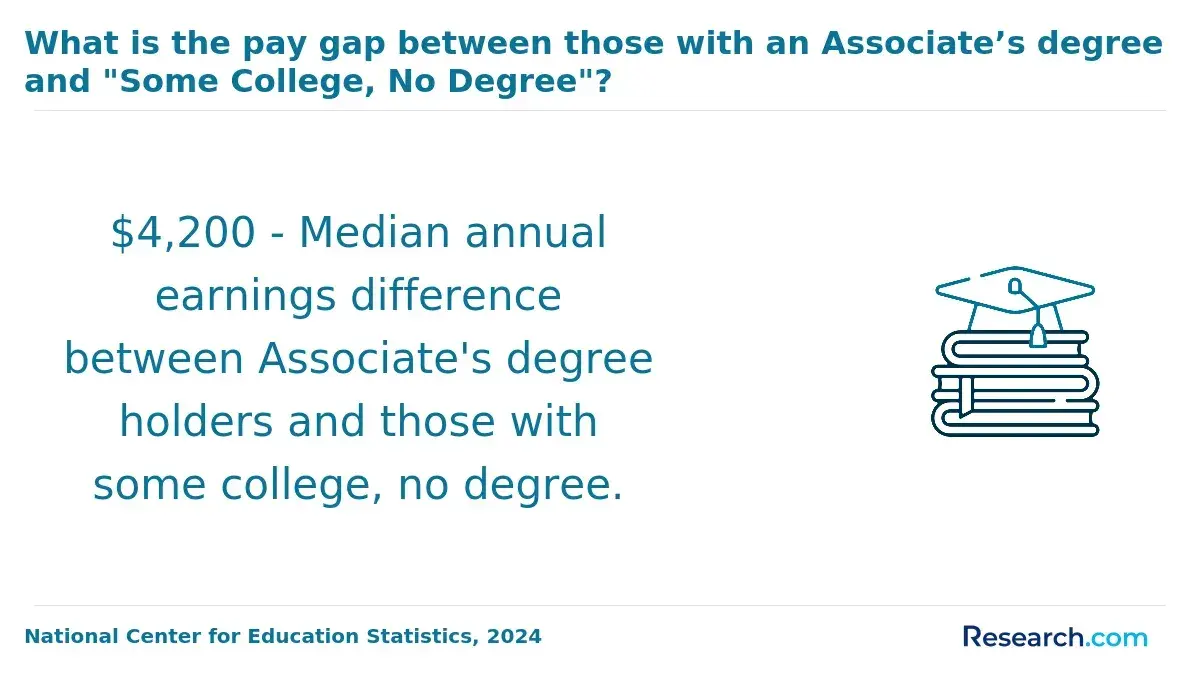
Most cybersecurity roles do not have a single mandatory education route, but employers often use education as a screening signal. A bachelor's degree in cybersecurity, computer science, information technology, information systems, or a related field is common for analyst and engineer roles. However, associate degrees, certificates, military cyber training, IT experience, and industry certifications can also support entry when paired with practical skills.
The smartest education path depends on your starting point. A new high school graduate, a help desk technician, a veteran, and a software developer should not all choose the same credential.
| Starting point | Practical education path | Roles to target first | When it makes sense |
| No college and limited IT experience | Associate degree, undergraduate certificate, or bachelor's program with labs | Help desk, junior SOC analyst, IT support with security duties | You need structured fundamentals and a way to build work samples |
| Current IT support or network professional | Certificate, bachelor's completion program, or targeted certifications | SOC analyst, systems security analyst, cloud security associate | You already understand users, systems, tickets, networks, or identity tools |
| Software developer | Secure coding courses, application security certificate, or master's-level specialization | Application security analyst, product security analyst, DevSecOps role | You can connect coding knowledge to vulnerability prevention |
| Military or veteran background | Cybersecurity degree with credit for prior learning, GI Bill support, or certification preparation | SOC, risk, government contractor, security operations roles | You may have discipline, clearance potential, and operational experience |
| Experienced professional changing careers | Graduate certificate, master's degree, bootcamp, or portfolio-based route | GRC analyst, cyber risk analyst, junior analyst, security project role | You need to reposition existing business, compliance, or technical experience |
A degree is most valuable when the curriculum includes applied work, not just theory. Look for hands-on labs, cloud environments, incident reports, network defense exercises, secure coding assignments, and capstone projects you can discuss in interviews.
How do online and campus cybersecurity programs compare?
Online and campus cybersecurity programs can both be strong if they are accredited, hands-on, and aligned with your target role. The main difference is not academic quality by format alone; it is how the format fits your schedule, learning style, access to labs, and networking needs.
The table below compares online and campus formats across the decision points that matter most for cybersecurity students.
| Factor | Online cybersecurity program | Campus cybersecurity program | Best choice when |
| Schedule | Often more flexible for working adults | More structured class times and in-person routines | Choose online if you need work or family flexibility; choose campus if structure keeps you accountable |
| Labs | May use virtual labs, cloud sandboxes, and remote ranges | May offer physical labs, local equipment, and in-person team exercises | Either can work if labs are required, frequent, and realistic |
| Networking | Requires intentional effort through virtual events, faculty contact, and online communities | Often easier through clubs, local employers, and campus career fairs | Campus can help if you are early-career and need local connections |
| Cost | May reduce commuting and relocation costs | May involve housing, transportation, parking, or activity fees | Compare total cost, not tuition alone |
| Career fit | Strong for disciplined learners and working IT professionals | Strong for students who benefit from face-to-face support | Choose the format that helps you finish and build a portfolio |
Online study can be especially practical for active-duty service members, veterans, and working adults who need mobility or asynchronous courses. If that describes you, comparing online cybersecurity degree programs for veterans can help you evaluate transfer credit, military benefits, student support, and career alignment.
A common mistake is assuming online means easier. In cybersecurity, online students still need to practice command-line work, write reports, troubleshoot labs, collaborate on projects, and prepare for technical interviews. If a program is mostly passive reading and quizzes, it may not build the evidence employers want to see.
What should a cybersecurity curriculum include?
A strong cybersecurity curriculum should teach how systems work, how they fail, and how to reduce risk without disrupting the business. Programs that skip computing fundamentals can leave students memorizing tools without understanding why attacks succeed.
Use the following curriculum areas as a checklist when comparing programs. These topics matter because they connect directly to common entry-level and mid-level job responsibilities:
- Networking and operating systems, including TCP/IP, routing basics, Linux, Windows administration, permissions, and authentication.
- Security foundations, including confidentiality, integrity, availability, access control, cryptography concepts, vulnerability management, and secure configuration.
- Security operations, including log analysis, SIEM tools, alert triage, incident response, malware basics, digital forensics, and reporting.
- Cloud and identity security, including IAM, multifactor authentication, cloud logging, shared responsibility, containers, and secure deployment practices.
- Application security, including common web vulnerabilities, secure coding principles, API security, software supply chain risk, and threat modeling.
- Governance, risk, and compliance, including security policies, audits, privacy, vendor risk, business continuity, and frameworks such as NIST and ISO-aligned controls.
- Ethics and legal boundaries, including authorized testing, privacy considerations, evidence handling, and professional conduct.
- Capstone or portfolio work, including incident reports, risk assessments, security architecture diagrams, or lab-based projects that can be discussed in interviews.
The curriculum should also reflect current workplace trends. AI-aware security, cloud misconfiguration, identity attacks, software supply chain risk, and third-party vendor exposure are now practical concerns for many employers, so programs should show how these risks appear in real systems rather than treating cybersecurity as a purely theoretical subject.
What admissions requirements do cybersecurity programs usually ask for?
Admissions requirements vary by school, credential level, and selectivity. Undergraduate programs usually focus on prior academic records and readiness for college-level math and computing. Graduate programs may look for a bachelor's degree, transcripts, resume, statement of purpose, and sometimes prerequisite coursework or professional experience.
The table below outlines common admissions expectations by program type. Use it to determine whether you are ready to apply now or should complete prerequisites first.
| Program type | Common admissions requirements | Preparation tip |
| Undergraduate certificate | High school diploma or equivalent; placement requirements may apply | Ask whether credits transfer into an associate or bachelor's degree |
| Associate degree | High school diploma or equivalent; placement in math, English, or computing courses | Choose programs with transfer agreements if a bachelor's degree is possible later |
| Bachelor's degree | High school transcript or transfer credits; some programs request essays or standardized test information | Check whether programming, statistics, or college algebra is required early |
| Graduate certificate | Bachelor's degree; resume; possible IT, programming, or networking prerequisites | Confirm whether the certificate can stack into a master's degree |
| Master's degree | Bachelor's degree; transcripts; resume; statement of purpose; possible recommendations or prerequisites | Ask how nontechnical students can bridge into advanced coursework |
Before applying, gather evidence that shows readiness beyond grades. Admissions teams and faculty advisors may value IT work experience, military training, coding projects, home labs, certifications, or a clear career goal because cybersecurity programs are more manageable when students understand the field's workload.
Students who are still deciding between technology and healthcare career training may also compare how aid and admissions work in other online career programs. For example, researching financial aid for medical billing and coding can provide a useful contrast if you are comparing short, job-focused training options before committing to cybersecurity.
How long does a cybersecurity degree or certificate take?
Cybersecurity training can take a few months or several years depending on the credential. The right timeline depends on whether you need a quick entry point, a full undergraduate foundation, a promotion credential, or a career-changing graduate pathway.
The table below compares typical completion timelines. Actual length can vary because of transfer credits, course load, prerequisites, military credit, academic calendar, and whether the program is accelerated or part time.
| Credential | Typical full-time length | Typical part-time length | Best for |
| Bootcamp or short certificate | Several weeks to several months | Several months to about a year | Learners seeking focused skill-building or career exploration |
| Undergraduate certificate | Less than one year in many formats | About one to two years | Students who want stackable credits or a smaller first step |
| Associate degree | About two years | About three to four years | Entry-level students who want a lower-cost foundation and transfer option |
| Bachelor's degree | About four years | Often five or more years | Students seeking broad eligibility for analyst, engineer, and advancement roles |
| Graduate certificate | About six months to one year | About one to two years | Professionals adding cybersecurity to an existing degree or IT background |
| Master's degree | About one to two years | About two to three years | Career changers, technical specialists, and leadership-track professionals |
Accelerated programs can save time, but they are not automatically better. They work best for students with prior IT knowledge, strong study habits, and enough weekly time for labs. If you are new to computing, a slower program may lead to better retention and a stronger portfolio.
When comparing timelines across fields, remember that shorter programs are not always less demanding and longer degrees are not always better investments. Students considering healthcare alternatives alongside cybersecurity may review online medical assistant programs with financial aid to compare how program length, support, and aid options differ across career-focused online education.
How much do cybersecurity programs typically cost?
Cybersecurity program costs vary widely by credential, institution type, residency status, delivery format, transfer credits, and whether the program includes certification exam vouchers or lab fees. The best comparison is total cost to completion, not the advertised per-credit tuition.
College Board's 2024 pricing data reported average published tuition and fees of $11,610 for in-state students at public four-year institutions for one academic year. This benchmark matters because a cybersecurity bachelor's degree can be affordable at some public institutions, but the final cost can rise quickly with out-of-state tuition, housing, repeated courses, technology fees, or lost work time.
The table below summarizes the cost factors that most often change the real price of a cybersecurity education.
| Cost factor | Why it matters | What to ask before enrolling |
| Tuition model | Per-credit, flat-rate, subscription, or cohort pricing can change the total bill | What is the estimated total tuition for the full credential? |
| Fees | Online, lab, technology, graduation, and student service fees can add up | Which fees are mandatory each term? |
| Certification costs | Some programs include exam vouchers; others leave students to pay separately | Are Security+, Network+, CySA+, cloud, or other exam vouchers included? |
| Transfer credits | Accepted credits can reduce both time and cost | How many prior credits, military credits, or certifications can apply? |
| Equipment and software | Labs may require a capable computer, webcam, virtualization support, or paid tools | What hardware and software are required before the first term? |
| Opportunity cost | Full-time study may reduce work hours or income | Can the program be completed part time without delaying key courses? |
To control cost, start by completing the FAFSA if eligible, comparing public in-state options, asking about employer tuition assistance, checking military or veteran benefits, and confirming transfer-credit policies in writing. Avoid choosing the cheapest program automatically if it lacks accreditation, labs, career support, or courses aligned with your target role.
What certifications matter most in cybersecurity careers?
Cybersecurity certifications can help validate skills, especially when a candidate lacks years of direct experience. They are not a substitute for hands-on ability, but they can strengthen a resume, support promotions, and help applicants pass employer screening systems.
The most useful certification depends on your role target. The list below groups common certifications by career stage and purpose so you can avoid collecting credentials that do not match your goals:
- Foundational IT and security: CompTIA A+, Network+, and Security+ can help beginners prove basic systems, networking, and security knowledge.
- Security operations and analysis: CompTIA CySA+, Cisco CyberOps, and GIAC security operations credentials can support SOC and threat analysis paths.
- Penetration testing: CompTIA PenTest+, GIAC penetration testing credentials, and Offensive Security credentials are more relevant when you can demonstrate ethical testing and reporting skills.
- Cloud security: AWS, Microsoft Azure, Google Cloud, and vendor-neutral cloud security credentials can help IT professionals move into cloud defense roles.
- Governance and auditing: ISACA certifications such as CISA and CRISC can support audit, risk, and compliance careers.
- Advanced security leadership: CISSP is widely recognized for experienced professionals, but it is usually more appropriate after substantial security work experience.
Do not treat certifications as a checklist race. A better strategy is to choose one target role, study the job postings for that role, build a lab or project around the required skills, and then select the certification that best supports that evidence.
One red flag is a program that markets certification pass rates without explaining lab quality, instructor support, prerequisites, or retake policies. Ask whether certification preparation is integrated into coursework or simply added as optional test prep.
How do you choose an accredited cybersecurity program?
Accreditation is one of the most important safeguards when choosing a cybersecurity program. In the U.S., institutional accreditation helps determine whether a school meets recognized academic standards and may affect federal financial aid eligibility, transfer credits, graduate admissions, and employer recognition.
Programmatic recognition can also matter. Some cybersecurity programs align with National Centers of Academic Excellence in Cybersecurity designations, while others emphasize ABET-accredited computing programs, industry certification preparation, or employer advisory boards. These signals are helpful, but they should be evaluated alongside curriculum, outcomes, cost, and support.
Use these steps before enrolling. They are designed to reduce the risk of choosing a program that looks attractive online but does not support your career goal.
- Verify institutional accreditation through the school's official accreditation page and the U.S. Department of Education or recognized accreditor directories.
- Confirm the exact credential name, such as certificate, associate degree, bachelor's degree, graduate certificate, or master's degree.
- Compare required courses with your target role, especially cloud security, incident response, secure coding, or GRC.
- Ask for the full cost of attendance, including fees, labs, books, technology requirements, and certification exam costs.
- Review transfer-credit rules before enrolling, especially if you have community college, military, prior learning, or certification credit.
- Ask what career support includes, such as resume review, mock interviews, employer connections, internship support, and portfolio development.
- Look for required hands-on labs, capstones, cyber ranges, or project work rather than relying only on lectures and exams.
- Request outcome information carefully, and remember that job placement and salary data can vary by student background and local labor market.
Common mistakes include choosing a school based only on rankings, ignoring total cost, assuming every online program is equally respected, enrolling before checking transfer policies, or selecting a curriculum that does not match the desired role. The best program is the one you can afford, complete, and use to show role-specific competence.
Other Things You Should Know About Cybersecurity Degrees
Yes, but beginners usually need to build IT fundamentals first. Many entry-level cybersecurity jobs expect knowledge of networking, operating systems, troubleshooting, and basic scripting, so help desk, IT support, and lab-based projects can be useful stepping stones.
Yes, some roles require little daily coding, especially GRC, security awareness, SOC monitoring, and risk analysis. However, learning basic scripting and understanding how software works can make you more competitive and help you communicate with technical teams.
In 2027, the cybersecurity role type with the most opportunities is expected to be in Cloud Security. With the increasing adoption of cloud services, organizations are prioritizing securing their cloud environments. This trend is driving demand for professionals skilled in cloud security strategies, tools, and compliance requirements.
For many people, the best first cybersecurity job is junior SOC analyst, IT support with security duties, vulnerability management assistant, or GRC analyst. The right choice depends on whether your strengths are technical troubleshooting, documentation, compliance, communication, or investigation.
References
- How Long Does IT Certification Take? Training Timelines https://www.acilearningtechacademy.com/blog/how-long-does-it-certification-take/
- 20 Coolest Cybersecurity Careers and Jobs | SANS Institute https://www.sans.org/cybersecurity-focus-areas/cybersecurity-careers/20-coolest-cyber-security-careers
- Top Cyber Security Certifications for Beginners to Get Hired https://www.nuyew.academy/cyber-security-certifications-that-get-you-hired/
- Cybersecurity Certifications | NICCS https://niccs.cisa.gov/resources/cybersecurity-certifications
- Cybersecurity Admissions Criteria - MSU Denver https://www.msudenver.edu/cybersecurity-center/admissions-criteria/
- Cybersecurity Job Demand: Current Trends and Future Outlook https://destcert.com/resources/cybersecurity-job-demand/
- Cybersecurity Degree Requirements: What’s New for 2025 - Programs.com https://programs.com/resources/cybersecurity-degree-requirements/
- Which Cybersecurity Roles Are in Highest Demand in 2026? | Glocomms https://www.glocomms.com/en-us/industry-insights/career-advice/which-cybersecurity-roles-are-in-highest-demand-in-2026
- Cybersecurity Certificates, Certifications and Degrees: How to Choose | CompTIA Blog https://www.comptia.org/en-us/blog/cybersecurity-certificates-certifications-and-degrees-how-to-choose/
- Information Security Analysts https://www.bls.gov/ooh/computer-and-information-technology/information-security-analysts.htm