2027 Online Cybersecurity Degrees With Information Assurance Focus

Co-Founder and Chief Data Scientist
Choosing an online cybersecurity degree is harder when programs use similar labels but train students for different jobs. Information assurance matters because organizations must protect data, prove compliance, and recover from attacks; the FBI's 2024 Internet Crime Report recorded more than $16 billion in reported cybercrime losses. This guide is for prospective students comparing online degrees, career switchers, and working IT professionals. You will learn how these programs work, what they cost, which credentials matter, and how to choose a reputable option without overpaying or mismatching your career goal.
Key Things You Should Know
- Information assurance-focused cybersecurity degrees are strongest for students targeting risk management, security governance, compliance, cloud security, incident response, and systems protection rather than purely theoretical computer science roles.
- According to BLS data for May 2024, information security analysts had a median annual wage of $124,910, but pay varies widely by role, employer, clearance requirements, location, and experience.
- Use accreditation, NSA Center of Academic Excellence recognition, hands-on labs, transfer-credit policy, total cost, certification alignment, and career outcomes to compare programs-not tuition alone.
What is an online cybersecurity degree with an information assurance focus?
An online cybersecurity degree with an information assurance focus is a college program that teaches students how to protect information systems, reduce organizational risk, and maintain the confidentiality, integrity, and availability of data. Cybersecurity often emphasizes defending networks, devices, software, and cloud environments from attacks. Information assurance is broader: it includes policies, governance, risk management, compliance, continuity planning, auditing, and security controls.
In practical terms, this degree fits students who want to understand both technology and accountability. A graduate may configure security tools, but they may also write access-control policies, evaluate vendor risk, document controls for an audit, or help an organization meet frameworks such as NIST, ISO 27001, HIPAA, PCI DSS, or federal security requirements.
The most common degree levels are associate, bachelor's, master's, and graduate certificate programs. A bachelor's degree usually works best for entry-level cybersecurity analyst, security operations, IT risk, and systems security roles. A master's degree is often more suitable for professionals who already have IT experience and want to move into security architecture, governance, leadership, or specialized assurance work.
This path may be a good fit if you enjoy structured problem-solving, policy interpretation, technical documentation, and continuous learning. It may be a poor fit if you want a program focused almost entirely on software engineering, exploit development, or advanced cryptographic research. Those areas exist within cybersecurity, but information assurance programs are usually designed around protecting organizations and proving that protections work.
How do online cybersecurity programs compare to campus-based options for information assurance?
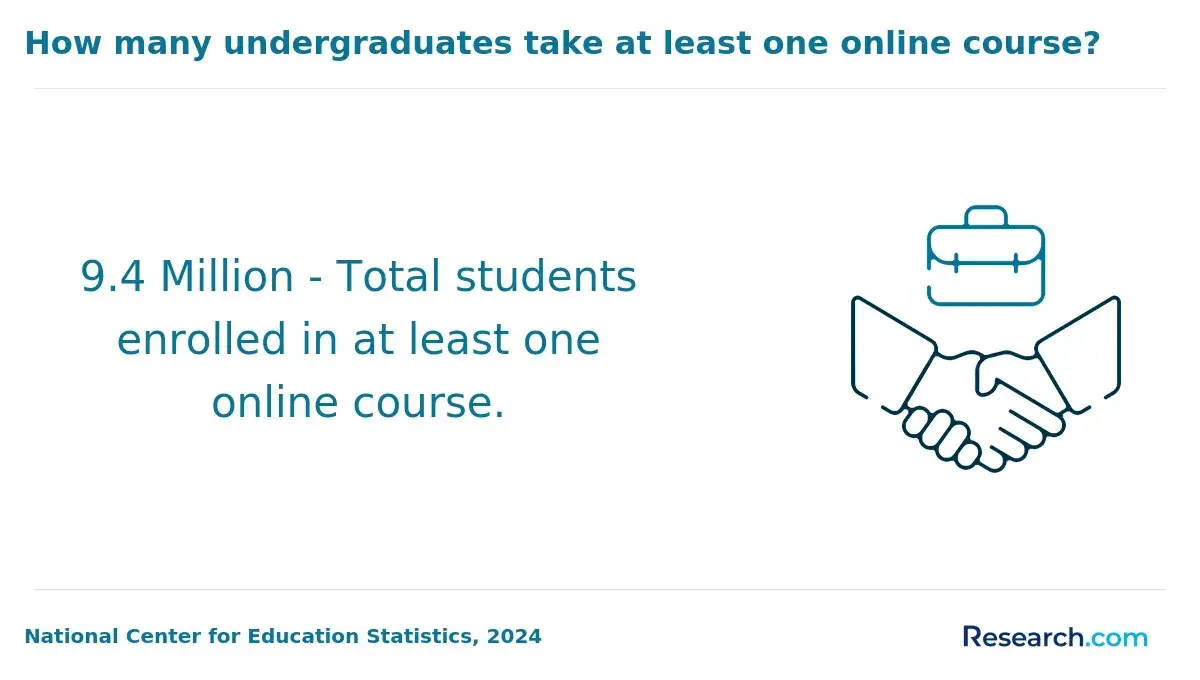
Online and campus-based cybersecurity programs can lead to similar credentials, but the learning experience differs. NCES distance education tables released in 2024 show that online learning remains a mainstream part of U.S. higher education, which means students now have more legitimate remote options than they did before large-scale adoption of digital course delivery.
The table below compares the factors that usually matter most for information assurance students. It can help you decide whether online flexibility outweighs the benefits of in-person access to campus labs, faculty, and local recruiting.
| Factor | Online cybersecurity degree | Campus-based cybersecurity degree | Best fit |
| Schedule | Often asynchronous or evening-friendly | Usually tied to class meeting times | Online fits working adults and military students |
| Hands-on labs | Delivered through virtual labs, cloud sandboxes, VPN environments, and remote ranges | May include physical labs, on-campus cyber ranges, and supervised equipment | Either can work if labs are rigorous and required |
| Networking | Requires intentional participation in virtual events, projects, and professional groups | More organic access to classmates, faculty, and campus recruiters | Campus may help students who need more structure |
| Cost structure | May reduce relocation, commuting, and housing costs | May include more campus-based fees and living expenses | Online often helps cost-conscious students, but tuition still varies |
| Career services | Quality varies; strong programs offer remote advising, resume help, mock interviews, and employer events | May provide in-person career fairs and local employer pipelines | Choose based on employer access, not format alone |
Online study is not automatically easier. A strong online program still requires lab work, technical writing, discussion, group projects, and proctored or performance-based assessments. Students who need live accountability may prefer hybrid or campus formats, while disciplined learners who already work in IT may benefit from the flexibility of online coursework.
Which accreditation and quality standards apply to online cybersecurity degrees in the U.S.?
The first quality check is institutional accreditation. In the U.S., students should verify that the college or university is accredited by an accreditor recognized by the U.S. Department of Education or the Council for Higher Education Accreditation. This matters for federal financial aid, credit transfer, employer recognition, and admission to graduate study.
Cybersecurity-specific quality indicators can add another layer of confidence. They do not replace institutional accreditation, but they can show that the curriculum has been reviewed against security education standards or workforce expectations.
| Quality indicator | What it means | Why it matters |
| Institutional accreditation | The school meets broad academic, financial, and governance standards | Essential for federal aid eligibility and general degree recognition |
| NSA Center of Academic Excellence designation | The program or institution aligns with cybersecurity education standards recognized by the National Security Agency | Useful for students targeting government, defense, and assurance-oriented roles |
| ABET cybersecurity accreditation | A program-level review of computing or cybersecurity education quality | Especially valuable for students who want a technically rigorous undergraduate program |
| State authorization | The school is authorized to enroll online students in specific states | Important because online eligibility can vary by student location |
| Certification alignment | Courses map to skills tested by credentials such as Security+, CISSP, CISA, or cloud security certifications | Helps students build career-ready evidence beyond the degree |
Students should be careful with programs that advertise "accredited cybersecurity training" without naming the accreditor or explaining whether the accreditation applies to the institution, a program, or a vendor certificate. Another red flag is a school that promises rapid job placement, guaranteed salaries, or eligibility for every government role. Federal and defense positions may depend on citizenship, clearance eligibility, experience, and specific workforce qualification rules such as DoD 8140 requirements.
What concentrations and core courses are typical in information assurance-focused cybersecurity programs?
Information assurance programs typically combine technical defense skills with risk, governance, and compliance coursework. The strongest programs do not treat policy as separate from technology; they show how security controls, audits, architecture, and incident response work together.
The table below summarizes common concentrations and courses. Use it to match a program's curriculum to the type of work you want to do after graduation.
| Area | Typical courses or topics | Career relevance |
| Security fundamentals | Network security, operating systems, secure systems administration, scripting | Builds the baseline needed for analyst and operations roles |
| Information assurance | Risk management, security governance, policy, compliance, auditing, business continuity | Supports roles in GRC, IT risk, security controls, and compliance |
| Incident response | Digital forensics, malware analysis basics, security monitoring, evidence handling | Prepares students for SOC, response, and investigation support work |
| Cloud and enterprise security | Cloud architecture, identity and access management, virtualization, zero trust concepts | Useful for organizations moving data and applications into hybrid environments |
| Secure development | Application security, secure coding, DevSecOps, vulnerability management | Helps students work with software teams and reduce product risk |
| Leadership and strategy | Security program management, legal and ethical issues, privacy, vendor risk | Supports advancement into management or advisory roles |
Current curricula increasingly include AI-enabled threats, automated security monitoring, and cloud-native controls. Students who want a broader technology pathway may compare cybersecurity with AI degree programs, especially if they are interested in machine learning security, fraud detection, or automated risk analytics.
Students interested in critical infrastructure, emergency response, transportation, utilities, or location-based cyber risk may also benefit from geospatial knowledge. In those cases, comparing cybersecurity options with colleges with GIS programs can clarify whether a combined cyber-and-geospatial path makes sense.
What admission requirements do online cybersecurity programs with information assurance emphasis usually have?
Admission requirements vary by school and degree level, but online cybersecurity programs usually evaluate academic preparation, technical readiness, and fit for the program. Some programs welcome beginners, while others expect prior IT coursework, programming experience, or professional background.
Prospective students should review requirements by degree level before applying. This helps avoid applying to a program that is either too introductory or too advanced for your current skills.
| Program level | Common requirements | Best preparation |
| Associate degree | High school diploma or GED, placement testing, basic math and computer literacy | Introductory IT, networking basics, and study discipline |
| Bachelor's degree | High school diploma or transfer credits, transcripts, possible math prerequisites | Algebra, basic programming or scripting, computer systems familiarity |
| Master's degree | Bachelor's degree, transcripts, resume, statement of purpose, sometimes IT prerequisites | Networking, systems administration, security fundamentals, professional experience |
| Graduate certificate | Bachelor's degree or professional experience depending on the school | Clear career goal and ability to handle condensed graduate coursework |
If you are new to IT, do not assume that a cybersecurity degree starts from zero. Many students struggle because they skip networking, operating systems, and command-line basics. Before enrolling, complete a readiness check with these steps:
- Ask whether the program has bridge courses for students without IT experience.
- Review the first two semesters of coursework and identify math, programming, or networking prerequisites.
- Confirm whether transfer credits can reduce time and cost.
- Ask how labs are delivered and whether you need specific hardware, software, or broadband speeds.
- Request examples of capstone projects, virtual labs, or security exercises used in upper-level courses.
Admissions selectivity is not the only sign of quality. An open-admission program can still be reputable if it is accredited, transparent, and academically demanding. Conversely, a selective program may still be a poor fit if it lacks hands-on security work or does not align with your target role.
How long do online cybersecurity information assurance degrees take, and what do they cost?
Program length depends on degree level, transfer credits, course load, and whether the school uses traditional semesters, accelerated terms, or competency-based education. Cost depends on tuition, fees, textbooks, lab subscriptions, certification exam vouchers, and the number of credits you still need to complete.
College Board's 2024 pricing data provides useful context for comparing tuition, even though individual online programs may charge different rates. These published averages are not cybersecurity-specific, but they help students benchmark whether a quoted price is unusually high or competitive.
- Public four-year in-state published tuition and fees averaged $11,610 for 2024-25.
- Public four-year out-of-state published tuition and fees averaged $30,780 for 2024-25.
- Private nonprofit four-year published tuition and fees averaged $43,350 for 2024-25.
The table below outlines typical timelines and cost factors by degree level. Use it as a planning tool, then verify the exact credit count and tuition model with each school.
| Degree type | Common time to complete | Cost drivers | When it makes sense |
| Associate degree | About 2 years full time | Community college tuition, transferability, lab fees | Students seeking a lower-cost start or entry-level IT foundation |
| Bachelor's degree | About 4 years full time, less with transfer credits | Credit requirements, residency rules, online fees, certification materials | Students targeting analyst, security operations, systems security, or GRC roles |
| Master's degree | About 1 to 3 years depending on pace | Graduate tuition, prerequisites, capstone or practicum requirements | Working professionals seeking advancement or specialization |
| Graduate certificate | Often under 1 year to 18 months | Shorter credit load, but higher graduate per-credit rates may apply | Professionals needing targeted skills without a full degree |
To evaluate return on investment, compare total program cost with your current income, target role, employer tuition benefits, and time away from work. A lower tuition program is not always the best value if it lacks labs, career support, or transfer pathways. A higher-cost program may be reasonable if it offers strong employer connections, certification preparation, and a curriculum matched to your intended career path.
What cybersecurity and information assurance careers can graduates pursue with these degrees?
Graduates can pursue technical, analytical, and governance-oriented roles. The right role depends on degree level, prior IT experience, certifications, internships, security clearance eligibility, and hands-on portfolio evidence. Many students begin in IT support, networking, systems administration, or SOC support before moving into more specialized cybersecurity jobs.
The table below connects common roles to responsibilities and the type of degree preparation that usually fits. It is not a guarantee of eligibility, because employers set their own experience and credential requirements.
| Role | Typical responsibilities | Degree fit |
| Cybersecurity analyst | Monitor alerts, investigate suspicious activity, document incidents, recommend controls | Bachelor's degree with labs, networking, and incident response |
| Information assurance analyst | Assess risks, document controls, support audits, review policies, track compliance gaps | Bachelor's or master's degree with GRC and risk coursework |
| SOC analyst | Use SIEM tools, triage alerts, escalate incidents, create reports | Associate or bachelor's degree plus hands-on labs and entry-level certifications |
| IT risk analyst | Evaluate vendor, system, cloud, and operational risks | Bachelor's or master's degree with risk management and compliance focus |
| Security engineer | Implement tools, harden systems, manage identity controls, support secure infrastructure | Bachelor's degree plus systems, cloud, and scripting experience |
| Security manager | Lead teams, manage programs, communicate risk to executives, oversee compliance | Master's degree or bachelor's degree plus substantial experience |
Students who enjoy analytics, automation, and large-scale data work may eventually move toward security data science, threat intelligence analytics, or AI-assisted detection. For long-term research or senior technical leadership, comparing a cybersecurity master's with an online PhD in data science may be useful if your goal involves advanced modeling rather than day-to-day security operations.
Employers increasingly expect practical evidence. Students should build a portfolio that may include sanitized lab reports, security policy samples, risk assessments, cloud hardening projects, incident response playbooks, or capstone work. Do not include real employer data, confidential screenshots, or exploit details that violate platform rules or laws.
What salary ranges and advancement opportunities exist in cybersecurity and information assurance roles?
Cybersecurity pay is influenced by experience, region, industry, clearance requirements, leadership responsibility, and specialization. The most widely cited federal benchmark is the BLS category for information security analysts. For May 2024, BLS reported a median annual wage of $124,910 for this occupation, which suggests strong earning potential but should not be read as an entry-level salary promise.
BLS also projects employment for information security analysts to grow 33% from 2023 to 2033. That projected growth reflects continued demand for security monitoring, cloud protection, and incident response, but individual hiring outcomes still depend on local markets and how well a candidate can demonstrate practical skills.
The table below shows a typical advancement path. It focuses on responsibility level rather than guaranteed pay because salary can vary significantly even within the same job title.
| Career stage | Common titles | What usually matters most |
| Entry level | IT support specialist, junior SOC analyst, security technician | Networking basics, troubleshooting, ticketing experience, Security+ or similar credential |
| Early cybersecurity | Cybersecurity analyst, SOC analyst, vulnerability analyst | Hands-on labs, incident documentation, SIEM exposure, scripting, analyst certifications |
| Mid-level specialization | Information assurance analyst, cloud security analyst, GRC analyst, security engineer | Framework knowledge, audit readiness, cloud controls, risk assessment, project ownership |
| Senior level | Security architect, senior risk manager, incident response lead | Architecture judgment, cross-team leadership, advanced certifications, business communication |
| Leadership | Security manager, director of security, CISO-track roles | Budgeting, governance, executive reporting, strategy, regulatory accountability |
Advancement often requires more than a degree. Professionals who move up tend to combine education with documented projects, certifications, cross-functional communication, and experience in regulated environments such as finance, healthcare, government, defense, energy, or technology services.
Which industry certifications align best with information assurance-focused cybersecurity degrees?
Certifications can complement a degree by validating specific skills that employers recognize. They are especially useful when a student is changing careers, applying for government or contractor roles, or trying to prove readiness for a specialized function.
Students who want shorter, targeted preparation before or during a degree can compare formal programs with cyber security online courses, especially if they need foundational practice before taking certification exams.
The table below summarizes common certifications and how they fit an information assurance pathway. Requirements, exam objectives, and experience rules can change, so students should verify current details with the certifying organization before registering.
| Certification | Best for | How it aligns with information assurance |
| CompTIA Security+ | Entry-level cybersecurity and IT security roles | Covers core security concepts, risk, threats, architecture, and operations |
| CompTIA CySA+ | Security analysts and SOC roles | Emphasizes threat detection, analysis, and response |
| ISC2 SSCP | Hands-on security administrators and analysts | Supports operational security, access controls, monitoring, and incident response |
| ISC2 CISSP | Experienced security professionals and managers | Strong fit for governance, architecture, risk, and enterprise security leadership |
| ISACA CISA | IT audit and assurance roles | Directly supports auditing, controls testing, and assurance work |
| ISACA CISM | Security management roles | Focuses on governance, risk management, incident management, and security programs |
| ISACA CRISC | IT risk professionals | Useful for enterprise risk identification, response, and monitoring |
| CCSP or cloud security credentials | Cloud security and architecture roles | Supports assurance in cloud environments, identity controls, and shared responsibility models |
A common mistake is collecting certifications without a career strategy. A better approach is to choose one foundational credential, build practical projects, then add specialized certifications that match your target role. For example, an aspiring GRC analyst may prioritize CISA or CISM over penetration testing credentials, while a SOC analyst may benefit more from CySA+, SIEM labs, and incident response practice.
How can prospective students evaluate and choose a reputable online cybersecurity program?
The best program is the one that matches your career goal, budget, schedule, and current skill level. Reputation matters, but rankings should not replace direct evidence of quality. Ask for specifics about curriculum, labs, faculty experience, student support, and outcomes before applying.
Use the following steps to compare programs in a disciplined way instead of relying only on marketing language:
- Verify institutional accreditation and confirm that the school is authorized to enroll students in your state.
- Check whether the curriculum includes required hands-on labs, not just readings and quizzes.
- Compare course titles against your target role, such as GRC analyst, SOC analyst, cloud security analyst, or security engineer.
- Ask how many credits you can transfer and whether transfer credits apply to major requirements or only electives.
- Calculate total cost, including fees, books, technology requirements, certification vouchers, and repeated-course policies.
- Review faculty backgrounds for cybersecurity practice, research, government, military, audit, or industry experience.
- Ask career services which employers recruit online students and whether remote students receive the same support as campus students.
- Request examples of capstone projects, cyber range activities, or portfolio artifacts students complete before graduation.
If you are comparing cybersecurity with emerging technology programs, consider whether your goal is to protect systems, build intelligent systems, or combine both. Students interested in automation, model security, or AI governance may want to compare cybersecurity curricula with ai degree programs before committing.
The table below highlights common red flags and better alternatives. It can help you spot programs that look convenient but may not support long-term career mobility.
| Red flag | Why it is risky | Better alternative |
| No clear accreditation information | Credits, aid eligibility, and employer recognition may be limited | Choose a school with verifiable institutional accreditation |
| Very short completion promises with no discussion of workload | Cybersecurity requires practice, labs, and time to build competence | Ask for weekly time expectations and lab requirements |
| Curriculum is mostly theory or policy with few technical labs | Graduates may struggle to demonstrate job-ready skills | Look for virtual labs, cloud exercises, incident response work, and capstones |
| Tuition is advertised without fees or total program cost | The real cost may be higher than expected | Request a full cost sheet based on your transfer-credit evaluation |
| Program claims guaranteed employment or salary | Outcomes depend on market conditions, experience, location, and credentials | Ask for transparent placement support and alumni outcome data |
| No alignment with certifications or security frameworks | The degree may not map well to employer expectations | Choose curricula that reference relevant frameworks, tools, and credentials |
A reputable program should be transparent before you enroll. If admissions staff cannot explain labs, transfer rules, accreditation, total cost, or career support, keep comparing options.
Other Things You Should Know About Cybersecurity
Yes, many online programs are designed for working adults. The key is course load. One or two courses per term is often more realistic for students with full-time jobs, especially when classes include labs, projects, or certification preparation.
Not for most private-sector cybersecurity jobs. A clearance may be required for certain federal, defense, intelligence, or contractor roles. Clearance eligibility can depend on citizenship, background checks, finances, and employer sponsorship.
To enroll in a 2027 online cybersecurity degree with an information assurance focus, applicants typically need a high school diploma or GED, a strong foundation in math and computer science, and possibly experience in IT. Some programs may require standardized test scores or prerequisite courses.
Most students need a reliable computer, high-speed internet, webcam, microphone, and enough memory to run virtual labs or cloud-based tools. Some programs provide remote lab environments, while others list specific hardware and software requirements before enrollment.
References
- Bachelor of Science inCybersecurity Online or On Campus https://www.albany.edu/cehc/programs/bs-cybersecurity
- 20 Jobs You Can Pursue With a Cybersecurity Degree - Champlain College https://www.champlain.edu/blog/stories/cybersecurity-degree-careers/
- Cybersecurity Career Pathway https://www.cyberseek.org/pathway.html
- Compare Types of Cybersecurity Degrees | CyberDegrees.org https://www.cyberdegrees.org/listings/
- qa.com | Top 10 Must Have Cyber Security Certifications in 2026 https://www.qa.com/browse/certifications/cyber-security-certifications/best-cyber-security-certifications/
- Online Cybersecurity Degrees: The Top 10 Programs to Consider - nexus IT group https://nexusitgroup.com/online-cybersecurity-degrees-the-top-10-programs-to-consider/
- Top 10 Highest-Paid Cybersecurity Jobs (With Salaries) https://destcert.com/resources/highest-paid-cybersecurity-jobs/
- How to Choose an Online Cybersecurity Degree | SANS.edu https://www.sans.edu/insights/online-cybersecurity-degree-cost-vs-quality
- Certifications in the field of cyber security - Canadian Centre for Cyber Security https://www.cyber.gc.ca/en/guidance/certifications-field-cyber-security
- Should I Get My Bachelor’s Degree in Cybersecurity Online? | CSU Global https://csuglobal.edu/blog/should-i-get-my-bachelors-degree-cybersecurity-online