2027 Easiest Law Degree Programs

Co-Founder and Chief Data Scientist
Choosing the “easiest” law degree is really a decision about fit: Do you want legal knowledge to improve your current career, or do you want to become an attorney? Those paths are not the same. A Juris Doctor (JD) is the standard route for people who plan to practice law and sit for the bar exam, while degrees such as the Master of Legal Studies (MLS), Master of Science in Law (MSL), and Master of Jurisprudence (MJ) are designed for professionals who need legal fluency but do not intend to represent clients in court.
This guide explains which law and law-related degrees are generally less demanding than law school, what they cost, what careers they can support, and when they are worth considering. It is written for working adults, career changers, compliance professionals, HR employees, business professionals, paralegals, and students who want a practical legal education without committing to the full attorney pathway.
Quick answer: What is the easiest law degree?
The Master of Legal Studies (MLS) is commonly considered one of the easiest law degree options for non-lawyers because it usually does not require the LSAT, does not prepare students for bar licensure, and focuses on applied legal knowledge rather than attorney training. It can be a strong fit for professionals in compliance, human resources, healthcare, finance, business operations, and contract-heavy roles.
- Best non-attorney law degree: Master of Legal Studies (MLS)
- Best entry-level legal pathway: Associate’s degree or certificate in legal studies or paralegal studies
- Best degree for becoming a lawyer: Juris Doctor (JD), which is not the easiest route and usually requires a much larger time and financial commitment
- Common MLS career outcome: Compliance officer, with an average annual salary of $80,190
- Online availability: Many MLS, MSL, MJ, paralegal, and legal studies programs are available online for working students
What can you expect from the easiest law degree programs?
The easiest law degree programs are usually not designed to train attorneys. Instead, they help students understand legal systems, regulations, contracts, risk, ethics, and legal reasoning in ways that can be applied in business, healthcare, government, education, nonprofit work, human resources, and compliance.
The MLS is the most common example. Compared with a JD, an MLS typically has a shorter completion timeline, fewer practice-oriented requirements, and a curriculum aimed at professionals who need to understand law in context rather than argue cases or provide legal representation. Related degrees, including the MSL and MJ, serve similar audiences but may differ by school, specialization, and professional focus.
| Degree | Best for | Typical commitment | Does it qualify you to practice law? |
| Master of Legal Studies (MLS) | Professionals who need legal knowledge for compliance, HR, business, healthcare, or operations | Usually one to two years | No |
| Master of Science in Law (MSL) | Non-lawyers who want legal knowledge connected to a technical or professional field | Usually one to two years | No |
| Master of Jurisprudence (MJ) | Professionals seeking focused legal understanding in a specific area | Usually one to two years | No |
| Juris Doctor (JD) | Students who plan to become licensed attorneys | Typically three years of full-time study | Potentially, after meeting bar and state requirements |
| Doctor of Juridical Science (SJD or JSD) | Advanced legal scholars and researchers | Several years after a JD | Not the usual entry route to practice |
Where can you work after completing an easier law degree?
Graduates of MLS, MSL, and MJ programs often work in roles where legal knowledge improves decision-making but attorney licensure is not required. These positions may involve interpreting regulations, reviewing contracts, supporting policy development, managing risk, maintaining compliance programs, or working with legal teams.
Possible employers include corporations, hospitals, insurance companies, financial institutions, universities, nonprofits, government agencies, law firms, and consulting organizations. The best opportunities usually go to graduates who combine legal education with prior work experience, industry knowledge, or a targeted specialization.
How much can you make with an easier law degree?
Salary outcomes depend heavily on role, industry, location, prior experience, and whether the degree adds to an existing professional background. An MLS alone does not guarantee a specific salary, but it can strengthen qualifications for positions that require legal and regulatory knowledge.
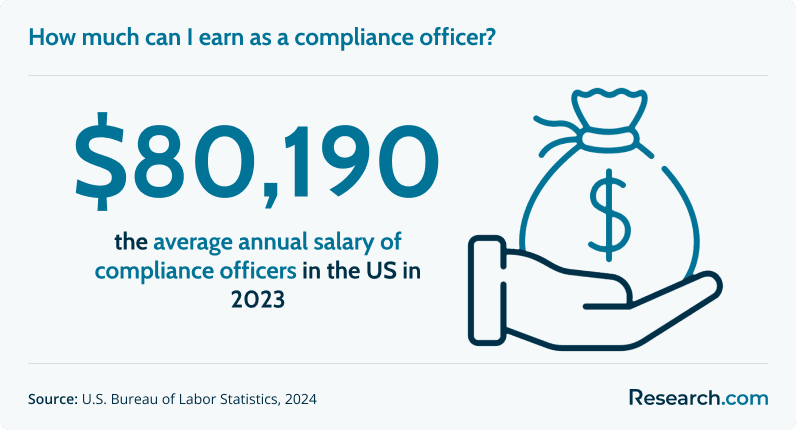
- Compliance officer: A common role for MLS graduates. Compliance officers earn an average annual salary of around $80,190, and the field is projected to grow 5% from 2023 to 2033.
- Paralegals and legal assistants: These roles may be accessible through associate, bachelor’s, certificate, or paralegal-focused programs. The median annual salary for paralegals and legal assistants is $60,970.
- Postsecondary law teacher: Some graduates may teach law-related subjects, especially in continuing education or community college settings, though requirements vary by institution. Postsecondary law teachers earn an average salary of $142,440.
These figures show that easier law degrees can lead to meaningful opportunities, but the strongest return usually comes when the degree supports a specific career plan rather than serving as a general credential.
- Easiest law degree programs for 2027
- Main types of law degrees
- Easier law-related degrees for entry-level legal careers
- Average cost of easier law degree programs
- Online law and legal studies degree options
- Admissions requirements for easier law degree programs
- How to check accreditation and program quality
- How online learning works in legal education
- Whether paralegal programs are a lower-cost legal pathway
- Certifications that can strengthen legal career prospects
- How to evaluate financial return on investment
- MLS vs. online criminal justice degree value comparison
- Career support and networking in MLS programs
- Online associate legal studies programs as stepping-stones
- Fast paralegal certification as an alternative
- Challenges of easier law degree programs
- Common courses in easier law degree programs
- Common specializations in MLS and related programs
- How to choose the right easier law degree program
- Career paths after an easier law degree
- How interdisciplinary study can increase degree value
- MLS job market outlook
What are the easiest law degree programs for 2027?
For students who want legal knowledge without the demands of law school, the MLS is usually the most practical and accessible graduate-level option. It is built for professionals who interact with law in their jobs but do not need attorney licensure. That includes compliance officers, HR professionals, healthcare administrators, finance employees, entrepreneurs, contract managers, and operations leaders.
The MSL and MJ are also accessible compared with a JD, but they may be more specialized depending on the school. An MSL may connect law to areas such as technology, healthcare, or intellectual property. An MJ may focus on a defined legal subject such as labor law, tax law, or environmental law. These options can be valuable, but they are most useful when the curriculum clearly matches a student’s career direction.
The key distinction is simple: an MLS, MSL, or MJ can help you understand law; a JD is the pathway for people who want to practice law. If your goal is broad career flexibility rather than attorney licensure, you may also want to compare legal studies with other adaptable programs such as the easiest liberal studies degree programs.
What are the different types of law degrees?
Law degrees vary by purpose, rigor, length, and professional outcome. Before choosing a program, identify whether you want a legal support role, a business-facing legal knowledge role, an academic legal research path, or the ability to become a licensed attorney.
1. Master of Legal Studies (MLS)
The MLS is designed for non-lawyers who need a working knowledge of law. It is often pursued by professionals in business, healthcare, compliance, human resources, education, and government. Many programs can be completed in one to two years, and some schools offer flexible formats similar to accelerated degree programs for working adults. Students looking for a broader business foundation may also compare MLS options with the easiest management degree programs.
2. Master of Science in Law (MSL)
The MSL is another non-attorney graduate law degree. It often connects legal knowledge to a specific professional field, such as healthcare, technology, intellectual property, or regulatory work. It is typically completed in one to two years.
3. Master of Jurisprudence (MJ)
The MJ provides graduate-level legal education for professionals who want to understand a defined legal area without becoming attorneys. Depending on the school, students may focus on topics such as tax law, labor law, healthcare law, or environmental law.
4. Juris Doctor (JD)
The JD is the main professional law degree for students who want to become lawyers in the United States. It usually requires three years of full-time study and is much more intensive than an MLS, MSL, or MJ. A JD is the appropriate choice if your goal is attorney licensure.
5. Doctor of Juridical Science (SJD or JSD)
The SJD or JSD is the highest academic law degree and is usually intended for legal scholars, researchers, and academics. It follows the JD and generally requires several years of advanced research.
Among these options, the MLS is usually the least demanding graduate law degree for people who want legal knowledge without becoming lawyers. Students who enjoy legal research and information organization may also find related value in the easiest library science programs.
What are the easiest law-related degrees?
If you are not ready for a graduate law degree, undergraduate legal studies and paralegal programs can provide a lower-cost entry point into the legal field. These programs focus on legal terminology, research, ethics, documentation, litigation support, and office procedures.
Associate’s Degree in Legal Services and Studies
An associate’s degree in legal services and studies is one of the most accessible law-related credentials. It usually takes around two years and can prepare students for entry-level work in law offices, public agencies, corporate legal departments, or legal support roles. Students comparing costs may want to review the cheapest online associate degree options. Those interested in service-focused careers can also compare legal studies with a human services online degree.
Bachelor’s Degree in Legal Services
A bachelor’s degree in legal services gives students broader exposure to civil law, contracts, litigation, public policy, legal systems, and professional ethics. It is generally less intensive than a JD and may support work in legal departments, policy offices, compliance teams, or administrative legal roles.
Bachelor’s Degree in Paralegal Studies
A bachelor’s degree in paralegal studies prepares students to support attorneys through legal research, document preparation, case organization, client file management, and litigation support. It is more extensive than an associate program but still more direct and career-focused than law school.
| Path | Who it fits best | Main advantage | Main limitation |
| Associate’s in legal services | Students seeking a fast, lower-cost legal support credential | Accessible entry point into legal office work | May limit advancement without further education |
| Bachelor’s in legal services | Students who want broader legal and policy knowledge | Stronger foundation than an associate degree | Longer and more expensive than a two-year option |
| Bachelor’s in paralegal studies | Students aiming for paralegal or legal assistant roles | Career-focused training in legal support tasks | Does not qualify graduates to practice law |
| MLS | Working professionals who need legal knowledge for advancement | Graduate-level legal understanding without a JD | Not a route to attorney licensure |
What is the average cost of the easiest law degree program?
Costs vary widely by school, residency status, delivery format, credit requirements, and fees. When comparing programs, look beyond advertised tuition and calculate the total cost of attendance, including technology fees, books, travel, graduation fees, and any required campus visits.
For MLS, MSL, and MJ programs, the average total cost typically ranges from $15,000 to $50,000. These programs are usually less expensive than a JD. According to a comparison to a traditional JD program, JD tuition commonly ranges from $30,000 to $70,000 per year at many law schools. Over three years, that can place total tuition between $90,000 and $210,000.
| Program type | Typical cost range stated | Best use case |
| MLS, MSL, or MJ | $15,000 to $50,000 total | Graduate legal knowledge for non-attorney careers |
| JD | $30,000 to $70,000 per year; $90,000 to $210,000 over three years | Attorney licensure pathway |
| Associate’s Degree in Legal Services & Studies | $5,000 to $15,000 for the full program | Entry-level legal support preparation |
| Bachelor’s Degree in Legal Services | $15,000 to $45,000 | Broader undergraduate legal education |
| Bachelor’s Degree in Paralegal Studies | $20,000 to $50,000 | Paralegal and legal assistant preparation |
Financial aid options to compare
- Scholarships and grants: Schools, legal associations, employers, and community organizations may offer awards for legal studies students.
- Federal student loans: Eligible students may use federal loans, which often have borrower protections not available through private loans.
- Employer tuition assistance: This can be valuable if your current role involves compliance, HR, contracts, risk management, or legal operations.
- Work-study programs: Some institutions offer work-study opportunities that may also provide relevant administrative or legal exposure.
Can you earn a law or law-related degree online?
Yes. Many MLS, MSL, MJ, paralegal studies, and legal services programs are offered online. This format is especially useful for working adults who need to study part time, continue earning income, or avoid relocating.
Online MLS programs often resemble other flexible professional degrees in format, with asynchronous courses, scheduled discussions, digital libraries, writing assignments, and applied projects. Students comparing self-directed graduate options may find useful similarities in self-paced MBA online programs.
Online programs commonly take one to three years, depending on whether a student enrolls full time or part time. Some have no campus visits, while others include brief residencies or synchronous class meetings. Before enrolling, confirm whether the schedule, technology requirements, exam policies, and student support services match your work and family obligations.
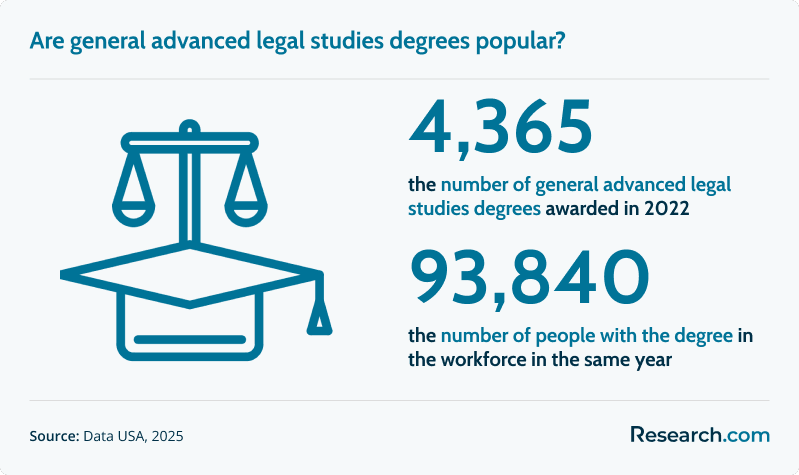
No matter the mode of instruction, around 4,365 advanced legal studies degrees were conferred in 2022, with approximately 93,840 degree holders active in the US workforce that same year.
What are the prerequisites for enrolling in the easiest law degree programs?
Admissions requirements for MLS, MSL, and MJ programs are usually more flexible than JD admissions. Most applicants need a bachelor’s degree from an accredited institution, but the undergraduate major often does not need to be law-related. Degrees in business, communications, political science, healthcare, criminal justice, humanities, or a philosophy degree can all provide relevant preparation.
Many programs do not require prior legal experience. However, schools may review academic performance, professional experience, personal statements, resumes, recommendation letters, and career goals. Some programs offer introductory legal courses for students who have not studied law before.
Common graduate admissions requirements
- Bachelor’s degree from an accredited institution
- Minimum GPA requirement, often ranging from 2.5 to 3.0 depending on the program
- Resume, statement of purpose, and recommendation letters, depending on the school
- No prior legal experience required in many programs
- Possible introductory coursework for students without a legal background
Undergraduate law-related degree prerequisites
Associate and bachelor’s programs in legal studies or paralegal studies usually have simpler admissions requirements. Applicants generally need a high school diploma or GED, along with standard college application materials.
The industries with the highest level in employment in legal occupations include legal services (753,360) and local governments (98,390). See the chart below for a breakdown.
How can you verify the program’s accreditation and quality?
Accreditation should be one of your first checks. For any degree program, confirm that the institution is properly accredited by a recognized accrediting body. For paralegal education, also review whether the program has relevant professional approval or recognition when that matters for your target employers.
Quality is not only about accreditation. Review the curriculum, faculty experience, student support, graduation requirements, career services, transfer credit policies, and graduate outcomes. If your goal is legal support work, an online paralegal certification may also help you build practical skills alongside or instead of a degree.
How do online learning methodologies enhance legal education?
Strong online legal programs use more than recorded lectures. They may include case analysis, discussion boards, live seminars, legal research databases, writing workshops, simulations, group projects, and scenario-based assignments. These tools can help students practice applying legal concepts to workplace problems.
Online learning can be especially useful for students who are already employed in regulated industries because they can connect coursework directly to real professional challenges. Students interested in criminal law, policing, courts, or corrections may also compare legal studies with a criminal law degree online.
Are paralegal programs a cost-effective pathway to a legal career?
Paralegal programs can be a practical choice for students who want to enter legal work quickly without completing a graduate degree. These programs emphasize legal research, document drafting, case management, ethics, litigation support, and law office procedures.
This path is especially attractive if your immediate goal is a legal assistant or paralegal role rather than a compliance, management, or policy position. To compare lower-cost options, review the cheapest ABA-approved paralegal programs.
What additional certifications can boost career prospects after an easiest law degree?
Certifications can help clarify your skills for employers, particularly when your degree is broad. Useful areas may include compliance, regulatory affairs, contracts, healthcare compliance, privacy, risk management, project management, or paralegal studies. The right credential depends on the role you want.
If you are targeting legal support work, a paralegal-focused credential may strengthen your resume. Students comparing degree and certificate options can review an online school for paralegal pathway to understand how training formats differ.
Is the easiest law degree program a sound financial investment?
An easier law degree can be worth it when it solves a specific career problem: qualifying for compliance work, strengthening a promotion case, moving into HR policy, supporting contract responsibilities, or adding legal fluency to an existing professional background. It is a weaker investment if you enroll only because the program seems interesting but have no target role or employer demand.
Before committing, compare total cost, completion time, salary potential, employer tuition support, and opportunity cost. Students looking for lower-cost graduate legal studies options can compare affordable online master’s in legal studies programs.
How does an MLS program compare to an online criminal justice degree in affordability and value?
An MLS and an online criminal justice degree can both relate to law, but they prepare students for different outcomes. An MLS is usually better for professionals who work with regulations, contracts, compliance, risk, employment policies, or legal operations. A criminal justice degree is usually more focused on policing, courts, corrections, public safety, criminology, and justice systems.
When comparing affordability, look at tuition, fees, time to completion, required technology, internship expectations, and whether the curriculum matches your target job. Students considering justice-focused careers can compare the online criminal justice degree cost structures with MLS programs before deciding.
How do MLS programs bolster career support and industry networking?
Career support matters because many MLS students are trying to translate legal education into non-attorney roles. Strong programs may offer career coaching, resume reviews, employer panels, alumni events, faculty mentorship, internship guidance, and networking with legal, corporate, healthcare, or government professionals.
Ask whether career services are designed specifically for MLS students or mainly for JD students. That distinction matters. To better understand degree outcomes, review what you can do with an MLS degree.
Are online associate programs in legal studies a viable stepping-stone to advanced legal careers?
Yes, online associate programs in legal studies can be a useful first step, especially for students who want affordable exposure to legal concepts before committing to a bachelor’s or master’s degree. They can also prepare students for entry-level legal office roles while they continue their education.
The best associate programs teach legal terminology, research, writing, ethics, civil procedure basics, and office technology. If you are considering this pathway, compare online associate programs in legal studies and check how credits transfer into bachelor’s programs.
Can the quickest paralegal certification be a viable alternative to an easiest law degree program?
A fast paralegal certificate may be a better choice than an MLS if your immediate goal is legal support work and you do not need a graduate credential. Certificate programs are usually narrower and more skills-focused, while an MLS provides broader legal understanding for professionals in multiple industries.
Choose a certificate if you need job-ready skills in legal research, document preparation, and case support. Choose an MLS if you need legal knowledge for management, compliance, policy, contracts, or regulated business operations. To compare accelerated options, review the quickest paralegal certification pathways.
What are the potential challenges of pursuing an easiest law degree program?
The biggest risk is misunderstanding what the degree can and cannot do. An MLS, MSL, or MJ does not qualify you to practice law, represent clients, or sit for the bar simply because it is housed in a law school. Some employers may still prefer a JD for roles involving complex legal analysis, attorney-client matters, litigation strategy, or legal advice.
Another challenge is career translation. A broad legal studies degree may not be enough by itself if you lack relevant experience. Students may need internships, certifications, industry knowledge, or a clear specialization to compete for targeted roles. Some careers involving security, intelligence, or sensitive government work may also require additional vetting beyond education; for example, students interested in federal intelligence work should understand the CIA recruitment process.
What courses are typically in the easiest law degree program?
MLS programs usually focus on practical legal foundations rather than the full professional training required in JD programs. Courses help students understand how law affects organizations, employees, contracts, regulations, risk, and decision-making. Flexible programs may appeal to students comparing the fastest online degree options.
- Introduction to Law: Overview of the legal system, courts, civil law, criminal law, and constitutional principles.
- Contracts: Study of agreements, formation, performance, breach, enforcement, and contract interpretation.
- Legal Research and Writing: Training in finding legal sources, reading statutes and cases, and communicating legal analysis clearly.
- Torts: Introduction to civil wrongs such as negligence, liability, and personal injury claims.
- Ethics and Professional Responsibility: Review of ethical standards, professional conduct, and legal decision-making responsibilities.
- Property Law: Coverage of ownership, transfer, land use, and related property rights.
What types of specializations are available in the easiest law degree programs?
Specializations can make an MLS or similar degree more useful because they connect legal study to a specific employment market. Before selecting a concentration, compare it with your current experience and the roles you plan to pursue.
- Corporate law: Business organizations, contracts, governance, transactions, mergers, and acquisitions.
- Intellectual property law: Copyrights, trademarks, patents, creative works, and innovation protection.
- Health law: Healthcare regulation, policy, privacy, compliance, and institutional risk.
- Environmental law: Environmental regulation, sustainability, land use, and natural resources.
- Real estate law: Property ownership, leasing, development, financing, and land use issues.
- Labor and employment law: Workplace regulation, employee rights, collective bargaining, discrimination, and HR compliance.
Compliance is one of the clearest career connections for MLS graduates. In 2023, there were 403,900 compliance officers employed in the US, earning an average annual salary of $80,190.
How do you choose the best easiest law degree program?
The best program is not automatically the shortest or cheapest. It is the one that fits your career goal, budget, schedule, and credential needs. Use the following checklist before applying.
| Decision factor | What to ask | Why it matters |
| Career goal | Do I want legal support work, compliance work, HR advancement, policy work, or attorney licensure? | Different goals require different credentials. |
| Program type | Is an MLS, MSL, MJ, certificate, associate degree, bachelor’s degree, or JD the right fit? | An easier degree is not useful if it does not match the job requirement. |
| Flexibility | Can I study online, part time, asynchronously, or in an accelerated format? | Working adults need a format they can actually complete. |
| Cost | What is the total cost after fees, books, travel, and lost work time? | Tuition alone can hide the real financial commitment. |
| Specialization | Does the program offer concentrations tied to my industry? | Focused study can make the degree easier to market. |
| Accreditation | Is the institution properly accredited? | Accreditation affects credibility, transferability, and financial aid eligibility. |
| Career support | Are services tailored to MLS or legal studies students? | General law school career services may focus mainly on JD students. |
Common mistakes to avoid
- Choosing a program without checking institutional accreditation
- Assuming an MLS will allow you to become a licensed attorney
- Comparing tuition only and ignoring fees, books, and required residencies
- Picking a specialization that does not match your job market
- Relying only on rankings instead of curriculum, support, and outcomes
- Assuming online programs are automatically easier than campus programs
- Ignoring transfer credit and employer tuition reimbursement policies
What career paths are available for graduates of the easiest law degree programs?
Graduates of MLS and related master’s programs usually pursue roles where legal knowledge strengthens business, regulatory, administrative, or educational work. These roles do not require attorney licensure, but they often reward professionals who can interpret rules, communicate risk, and work with legal teams.
- Compliance officer: Compliance professionals help organizations follow laws, regulations, and internal policies. This pathway is common in finance, healthcare, insurance, education, and corporate settings. The field had more than 400,000 professionals in 2023, with an average salary of a little over $80,000.
- Human resources manager: MLS graduates with employment law knowledge may support hiring policies, compensation practices, workplace investigations, employee relations, and compliance with labor regulations.
- Corporate consultant: Professionals with business backgrounds may use legal studies to advise organizations on governance, contracts, regulatory risk, or operations. Some students may pair legal knowledge with business training through options such as the fastest MBA programs.
- Paralegal or legal assistant: Some graduates work in legal support roles that involve research, document drafting, case organization, and attorney support. For many of these roles, targeted paralegal education may be more direct than an MLS.
- Legal educator: Graduates may teach law-related subjects in certain academic or continuing education settings, though qualifications vary. The average annual salary for postsecondary law teachers in the US in 2023 was $142,440.
Other related roles may include regulatory affairs specialist, contract manager, policy analyst, risk analyst, mediator, arbitrator, legal operations specialist, or consultant. For occupational details on compliance officers, students should compare job tasks with the curriculum before enrolling. Practicing lawyers remain a separate career pathway and earn an average of $145,760 annually.
How can an interdisciplinary approach enhance the value of an easiest law degree program?
An MLS becomes more marketable when it is paired with another field. Legal knowledge is especially useful when combined with healthcare administration, cybersecurity, business, finance, human resources, intelligence, public policy, environmental management, or technology.
For example, a professional who understands both law and intelligence analysis may be better prepared for roles involving regulatory compliance, risk assessment, policy interpretation, or sensitive information environments. Students interested in that combination may compare legal studies with a masters degree in intelligence online.
What is the job market for graduates with an MLS degree?
The job market for MLS graduates is strongest in roles where organizations need employees who understand regulations but do not require licensed attorneys. Compliance, HR, risk management, contracts, legal operations, and business administration are common examples.
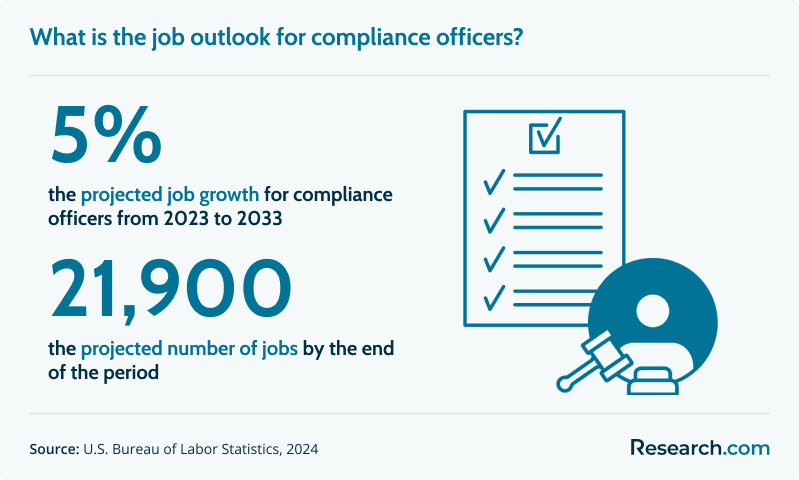
Compliance officers are projected to see 5% job growth from 2023 to 2033, with 21,900 new positions expected by the end of that period. This reflects ongoing demand for professionals who can help organizations follow laws, manage risk, and adapt to changing regulations.
That said, MLS graduates should not assume the degree alone will open every legal-adjacent role. Employers often look for a combination of education, industry experience, writing ability, analytical judgment, and practical knowledge of regulations in a specific sector.
References:
- Bureau of Labor Statistics. (2024). Arbitrators, mediators, and conciliators. Retrieved January 10, 2025, from BLS.
- Bureau of Labor Statistics. (2024). Compliance officers. Retrieved January 10, 2025, from BLS.
- Bureau of Labor Statistics. (2024). Legal occupations. Retrieved January 10, 2025, from BLS.
- Bureau of Labor Statistics. (2024). Lawyers. Retrieved January 10, 2025, from BLS.
- Bureau of Labor Statistics. (2024). Occupational employment and wages, May 2023 - 13-1041 Compliance officers. Retrieved January 10, 2025, from BLS.
- Bureau of Labor Statistics. (2024). Occupational employment and wages, May 2023 - 23-0000 Legal occupations (major group). Retrieved January 10, 2025, from https://www.bls.gov/oes/2023/may/oes230000.htm.
- Data USA. (2025). General advanced legal studies. Retrieved January 10, 2025, from Data USA.
- Northeastern University School of Law. (2023, October 25). Master of Legal Studies vs. Juris Doctor: Which is right for you? Retrieved January 10, 2025, from Northeastern University.
Key Insights
- The MLS is usually the easiest graduate-level law degree for non-lawyers because it teaches applied legal knowledge without the attorney licensure pathway.
- If you want to practice law, the JD is the appropriate degree; an MLS, MSL, or MJ does not replace law school or bar eligibility.
- Paralegal certificates and associate degrees can be faster and cheaper routes into legal support work than a master’s degree.
- MLS programs are most valuable when tied to a clear career goal such as compliance, HR, contracts, healthcare regulation, risk management, or legal operations.
- Cost matters: MLS, MSL, and MJ programs typically range from $15,000 to $50,000, while JD tuition can total $90,000 to $210,000 over three years.
- Online programs can be convenient, but students should still verify accreditation, total cost, career services, transfer policies, and whether the curriculum fits their target role.
- The safest decision is to choose the least expensive accredited program that offers the right specialization, credible faculty, strong student support, and a direct connection to your career plan.
Other Things You Should Know About Law Degrees
Easiest law degree programs in 2027 often provide support services like academic advising, tutoring, and career counseling. Some include mental health resources and student mentorship programs, enhancing students' educational experiences and helping them manage both academic and personal challenges effectively.
Many of the easiest law degree programs still require an LSAT score for admission, but some schools accept the GRE instead. Juris Doctor programs approved by the ABA usually ask for an accredited bachelor’s degree, transcripts, letters of recommendation, and a personal statement.