2027 How to Get a Paralegal Certificate: Educational Requirements

Co-Founder and Chief Data Scientist
Choosing a paralegal certificate is usually a practical career decision: you want legal training that is faster than a degree, credible to employers, and affordable enough to justify the investment. The challenge is that “certificate,” “certification,” associate degree, bachelor’s degree, ABA approval, online delivery, and employer preferences are often discussed as if they mean the same thing. They do not.
This guide explains what education you typically need for a paralegal certificate, how certificate programs compare with degrees, how long they take, what they cost, whether online programs are accepted, and how to judge the career value of the credential. It is written for first-time college students, working adults, career changers, and legal support workers who want a clear path into paralegal roles without overpaying or choosing the wrong program.
Quick answer: What education do you need for a paralegal certificate?
Most paralegal certificate programs require a high school diploma or equivalent at minimum. Some post-baccalaureate certificate programs require applicants to already hold an associate or bachelor’s degree. Program length can be as short as six months, and typical costs range from $7,000 to $15,000 depending on the school, format, and services included. A certificate can qualify candidates for entry-level paralegal work, especially when paired with internships, strong writing skills, legal research experience, or prior office experience.
| Decision point | What to know before enrolling |
| Minimum education | Many programs accept students with a high school diploma or equivalent, while some prefer or require prior college coursework. |
| Time to finish | Some programs can be completed in as few as six months; part-time and online students may take longer. |
| Typical cost | Certificate programs commonly cost $7,000 to $15,000. |
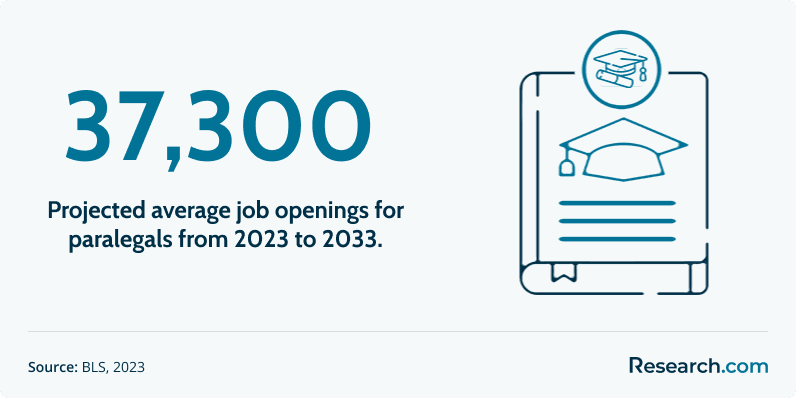
| Career outlook | The U.S. Bureau of Labor Statistics projects 1% employment growth for paralegals and legal assistants from 2023 to 2033, with about 37,300 openings each year. |
| Salary benchmark | As of May 2023, the median annual wage for paralegals and legal assistants was $60,970. |
| Best fit | A certificate often makes sense for career changers, students who want faster entry into legal work, and degree holders who need legal-specific training. |
- What is a paralegal certificate and how does it differ from a degree?
- What are the educational requirements for a paralegal certificate in 2027?
- How long does it take to get a paralegal certificate?
- How much does it cost to get a paralegal certificate?
- Can you get a paralegal certificate online?
- Is a paralegal certificate a worthwhile investment?
- How do I choose the right paralegal certificate program?
- Should paralegals consider advanced legal education?
- Should I pursue a paralegal certificate or an associate degree?
- How much do paralegals earn with a certificate?
- Can interdisciplinary studies boost your paralegal career?
- Can advanced interdisciplinary studies boost a paralegal’s career prospects?
- What are the job prospects for paralegals with a certificate?
- What are the biggest challenges in becoming a paralegal?
- Can you specialize as a paralegal?
- What are the pathways to career advancement after earning a paralegal certificate?
What is a paralegal certificate and how does it differ from a degree?
A paralegal certificate is an academic credential showing that you completed focused coursework in legal research, legal writing, litigation support, ethics, and other law-related subjects. It is not the same as professional certification. A certificate is awarded by a school after completing a program; certification is usually earned through a professional organization after meeting eligibility rules and passing an exam.
Before choosing a credential, it helps to understand what a paralegal does in daily practice. Paralegals often organize case files, draft legal documents, conduct research, communicate with clients under attorney supervision, prepare exhibits, track deadlines, and support attorneys before trial, during transactions, or in administrative proceedings.
A paralegal degree is broader. An associate or bachelor’s degree in paralegal studies usually includes legal courses plus general education requirements such as composition, social science, communication, and electives. A certificate is narrower and usually faster because it concentrates on legal training rather than a full undergraduate curriculum.
| Credential | Typical focus | Best for | Main trade-off |
| Paralegal certificate | Legal research, writing, procedure, ethics, and practical legal skills | Career changers, working adults, and students seeking faster entry into legal support roles | Less broad than a degree and may not satisfy employers that prefer college degrees |
| Associate degree | Legal studies plus general education | Students who want a college credential and possible transfer options | Takes longer than most certificate programs |
| Bachelor’s degree | Broader undergraduate education with legal or related specialization | Students seeking broader career flexibility or future graduate study | Usually requires more time and money than a certificate |
| Professional certification | Exam-based validation of paralegal knowledge and experience | Paralegals who want to strengthen credentials after education or work experience | Eligibility requirements vary and may include education, experience, or continuing education |
The Bureau of Labor Statistics projects 1% growth for paralegals and legal assistants from 2023 to 2033, with about 37,300 job openings yearly. That means the certificate can be useful, but it should be chosen carefully: employers may compare candidates on education, experience, writing ability, technology skills, and familiarity with the legal specialty they need.
What are the educational requirements for a paralegal certificate in 2027?
The baseline requirement for many paralegal certificate programs is a high school diploma or equivalent. However, requirements vary by school and by program level. Some programs are designed for beginners, while post-degree certificates may expect applicants to have already completed college coursework.
This pattern is common across legal support careers. For example, people researching how court clerks are hired will often find that entry-level legal support roles may value a mix of education, administrative skill, attention to detail, and familiarity with court or legal procedures.
Common admission requirements
- Completed application form
- High school, college, or prior academic transcripts
- Proof of a diploma, GED, or previous degree when required
- Personal statement or short essay for some programs
- Placement requirements or advising for students who need writing support
- Possible technology requirements for online courses
Typical paralegal certificate coursework
While curricula differ, strong programs usually include both legal theory and practice-based assignments. Look for courses that require drafting, research, citation, case analysis, and deadline management rather than only lectures or multiple-choice quizzes.
- Legal research and writing
- Civil litigation and legal procedure
- Contracts and torts
- Legal ethics and professional responsibility
- Law office technology and document management
- Interviewing, investigation, and case preparation
- Electives such as family law, criminal law, real estate, immigration, or corporate law
The American Bar Association (ABA) reports that there are over 260 ABA-approved paralegal education programs in the United States. ABA approval can be a useful quality signal, but it is not the only factor to evaluate. Students should also examine curriculum depth, internship access, faculty experience, career support, transfer policies, and employer recognition in their local market.
How long does it take to get a paralegal certificate?
A paralegal certificate can take as few as six months, but the actual timeline depends on course load, academic calendar, internship requirements, and whether the program is full-time, part-time, online, hybrid, or campus-based.
Students who want the fastest route may compare accelerated paralegal certificate options. These programs can work well for motivated students who have enough time each week for reading, writing, legal research, and assignments. However, faster is not automatically better. A compressed program can be difficult if you are working full time, caring for family, or new to legal terminology.
| Program format | Possible timeline | When it makes sense | Risk to watch |
| Full-time certificate | As few as six months | You can commit significant weekly study time and want to enter the workforce quickly. | The pace may leave little room for work, family obligations, or skill-building beyond class assignments. |
| Part-time certificate | Longer than full-time study | You need to keep working while preparing for a legal support career. | Longer timelines can reduce momentum if advising and scheduling are weak. |
| Online certificate | Varies by school and schedule | You need geographic flexibility or cannot attend campus regularly. | You must verify accreditation, hands-on practice, internship options, and technology requirements. |
| Accelerated certificate | Shorter than traditional formats | You already have strong writing, organization, and study skills. | Condensed courses can be demanding and may not suit students who need more instructor feedback. |
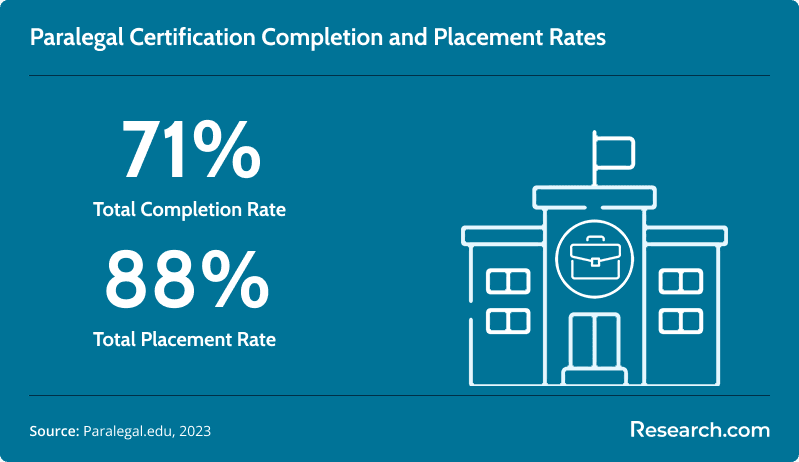
Program outcomes also vary by institution. For example, the Center for Advanced Legal Studies reports a 71% completion rate for its paralegal certificate program. National Paralegal College has a 10% graduation rate within the standard program duration. Those figures show why students should not choose based on advertised speed alone. Completion support, course availability, academic advising, and realistic workload expectations matter.
How much does it cost to get a paralegal certificate?
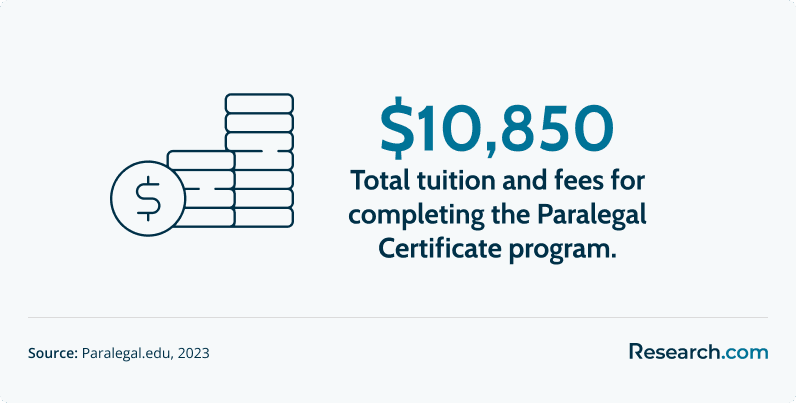
Paralegal certificate programs commonly cost $7,000 to $15,000. Tuition can vary based on school type, program length, online or campus delivery, ABA approval, student services, technology fees, books, and whether an internship is included. Students exploring a focused path such as how to become a criminal paralegal should compare total program cost against local entry-level wages and the availability of criminal law internships or clinics.
Costs to include beyond tuition
- Application and registration fees
- Textbooks, legal research tools, and citation guides
- Technology fees for online coursework
- Transportation or parking for campus classes or internships
- Professional association dues or exam preparation materials
- Lost work hours if the program requires daytime attendance
Financial aid and payment options
- Federal and state aid: The U.S. Department of Education provides information about grants and other aid programs. Eligibility depends on the institution and program.
- State grants: Some states, including California, offer grants for students attending qualifying institutions.
- Employer tuition reimbursement: Legal offices, corporations, government agencies, or other employers may help pay for training when it connects to your current or future role.
- Payment plans: Some schools allow students to spread tuition payments across the term or program.
How to judge affordability correctly
Do not compare programs by tuition alone. A lower-cost program may be a poor value if it lacks legal writing practice, internship connections, career support, or employer recognition. A more expensive program may be worthwhile if it offers strong placement support, practical assignments, and access to legal employers. Ask for completion rates, internship availability, graduate employment information, and a full cost sheet before enrolling.
Can you get a paralegal certificate online?
Yes. Students can complete a paralegal certificate online through accredited schools and legal education providers. Online programs are especially useful for working adults, rural students, parents, military-connected learners, and career changers who cannot attend campus on a fixed schedule.
Employer acceptance depends on program quality, not just delivery format. A strong online program should include instructor feedback, legal research databases or training, writing assignments, ethics instruction, and opportunities for practical experience. Some online programs may also include internships or local field experiences. Sam Houston State University, for example, offers online paralegal certificates with valuable components.
| Online paralegal certificate | Campus paralegal certificate |
| Better for students who need schedule flexibility or cannot commute regularly. | Better for students who prefer face-to-face discussion, campus resources, and local networking. |
| Requires strong time management and comfort with online learning platforms. | Requires attendance at set times and may involve commuting costs. |
| Can be credible when offered by an accredited institution with rigorous legal coursework. | Can offer easier access to in-person faculty support, clinics, or local internships. |
| Students must confirm whether internships, career services, and employer connections are available remotely. | Students should still verify accreditation, outcomes, cost, and whether the curriculum is current. |
When evaluating online study, be precise about language. An online certificate from a school is not the same as national professional certification. Also, not every online program is ABA-approved. Review the school’s accreditation, ABA status if relevant to your goals, and how the program supports practical skill development.
Is a paralegal certificate a worthwhile investment?
A paralegal certificate can be worth it when it helps you qualify for legal support work faster and at a lower cost than a degree. It is most valuable when the program is recognized by employers, teaches practical legal skills, provides feedback on writing, and helps students build experience through internships or job connections.
The return on investment is weaker if the program is expensive, has poor completion support, lacks career services, or is not recognized by employers in your area. Students comparing legal and justice-related options may also want to review alternatives such as the most affordable online criminal justice degree if they want broader roles in courts, corrections, compliance, public safety, or law-adjacent fields.
A paralegal certificate is more likely to be worth it if:
- You already have a degree in another subject and need legal-specific training.
- You want to test the legal field before committing to a longer degree.
- You can choose a program with strong writing, research, and internship components.
- You live in a market where employers hire certificate-trained paralegals.
- You can keep debt low and complete the program without leaving stable employment unnecessarily.
A different path may be better if:
- Your target employers consistently require an associate or bachelor’s degree.
- You want broader transfer options for future undergraduate study.
- You need a credential that supports multiple career directions outside legal support.
- You are not ready for intensive reading, writing, deadlines, and detailed document work.
How do I choose the right paralegal certificate program?
The right program is the one that matches your career target, schedule, budget, and local employer expectations. Rankings and advertisements can be useful starting points, but they should not replace a careful review of accreditation, curriculum, outcomes, and support services.
| What to check | Questions to ask the school |
| Accreditation and recognition | Is the institution accredited? Is the paralegal program ABA-approved or otherwise recognized by legal employers in the region? |
| Curriculum | How much graded writing, legal research, drafting, and practical case work will students complete? |
| Faculty | Do instructors have current legal practice, paralegal management, litigation, corporate, government, or specialty experience? |
| Internship access | Does the program help place students in internships, or must students find their own? |
| Career support | Does the school help with resumes, legal writing samples, interview preparation, and employer networking? |
| Flexibility | Can working students complete courses part time, online, in the evening, or in a hybrid format? |
| Total cost | What is the full price including fees, books, legal research tools, and required materials? |
| Outcomes | What are completion rates, employment outcomes, and typical job titles for graduates? |
Students interested in adjacent legal, investigative, or public safety fields may also compare paralegal programs with broader criminal justice options, including resources on the highest paying jobs in forensics. That comparison can clarify whether you want law office work specifically or a wider justice-related career path.
Should paralegals consider advanced legal education?
Advanced legal education can help experienced paralegals move toward compliance, contracts management, legal operations, risk management, policy, or leadership roles. It is not required for every paralegal job, but it may be useful for professionals who want to handle more complex legal analysis, work in regulated industries, or qualify for roles that prefer graduate-level legal training.
For students who want graduate legal knowledge without becoming attorneys, online master of legal studies programs may be worth comparing. Before enrolling, confirm whether the degree supports your target roles, whether employers in your field value it, and whether the cost fits your expected career benefit.
Should I pursue a paralegal certificate or an associate degree?
The best choice depends on your existing education and long-term plans. A certificate is usually the faster option if you already have college experience or want focused legal training. An associate degree in legal studies online may be better if you want a college degree, need general education credits, or plan to transfer later into a bachelor’s program.
| Choose a certificate if... | Choose an associate degree if... |
| You want the shortest reasonable route into entry-level legal support work. | You want a broader academic credential with general education coursework. |
| You already have a degree in another field. | You do not yet have a college degree and want a foundation for future study. |
| Your local employers accept certificate-trained applicants. | Your target employers prefer or require a degree. |
| You want to minimize time and cost. | You want stronger transfer possibilities into a bachelor’s degree later. |
How much do paralegals earn with a certificate?
Salary depends on location, employer type, legal specialty, experience, education, and technical skill. As of May 2023, the median annual wage for paralegals and legal assistants was $60,970. A certificate alone does not guarantee that salary, but it can help candidates qualify for roles where they can build experience and advance.
Certificate versus degree earnings
Public salary data does not always separate certificate holders from associate or bachelor’s degree holders. In hiring, many employers weigh practical ability heavily: legal research, document drafting, accuracy, deadline management, software proficiency, and professionalism. Students who want a broader credential while continuing to work may compare a paralegal studies online degree with certificate options.
Industry and location differences
- Industries: Paralegals in software publishing earn an average of $123,720 annually, while those in motor vehicle manufacturing average $119,340.
- States: The District of Columbia reports the highest average salary at $82,010, followed by California at $61,810.
Can certification improve earnings?
Professional credentials, such as certification through the National Association of Legal Assistants (NALA), can strengthen a paralegal’s resume. The value of certification depends on employer preferences, your experience level, and the specialty you pursue.
Can interdisciplinary studies boost your paralegal career?
Interdisciplinary study can help paralegals who want to work in areas where law overlaps with business, security, compliance, technology, healthcare, finance, or government. For example, a paralegal supporting regulatory investigations may benefit from understanding risk management and public-sector procedures, while a contracts paralegal may benefit from business communication and project management.
Students interested in legal work connected to national security, emergency management, or public safety may explore accelerated online homeland security degree programs. This type of study is not necessary for every paralegal role, but it can support niche career goals in compliance, public agencies, or security-related legal environments.
Can advanced interdisciplinary studies boost a paralegal’s career prospects?
Advanced interdisciplinary education may help experienced paralegals move into specialized work involving investigations, cybersecurity policy, intelligence, regulatory compliance, or government contracting. These roles often require more than basic legal procedure; they may call for research judgment, risk analysis, secure information handling, and the ability to translate complex facts into usable legal or policy documents.
An online masters degree in intelligence may be relevant for paralegals targeting security, intelligence, or compliance-adjacent roles. However, it should be evaluated against specific job postings, employer expectations, cost, and whether graduate study is truly required for advancement.
What are the job prospects for paralegals with a certificate?
Paralegals with certificates can compete for entry-level legal assistant and paralegal roles, especially when their training includes research, writing, litigation support, law office technology, and internship experience. The U.S. Bureau of Labor Statistics projects employment of paralegals and legal assistants to grow 1% from 2023 to 2033, with about 37,300 openings annually, largely due to workforce turnover.
Common employers
- Law firms: Litigation, family law, personal injury, immigration, criminal defense, real estate, probate, and corporate practices hire paralegals to support attorneys and manage documents.
- Corporate legal departments: Businesses use paralegals for contracts, compliance, entity management, intellectual property, employment matters, and records management.
- Government agencies: Public-sector offices may hire paralegals for case preparation, administrative proceedings, public records, policy support, and regulatory work.
- Nonprofits and legal aid organizations: These employers may use paralegal talent for client intake, document preparation, benefits cases, housing matters, or immigration support.
How to become more employable
- Complete an internship or practicum if available.
- Build a legal writing sample before graduation.
- Learn commonly used legal research and document management tools.
- Join local paralegal or bar association events when open to students.
- Target a specialty and tailor your resume to that practice area.
- Ask instructors or internship supervisors for specific feedback on accuracy and professionalism.
Some students use paralegal work as a way to explore law school. Paralegal experience can provide exposure to legal reasoning, attorney workflows, client service, and the realities of legal practice. It can also help students decide whether they actually want the cost and time commitment of law school.
Students considering technical or courtroom-adjacent paths may also compare paralegal work with specialized justice careers. For example, learning how to become a forensic ballistics expert can clarify the difference between legal support roles and evidence-focused forensic careers.
What are the biggest challenges in becoming a paralegal?
Paralegal work can be rewarding, but it is not an easy desk job. The role requires precision, confidentiality, deadline control, strong writing, and the ability to support legal work without giving legal advice or practicing law independently.
Challenge 1: A competitive entry-level market
Because projected employment growth is 1% from 2023 to 2033, candidates should expect competition for desirable roles. The annual opening estimate of about 37,300 is meaningful, but many openings come from replacement needs rather than rapid expansion.
Challenge 2: Heavy reading and writing demands
New students sometimes underestimate how much paralegal work depends on careful reading, accurate writing, citation, document review, and organizing facts. Strong programs should help you practice these skills before you apply for jobs.
Challenge 3: Stress and deadlines
Paralegals often work under court deadlines, filing rules, attorney expectations, client needs, and last-minute changes. The work can involve high stakes and limited control over final decisions.
Challenge 4: Understanding the role boundary
Paralegals support attorneys but cannot perform tasks reserved for licensed lawyers. New paralegals must understand confidentiality, unauthorized practice of law rules, conflicts, billing ethics, and supervision requirements.
Common mistakes to avoid
| Mistake | Better approach |
| Choosing a program only because it is fast | Check curriculum depth, writing feedback, internship options, and employer recognition. |
| Looking only at tuition | Compare total cost, completion support, career services, and likely job value. |
| Assuming every online program has equal credibility | Verify institutional accreditation, ABA approval if relevant, faculty quality, and practical training. |
| Ignoring local employer preferences | Read job postings in your area and ask legal employers what credentials they value. |
| Waiting until graduation to network | Start building contacts through internships, instructors, professional associations, and informational interviews. |
| Confusing certificate with certification | Know whether you are earning a school credential, professional certification, or both. |
Students interested in courtroom operations can also review bailiff career requirements to compare paralegal work with other court support roles.
Can you specialize as a paralegal?
Yes. Specialization can make a paralegal more competitive because legal employers often need support staff who understand a specific practice area. Common specialties include litigation, corporate law, intellectual property, real estate, family law, immigration, criminal law, probate, bankruptcy, healthcare compliance, and employment law.
Specialties to consider
| Specialty | Typical work | Good fit for students who... |
| Litigation | Discovery, pleadings, trial preparation, exhibits, deadlines, and case files | Can manage pressure, details, and fast-changing priorities |
| Corporate law | Contracts, entity filings, board materials, compliance, and transaction support | Like business, organization, and document-heavy work |
| Intellectual property | Trademark, patent, copyright, docketing, filings, and portfolio tracking | Are detail-oriented and interested in innovation, media, or technology |
| Immigration law | Forms, client documents, deadlines, petitions, and case tracking | Have strong communication skills and cultural awareness |
| Family law | Divorce, custody, financial documents, hearings, and client communication | Can handle sensitive client situations with professionalism |
| Real estate | Closings, title documents, contracts, due diligence, and recording | Enjoy transaction timelines and document coordination |
Higher-paying specialization areas
Corporate law and intellectual property are often associated with stronger compensation opportunities because the work can be complex and business-critical. However, pay varies by employer, location, experience, and workload, so students should compare local job postings rather than relying on national assumptions.
Certifications and specialty credibility
Professional credentials can help demonstrate competence. Organizations such as NALA offer the Certified Paralegal (CP) credential. Students may also strengthen their resumes by completing ABA approved paralegal programs, particularly in markets where employers view ABA approval as a sign of rigorous training.
How to choose a paralegal specialty
- Review job postings in your target city or remote market.
- Compare salary potential with the daily tasks involved.
- Ask practicing paralegals what the workload is really like.
- Choose electives and internships that align with the specialty.
- Build a writing sample relevant to your target practice area.
What are the pathways to career advancement after earning a paralegal certificate?
A certificate can be the first step, not the final credential. Advancement usually comes from experience, specialization, technology skills, professional certification, and the ability to manage increasingly complex legal work.
Possible advancement paths
- Entry-level paralegal or legal assistant: Build core skills in filing, research, document preparation, client communication, and calendar management.
- Specialized paralegal: Move into practice areas such as litigation, corporate law, intellectual property, immigration, or compliance.
- Senior paralegal: Handle more complex cases, supervise junior staff, manage workflows, or support high-value matters.
- Legal operations or compliance role: Apply legal process knowledge in corporate, regulatory, healthcare, finance, or government settings.
- Further education: Pursue an associate degree, bachelor’s degree, master’s degree, professional certification, or law school depending on goals.
Some paralegals broaden their options through justice or public safety education. For example, the best online programs for law enforcement may be relevant for students who want to combine legal knowledge with public-sector, investigative, or enforcement-oriented career paths.
Practical steps before you enroll
- Define your target job first. Search local paralegal and legal assistant postings. Note whether employers ask for a certificate, associate degree, bachelor’s degree, ABA-approved program, experience, bilingual skills, or specialty knowledge.
- Verify the school and program. Confirm institutional accreditation and whether the paralegal program has ABA approval if that matters in your market.
- Ask for a full cost breakdown. Include tuition, fees, books, technology, commuting, and any internship-related expenses.
- Review the curriculum carefully. Prioritize programs with legal writing, research, ethics, procedure, drafting, and practice-based assignments.
- Look for real experience. Internships, practicums, clinics, or employer-connected projects can make a certificate more valuable.
- Evaluate completion support. Ask how the school helps students who fall behind, need writing support, or are balancing work and school.
- Compare outcomes. Request completion rates, graduate job titles, career services information, and employer partnerships.
- Plan your next credential. Decide whether you may later pursue professional certification, a degree, a master’s program, or law school.
Sources and further reading
- Riggs, T. Paralegal certificate and certification terminology explained. https://www.paralegal.edu/blog/paralegal-certificate-vs-paralegal-certification-lets-clear-up-the-confusion
- Generations College. Comparison of a paralegal associate degree and certificate. https://www.generations.edu/comparing-a-paralegal-associate-degree-vs-a-certificate
- U.S. Bureau of Labor Statistics. Occupational Outlook Handbook for paralegals and legal assistants. https://www.bls.gov/ooh/legal/paralegals-and-legal-assistants.htm
- Flavin, B. Rasmussen University overview of paralegal bachelor’s degree considerations. https://www.rasmussen.edu/degrees/justice-studies/blog/paralegal-bachelors-degree
- NALA. Certification eligibility requirements. https://nala.org/certification/eligibility-requirements/
- Center for Advanced Legal Studies. Program disclosures. https://www.paralegal.edu/disclosures
- Data USA. National Paralegal College profile. https://datausa.io/profile/university/national-paralegal-college
- Federal Student Aid. Federal aid information. https://studentaid.gov/
- National Paralegal College. Tuition and payment plan information. https://www.nationalparalegal.edu/tuition.aspx
- Hofstra Law. Paralegal certificate admissions and tuition details. https://law.hofstra.edu/paralegal-certificate-program/admissions-and-tuition/
- UCLA Extension. Paralegal studies certificate information. https://www.uclaextension.edu/legal-programs/paralegal-studies/certificate/paralegal-studies
- Ketterer, S. Sam Houston State University certificate announcement. https://www.houstonchronicle.com/news/houston-texas/education/article/sam-houston-state-university-launch-ai-20174082.php
- U.S. Bureau of Labor Statistics. Occupational employment and wage statistics for paralegals and legal assistants. https://www.bls.gov/oes/current/oes232011.htm
- NALA archived information for paralegals and legal assistants. https://web.archive.org/web/20120306130033/http://www.nala.org/AboutParalegals.aspx
- Online Paralegal Degree Center. Explanation of certificate and degree differences. https://www.online-paralegal-degree.org/faq/what-is-the-difference-between-a-paralegal-certificate-program-and-a-paralegal-degree
- Patent Education Series. Paralegal salary discussion. https://www.patenteducationseries.com/career-insights/paralegal-salary.html
- Online Master of Legal Studies. Paralegal salaries by legal field and location. https://onlinemasteroflegalstudies.com/career-guides/become-a-paralegal/salary
- BecomeAParalegal.org. Certificate, certification, and certified terminology. https://www.becomeaparalegal.org/blog/paralegal-certificate-certification-and-certified-whats-the-difference
- Pantazakos, M. Discussion of paralegal career myths. https://go.yu.edu/blog/the-future-of-skills-based-employment-1
- MinuteBox. Factors contributing to paralegal stress and exhaustion. https://www.minutebox.com/blog/2023-08-07-6-factors-that-contribute-to-paralegal-stress-and-exhaustion
- Institute for Paralegal Education. Continuing legal education and training. https://ipe-sems.com/
- Tulane University School of Professional Advancement. Benefits of paralegal experience before law school. https://sopa.tulane.edu/blog/3-benefits-having-paralegal-experience-joining-law-school
- Kuris, G. U.S. News and World Report discussion of paralegal experience for law school applicants. https://www.usnews.com/education/blogs/law-admissions-lowdown/articles/ways-paralegal-experience-can-help-law-school-applicants
- NALA. Recertification process. https://nala.org/certification/recertification-process
- NFPA. Renewal information for CRP or RP credentials. https://www.paralegals.org/page/certification-renewal
Key Insights
- A paralegal certificate is a school-issued credential focused on legal skills; it is different from professional certification through an organization such as NALA.
- Many certificate programs require only a high school diploma or equivalent, but post-degree certificates may require prior college education.
- Program length can be as short as six months, though faster programs require strong time management and may not suit every student.
- The typical cost range is $7,000 to $15,000, so students should compare total costs, not just advertised tuition.
- Online paralegal certificates can be legitimate when offered by accredited institutions with rigorous coursework, practical assignments, and credible student support.
- As of May 2023, the median annual wage for paralegals and legal assistants was $60,970, but salary varies by location, industry, specialty, experience, and employer.
- The BLS projects 1% employment growth from 2023 to 2033 and about 37,300 openings annually, so applicants should strengthen their resumes with internships, writing samples, technology skills, and specialization.
- The best program is not automatically the fastest or cheapest one. Choose based on accreditation, curriculum quality, internship access, career services, employer recognition, and fit with your long-term legal career goals.
Other Things You Should Know About Paralegal Certificate Programs
To obtain a paralegal certificate in 2027, you typically need to complete courses in legal writing, ethics, contracts, and civil litigation. Requirements may vary, but core topics usually include legal research and business law. Check specific program details for credit hours and electives.
No. Many paralegal certificate programs accept applicants with an associate degree or prior college coursework, while some post-baccalaureate certificates require a completed bachelor’s degree. ABA-approved programs and employer expectations set the exact entry standard, so applicants should check the program’s admissions rules before applying.