2027 Accredited Online Educational Psychology Degree Programs for Working Adults: Flexible, Part-Time, and Self-Paced Options

Co-Founder and Chief Data Scientist
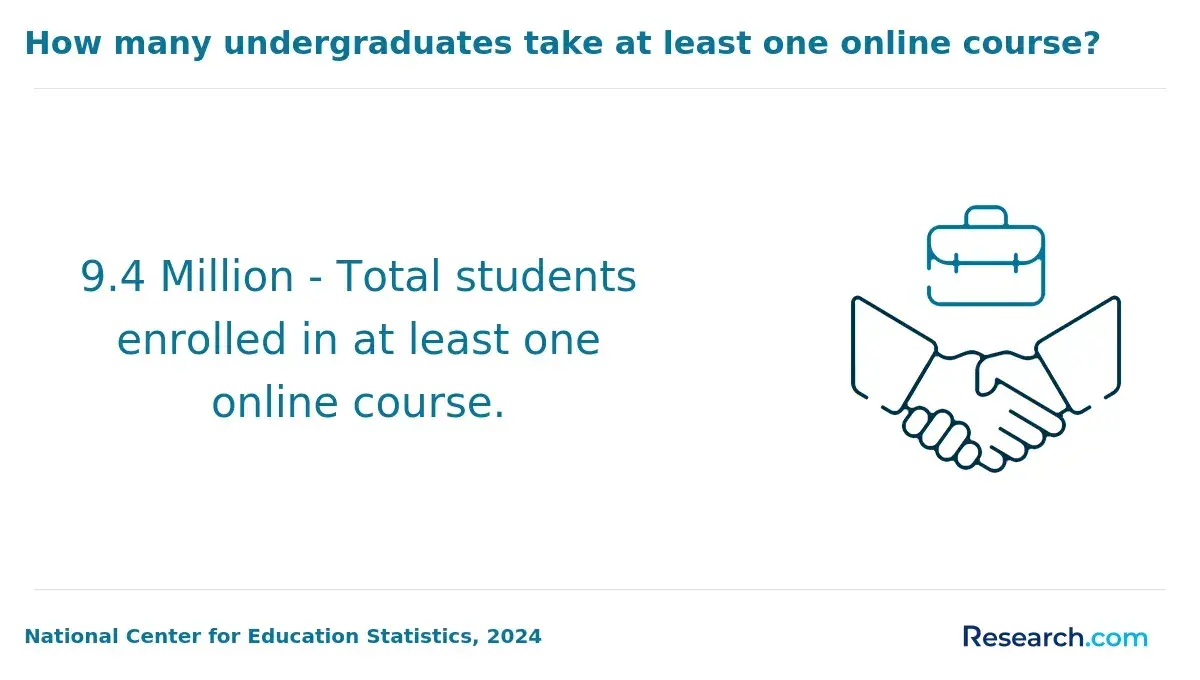
Choosing an online educational psychology degree while working full time means weighing accreditation, schedule control, cost, and career payoff at the same time. NCES reported in its 2024 Condition of Education that more than half of U. S. college students took at least one distance education course in fall 2022, showing how normal online learning has become. This guide is for adults comparing accredited online educational psychology programs, especially flexible, part-time, and self-paced options. You will learn how formats differ, what accreditation means, how costs and timelines work, and how to choose a program that fits your job and goals.
Key Things You Should Know
- Choose an institution accredited by an agency recognized by the U.S. Department of Education, and check program-level approval such as NASP or APA when your goal involves school psychology, licensure, or supervised practice.
- Most working adults should expect roughly 8 to 15 hours of weekly study for one graduate course, while full-time schedules can require 20 to 35 hours; many master's programs take about 18 to 36 months, and transfer credits or prior graduate work may shorten the timeline if the school allows it.
- College Board's 2024 Trends in College Pricing reported average published tuition and fees of $11,610 for in-state public four-year institutions and $43,350 for private nonprofit four-year institutions in 2024-25, so online students should compare per-credit tuition, fees, employer tuition benefits, and transfer-credit policies before enrolling.
What Is an Accredited Online Educational Psychology Degree Program and Why Does Accreditation Matter?
An accredited online educational psychology degree program is a college or university program that studies how people learn, develop, stay motivated, respond to assessment, and succeed in instructional settings. Depending on the school, the degree may be offered as a bachelor's concentration, master's degree, education specialist degree, doctoral degree, or certificate connected to psychology, education, learning sciences, instructional design, research methods, or school psychology.
For working adults, accreditation matters because it affects financial aid eligibility, transfer credit, employer recognition, graduate school admission, and licensure pathways. Institutional accreditation confirms that the school meets broad academic and administrative standards.
Programmatic accreditation or approval may matter when a degree is tied to a regulated role, such as school psychologist, licensed psychologist, or educator preparation specialist.
If you are still building a shortlist, it can help to start with directories of accredited online degree programs and then verify each school directly through official accreditation databases and state licensing boards.
The table below summarizes the main accreditation checks. Use it to separate general degree quality from requirements that may affect licensure or professional practice.
| Accreditation or Approval Type | What It Means | Why It Matters for Working Adults |
| Institutional accreditation | The college or university meets recognized standards for academics, governance, student services, and financial stability. | Usually required for federal financial aid, transfer credit, employer reimbursement, and admission to many graduate programs. |
| NASP approval | The National Association of School Psychologists reviews school psychology programs against professional preparation standards. | Important for students pursuing school psychology credentials, though state requirements still vary. |
| APA accreditation | The American Psychological Association accredits certain doctoral psychology programs, internships, and postdoctoral residencies. | Relevant for students pursuing psychologist licensure, especially at the doctoral level. |
| State educator or psychology board approval | A state agency determines whether a program meets credentialing expectations for regulated roles. | Essential if you plan to work in K-12 schools, assessment, counseling-adjacent roles, or licensed psychology practice. |
One common mistake is assuming that "online" and "accredited" automatically mean the program qualifies you for every education or psychology role. Accreditation is necessary, but it is not always sufficient for licensure. Before enrolling, ask the school whether the program meets requirements in your state and request that answer in writing.
Which Flexible Educational Psychology Degree Formats Are Best for Working Adults: Part-Time, Full-Time, or Self-Paced?
The best format depends on your work schedule, family responsibilities, urgency, and ability to manage deadlines without frequent live meetings. In educational psychology, the most common online formats are asynchronous courses, scheduled live online courses, part-time tracks, full-time tracks, cohort programs, and limited self-paced or competency-based models.
The table below compares common online formats from the perspective of a working adult. The key issue is not whether a program is online, but how much control you have over time, pacing, deadlines, and live attendance.
| Format | Best Fit | Trade-Off | Typical Workload Pattern |
| Part-time asynchronous | Adults with full-time jobs, caregiving duties, or unpredictable work schedules. | More flexible but usually slower than full-time study. | Often one course at a time or two lighter courses per term. |
| Full-time online | Students who can reduce work hours or use savings, employer support, or financial aid. | Faster completion but higher weekly workload and less schedule margin. | Multiple courses, frequent deadlines, and heavier reading or research expectations. |
| Self-paced or competency-based | Independent learners with strong study habits and prior knowledge in education, psychology, or research. | High flexibility, but fewer external deadlines can cause delays. | Progress depends on assessment completion, term limits, and faculty review timelines. |
| Live synchronous online | Students who want instructor interaction, peer discussion, and structured accountability. | Requires scheduled attendance that may conflict with work or family obligations. | Weekly evening or weekend sessions plus independent assignments. |
| Cohort-based online | Students who value peer support and predictable course sequencing. | Less freedom to pause, accelerate, or switch course order. | Fixed sequence with classmates moving through the program together. |
A part-time program is often the safest choice if you cannot consistently protect large blocks of study time. A full-time program may make sense if you need a credential quickly for promotion, certification, or graduate progression and can realistically reduce other commitments. A self-paced program can be excellent for disciplined adults, but it is risky if you need external structure to stay on track.
Before choosing a format, ask schools precise scheduling questions rather than relying on marketing language. "Flexible" can mean many different things, so use the following checklist when speaking with admissions staff:
- Ask whether courses are asynchronous, live, or a mix of both.
- Confirm whether exams, presentations, or group projects require attendance at specific times.
- Ask how many hours per week students typically spend in one course.
- Check whether part-time students receive the same advising, financial aid guidance, and course availability as full-time students.
- Review whether self-paced courses have term deadlines, maximum completion windows, or required faculty check-ins.
What Are the Admission Requirements for Accredited Online Educational Psychology Degree Programs?
Admission requirements vary by degree level, but online educational psychology programs typically review academic readiness, professional goals, writing ability, and evidence that applicants can handle graduate-level reading, research, and statistics. Working adults should pay close attention to prerequisite coursework and documentation timelines because transcripts, references, and test scores can delay enrollment.
The table below outlines common admission requirements by degree level. Use it to identify which documents you may need before you contact admissions offices.
| Program Level | Common Requirements | Important Notes for Working Adults |
| Bachelor's degree or bachelor's completion program | High school diploma or GED, prior college transcripts if applicable, minimum GPA, placement requirements, and transfer-credit evaluation. | Best for adults without a completed undergraduate degree who want a foundation in psychology, education, or human development. |
| Master's degree | Bachelor's degree, transcripts, statement of purpose, resume, letters of recommendation, and possible prerequisites in psychology, education, statistics, or research methods. | Often the main entry point for teachers, trainers, instructional designers, and education professionals seeking advancement. |
| Education specialist degree | Prior graduate coursework, education or psychology background, field placement eligibility, and sometimes state-specific requirements. | Common for school psychology pathways; practicum and internship expectations can affect work schedules. |
| Doctoral degree | Graduate degree or strong undergraduate record, research interests, writing sample, faculty fit, interview, and evidence of research preparation. | Best for research, university teaching, advanced assessment, leadership, or licensure-oriented goals, depending on program design. |
If you have been out of school for several years, your professional experience can strengthen your application, especially if you work in teaching, training, human resources, youth development, special education, instructional design, behavioral support, or assessment. However, experience usually does not replace required prerequisites unless the school has a formal prior learning or waiver process.
To avoid application delays, follow a simple sequence before you apply:
- Request official transcripts from every college you attended, even if you did not finish a degree there.
- Ask whether the program requires prerequisite courses in statistics, psychology, child development, learning theory, or research methods.
- Prepare a statement of purpose that connects your work experience to educational psychology goals.
- Choose recommenders who can speak to your professional judgment, communication skills, and readiness for online learning.
- Confirm whether standardized tests are optional, waived for experienced professionals, or required for doctoral admission.
How Much Does an Online Educational Psychology Degree Cost, and What Financial Aid Options Are Available?
Online educational psychology degree costs depend on degree level, public or private status, residency rules, credit requirements, technology fees, books, field placement costs, and whether the school charges online students a separate per-credit rate. College Board's 2024 pricing data gives a useful benchmark: average published tuition and fees for 2024-25 were $11,610 at in-state public four-year institutions and $43,350 at private nonprofit four-year institutions.
For online students, the practical lesson is to compare total program cost, not just tuition per credit.
When a school publishes program costs, list every required expense before deciding whether the program is affordable. Common cost categories include:
- Per-credit tuition for online undergraduate or graduate courses
- Mandatory online learning, technology, student services, or assessment fees
- Books, journal access, testing software, and research tools
- Background checks, fingerprinting, liability insurance, or placement fees for school-based fieldwork
- Travel costs for any campus residencies, intensives, internship meetings, or proctored assessments
- Lost income if you reduce work hours to complete practicum, internship, or accelerated coursework
If you are comparing undergraduate pathways before entering educational psychology, resources on a cheap online bachelor degree can help you understand how tuition, transfer credits, and online fees affect total cost before graduate school.
Most students should review several financial aid and funding options rather than relying on loans alone. Availability depends on enrollment status, citizenship or eligible noncitizen status, school participation, satisfactory academic progress, and program eligibility.
- Federal financial aid through the FAFSA, including loans and grants where applicable
- State grants or educator workforce programs, especially for school-based roles
- Employer tuition assistance or reimbursement, which may require grade minimums or continued employment
- Scholarships from universities, education associations, psychology organizations, unions, or school districts
- Military, veteran, or public service education benefits if eligible
- Payment plans that spread tuition over a term without increasing loan debt
A common red flag is a program that appears inexpensive but has limited transfer credit, high mandatory fees, or unclear practicum costs. Ask for a written total-cost estimate based on your transfer-credit evaluation, expected pace, and residency status.
How Long Does It Take to Complete an Online Educational Psychology Degree, and Can Transfer Credits Help You Graduate Faster?
Completion time depends on degree level, enrollment intensity, term length, course sequencing, fieldwork, and transfer-credit acceptance. Many online master's programs in educational psychology or related learning sciences fields take about 18 to 36 months, while bachelor's completion programs can vary from one to four years depending on prior credits.
Doctoral and specialist programs typically take longer because they include advanced research, comprehensive exams, practicums, internships, or dissertations.
The table below shows how pace affects timeline and workload. These ranges are general planning estimates, so ask each school for a degree plan based on your exact transfer credits and work schedule.
| Enrollment Pace | Who It Fits | Typical Timeline Pattern | Risk to Watch |
| One course per term | Adults working full time with family or travel obligations. | Slowest but often most sustainable. | Program may take longer than financial aid or employer benefit windows allow. |
| Two courses per term | Adults with predictable evenings or weekends and strong time management. | Moderate pace that can often finish a master's degree in about two years. | Busy work seasons can make deadlines difficult. |
| Accelerated full-time | Students who can reduce work hours or temporarily prioritize school. | Fastest option when courses are offered year-round. | Burnout, lower grades, or difficulty completing fieldwork while employed. |
| Self-paced | Experienced independent learners who can finish assessments quickly. | Can shorten or lengthen completion depending on motivation and term limits. | Progress can stall without scheduled accountability. |
Transfer credits can be one of the biggest time-saving tools, but policies differ sharply. Some schools limit graduate transfer credit, require recent coursework, reject credits below a minimum grade, or only accept courses that closely match program outcomes. At the bachelor's level, adult learners may also benefit from prior learning assessment, military credit, professional certifications, or community college transfer pathways.
If speed is a priority, compare educational psychology options with broader accelerated graduate pathways such as 1 year masters programs, but remember that licensure-related programs may not be compressible because practicum and internship hours must follow professional standards.
Before enrolling, take these steps to estimate your realistic completion date:
- Request an official transfer-credit review before committing to the program.
- Ask for a part-time and full-time degree map showing exact course sequences.
- Confirm whether every required course is offered each term or only once per year.
- Check whether fieldwork can be completed near your home or current workplace.
- Ask how long students are allowed to pause enrollment without reapplying or losing catalog rights.
What Should You Look for When Comparing Accredited Online Educational Psychology Degree Programs?
When comparing accredited online educational psychology programs, focus on fit, evidence, and constraints rather than promotional claims. A good program for a working adult should be academically credible, transparent about costs, realistic about workload, and clear about whether it supports licensure, career advancement, research preparation, or instructional roles.
The table below organizes the most important comparison factors. Use it as a decision tool when narrowing a list of schools.
| Factor | What to Compare | Why It Matters |
| Accreditation and approval | Institutional accreditation, NASP or APA relevance, state authorization, and licensure disclosures. | Protects eligibility for aid, transfer, employer recognition, and regulated career pathways. |
| Program focus | Learning sciences, school psychology, human development, assessment, research, instructional design, or educational technology. | Educational psychology is broad, so specialization affects career fit. |
| Schedule design | Asynchronous work, live meetings, deadlines, cohort rules, and self-paced limits. | Determines whether the program can fit around full-time employment. |
| Faculty expertise | Research areas, practitioner experience, school partnerships, and advising availability. | Faculty fit matters for research projects, dissertations, and career mentoring. |
| Fieldwork requirements | Practicum hours, internship placement support, school-site rules, and supervision requirements. | Can be difficult to complete if you work standard daytime hours. |
| Outcomes transparency | Completion rates, licensure pass rates when applicable, employment outcomes, and alumni roles. | Helps you evaluate value beyond marketing language. |
Some online program quality signals are visible across fields, not only in educational psychology. For example, comparing how programs describe portfolios, faculty feedback, software access, and online collaboration in an online graphic design bachelor degree can help you notice whether a school explains online learning support clearly or relies on vague promises.
Working adults should also watch for common mistakes. The most serious red flags include enrolling without verifying accreditation, assuming all online courses are asynchronous, ignoring fieldwork timing, choosing a program only because it is fast, and failing to calculate total cost after transfer-credit limits.
A better approach is to ask direct questions and compare written answers from several schools before submitting a deposit.
- "Does this program meet licensure or certification requirements in my state for my intended role?"
- "How many live sessions are required per course, and are they recorded?"
- "Can I complete practicum or internship hours at my workplace?"
- "What happens if I need to stop out for one term because of work or family obligations?"
- "What percentage of students complete the program part time?"
- "What student outcomes are available for online students specifically?"
What Career Opportunities and Salary Potential Can You Expect With a Educational Psychology Degree?
An educational psychology degree can support several career directions, but the exact options depend on degree level, specialization, licensure, and prior experience. The degree is especially relevant for people who want to understand learning, motivation, assessment, student support, program evaluation, instructional improvement, or evidence-based education practices.
BLS May 2024 wage data provides useful salary context for related U.S. roles, but it should not be read as a guarantee for any individual graduate. Pay depends on employer type, state, credential level, school district salary schedules, experience, and whether the role requires licensure.
| Career Path | Typical Responsibilities | Common Education or Credential Considerations | 2024 Salary Context |
| School psychologist | Assess student needs, support interventions, collaborate with educators and families, and contribute to special education processes. | Usually requires a specialist-level or doctoral school psychology program, supervised fieldwork, and state credentialing. | BLS reported a median annual wage of $84,940 for school psychologists in May 2024. |
| Instructional coordinator | Develop curricula, train teachers, review instructional materials, and use assessment data to improve learning. | Often requires a master's degree and teaching or education experience; some states or districts require licensure. | BLS reported a median annual wage of $74,720 for instructional coordinators in May 2024. |
| Training and development specialist | Design workplace learning programs, evaluate training effectiveness, and support employee development. | Educational psychology can pair well with adult learning, assessment, HR, or instructional design experience. | BLS reported a median annual wage of $66,030 for training and development specialists in May 2024. |
| Postsecondary education administrator | Support academic programs, student success, assessment, admissions, or institutional effectiveness. | A master's degree is common; leadership experience and data skills can matter. | BLS reported a median annual wage of $103,960 for postsecondary education administrators in May 2024. |
This degree may be worth it if it helps you qualify for a specific role, move into assessment or learning-design work, strengthen your teaching practice, or prepare for doctoral study. It may not be the best investment if your target job does not require graduate training, if the program does not meet licensure rules, or if the debt would be hard to manage under realistic salary expectations.
Educational psychology also overlaps with leadership, organizational learning, and workforce development. If your goal is managing adult learning teams rather than studying student cognition or school-based assessment, an online masters in leadership may be a better fit than a psychology-focused degree.
Strong programs help students build practical skills that transfer across education and workplace settings. Look for coursework and projects that develop:
- Learning theory and human development knowledge
- Assessment design and interpretation
- Research methods and data analysis
- Program evaluation and evidence-based decision-making
- Instructional improvement and intervention planning
- Communication with educators, families, learners, administrators, or organizational leaders
How Can Working Adults Balance a Educational Psychology Degree With Full-Time Work and Family Responsibilities?
Balancing an educational psychology degree with full-time work is possible, but it requires a schedule that treats school as a fixed commitment rather than leftover time. The adults who do best usually choose a realistic course load, communicate early with family and employers, and build a weekly routine before assignments pile up.
A practical weekly plan should account for reading, discussion posts, research writing, group meetings, recorded lectures, and exams. If you are taking one graduate course, many students should budget several focused study blocks each week rather than one long weekend session.
- Choose your weekly study windows before the term begins, and protect them like work meetings.
- Start with one course if you are returning to school after a long break or entering a research-heavy program.
- Tell your supervisor early if the program includes daytime fieldwork, live sessions, or exam windows.
- Use school calendars to plan around work travel, childcare gaps, holidays, and peak job seasons.
- Build a backup plan for illness, overtime, family emergencies, or technology problems.
- Reassess your course load after the first term instead of assuming the advertised pace is right for you.
Self-paced learning can be helpful for adults with shifting schedules, but it requires more self-management than many students expect. If there are no weekly class meetings, create your own milestones and ask whether instructors provide feedback quickly enough for you to keep moving.
If you need external accountability, a part-time asynchronous program with regular deadlines may be better than a fully self-paced model.
Family responsibilities also matter. Before enrolling, discuss quiet study time, childcare coverage, shared household tasks, and deadline-heavy weeks with the people who depend on you. A sustainable plan is usually better than an aggressive plan that forces you to withdraw midterm.
What Student Support Services and Online Learning Resources Should You Expect From a Educational Psychology Degree Program?
Online student support is not a bonus feature for working adults; it is part of program quality. Because educational psychology courses often involve research, statistics, assessment, writing, and applied projects, students need timely access to academic, technical, and career resources outside traditional campus hours.
The table below summarizes support services to expect from a strong online program. These services can make the difference between finishing on time and losing momentum when work or family demands increase.
| Support Service | What Strong Programs Provide | Why It Matters Online |
| Academic advising | Clear degree maps, course sequencing help, part-time planning, and transfer-credit guidance. | Prevents scheduling mistakes that can delay graduation. |
| Faculty access | Virtual office hours, timely feedback, research mentoring, and clear communication expectations. | Important for statistics, research design, assessment, and capstone work. |
| Library and research support | Database access, citation help, literature review support, and librarian consultations. | Educational psychology assignments often require peer-reviewed research. |
| Writing and statistics tutoring | Online tutoring, writing center appointments, and support for research methods or data analysis. | Especially useful for adults returning to academic writing after years in the workforce. |
| Career services | Resume reviews, interview preparation, practicum guidance, and role-specific advising. | Helps connect the degree to promotions, job changes, or licensure steps. |
| Technology support | Evening or weekend help desk access, learning management system tutorials, and proctoring support. | Reduces the risk that technical issues cause missed deadlines. |
Before enrolling, test the school's responsiveness. Email admissions, financial aid, advising, and technology support with practical questions and note how specific the answers are. Slow or vague responses before enrollment can signal frustration later, especially if you will study outside regular business hours.
You should also ask whether online students have the same access to faculty mentoring, research opportunities, school partnerships, and career services as campus students. Some programs are fully integrated; others are online in delivery but limited in support.
Do Online Educational Psychology Degree Programs Include Internships, Practicums, or Other Hands-On Learning Requirements?
Many online educational psychology programs include applied learning, but requirements vary by degree type and career goal. Research-focused master's programs may use capstones, program evaluations, or data projects. School psychology, counseling-adjacent, or licensure-oriented pathways are more likely to require practicum, internship, supervised field hours, background checks, and site approvals.
The table below explains common hands-on requirements. Working adults should review these early because fieldwork can be harder to schedule than online coursework.
| Requirement | What It Usually Involves | Scheduling Concern for Working Adults |
| Capstone project | Applied research, literature review, intervention proposal, assessment project, or program evaluation. | Often flexible, but major writing deadlines can cluster near the end of the term. |
| Practicum | Supervised experience in a school, clinic, agency, or educational setting. | May require daytime availability and approved supervision. |
| Internship | Extended supervised professional experience tied to credential preparation. | Can be difficult to complete while maintaining a full-time job unless the site and employer are flexible. |
| Residency or intensive | Short campus or virtual sessions for assessment training, research, advising, or cohort work. | May require travel, time off work, or fixed attendance. |
| Dissertation or doctoral research | Original research under faculty supervision. | Requires long-term independent work and sustained faculty communication. |
If the program includes fieldwork, do not assume you can complete it at your current workplace. Schools may require a different supervisor, a specific type of setting, liability coverage, or separation between your employee role and your trainee role.
Ask these questions before accepting admission:
- Who is responsible for finding practicum or internship placements?
- Can placements be completed in my state or local area?
- Are evening, weekend, remote, or hybrid placements allowed?
- What background checks, insurance, fingerprinting, or immunization records are required?
- How many total hours are required, and over how many terms?
- Will the fieldwork meet credentialing requirements in my state?
The biggest mistake is choosing a program because the coursework is flexible while overlooking fieldwork that is not. For many working adults, the practicum or internship schedule is the real test of whether the degree is manageable.
Other Things You Should Know About Educational Psychology
Often, yes. Many master's programs accept applicants from related or unrelated majors, but they may require prerequisite coursework in psychology, education, statistics, child development, or research methods. Ask for a prerequisite review before applying.
No. Educational psychology is a broad academic field focused on learning, motivation, development, assessment, and educational research. School psychology is a professional practice field that usually requires specific supervised training and state credentialing to work in K-12 schools.
Usually, they need at least comfort with research methods and basic statistics. Programs that emphasize assessment, measurement, program evaluation, or doctoral research may require more advanced quantitative skills.
It can, depending on the role. Instructional design, learning analytics, training evaluation, curriculum consulting, and research support may offer remote or hybrid options. School-based or supervised clinical roles usually require more in-person work.
References
- Best Online Educational Psychology Programs https://www.psychology.org/rankings/best-educational-psychology-programs/
- Interested in a career in Educational Psychology? https://www.aep.org.uk/interested-career-educational-psychology
- Most Popular Online Psychology Degrees 2025 https://www.onlineu.com/degrees/psychology
- Online Learning for Adults: Unveiling Hidden Benefits https://advantagesschool.com/benefits-of-online-learning-for-adults/
- Pursuing a career as an educational psychologist https://online.wrexham.ac.uk/blogs/pursuing-a-career-as-an-educational-psychologist/
- Educational Psychology Master’s Programs Online: Find a School https://www.onlinemastersdegrees.org/best-programs/psychology/educational-psychology/
- Master of Education (Educational Psychology) https://www.ualberta.ca/en/graduate-programs/master-of-education-educational-psychology.html
- Prerequisites for a Masters in Psychology: 5 Helpful Pieces - Prereqcourses https://www.prereqcourses.com/prerequisites-for-a-masters-in-psychology/
- How Can Continuing Education Support Students Across Their Learning Lifecycle? https://moderncampus.com/blog/how-can-continuing-education-support-students-across-their-learning-lifecycle.html
- How to Become a Psychologist https://onlinecounselingprograms.com/mental-health-careers/how-to-become-psychologist/