2027 Fastest Accredited Online Educational Psychology Degree Programs That Accept Transfer Credits

Co-Founder and Chief Data Scientist
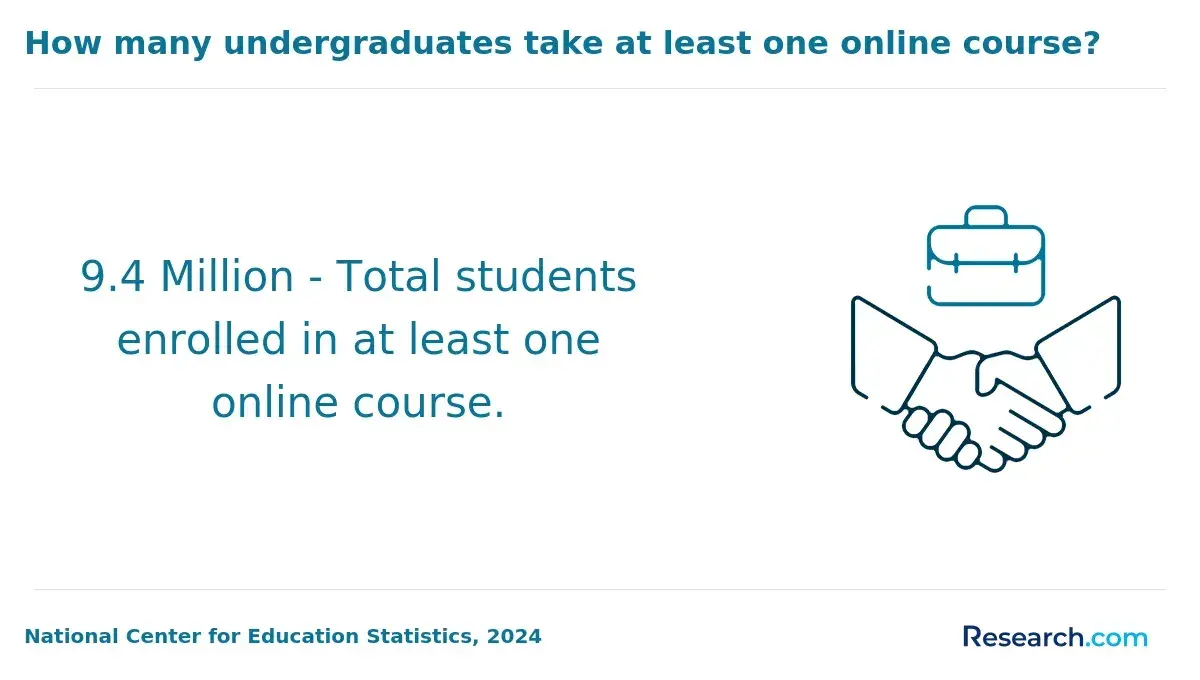
Transfer students often have one urgent question: which accredited online educational psychology degree will actually let previous credits shorten the road to graduation? NCES reported in its 2024 distance education data that more than half of U. S. college students took at least one online course, making online degree completion a mainstream option rather than a backup plan.
This guide is for transfer students, adult learners, and degree completers who want the fastest legitimate route. You will learn how transfer limits, accreditation, residency rules, accelerated terms, prior learning credit, and cost affect the real time to finish.
Key Things You Should Know
- The fastest realistic bachelor's-level route is usually a regionally accredited online psychology, educational studies, human development, or learning sciences program that accepts up to 90 transfer credits and requires about 30 credits in residence, allowing some well-prepared transfer students to finish in about 12 months of full-time accelerated study.
- Programs that look "fast" are not always fastest after evaluation: credits must apply to general education, electives, and major requirements, not simply be accepted by the university as excess credit.
- For graduate-level educational psychology programs, transfer limits are usually much smaller, often around 6 to 12 credits, so acceleration depends more on short terms, year-round enrollment, and whether a thesis, practicum, or capstone is required.
What Are the Fastest Accredited Online Educational Psychology Degree Programs That Accept Transfer Credits?
The fastest accredited online educational psychology degree programs are usually not ranked by advertised speed alone. The best options for transfer students combine regional or national institutional accreditation, flexible online delivery, generous transfer evaluation, short academic terms, year-round course availability, and a curriculum aligned with learning, development, assessment, instructional design, or child and adolescent psychology.
At the bachelor's level, the exact title "educational psychology" is less common than broader online majors such as psychology, applied psychology, educational studies, human development, or child development with educational psychology coursework. At the master's level, online educational psychology degrees are more common, but graduate transfer credit is usually limited. Students who want a broader list of legitimate online institutions can also compare accredited online degree programs before narrowing their choices to educational psychology-related options.
The table below compares common fast-path options. Use it as a decision tool, not as a guarantee; each school must evaluate your transcripts before confirming what will count toward the degree.
| Fast-path program type | Typical online credential | Common transfer-credit ceiling | Why it can be fast | Best fit |
| Psychology with educational or developmental coursework | BA or BS in Psychology | Up to 90 credits at many transfer-friendly institutions | Large elective space may allow more previously earned credits to apply | Students planning graduate study in educational psychology, counseling, school psychology, learning design, or research |
| Educational studies or learning sciences | BA or BS in Educational Studies | Often up to 75 to 90 credits, depending on school policy | Prior education, liberal arts, and social science credits may fit well | Students interested in non-licensure education roles, training, curriculum support, or graduate education programs |
| Human development, child development, or family studies | BA or BS in Human Development or Child Development | Often up to 90 credits | General education and social science transfer credits commonly apply | Students focused on child learning, adolescent development, family services, or early learning settings |
| Online educational psychology master's | MA, MS, MEd, or EdM in Educational Psychology | Often 6 to 12 graduate credits | Programs may be 30 to 36 credits and offered fully online | Students who already hold a bachelor's degree and want advanced study in learning, cognition, motivation, or assessment |
| Competency-based education-related bachelor's pathway | BA or BS in Psychology, Education Studies, or related field | Varies widely; transfer plus competency assessment may reduce time | Students can move faster through material they already know | Highly self-directed adult learners with strong prior college credit and work experience |
The most transfer-friendly schools commonly share a few traits. They publish transfer-credit maximums, provide preliminary transcript reviews, accept ACE-reviewed learning when applicable, offer multiple start dates, and do not make students wait a full semester for required major courses.
Before choosing, compare the following program features because they directly affect speed:
- Maximum transfer allowance: A 90-credit limit can reduce a 120-credit bachelor's degree to 30 remaining credits if the credits apply correctly.
- Residency requirement: A school may require the final 30 credits, or a minimum number of upper-division credits, to be completed through that institution.
- Major-course sequencing: A program with required courses offered only once per year may delay graduation even if the transfer policy is generous.
- Term length: Five-, six-, seven-and-a-half-, or eight-week terms can allow year-round progress, but the workload is more compressed.
- Capstone or practicum: A required final project may add value, but it can also create scheduling limits.
How Fast Can You Complete an Online Educational Psychology Degree With Transfer Credits?
A transfer student can finish an online educational psychology-related bachelor's degree in about one to three years, depending on how many credits transfer into the actual degree plan. The fastest students are usually those who already completed an associate degree or 75 to 90 credits with strong overlap in general education, psychology, education, research methods, statistics, and electives.
The table below shows realistic timelines for a 120-credit bachelor's pathway. It assumes continuous enrollment and no major delays in course availability.
| Credits that apply to the degree | Credits remaining | Possible full-time accelerated timeline | More realistic part-time timeline | Key caution |
| 90 credits | 30 credits | About 10 to 12 months | About 15 to 24 months | Only possible if upper-division major and residency requirements fit the remaining plan |
| 75 credits | 45 credits | About 12 to 18 months | About 24 to 30 months | May require additional major prerequisites or statistics coursework |
| 60 credits | 60 credits | About 18 to 24 months | About 30 to 36 months | Common for associate degree holders, but not all associate credits may map cleanly |
| 30 credits | 90 credits | About 30 to 36 months | About 4 years | Acceleration depends more on term structure than transfer credit |
| 0 to 15 credits | 105 to 120 credits | About 3 to 4 years | More than 4 years | This is not usually a degree-completion pathway |
For an online master's in educational psychology, a student who transfers the maximum allowed graduate credits may shorten a 30-credit program by one or two courses. That can help, but it usually does not cut the degree in half because graduate programs protect curriculum sequence, research methods requirements, and culminating projects.
To estimate your fastest timeline before enrolling, follow a sequence that forces the school to confirm details in writing:
- Request an unofficial transfer evaluation before submitting an enrollment deposit, using transcripts from every prior college.
- Ask which transferred credits satisfy major requirements, not just how many are accepted by the institution.
- Confirm the minimum credits you must complete at the school, including upper-division and final-credit rules.
- Ask for a term-by-term plan that includes course availability for the next full academic year.
- Check whether accelerated terms permit the course load you need without violating academic progress or financial aid rules.
A common mistake is assuming that "up to 90 transfer credits" means only 30 credits remain. In practice, a student might transfer 90 institutional credits but still need 36 to 45 credits if major prerequisites, upper-division requirements, or capstone prerequisites are missing.
How Many Transfer Credits Can You Apply Toward an Online Educational Psychology Degree?
Most bachelor's programs require 120 semester credits, and many transfer-friendly online universities allow up to 90 transfer credits toward that total. The important distinction is between credits accepted by the registrar and credits applied to the educational psychology-related degree plan. Accepted credits may appear on your record, while applied credits reduce the actual number of courses you still need to graduate.
The table below summarizes common transfer-credit categories and how they usually affect a fast online degree plan.
| Credit category | Common bachelor's transfer treatment | How it affects speed | What to verify |
| General education credits | Often widely transferable if earned at an accredited institution | Can quickly clear lower-division requirements | Whether the school accepts your prior composition, math, science, humanities, and social science courses |
| Psychology and education courses | May apply to major, concentration, or electives | Can shorten the most relevant part of the degree | Whether courses are considered equivalent to required learning, development, statistics, or research methods courses |
| Free electives | Often flexible, but limited by total degree space | Helpful when prior courses do not match the major exactly | Whether the degree has enough elective room to absorb older or unrelated credits |
| Upper-division credits | May be required in a minimum amount | Can prevent delays if you already have junior- or senior-level coursework | Whether prior upper-division courses meet the school's level and content standards |
| Graduate credits | Usually capped and reviewed carefully | May remove one or more master's courses | Whether credits are recent, graduate-level, relevant, and not already used toward another completed degree |
Transfer-credit policies vary, but the most common bachelor's transfer ceiling is 75% of the program, or 90 credits in a 120-credit degree. Some schools phrase the rule as a residency requirement instead, meaning at least 25% of the degree must be completed through the awarding institution.
When comparing schools, ask for these details in writing because they are the numbers that determine your actual remaining workload:
- The total number of credits accepted from two-year colleges, four-year colleges, exams, military training, and prior learning assessment.
- The minimum number of credits that must be completed at the degree-granting institution.
- The minimum number of upper-division credits required in the major or concentration.
- The oldest credits the program will accept for psychology, statistics, research methods, and education coursework.
- Whether transferred courses must meet a minimum grade, commonly a C or higher for undergraduate credit.
The best transfer outcome is not always the school with the biggest transfer maximum. It is the school where your specific credits replace the most required courses without delaying the sequence of upper-level educational psychology coursework.
How Can You Verify Accreditation for Fast Online Educational Psychology Degree Programs?
Accreditation is the first quality check for any fast online educational psychology degree. A quick program is only useful if the institution is recognized by employers, graduate schools, financial aid systems, and, when relevant, state licensing or certification agencies.
In the U.S., institutional accreditation is usually the baseline requirement. Regional accrediting agencies and recognized national accreditors are reviewed by the U.S. Department of Education or the Council for Higher Education Accreditation. Programmatic accreditation may matter for educator preparation, counseling, school psychology, or applied behavior analysis pathways, but many general educational psychology bachelor's or master's programs do not have a separate programmatic accreditor.
Use this verification process before applying, especially if a program advertises extremely fast completion:
- Search the institution in the U.S. Department of Education's Database of Accredited Postsecondary Institutions and Programs.
- Confirm the accreditor's name, institutional status, and current accreditation dates.
- Check whether the online campus, adult-learning division, or global campus is covered by the same institutional accreditation.
- Ask whether the degree is designed for licensure, non-licensure education work, graduate preparation, or professional advancement.
- If you want school psychology, counseling, teaching, or administrator licensure, contact your state agency before enrolling.
Be cautious with programs that promise completion in only a few months, refuse to provide accreditation details, charge large upfront fees before transcript evaluation, or imply that an educational psychology degree automatically qualifies you as a licensed psychologist. Legitimate acceleration comes from prior credits, condensed terms, competency assessment, and efficient scheduling, not from skipping academic requirements.
Which Types of Transfer Credits Can Count Toward an Online Educational Psychology Degree?
Several types of transfer credit may count toward an online educational psychology degree, but each type is evaluated differently. Traditional college coursework is usually the simplest to apply, while exam credit, military credit, and prior learning portfolios require more documentation and may be capped separately.
The table below explains which credits are most likely to help and where they usually fit in a degree plan.
| Transfer-credit type | Typical source | Where it may apply | Speed advantage |
| Accredited college coursework | Community colleges, universities, prior online programs | General education, major prerequisites, electives, upper-division requirements | Usually the strongest and most predictable transfer category |
| Completed associate degree | AA, AS, or AAS programs | General education block transfer, lower-division electives, some major courses | May allow junior standing if the degree aligns well |
| Exam credit | CLEP, DSST, AP, IB, or institutional challenge exams | General education or introductory electives | Can remove lower-level requirements without taking a full course |
| Military training | Joint Services Transcript or Community College of the Air Force transcript | Electives, leadership, communication, training, or technical requirements | Can add substantial elective credit for eligible students |
| Prior learning assessment | Portfolio review, workplace learning, documented training | Electives or selected major-adjacent requirements | Helpful for adult learners with education, training, coaching, or human services experience |
| Professional certifications | ACE-reviewed credentials or school-approved credentials | Electives, technology, training, child development, or behavior-related requirements | May reduce course load when the certification has credit recommendations |
Students interested in educational psychology often bring credits from psychology, sociology, child development, education, social work, statistics, communication, or human services. These are often more useful than unrelated electives because they may satisfy prerequisites for research methods, learning theory, developmental psychology, assessment, or educational foundations.
To improve your transfer outcome, gather documentation before the evaluation begins:
- Official transcripts from every college attended, even if you completed only one course.
- Course descriptions or syllabi for psychology, statistics, research, and education courses that may need faculty review.
- Exam score reports for CLEP, DSST, AP, IB, or other recognized exams.
- Military transcripts, including ACE credit recommendations when available.
- Certificates, training records, and supervisor verification for prior learning assessment, if the school offers it.
The biggest red flag is a school that gives a high transfer estimate without reviewing official records. A reliable evaluation should show exactly how each credit applies: general education, major, concentration, elective, or non-applicable.
How Do Residency and Major Requirements Affect Transfer Credits for an Online Educational Psychology Degree?
Residency requirements determine how many credits you must complete through the school awarding the degree. Major requirements determine which specific educational psychology-related courses you must complete, regardless of how many credits you already earned. Together, these rules often matter more than the advertised transfer maximum.
For example, a student may transfer 90 credits into a 120-credit program, but if the school requires 30 credits in residence and 24 upper-division credits in the major, most of the final year will still need to be completed at that institution. This protects academic quality and ensures the school can certify that the student completed the core learning outcomes of the degree.
The table below shows how transfer-friendly policies can produce different outcomes depending on residency and major rules.
| Policy scenario | What it sounds like | What it may mean in practice | Student impact |
| High transfer maximum with 30-credit residency | Up to 90 credits accepted | Student still completes at least 30 credits through the school | Potentially very fast if required courses are offered year-round |
| High transfer maximum with strict major core | Many credits accepted | Transferred credits may count mostly as electives | Student may need extra psychology, education, or research courses |
| Lower transfer maximum with excellent course availability | Only 60 to 75 credits accepted | More credits remain, but courses are easy to schedule | May be faster than a generous program with bottleneck courses |
| Competency-based format with residency rules | Move at your own pace | Student must still complete a required number of institutional competencies | Fast for self-directed students, slower for those needing structure |
Program-specific requirements can also affect transfer mobility across very different majors. A student comparing educational psychology with an online graphic design bachelor degree, for instance, would see that one program may prioritize research and development courses while the other may require studio sequences and portfolio review; both can limit how unrelated transfer credits apply.
Ask these questions before you enroll because they uncover hidden timeline issues:
- How many credits must I complete with your institution to graduate?
- How many upper-division credits are required in the major?
- Which required courses cannot be transferred under any circumstances?
- Are core educational psychology courses offered every term or only once per year?
- Can I take two accelerated courses at once, or does the school restrict course load?
- Does the capstone require prerequisites that could add an extra term?
Students who should avoid the fastest pathway are those who need a highly supervised licensure program, want extensive field experience, struggle with compressed courses, or have many credits that do not match psychology, education, social science, or general education requirements.
Can Prior Learning, CLEP, Military Training, or Certifications Help You Finish an Online Educational Psychology Degree Faster?
Prior learning, CLEP, military training, certifications, and portfolio credit can help some students finish faster, but they work best as supplements to traditional transfer credit. They are especially useful for adult learners who have work experience in training, tutoring, education support, child care, behavioral services, military instruction, coaching, or human resources.
Credit-for-prior-learning policies have become more visible as colleges try to improve credit mobility for adult learners. The practical value is simple: if a school grants credit for documented college-level learning, the student may reduce the number of courses needed and lower total tuition. The limitation is just as important: prior learning credit often applies to electives more easily than to upper-division educational psychology major requirements.
These options can shorten the degree, but only if the school accepts them and they fit the plan:
- CLEP and DSST exams: Best for general education courses such as introductory psychology, sociology, humanities, college composition, or social sciences.
- Military training: Best for students with Joint Services Transcript recommendations that map to leadership, instruction, communication, technical, or elective credit.
- ACE-reviewed workplace training: Best when the employer, provider, or certification has formal college-credit recommendations.
- Portfolio assessment: Best for experienced adults who can document college-level learning through projects, training materials, reflective essays, and supervisor verification.
- Professional certifications: Best when related to child development, behavior support, instructional technology, training, human services, or organizational learning.
A smart strategy is to use low-cost exam credit only after the school confirms it will apply to an unmet requirement. Taking random exams before a degree audit can waste time and money if the credits end up as excess electives.
Prior learning credit may also affect financial aid pacing. If a large number of credits are awarded after enrollment, ask the financial aid office how that change affects satisfactory academic progress, loan eligibility, enrollment status, and remaining aid limits.
How Much Does a Fast Online Educational Psychology Degree Cost After Transfer Credits and Financial Aid?
The cost of a fast online educational psychology degree depends on remaining credits, tuition per credit, fees, books, prior learning assessment charges, and financial aid. Transfer credits can lower the total price dramatically because students pay only for remaining coursework, but the lowest tuition rate is not always the lowest total cost if the program adds extra terms or does not apply credits efficiently.
College Board's 2024 pricing data reported average published tuition and fees of $11,610 for in-state students at public four-year institutions and $43,350 at private nonprofit four-year institutions for the 2024-25 academic year. For online transfer students, the key lesson is not that one sector is always better; it is that total cost should be calculated from credits remaining after the official degree audit.
The table below shows how remaining credits change the cost equation. It uses tuition-per-credit examples rather than school-specific prices, because online rates and fees vary widely.
| Remaining credits | At $350 per credit | At $500 per credit | At $700 per credit | What it means |
| 30 credits | $10,500 | $15,000 | $21,000 | Often the fastest and lowest-cost degree-completion scenario |
| 45 credits | $15,750 | $22,500 | $31,500 | Common for students with strong transfer credit but missing major courses |
| 60 credits | $21,000 | $30,000 | $42,000 | Typical for many associate degree transfers |
| 90 credits | $31,500 | $45,000 | $63,000 | Less of an accelerated degree-completion path |
Students focused on affordability can compare a cheap online bachelor degree with transfer-friendly educational psychology-related programs, but the comparison should include fees, credit loss, course availability, and time to completion.
Before choosing the cheapest or fastest option, calculate the full financial picture:
- Tuition per credit multiplied by credits remaining after the official evaluation.
- Technology, distance learning, graduation, portfolio assessment, and transcript fees.
- Books, digital learning materials, exam fees, and proctoring costs.
- Potential tuition savings from employer reimbursement, military benefits, scholarships, or federal aid.
- Opportunity cost if a slower program delays graduate school, promotion eligibility, or career transition.
A major red flag is being pressured to enroll before seeing a written transfer evaluation and total program cost estimate. A legitimate program should be willing to explain how many credits remain, how much they cost, and which charges are mandatory.
How Do Accelerated, Competency-Based, and Self-Paced Online Educational Psychology Degree Programs Compare?
Accelerated, competency-based, and self-paced online programs can all be fast, but they are fast in different ways. The best format depends on how many credits you transfer, how independently you learn, how predictable your schedule is, and whether the program has required course sequences.
The table below compares the main formats transfer students encounter when searching for fast educational psychology-related degrees.
| Format | How it works | Why it may be faster | Who benefits most | Main trade-off |
| Accelerated term-based | Courses run in shorter blocks, often 5 to 8 weeks | Students can complete more terms per year | Students who want structure and predictable deadlines | Workload is compressed and can be intense |
| Competency-based | Students progress by demonstrating mastery | Prior knowledge may reduce time spent on familiar material | Experienced, self-directed learners | Requires strong time management and comfort with independent learning |
| Self-paced course model | Students move through course content within broad deadlines | Fast learners may finish courses quickly | Students with variable work or family schedules | Some students slow down without weekly structure |
| Traditional online semester | Courses follow 15- or 16-week terms | Less accelerated, but often stable and widely available | Students balancing school with heavy work or caregiving responsibilities | May extend time to graduation |
At the graduate level, fast education-related programs often use short terms and compact curricula. Students considering continued study after a bachelor's degree may also compare 1 year masters programs, but they should verify whether the curriculum fits educational psychology, instructional design, leadership, assessment, or another goal.
Choose the format by matching it to your real life, not just the advertised completion time:
- Choose an accelerated term-based program if you need deadlines, instructor interaction, and a clear weekly rhythm.
- Choose a competency-based program if you have strong prior learning, can study independently, and want to move quickly through familiar material.
- Choose a self-paced model if your work schedule changes often and you can maintain momentum without frequent reminders.
- Choose a traditional online program if you need more time to absorb research methods, statistics, learning theory, or writing-intensive coursework.
The fastest advertised option may be the wrong choice if it causes poor grades, course withdrawals, or burnout. A slightly slower program that preserves GPA, graduate-school readiness, and financial aid eligibility can be the better long-term decision.
Are Fast Accredited Online Educational Psychology Degrees Respected by Employers and Graduate Schools?
Fast accredited online educational psychology degrees can be respected by employers and graduate schools when the institution is properly accredited, the curriculum is rigorous, and the student can explain how the program built relevant skills. The word "online" is usually less important than accreditation, transcript quality, field relevance, GPA, recommendations, experience, and whether the degree meets any required licensure or graduate admissions prerequisites.
Educational psychology-related programs can support several directions, but they do not all lead to the same job. A bachelor's degree may support entry-level roles in education support, training, human services, student services, behavioral support, or preparation for graduate study. A master's degree may support work in learning design, assessment, research support, curriculum, education program evaluation, or doctoral preparation. Licensure-based roles such as school psychologist, licensed psychologist, counselor, or teacher usually require specific state-approved preparation beyond a general educational psychology degree.
BLS wage data published for May 2024 reported a median annual wage of $74,720 for instructional coordinators. That figure is useful as labor-market context for education and curriculum roles, but it should not be treated as a salary promise for educational psychology graduates because job title, state, experience, school setting, and credentials all matter.
The table below connects common goals with the level of education usually needed and the transfer-credit issue to watch.
| Goal | Common education path | How an educational psychology-related degree helps | Transfer-credit concern |
| Graduate study in educational psychology | Bachelor's in psychology, education, human development, or related field | Builds foundation in learning, cognition, development, statistics, and research | Graduate schools may expect prerequisite courses and strong grades in major coursework |
| Instructional design or learning and development | Bachelor's plus portfolio, certificate, or master's depending on employer | Connects learning theory with adult learning, training, and assessment | Transferred electives should not crowd out technology, design, or assessment coursework |
| Curriculum or education program support | Bachelor's or master's; some roles prefer teaching experience | Supports understanding of student learning, assessment, motivation, and development | Non-licensure programs may not meet teaching credential requirements |
| School psychology | Specialist-level or doctoral school psychology program in most states | Bachelor's or master's coursework may prepare for admission | Fast bachelor's completion should still preserve prerequisites, GPA, and research preparation |
| Organizational learning leadership | Bachelor's plus graduate leadership, training, or organizational development study | Applies learning science to employee development and performance improvement | Students should keep enough room for leadership, communication, and applied project courses |
Some students move from educational psychology into leadership, training, or organizational development roles; in that case, an online masters in leadership may be a better graduate fit than a research-focused educational psychology master's.
To protect the value of a fast online degree, avoid these mistakes:
- Choosing a non-licensure program while assuming it will qualify you for teacher, counselor, psychologist, or school psychologist licensure.
- Ignoring graduate-school prerequisites such as statistics, research methods, abnormal psychology, developmental psychology, or learning theory.
- Selecting the shortest program even if it lacks faculty support, writing practice, research exposure, or applied projects.
- Letting transferred electives replace opportunities to build a stronger academic or professional portfolio.
- Failing to ask employers or target graduate programs whether the degree title and institution meet their expectations.
The strongest fast pathway is one that saves time without weakening your next step. For many transfer students, that means completing a recognized online bachelor's efficiently, preserving a strong GPA, and using remaining courses strategically for research, statistics, child and adolescent development, assessment, instructional design, or applied learning projects.
Other Things You Should Know About Educational Psychology
No. Educational psychology is a broad academic field focused on learning, development, motivation, assessment, and instruction. School psychology is typically a licensure-oriented profession that usually requires a specialist-level or doctoral program, supervised fieldwork, and state credentialing.
Sometimes, but it is less common than online psychology, educational studies, human development, or child development degrees with educational psychology coursework. If your goal is graduate study, check whether the program includes statistics, research methods, developmental psychology, learning theory, and strong writing preparation.
They may, especially for general education and electives. However, programs may apply stricter review to older coursework in statistics, research methods, psychology, education technology, or major requirements. A transcript evaluation is the only reliable way to know.
Bachelor's programs generally do not require the GRE. Many online master's programs in education-related fields have moved away from standardized test requirements, but policies vary by school, GPA, prior degree, and program level.
References
- 2025 Most Affordable Online Master's Degrees in Child Development https://www.onlineu.com/most-affordable-colleges/child-development-masters-degrees
- The Importance of Understanding Transfer Credit Policies https://www.sophia.org/blog/higher-education/understanding-transfer-credit-policies/
- How College Credit Transfer Really Works: A Practical Guide https://www.straighterline.com/blog/transfer-how-college-credit-transfer-really-works-a-practical-guide
- Best Online School Psychology Programs 2025 | Psychology.org https://www.psychology.org/rankings/best-online-school-psychology-programs/
- Earn an Online Psychology Degree | OEDb.org https://www.oedb.org/rankings/online-psychology-programs/
- MA in Educational Psychology, PPSP Credential https://www.umassglobal.edu/academic-programs/ma-educational-psychology-ppsp-credential
- Transfer Credit & Residency Policy https://catalog.baypath.edu/academic-policies-and-procedures/transfer-credit/