2027 Best Online Nursing Programs in Ohio – Accredited RN to BSN Programs

Co-Founder and Chief Data Scientist
Choosing an online nursing program in Ohio is not just a question of convenience. You need to know whether the program fits your current license status, prepares you for the right credential, meets Ohio licensure expectations, offers realistic clinical placement support, and makes financial sense. This guide is designed for working RNs, career changers, LPNs, first-time nursing students, and bachelor’s degree holders comparing online and hybrid nursing options in Ohio.
For 2026 planning, the strongest online nursing choice is usually the one that matches your starting point: RN to BSN for licensed RNs, accelerated BSN for non-nursing bachelor’s graduates, ADN or blended pre-licensure options for new entrants, and MSN or bridge pathways for nurses aiming at advanced practice, leadership, education, or specialized care. You will learn how Ohio online nursing programs work, what they cost, how long they take, what careers they support, and which questions to ask before enrolling.
Quick answer: Is an online nursing degree in Ohio worth considering?
Yes, an online nursing degree in Ohio can be a practical option if the program is properly accredited, includes approved clinical experiences, fits your schedule, and aligns with the license or role you want. Online coursework can reduce commuting and make it easier to continue working, but nursing is never fully online when clinical training is required. Students should verify accreditation, Ohio Board of Nursing eligibility, NCLEX-RN preparation, transfer credit policies, and clinical placement expectations before committing.
What are the benefits of getting an online nursing degree in Ohio?
- Online nursing programs in Ohio can prepare graduates for roles in hospitals, ambulatory care centers, home health agencies, schools, and community-based care settings.
- RNs in Ohio typically earn a median yearly wage of $84,430.
- Program formats such as RN-to-BSN, blended ADN, accelerated BSN, and graduate nursing pathways give students different routes toward licensure preparation, advancement, or specialization.
- Recent studies have indicated that 60% of registered nurses (RNs) in the US express a genuine affinity for their chosen vocation, making program fit especially important for students preparing for a long-term healthcare career.
What can I expect from an online nursing program in Ohio?
An online nursing program in Ohio usually combines digital coursework with required hands-on clinical learning. Lectures, readings, discussions, assignments, exams, and some simulations may be completed through an online learning platform. Clinical practice, lab work, skills checks, and supervised patient care must still occur in person at approved healthcare sites.
The format depends on the pathway. RN-to-BSN programs are generally built for licensed registered nurses who already completed initial nursing preparation. Accelerated BSN programs are intended for students who already hold a bachelor’s degree in another field and want to transition into nursing. Blended pre-licensure programs may place theory online while requiring campus labs and local clinical rotations.
Accredited programs should prepare students for the appropriate next step, whether that means BSN completion, NCLEX-RN eligibility, graduate study, or advanced clinical practice. Flexibility is a major advantage, but online nursing students still need disciplined study habits, reliable technology, strong communication skills, and enough time for clinical requirements.
Where can I work with an online nursing program in Ohio?
Graduates of Ohio online nursing programs can pursue work in many of the same settings as graduates of campus-based programs, provided they meet licensure and employer requirements. Hospitals remain a major employment setting, with opportunities in emergency departments, intensive care, medical-surgical units, pediatrics, women’s health, oncology, and perioperative services.
Outside the hospital, nurses may work in ambulatory care centers, urgent care clinics, physician practices, home health agencies, rehabilitation facilities, schools, public health departments, telehealth services, long-term care settings, and specialty clinics. The best setting depends on your credential level, clinical experience, preferred patient population, schedule needs, and long-term career goals.
How much can I make with an online nursing program in Ohio?
RNs in Ohio earn an annual median salary of $84,430, compared with a national median of $94,480 for RNs. Salary outcomes vary by employer, region, specialty, shift, credential level, years of experience, and whether the nurse moves into leadership, education, informatics, advanced practice, or specialty care.
Ohio’s total personal consumption expenditures average $47,768, a figure that includes housing, healthcare, food services, and other major living costs. When comparing nursing programs, students should evaluate both expected earnings and the total cost of earning the credential, including tuition, fees, books, clinical travel, technology, exam fees, and lost work hours.
| Ohio nursing salary and cost context | Amount | How to use this information |
| Annual median salary for RNs in Ohio | $84,430 | Use this as a broad state benchmark, not a guaranteed starting salary. |
| National median salary for RNs | $94,480 | Compare this with Ohio earnings if you are considering relocation or travel nursing. |
| Average total personal consumption expenditures in Ohio | $47,768 | Factor living costs into your return-on-investment calculation. |
- Best Online Nursing Programs in Ohio for 2027
- How long does an online nursing program in Ohio take?
- Online vs. on-campus nursing programs in Ohio
- Average cost of an online nursing program in Ohio
- Financial aid options for Ohio online nursing students
- Prerequisites for online nursing programs in Ohio
- Common online nursing courses in Ohio
- Online nursing specializations available in Ohio
- How to choose the right online nursing program in Ohio
- Emerging trends and in-demand nursing specializations in Ohio
- Steps after graduation to become a licensed RN in Ohio
- Nursing license requirements for online graduates in Ohio
- ADN to MSN bridge programs and career advancement
- Career paths for graduates of Ohio online nursing programs
- Accelerated online nursing programs and faster career entry
- Networking and mentorship in online nursing programs
- Online nursing preparation for an LVN role in Ohio
- How graduate outcomes are measured
- Ohio job market for online nursing graduates
- Return on investment for an online nursing degree in Ohio
- Common challenges in Ohio online nursing programs
- Technology skills needed for online nursing school
- Easiest Nursing Programs to Enter in Ohio
- Interdisciplinary healthcare training in online nursing programs
- Non-clinical roles for online nursing graduates in Ohio
- Acute Care Nurse Practitioner Opportunities in Ohio
Best Online Nursing Programs in Ohio for 2027
How do we rank schools?
Research.com builds rankings to help students compare degree options with clearer information about cost, program structure, accreditation, and student decision factors. Our team applies a defined research methodology when evaluating universities that offer online nursing programs in Ohio.
Ranking inputs are drawn from established education datasets and institutional data sources, including:
- The Integrated Postsecondary Education Data System (IPEDS) database
- Peterson's databases, including the Distance Learning Licensed Data Set
- The College Scorecard database
- National Center for Education Statistics (NCES)
Because nursing decisions involve licensure and clinical training, students should treat rankings as a starting point rather than the final answer. Confirm current tuition, accreditation, clinical placement policies, admission standards, and state authorization directly with each school before applying.
| School | Program snapshot | Program Length | Cost per Credit | Accreditation |
| Xavier University | Accelerated BSN pathway for students with a non-nursing bachelor’s degree, using interactive activities, patient cases, peer discussion, holistic care, and population-based healthcare content. | 16 months | $977.86 | Commission on Collegiate Nursing Education (CCNE) |
| University of Cincinnati | Fully online RN to BSN curriculum covering public health issues, informatics, evidence-based practice, capstone work, and community-based learning. | Nine, 12, or 18 months | $251.30 (in-state); $257.96 (out-of-state) | CCNE |
| Ursuline College | Accelerated RN to BSN option emphasizing leadership, professional development, research, education, and preparation for future graduate study. | 15 months to two years | $360 | CCNE |
| Ohio University | RN to BSN program with courses in nursing theory, diversity, leadership, family nursing, community health, and gerontologic nursing. | One year | $307 (in-state); $312 (out-of-state) | CCNE |
| Chamberlain University | Online BSN option with hands-on learning across several US locations, plus a 100% online RN to BSN route; coursework includes nursing theory, statistical reasoning, English composition, and community health nursing. | Three years | $675 to $725 | CCNE |
| Wright State University | RN to BSN completion program focused on evidence-based research, patient management, information technology, health promotion, and healthcare legislation and regulation. | One year | $501 (in-state); $935 (out-of-state) | CCNE |
| Ohio State University | Online RN to BSN pathway for nurses with an LPN or nursing diploma and an active, unrestricted license; coursework includes contemporary issues, community health, leadership, and evidence-based practice. | 12 to 15 months | $566.58 | CCNE |
| Kent State University | Online RN to BSN curriculum covering information technology, population-based care, health promotion, health maintenance and restoration, healthcare policy, and capstone work. | One year | $307.69 | CCNE |
| Youngstown State University | RN to BSN program emphasizing leadership, cultural sensitivity, critical thinking, interdisciplinary communication, public health policy, and community healthcare. | 10 months | $275 (in-state); $280 (out-of-state) | CCNE, Accreditation Commission for Education in Nursing (ACEN) |
| Columbus State Community College | Blended nursing program with online lectures, videos, lab experience, and structured discussions for students exploring accessible nursing pathways. | Two years | $177.93 (in-state); $363.92 (out-of-state) | ACEN |
Program details to compare before applying
- Xavier University: Tracks/concentrations: Nursing Theories. Required Credits to Graduate: 63.
- University of Cincinnati: Tracks/concentrations: Public Health Issues, Informatics, Evidence-based Practice. Required Credits to Graduate: 27.
- Ursuline College: Tracks/concentrations: Evidence-based Practice. Required Credits to Graduate: 30.
- Ohio University: Tracks/concentrations: Nursing Leadership. Required Credits to Graduate: 31.
- Chamberlain University: Tracks/concentrations: Nursing Theories, Statistical Reasoning. Required Credits to Graduate: 120.
- Wright State University: Tracks/concentrations: Patient Management, Information Technology, Health Promotion. Required Credits to Graduate: 30.
- Ohio State University: Tracks/concentrations: Contemporary Issues, Community Health, Leadership. Required Credits to Graduate: 25.
- Kent State University: Tracks/concentrations: Nursing Leadership. Required Credits to Graduate: 39.
- Youngstown State University: Tracks/concentrations: Nursing Leadership. Required Credits to Graduate: 28.
- Columbus State Community College: Tracks/concentrations: Nursing Theories. Required Credits to Graduate: 34.
Key Findings About Online Nursing Programs in Ohio
- Online RN to BSN programs in Ohio can offer an expedited timeline of 15 months, which may work well for employed RNs.
- On average, online BSN programs commonly offered by four-year public institutions cost $10,049 for in-state students and $26,213 for out-of-state residents.
- Financial aid for online nursing programs in Ohio generally resembles aid for campus-based programs and may include federal aid, state aid, scholarships, and loans.
- Graduates of online RN to BSN programs in Ohio may pursue hospital roles, outpatient positions, leadership tracks, and other career options supported by the BSN credential.
- Ohio is expected to see a total of 133,320 job vacancies for RNs by 2025, with an average annual projection of 7,700 openings.
How long does it take to complete an online nursing program in Ohio?
The completion timeline depends on the type of nursing program and your prior education. A traditional BSN can take up to four years and typically includes nursing research, disease pathology, patient communication, advocacy, clinical practice, and general education coursework.
For licensed RNs, affordable RN to BSN online programs in Ohio may shorten the degree-completion timeline to 15 months. Accelerated online nursing programs in Ohio may compress the typical two- or four-year route to an average of under 18 months, especially for qualified students who already hold prior college credit or a bachelor’s degree.
| Program type | Best fit | Typical timeline stated in this guide | Important caution |
| RN to BSN | Licensed RNs seeking a bachelor’s degree | 15 months or other school-specific timelines | Confirm transfer credits and whether clinical or practice projects are required. |
| Accelerated BSN | Students with a non-nursing bachelor’s degree | Under 18 months on average | Expect an intensive pace and limited schedule flexibility during clinical work. |
| Traditional BSN | Students beginning nursing preparation | Up to four years | Online coursework does not remove in-person lab and clinical obligations. |
How does an online nursing program in Ohio compare to an on-campus program?
Online and campus-based nursing programs can lead to similar credentials when they are accredited and meet licensure requirements, but the learning experience is different. Online programs usually offer more scheduling control for didactic coursework, while campus programs provide more built-in face-to-face interaction and a structured weekly routine.
| Factor | Online nursing program in Ohio | On-campus nursing program in Ohio |
| Schedule | Often uses asynchronous coursework that students complete around work or family responsibilities. | Typically requires attendance at set class, lab, and campus meeting times. |
| Clinical training | Still requires in-person placements, sometimes arranged closer to the student’s location. | Usually uses school-affiliated clinical sites near campus. |
| Learning style | Works best for self-directed students who can manage deadlines independently. | May be better for students who prefer immediate classroom interaction and routine. |
| Cost considerations | May reduce commuting, relocation, and campus-related expenses. | May include transportation, housing, meals, and campus fees depending on the student’s situation. |
| Networking | Requires intentional use of discussion boards, faculty office hours, virtual events, and clinical contacts. | Provides more spontaneous peer, faculty, and campus networking opportunities. |
| Technology requirements | Requires dependable internet access, comfort with learning platforms, and digital communication tools. | Uses technology too, but daily learning may rely more heavily on in-person instruction. |
What is the average cost of an online nursing program in Ohio?
The cost of online nursing school varies by credential level, institution type, residency status, fees, transfer credits, and clinical requirements. Students comparing affordable online bachelor degree programs should look beyond advertised tuition and calculate the full cost to graduation.
In-person and online BSN programs commonly offered by four-year public institutions average $10,049 for in-state students and $26,213 for out-of-state residents. Private institutions generally charge around $35,352 for a four-year BSN degree.
The chart below shows the cost per credit of online RN to BSN programs in Ohio.
Costs students often overlook
- Mandatory fees: Online course fees, technology fees, nursing program fees, simulation fees, and graduation fees can change the real price.
- Clinical expenses: Background checks, immunizations, drug screening, uniforms, supplies, parking, and travel may not be included in tuition.
- Licensure and testing: NCLEX-RN preparation, exam registration, fingerprinting, and state application costs should be included in your budget.
- Time away from work: Accelerated programs may shorten the calendar timeline but can reduce your ability to work while enrolled.
What are the financial aid options for students enrolling in an online nursing program in Ohio?
Online nursing students in Ohio may qualify for many of the same funding options as campus-based students, as long as the school and program meet aid eligibility rules. Start with federal aid, then compare institutional scholarships, employer benefits, nursing organization scholarships, and private funding.
- FAFSA: The Free Application for Federal Student Aid is the starting point for federal grants, subsidized and unsubsidized loans, and work-study eligibility.
- Nursing scholarships: National and state nursing organizations may offer awards for nursing students, including opportunities through groups such as the American Nurses Association or the Ohio Nurses Association.
- Private scholarships: Foundations, employers, healthcare systems, community groups, and specialty organizations may fund students based on need, merit, service goals, or nursing specialty interests.
- Federal Direct Loans: These loans are issued through the Department of Education and offer federal repayment protections.
- Private loans: Private loans may fill funding gaps, but they often carry higher interest rates and fewer borrower protections than federal loans.
- School financial aid office: Each nursing program can explain its institutional aid, application deadlines, scholarship rules, and whether online students qualify for the same awards as campus students.
What are the prerequisites for enrolling in an online nursing program in Ohio?
Admission requirements differ by school and pathway, but most Ohio online nursing programs ask applicants to document academic readiness, prior coursework, and technical ability. Pre-licensure, RN-to-BSN, bridge, and graduate programs may each use different standards.
- High School Diploma or GED: Nursing programs generally require proof of secondary education or an equivalent credential.
- Minimum GPA: Many programs set a minimum GPA, often between 2.5 and 3.0 on a 4.0 scale.
- Science coursework: Biology, chemistry, anatomy and physiology, and related sciences are commonly required before or during the nursing curriculum.
- Standardized testing: Some schools may require a score from an assessment such as the Test of Essential Academic Skills.
- Transfer credit review: Students with previous college coursework should ask how credits apply to prerequisites, general education, and nursing requirements.
- Technology readiness: Online learners should be able to use digital learning platforms, video tools, file uploads, and online communication systems.
- Program-specific criteria: Always verify requirements directly with the admissions office because nursing programs may have separate standards from general university admission.
What courses are typically in an online nursing program in Ohio?
Ohio online nursing curricula are shaped by accreditation standards, licensure expectations, and the credential being awarded. Students can expect a combination of general education, nursing theory, patient care, clinical reasoning, evidence-based practice, and supervised clinical learning.
General Education Courses
- English Composition: Builds professional writing, documentation, and communication skills.
- Natural Sciences: Biology, chemistry, anatomy, and physiology help students understand body systems, disease processes, and medication effects.
- Social Sciences: Psychology, sociology, and related courses help nurses understand behavior, family systems, communities, and social factors that affect health.
Nursing Core Courses
- Fundamentals of Nursing: Introduces basic nursing principles, safety practices, patient care skills, and professional responsibilities.
- Nursing Assessment: Teaches systematic patient assessment, data collection, observation, and clinical judgment.
- Pharmacology for Nurses: Covers medication actions, safe administration, dosage considerations, and patient education.
- Medical-Surgical Nursing: Focuses on care for patients with common and complex medical or surgical conditions.
- Maternal-Neonatal Nursing: Examines care for pregnant patients, mothers, newborns, and families.
- Pediatric Nursing: Covers nursing care for infants, children, and adolescents.
- Mental Health Nursing: Prepares students to support patients with psychiatric and behavioral health needs.
What types of specializations are available in online nursing programs in Ohio?
Most undergraduate online nursing programs in Ohio prepare students as generalist nurses or help licensed RNs complete a BSN. Specialization is more common at the graduate level, particularly through affordable MSN programs online.
- Nurse Leadership: Prepares nurses for management, administration, quality improvement, and team leadership responsibilities.
- Nursing Education: Develops skills for teaching nursing students, training staff, and designing clinical learning experiences.
- Family Nurse Practitioner: Expands nursing practice toward primary care for individuals and families.
- Adult-Gerontology Primary Care Nurse Practitioner: Focuses on primary care for adults and older adults.
- Women's Health: Prepares nurses to support women’s health needs across the lifespan, including pregnancy, childbirth, and reproductive health.
- Mental Health and Psychiatric Nursing: Builds advanced skills for caring for patients with mental health and behavioral health conditions.
How to choose the best online nursing programs in Ohio?
The best online nursing program in Ohio is the one that matches your current credential, career target, budget, learning style, and licensure needs. A highly ranked program is not automatically the right fit if clinical placements are inconvenient, transfer credits are limited, or the pathway does not support your intended role.
Start with accreditation and licensure alignment
Confirm that the program is accredited by a recognized nursing accreditor such as ACEN or CCNE. You can also review information from a reputable national nursing organization to understand the role of nursing accreditation. Accreditation matters because it can affect licensure eligibility, transferability, graduate school admission, employer recognition, and financial aid access.
Match the program type to your starting point
- RN to BSN: Best for licensed RNs with an ADN, diploma, or qualifying nursing background who want to complete a bachelor’s degree.
- BSN: Best for students preparing for RN licensure and the NCLEX-RN exam without a prior nursing degree.
- MSN: Best for RNs seeking advanced roles in practice, leadership, education, or specialized care.
- Bridge pathways: Best for nurses who want to move from an associate-level credential toward graduate education without taking unnecessary steps.
Evaluate fit, not just reputation
- Flexibility: Ask whether courses are asynchronous, synchronous, or a mix of both.
- Clinical placement: Find out whether the school secures placements or expects students to locate sites independently.
- Total cost: Compare tuition, fees, books, technology, clinical expenses, and aid eligibility.
- Learning support: Look for tutoring, faculty access, exam preparation, advising, and technical support.
- Specialization goals: If your long-term goal is advanced practice, such as through the cheapest BSN to FNP online programs, verify that the school’s pathway supports that direction.
Questions to ask before enrolling
- Is the nursing program accredited by ACEN, CCNE, or another recognized nursing accreditor?
- Does the program meet Ohio licensure expectations for the credential I want?
- Who is responsible for finding clinical placements?
- How many credits will transfer, and which prerequisites must I still complete?
- What are the NCLEX-RN pass rates, graduation rates, and job placement outcomes?
- Are online students eligible for the same scholarships and support services as campus students?
- What happens if I move out of state during the program?
Emerging Trends and In-Demand Specializations for Online Nursing Graduates in Ohio
Ohio nursing students should pay attention to shifts in healthcare delivery, because employers increasingly value nurses who can work across settings, use digital tools, coordinate care, and support complex patient needs. Telehealth is one example: nurses may need to communicate clearly through virtual platforms, monitor patients remotely, educate patients online, and document care accurately in digital systems.
Geriatric care is another important area because healthcare systems, home care agencies, and long-term care providers need nurses who understand chronic disease management, medication safety, mobility limitations, cognitive changes, caregiver support, and end-of-life care. Mental health and psychiatric nursing also remain important as healthcare organizations work to improve access to behavioral health services.
For RNs who want greater autonomy or specialization, accredited nurse practitioner programs in Ohio may open pathways into advanced practice, leadership, and specialty care. Students should confirm each program’s clinical hour requirements, state authorization, certification preparation, and Ohio practice requirements before enrolling.
What steps must I take after graduating an online nursing program to become a licensed RN in Ohio?
After completing an online nursing program, graduates who are seeking RN licensure should verify that their program satisfies Ohio’s educational and clinical expectations. The next steps generally include applying through the appropriate state process, completing required background checks, registering for the NCLEX-RN, preparing for the exam, and submitting any documentation requested by the Ohio Board of Nursing.
Because licensure rules can be detailed and program-specific, students should review the process for how to become an RN in Ohio before graduation. Doing this early helps prevent delays caused by missing transcripts, incomplete clinical documentation, or misunderstanding the application timeline.
What are the nursing license requirements for online program graduates in Ohio?
Graduates of online nursing programs must meet the same licensure standards as other nursing graduates. Online coursework alone is not enough; the program must include appropriate clinical preparation, and the graduate must satisfy Ohio’s exam, application, verification, and background check requirements.
Prospective students should confirm licensure eligibility before they enroll, especially if they attend an out-of-state online program while living in Ohio. For a focused breakdown of the process, review Research.com’s guide to nursing license requirements in Ohio.
How do ADN to MSN bridge programs support career advancement in Ohio?
ADN to MSN bridge programs allow registered nurses with associate degrees to move toward graduate-level preparation without first completing a separate traditional BSN in the usual sequence. These programs may be useful for nurses aiming at advanced practice, leadership, education, or specialized nursing roles.
The right bridge program should align with your license, experience level, career goal, clinical placement needs, and work schedule. Students comparing ADN to MSN bridge programs should examine admission requirements, bridge coursework, graduate specialty options, clinical support, accreditation, and certification preparation.
What career paths are available for graduates of online nursing programs in Ohio?
Graduates of RN to BSN, MSN, and related nursing pathways in Ohio may qualify for a broad range of clinical and non-clinical roles. Nurses comparing the cheapest online MSN options should think beyond tuition and evaluate whether the program supports the specific role they want.
Traditional Hospital Settings
- Medical-Surgical Nursing: Caring for patients with a wide range of medical conditions and surgical recovery needs.
- Critical Care Nursing: Supporting critically ill patients in intensive care and high-acuity units.
- Emergency Room Nursing: Delivering rapid assessment and treatment in emergency departments.
- Women's Health Nursing: Providing care related to pregnancy, childbirth, reproductive health, and women’s health needs.
- Pediatric Nursing: Caring for infants, children, adolescents, and their families.
Beyond the Hospital
- Outpatient Clinics: Working in specialty clinics, ambulatory surgery centers, primary care offices, and chronic disease programs.
- Home Health Nursing: Supporting recovery, chronic care, and independent living in patients’ homes.
- School Nursing: Providing health services, screenings, medication support, and wellness education in school settings.
- Public Health Nursing: Promoting prevention, health education, vaccination, and community wellness.
- Telehealth Nursing: Using digital communication tools to support remote patient care.
Leadership and Management Opportunities
- Nurse Manager: Supervising nursing staff, schedules, operations, and quality goals within a unit or facility.
- Case Management: Coordinating services for patients with complex medical, social, or discharge planning needs.
- Nursing Education: Teaching students or training clinical staff after meeting additional education and qualification requirements.
The table below provides a simple Ohio salary and cost-of-living reference point.
| Average Annual Salary of RNs in Ohio | $84,430 |
| Average Total Personal Consumption Expenditures | $47,768 |
Can accelerated online nursing programs fast-track my career?
Accelerated online nursing programs can shorten the time required to complete nursing preparation, but they are not easier programs. They usually require intensive coursework, consistent study time, and carefully scheduled clinical experiences. They may be a strong fit for motivated students who already have prior college credit, a non-nursing bachelor’s degree, or healthcare experience.
Students considering an accelerated option should ask how clinical hours are scheduled, whether employment during the program is realistic, how exam preparation is handled, and what support is available during fast-paced terms. Programs such as an easy 1 year accelerated RN nursing degree online may appeal to students seeking speed, but applicants should verify accreditation, licensure alignment, and workload before enrolling.
How do online nursing programs in Ohio foster professional networking and mentorship?
Strong online nursing programs do more than post lectures. They create structured ways for students to interact with faculty, clinical instructors, classmates, alumni, and healthcare employers. Common supports include virtual office hours, online discussion groups, peer cohorts, alumni networks, career advising, mentorship opportunities, and clinical partnerships.
Students comparing accredited nursing schools in Ohio should ask how the school helps online learners build professional relationships. Networking matters because clinical placements, references, preceptors, specialty interests, and first nursing jobs often develop through sustained contact with instructors and healthcare professionals.
How can online nursing programs prepare me for an LVN role in Ohio?
Students researching LVN pathways should note that Ohio commonly uses practical nursing terminology for entry-level licensed nursing routes. Online or hybrid nursing coursework may help students build foundational knowledge, but clinical skills, supervised practice, and state licensing requirements remain essential.
If your goal is entry-level practical nursing, review the specific steps for how to become an LVN nurse in Ohio and confirm whether the program you are considering supports the credential required for your intended role. Do not assume that a general online healthcare course will qualify you for nursing licensure.
How are graduate outcomes measured in online nursing programs in Ohio?
Graduate outcomes help students judge whether a program delivers on its promises. Useful indicators include graduation rates, NCLEX-RN pass rates, clinical competency evaluations, job placement statistics, employer partnerships, student support usage, and graduate satisfaction.
Students considering advanced practice should also examine certification preparation, preceptor support, and specialty-specific outcomes. If your long-term plan is advanced practice, Research.com’s guide on how to become a nurse practitioner in Ohio can help you understand the steps beyond initial RN preparation.
What is the job market for graduates of online nursing programs in Ohio?
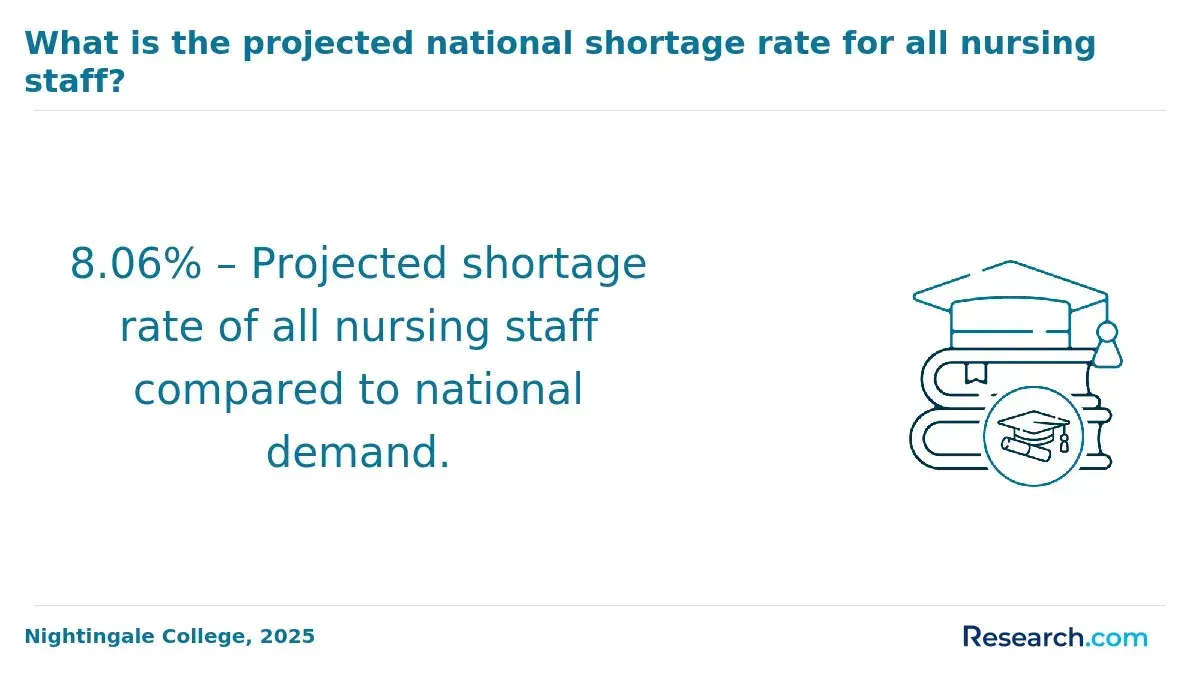
By 2034, Ohio is projected to have an average of 189,100 annual job openings for RNs nationally, with nearly 7,630 annual job openings projected in Ohio by 2032. This reflects a 5% increase from 2024 to 2034 nationally and a 3% increase in Ohio. By 2038, the projection indicates a 3% shortage of registered nurses nationally, suggesting continued strong demand.
Demand does not mean every graduate receives the same job offer or salary. Hiring depends on license status, clinical performance, location, specialty, employer needs, schedule availability, and prior experience. Students can improve employability by choosing accredited programs, performing well in clinical placements, preparing thoroughly for licensure exams, and building professional references before graduation.
Does an online nursing degree in Ohio provide a strong return on investment?
An online nursing degree can offer a favorable return when it helps the student qualify for licensure, complete a BSN while working, move into a higher-responsibility role, or enter a graduate specialty without unnecessary debt. The strongest ROI usually comes from controlling total cost, maximizing transfer credit, using employer tuition benefits, avoiding programs that do not meet licensure requirements, and choosing a credential that employers value.
ROI can weaken if students focus only on speed or convenience and overlook accreditation, clinical placement burden, loan costs, or state authorization. Nurses interested in specialty advancement can also explore pathways such as how to become a nurse midwife in Ohio, but they should compare the added education cost with realistic career goals and certification requirements.
What challenges may arise during online nursing programs in Ohio?
Online nursing school can be demanding because students must balance academic work, clinical schedules, family responsibilities, employment, and technology requirements. The flexibility of online learning can become a disadvantage for students who do not set a consistent study schedule.
- Clinical placement complexity: Students may need to travel, meet facility requirements, or coordinate schedules around shifts and preceptor availability.
- Limited face-to-face contact: Online learners must be intentional about asking questions, attending virtual sessions, and building peer support.
- Technology problems: Internet issues, software updates, webcam requirements, and simulation platforms can affect participation.
- Fast pacing: Accelerated programs can be stressful for students who underestimate weekly workload.
- Licensure assumptions: Students may mistakenly believe that any online nursing program automatically qualifies them for Ohio licensure.
Students who want a more gradual entry into nursing may want to compare practical nursing routes and review how to become an LPN in Ohio before choosing a longer or more intensive pathway.
What technology skills are required for online nursing programs in Ohio?
Online nursing students need enough digital confidence to participate fully in coursework, communicate professionally, complete simulations, submit assignments, and protect patient-related information during educational activities. The most important technology skills include:
- Learning Management Systems: Students should be able to navigate Blackboard, Canvas, Moodle, or similar platforms to access lectures, submit assignments, check grades, and join discussions.
- Virtual simulations: Programs may use simulation software to practice clinical decision-making, patient assessment, and care planning.
- Video conferencing: Students may use Zoom, Microsoft Teams, or similar tools for live classes, advising, presentations, and group projects.
- Office software: Word processing, spreadsheets, presentations, file management, and document formatting are common requirements.
- Digital organization: Online learners benefit from calendars, reminders, task lists, and cloud storage systems that keep coursework and clinical deadlines organized.
- Professional online communication: Clear email, respectful discussion posts, timely replies, and appropriate documentation habits matter in both school and practice.
Easiest Nursing Programs to Enter in Ohio
Students searching for accessible nursing programs should be careful with the word “easy.” A program may have more flexible admissions, but nursing coursework, clinical standards, and licensure exams remain rigorous. The better question is which program offers a realistic entry point for your background while still maintaining accreditation and strong student outcomes.
Some programs may use holistic admissions, lower GPA thresholds, prerequisite flexibility, or consideration of healthcare experience. Applicants who are returning to school, changing careers, or rebuilding academic records can use Research.com’s guide to what is the easiest nursing program to get into as a starting point.
Before choosing an accessible program, confirm completion rates, support services, NCLEX-RN preparation, clinical placement availability, and whether graduates are eligible for the license or credential you want.
How do online nursing programs in Ohio integrate interdisciplinary healthcare training?
Modern nursing requires collaboration with physicians, pharmacists, therapists, medical assistants, social workers, administrators, coders, and other healthcare professionals. Online nursing programs may support interdisciplinary learning through case studies, team-based assignments, simulation activities, informatics coursework, care coordination projects, and exposure to healthcare operations.
Students who want a broader view of clinical support roles can also explore medical assistant programs in Ohio. Understanding adjacent healthcare roles can help nurses communicate more effectively, coordinate care, and appreciate how different professionals contribute to patient outcomes.
What non-clinical roles can an online nursing degree prepare me for in Ohio?
A nursing degree can support more than bedside care. Depending on credential level, experience, and additional training, graduates may move into case management, healthcare administration, quality assurance, clinical informatics, utilization review, public health, patient education, regulatory compliance, or nursing education.
Some nurses also transition into revenue cycle, documentation, or healthcare data roles. Students interested in administrative and analytical healthcare work can review how to become a medical biller and coder in Ohio to understand how billing, coding, documentation, and reimbursement connect with clinical care.
Acute Care Nurse Practitioner Opportunities in Ohio
Acute Care Nurse Practitioners, often called ACNPs, care for patients with urgent, complex, or unstable conditions. They may work in emergency departments, intensive care units, trauma settings, specialty services, hospital medicine, surgical units, or other high-acuity environments. The role requires advanced assessment, diagnostic reasoning, treatment planning, and collaboration with physicians and interdisciplinary teams.
Why choose acute care nursing in Ohio?
Ohio’s healthcare landscape includes major hospital systems and specialty care centers, including Cleveland Clinic and Ohio State University Wexner Medical Center. Nurses interested in acute care should be prepared for high-pressure decision-making, complex patient needs, and ongoing professional development.
Advancing your career with an ACNP program
RNs who want to become ACNPs typically need graduate-level preparation, advanced clinical training, and eligibility for the relevant certification and state practice requirements. Online acute care nurse practitioner programs may offer didactic flexibility, but clinical experiences still require approved in-person practice sites.
Students should verify accreditation, clinical placement support, faculty qualifications, certification preparation, state authorization, and whether the program’s acute care focus matches their intended patient population and work setting.
Financial incentives for ACNPs in Ohio
ACNP roles can offer advancement potential because they require specialized graduate preparation and advanced clinical responsibility. However, compensation varies by employer, setting, experience, certification, schedule, and region. Prospective students should compare tuition, lost work time, certification costs, and expected role availability before enrolling.
Get started with online ACNP programs
If you are an RN considering acute care advancement, compare online acute care nurse practitioner programs carefully. Look for programs that combine rigorous coursework, strong clinical placement support, and preparation for the realities of emergency, critical care, and specialty acute care practice.
Common mistakes to avoid when choosing an online nursing program in Ohio
- Choosing without verifying accreditation: Accreditation can affect licensure, financial aid, employment, and graduate school options.
- Assuming online means fully remote: Nursing programs with clinical requirements still require in-person training.
- Looking only at tuition: Fees, clinical travel, supplies, books, exam costs, and lost work time can change affordability.
- Ignoring clinical placement policies: Some schools help arrange placements, while others expect students to secure sites.
- Assuming all programs meet Ohio licensure rules: This is especially risky with out-of-state online programs.
- Relying only on rankings: Rankings can help you build a shortlist, but program fit, support, cost, and outcomes matter more.
- Overestimating accelerated-program flexibility: Shorter programs often require a heavier weekly workload.
Key Insights
- The best online nursing program in Ohio depends on your starting point: RN to BSN for licensed RNs, accelerated BSN for qualified career changers, pre-licensure options for new students, and MSN or bridge programs for advancement.
- Online nursing programs offer flexibility for coursework, but clinical training, labs, and supervised patient care still require in-person participation.
- Accreditation and Ohio licensure alignment should be checked before cost, speed, or convenience because they determine whether the program can support your career goal.
- RNs in Ohio earn an annual median salary of $84,430, but salaries are not guaranteed and vary by setting, specialty, experience, and credential level.
- Public four-year BSN costs average $10,049 for in-state students and $26,213 for out-of-state residents, while private institutions generally charge around $35,352 for a four-year BSN degree.
- Ohio online nursing students should compare total program cost, transfer credits, clinical placement support, NCLEX-RN preparation, graduation rates, and job placement outcomes before enrolling.
- Common high-value growth areas include telehealth, geriatric care, psychiatric-mental health nursing, acute care, leadership, nursing education, and advanced practice pathways.
Related Articles for Nearby States
- 2027 Best Online Nursing Programs in Indiana – Accredited RN to BSN Programs
- 2027 Best Online Nursing Programs in Kentucky – Accredited RN to BSN Programs
- 2027 Best Online Nursing Programs in West Virginia – Accredited RN to BSN Programs
- 2027 Best Online Nursing Programs in Pennsylvania: Accredited RN to BSN Programs
- 2027 Best Online Nursing Programs in Michigan – Accredited RN to BSN Programs
- 2027 Best Online Nursing Programs in Illinois – Accredited RN to BSN Programs
- 2027 Best Online Nursing Programs in Tennessee – Accredited RN to BSN Programs
- 2027 Best Online Nursing Programs in North Carolina – Accredited RN to BSN Programs
- 2027 Best Online Nursing Programs in Missouri – Accredited RN to BSN Programs
- 2027 Best Online Nursing Programs in Maryland – Accredited RN to BSN Programs
References:
- AACN. (2025). 2024-2025 Enrollment and Graduations in Baccalaureate and Graduate Programs. https://www.aacnnursing.org
- Coherent Market Insights. (2025). Nursing Care Services Market Size and Analysis. https://www.coherentmarketinsights.com
- Market Research Future. (2025). Nursing Care Market Size, Share, Trends. https://www.marketresearchfuture.com
- Mordor Intelligence. (2026). Health Caregiving Market Analysis Industry Report. https://www.mordorintelligence.com
- US Bureau of Labor Statistics (BLS). (2024a). Occupational Outlook Handbook – Registered Nurses. Retrieved from BLS.
Other Things You Should Know About Online Nursing Programs in Ohio
Applicants for online RN to BSN programs in Ohio in 2027 generally need a valid RN license, an associate degree in nursing (ADN) or a nursing diploma, and a minimum GPA—often around 2.5 or higher. Some programs may require completion of specific prerequisite courses, letters of recommendation, and a personal statement.
Yes, clinical placements are typically required for Ohio's online RN to BSN programs in 2027. These placements help fulfill practical experience requirements and are often completed at approved healthcare facilities near the student's location, allowing for hands-on learning alongside online coursework.
Yes. Many Ohio RN to BSN programs accept up to 90 semester transfer credits, but most require at least 30 credits earned at the university for the BSN. Schools also review an active RN license, an associate degree or diploma in nursing, and official transcripts before awarding transfer credit.