
2027 1 Year Accelerated RN Nursing Degree Program Online

Co-Founder and Chief Data Scientist
An accelerated online nursing degree is built for people who want to move into registered nursing quickly without spending several years in a traditional campus program. For career changers, second-degree students, and working adults with completed prerequisites, a 1-year accelerated online nursing degree can shorten the path to RN eligibility while still requiring in-person clinical training.
The decision is not simple. These programs are intense, costly, and highly regulated. “Online” does not mean fully remote, and not every fast nursing program will meet licensure requirements in every state. This guide explains how 1-year accelerated online nursing programs work in 2027, what they cost, how clinical placements are handled, what employers look for, and how to compare programs before applying.
Quick Answer: Is a 1-Year Accelerated Online Nursing Degree Worth It?
A 1-year accelerated online nursing degree can be worth it if you already have a bachelor’s degree or substantial college credits, can commit to a full-time academic schedule, and choose an accredited program that prepares graduates for the NCLEX-RN exam. Most programs combine online theory courses with in-person labs, simulations, and clinical rotations at approved healthcare sites.
The main advantage is speed. Students may complete a nursing pathway in 12 to 16 months instead of following a traditional multiyear route. The trade-off is intensity: accelerated programs often require heavy weekly study time, strict clinical availability, and strong self-management skills.
What are the main benefits of a 1-year accelerated online nursing degree?
- Faster entry into nursing: An accelerated format can help qualified students reach RN licensure preparation more quickly than a traditional BSN pathway.
- Career flexibility: Graduates may pursue roles such as registered nurse, critical care nurse, pediatric nurse, surgical nurse, and home health nurse after meeting licensure requirements.
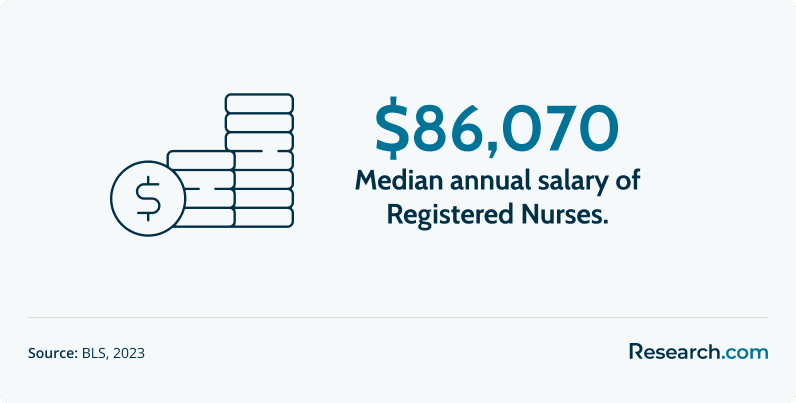
- Strong salary potential: Registered nurses had a median annual salary of $86,070 in May 2023.
- Flexible coursework: Online delivery can reduce commuting and make it easier to manage lectures, assignments, and discussions around other responsibilities.
- Healthcare demand: Nurse practitioner jobs alone are expected to grow by 40% from 2023 to 2033, showing continued demand for advanced nursing roles after RN preparation.
What can I expect from a 1-year accelerated online nursing degree?
A 1-year accelerated online nursing degree is usually an Accelerated Bachelor of Science in Nursing, often called an ABSN. It is designed for students who already have college-level education and now want to qualify for entry-level registered nursing practice.
The academic pace is fast. Students typically study subjects such as anatomy, pharmacology, pathophysiology, health assessment, evidence-based practice, and patient care. Many programs also include simulation-based learning, skills labs, a capstone experience, and supervised clinical hours in healthcare settings.
Online delivery usually applies to classroom-based material. Students may attend live virtual lectures, watch recorded lessons, complete assignments through a learning platform, participate in discussion boards, and work through digital simulations. However, nursing cannot be completed entirely online. Clinical rotations, skills checks, labs, and some assessments may require in-person attendance.
Total tuition varies widely. Full-program costs commonly range from $20,000 to $80,000, depending on the school, credit requirements, fees, and residency status. Students should also budget for books, supplies, background checks, uniforms, immunizations, clinical travel, licensure applications, and NCLEX-RN preparation.
Typical structure of a 1-year accelerated online nursing program
| Program Component | What It Usually Includes | Why It Matters |
| Online nursing coursework | Recorded or live lectures, readings, assignments, quizzes, and case-based discussions | Builds the scientific and clinical reasoning foundation needed for safe nursing practice |
| Simulation and skills training | Virtual simulations, lab practice, patient scenarios, and competency checks | Helps students practice decisions and procedures before entering clinical environments |
| Clinical rotations | In-person placements in hospitals, clinics, long-term care facilities, or community health settings | Provides supervised patient-care experience required for nursing preparation |
| Capstone or final practicum | Integrated project, advanced clinical experience, or transition-to-practice component | Connects classroom learning with real nursing responsibilities |
| NCLEX-RN preparation | Review modules, practice questions, predictor exams, and faculty advising | Supports readiness for the RN licensure exam |
Where can I work with a 1-year accelerated online nursing degree?
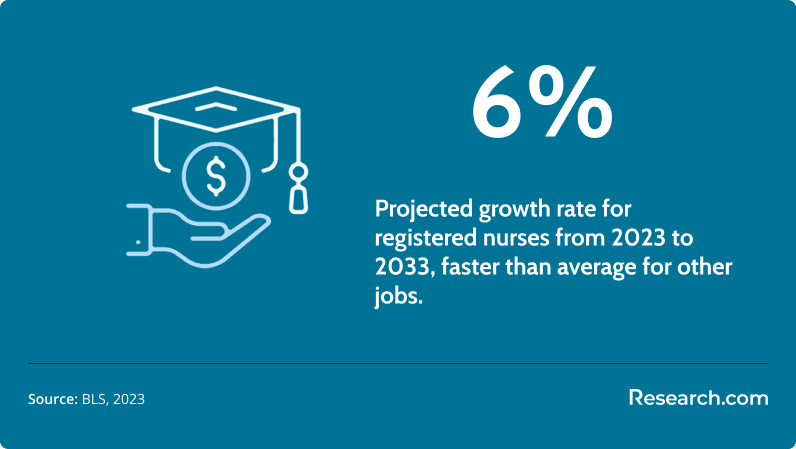
Graduates who complete an accredited nursing program and pass the required licensure exam can pursue registered nurse roles in many healthcare environments. According to the U.S. Bureau of Labor Statistics, registered nursing employment is projected to grow 6% from 2023 to 2033, with nearly 200,000 jobs added each year.
As of May 2023, the industries employing the largest numbers of registered nurses included:
- Hospitals: Almost 1.8 million nurses work in hospitals, representing 30.61% of the workforce.
- Physician offices: More than 200,000 nurses work in this setting, accounting for about 7.74% of the field.
- Nursing and residential care facilities: Nearly 180,000 nurses are employed here, making up around 11% of the industry.
- Outpatient care centers: Around 160,000 nurses work in outpatient care, equal to 15.39% of industry employment.
- Employment services: More than 130,000 nurses work through employment services, representing 3.49% industry employment.
How much can I make with a 1-year accelerated online nursing degree?
Registered nurse pay depends on the setting, state, specialty, shifts, experience, union coverage, and local demand. In May 2023, the median annual wage for registered nurses was $86,070.
| Work Setting | Annual RN Wage Reported | What to Consider |
| Hospitals | $88,430 per year | Often includes acute care, shift work, and opportunities to move into specialty units |
| Outpatient care centers | $102,640 per year | May offer higher pay in specialized ambulatory care settings |
| Nursing facilities | $79,280 per year | Common setting for long-term care, rehabilitation, and geriatric nursing |
| Educational services | $71,550 annually | May include school nursing, academic health settings, or student health services |
| Government | $99,840 annually | May involve public hospitals, correctional health, veterans care, or public health roles |
Location can have a major effect on earnings. States such as California and Hawaii are known for higher average salaries for nursing professionals, although cost of living and licensing rules should also be considered.
- Best 1-Year Accelerated Online Nursing Degree Programs for 2027
- How long does it take to complete a 1-year accelerated online nursing degree program?
- How does an online 1-year accelerated nursing degree compare with an on-campus program?
- What is the average cost of a 1-year accelerated online nursing degree program?
- What financial aid options are available for accelerated online nursing students?
- What are the prerequisites for enrolling in a 1-year accelerated online nursing degree program?
- What courses are included in a 1-year accelerated online nursing degree program?
- What specializations are available in a 1-year accelerated online nursing degree program?
- What challenges should students expect in an accelerated online nursing program?
- How do accelerated online nursing programs maintain clinical training quality?
- What future specializations can accelerated nursing degrees lead to?
- How to choose the best 1-year accelerated online nursing degree program
- What are the continuing education and professional development options after graduation?
- What career paths are available for graduates of a 1-year accelerated online nursing degree program?
- How does a 1-year accelerated online nursing degree compare with the shortest direct entry MSN programs for non nursing majors online?
- How do accelerated nursing programs integrate evolving healthcare technologies?
- What is the job market for graduates with a 1-year accelerated online nursing degree?
- How do employers evaluate graduates of a 1-year accelerated online nursing degree program?
- What is the return on investment for a 1-year accelerated online nursing degree program?
Best 1-Year Accelerated Online Nursing Degree Programs for 2027
How do we rank schools?
Choosing a nursing program affects your cost, licensure preparation, clinical access, and early career options. Research.com evaluates programs using information from trusted data sources, including the IPEDS database, Peterson's database, the College Scorecard database, and the National Center for Education Statistics. These sources help compare institutions using consistent education data. For more detail on how Research.com evaluates schools, review the Research.com methodology.
1. Elmhurst University
Elmhurst University offers an online Accelerated Bachelor of Science in Nursing program for students moving into nursing from another academic or professional background. The program pairs online courses in pharmacology, pathophysiology, and patient care with in-person clinical placement experiences.
- Required Credits to Graduate: 60
- Cost: $50,000
- Accreditation: Commission on Collegiate Nursing Education (CCNE)
2. Baylor University
The online Accelerated Bachelor of Science in Nursing program at Baylor University is structured for students who want a direct route into professional nursing preparation. Coursework covers health assessment, pharmacology, and evidence-based practice, while clinical rotations help students build supervised patient-care experience.
- Required Credits to Graduate: 62
- Cost: $68,100 total tuition
- Accreditation: Commission on Collegiate Nursing Education (CCNE)
3. Marymount University
Marymount University provides an online Accelerated Bachelor of Science in Nursing program with coursework in pharmacology, pathophysiology, and patient-centered care. Students complete interactive online learning and clinical rotations through partner healthcare facilities.
- Required Credits to Graduate: 65
- Cost: $18,700 per semester
- Accreditation: Commission on Collegiate Nursing Education (CCNE)
4. University of Texas at Arlington
The University of Texas at Arlington online Bachelor of Science in Nursing program emphasizes evidence-based care, leadership, and patient-centered practice. Students complete online coursework and approved clinical experiences in healthcare settings.
- Required Credits to Graduate: 51
- Cost: $425 per credit hour
- Accreditation: Commission on Collegiate Nursing Education (CCNE)
5. Holy Family University
Holy Family University offers an online Accelerated Bachelor of Science in Nursing program that combines core nursing coursework with hands-on clinical preparation. Students study health assessment, pharmacology, and patient care while completing required clinical placements.
- Required Credits to Graduate: 59
- Cost: $857 per credit hour
- Accreditation: Commission on Collegiate Nursing Education (CCNE)
6. Walden University
Walden University offers an online Bachelor of Science in Nursing program focused on patient-centered care, leadership, and evidence-based nursing practice. Program length and cost may vary based on transfer credits and pace.
- Required Credits to Graduate: 170 to 180 total credits (depends on transfer credits and pace)
- Cost: $17,230 to $20,935 per year (varies by transfer credits and pace)
- Accreditation: Commission on Collegiate Nursing Education (CCNE)
7. Arkansas State University
Arkansas State University provides an online Accelerated Bachelor of Science in Nursing program that covers health assessment, pharmacology, and evidence-based practice. Students complete online coursework and in-person clinical rotations as part of their nursing preparation.
- Required Credits to Graduate: 67 credit hours
- Cost: $282 per credit hour
- Accreditation: Accreditation Commission for Education in Nursing (ACEN)
8. Cleveland State University
The online Accelerated Bachelor of Science in Nursing program at Cleveland State University includes coursework in pharmacology, patient care, and health assessment. Clinical rotations at partner healthcare facilities give students supervised hands-on training.
- Required Credits to Graduate: 69
- Cost: $307.20 - $441.60 per credit (in-state) / $435.97 - $626.70 per credit (out-of-state) + $8,708 fees
- Accreditation: Commission on Collegiate Nursing Education (CCNE)
9. University of Tulsa
The University of Tulsa offers an Accelerated Bachelor of Science in Nursing program for students seeking a compressed route into nursing preparation. Students study patient care, pharmacology, and health assessment while completing clinical placements.
- Required Credits to Graduate: 60
- Cost: $625 per credit hour (textbooks included)
- Accreditation: Accreditation Commission for Education in Nursing (ACEN)
10. Rockhurst University
Rockhurst University offers an Accelerated Bachelor of Science in Nursing program that blends online instruction with clinical experience. Students complete coursework in health assessment, pharmacology, and patient care while developing practical skills through rotations.
- Required Credits to Graduate: 60
- Cost: $783 per credit hour
- Accreditation: Commission on Collegiate Nursing Education (CCNE)
How long does it take to complete a 1-year accelerated online nursing degree program?
A 1-year accelerated online nursing degree program usually takes 12 to 16 months. The exact timeline depends on prerequisite completion, transfer credits, clinical scheduling, full-time or part-time enrollment, and whether the program requires campus visits.
Most ABSN programs are full-time and highly structured. Students often move through courses in cohorts, completing online academic work while attending clinical rotations at approved healthcare sites. Part-time options may be available at some schools, but they usually extend the graduation timeline.
Transfer credits can reduce the number of requirements a student must complete, especially in subjects such as biology, anatomy, physiology, chemistry, or statistics. Still, students should not assume a shorter program is automatically easier. Accelerated nursing programs compress large amounts of material into a short period, which can make weekly workload heavier than in traditional BSN programs.
If admission selectivity is a concern, comparing the easiest accelerated nursing programs to get into can help applicants identify schools with more flexible admissions policies or stronger support for career changers.
How does an online 1-year accelerated nursing degree compare with an on-campus program?
Online and on-campus accelerated nursing programs can lead to similar licensure preparation when they are properly accredited and approved. The main difference is delivery. Online programs move much of the theory instruction into a digital format, while on-campus programs rely more heavily on scheduled in-person classes.
Both formats require in-person clinical training. Students considering faster healthcare education routes may also compare nursing with other options such as 2-year medical degrees that pay well, although nursing licensure has its own state-specific requirements.
| Factor | Online Accelerated Nursing Program | On-Campus Accelerated Nursing Program |
| Course delivery | Theory courses are completed through online modules, live sessions, recordings, and digital assignments | Lectures and classroom discussions are usually held in person on a fixed schedule |
| Clinical training | Completed in person at approved local or regional healthcare sites | Often arranged through the school’s established nearby clinical partners |
| Flexibility | Better for students who need remote access to coursework | Better for students who prefer a fixed classroom routine |
| Student discipline required | High; students must manage online learning, deadlines, and clinical schedules independently | High, but the campus schedule may provide more external structure |
| Employer perception | Employers increasingly recognize accredited online nursing degrees from reputable institutions | Employers are familiar with traditional campus-based nursing pathways |
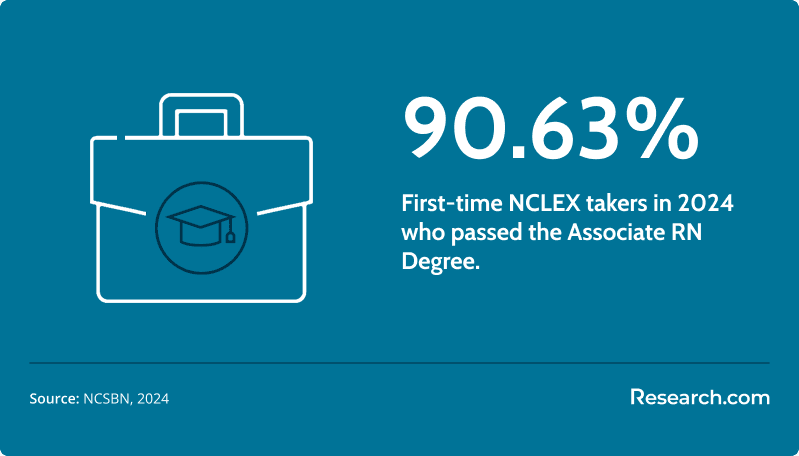
Research shows that accelerated prelicensure BSN students perform better than traditional students on the NCLEX-RN. However, students should still compare each program’s actual NCLEX-RN pass rate, clinical placement support, and state approval status before enrolling.
Who should choose online?
- Students who can manage independent study and strict deadlines.
- Applicants who live far from campus but can complete clinicals at approved sites.
- Career changers who need flexibility in how lectures and assignments are completed.
Who may prefer on-campus?
- Students who learn best through face-to-face instruction.
- Applicants who want frequent access to campus labs, faculty, and peer study groups.
- Students who do not want to coordinate as much of the online learning experience independently.
What is the average cost of a 1-year accelerated online nursing degree program?
The average cost of a 1-year accelerated online nursing degree program ranges from $30,000 to $60,000, though some programs fall outside that range. The broader full-program cost range is often $20,000 to $80,000.
Tuition is only one part of the total price. Students should also review fees, clinical travel requirements, supplies, background checks, immunization documentation, testing costs, exam preparation, and licensing expenses. Those comparing nursing with related healthcare paths, including careers in care case management, should evaluate both upfront education costs and long-term career requirements.
Common cost categories
| Cost Category | What It May Include | Question to Ask |
| Tuition | Per-credit or full-program charges | Is the listed tuition total or only an estimate? |
| Mandatory fees | Technology fees, lab fees, simulation fees, clinical placement fees, and proctoring fees | Which fees are required each term? |
| Clinical expenses | Travel, parking, uniforms, supplies, screenings, and immunizations | How far might I need to travel for clinical rotations? |
| Books and learning materials | Textbooks, digital access codes, software, and NCLEX preparation tools | Are materials included in tuition? |
| Licensure preparation | NCLEX-RN review, application fees, testing fees, and state board requirements | What costs are due after graduation? |
How to reduce costs
- Submit transfer credits early and ask for a written credit evaluation.
- Compare total program cost instead of only per-credit tuition.
- Ask whether clinical placement support is included or billed separately.
- Complete the FAFSA and apply for nursing-specific scholarships.
- Check whether your employer offers tuition reimbursement or workforce training benefits.
What financial aid options are available for accelerated online nursing students?
Students in 1-year accelerated online nursing degree programs may be eligible for grants, scholarships, federal student loans, work-study, employer tuition assistance, and institutional aid. Eligibility depends on the school’s accreditation, federal aid participation, enrollment status, prior degree history, and financial need.
Grants and scholarships
Need-based grants, including the Pell Grant, do not require repayment when eligibility rules are met. Nursing scholarships may be offered by professional associations, hospitals, foundations, community organizations, and schools. Some awards focus on academic performance, service commitments, rural healthcare, or work in underserved communities.
Federal student loans
Students may use Direct Subsidized and Unsubsidized Loans when eligible. Graduate students may qualify for Grad PLUS loans, which are unsubsidized and require a credit check. Loan terms, repayment plans, and interest rates should be reviewed carefully before borrowing.
Employer tuition assistance
Healthcare employers and some non-healthcare employers offer tuition reimbursement for employees pursuing nursing education. These benefits may require students to remain employed for a set period after graduation, so applicants should read service obligations closely.
Financial aid for online programs
Online students generally follow the same federal aid process as campus students when the institution is accredited and approved for federal student aid. Completing the Free Application for Federal Student Aid (FAFSA) is the standard first step for determining eligibility.
What are the prerequisites for enrolling in a 1-year accelerated online nursing degree program?
Most 1-year accelerated online nursing degree programs are designed for students who already hold a bachelor’s degree in a non-nursing field. Some programs may also consider applicants with substantial transferable credits, but requirements vary by school.
- Prerequisite courses: Applicants commonly need anatomy, physiology, microbiology, chemistry, statistics, and nutrition. These common nursing prerequisites help ensure students can handle upper-level nursing coursework.
- Minimum GPA: Many programs expect a minimum undergraduate GPA near 3.0 on a 4.0 scale, although competitive schools may prefer stronger academic records.
- Standardized tests: Some schools require an exam such as the TEAS, while others do not use standardized testing in admissions.
- Healthcare exposure: Prior patient-care experience is not always required, but it can strengthen an application. Some students begin through a certified nursing assistant career path to gain experience and confirm their interest in direct patient care.
- Compliance documentation: Programs often require background checks, drug screening, immunization records, CPR certification, and health forms before clinical placement.
What courses are included in a 1-year accelerated online nursing degree program?
A 1-year accelerated online nursing degree program covers the same core competencies expected of prelicensure nursing education but delivers them in a compressed schedule. The curriculum is designed to prepare students for safe entry-level nursing practice and NCLEX-RN readiness.
Core nursing coursework
Students usually study anatomy, physiology, microbiology, pharmacology, pathophysiology, health assessment, nursing fundamentals, medical-surgical nursing, and evidence-based practice. These courses develop the scientific knowledge and clinical judgment nurses use in patient care.
Clinical rotations
Clinical training is required even when the classroom portion is online. Students may rotate through medical-surgical nursing, pediatrics, maternity, mental health, community health, and other settings depending on program design and state requirements.
Online learning format
Programs may use asynchronous lessons, live virtual discussions, case studies, simulation activities, quizzes, exams, and group assignments. Students should ask how much of the program is self-paced and how much requires scheduled attendance.
Electives and focused study
Some programs include limited electives in community health, critical care, leadership, or nursing informatics. Students who already hold RN credentials and want a faster bachelor’s completion pathway may instead compare fast RN to BSN programs.
What specializations are available in a 1-year accelerated online nursing degree program?
Most 1-year accelerated online nursing degree programs focus on generalist nursing preparation rather than deep specialization. The primary goal is to prepare graduates for RN licensure and entry-level practice. Because the timeline is condensed, specialization options are usually limited to electives, clinical exposure, or later certificates.
- Pediatrics, geriatrics, and critical care: Students may encounter these areas through rotations or elective coursework.
- Leadership and management: Some programs introduce supervision, care coordination, quality improvement, or healthcare systems content.
- Community and public health: Students may study population health, prevention, education, and care access.
- Nursing informatics: Some curricula include electronic health records, data use, and healthcare technology concepts.
Career and salary impact
Specialization can improve long-term career options, but most specialty roles require work experience, certification, or graduate study. The U.S. Bureau of Labor Statistics projects a 40% job growth rate for nurse practitioners from 2023 to 2033, reflecting demand for advanced nursing roles. Critical care nurses earn an average salary of $78,110, slightly higher than the $77,600 average salary for registered nurses.
Additional education after the ABSN
Many specialized nursing roles require certifications or graduate education beyond the accelerated bachelor’s degree. Nurses who plan to become nurse practitioners may later explore accelerated nurse practitioner programs online after meeting admission and experience requirements.
What challenges should students expect in an accelerated online nursing program?
The biggest challenge is workload. A 1-year accelerated online nursing degree compresses lectures, assignments, exams, simulations, and clinical rotations into a short timeline. Students often have limited room for schedule disruptions, and missing clinical hours can delay completion.
Online learning can also feel isolating if a program does not provide strong faculty access, peer interaction, tutoring, and technical support. Clinical coordination may create added stress, especially for students who live far from approved placement sites or have limited availability due to work or family responsibilities.
Students with long-term goals in advanced practice should map the full education path early. For example, someone comparing bridge options such as ADN to NP programs should understand how each credential fits into future graduate admissions and licensure requirements.
Common mistakes to avoid
| Mistake | Why It Can Hurt You | Better Approach |
| Choosing a program only because it is fast | A shorter timeline is not helpful if the program lacks the right approval or support | Verify accreditation, state approval, clinical placement quality, and NCLEX-RN preparation |
| Assuming “online” means no travel | Nursing programs still require in-person labs, simulations, or clinical rotations | Ask for exact campus visit and clinical location expectations before enrolling |
| Looking only at tuition | Fees, supplies, travel, testing, and licensure costs can change the total price | Request a full cost-of-attendance estimate |
| Ignoring state licensure rules | A program may not meet requirements in every state | Confirm eligibility with the state board of nursing where you plan to practice |
| Underestimating weekly workload | Accelerated programs can be difficult to balance with full-time work | Plan finances, childcare, transportation, and study time before the first term |
How do accelerated online nursing programs maintain clinical training quality?
Strong accelerated online nursing programs protect clinical quality through approved healthcare partnerships, licensed preceptors, simulation-based preparation, faculty oversight, and competency assessments. Clinical training must be structured, documented, and aligned with accreditation and state nursing board expectations.
Students should ask who secures placements, how far they may need to travel, what happens if a placement falls through, and whether clinical sites are available in their state. Programs that leave most placement responsibilities to students may create delays or added stress.
Students planning future specialized training can also compare advanced options such as an 18 month FNP program to understand how clinical expectations increase at the graduate level.
What future specializations can accelerated nursing degrees lead to?
A 1-year accelerated online nursing degree can serve as the foundation for later specialization once the graduate becomes licensed and gains clinical experience. Common next steps include specialty certification, an MSN, a DNP, postgraduate certificates, residencies, preceptorships, or leadership development programs.
Possible long-term pathways include nurse practitioner, nurse educator, clinical nurse leader, healthcare administrator, informatics nurse, public health nurse, and specialty bedside roles. Nurses interested in psychiatric advanced practice may eventually compare programs and compensation trends, including information on DNP PMHNP salary.
How to choose the best 1-year accelerated online nursing degree program
The best accelerated online nursing program is not simply the fastest or cheapest option. It is the program that is accredited, approved for your state, clinically feasible, affordable for your situation, and strong enough to prepare you for the NCLEX-RN and entry-level practice.
1. Verify accreditation and state approval
Look for accreditation from recognized nursing accreditors such as the Commission on Collegiate Nursing Education (CCNE) or the Accreditation Commission for Education in Nursing (ACEN). Also confirm that the program meets licensure requirements in the state where you plan to become an RN.
2. Review NCLEX-RN pass rates
NCLEX-RN pass rates can help indicate whether a program prepares students effectively. For example, the University of San Francisco School of Nursing and Health Professions reported a 90% first-time NCLEX pass rate among its baccalaureate graduates from 2022 to 2024.
3. Ask detailed clinical placement questions
Clinical training is one of the most important parts of nursing education. Ask whether the school arranges placements, whether placements are guaranteed, how far students travel, and what healthcare settings are used. Strong clinical experiences are important for students pursuing BSN career opportunities in hospitals, outpatient care, community health, and specialty settings.
4. Evaluate support services
Online students should have access to academic advising, faculty office hours, tutoring, library resources, technology support, mental health resources, and NCLEX preparation. Accelerated students need quick support because short terms leave little time to recover from academic setbacks.
5. Compare total cost and schedule feasibility
Ask for a complete cost breakdown and a sample weekly schedule. If the program strongly discourages employment during enrollment, include lost wages in your ROI calculation.
Questions to ask before applying
- Is the program accredited by CCNE or ACEN?
- Is the program approved for RN licensure preparation in my state?
- What is the most recent NCLEX-RN pass rate?
- Who is responsible for finding clinical placements?
- How many campus visits, labs, or intensives are required?
- What is the total program cost, including fees and supplies?
- How many students complete the program on time?
- What academic support is available to online accelerated students?
- Can my prerequisites or previous degree credits transfer?
- What happens if I fail a course or cannot complete a clinical rotation on schedule?
What are the continuing education and professional development options after graduation?
After graduation and RN licensure, professional development becomes essential. Nurses may pursue specialty certifications, hospital residency programs, continuing education courses, an MSN, a DNP, leadership certificates, or postgraduate training in a focused practice area.
Continuing education can support advancement into roles such as nurse practitioner, clinical educator, care coordinator, nurse manager, informatics specialist, or healthcare administrator. Nurses interested in mental health may compare affordable online psychiatric nurse practitioner programs after meeting graduate admission and licensure requirements.
What career paths are available for graduates of a 1-year accelerated online nursing degree program?
Graduates of a 1-year accelerated online nursing degree program typically begin by seeking RN licensure and entry-level registered nurse roles. Over time, clinical experience, certifications, and graduate education can open specialized and leadership pathways.
Entry-level RN settings
- Hospitals: Nurses provide direct patient care in units such as medical-surgical, emergency, intensive care, maternity, or pediatrics.
- Clinics and outpatient centers: RNs support routine care, patient education, procedures, care coordination, and follow-up.
- Nursing homes and long-term care facilities: Nurses care for older adults, rehabilitation patients, and individuals with chronic conditions.
- Community health organizations: RNs provide education, screenings, prevention services, and population health support.
Specialty areas after experience
- Critical care: Nurses care for patients with serious or unstable conditions, often in intensive care units.
- Pediatrics: Nurses work with infants, children, adolescents, and their families.
- Geriatrics: Nurses support older adults with age-related health needs and chronic conditions.
Advancement options
- Nurse manager or clinical nurse leader: These roles involve staff coordination, quality improvement, and unit operations.
- Nurse educator: Educators train nursing students, new hires, or clinical staff.
- Advanced practice registered nurse: APRN roles such as nurse practitioner or nurse anesthetist require graduate education such as an MSN or DNP.
Non-traditional nursing careers
- Public health and policy: Nurses help design, implement, and evaluate community health programs.
- Healthcare informatics: Nurses work with electronic health records, clinical data, workflow improvement, and patient-care technology.
- Medical research: Nurses support clinical trials, research coordination, and evidence-based practice.
- Travel nursing: Nurses who want geographic flexibility can learn more about how to become a traveling nurse and the experience typically needed for temporary assignments.
How does a 1-year accelerated online nursing degree compare with the shortest direct entry MSN programs for non nursing majors online?
A 1-year accelerated online nursing degree is generally focused on preparing students for entry-level registered nursing practice and NCLEX-RN eligibility. By contrast, the shortest direct entry MSN programs for non nursing majors online are graduate-level pathways for people without a nursing background who want advanced preparation, leadership training, or a route toward specialized practice.
| Comparison Point | 1-Year Accelerated Online Nursing Degree | Direct Entry MSN for Non-Nurses |
| Primary goal | Prepare for entry-level RN practice | Prepare for graduate-level nursing competencies and potential advanced pathways |
| Typical credential | Accelerated BSN or similar prelicensure nursing degree | Master of Science in Nursing |
| Academic level | Undergraduate nursing preparation | Graduate nursing education |
| Best for | Students who want the fastest practical route to RN preparation | Students who want advanced coursework, leadership content, and a longer-term graduate pathway |
| Key trade-off | Faster and focused, but less advanced | Broader and more advanced, but usually more demanding and complex |
How do accelerated nursing programs integrate evolving healthcare technologies?
Accelerated nursing programs increasingly use simulation, electronic health record training, telehealth exposure, case-based learning, and remote patient-monitoring concepts to prepare students for modern clinical environments. These tools do not replace clinical hours, but they can help students practice clinical judgment before working with patients.
Students should look for programs that teach practical technology skills rather than only mentioning innovation in marketing materials. Useful questions include whether students practice with electronic documentation, telehealth scenarios, medication safety systems, and simulation-based patient deterioration cases. Applicants who are still comparing admission options may also find it useful to review easy nursing schools to get into.
What is the job market for graduates with a 1-year accelerated online nursing degree?
Graduates who become licensed RNs enter a labor market with steady demand. The U.S. Bureau of Labor Statistics projects 6% employment growth for registered nurses from 2023 to 2033, with approximately 194,500 job openings each year due to retirements and healthcare demand.
ABSN graduates may qualify for RN roles in hospitals, clinics, nursing homes, outpatient centers, and community health organizations. Demand can be especially strong in emergency care, acute care, rural locations, and underserved communities. Employers usually focus on licensure, clinical readiness, professionalism, and school quality rather than whether theory coursework was delivered online.
Pay varies by role and location. Nurse anesthetists, a high-demand role, earn an average of $214,000, with male representation growing to nearly 50% in the field. Nurse practitioners also have strong compensation potential, with labor and delivery nurse practitioner salary averaging around $110,000 annually.
How do employers evaluate graduates of a 1-year accelerated online nursing degree program?
Employers evaluate accelerated online nursing graduates based on RN licensure, clinical performance, communication, adaptability, teamwork, patient safety awareness, and readiness for fast-paced care environments. The program’s accreditation, reputation, NCLEX-RN pass rate, and clinical placement quality can also affect employer confidence.
Graduates should be ready to explain their clinical experiences clearly during interviews. Hiring managers may ask about patient populations served, charting experience, medication safety, simulation training, teamwork, and how the student handled the accelerated pace. Students comparing fast bachelor’s completion models may also review the fastest BSN program options, although RN-to-BSN programs serve already licensed nurses rather than new prelicensure students.
What is the return on investment for a 1-year accelerated online nursing degree program?
The return on investment depends on total program cost, lost income while enrolled, financial aid, local RN wages, time to licensure, and how quickly the graduate secures employment. The main ROI advantage is earlier workforce entry. A shorter program may allow students to start earning RN wages sooner than a traditional route, but only if the program is reputable, clinically feasible, and completed on time.
Students should compare the total cost of attendance with realistic salary expectations in their state and preferred setting. They should also consider whether they plan to pursue graduate education later, since future credentials can change long-term earnings and career mobility. Some graduates continue into bridge or completion programs, including the easiest online RN-to-BSN programs to get into, depending on their prior credential and professional goals.
Simple ROI checklist
- Calculate total tuition, fees, supplies, travel, and licensure costs.
- Estimate income you may lose if you reduce work hours during the program.
- Compare RN wages in your state and target work setting.
- Check the program’s graduation rate and NCLEX-RN pass rate.
- Ask how soon graduates typically secure RN roles after licensure.
- Consider whether future MSN, DNP, or specialty certification costs are part of your plan.
What graduates say about a 1-year accelerated online nursing degree
-
: "
The online format helped me manage lectures and assignments around my schedule, but the clinical requirements were serious and time-consuming. The program moved quickly, so staying organized was the only way to keep up. – Leona
"
-
: "
Changing careers into nursing in one year required more discipline than I expected. The pace was demanding, but the structure and faculty support helped me stay focused through each term. – Albert
"
-
: "
The program gave me a direct route into nursing while still requiring real clinical experience. Passing the NCLEX on my first attempt made the intensity feel worthwhile. – Elio
"
Key Insights
- A 1-year accelerated online nursing degree is not fully online: Coursework may be remote, but clinical rotations, labs, simulations, and skills assessments usually require in-person participation.
- Most programs take 12 to 16 months: Timelines depend on prerequisites, transfer credits, clinical scheduling, and whether the student remains full time.
- Cost varies widely: Full-program costs commonly range from $20,000 to $80,000, while the average range is often $30,000 to $60,000.
- Accreditation and state approval are non-negotiable: Students should verify CCNE or ACEN accreditation and confirm the program supports RN licensure in their intended state.
- Clinical placement quality can make or break the experience: Ask whether the school arranges placements, how far students travel, and what happens if a site becomes unavailable.
- The RN job outlook remains positive: Registered nursing employment is projected to grow 6% from 2023 to 2033, with approximately 194,500 annual openings.
- Salary outcomes are not guaranteed: The median RN salary was $86,070 in May 2023, but earnings vary by location, employer, specialty, and experience.
- The best program is the one that fits your licensure goal, schedule, finances, and learning style: Do not choose based on speed alone.
References
- Monti, J., PhD. Accelerated Bachelor of Science in Nursing overview. NurseJournal.org. https://nursejournal.org/degrees/absn/
- Wehner, L. A. Comparison of NCLEX-RN Pass Rates between Accelerated and Traditional Prelicensure BSN Programs. https://www.gavinpublishers.com/article/view/comparison-of-nclex-rn-pass-rates-between-accelerated-and-traditional-prelicensure-bsn-programs
- Regis College. How Employers Perceive Online Degrees. https://online.regiscollege.edu/blog/employers-perceive-online-degrees
- Volpe, A. Here’s what you need to know about the revamped FAFSA. Vox. https://www.vox.com/even-better/23977937/fafsa-changes-2024-2025-federal-student-aid-college
- Dunn, A., RN. How much does nursing school cost? NurseJournal.org. https://nursejournal.org/resources/how-much-does-nursing-school-cost/
- Msn, G. M. Guide to financial aid and scholarships for nurses. NurseJournal.org. https://nursejournal.org/resources/financial-aid/nursing-scholarship-grants/
- Nurse anesthetists, nurse midwives, and nurse practitioners. Bureau of Labor Statistics. https://www.bls.gov/ooh/healthcare/nurse-anesthetists-nurse-midwives-and-nurse-practitioners.htm
- Registered nurses. Bureau of Labor Statistics. https://www.bls.gov/ooh/healthcare/registered-nurses.htm
- USF shines in U.S. news rankings. University of San Francisco. https://www.usfca.edu/news/usf-shines-2025-rankings
- Accelerated nursing programs. American Association of Colleges of Nursing. https://www.aacnnursing.org/students/nursing-education-pathways/accelerated-programs
- Nursing certifications: Our Certifications. ANCC. https://www.nursingworld.org/our-certifications/
- Registered nurses: Job outlook. Bureau of Labor Statistics. https://www.bls.gov/ooh/healthcare/registered-nurses.htm#tab-6
- Torry, H. The Hot New Job for Men: Nursing. The Wall Street Journal. https://www.wsj.com/economy/jobs/male-nursing-boom-high-demand-field-7733dfaf
- Taylor, M. Top 9 most stressful nursing jobs. https://www.beckershospitalreview.com/nursing/top-9-most-stressful-nursing-jobs
- Nursing, C. B. O. R. Steps to become a CA RN. https://www.rn.ca.gov/careers/steps.shtml
- Bsn, A. B. a. R. A shortcut to becoming a registered nurse (RN). https://www.registerednursing.org/articles/shortcut-to-rn/
- Registered nurses. Bureau of Labor Statistics occupational employment and wage statistics. https://www.bls.gov/oes/current/oes291141.htm
Other Things You Should Know About 1-Year Accelerated Online Nursing Degree Programs
Most programs require a criminal background check, drug screen, and proof of current immunizations before clinical placement. Typical records include MMR, varicella, hepatitis B, Tdap, influenza, and a negative TB test. Some schools also require CPR certification approved by the American Heart Association.
Students in the 1 Year Accelerated RN Nursing Degree Program Online need a reliable computer with high-speed internet access, webcam, and microphone. Software requirements may include the latest versions of Zoom and Microsoft Office Suite to facilitate online learning and assessments.


