
2027 How Long Is Nursing School? Breakdown by Degree and Type of Nurse

Co-Founder and Chief Data Scientist
Choosing a nursing program is really a timeline decision: how quickly do you need to enter the workforce, what type of nurse do you want to become, and how much time, money, and clinical training can you realistically commit? The answer to “how long is nursing school?” can be as short as 4-12 weeks for nursing assistant training or as long as 3-5 years for a nursing doctorate after prior nursing education. The right path depends on whether you want an entry-level healthcare role, registered nurse licensure, advanced practice authority, education, research, or leadership.
The timing matters because healthcare systems continue to face nursing shortages and uneven workforce distribution, with the world needing around six million professionals by 2030. At the same time, employers, state boards, and healthcare organizations increasingly expect nurses to bring stronger clinical judgment, technology fluency, and evidence-based practice skills. This guide explains the main nursing school timelines, what each credential prepares you to do, how education level affects opportunities and patient care, and how to choose a program without overlooking accreditation, licensure, cost, clinical placement, or return on investment.
Quick Answer: How Long Does Nursing School Take?
Nursing school can take 4-12 weeks for a certified nursing assistant program, 12-18 months for an LPN/LVN program, 2-3 years for an associate degree in nursing, 4 years for a BSN, 2-3 years for an MSN, and 3-5 years for a nursing doctorate. These timelines may change if you study part time, need prerequisites, wait for clinical placement, transfer credits, enroll in a bridge program, or pursue advanced licensure and certification after graduation.
How Long Is Nursing School for 2026? Table of Contents
- How nursing education level affects your career options
- Nursing school length by degree and credential
- Why continuing education matters after nursing school
- How to choose a nursing program for your career goal
- Why financial planning can affect nursing school success
- How school nurses support student health and learning
- How ADN to MSN bridge programs can expand career options
- How LPN to RN online bridge programs may shorten your path
- Accreditation and curriculum factors to check before enrolling
- Whether affordable DNP programs are worth considering
- How to evaluate nursing school return on investment
- What to know about the easiest nurse practitioner degree
- How to manage work, family, and nursing school
- How RN to BSN online fast-track programs can help working nurses
How Nursing Education Level Affects Your Career Options
The length of nursing school is not just an academic detail. It affects when you can start working, what license or certification you can pursue, which responsibilities you may hold, and how far you can advance without returning to school. Similar to the early planning involved in becoming a medical biller or coder, nursing requires students to match training time with career expectations before committing to a program.
More Education Can Expand Responsibility, Mobility, and Advancement
Higher nursing degree levels generally open more professional options. Workers with some college education but no degree earn at least $935 weekly, while college degree holders earn around $1,005 to $2,083 weekly (BLS, 2023a). Earnings differ by role, region, employer, shift, experience, and specialty, so students should treat these figures as broad labor-market context rather than guaranteed income. The same caution applies when comparing nursing salaries with related healthcare fields, such as the certified surgical technologist salary.
A BSN can make graduates more competitive for registered nursing roles and may prepare them for broader responsibilities in patient education, care coordination, leadership, and evidence-based practice. Graduate nursing education can lead to advanced practice, administration, teaching, research, or adjacent healthcare fields such as online public health degrees. Doctoral preparation can support roles in executive leadership, policy, advanced clinical practice, nursing education, or scholarship.
That said, longer education is not automatically better for every student. Nursing programs are academically demanding and often include intensive science courses, simulation labs, clinical rotations, exams, and licensure preparation. Students should review expected RN degree courses, clinical schedules, tuition, transportation, childcare, work obligations, and burnout risk before choosing a path.
Education Level Can Influence Patient Care Quality
The Institute of Medicine (IOM) has recommended that nursing schools increase the share of BSN-prepared nurses from 50% to 80% by 2030. The goal is not simply to produce more degrees; it is to prepare a nursing workforce with stronger clinical reasoning, leadership capacity, population-health awareness, and readiness for complex care environments.
The American Association of Colleges of Nursing (AACN) (2023a) cites research connecting higher levels of nursing education, including pathways such as an online master’s in nursing program, with improved patient outcomes and lower odds of mortality, readmission, and length of hospital stay. These outcomes depend on many factors, including staffing levels, care setting, patient acuity, leadership, resources, and team communication, but education remains an important part of workforce quality.
For prospective students, the key takeaway is practical: a shorter credential can help you enter healthcare sooner, while a longer degree may prepare you for broader clinical judgment, advancement, and specialization. Your best choice depends on your target role, not only on the fastest available timeline.
Nursing School Length by Degree and Credential
The answer to “how long does it take to become a nurse?” depends on the credential you pursue, the license you need, and the program format you choose. This is similar to comparing training requirements in other healthcare roles, such as how to become a phlebotomist, where the timeline depends on training hours, supervised practice, and certification or licensure rules.
- Credential level. Nursing assistant, LPN/LVN, RN, APRN, and doctoral paths require different amounts of classroom instruction, lab practice, clinical training, and exam preparation.
- Cost and course load. Yearly, a worldwide total of $27.2 billion is allocated for nursing and midwifery education. Tuition, fees, books, uniforms, supplies, background checks, testing fees, transportation, and lost work hours can affect whether students enroll full time or part time. Comparing online RN to BSN costs with campus-based options can help working nurses plan more realistically.
- Clinical placement availability. Nursing students must complete supervised clinical experiences. Limited clinical sites, faculty shortages, scheduling conflicts, or health-system capacity can delay progression even when classroom coursework is available.
- Personal circumstances. Work hours, family responsibilities, learning pace, prerequisite needs, transfer-credit policies, health issues, and relocation requirements can all change the actual time to completion.
The table below compares common nursing education routes, typical timelines, and the roles they can support. Use it as a planning tool, then verify exact requirements with the school, the state board of nursing, and the employer or specialty organization connected to your goal.
| Degree Type | Time to Completion | Positions in the Field |
| Nursing Assistant Training Program | 4-12 weeks | Certified Nursing Assistant |
| Practical/Vocational Program | 12-18 months | Licensed Practical Nurse/Licensed Vocational Nurse |
| Associate's Degree in Nursing | 2-3 years | Registered Nurse |
| Bachelor's Degree in Nursing | 4 years | Registered Nurse |
| Master's Degree in Nursing | 2-3 years | Advanced Practice Registered Nurse (APRN): Nurse Practitioner, Certified Registered Nurse Anesthetist, Certified Nurse Midwife, Clinical Nurse Specialist |
| Doctorate in Nursing | 3-5 years | Nursing educator, researcher, nurse administrator, other leadership roles |
Certified Nursing Assistant (CNA)
- Time to Completion: Four to 12 weeks
- Average Annual Salary: $36,220
- Job Outlook: 5%
- Estimated Yearly Employment: 220,200 (including orderlies)
A CNA program is often the fastest entry point into patient care. While students comparing timelines may also ask how long a college semester is, CNA training is usually much shorter than a standard academic term. Programs may be offered through high schools, community colleges, hospitals, long-term care facilities, or other approved providers.
CNAs, also called nursing aides, typically work under the supervision of licensed nurses. Their duties often include helping patients bathe, dress, eat, move safely, and remain comfortable. After training, candidates generally complete a competency exam and meet any state-specific certification or registry requirements. This route can be a good fit if you want direct patient-care experience before deciding whether to pursue LPN/LVN or RN education.
Licensed Practical/Vocational Nurse (LPN/LVN)
- Time to Completion: 12 to 18 months
- Average Annual Salary: $55,860
- Job Outlook: 6%
- Estimated Yearly Employment: 58,800
An LPN or LVN program is a shorter nursing route than an RN degree and can lead to licensed practice after completion of an approved program and the National Council Licensure Examination (NCLEX-PN). LPNs or LVNs comprise 6.2% of the nursing workforce in 2024 (Bureau of Labor Statistics, 2024). Programs are commonly offered by vocational schools and community colleges.
LPN/LVN responsibilities vary by state. They may monitor patients, collect samples, perform basic lab procedures, document care, assist with medications, and report changes to RNs or physicians. Some LPNs/LVNs add credentials in areas such as wound care or intravenous (IV) therapy. This path can make sense if you want to work sooner and later use a bridge program to move toward RN licensure.
Associate’s Degree in Nursing (ADN) and Diploma in Nursing
- Time to Completion: Two to three years
- Average Annual Salary: $89,010
- Job Outlook: 6%
- Estimated Yearly Employment: 203,200
An ADN or nursing diploma can be one of the most direct routes to becoming a registered nurse. Students complete nursing coursework, labs, and clinical experiences, then take the NCLEX-RN for licensure. As of 2024, approximately 65% of RNs hold bachelor’s degrees with 21% holding associate degrees according to the American Nurses Association (ANA, 2024).
RNs assess patients, monitor changes in condition, administer or coordinate treatments within their scope of practice, operate or check equipment, record patient histories, educate patients and families, and collaborate with care teams. ADN graduates who want more mobility may later complete RN-to-BSN or RN-to-MSN pathways. This option often appeals to students who want RN eligibility sooner but are open to continuing education later.
Bachelor’s Degree in Nursing (BSN)
- Time to Completion: Four years
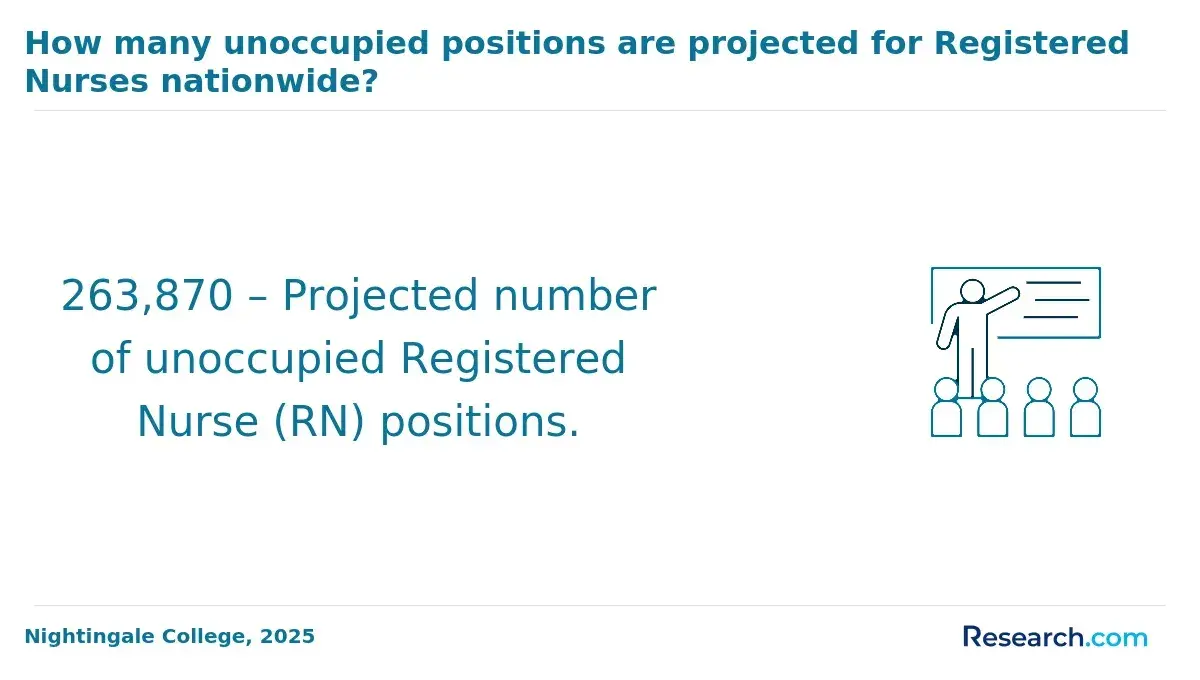
- Average Annual Salary: $61,250 to $129,400
- Job Outlook: 6%
- Estimated Yearly Employment: 203,200
Nursing remains among the most common college majors in America. A traditional BSN usually takes four years and combines general education, nursing science, clinical practice, community health, leadership, research literacy, and preparation for the NCLEX-RN. BSN graduates may administer medications, perform assessments, support diagnostic procedures, educate families, coordinate care, and help guide LPN/LVNs and CNAs depending on workplace policy and state rules.
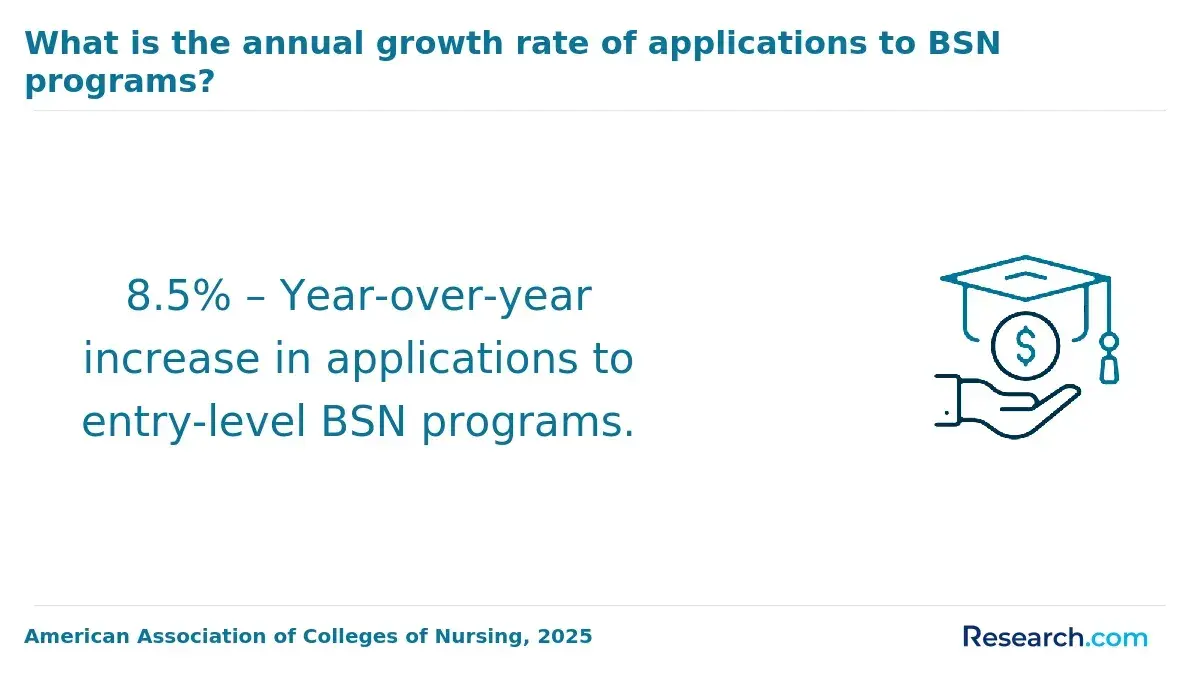
BSN enrollment has remained high since 2001 and dipped slightly in 2022, with a -1.4% change (AACN, 2023b). A BSN can be a strong starting point for students who want broader RN preparation, future graduate study, or employment in settings that prefer or require bachelor’s-prepared nurses. Students who already hold a non-nursing bachelor’s degree may also investigate accelerated BSN options, while licensed RNs may consider RN-to-BSN programs.
Master’s Degree in Nursing (MSN/MN)
- Time to Completion: Two to three years
- Average Annual Salary: $124,680
- Job Outlook: 40%
- Estimated Yearly Employment: 30,200 (including nurse anesthetists and nurse midwives)
An MSN or MN is commonly required for advanced practice registered nurse roles and may also support nursing education, informatics, leadership, or specialized clinical positions. The timeline can extend beyond coursework because students often need supervised clinical hours, national certification, and state APRN licensure. Applicants typically need an active RN license, and some programs require a BSN while others offer bridge pathways.
APRNs may diagnose conditions, prescribe or manage medications where permitted, develop treatment plans, collaborate with physicians and other clinicians, and mentor less experienced nurses. Nurse Practitioners (NPs) may specialize in geriatric, pediatric, psychiatric, family, acute care, or other populations. Students comparing advanced clinical careers may also want to review nurse practitioner vs. physician assistant salary and scope-of-practice differences.
Other advanced roles include Certified Registered Nurse Anesthetists (CRNAs), who administer anesthesia during procedures; Certified Nurse Midwives (CNMs), who provide pregnancy, birth, and reproductive health care; and Clinical Nurse Specialists (CNSs), who may consult, teach, improve systems of care, and contribute to research. These roles require careful attention to state rules, national certification requirements, and clinical placement expectations.

Doctorate in Nursing (PhD/DNP)
- Time to Completion: Three to five years
- Average Annual Salary: $77,440 to $165,240 (including nursing educators)
- Job Outlook: 40%
- Estimated Yearly Employment: 30,200 (including nurse anesthetists and nurse midwives)
A nursing doctorate can lengthen the overall education timeline, but it may be appropriate for nurses targeting advanced clinical leadership, executive administration, research, education, or systems-level practice. A Doctor of Philosophy in Nursing (PhD) is usually research-focused, while a Doctor of Nursing Practice (DNP) is generally practice-focused. Some schools offer BSN-to-doctorate or MSN-to-doctorate pathways that may streamline progression for qualified students.
Doctoral-prepared nurses may work as nurse administrators, clinical leaders, nurse educators, researchers, chief nursing officers, or advanced practice leaders depending on their background and credentialing. Nurses who want broader healthcare management preparation may also compare nursing doctoral routes with an online doctorate in healthcare administration. As of 2024, 5,120 students were enrolled in PhDs in Nursing while 46,890 were taking up DNPs (AACN, 2024).
Why Continuing Education Matters After Nursing School
Nursing education does not stop at graduation. Licensure renewal, employer training, specialty certification, new technology, changing treatment guidelines, and evolving patient needs make continuing education a normal part of a nursing career.
- Skill development and specialization. Continuing education helps nurses build expertise in areas such as critical care, oncology, pediatrics, geriatrics, mental health, informatics, or wound care.
- License and certification maintenance. Many nurses must complete continuing education credits to renew licenses or specialty credentials. Requirements vary by state, role, and certification body.
- Technology readiness. Electronic health records, telemedicine tools, clinical decision-support systems, remote monitoring, and new medical devices require ongoing training.
- Career growth. Additional education can support movement into charge nurse, preceptor, educator, manager, administrator, advanced practice, or quality-improvement roles.
- Better practice habits. Nurses who stay current with evidence-based care can reduce avoidable errors, strengthen care coordination, and respond more effectively to changing patient conditions.
How to Choose the Right Nursing Program Based on Your Career Goals
The best nursing program is the one that prepares you for the license, role, schedule, and long-term career you actually want. A short program may be efficient, but it is not ideal if your target role requires RN licensure, a BSN, graduate certification, or advanced practice authority.
| Your Goal | Program Type to Consider | Why It May Fit |
| Enter healthcare quickly and gain patient-care exposure | CNA training | Shortest route and useful for testing whether direct care is right for you |
| Become a licensed nurse sooner than an RN pathway | LPN/LVN program | Can lead to practical nursing roles and future bridge options |
| Become an RN as efficiently as possible | ADN or nursing diploma | Prepares for NCLEX-RN and entry-level registered nursing practice |
| Start with broader RN preparation | BSN | Often preferred for advancement, leadership preparation, and graduate study |
| Advance from LPN/LVN to RN | LPN to RN online programs | Builds on existing nursing education while supporting career progression |
| Move into advanced practice or specialization | MSN, bridge MSN, or doctorate | Supports APRN, leadership, education, or specialty roles when licensure and certification rules are met |
- Start with your current credential. A high school graduate, CNA, LPN/LVN, ADN-prepared RN, BSN-prepared RN, and non-nursing bachelor’s graduate may all need different pathways.
- Confirm the required license. Do not choose a program until you know whether your target job requires CNA certification, NCLEX-PN, NCLEX-RN, APRN certification, or state-specific approval.
- Check delivery format carefully. Online coursework can improve flexibility, but nursing programs still require clinical experiences, labs, simulations, or in-person assessments.
- Review specialization support. If you want pediatrics, mental health, critical care, anesthesia, midwifery, or school nursing, ask whether the program offers relevant clinical placements and faculty expertise.
- Verify accreditation and outcomes. Look for recognized nursing accreditation, state board approval, NCLEX preparation, graduation outcomes, clinical placement support, and student services.
- Ask about clinical scheduling. Clinical hours can determine whether a program is feasible for working adults, parents, commuters, or students in rural areas.
Why Financial Planning Can Affect Nursing School Success
Financial planning can determine whether a student is able to stay enrolled, reduce course loads, avoid unnecessary debt, or complete clinical requirements on time. Nursing school costs may include tuition, fees, uniforms, textbooks, testing, immunizations, background checks, equipment, transportation, childcare, reduced work hours, and licensure expenses. Looking at tuition alone can create a misleading picture of affordability.
Students should compare total program cost, financial aid, scholarships, employer tuition support, repayment obligations, and expected time away from work. For students seeking lower-cost entry points, researching options such as the cheapest ADN online programs can be useful, provided the program is properly approved, clinically viable in the student’s location, and aligned with licensure needs.
Questions to Ask Before Committing Financially
- What is the total estimated cost, including fees, supplies, testing, clinical travel, and licensure expenses?
- Can I complete clinical requirements near where I live, or will I need to travel?
- What happens financially if I fail or repeat a course?
- Are scholarships, grants, payment plans, or employer reimbursement available?
- Will credits transfer if I later move from LPN to RN, ADN to BSN, or BSN to MSN?
- Does the program’s schedule allow me to keep enough paid work hours to cover living costs?
How Do School Nurses Impact Student Health and Academic Success?
School nurses connect healthcare and education by helping students manage health needs that can interfere with attendance, attention, safety, and learning. They respond to illness and injury, support medication administration, monitor chronic conditions, communicate with families, coordinate with educators, and help schools maintain healthier environments.
Students with asthma, diabetes, allergies, mental health concerns, disabilities, or other ongoing needs may rely on school nursing support to participate safely in the school day. School nurses may also contribute to health education, vaccination awareness, prevention efforts, and referrals to community resources. Nurses interested in school-based work should understand how their role overlaps with counselors, social workers, and family-support professionals. For related student-support career requirements, Research.com provides a guide to school social worker requirements.
How Does an ADN to MSN Bridge Program Expand Specialized Career Opportunities?
An ADN to MSN bridge program is designed for registered nurses who want to move from associate-level preparation toward graduate-level nursing without completing a separate traditional BSN first. These programs can help qualified RNs pursue advanced clinical, leadership, education, or specialty pathways while recognizing prior nursing education and practice experience.
This route may be especially useful for ADN-prepared nurses who have a clear advanced-practice goal and want a more direct academic plan. For example, nurses interested in mental health may compare bridge pathways such as ADN to Psych NP options. Before enrolling, students should confirm admission requirements, bridge coursework, clinical placement expectations, state licensure rules, and whether the program supports the exact certification they plan to pursue.
How Can LPN to RN Online Bridge Programs Expedite Your Career Progression?
LPN to RN bridge programs can shorten the path to registered nursing by building on prior practical nursing coursework and clinical experience. Online or hybrid formats may make the classroom portion more flexible for working LPNs/LVNs, but students should expect in-person clinical requirements and licensure preparation.
These programs can be a smart choice for LPNs/LVNs who want broader RN responsibilities, stronger advancement potential, and eligibility for future BSN or MSN study. However, “online” does not mean fully remote in most cases. Before choosing a school, compare approval status, clinical locations, NCLEX-RN preparation, transfer-credit policies, and scheduling. For program comparisons, review Research.com’s guide to LPN to RN online bridge programs.
What Accreditation and Curriculum Factors Are Critical for Nursing Programs?
Accreditation and state approval are among the most important checks for any nursing program. A program may be convenient or inexpensive, but if it does not meet licensure, transfer, employer, or graduate-school expectations, it can create serious career barriers.
| Factor to Check | Why It Matters | What to Ask |
| State board approval | Determines whether the program prepares students for required licensure in a specific state | Is this program approved for the state where I plan to practice? |
| Nursing accreditation | Can affect employer acceptance, graduate admission, and perceived program quality | Which recognized nursing accreditor reviews the program? |
| Clinical placement model | Clinical access can affect graduation timing and licensure readiness | Does the school arrange placements, or must students find their own? |
| NCLEX or certification preparation | Graduation alone does not guarantee licensure | How does the curriculum prepare students for the required exam? |
| Curriculum relevance | Modern nursing requires evidence-based care, technology use, safety, communication, and population health | Does the program include simulation labs, EHR exposure, specialty options, and current clinical standards? |
| Advanced pathway alignment | Students planning graduate education need credits and prerequisites that support progression | Will this credential support BSN, MSN, NP, DNP, or other future study? |
Students considering advanced practice should apply the same scrutiny to graduate programs. Options such as affordable nurse practitioner online programs may be valuable when they combine recognized accreditation, strong clinical support, appropriate specialty preparation, and eligibility for certification and state practice requirements.
Are Affordable Advanced Nursing Doctorate Programs a Viable Pathway?
Affordable DNP programs can be worthwhile for nurses who need doctoral preparation for advanced clinical leadership, systems improvement, executive roles, or practice-focused scholarship. Cost matters, but it should not be the only deciding factor. Students should compare accreditation, faculty expertise, practicum support, project requirements, schedule flexibility, graduation expectations, and whether the program aligns with their specialty and state requirements.
Researching affordable online DNP programs can help nurses identify cost-conscious options, but students should still calculate total expenses and confirm that online delivery will not create clinical-placement obstacles.
Does Nursing Education Offer a Strong Return on Investment?
Nursing education can offer strong value when the credential matches the student’s career goal, local labor market, licensing requirements, and financial situation. ROI should include more than salary. Students should consider completion time, debt, lost wages, employer reimbursement, advancement potential, schedule stability, clinical burden, geographic mobility, and whether the credential supports future education.
Lower-cost pathways, including the most affordable online LPN programs, may help students enter nursing with less upfront cost. RN-to-BSN, bridge, MSN, and DNP programs may produce different returns depending on specialty, employer preferences, and state scope-of-practice rules. No program can guarantee salary or employment, so students should compare verified outcomes and speak with employers in their target region before enrolling.
Common Mistakes When Estimating Nursing School ROI
- Looking only at tuition. Fees, supplies, testing, transportation, clinical travel, childcare, and reduced work hours can change affordability.
- Ignoring accreditation or state approval. A program that does not meet licensure standards can delay or block career plans.
- Assuming online means no campus or clinical obligations. Many online nursing programs still require in-person labs, simulations, exams, or clinical rotations.
- Choosing the fastest program without checking fit. A shorter path may not support your intended specialty, employer preference, or future degree plan.
- Relying only on rankings. Rankings can help with discovery, but students should also examine outcomes, cost, clinical support, and licensure alignment.
- Treating salary ranges as promises. Pay varies by state, setting, shift, union status, experience, specialty, and overtime.
What Is the Easiest Nurse Practitioner Degree?
The “easiest” nurse practitioner degree is usually not the one with the lowest standards. It is the program that best matches your current credentials, specialty goal, clinical background, schedule, and state requirements. Some accelerated or bridge NP tracks reduce repeated coursework by recognizing prior RN experience, but accredited programs still require rigorous graduate study, clinical preparation, and certification readiness.
Students should be cautious with any program that sounds unusually fast or effortless. Instead, compare admission requirements, specialty tracks, clinical placement support, board certification preparation, and graduation expectations. For a focused comparison, see Research.com’s guide to the easiest nurse practitioner degree programs.
How Can You Balance Work, Family, and Nursing School?
Nursing school is difficult to complete without a realistic support plan. Clinical rotations may start early, run long, or change by site availability. Exams, skills checks, simulations, and care plans can also require more study time than students expect. Planning before enrollment is often the difference between persistence and burnout.
- Build a weekly schedule before classes begin. Block time for lectures, labs, clinicals, commuting, study, sleep, work, meals, and family responsibilities.
- Protect study time. Nursing content builds quickly, so short daily review sessions are often more effective than last-minute cramming.
- Use online flexibility carefully. An online nursing degree for non nurses may offer more scheduling control, but students still need firm deadlines and a clinical plan.
- Talk with your employer early. Ask about shift flexibility, tuition support, reduced hours during clinical periods, or schedule accommodations.
- Set expectations with family and roommates. Explain when you will be unavailable and identify who can help during exams, clinical weeks, or emergencies.
- Keep documents organized. Track immunizations, background checks, clinical forms, certifications, syllabi, assignments, and exam dates in one system.
- Use school support services. Tutoring, skills labs, faculty office hours, counseling, disability services, and peer study groups can prevent small problems from becoming course failures.
- Take health seriously. Sleep, food, hydration, movement, and mental health care are not optional extras in a demanding clinical program.
What Are the Benefits of an RN to BSN Online Fast-Track Program?
RN to BSN fast-track programs are designed for licensed registered nurses who want to complete bachelor’s-level nursing education more efficiently. These programs typically build on existing RN knowledge and focus on areas such as leadership, evidence-based practice, community health, quality improvement, and care coordination.
This option can be useful for working RNs who want broader career mobility, graduate-school preparation, or employer-preferred credentials without pausing their careers. Students should still review workload, transfer credits, accreditation, total cost, practicum requirements, and employer reimbursement. For a detailed comparison, explore RN to BSN online fast-track programs.
Practical Steps Before You Enroll in Nursing School
- Choose the role first. Decide whether your target is CNA, LPN/LVN, RN, APRN, educator, administrator, researcher, or another nursing-related role.
- Check your state board of nursing. Confirm that the program meets requirements in the state where you plan to become licensed.
- Verify accreditation. Ask the school to identify its nursing accreditor and confirm the status directly when possible.
- Map the full timeline. Include prerequisites, application deadlines, waitlists, clinical placement, exams, licensure processing, and certification requirements.
- Calculate total cost. Include tuition, fees, books, uniforms, testing, health requirements, transportation, childcare, and lost wages.
- Ask about clinical placement. Find out who secures placements, where they occur, what hours are required, and what happens if placements are delayed.
- Review student outcomes. Ask about graduation rates, licensure exam preparation, employment support, and student services.
- Plan your next step. If you start with CNA, LPN/LVN, or ADN, make sure the credits and credential can support future bridge or degree-completion options.
Key Insights
- Nursing school length depends on the credential. CNA training may take 4-12 weeks, LPN/LVN programs 12-18 months, ADN programs 2-3 years, BSN programs 4 years, MSN programs 2-3 years, and nursing doctorates 3-5 years.
- The fastest route is not always the best route. Choose based on the license, scope of practice, employer expectations, and future education you need.
- Clinical placement can affect graduation timing. Even flexible or online programs may require in-person clinical hours, labs, simulations, or exams.
- Higher education can support broader opportunities. BSN, MSN, and doctoral pathways may lead to leadership, advanced practice, teaching, research, or specialized roles.
- Accreditation and state approval are non-negotiable. A program must align with licensure and career requirements in the state where you plan to practice.
- ROI requires a full-cost view. Tuition is only one part of the investment; students should also consider fees, supplies, transportation, lost work time, debt, and advancement potential.
- Bridge programs can shorten progression. LPN-to-RN, RN-to-BSN, ADN-to-MSN, and BSN/MSN-to-doctorate options may help qualified nurses advance without starting over.
- Continuing education is part of the profession. Nurses must keep pace with licensure rules, technology, evidence-based practice, specialty standards, and changing patient needs.
References
- NCSBN. (2025). 2024 National Nursing Workforce Study. https://www.ncsbn.org/workforce
- AACN. (2025). 2024-2025 Enrollment and Graduations in Baccalaureate and Graduate Programs in Nursing. https://www.aacnnursing.org/news-data/all-news/schools-of-nursing-enrollment-increases
- American Nurses Association. (2024). Nursing data report 2024. https://www.nursingdata.org/reports/2024
- NurseJournal. (2025). The Top 20 Highest-Paying Nursing Specialties. https://nursejournal.org/articles/best-nursing-specialities-for-the-future/
- AACN. (2025). 2024-2025 Enrollment and Graduations in Baccalaureate and Graduate Programs. https://www.aacnnursing.org
- College Ave. (2025). BSN Nurse Salary: What Graduates Can Expect to Earn. https://www.collegeave.com
- Nightingale College. (2025). Nursing Shortage: 2026 US Statistics. https://nightingale.edu
- Precedence Research. (2025). Healthcare Staffing Market Size to Hit USD 82.47 Bn. https://www.precedenceresearch.com/healthcare-staffing-market
- U.S. Bureau of Labor Statistics. (2024). Occupational Outlook Handbook: Licensed practical and licensed vocational nurses. https://www.bls.gov/ooh/healthcare/licensed-practical-and-vocational-nurses.htm
Other Things You Should Know About Nursing School
An LPN/LVN program usually takes 12 to 18 months to complete. After finishing the program, you must pass the NCLEX-PN exam to become licensed.
An ADN typically takes two to three years to complete. Graduates must pass the NCLEX-RN exam to become licensed registered nurses.
A Master of Science in Nursing (MSN) degree typically takes 1.5 to 2 years to complete for full-time students. This timeframe can vary based on specialization and whether the program is pursued part-time. Some programs offer courses online or hybrid formats, affecting duration.
Earning a Bachelor's Degree in Nursing (BSN) typically takes 4 years of full-time study. This includes a mix of classroom instruction and clinical practice. Accelerated programs may be available for those who already have a prior degree, reducing the time to about 12-18 months.
Yes, there are accelerated programs such as accelerated BSN or MSN programs that can shorten the time to degree completion. These programs are intensive and often require full-time commitment.
For RN licensure, the program must be approved by the state board of nursing and accredited by a recognized nursing accreditor such as the ACEN or CCNE. Without that approval, graduates may be blocked from taking the NCLEX-RN or meeting state licensing rules.
In 2027, becoming a Registered Nurse (RN) can take different times depending on the pathway. An Associate's Degree in Nursing (ADN) typically takes 2 to 3 years, while a Bachelor’s Degree in Nursing (BSN) generally requires 4 years of study. Accelerated BSN programs may range from 12 to 18 months for those who already hold a degree in another field.


