
2027 How to Become a Medical Biller or Coder – Salary & Requirements

Co-Founder and Chief Data Scientist
Becoming a medical biller or coder is a practical way to enter healthcare without providing direct patient care. The role centers on medical records, insurance claims, coding systems, reimbursement rules, and accurate documentation. For people who are detail-oriented, comfortable with computers, and interested in remote healthcare work, this career can be worth exploring.
The field matters now because healthcare organizations rely heavily on accurate digital records and timely claims processing. According to AAPC, 63% of medical coders work from home (AAPC, 2024), making the profession especially relevant for career changers and students comparing flexible healthcare jobs. Demand for training has also increased, including online medical billing and coding certificate programs.
This guide explains how to become a medical biller or coder, what the job involves, what education and certifications employers may expect, which skills matter most, how remote work affects the role, and how to evaluate whether this career path fits your goals.
How to Become a Medical Biller or Coder Table of Contents
- What is a medical biller or coder?
- What does a medical biller or coder do?
- How to Become a Medical Coder: Requirements
- How to Become a Medical Coder: Essential Skills
- Strategies for Professional Growth in Medical Billing and Coding
- Is medical billing and coding a viable career option?
- How is automation reshaping medical billing and coding?
- What are the benefits and challenges of remote work for medical coders?
- How can professional networking boost career advancement in medical billing and coding?
- How Can an Accelerated Online Bachelor's Degree in Healthcare Administration Boost Your Billing and Coding Career?
- What Is the Impact of Continuous Learning on Billing and Coding Expertise?
- Advanced Education Opportunities in Medical Billing and Coding
- How do medical billing and coding certifications impact career growth?
- How Can Additional Clinical Education Benefit Billing and Coding Professionals?
- Can Medical Billing and Coding Professionals Benefit from Pharmacy Billing Knowledge?
Quick Answer: How Do You Become a Medical Biller or Coder?
To become a medical biller or coder, you generally need a high school diploma or GED, training in medical terminology and coding systems, and, for many jobs, a professional certification. Some entry-level roles may not require a degree, but completing a certificate, associate degree, or bachelor’s degree can improve your competitiveness. Employers often value candidates who understand ICD-10, CPT, HCPCS, insurance claims, healthcare compliance, and electronic health records.
| Step | What to Do | Why It Matters |
| 1. Meet the basic education requirement | Earn a high school diploma or GED. | This is the minimum starting point for most training programs and entry-level roles. |
| 2. Complete training | Choose a certificate, diploma, associate degree, or related bachelor’s pathway. | Training builds knowledge of medical terminology, billing rules, coding systems, and documentation. |
| 3. Learn major coding systems | Study ICD-10, CPT, and HCPCS. | These code sets are central to translating healthcare services into billable records. |
| 4. Consider certification | Prepare for a credential such as CPC, CCS, or CBCS. | Certification can strengthen job applications and may support higher earning potential. |
| 5. Gain experience | Look for internships, externships, entry-level billing roles, or healthcare administrative work. | Hands-on experience helps you apply coding rules, resolve claim issues, and work with real records. |
| 6. Keep learning | Track coding updates, payer rules, compliance changes, and software tools. | Billing and coding rules change, so ongoing learning is part of the job. |
What is a medical biller or coder?
A medical biller or coder is a healthcare administrative professional who helps turn patient care into accurate records, claims, and payment documentation. The job is not the same as working as a cashier or simply sending invoices. It requires knowledge of medical language, insurance rules, patient records, healthcare software, and standardized coding systems.
Medical coders review clinical documentation and assign standardized codes to diagnoses, procedures, services, medications, supplies, and equipment. Medical billers use those coded records to prepare claims, communicate with insurers, correct errors, and support payment collection. In smaller organizations, one person may handle both billing and coding duties.
The role is often a good fit for people who like structured work, computer-based tasks, healthcare documentation, and problem-solving. It is also different from hands-on clinical jobs. If you are comparing administrative and clinical healthcare pathways, it may help to review related roles such as what a phlebotomist does.
Medical billers and coders may work for hospitals, physicians’ offices, insurance companies, billing services, outpatient centers, nursing facilities, or remote revenue cycle teams. Their work supports reimbursement accuracy and helps reduce billing errors that can affect both providers and patients.
What does a medical biller or coder do?
Medical billers and coders handle different parts of the same revenue cycle. Coders focus on translating clinical information into standardized codes. Billers focus on turning coded services into claims, invoices, follow-ups, and payment records. Because the work overlaps, many job postings combine both responsibilities.
Medical coders review clinical notes, diagnoses, procedures, medications, supplies, and services. They then assign the correct codes using accepted systems. This work depends on accurate documentation and a clear understanding of how healthcare data is standardized across healthcare systems.
Medical billers prepare and submit claims to insurance companies, post payments, identify claim denials, contact payers, verify patient balances, and help resolve billing questions. They may communicate with patients, providers, insurers, and internal revenue cycle teams.
| Role | Main Focus | Typical Tasks |
| Medical coder | Clinical documentation and code assignment | Reviews records, assigns ICD-10, CPT, and HCPCS codes, checks documentation accuracy, and flags inconsistencies. |
| Medical biller | Claims and payment processing | Creates claims, submits bills, follows up on denials, posts payments, and communicates with insurers and patients. |
| Billing and coding specialist | Combined administrative revenue cycle support | Handles both coding and billing tasks, especially in smaller practices or outsourced billing companies. |
Several related healthcare jobs use overlapping administrative, technical, or clinical skills. These occupations can also help you understand where medical billing and coding fits within the broader healthcare workforce.
| Occupation | Job Duties |
| Medical and Health Services Managers | Oversee, organize, and coordinate the business operations of healthcare providers. |
| Health Information Technologists and Medical Registrars | Support computerized healthcare systems and evaluate clinical information. |
| Information Clerks | Handle routine office duties, maintain files, collect information, and assist customers. |
| Medical Assistants | Perform administrative and clinical duties in hospitals, physician offices, and other healthcare settings. |
| Pharmacy Technicians | Assist pharmacists with dispensing prescription medications to patients or healthcare professionals. |
How to Become a Medical Coder or Biller: Requirements
The path into medical billing and coding is more flexible than many healthcare careers. You do not usually need a license, and you do not need years of clinical training to begin. However, employers still expect accuracy, confidentiality, medical terminology knowledge, coding competence, and familiarity with billing rules.
Unlike advanced clinical pathways, such as becoming a psychiatric nurse practitioner, medical billing and coding can often be entered through shorter training options. The right choice depends on your budget, timeline, prior education, and career goals.
Education
A high school diploma or GED is commonly enough to begin training for medical billing and coding. From there, you can choose a short certificate, a diploma program, an associate degree, or a bachelor’s degree in a related healthcare administration or health information field.
A certificate may be the fastest option if your goal is to qualify for entry-level work or prepare for a certification exam. An associate degree can provide broader preparation in healthcare systems, anatomy, coding, billing, and office technology. A bachelor’s degree may be useful if you eventually want to move into management, compliance, health information, or revenue cycle leadership.
Students comparing healthcare education options should not assume that the longest program is always the best choice. For example, clinical degree pathways such as the common courses in RN degree programs prepare students for very different responsibilities than billing and coding programs. Review curriculum carefully before enrolling.
| Education Option | Best For | Important Considerations |
| Certificate or diploma | Students who want focused career training in a shorter format. | Check whether the program prepares you for recognized certification exams. |
| Associate degree | Students who want broader healthcare administration and health information preparation. | May take longer but can provide more general education and transferable coursework. |
| Bachelor’s degree | Professionals aiming for future supervisory, compliance, or healthcare administration roles. | Usually more time-intensive and should be evaluated against your long-term career goals. |
| Related healthcare administration training | Coders who want to move beyond entry-level billing and coding. | Can support advancement into revenue cycle, office management, or compliance roles. |
If you are comparing training routes, Research.com’s guide to online medical coding and billing degree programs can help you understand available formats and program features.
Certifications
Certification is one of the most important ways to strengthen your profile as a medical biller or coder. It is not always required for every position, but many employers prefer certified applicants because certification signals that you have studied coding systems, billing rules, documentation standards, and compliance expectations.
In an AAPC survey, certified medical coders earned 27% more than coders without certification (AAPC, 2024). That does not guarantee a specific salary for every certified worker, but it does show why credentials can matter in hiring and advancement decisions.
Certification exams can be demanding, and some may last nearly six hours. Before paying for an exam or prep course, confirm which credential matches your target job. Common options include credentials focused on professional coding, hospital coding, billing and coding, auditing, compliance, or specialty areas.
Work Experience
Education and certification help you build credibility, but employers also value practical experience. Experience teaches you how claims are actually processed, how denials are handled, how documentation problems are resolved, and how billing systems operate in real healthcare settings.
Internships and externships are often built into training programs. These opportunities can help you practice coding, billing, data entry, claim review, and compliance procedures under supervision. If you are changing careers, related experience in healthcare customer service, insurance verification, front-desk medical office work, or records management can also be useful.
The largest employers of medical billers or coders are hospitals (28%), offices of physicians (19%), professional, scientific, and technical services (11%), administrative and support services (7%), and nursing care facilities (5%) (U.S. Bureau of Labor Statistics, 2025). These settings differ in pace, specialization, software systems, and remote-work options, so consider where you would prefer to work before choosing a training program.
How to Become a Medical Coder or Biller: Essential Skills
Medical billing and coding requires more than memorizing codes. Strong professionals combine technical accuracy, healthcare knowledge, compliance awareness, communication skills, and persistence. The best preparation programs teach both the coding rules and the judgment needed to apply them correctly.
Technical Skills and Proficiency in Coding Systems
Medical billers and coders spend much of their day using computers, electronic records, billing platforms, coding references, claim systems, spreadsheets, and payer portals. Comfort with software is essential, especially because 96% of non-federal acute care hospitals and nearly 80% of office-based physicians have implemented a certified EHR to manage patient data (The Office of the National Coordinator for Health Information Technology, 2024).
The main coding systems you should understand include ICD-10, CPT, and HCPCS. These systems help standardize diagnoses, procedures, supplies, and healthcare services so providers, insurers, and regulators can interpret records consistently.
ICD-10, the International Classification of Diseases, 10th Revision, is used to classify diseases and health conditions. ICD-10 codes are alphanumeric and have been in use since 1977.
CPT, or Current Procedural Terminology, is used to identify services and procedures. CPT codes are five-character alphanumeric codes that usually include five numbers, although some include four numbers and one letter depending on the service.
HCPCS, or the Healthcare Common Procedure Coding System, is based on CPT and is used for services, supplies, and procedures not fully covered by CPT. HCPCS codes are alphanumeric and include a letter followed by four numbers.
Strong Knowledge of Anatomy, Physiology, and Disease Processes
Coders do not diagnose patients, but they do need enough clinical understanding to interpret documentation accurately. Anatomy, physiology, and disease-process knowledge help coders recognize whether a diagnosis, procedure, body system, or treatment detail matches the record.
For example, if a code describes a procedure that does not align with the documented body part or condition, a trained coder may identify the mismatch before the claim is submitted. Catching errors early can reduce denials, delays, and compliance risks.
This knowledge also improves communication with providers. When coders understand clinical language, they can ask clearer documentation questions and support more accurate billing.
Familiarity with Healthcare Regulations and Insurance Guidelines
Medical billing and coding professionals work within a regulated environment. They must understand documentation standards, payer rules, privacy expectations, claim requirements, and compliance practices. Mistakes can lead to denied claims, delayed payments, patient billing problems, audits, penalties, or reputational harm for healthcare organizations.
Because rules change, successful coders keep learning after they complete school or earn a credential. Certification exams also commonly test knowledge of coding guidelines, insurance requirements, and healthcare compliance, making this area important for both entry and advancement.
Effective Communication and Interpersonal Skills
Billing and coding may appear to be a solitary, computer-based job, but communication is central to the role. Billers and coders may need to contact providers about unclear documentation, communicate with payers about claim denials, explain billing issues to patients, or coordinate with revenue cycle teams.
Clear communication reduces misunderstandings and supports accurate claims. It also helps when resolving difficult situations, such as denied claims, missing documentation, patient balance questions, or conflicting payer guidance.
Empathy matters as well. Patients may be stressed by medical bills, and providers may be busy or frustrated by documentation requests. Professionalism, patience, and tact can make the work smoother and more effective.
Strategies for Professional Growth in Medical Billing and Coding
Medical billing and coding can start as an entry-level administrative healthcare role, but it can also lead to specialized and supervisory opportunities. Growth usually depends on certification, accuracy, experience, technology skills, and the ability to handle more complex claims or compliance responsibilities.
- Track coding and payer updates: Coding rules, payer requirements, and documentation standards change. Webinars, workshops, professional updates, and employer training can help you stay current.
- Build specialty knowledge: Experience in areas such as medical auditing, risk adjustment, compliance, surgery coding, hospital coding, or revenue cycle management can make you more competitive.
- Improve technology skills: EHR systems, claims platforms, coding tools, and automation-assisted workflows are now part of the job. Strong software skills can improve speed and accuracy.
- Consider advanced education when it fits your goals: Professionals aiming for management may consider healthcare administration or related graduate study. For example, one-year master’s programs online may appeal to working professionals who need a faster format.
- Join professional communities: Associations, coding forums, local chapters, and mentorship groups can help you learn from experienced professionals and discover job leads.
Is medical billing and coding a viable career option?
Medical billing and coding can be a viable career for people who want healthcare work that is structured, detail-heavy, and often computer-based. It may be especially appealing if you prefer administrative problem-solving over direct patient care, or if you want a role that can sometimes be done remotely.
However, it is not the right fit for everyone. The work can be repetitive, accuracy standards are high, rules change frequently, and remote roles may require proven experience. Before enrolling in a program, compare the career’s advantages and trade-offs in Research.com’s guide to the pros and cons of being a medical biller and coder.
| This Career May Fit You If... | You May Want Another Path If... |
| You are detail-oriented and comfortable checking records carefully. | You prefer hands-on clinical care throughout the day. |
| You like healthcare but do not want to perform procedures on patients. | You dislike administrative rules, documentation, or repetitive review work. |
| You can work independently and meet accuracy standards. | You want a job with constant face-to-face interaction. |
| You are willing to keep up with coding, payer, and compliance changes. | You want training that ends permanently after graduation. |
| You are interested in remote or hybrid administrative healthcare roles. | You assume every entry-level coding job will be remote immediately. |
How is automation reshaping medical billing and coding?
Automation and artificial intelligence are changing the daily workflow of medical billing and coding. Software can now assist with code suggestions, claim edits, documentation checks, denial prediction, and error detection. These tools may reduce some repetitive tasks, but they do not remove the need for trained professionals who can verify accuracy, interpret documentation, apply guidelines, and identify compliance risks.
The strongest job candidates will likely be those who can work with technology rather than compete against it. Employers may increasingly value coders who understand automated coding tools, EHR systems, data quality, auditing, and regulatory compliance.
If you are comparing healthcare roles affected by technology and demand, Research.com’s guide to high-paying medical jobs can provide broader career context.
What are the benefits and challenges of remote work for medical coders?
Remote work is one reason medical coding attracts career changers. AAPC reported that 63% of medical coders work from home (AAPC, 2024). Still, remote coding is not automatically easy to obtain, especially for beginners. Many employers prefer remote coders who already have experience, certification, and proven accuracy.
| Remote Work Factor | Benefit | Challenge |
| Schedule and location | Remote work can reduce commuting and may support better work-life balance. | Some positions still require fixed hours, productivity tracking, or occasional onsite work. |
| Job search flexibility | Coders may be able to apply to employers outside their local area. | Remote roles can attract many applicants, making competition stronger. |
| Work environment | A quiet home office can improve concentration for record review and coding. | You need a secure, private, ergonomic workspace and reliable technology. |
| Independence | Experienced coders may appreciate focused, self-directed work. | New coders may find it harder to get quick feedback or mentoring remotely. |
| Communication | Digital tools can streamline payer, provider, and team communication. | Delayed responses can slow down documentation clarification or denial resolution. |
To prepare for remote work, build strong time-management habits, learn common EHR and billing platforms, understand privacy requirements, and keep examples of your accuracy, certification, and productivity when applying.
Medical Biller or Coder Salary and Job Outlook
The employment outlook for medical records specialists, including many billing and coding roles, is positive. The U.S. Bureau of Labor Statistics projects job growth of 7% from 2024 to 2034 (BLS, 2025). Experts also estimate that about 3,200 openings for medical billers or coders will be added each year, on average, over the decade.
Demand is connected to several healthcare trends, including an aging population, increased use of healthcare services, and the continued need to convert clinical information into standardized codes for reimbursement and recordkeeping. Similar demand drivers affect other healthcare careers, including some of the reasons people consider becoming a surgical technologist.
Salary offers vary by employer, location, credential, specialty, work setting, and experience level. Certification may improve earning potential, and mid-level or specialized coders may earn more than entry-level workers. However, no program or credential can guarantee a specific salary.
| Factor | How It Can Affect Career Outcomes |
| Certification | May help demonstrate coding competence and support advancement opportunities. |
| Experience | More experience can lead to complex coding, auditing, denial management, or supervisory responsibilities. |
| Work setting | Hospitals, physician offices, billing companies, and insurers may have different expectations and pay structures. |
| Specialty knowledge | Expertise in a specialty area can make a coder more valuable for certain employers. |
| Technology skills | Comfort with EHR systems, coding software, and claims platforms can improve productivity. |
How can professional networking boost career advancement in medical billing and coding?
Networking can help medical billers and coders learn about job openings, certification strategies, payer changes, coding updates, and specialty opportunities. Professional associations, online coding communities, alumni groups, employer events, and mentorship programs can all provide useful connections.
Networking is especially valuable for new coders who need practical advice on certification exams, entry-level job searches, remote-work expectations, and resume positioning. It can also expose you to adjacent healthcare roles. For example, a professional exploring patient-facing administrative experience might compare billing and coding with the quickest medical assistant program options.
How Can an Accelerated Online Bachelor's Degree in Healthcare Administration Boost Your Billing and Coding Career?
An accelerated online bachelor’s degree in healthcare administration may help billing and coding professionals move beyond entry-level technical work. The degree can add knowledge in healthcare operations, leadership, finance, policy, compliance, and organizational management.
This path may make sense if your long-term goal is to become a revenue cycle supervisor, medical office manager, compliance coordinator, or healthcare administrator. It may not be necessary if your immediate goal is a coding-only position. If you are considering a management-focused pathway, compare options in Research.com’s guide to the best accelerated online bachelor’s degree programs in healthcare administration.
What Is the Impact of Continuous Learning on Billing and Coding Expertise?
Continuous learning is essential in billing and coding because code sets, payer policies, documentation expectations, privacy rules, and software tools change over time. Professionals who stop learning may struggle with denials, compliance issues, outdated coding practices, or reduced competitiveness.
Ongoing education can include certification maintenance, employer training, specialty workshops, webinars, compliance updates, software training, and advanced coursework. Some professionals also build clinical knowledge through related programs. For example, exploring the best accelerated PharmD programs online can help illustrate how medication knowledge connects to broader healthcare documentation and billing systems, even though pharmacy education is a separate career path.
Advanced Education Opportunities in Medical Billing and Coding
Advanced education is not required for every medical billing and coding job, but it can support career mobility. If you want to move into leadership, healthcare administration, compliance, auditing, health information management, or practice operations, additional education may be worth considering.
Why Consider a Master’s Degree?
A master’s degree can help professionals develop leadership, policy, finance, analytics, and management skills that go beyond technical coding. This may be useful for roles such as medical office manager, healthcare administrator, compliance officer, or revenue cycle leader.
Flexible Learning Options
Working adults often compare online and accelerated options because they need to balance employment, family responsibilities, and school. A program such as a one-year online master’s in healthcare administration may appeal to professionals who want graduate-level preparation in a shorter format.
Career Advancement and Increased Earning Potential
Advanced education may expand eligibility for management or specialized roles, but it should be evaluated carefully. Consider the cost, schedule, accreditation, curriculum, employer expectations, and whether the degree aligns with the roles you actually want.
How do medical billing and coding certifications impact career growth?
Certifications can improve career growth by validating your knowledge of medical terminology, coding systems, claims processes, and healthcare rules. Recognized credentials such as Certified Professional Coder (CPC), Certified Coding Specialist (CCS), or Certified Billing and Coding Specialist (CBCS) may help you stand out when applying for jobs.
Certification can also support advancement into roles such as coding auditor, compliance specialist, denial management specialist, or specialty coder. The best credential depends on whether you want to work in physician-based coding, facility coding, billing, compliance, auditing, or another specialty.
Before choosing a course, compare cost, exam preparation, student support, curriculum, and outcomes. Research.com’s guide to affordable online medical billing and coding courses can help you evaluate lower-cost preparation options.
How Can Additional Clinical Education Benefit Billing and Coding Professionals?
Additional clinical education can make a biller or coder better at reading complex records, interpreting provider documentation, and asking accurate clarification questions. A stronger understanding of therapies, diagnoses, procedures, and medications can also improve code accuracy and help resolve claim discrepancies.
This does not mean every coder needs a clinical degree. However, professionals who work in specialty coding, auditing, inpatient coding, or complex claims may benefit from deeper clinical knowledge. If you are researching advanced clinical education for a separate career path, you can compare options such as online PharmD programs.
Can Medical Billing and Coding Professionals Benefit from Pharmacy Billing Knowledge?
Pharmacy billing knowledge can be useful for billing and coding professionals who work with medication-related claims, infusion services, specialty practices, outpatient care, or interdisciplinary healthcare billing. Understanding drug pricing structures, medication claims, pharmacy operations, and payer rules can help reduce billing errors and improve reimbursement accuracy.
This knowledge may also help professionals evaluate adjacent career interests. If you are considering a deeper pharmacy pathway, Research.com’s guide on how to become a pharmacist can help you understand that separate career route.
How to Choose a Medical Billing and Coding Program
Choosing the right program is one of the most important decisions in this career path. A program should prepare you for real billing and coding work, not just introduce vocabulary. It should also match your schedule, budget, certification goals, and preferred work setting.
| Question to Ask | Why It Matters |
| Is the school properly accredited or recognized? | Accreditation and institutional credibility can affect transfer options, financial aid eligibility, and employer confidence. |
| Does the curriculum cover ICD-10, CPT, HCPCS, medical terminology, anatomy, billing, insurance, and compliance? | A narrow curriculum may leave gaps that affect certification preparation and job readiness. |
| Which certification exam does the program prepare students for? | Different credentials match different jobs, so the program should align with your target role. |
| Are externships, simulations, or real-world billing exercises included? | Practical experience helps bridge the gap between coursework and employer expectations. |
| What student support is available? | Tutoring, career services, exam prep, and job-search support can be important for beginners. |
| What is the total cost? | Look beyond tuition and include books, exam fees, technology, software, and retake fees. |
| Can credits transfer to a higher degree? | This matters if you may later pursue an associate, bachelor’s, or healthcare administration degree. |
Common Mistakes to Avoid
Many students enter medical billing and coding with realistic goals, but some make avoidable mistakes when choosing programs or planning their careers. Avoiding these issues can save time, money, and frustration.
| Mistake | Better Approach |
| Choosing a program only because it is fast. | Make sure it covers the coding systems, billing processes, and certification preparation you need. |
| Looking only at tuition. | Calculate total cost, including books, exam fees, software, technology, and supplies. |
| Assuming certification is optional for every job. | Review job postings in your area or desired remote market to see which credentials employers request. |
| Expecting immediate remote work with no experience. | Build accuracy, credentials, and practical experience to compete for remote roles. |
| Ignoring accreditation and school reputation. | Verify institutional quality before enrolling or using financial aid. |
| Assuming salary outcomes are guaranteed. | Use salary data as context, but evaluate your location, employer type, credential, and experience level. |
| Stopping education after the first course. | Plan for ongoing updates in coding guidelines, payer policies, compliance, and technology. |
Start Your Career as a Medical Biller or Coder
Medical billing and coding can be a strong entry point into healthcare for people who want administrative, records-based, and technology-supported work. You can work in large health systems, physician practices, billing companies, insurers, nursing care facilities, or remote revenue cycle teams.
To improve your chances of success, start with the right training, prepare for relevant certification, gain practical experience, and keep your technical skills current. Some professionals later move into office administration or management; if that interests you, compare online medical office administration certificate programs.
Do not choose a program based only on speed or marketing claims. Review curriculum, certification alignment, cost, support services, transfer policies, and student outcomes when available. A reputable program should help you understand coding systems, billing workflows, compliance, medical terminology, and the realities of the job.
If you are exploring broader healthcare education, you may also want to compare public health and nursing pathways, including an online doctorate in public health or options connected to what you can do with a BSN degree, including nurse educator salary and career paths.
Key Insights
- Medical billing and coding is an administrative healthcare pathway: The work focuses on records, codes, claims, reimbursement, insurance rules, and documentation accuracy rather than direct patient care.
- The entry barrier is relatively flexible: A high school diploma or GED can be enough to begin training, but certificates, degrees, and certifications can improve job readiness.
- Certification can matter: AAPC reported that certified medical coders earn 27% more than non-certified coders (AAPC, 2024), though individual salaries depend on employer, location, experience, and role.
- Remote work is common but competitive: AAPC reported that 63% of medical coders work from home (AAPC, 2024), but many remote employers prefer applicants with certification and experience.
- Technical skills are essential: Coders should understand ICD-10, CPT, HCPCS, EHR systems, payer rules, compliance, anatomy, physiology, and medical terminology.
- The job outlook is positive: The U.S. Bureau of Labor Statistics projects 7% growth for medical records specialists from 2024 to 2034, with about 3,200 openings for medical billers or coders added each year, on average, over the decade.
- Program choice affects outcomes: Before enrolling, check accreditation, curriculum, certification preparation, total cost, student support, and whether credits can transfer to future healthcare administration study.
Resources:
- AAPC. (2024). 2024 Medical Coding Salary Survey Report. https://www.aapc.com/resources/research/medical-coding-salary-survey/
- AMBCI. (2025). How Much Do Medical Coder and Billers Make? https://ambci.org/medical-billing-and-coding-certification-blog/how-much-do-medical-coder-and-billers-make
- Delta Technical College. (2025). Medical Coding Enrollment and Outcomes 2024-2025. https://www.deltatechnicalcollege.com/programs/medical-coding-training/enrollment-and-outcomes/
- Office of the National Coordinator for Health Information Technology. (2024). Adoption of Health Information Technology among Non-Federal Acute Care Hospitals. HealthIT.gov. https://www.healthit.gov/data/quickstats/adoption-health-information-technology-among-non-federal-acute-care-hospitals
- U.S. Bureau of Labor Statistics. (2025). Health information technologists and medical registrars. https://www.bls.gov/ooh/healthcare/health-information-technologists-and-medical-registrars.htm
- U.S. Bureau of Labor Statistics. (2025). Occupational Outlook Handbook: Healthcare. https://www.bls.gov/ooh/healthcare/
- U.S. Bureau of Labor Statistics. (2025). Medical Records Specialists: Occupational Outlook Handbook. https://www.bls.gov/ooh/healthcare/medical-records-and-health-information-technicians.htm#tab-3
Other Things You Should Know About How to Become a Medical Biller or Coder
To become a medical coder or biller, a high school diploma is essential, but most employers prefer candidates with postsecondary certificates or associate degrees in medical billing and coding. These programs typically cover subjects like anatomy, medical terminology, and CPT/ICD coding systems.
While certifications are not mandatory, they are highly recommended. Certified medical coders earn 27% more than those without certification and have better job opportunities. Certification demonstrates expertise in complex billing procedures and government-mandated coding requirements.
Certified medical billers and coders must complete 36 hours of continuing education every two years to maintain credentials in 2027. These hours should include topics like medical coding updates and compliance, ensuring they stay current with industry standards and practices.
Medical billers and coders should know ICD-10-CM, CPT, and HCPCS Level II. ICD-10-CM is used for diagnoses, CPT for procedures, and HCPCS Level II for supplies and services not covered by CPT. Accuracy with these systems is essential for clean claims and proper reimbursement.
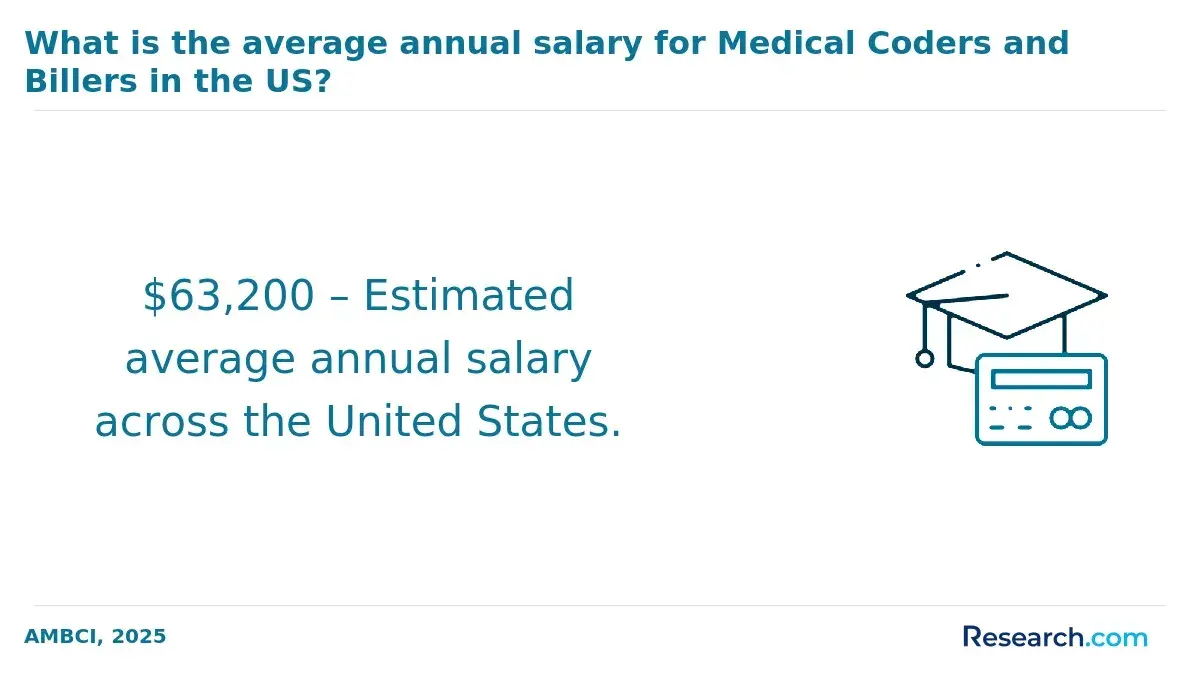
In 2027, the average salary for medical billers and coders is projected to be around $48,000 annually, according to the Bureau of Labor Statistics. Salaries can vary based on factors like experience, location, and certification level, with entry-level positions starting lower and more specialized roles earning higher amounts.


