
2027 CPC vs CCS Certification: Differences, Cost and Salary Prospects

Co-Founder and Chief Data Scientist
Deciding between CPC and CCS certification is really a decision about where you want to work in medical coding. CPC is built around physician, clinic, and outpatient coding. CCS is more closely tied to hospital, inpatient, and complex health information coding. Both can improve employability, but they serve different career stages, exam expectations, and job environments.
This guide is for high school graduates, career changers, medical assistants, billing staff, and early-career coders trying to choose the credential that best fits their timeline, budget, and long-term goals. You will learn how CPC and CCS differ, which one is more beginner-friendly, what each exam covers, how much candidates typically spend, what jobs each credential supports, and how to avoid choosing a certification that does not match your target role.
Medical records specialist roles are projected to grow 9% from 2023 to 2033. A high school diploma may qualify some applicants for entry-level healthcare administrative work, but many coding roles increasingly favor candidates who have formal training in anatomy, medical terminology, coding systems, and compliance. The right credential can help you show employers that you are prepared to code accurately and work within reimbursement rules.
Quick Answer: CPC vs CCS
Choose CPC if you are new to medical coding or want to work in outpatient settings such as physician offices, clinics, or ambulatory care. Choose CCS if you already have coding experience and want to work with hospital, inpatient, or more complex medical records. CPC is usually the faster and more accessible starting credential, while CCS is often better for coders pursuing advanced hospital-based roles.
Key Things You Should Know About CPC vs CCS
- CPC certification is generally the better first credential for beginners because it focuses on outpatient and physician-based coding.
- CCS certification is stronger for coders who want inpatient, hospital, or health information management roles.
- CPC exams emphasize CPT, ICD-10-CM, and HCPCS Level II codes; CCS exams include ICD-10-CM, ICD-10-PCS, inpatient coding guidelines, reimbursement, and compliance topics.
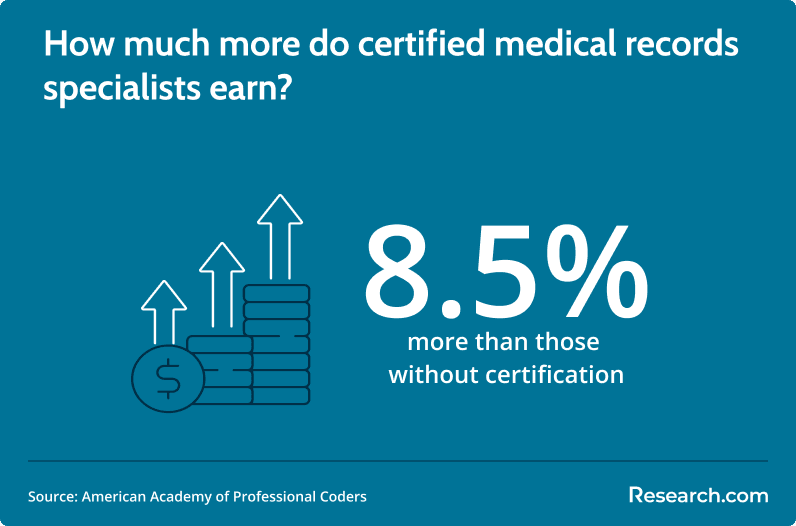
- Certified coders can earn up to 20% more than non-certified coders, but salary depends on location, experience, employer type, and additional credentials.
- Many coders start with CPC, gain work experience, and later pursue CCS or a specialty credential.
- What is the difference between CPC and CCS certifications?
- Which certification is best for entry-level medical coders?
- How do CPC and CCS exam requirements compare?
- How do you prepare for CPC and CCS certification exams?
- How long does it take to get CPC vs CCS certified?
- What are the costs of CPC vs CCS certification for 2027?
- What jobs can you get with CPC vs CCS?
- What financing options can help manage certification-related expenses?
- How much do CPC and CCS certified coders earn?
- Can CPC and CCS certifications lead to career advancement?
- What’s the industry outlook for CPC and CCS holders for 2027?
- Are online health care certificates recognized by employers?
- Is combining medical coding certification with a fast healthcare administration degree beneficial?
- Should I pursue complementary academic degrees alongside my certification?
- Can further education boost your post-certification career growth?
- Could a Doctorate in Pharmacy enhance a medical coding career?
- Key insights
What is the difference between CPC and CCS certifications?
CPC and CCS are both respected medical coding credentials, but they are designed for different coding environments. CPC is centered on professional services and outpatient care. CCS is centered on hospital coding, including inpatient documentation and more complex reimbursement rules.
| Category | CPC Certification | CCS Certification |
| Full credential name | Certified Professional Coder | Certified Coding Specialist |
| Issuing organization | AAPC | AHIMA |
| Best fit | Beginners, career changers, outpatient coders, physician-practice coders | Experienced coders, hospital coders, inpatient coding professionals |
| Typical work setting | Clinics, physician offices, ambulatory surgical centers, outpatient departments | Hospitals, inpatient facilities, rehabilitation centers, long-term care settings |
| Main coding focus | CPT, ICD-10-CM, HCPCS Level II | ICD-10-CM, ICD-10-PCS, CPT, reimbursement, compliance |
| Career strategy | Good first credential for entering the field quickly | Good advanced credential for hospital coding and higher-complexity records |
CPC certification
The Certified Professional Coder credential is often the better starting point for people who want to code services performed in physician practices, clinics, outpatient departments, or ambulatory surgical centers. It tests whether you can read provider documentation and assign accurate CPT, HCPCS Level II, and ICD-10-CM codes.
CPC is also practical for people moving into coding from billing, front-office healthcare work, medical assisting, or another non-clinical background. If you need a short training path before deciding on a certification exam, a fast online medical billing and coding certification option can help you build basic terminology and coding knowledge.
CCS certification
The Certified Coding Specialist credential is more advanced and is commonly associated with hospital-based coding. CCS-certified professionals work with more complex medical records, inpatient procedures, data quality expectations, reimbursement systems, and compliance requirements. It can be a strong next step for coders who already understand outpatient coding and want to move into inpatient or facility coding.
The right choice depends less on which credential is “better” and more on which coding environment you want to enter. If you want outpatient work, start with CPC. If your goal is inpatient coding and you already have coding exposure, CCS may be the stronger match.
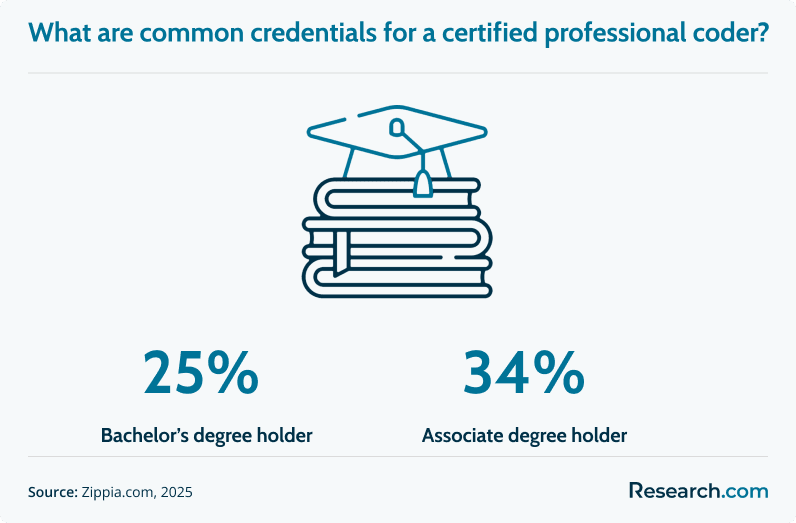
Which certification is best for entry-level medical coders?
CPC certification is usually the best choice for entry-level medical coders. It does not require the same level of hospital coding exposure that CCS often assumes, and its outpatient focus matches many first coding jobs in clinics, physician offices, and ambulatory care settings.
Employers recognize the CPC certification as evidence that a candidate understands core coding systems, medical documentation, anatomy, and coding guidelines. AAPC reports that about 70% of professionals pursue certification to unlock better job opportunities and higher pay, which helps explain why many new coders view CPC as a practical first credential.
| If your situation is... | Better starting choice | Why |
| You are new to coding and want the fastest practical entry point | CPC | It is more beginner-friendly and aligned with outpatient roles. |
| You already code inpatient and outpatient records | CCS | It validates more advanced facility and hospital coding skills. |
| You work in a physician office or clinic | CPC | The exam content matches professional-service coding. |
| You want to work in a hospital coding department | CCS | The credential is more directly connected to inpatient coding and health information management. |
| You are unsure which healthcare role you want | CPC or foundational training first | Starting with outpatient coding or billing coursework can clarify your next move. |
For students who are not ready to commit only to coding, comparing the best medical assistant trade schools can also be useful. Medical assisting can provide exposure to clinical terminology, patient documentation, and healthcare workflows before specializing in coding.
How do CPC and CCS exam requirements compare?
Both exams measure coding accuracy, but they do not test the same type of coding work. CPC is built around professional and outpatient services. CCS requires stronger familiarity with inpatient coding, facility documentation, reimbursement rules, and compliance standards.
CPC exam focus
The CPC exam from AAPC evaluates whether candidates can assign codes correctly in outpatient and physician-based settings. Candidates should be comfortable with:
- CPT: codes used for outpatient procedures and professional services.
- ICD-10-CM: diagnosis codes that describe patient conditions.
- HCPCS Level II: codes used for certain supplies, equipment, and non-physician services.
- Medical terminology, anatomy, documentation review, and official coding guidelines.
This credential fits people targeting private practices, outpatient departments, clinics, and ambulatory surgical centers.
CCS exam focus
The CCS exam from AHIMA is more closely tied to hospital and facility coding. Candidates should expect content related to:
- ICD-10-CM: diagnosis coding.
- ICD-10-PCS: procedure coding used for inpatient hospital services.
- CPT: outpatient service coding, though it is not the only focus.
- Compliance, reimbursement methodologies, coding quality, and facility coding guidelines.
If you are mapping a complete pathway into coding, this exam comparison should be part of a broader plan that includes training, practice cases, and work experience. Readers who want a full role overview can also review this guide on how to become a certified professional coder.
How do you prepare for CPC and CCS certification exams?
The best preparation plan combines coding manuals, structured coursework, practice exams, and repeated exposure to real medical documentation. The right study strategy depends on your starting point. A beginner preparing for CPC usually needs more time with terminology and outpatient coding basics, while a CCS candidate often needs deeper practice with inpatient records and facility coding rules.
Step 1: Build the medical language foundation
Before focusing heavily on codes, make sure you understand anatomy, physiology, medical terminology, common procedures, and provider documentation. Weak terminology skills can slow you down during the exam and on the job.
Step 2: Study the correct coding systems
- For CPC, prioritize CPT, ICD-10-CM, HCPCS Level II, documentation guidelines, and outpatient coding scenarios.
- For CCS, prioritize ICD-10-CM, ICD-10-PCS, inpatient coding rules, reimbursement methodologies, compliance, and mixed record types.
Step 3: Use official or exam-aligned materials
Use current coding manuals, official practice exams, prep books, and course materials aligned with AAPC or AHIMA expectations. A general billing course may help, but it should not be your only exam preparation source.
Step 4: Practice under timed conditions
Mock exams help you identify weak areas, improve speed, and reduce test-day stress. Practice is especially important because coding exams require both knowledge and fast navigation through manuals or case materials.
Step 5: Review missed questions by category
Do not only count your score. Track whether missed questions come from anatomy, modifiers, ICD-10-CM guidelines, inpatient procedures, compliance, or reimbursement. That pattern tells you what to study next.
If your main concern is the length of training, this overview of how long medical billing and coding school takes can help you compare short courses, certificate programs, and longer academic options.
How long does it take to get CPC vs CCS certified?
CPC is usually the shorter pathway. CCS generally takes longer because it is more advanced and AHIMA recommends prior coding experience.
| Timeline factor | CPC | CCS |
| Typical training length | Most CPC candidates complete training in 4 to 9 months through online courses or certificate programs. | Preparation often takes longer because candidates need stronger inpatient and outpatient coding exposure. |
| Experience expectation | No formal experience is required for many candidates who use CPC as an entry pathway. | AHIMA recommends at least 1–2 years of experience in coding inpatient and outpatient records. |
| Best sequence for many coders | Start here to enter outpatient coding. | Pursue after gaining coding experience, especially if targeting hospital roles. |
CPC certification timeline
- Many candidates complete CPC training in 4 to 9 months.
- People with prior coursework in billing, anatomy, medical terminology, or healthcare administration may move faster.
- After coursework, candidates often spend several weeks reviewing and taking practice exams.
- Because formal experience is not the main barrier, CPC can be a practical route into the field.
CCS certification timeline
- CCS preparation usually requires more time because the exam covers broader and more complex coding scenarios.
- AHIMA recommends at least 1–2 years of experience in coding inpatient and outpatient records.
- Some candidates first earn CPC, then pursue CCS once they have stronger documentation and coding experience.
What are the costs of CPC vs CCS certification for 2027?
CPC is generally the less expensive certification route for new coders, while CCS candidates may spend more because the exam often requires deeper preparation and more advanced coursework.
| Cost category | CPC | CCS |
| Membership | AAPC membership costs around $180 per year. | AHIMA membership costs about $79 for students or $135 for professionals. |
| Exam fee | The CPC exam fee ranges from $300 to $400, with student discounts available. | The CCS exam fee is typically $299 for members and $399 for non-members. |
| Study materials | Optional study tools and practice exams may add $100 to $300. | Many candidates pay for more extensive prep materials or formal coursework. |
| Typical total cost | Most candidates spend between $500 and $800. | Total costs range from $700 to over $1,000 depending on preparation choices. |
How to control certification costs
- Confirm whether your employer reimburses exam fees, membership fees, or continuing education.
- Compare what is included in each prep course before paying for add-ons.
- Ask whether practice exams, coding manuals, tutoring, and exam vouchers are bundled into tuition.
- Check refund policies and retake policies before enrolling in a course.
- Choose accredited or reputable training instead of the cheapest option with unclear outcomes.
If cost is your main barrier, compare accredited online medical billing and coding schools with financial aid before paying out of pocket for a standalone course or exam prep package.
What jobs can you get with CPC vs CCS?
CPC most often supports outpatient coding roles. CCS is more commonly aligned with hospital, inpatient, and facility coding positions. The titles can overlap, but employers usually describe the coding environment in the job posting.
| Credential | Common job settings | Possible job titles | Primary work focus |
| CPC | Physician offices, outpatient clinics, ambulatory surgical centers | Medical coder, professional fee coder, outpatient coder, coding specialist, billing and coding specialist | Provider services, outpatient procedures, diagnoses, supplies, claims support |
| CCS | Hospitals, inpatient rehabilitation centers, long-term care facilities, specialty medical centers | Inpatient coder, facility coder, coding specialist, health information coding specialist | Inpatient records, diagnosis and procedure coding, reimbursement, compliance, data quality |
Where CPC-certified coders often work
- Physician offices
- Outpatient clinics
- Ambulatory surgical centers
- Provider billing departments
- Medical group practices
CPC-certified coders focus on the services performed by physicians, nurse practitioners, and other providers. With experience, some move into auditing, compliance, billing management, or specialty coding.
Where CCS-certified coders often work
- Hospitals
- Inpatient rehabilitation centers
- Long-term care facilities
- Large health systems
- Specialty medical centers
CCS-certified professionals handle more complex records, including diagnostic and surgical coding. Their work supports accurate reimbursement, reliable healthcare data, compliance, and reporting. The CCS certification is especially relevant for candidates who want to demonstrate readiness for facility-based coding.
What financing options can help manage certification-related expenses?
Certification costs can include membership fees, exam fees, manuals, online courses, practice exams, and continuing education. Before paying upfront, look for ways to reduce the total cost rather than focusing only on the exam fee.
- Employer reimbursement: Ask whether your employer pays for certification, CEUs, or coding association membership.
- Scholarships: Some schools, workforce programs, and professional organizations offer training support.
- Payment plans: Many online programs allow installment payments instead of one full payment.
- Workforce development funding: Local career centers may help eligible students pay for job-focused training.
- Bundled programs: Some programs include exam prep, books, and practice exams, which may reduce separate purchases.
When comparing healthcare training expenses, it can also help to review related allied health program costs. For example, this guide to medical assistant tuition cost can provide context on how short healthcare training programs vary in affordability.
How much do CPC and CCS certified coders earn?
Both CPC and CCS can lead to steady healthcare administrative careers, but CCS roles often have higher earning potential because they are linked to more complex inpatient coding and facility reimbursement. Salary still depends on location, experience, employer size, remote-work competition, productivity standards, and additional credentials.
CPC certification salary outlook
Certified Professional Coders typically earn between $40,000 and $50,000 per year in the U.S. Entry-level coders may begin near the lower end, while experienced coders, auditors, team leads, and professionals with specialty credentials may earn more.
- Common setting: Outpatient clinics, physician offices, ambulatory care centers, and provider billing departments.
- Demand driver: Continued outpatient care growth and the need for accurate coding and reimbursement.
Strong administrative and communication skills can improve employability in coding-adjacent roles. If you are comparing healthcare support careers, this overview of important medical assistant skills explains transferable abilities such as detail orientation, documentation awareness, and patient communication.
CCS certification salary outlook
Certified Coding Specialists generally earn $45,000 to $65,000 annually. The higher range reflects the added complexity of inpatient coding, facility documentation, reimbursement rules, and compliance responsibilities.
- Common setting: Hospitals, inpatient facilities, specialty medical centers, and health systems.
- Career advantage: CCS may support movement into more senior coding, quality, auditing, or health information roles.
Some students compare coding salaries with other mobile or allied health roles. For example, the traveling medical assistant salary can vary by assignment, employer, and location, which makes direct comparisons useful before choosing a career path.
Can CPC and CCS certifications lead to career advancement?
Yes. CPC and CCS can support advancement, especially when paired with experience, continuing education, specialty credentials, auditing skills, compliance knowledge, or healthcare administration training. Certification alone does not guarantee promotion, but it can make a coder more competitive for roles with greater responsibility.
Continuing education requirements
- CPC certification: Requires 36 Continuing Education Units every two years. CEUs may come from approved webinars, courses, conferences, and professional learning activities.
- CCS certification: Requires 20 CEUs every two years, along with an annual coding self-assessment.
Specialty certifications to consider later
- COC, Certified Outpatient Coder: Best for coders working in hospital outpatient departments and ambulatory surgical centers.
- CIC, Certified Inpatient Coder: Useful for coders focused on inpatient hospital coding, ICD-10, and inpatient payment systems.
- CEMC, Certified Evaluation and Management Coder: Relevant for professionals who code evaluation and management services across specialties.
- CRC, Certified Risk Adjustment Coder: Valuable for coders working with risk adjustment models used by insurance programs.
Common advancement routes
- Outpatient coder to specialty coder
- Medical coder to coding auditor
- Coding specialist to compliance analyst
- Coder to billing manager
- Facility coder to health information management role
Students comparing training providers can review top accredited online medical billing and coding schools to find programs that align with certification goals and long-term career planning.
What’s the industry outlook for CPC and CCS holders for 2027?
The outlook for CPC and CCS holders remains favorable because healthcare organizations need accurate coding for reimbursement, compliance, quality reporting, and health data management. Medical records specialist roles are projected to grow 9% from 2023 to 2033, and certified candidates may have an advantage when employers screen for coding accuracy and credentialed knowledge.
Healthcare administrative demand remains steady
According to the U.S. Bureau of Labor Statistics, healthcare occupations are expected to grow much faster than average between 2022 and 2032. The sector includes over 2.4 million existing medical office and administrative roles, with about 1.8 million new job openings projected each year. Many openings are not coding-only positions, but coding, billing, documentation, and health information skills remain important across healthcare administration.
Certification matters more when competition increases
Some entry-level billing and coding jobs do not require certification, but credentialed candidates may stand out for roles that require accuracy, compliance awareness, and knowledge of payer rules. CPC is especially valuable for physician practices and outpatient organizations. CCS is more relevant for hospitals, inpatient facilities, and organizations that need stronger facility coding expertise.
Current trends affecting medical coders
- AI-assisted coding tools: Technology can speed up code suggestions, but employers still need trained coders to validate documentation, resolve errors, and apply guidelines correctly.
- Remote work competition: Remote coding jobs can attract many applicants, making certification, experience, and productivity important.
- Documentation quality expectations: Coders increasingly work with providers, auditors, and billing teams to reduce denials and improve record accuracy.
- Compliance pressure: Healthcare organizations need coders who understand coding rules, payer policies, and ethical billing practices.
If you want to keep training costs low before taking a certification exam, compare a low-cost online medical coding and billing program with more expensive certificate options.
Are online health care certificates recognized by employers?
Online healthcare certificates can be recognized by employers when they come from reputable, accredited, or industry-aligned programs. What matters is not only whether a program is online, but whether it teaches current coding systems, includes medical terminology and anatomy, prepares students for recognized certification exams, and has transparent outcomes.
Many schools now offer online health care certificates for students who need flexible schedules. Before enrolling, confirm that the curriculum supports CPC, CCS, or another relevant certification, and ask whether graduates are eligible and prepared to sit for the intended exam.
Questions to ask before choosing an online certificate
- Is the school institutionally accredited or otherwise recognized by employers?
- Which certification exam does the program prepare students for?
- Are coding manuals, practice exams, and exam vouchers included?
- Does the program teach CPT, ICD-10-CM, HCPCS Level II, and, if relevant, ICD-10-PCS?
- Are instructors experienced in medical coding or health information management?
- Does the school publish completion, placement, or certification pass information?
- Will credits transfer if you later pursue a degree?
What do CPC and CCS candidates often experience?
-
: "
“Earning CPC certification helped me qualify for my first outpatient clinic role. The exam preparation made me more confident reading provider notes and assigning codes accurately.” — Laura
"
-
: "
“I pursued CCS because I wanted hospital coding work. The preparation was demanding, but it helped me understand inpatient records and facility reimbursement at a deeper level.” — Denzel
"
-
: "
“The biggest benefit was learning how to think like a coder. I became more careful with documentation, guidelines, and compliance.” — Precy
"
Is combining medical coding certification with a fast healthcare administration degree beneficial?
Combining coding certification with healthcare administration study can make sense if your long-term goal is supervision, revenue cycle management, compliance, operations, or health information leadership. Coding certification proves technical ability; healthcare administration coursework can add budgeting, policy, management, and systems knowledge.
This combination is not necessary for every coder. If your goal is simply to enter outpatient coding quickly, CPC training may be enough to start. If you want to manage teams or move beyond daily coding production, then fast healthcare administration degree programs may be worth comparing after you understand your target role.
Should I pursue complementary academic degrees alongside my certification?
A degree can help in some career paths, but it should match your goal. For most entry-level coding roles, a coding certificate and recognized certification are more directly relevant than an unrelated degree. However, academic study can be useful if you want to work in healthcare analytics, research administration, compliance, clinical documentation improvement, or management.
Programs in healthcare administration are usually more directly connected to coding advancement than science degrees. A science-focused option such as the cheapest biochemistry online degree may be useful only if your goals involve research, laboratory science, clinical data interpretation, or a broader scientific career direction.
Can further education boost your post-certification career growth?
Further education can support growth after CPC or CCS certification, especially if you want roles beyond production coding. Healthcare administration study can strengthen your understanding of finance, policy, compliance, operations, and leadership. That can be valuable for coders moving toward auditing, revenue cycle management, documentation improvement, or supervisory positions.
If leadership is your goal, compare online healthcare administration degrees by accreditation, transfer policy, total cost, course content, and how well the curriculum connects to revenue cycle or health information careers.
Could a Doctorate in Pharmacy enhance a medical coding career?
A Doctorate in Pharmacy is not a standard or necessary path for most medical coders. It is a major academic and professional commitment that is more appropriate for people pursuing pharmacy, clinical medication expertise, pharmaceutical care, or specialized healthcare leadership roles.
That said, advanced pharmacy knowledge could be useful in narrow areas such as medication-related coding review, healthcare analytics, compliance, payer policy, or clinical documentation work involving pharmacological therapies. If you are considering this route, compare the career return carefully before enrolling in affordable online doctorate in pharmacy programs.
Common mistakes to avoid when choosing CPC or CCS
| Mistake | Why it can hurt you | Better approach |
| Choosing CCS as a beginner without inpatient experience | The exam may be too advanced without enough coding exposure. | Consider CPC first, then pursue CCS after experience. |
| Picking CPC when you only want hospital inpatient coding | CPC is more aligned with outpatient and physician-based work. | Research CCS and inpatient coding requirements before committing. |
| Focusing only on exam cost | Training, manuals, membership, retakes, and CEUs can change the total investment. | Compare total cost, not just the exam fee. |
| Assuming all online programs are equal | Some programs may not prepare students for recognized exams. | Verify accreditation, curriculum, exam alignment, and outcomes. |
| Ignoring continuing education requirements | Credentials must be maintained after passing the exam. | Plan for CEUs, renewal requirements, and ongoing learning. |
| Expecting certification to guarantee a salary | Pay varies by location, experience, employer, and role. | Use salary ranges as guidance, not a promise. |
Key Insights
- CPC is usually the stronger first certification for beginners because it focuses on outpatient, physician-based coding and has a shorter typical preparation path.
- CCS is better suited for coders who want hospital, inpatient, or facility coding roles and already have meaningful coding exposure.
- Most CPC candidates complete training in 4 to 9 months, while CCS candidates often need more preparation because AHIMA recommends at least 1–2 years of experience in coding inpatient and outpatient records.
- CPC candidates typically spend between $500 and $800, while CCS candidates often spend $700 to over $1,000 depending on preparation choices.
- CPC-certified coders typically earn between $40,000 and $50,000 per year, while CCS-certified coders generally earn $45,000 to $65,000 annually.
- Certification can improve competitiveness, and certified coders can earn up to 20% more than non-certified peers, but individual outcomes are not guaranteed.
- Before choosing a credential, decide where you want to work: outpatient clinics and physician offices point toward CPC; hospitals and inpatient coding point toward CCS.
- AI-assisted coding tools may change workflows, but trained coders remain important for documentation review, compliance, error correction, and final coding decisions.
References:
- U.S. Bureau of Labor Statistics. (2024). Medical records and health information specialists. Occupational Outlook Handbook.
- Zippia. (n.d.). Certified professional coder overview.
- Ultimate Medical Academy. (n.d.). CPC vs CCS: Which certification is right for you?
- Indeed Editorial Team. (n.d.). CPC vs. CCS: Definitions and differences.
- MedicalTechnologySchools.com. (n.d.). Medical coding certification guide.
- Moldstud.com. (n.d.). Certification options comparison for CPC, CCS, and CCA.
Other Things You Should Know about Getting CPC or CCS Certified
AAPC’s CPC has no formal education requirement, but candidates need strong knowledge of ICD-10-CM, CPT, and HCPCS Level II coding. AHIMA’s CCS requires a broader coding background, usually including anatomy, physiology, and clinical coding experience. Both exams are administered by their respective credentialing bodies.
In 2027, the CPC exam is a multiple-choice test administered by the AAPC, while the CCS exam, conducted by AHIMA, includes interactive case studies and multiple-choice questions. Both exams evaluate candidates' coding proficiency and knowledge of healthcare regulations.
In 2027, obtaining a CPC certification typically costs between $300 and $400, inclusive of the exam fee and study materials. In contrast, the CCS certification costs approximately $400 to $500, accounting for the exam, additional preparation courses, and study resources. Prices may vary depending on the provider.


