
2027 Most Affordable Online Doctorate in Pharmacy (Pharm.D.) Programs

Co-Founder and Chief Data Scientist
Approximately six in ten U.S. adults currently rely on prescription drugs, and more than a quarter (27%) report taking four or more medications daily to manage their health conditions (Centers for Disease Control and Prevention, 2023). Licensed pharmacists, individuals who completed a traditional or an online doctorate in pharmacy program, are vital healthcare providers who dispense these medications.
Pharmacists also ensure patients receive the right dosage and type of medications. Moreover, they are instrumental in monitoring drug-body interactions and enhancing overall patient care. As a career planner with over a decade of experience, I’ve observed the critical role pharmacists play and understand that entering this profession is a substantial commitment.
So, in this guide, I will explore the most affordable Pharm.D. programs and discuss admission requirements and prerequisites. Additionally, I will provide information on job outlook, salary, work environments, and other aspects of becoming a pharmacist to help you navigate your professional path.
What are the benefits of getting an online doctorate in pharmacy?
- Online Pharm.D. programs offer the flexibility to balance your studies with work and personal commitments and develop strong technological skills needed in modern healthcare settings.
- Doctorate in pharmacy programs must be evaluated by the Accreditation Council for Pharmacy Education (ACPE), which ensures that they meet rigorous standards for a comprehensive curriculum. More than 100 Pharm.D. programs are ACPE-accredited, including online programs.
- Graduates of online Pharm.D. programs are eligible to take the licensure exam for pharmacists, who earn as much as $137,480 annually in the U.S.
What can I expect from an online Pharm.D. program?
An online Pharm.D. program is an alternative pathway for individuals aiming to earn a doctorate and become licensed while juggling personal or professional commitments. These programs provide the same rigorous curriculum as traditional on-campus options, with the added convenience of online learning.
Throughout my 10+ years of experience as a career planner for higher education students, I’ve noted that students taking up online Pharm.D. programs can expect the following:
- Collaborate with mentors and professors in research
- Attend a combination of live sessions and self-paced learning
- Explore virtual labs, discussion boards, and online group projects
- Gain access to virtual coursework and lectures at your convenience
- Allot around 40 to 80 hours of study per week, depending on the program
- Consult with placement advisors to clock in experience hours in local settings
- Visit their campus and meet their peers and professors during a few in-person meetings
- Complete clinical placements in various healthcare communities throughout the program.
Where can I work with a Pharm.D.?
Graduates holding a Pharm.D. generally filter into two fundamentally different work environments. According to recent federal employment data, 42% of pharmacists work in traditional pharmacies and drug retailers, while 27% are employed in hospitals. Understanding the daily demands of each setting is critical for career planning:
- Retail and Community Pharmacy: This sector is heavily metrics-driven. You will manage massive prescription volumes, administer vaccinations, and provide immediate patient counseling. The primary challenge involves maintaining rigorous safety standards while meeting strict corporate productivity quotas.
- Hospital and Clinical Pharmacy: This environment focuses on interdisciplinary collaboration. Clinical pharmacists work directly on hospital floors, adjusting intravenous medication dosing, rounding with physicians, and managing complex therapies for critically ill patients.
You must decide early in your academic journey whether you prefer the highly accessible, fast-paced nature of community practice or the specialized, collaborative care model found in clinical settings. Additionally, exploring specialized tracks such as ambulatory care or nuclear pharmacy opens up even more niche opportunities away from the traditional dispensing counter.
How much can I make with a Pharm.D.?
Pharmacy offers robust earning potential, with federal data reporting a mean annual salary of $134,790. Top earners, particularly those in specialized or management roles, earn upward of $168,650, while new clinical pharmacists typically start at around $130,403. However, base salaries only tell part of the financial story, as compensation structures vary drastically depending on the specific practice setting.
If you enter the corporate retail sector, you will frequently encounter higher starting base salaries and lucrative sign-on bonuses. Retail chains use these financial incentives to attract talent and offset the intense daily demands associated with high-volume dispensing.
By contrast, clinical pharmacists working in hospitals or ambulatory care often start at a slightly lower base salary, especially right after completing a residency program. Yet, these roles frequently offer superior long-term benefits:
- Better work-life balance and predictable scheduling.
- Comprehensive institutional healthcare and retirement packages.
- Opportunities for career progression into specialized clinical directorships.
When evaluating job offers, you must weigh the immediate financial gains of a retail sign-on bonus against the sustainable pacing and long-term career growth offered by clinical hospital roles.
- 2027 List of the Most Affordable Online Doctorate In Pharmacy (Pharm.D.) Programs List of Programs
- How long does it take to complete an online Pharm.D. program? How long does it take to complete an online Pharm.D. program?
- How does an online Pharm.D. program compare to an on-campus program? Online vs. On-Campus
- What is the average cost of an online Pharm.D. program? Cost
- What are the financial aid options for students enrolling in an online Pharm.D. program? Financial Aid
- What are the prerequisites for enrolling in an online Pharm.D. program? Requirements
- What courses are typically in an online Pharm.D. program? Courses
- What types of specializations are available in online Pharm.D. programs? Specializations
- How to choose the best online Pharm.D. program? How to choose the best online Pharm.D. program?
- How is leadership development integrated into an online Pharm.D. program? How is leadership development integrated into an online Pharm.D. program?
- What additional credentials can further boost your Pharm.D. career? What additional credentials can further boost your Pharm.D. career?
- Can combining pharmacy with healthcare administration elevate your career? Can combining pharmacy with healthcare administration elevate your career?
- How do online Pharm.D. programs support student success and networking? How do online Pharm.D. programs support student success and networking?
- How are emerging trends and challenges shaping the future of online Pharm.D. programs? How are emerging trends and challenges shaping the future of online Pharm.D. programs?
- What career paths are available for graduates of online Pharm.D. programs? What career paths are available for graduates of online Pharm.D. programs?
- What is the return on investment for an online Pharm.D. program? What is the return on investment for an online Pharm.D. program?
- What common challenges do online Pharm.D. students encounter? What common challenges do online Pharm.D. students encounter?
- How can you best prepare for pharmacist licensure exams? How can you best prepare for pharmacist licensure exams?
- Can a Pharm.D. pave the way for leadership roles in healthcare administration? Can a Pharm.D. pave the way for leadership roles in healthcare administration?
- What is the job market for graduates with a Doctorate in Pharmacy? Job Outlook
- What are the top skills needed for success in an online Pharm.D. program? What are the top skills needed for success in an online Pharm.D. program?
- How can you ensure the quality of your online Pharm.D. program? How can you ensure the quality of your online Pharm.D. program?
- Can additional healthcare credentials complement an online Pharm.D.? Can additional healthcare credentials complement an online Pharm.D.?
- How can pharmacy technicians transition to a Pharm.D. program, and what are the career benefits? How can pharmacy technicians transition to a Pharm.D. program, and what are the career benefits?
- Can fast track online Pharm.D. programs accelerate your career trajectory? Can fast track online Pharm.D. programs accelerate your career trajectory?
- How do online Pharm.D. programs foster diversity, equity, and inclusion? How do online Pharm.D. programs foster diversity, equity, and inclusion?
- How do employers perceive an online Pharm.D. degree? How do employers perceive an online Pharm.D. degree?
- How can continuing education and certifications enhance your pharmacy career after a Pharm.D.? How can continuing education and certifications enhance your pharmacy career after a Pharm.D.?
- What are the licensure exam pass rates for online Pharm.D. programs? What are the licensure exam pass rates for online Pharm.D. programs?
2027 Most Affordable Online Doctor of Pharmacy (Pharm.D.) Programs
Choosing an online Doctor of Pharmacy program is not just a tuition decision. A Pharm.D. is a professional degree tied to licensure, clinical rotations, board exams, and long-term student loan repayment. The least expensive option is not always the best option, but overpaying for a program that does not improve licensure outcomes, residency placement, or career mobility can weaken your return on investment for years.
This guide is designed for prospective pharmacy students, licensed pharmacists considering a nontraditional Pharm.D. pathway, pharmacy technicians exploring advancement, and working adults comparing online and hybrid options. You will learn which affordable online Pharm.D. programs stand out, how long they take, what they cost, how clinical training works, what accreditation matters, and how to evaluate whether a program can realistically help you become licensed and employed.
Because pharmacy is a regulated healthcare profession, the most important question is not simply, “Can I earn this degree online?” It is, “Will this program prepare me for licensure, clinical practice, and manageable debt?”
Quick Answer: What Is the Most Affordable Online Pharm.D. Program?
The most affordable online or hybrid Pharm.D. option depends on your residency status, prior pharmacy education, and whether you qualify for a traditional or nontraditional pathway. Among the programs listed here, Virginia Commonwealth University reports an estimated annual cost of $17,240 for in-state tuition and fees, while nontraditional programs such as MCPHS and Shenandoah University may cost less overall because they are designed for already-licensed pharmacists and require fewer credits than entry-level Pharm.D. pathways.
For any Pharm.D. program, affordability should be evaluated together with Accreditation Council for Pharmacy Education (ACPE) accreditation, NAPLEX preparation, clinical placement support, residency match outcomes, and your expected borrowing needs.
How We Ranked Affordable Online Pharm.D. Programs
Research.com evaluates affordability in the context of academic quality, institutional data, program structure, and student decision factors. A low tuition figure alone is not enough for a pharmacy doctorate, because students must also complete required experiential training and qualify for licensure exams.
Our ranking process draws from Research.com’s methodology and public or licensed education datasets, including the Integrated Postsecondary Education Data System, Peterson’s database, including its Distance Learning Licensed Data Set, College Scorecard, and the National Center for Education Statistics. These sources help us compare institutional costs, distance learning availability, and student-facing program information.
When using this list, pay close attention to whether a program is intended for first-time Pharm.D. students or for licensed pharmacists returning for a nontraditional doctorate. Those two pathways have very different admissions requirements, timelines, and cost structures.
| Program | Best Fit | Reported Cost | Credits | Accreditation |
| Duquesne University | Students seeking a four-year online pathway with extensive experiential learning | $1,995 per credit | 142 | ACPE |
| Creighton University | Students comfortable with distance learning plus required Omaha summer labs | $40,908 for Years 1-3; $61,362 for Year 4 | 150 | ACPE |
| Lake Erie College of Osteopathic Medicine | Students seeking distance delivery with Erie campus laboratory requirements | $31,880 non-resident; $28,120 PA resident | 136 | ACPE |
| St. John Fisher University | Students who want a hybrid flipped-classroom model with New York licensure preparation | $1,282 per credit | 151 | ACPE |
| Massachusetts College of Pharmacy and Health Sciences | Licensed pharmacists pursuing a nontraditional Pharm.D. | $1,215 per credit online graduate rate | 43 | ACPE |
| Shenandoah University | Working licensed pharmacists who need a nontraditional, asynchronous format | $45,350 estimated total cost | 53 | ACPE |
| University of Findlay | Students prepared for a demanding distance Pharm.D. workload and on-campus immersions | $42,740 annual tuition | 142 | ACPE |
| Virginia Commonwealth University | Students comparing strong public-university value and multiple dual degree options | $17,240 in-state tuition and fees | 155 | ACPE |
1. Duquesne University
Duquesne University offers an online Pharm.D. pathway that blends distance coursework with progressive experiential training. The first three years emphasize online instruction, foundational pharmacy practice, and early clinical exposure. The final year is focused on advanced practice rotations across pharmacy settings, giving students the in-person patient care experience required for professional preparation.
The curriculum also includes Continuous Professional Development courses each semester. Graduates earn both the Pharm.D. and a BS in Pharmacy Foundations, and the program includes 1,784 hours of experiential learning. This option may appeal to students who want a structured four-year path and are prepared for the clinical requirements that accompany an online pharmacy doctorate.
- Program length: Four years
- Tracks or focus areas:
- Acute Care
- Ambulatory Care
- Community Practice
- Entrepreneurial Pharmacy
- Geriatric Pharmacotherapy
- Cost per credit: $1,995 per credit
- Credits required: 142
- Accreditation: Accreditation Council for Pharmacy Education (ACPE)
2. Creighton University
Creighton University delivers a Distance Pharm.D. program that uses web conferencing, discussion boards, and digital collaboration tools to connect students with faculty and mentors. The program is built around patient-centered care, evidence-based decision-making, and team-based healthcare practice.
Although coursework is distance-based, students must travel to the Omaha campus for two-week summer sessions to complete laboratory courses. They also gain experiential exposure by shadowing professionals in community and hospital settings. Creighton also offers an in-person format, a hybrid option at its Phoenix campus, and dual degree pathways with an MBA or MS in Pharmaceutical Sciences.
- Program length: Four years
- Tracks or practice experiences:
- Advanced practice experiences in Community Hospital
- Acute Care
- Ambulatory Care
- Drug Information
- Medication Therapy Management Pharmacy
- Estimated annual tuition cost: $40,908 (Yrs 1-3); $61,362 (Yr 4)
- Credits required: 150
- Accreditation: ACPE
3. Lake Erie College of Osteopathic Medicine (LECOM)
Lake Erie College of Osteopathic Medicine offers a distance education Pharm.D. in addition to its four-year campus program and three-year accelerated pathways. The distance curriculum uses a systems-based structure, introducing pharmacotherapeutics and clinical exposure early so students can connect basic science, drug therapy, and patient care from the first year.
Students complete most didactic coursework online, while laboratory components are completed at the Erie campus. The fourth year is devoted to Advanced Pharmacy Practice Experiences, including six six-week rotations in community and clinical settings. This program may be a practical choice for students who want online coursework but can travel for required labs.
- Program length: Four years
- Tracks or practice areas:
- Advanced Community Institutional
- Inpatient Acute Care Medicine
- Ambulatory Care Pharmacy
- Tuition cost: $31,880 (Non-Resident); $28,120 (PA Resident)
- Credits required: 136
- Accreditation: ACPE
4. St. John Fisher University
St. John Fisher University offers a hybrid Pharm.D. pathway built around clinical practice, pharmaceutical science, and student-centered learning. Students study pharmaceutical sciences, clinical skills, and pharmacy administration while completing experiential components required for professional readiness.
The program includes two intensive summer terms that require 30–35 hours of work per week. Students also spend additional time during the first two summers completing initial Introductory Pharmacy Practice Experience rotations. The flipped-classroom model places much of the traditional lecture content online in asynchronous format, while live and experiential components focus on application. The program is designed to help graduates meet eligibility requirements for key pharmacy licensure exams in New York.
- Program length: Four years
- Tracks or practice areas:
- Community Health System
- Acute Care
- Ambulatory Care Pharmacy
- Cost per credit: $1,282
- Credits required: 151
- Accreditation: ACPE
5. Massachusetts College of Pharmacy and Health Sciences
The Non-Traditional Doctor of Pharmacy pathway at Massachusetts College of Pharmacy and Health Sciences is built for practicing pharmacists who already hold a pharmacy degree and license. Unlike entry-level Pharm.D. programs, this part-time online option allows licensed pharmacists to connect current professional experience with doctoral-level study.
The program includes 27 credits spread across five semesters, combining didactic learning, active learning, and up to 16 credits of clinical experience in healthcare settings. Because students are already working pharmacists, this pathway may be more manageable for professionals who need to continue employment while completing the doctorate.
- Program length: One to three years
- Tracks or practice areas:
- Internal Medicine
- Institutional, Ambulatory Care
- Community Pharmacy
- Cost per credit: $1,215 per credit (Online Graduate Rate)
- Credits required: 43
- Accreditation: ACPE
6. Shenandoah University
Shenandoah University offers a Nontraditional Doctor of Pharmacy pathway for licensed pharmacists who want a flexible route to the Pharm.D. The program is well suited to full-time professionals who are comfortable with self-directed online learning and who may be able to complete experiential requirements in or near their current workplace.
The curriculum includes 53 credit hours: 38 credit hours of didactic coursework and 15 credit hours of experiential education. Students learn through recorded lectures, team-based learning, and asynchronous course activities while interacting with faculty and peers through the online environment.
- Program length: Three to four years
- Tracks or practice areas:
- Ambulatory Care
- Acute Care
- Medication Information Pharmacy
- Estimated total cost: $45,350
- Credits required: 53
- Accreditation: ACPE
7. University of Findlay
The University of Findlay offers a Distance Pharm.D. with 100% online didactic coursework delivered through multiple learning formats. This is a demanding program: students should expect approximately 60 to 73 hours of study each week, including two to four hours of synchronous meetings and 33 to 40 hours of asynchronous coursework.
The program includes three one-week campus immersions, orientation, and a graduation event. Students also complete 300 hours of IPPE and 1,440 hours of APPE. This option may work best for students who need online coursework but can commit to a full-time professional school schedule and required in-person experiences.
- Program length: Four years
- Tracks or pathways:
- Direct Entry
- Transfer
- Professional
- Distance Pharm.D.
- Estimated annual cost: $42,740 annual tuition ($21,370/semester)
- Credits required: 142
- Accreditation: ACPE
8. Virginia Commonwealth University
Virginia Commonwealth University offers a Pharm.D. curriculum that combines pharmaceutical science, applied research, community engagement, and practical training. Students complete Introductory Pharmacy Practice Experiences during the first three years at pharmacy practice sites across the state.
The fourth year is devoted to clerkships or advanced practice experiences. Each experience lasts five weeks and requires at least 40 hours per week under faculty guidance. Students may also pursue dual degree options with an M.B.A., M.P.H., or Ph.D. in Pharmaceutical Sciences.
- Program length: Four years
- Tracks or practice areas:
- Acute Care
- Institutional Practice
- Geriatric Care
- Ambulatory Care
- Advanced Community Pharmacy
- Estimated annual cost: $17,240 (In-State Tuition & Fees)
- Credits required: 155
- Accreditation: ACPE
What Graduates Say About Online Pharm.D. Study
- Sunny: "The online format worked well for me because I learn best when I can manage my own schedule. I still had access to strong virtual resources, and the required in-person sessions helped me build practical skills. The program gave me both the academic foundation and the clinical exposure I needed to feel ready for pharmacy practice."
- Kate: "Completing my Pharm.D. online allowed me to keep working while I studied. I expected the program to feel distant, but faculty and classmates were easier to reach than I anticipated. The clinical experiences also helped me build professional connections that supported my next career steps."
- Samuel: "My online Pharm.D. required discipline, planning, and a lot of independent study. The flexibility was valuable, but it was not easy. Faculty support, digital learning tools, and clinical training helped me become a stronger learner and a more confident pharmacy professional."
Key Findings for Prospective Online Pharm.D. Students
- ACPE accreditation is non-negotiable. Without it, you may not meet licensure eligibility requirements.
- Online does not mean fully remote. Pharm.D. students must complete in-person clinical experiences, and some programs require campus labs or immersions.
- Program type matters. Entry-level Pharm.D. programs typically take four years, while nontraditional pathways are for licensed pharmacists and can be shorter.
- Total debt matters more than sticker price. Compare tuition, fees, travel, lost income, and loan repayment options before enrolling.
- Licensure and residency outcomes should influence your choice. Ask for NAPLEX pass rates and ASHP PGY1 residency match information before committing.
How Long Does It Take to Complete an Online Pharm.D. Program?
If your main question is how long does it take to become a pharmacist, the simple answer is that most online Pharm.D. programs take four years after admission to the professional program. That timeline is similar to campus-based pharmacy school because both formats must cover didactic coursework, clinical skills, Introductory Pharmacy Practice Experiences, and Advanced Pharmacy Practice Experiences.
Some schools offer three-year accelerated pathways, while others provide part-time options that can extend study to six years. Direct-entry options may combine undergraduate preparation with the Pharm.D., allowing eligible high school graduates to complete both degrees within six years.
Nontraditional online Pharm.D. programs serve a different audience: licensed pharmacists who already hold a pharmacy degree and want to complete a doctorate. These programs are typically shorter and may take three to three and a half years, depending on the curriculum and experiential requirements.
As with other health-related graduate options, including the cheapest online MPH degree, your actual completion time depends on transfer credits, prerequisite status, work obligations, clinical placement timing, and whether you study full time or part time.
| Pathway | Typical Student | Common Timeline | Decision Factor |
| Traditional online or hybrid Pharm.D. | Students seeking first-time pharmacist licensure | Four years | Best for students who can commit to a full professional-school workload |
| Accelerated Pharm.D. | Highly prepared students comfortable with an intensive pace | Three years in some programs | May reduce time but can increase academic pressure |
| Part-time Pharm.D. | Students balancing work, family, or other obligations | Can extend to six years | May improve flexibility but delays licensure and earnings |
| Nontraditional Pharm.D. | Licensed pharmacists with prior pharmacy education | Three to three and a half years in many cases | Only appropriate for applicants who already meet professional prerequisites |
How Does an Online Pharm.D. Compare With an On-Campus Program?
An online pharmacy doctorate usually covers the same professional competencies as an on-campus Pharm.D., but the learning logistics are different. Lectures, discussions, assignments, and some simulations may be delivered online, while labs, assessments, and clinical rotations still require in-person participation.
The biggest difference is clinical placement support. Campus students often benefit from established relationships with nearby hospitals, clinics, and community pharmacies. Distance learners may have more flexibility in where they live, but they may also need to help identify suitable clinical sites and preceptors in their region.
Pharmacy cannot be completed entirely online in the way some administrative healthcare programs can. For example, students comparing affordable online medical billing and coding schools will find more fully remote options because those programs do not require direct patient-care rotations. Pharm.D. students, by contrast, must practice in real healthcare settings.
Clinical training is also where students learn the operational realities of pharmacy practice, including medication safety, formulary management, interdisciplinary communication, and hospital policy. Resources such as CompleteRX can help students understand current pharmacy management issues, but the skills themselves are strengthened through supervised practice.
| Factor | Online or Hybrid Pharm.D. | On-Campus Pharm.D. |
| Course delivery | Many lectures and assignments are completed online | Most academic activities occur in person |
| Clinical rotations | Still required in person; placement may require student initiative | Often arranged through established local partnerships |
| Flexibility | Greater location and schedule flexibility for didactic work | More structured campus schedule |
| Peer interaction | Requires intentional online networking and study groups | More spontaneous in-person collaboration |
| Best for | Self-directed students who can manage remote coursework and clinical logistics | Students who prefer daily campus structure and direct access to facilities |
What Is the Average Cost of an Online Pharm.D. Program?
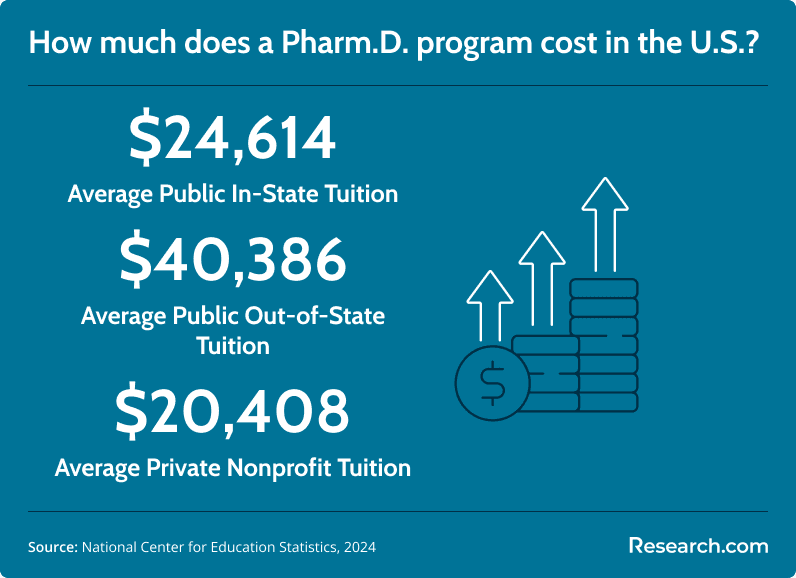
Online Pharm.D. costs vary widely by institution type, residency status, credit load, and whether the program is entry-level or nontraditional. Based on Research.com’s tracking of institutional metrics, public in-state programs average $24,614 per year, while public out-of-state programs rise to $40,386. Specific state programs such as South Carolina at $28,640 and Minnesota at $30,120 remain comparatively competitive. Private institutions range from $31,000 to more than $74,000 annually, with examples including LECOM at $31,880 and Midwestern at $73,669.
This makes the Pharm.D. very different from lower-cost graduate business options such as an online MBA less than $10000. Pharmacy education is expensive because it includes intensive clinical training, professional accreditation requirements, laboratory work, and licensure preparation.
Before choosing a program, estimate your total cost of attendance rather than focusing only on tuition. Include fees, books, technology, travel to campus immersions, housing during rotations, exam preparation, licensure fees, and interest on borrowed funds.
- Licensure reduces brand differences. Employers need you to pass required exams and hold a valid license. Paying more does not automatically improve your practice authority.
- Debt can limit career flexibility. A large private loan balance can make it harder to choose residencies, nonprofit roles, geographic moves, or lower-paying clinical opportunities.
- Public options may improve ROI. If an affordable ACPE-accredited program has strong licensure outcomes, it may offer better long-term value than a higher-cost private option.
What Financial Aid Options Are Available for Online Pharm.D. Students?
Pharm.D. students should begin with the FAFSA to determine eligibility for federal student aid. They may also research scholarships from pharmacy employers, professional associations, health systems, and corporate programs connected to organizations such as CVS Health, Walmart Pharmacy, and the makers of Tylenol.
Because a Pharm.D. can cost far more than shorter healthcare training options such as two year medical degrees, scholarships alone may not solve the affordability problem. The larger question is how you will repay loans after graduation.
For graduates with federal student debt, Public Service Loan Forgiveness can be a major strategy if career plans align with the rules. PSLF requires qualifying full-time employment, qualifying repayment, and careful documentation.
- Eligible employers: Government agencies and 501(c)(3) nonprofit hospitals can qualify.
- Required payment count: Borrowers must make 120 qualifying income-driven monthly payments, typically over 10 years.
- Potential benefit: Remaining eligible federal loan balances can be forgiven tax-free after the requirements are met.
- Important limitation: Corporate retail pharmacy employment does not qualify for PSLF.
Students should decide early whether they are aiming for higher immediate retail income and aggressive repayment or a nonprofit hospital path that may support PSLF eligibility.
What Are the Prerequisites for Enrolling in an Online Pharm.D. Program?
Admissions requirements vary, but online Pharm.D. programs generally expect strong preparation in science, math, communication, and healthcare-related coursework. The level of prior education required depends on the pathway. Entry-level Pharm.D. applicants may apply after completing prerequisites, while nontraditional Pharm.D. applicants are usually licensed pharmacists with prior pharmacy education.
Like other advanced programs, including the cheapest masters in psychology, pharmacy admissions committees look for evidence that applicants can handle rigorous graduate-level work.
- Bachelor’s degree in pharmacy or a related discipline
- Official transcripts
- PharmCAS application, depending on the school
- Minimum cumulative GPA of 2.7 or higher
- Personal statement or essay
- Letters of recommendation
- Interview
- Relevant work experience, depending on the program
Applicants may also need prerequisite coursework in biology, human anatomy, chemistry, calculus, physics, English, speech, psychology, humanities, behavioral sciences, or social sciences. Nontraditional Pharm.D. programs may require proof of current pharmacist licensure. International applicants are typically asked to submit English proficiency exam scores.
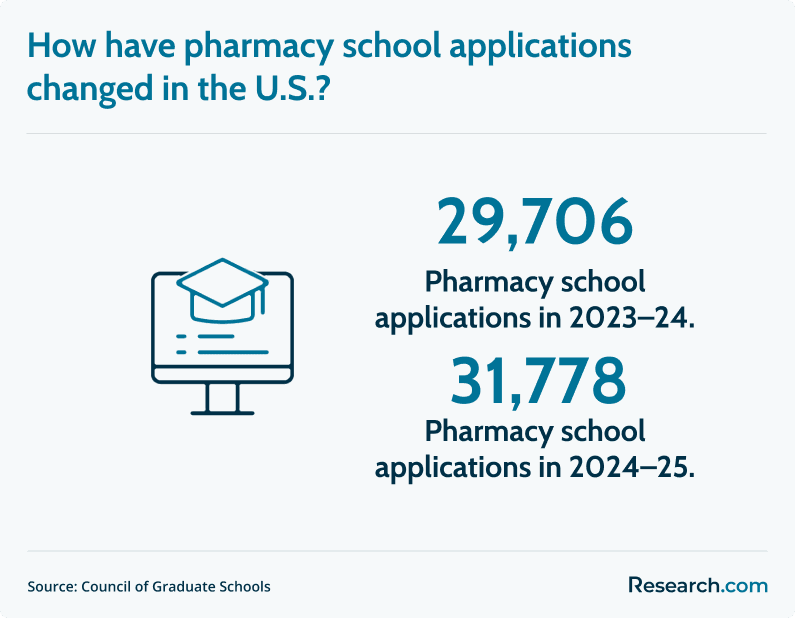
Starting in 2024, the Pharmacy College Admission Test (PCAT) is no longer a mandatory application requirement. According to recent AACP data, about 49% to 50% of applicants from 2023 to 2024 held a bachelor’s degree, and 51.5% had paid pharmacy technician experience. That experience can help applicants understand pharmacy workflows, but it does not replace required science preparation.
The chart below shows pharmacy school applicants by postsecondary experience.
What Courses Are Typically Included in an Online Pharm.D. Program?
An online Pharm.D. curriculum combines biomedical science, pharmacology, patient care, law, ethics, communication, and supervised practice. Even when lectures are delivered online, the program is designed to prepare students for hands-on pharmacy practice and licensure exams.
- Pharmaceutical sciences: Students study the chemical, biological, and physiological foundations of drug therapy.
- Pharmacokinetics and pharmacodynamics: Coursework explains how drugs are absorbed, distributed, metabolized, eliminated, and how they affect the body.
- Clinical pharmacy practice: Students learn patient assessment, medication therapy management, treatment planning, and healthcare team collaboration.
- Pharmacy law and ethics: Courses cover legal responsibilities, controlled substances, patient privacy, professional conduct, and state-specific practice rules.
- Pharmacy management and leadership: Students examine operations, budgeting, personnel management, quality improvement, and leadership in pharmacy settings.
- Introductory Pharmacy Practice Experiences: IPPEs introduce students to supervised practice in settings such as community and hospital pharmacies.
- Advanced Pharmacy Practice Experiences: APPEs occur later in the program and place students in intensive clinical rotations across healthcare environments.
Some students may choose electives related to geriatric pharmacy, oncology, infectious disease, behavioral health, or substance use treatment. Students also comparing accredited online colleges for drug and alcohol counseling may notice overlap in patient counseling, behavioral health, and medication-assisted treatment topics.
What Specializations Are Available in Online Pharm.D. Programs?
Pharm.D. programs may not always use the word “major,” but students can often shape their training through electives, clinical rotations, certificates, dual degrees, and postgraduate residency choices. Specialization is especially important for students who want hospital, ambulatory care, oncology, infectious disease, pediatrics, or other advanced clinical roles.
- Community pharmacy: Focuses on medication dispensing, patient counseling, immunizations, medication adherence, and pharmacy operations in retail or community settings.
- Acute care pharmacy: Prepares students for medication management in urgent and complex care environments such as emergency departments, ICUs, and hospital units. These pharmacists often work closely with physicians, nurses, and clinicians trained through pathways such as the best ACNP programs.
- Ambulatory care pharmacy: Emphasizes outpatient medication management, chronic disease care, patient education, and collaborative practice in clinics and specialty practices.
- Hospital pharmacy: Covers inpatient medication systems, sterile compounding, formulary decisions, dosing, transitions of care, and interdisciplinary treatment planning.
- Drug information: Focuses on evaluating medication evidence, answering clinical questions, reviewing literature, and supporting safe prescribing decisions.
- Medication Therapy Management: Centers on medication reviews, therapy optimization, adherence support, and recommendations to improve patient outcomes.
Pharmacists continue to hold a trusted position in healthcare. A Gallup study found that pharmacists are the sixth most trusted professionals, with 57% of Americans rating their honesty and ethical standards as "High/Very High" (Gallup, 2025). Specialized training strengthens that trust by preparing pharmacists to manage medication decisions that affect safety, cost, and quality of care.
How Should You Choose the Best Online Pharm.D. Program?
Start with accreditation, then move to outcomes and logistics. For pharmacy, ACPE accreditation is the first filter because it is tied to licensure eligibility. A program that lacks proper accreditation should not be treated as a viable pathway to pharmacist licensure.
After confirming accreditation, ask the school for two outcome measures that directly affect your future:
- First-time NAPLEX pass rates: The North American Pharmacist Licensure Examination is a required step toward practice. A program with consistently weak first-time pass outcomes may create serious financial risk.
- ASHP PGY1 residency match rates: Students aiming for hospital or specialized clinical practice should ask how many graduates secure postgraduate residencies.
Also evaluate clinical placement support, required campus visits, state authorization, faculty access, technology requirements, student support, and total cost. Rankings can help you build a shortlist, but they should not replace direct questions to admissions staff and current students.
| Question to Ask | Why It Matters | Warning Sign |
| Is the program ACPE-accredited? | Accreditation is essential for licensure preparation. | The school avoids giving a clear accreditation status. |
| What is the first-time NAPLEX pass rate? | Licensure exam performance reflects academic preparation. | Pass rates are unavailable or consistently weak. |
| Who arranges IPPE and APPE sites? | Clinical placements determine whether you can progress on time. | Students must find most sites without meaningful support. |
| How many campus visits are required? | Travel affects cost, schedule, and feasibility. | Required visits are unclear before enrollment. |
| What is the total cost of attendance? | Tuition is only one part of Pharm.D. debt. | The school emphasizes tuition but not fees, travel, or rotation expenses. |
| What residency support is available? | Clinical careers often require PGY1 or PGY2 training. | No advising, interview preparation, or match data is available. |
How Is Leadership Development Built Into an Online Pharm.D. Program?
Pharmacy leadership is no longer limited to managing a retail counter. Pharmacists lead medication safety initiatives, supervise teams, coordinate interprofessional care, manage budgets, guide policy, and contribute to quality improvement. Online Pharm.D. programs may support leadership development through communication courses, team-based assignments, case conferences, pharmacy management coursework, and experiential projects.
Students who want to move into administration, health system leadership, or academic leadership may also compare broader doctoral leadership training, such as a PhD in organizational leadership online. For Pharm.D. students, the best leadership preparation combines clinical credibility with decision-making, ethics, operations, and collaboration skills.
What Additional Credentials Can Strengthen a Pharm.D. Career?
After earning the Pharm.D. and passing licensure exams, pharmacists can build career depth through residencies, board certification, certificates, and continuing education. Short online certifications may help in areas such as telepharmacy, informatics, immunization, or medication safety, but advanced clinical roles usually require more formal training.
- PGY1 residency: A one-year postgraduate residency that strengthens general clinical practice skills and is often expected for inpatient roles.
- PGY2 residency: A second year of specialized training in areas such as oncology, critical care, ambulatory care, infectious disease, pediatrics, or psychiatry.
- Board of Pharmacy Specialties certification: Pharmacists may pursue designations such as Board Certified Pharmacotherapy Specialist or Board Certified Oncology Pharmacist after meeting eligibility requirements.
- Healthcare technology credentials: Training in informatics, data systems, telehealth, and digital medication management can support roles in modern pharmacy operations.
The credential that matters most depends on your target role. Retail pharmacy management, hospital clinical practice, pharmaceutical industry, managed care, academia, and administration each reward different combinations of experience and training.
Can Combining Pharmacy With Healthcare Administration Elevate Your Career?
A Pharm.D. can prepare you for clinical decision-making, but administrative roles often require additional knowledge in finance, staffing, compliance, quality improvement, and strategy. Students interested in pharmacy director, health system leadership, managed care, policy, or executive roles may benefit from business or healthcare administration training.
Some Pharm.D. programs offer dual degrees, while others allow graduates to add administrative education later. If you want a structured business pathway, an accelerated MBA healthcare administration online can complement pharmacy training by adding coursework in organizational management, healthcare finance, and strategic planning.
How Do Online Pharm.D. Programs Support Student Success and Networking?
Strong online Pharm.D. programs do not leave students to work in isolation. They provide academic advising, faculty office hours, virtual tutoring, career coaching, residency preparation, technical support, peer discussion spaces, and clinical placement guidance. These services are especially important because pharmacy coursework is cumulative and fast-paced.
Networking should also be intentional. Students can build professional relationships through virtual alumni events, student pharmacy organizations, webinars, clinical rotations, and local preceptor relationships. For students interested in broader healthcare administration or revenue-cycle exposure, related options such as medical coding and billing classes online with financial aid may provide context about healthcare operations, though they do not replace Pharm.D. clinical training.
How Are Emerging Trends Shaping Online Pharm.D. Programs?
Pharmacy education is adapting to digital health, telepharmacy, medication management technology, virtual simulation, interprofessional care, and expanded pharmacist roles in chronic disease management. Online Pharm.D. programs increasingly use digital tools to teach clinical reasoning, drug information retrieval, patient communication, and case-based decision-making.
Artificial intelligence and automation are also changing routine dispensing and medication verification workflows. That makes clinical judgment, patient counseling, therapy optimization, informatics literacy, and collaborative care more valuable. Students comparing admissions pathways may also review resources on the easiest pharmacy schools to get into, but they should not choose a school solely because admission seems less competitive. Preparation quality matters more than ease of entry.
What Career Paths Are Available for Online Pharm.D. Graduates?
A Pharm.D. can lead to community pharmacy, hospital pharmacy, ambulatory care, managed care, nuclear pharmacy, pharmaceutical industry, academia, research, medication safety, informatics, and pharmacy management roles. However, these paths do not all have the same entry requirements after graduation.
- Direct-to-practice roles: Licensed graduates can often move directly into community pharmacy, retail pharmacy, and some staff pharmacist positions.
- Clinical hospital roles: Many inpatient and specialty positions strongly prefer or require PGY1 and sometimes PGY2 residency training.
- Industry roles: Pharmaceutical companies may value research experience, fellowships, regulatory knowledge, or dual training.
- Leadership roles: Pharmacy managers, directors, and administrators often combine clinical experience with budgeting, personnel management, and operations expertise.
Pharmacists who want to move into executive administration may later consider options such as the cheapest online MHA programs. The best career planning starts during school: choose rotations, mentors, electives, and networking opportunities that align with your target setting.
What Is the Return on Investment for an Online Pharm.D. Program?
ROI for an online Pharm.D. depends on total borrowing, interest, time to licensure, job setting, residency plans, and loan forgiveness eligibility. With average pharmacy school debt hovering around $170,000, students should model repayment before enrolling rather than waiting until graduation.
This is a much larger investment than shorter healthcare options such as medical assistant online programs. A Pharm.D. can support access to higher-level professional roles, but the upfront cost is substantial.
The ROI calculation changes by career path. Retail positions may provide faster full-time income after licensure, and some graduates may use higher early earnings or sign-on bonuses to repay loans aggressively. Clinical pharmacy paths may require one to two years of residency at a reduced salary, often around $50,000, but nonprofit hospital employment may support PSLF eligibility if all requirements are met.
| Career Strategy | Potential Advantage | Potential Trade-Off |
| Enter retail or community pharmacy after licensure | Faster access to full pharmacist income | Corporate retail employment is not PSLF-eligible |
| Pursue PGY1 or PGY2 residency | Stronger access to clinical and specialty roles | Lower short-term income during residency |
| Work for a nonprofit hospital | May support PSLF if rules are met | Requires careful repayment planning and documentation |
| Choose a lower-cost ACPE-accredited program | Can reduce debt and improve flexibility | Still must verify licensure outcomes and clinical support |
What Common Challenges Do Online Pharm.D. Students Face?
The hardest part of an online Pharm.D. is often not the technology. It is the academic intensity and the need to stay connected while studying complex material remotely. During early didactic years, students must master pharmacokinetics, medicinal chemistry, pathophysiology, therapeutics, and calculations before entering advanced rotations.
Campus students may naturally form study groups through daily in-person interaction. Online students need to create that support system deliberately by joining virtual study groups, attending office hours, contacting faculty early, and using tutoring resources before problems compound.
Students who underestimate the timeline often search How long is schooling for a pharmacist? only after realizing the profession requires years of structured preparation. Successful distance learners treat the program like a full-time professional obligation, not a flexible side project.
How Can You Prepare for Pharmacist Licensure Exams?
Pharmacist licensure preparation should begin before graduation. Students generally prepare for the NAPLEX, which tests clinical knowledge and application, and the Multistate Pharmacy Jurisprudence Examination, which focuses on pharmacy law. The MPJE is state-specific and should not be treated as an afterthought.
- Use timed question banks: Practice under exam-like conditions to build speed, accuracy, and endurance.
- Review weak therapeutic areas early: Do not wait until the final weeks to address gaps in pharmacotherapy, calculations, or patient safety.
- Study state law carefully: The MPJE requires attention to the rules of the state where you plan to practice.
- Join structured review groups: Peer discussion can improve reasoning and help identify blind spots.
- Use rotation experiences as review: APPEs are opportunities to connect patient cases with exam content.
Even entry-level healthcare training, such as a medical assistant fast program, reinforces the importance of compliance and patient safety. For Pharm.D. graduates, licensure exams require a deeper and more specialized command of medication therapy and law.
Can a Pharm.D. Lead to Healthcare Administration Roles?
Yes. A Pharm.D. can support leadership roles in hospitals, health systems, managed care organizations, academic institutions, and pharmacy operations. However, administrative advancement usually requires more than clinical expertise. Employers may look for experience with budgeting, compliance, team leadership, informatics, performance improvement, and strategic planning.
Pharmacists who want to move beyond direct patient care may add formal management training through online degrees in healthcare administration. This combination can be useful for roles such as pharmacy director, medication safety officer, managed care leader, or healthcare operations manager.
What Is the Job Market for Doctor of Pharmacy Graduates?
The pharmacist job market is changing rather than simply expanding uniformly. Federal projections anticipate a 5% national job growth rate through 2034 and about 14,200 annual openings. At the same time, broader pharmaceutical hiring signals are mixed: the global pharmaceutical industry recently saw a 2% decrease in new job postings, while management roles remained strong at 20% of current demand.
These patterns reflect a split market. Traditional retail pharmacy has faced consolidation and workflow automation, while clinical, ambulatory care, specialty pharmacy, managed care, and medication management roles continue to require advanced judgment. As technology continues to impact medicine, pharmacists who can combine medication expertise with clinical reasoning, patient counseling, informatics, and collaborative care may be better positioned.
Graduates should not assume that a Pharm.D. alone guarantees the role they want. Career outcomes depend on licensure, geography, rotations, residency training, networking, and willingness to pursue emerging practice areas.
The chart below shows recent U.S. pharmacist job posting data.
What Skills Are Most Important for Success in an Online Pharm.D. Program?
Online Pharm.D. students need the same scientific and clinical ability as campus students, plus stronger self-management. Flexibility is helpful, but the workload is substantial.
- Time management: Students must balance lectures, assignments, labs, exams, clinical placements, and personal responsibilities.
- Clinical reasoning: Pharmacists evaluate patient factors, disease states, medication interactions, dosing, contraindications, and therapeutic alternatives.
- Communication: Patient counseling, prescriber collaboration, documentation, and team-based care all require clear communication.
- Precision: Medication errors can harm patients, so attention to detail is essential in calculations, dispensing, monitoring, and documentation.
- Technology fluency: Online coursework, simulation tools, drug databases, electronic health records, and pharmacy systems require comfort with digital platforms.
- Self-advocacy: Distance learners must ask for help early, build faculty relationships, and stay visible in virtual settings.
Students comparing long-term earning potential across disciplines can also review degrees that make the most money, but pharmacy applicants should focus on licensure outcomes and debt, not salary headlines alone.
How Can You Verify the Quality of an Online Pharm.D. Program?
Quality verification starts with ACPE accreditation. Then evaluate whether the school has transparent outcomes, sufficient clinical partnerships, qualified faculty, and student support systems. Institutional reputation matters, but pharmacy-specific outcomes matter more.
Students researching broader online education options may find general resources on accredited online colleges helpful, but pharmacy requires programmatic accreditation tied to the profession. Do not assume that institutional accreditation alone is enough for a Pharm.D.
- Confirm ACPE accreditation directly with the accreditor or program.
- Ask for first-time NAPLEX pass rates.
- Ask how IPPE and APPE placements are arranged.
- Review state authorization and licensure disclosures for your state.
- Compare total cost of attendance, not just tuition.
- Speak with current students or alumni if possible.
- Check whether the program offers residency advising and career placement support.
Can Additional Healthcare Credentials Complement an Online Pharm.D.?
Additional credentials can help pharmacists move into specialized, administrative, consulting, informatics, or operational roles. The best credential depends on the career direction. A pharmacist pursuing revenue-cycle consulting may benefit from reimbursement knowledge, while a clinical specialist may prioritize residency and board certification.
For example, training in medical billing higher education can help pharmacists understand documentation, reimbursement, and healthcare finance, especially in managed care, consulting, or administrative roles. However, such credentials should supplement—not replace—pharmacy licensure and clinical development.
How Can Pharmacy Technicians Transition to a Pharm.D. Program?
Pharmacy technicians often bring valuable workplace experience to Pharm.D. admissions. They understand medication workflows, patient interaction, inventory systems, insurance barriers, and pharmacy team dynamics. According to AACP data, 51.5% of applicants from 2023 to 2024 had paid pharmacy technician experience.
However, technician experience does not automatically shorten the Pharm.D. unless a school grants transfer credit for prior coursework. Technicians should review prerequisite science requirements, GPA expectations, PharmCAS policies, letters of recommendation, and interview criteria. Some may need to complete biology, chemistry, anatomy, calculus, or other prerequisite courses before applying.
The career difference can be substantial because a Pharm.D. leads to pharmacist licensure opportunities rather than technician roles. To compare the starting point, review how much does a pharmacy technician make and then weigh the cost, time, and licensing requirements of becoming a pharmacist.
Can Fast Track Online Pharm.D. Programs Accelerate Your Career?
Accelerated Pharm.D. programs can shorten the time to graduation for students who can handle an intensive schedule. These programs may reduce opportunity cost by helping students reach licensure sooner, but they also compress demanding science, clinical, and experiential requirements into a shorter timeframe.
Before choosing an accelerated option, confirm ACPE accreditation, rotation availability, campus requirements, board exam outcomes, and student support. A faster path is only valuable if it still prepares you for licensure and practice. Students comparing accelerated options can review fast track PharmD programs.
How Do Online Pharm.D. Programs Support Diversity, Equity, and Inclusion?
Online Pharm.D. programs can expand access for students who cannot relocate, but inclusive education requires more than remote delivery. Strong programs incorporate culturally responsive case studies, community-based rotations, diverse faculty perspectives, and training on healthcare disparities, medication access, language barriers, and patient trust.
Students interested in the biological and public health foundations of patient diversity may also explore the most affordable biology online degree as a related academic pathway. For Pharm.D. students, DEI preparation is most valuable when it connects directly to patient counseling, adherence, chronic disease management, and equitable medication use.
How Do Employers View an Online Pharm.D. Degree?
Employers generally focus less on whether didactic coursework was online and more on whether the program is ACPE-accredited, whether the graduate is licensed, and whether the applicant has relevant clinical experience. Strong rotations, residency training, board certification, and communication skills can carry more weight than course delivery format.
Online Pharm.D. graduates may also signal discipline and independence because they completed rigorous professional training in a flexible format. Still, applicants should be ready to discuss clinical experiences, teamwork, patient care examples, and licensure results. Students comparing high-income career pathways can review what degree makes six figures, but pharmacy employment outcomes should always be evaluated by region, setting, and debt load.
How Can Continuing Education and Certifications Help After a Pharm.D.?
A Pharm.D. is the beginning of a pharmacist’s professional education, not the end. Pharmacists must keep up with new therapies, safety guidance, regulations, technologies, and practice models. Continuing education can support license renewal, clinical specialization, leadership development, and transitions into industry, public health, academia, or informatics.
Some pharmacists pursue board certification in pharmacotherapy, oncology, geriatrics, ambulatory care, or other specialty areas. Others add certificates in immunization, medication safety, informatics, public health, or healthcare quality. Flexible options such as online healthcare courses with certificate can be useful for targeted skill-building, especially for working pharmacists.
What Licensure Exam Pass Rates Should You Review?
Licensure exam pass rates are one of the clearest indicators of whether a Pharm.D. program prepares graduates for practice. Ask each school for recent first-time NAPLEX pass rates, MPJE preparation support, remediation policies, and how outcomes compare with national performance.
Do not rely only on admissions friendliness or convenience. A program that is easier to enter may still be a poor investment if students struggle to pass licensure exams. Students evaluating other regulated healthcare pathways may compare resources such as easy nursing school, but the same principle applies: admission access should be weighed against completion, licensure, and employment outcomes.
How Do Online Pharm.D. Programs Foster Research and Innovation?
Online Pharm.D. programs may support research through faculty mentorship, literature evaluation, clinical case projects, quality improvement assignments, virtual collaboration, and partnerships with healthcare organizations. Students interested in academia, industry, drug information, informatics, or residency training should ask whether research participation is available to distance learners.
Research experience can strengthen residency applications and help students develop evidence-based decision-making skills. Some students may also compare accelerated PharmD online degree programs if they want a faster route, but they should ensure the program still provides meaningful research, clinical, and mentorship opportunities.
Common Mistakes to Avoid When Choosing an Online Pharm.D. Program
| Mistake | Why It Can Hurt You | Better Approach |
| Choosing a program before confirming ACPE accreditation | You may not meet licensure eligibility expectations. | Verify programmatic accreditation before applying. |
| Looking only at tuition | Fees, travel, rotations, exam costs, and interest can change affordability. | Calculate total cost of attendance and likely borrowing. |
| Assuming online means no travel | Labs, immersions, IPPEs, and APPEs may require in-person attendance. | Ask for a full list of campus and clinical requirements. |
| Ignoring state licensure disclosures | A program may not satisfy every state’s requirements in the same way. | Confirm eligibility in the state where you plan to practice. |
| Skipping NAPLEX and residency outcome questions | Poor outcomes can delay licensure or limit clinical opportunities. | Request recent pass rates and residency match data. |
| Borrowing without a repayment strategy | High debt can restrict career choices for years. | Compare PSLF, income-driven repayment, retail repayment strategies, and lower-cost schools. |
References
- American Association of Colleges of Pharmacy. (2023). Institutional Research. https://www.aacp.org/research/institutional-research
- American Association of Colleges of Pharmacy. (2024). Pharmacy demand report (PDR) executive summary 2nd Quarter 2024. Pharmacy Workforce Center, Inc. https://www.aacp.org/sites/default/files/2024-07/pharmacy-demand-report-07162024.pdf
- Brenan, M., & Jones, J. M. (2024, January 22). Ethics ratings of nearly all professions down in U.S. Gallup. https://news.gallup.com/poll/608903/ethics-ratings-nearly-professions-down.aspx
- Centers for Disease Control and Prevention. (2023, June). NCHS Data Brief No. 470: Strategies Used by Adults to Reduce Their Prescription Drug Costs. https://www.cdc.gov/nchs/data/databriefs/db470.pdf
- Pharmaceutical Technology. (2024). Hiring activity in the pharma industry decreased in Q2 2024. https://www.pharmaceutical-technology.com/data-insights/global-hiring-pharma-industry
- National Center for Education Statistics. (2023, May). Average and percentiles of graduate tuition and required fees in degree-granting postsecondary institutions, by control of institution: Academic year 1989-90 through 2021-22. Digest of Education Statistics. https://nces.ed.gov/programs/digest/d22/tables/dt22_330.50.asp
- U.S. Bureau of Labor Statistics. (2024a, May). Pharmacists. Occupational Outlook Handbook. https://www.bls.gov/ooh/healthcare/pharmacists.htm
- U.S. Bureau of Labor Statistics. (2024b, May). Occupational employment and wages, May 2024 - Pharmacists. Occupational Employment and Wage Statistics. https://www.bls.gov/oes/current/oes291051.htm
Key Insights
- The best affordable online Pharm.D. is the one that is accredited, licensure-focused, and financially realistic. Do not choose on tuition alone.
- Most entry-level online Pharm.D. programs still take four years. Shorter nontraditional pathways are usually for licensed pharmacists, not first-time pharmacy students.
- Clinical rotations are mandatory. Online coursework can reduce relocation needs, but it does not eliminate hands-on patient care requirements.
- Ask for outcomes before applying. First-time NAPLEX pass rates, MPJE support, and residency match data are critical indicators of program value.
- Debt strategy should shape school choice. Compare total cost, federal loan options, PSLF eligibility, and expected career path before committing.
- Career goals determine the right pathway. Retail practice, hospital clinical roles, managed care, research, and administration require different rotations, credentials, and postgraduate training.
Other Things You Should Know About Online Pharm.D. Programs
Most online Pharm.D. programs take 6 to 8 years total, including prerequisite coursework and the professional pharmacy curriculum. Students entering with completed science prerequisites may finish the doctorate portion in about 4 years, but any required laboratory or experiential rotations can extend the timeline.
Yes, some affordable online Pharm.D. programs may require short on-campus residencies, ranging from a few days to several weeks, to provide hands-on clinical experience. Check specific program details for residency duration and scheduling in 2027.


