
2027 How Much Does a Pharmacy Technician Make? Pharmacy Tech Salary Guide

Co-Founder and Chief Data Scientist
Pharmacy technician pay is not determined by one number. A technician working in a retail pharmacy in a lower-cost state may see a very different paycheck from a certified technician handling sterile compounding in a hospital or outpatient care center. For anyone considering this career in 2026, the real question is not only “How much does a pharmacy technician make?” but also “What choices can raise or limit my earning potential?”
This guide explains the salary factors that matter most: location, employer type, certification, education, experience, specialty skills, technology, and career mobility. It also looks at job satisfaction, benefits, advancement options, and practical steps for comparing pharmacy technician roles. Employment for pharmacy technicians is projected to grow by 7% between 2024 and 2034, but pay outcomes still depend heavily on where and how you build your career.
How Much Does a Pharmacy Technician Make Table of Contents
- Factors that influence pharmacy technician pay
- Average pharmacy technician salary range for 2026
- Salary outlook and labor market trends
- How to increase your pharmacy technician salary
- Job satisfaction, benefits, and work-life trade-offs
- How certification programs can strengthen a pharmacy technician career
- How regulatory changes affect pharmacy technician responsibilities
- Emerging technologies pharmacy technicians should understand
- How public health education can expand a technician’s impact
- How mentorship and networking support career growth
- How interdisciplinary science education can improve pharmacy expertise
- Why continuing education matters for pharmacy techniciansTechnology skills for pharmacy technicians
- Advanced healthcare pathways for pharmacy technicians
- Advanced education options in pharmacy
- Career advancement challenges for pharmacy technicians
- How public health-focused graduate education can broaden career optionsAdvancement barriersPharmacy education optionsHealthcare advancement pathsRelated career planning questions
Quick Answer: How Much Do Pharmacy Technicians Make?
Pharmacy technician salary varies by state, employer, credentials, and experience. In the United States, the average annual median salary for pharmacy technicians typically ranged from around 34,484 and $42,669 in the 2024. Pay can be lower for entry-level technicians and higher for workers in specialized settings such as outpatient care centers, hospitals, specialty pharmacies, sterile compounding, oncology, or government healthcare facilities.
| Factor | How it can affect pay | What to check before accepting a role |
| Location | State, city, and cost of living can create large pay differences. | Compare wages against rent, transportation, taxes, and commuting time. |
| Employer type | Retail, hospital, outpatient, specialty, long-term care, and government roles often have different pay structures. | Ask about shift differentials, benefits, overtime, and training support. |
| Certification | Credentials such as CPhT can improve competitiveness and may support higher pay. | Confirm whether certification is required, preferred, or tied to raises. |
| Specialization | Skills in sterile compounding, hazardous drug handling, oncology, infusion, or informatics may increase marketability. | Ask whether the employer provides paid training or requires prior credentials. |
| Experience | Experienced technicians may qualify for lead, supervisory, inventory, training, or compliance roles. | Look for a clear promotion ladder rather than only a starting wage. |
Factors Affecting Pharmacy Technician Salary
Pharmacy technician pay is shaped by both external market conditions and personal career choices. Two people with the same job title may earn different amounts because one works in a high-cost metropolitan area, holds certification, works evenings, or supports specialized pharmacy services. Understanding these variables helps you evaluate job offers more accurately.
Location
Geography is one of the strongest salary drivers for pharmacy technicians. State wages, local demand, and cost of living can make the same role financially attractive in one market and less competitive in another.
- State and regional wage differences. Pharmacy technician salaries can shift significantly by location. For example, pharmacy technicians in the State of California earn a little more than $45,000 on average yearly. In Alabama, the average pharmacy tech pay is around $29,700 annually.
- Local hiring demand. A tight labor market can push employers to offer better wages, bonuses, or more flexible schedules. In areas with many qualified applicants competing for the same jobs, wages may be less aggressive. For pharmacy technician demand, Los Angeles County reported nearly 2,500 job openings as of the first quarter of 2024.
- Cost of living. A higher salary does not always mean higher buying power. Major cities may offer stronger hourly wages, but housing, transportation, parking, childcare, and taxes can reduce the practical value of that pay.
Experience and Education
Education and experience affect how quickly pharmacy technicians move beyond entry-level tasks. Unlike long clinical pathways such as becoming a surgeon, pharmacy technician training can be more accessible, but advancement still depends on verified skills, reliability, and credentials.
- Work experience. Technicians with more time in the field usually understand prescription workflows, insurance issues, inventory systems, patient communication, medication safety, and pharmacy software more deeply. That experience can support raises or eligibility for senior technician roles.
- Formal training and associate programs. Some students build their foundation through campus-based training or the best online pharmacy technician associate programs. A structured program may be especially useful for learners who want preparation for certification exams, externship experience, or a clearer path into healthcare employment.
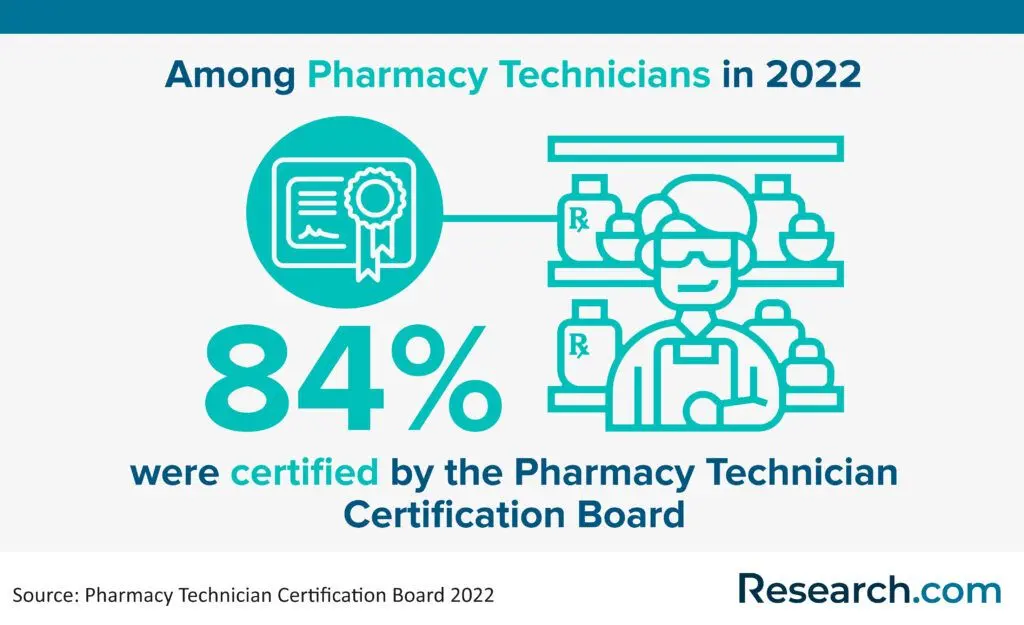
- Certification and specialized training. The Certified Pharmacy Technician (CPhT) credential can help demonstrate professional readiness. Additional training in sterile compounding, medication therapy management support, hazardous drug handling, or specialty pharmacy may strengthen a technician’s case for higher-paying assignments.
- Advancement potential. Education and experience can lead to lead technician, inventory coordinator, pharmacy buyer, compliance support, training coordinator, or supervisor roles. These positions usually require stronger judgment, communication, and accountability than entry-level dispensing support.
Type of Employer
The workplace setting often determines the pace of the job, the skill mix required, and the compensation structure. A retail pharmacy, hospital pharmacy, outpatient care center, specialty pharmacy, and long-term care pharmacy may all hire technicians, but they do not use them in exactly the same way.
| Employer setting | Typical work focus | Salary considerations |
| Retail pharmacy | Prescription intake, customer service, insurance processing, inventory, medication dispensing support. | Pay may depend on chain size, store volume, location, weekend coverage, and local competition. |
| Hospital or healthcare facility | Medication distribution, unit dose systems, sterile preparation support, inpatient workflows, collaboration with clinicians. | May offer stronger benefits, shift differentials, and specialized training opportunities. |
| Outpatient care center | Support for ambulatory medication services, patient coordination, and specialized pharmacy operations. | According to the U.S. Bureau of Labor Statistics, pharmacy technicians working in outpatient care centers have an annual mean wage of more than $62,500 as of 2024, the highest among the top-paying industries for pharmacy technicians. |
| Specialty pharmacy | Medication support for complex therapies such as oncology, HIV, transplant medicine, or other high-touch treatment areas. | Specialized knowledge and patient coordination responsibilities may support stronger pay. |
| Long-term care facility | Medication packaging, distribution systems, resident support, coordination with nurses and care teams. | Pay varies by facility size, regional demand, and the complexity of medication management. |
| Government or military healthcare setting | Pharmacy operations within public or military health systems. | Compensation may follow government or military pay structures and may include broader benefits. |
Average Salary Range for Pharmacy Technicians in 2026
For 2026 planning, use salary data as a starting point rather than a guarantee. The commonly cited range from Salary.com shows the average annual median salary for pharmacy technicians typically ranged from around 34,484 and $42,669 in the 2024. That figure is useful for comparison, but your actual offer may be above or below it depending on state, employer, schedule, certification, and specialty duties.
Pharmacy technician wages are generally lower than many licensed clinical roles. For example, readers comparing healthcare pathways may also review how much occupational therapists make or compare associate-level clinical training through an associate degree in sonography. The important distinction is that pharmacy technician work may require less time in school, but advancement often depends on certification, specialized experience, and employer-sponsored training.
Education level may also matter. A pharmacy technician with an associate degree and less than a year of work experience earns $1,234 less than the average median wage. More experienced technicians with at least a bachelor’s degree or those with additional certifications and qualifications may fall on the higher end of the salary scale. According to recent data from the U.S. Bureau of Labor Statistics, the median annual wage for technical workers, including specialized technicians, has increased, emphasizing the importance of advanced qualifications in securing higher salaries.
Pharmacy Technician Salary Comparison by State or Region
State-level salary comparisons are helpful, but they can be misleading if you do not also consider the city, employer type, commute, benefits, and cost of living. A higher hourly wage in a high-rent city may not produce more disposable income than a lower wage in a lower-cost area.
- Higher-paying states and regions. California, Alaska, Washington, Oregon, and the District of Columbia are commonly associated with higher average pharmacy technician salaries. These locations may also come with higher living expenses.
- Lower-paying states and rural markets. Some rural areas and lower-cost states may report lower average wages. However, lower rent, shorter commutes, or stronger benefits can change the value of a job offer.
- Metropolitan areas. Large metro areas often provide more hospital, specialty, outpatient, and high-volume retail opportunities. They may also offer higher pay to compete for qualified technicians.
| If you are comparing locations | Ask this question | Why it matters |
| State salary averages | Is the wage high because the area is expensive? | Cost of living can erase part of a higher salary. |
| City-level job postings | Are hospitals, outpatient centers, or specialty pharmacies hiring? | Employer mix can affect both pay and advancement. |
| Schedule expectations | Will the role require nights, weekends, holidays, or rotating shifts? | Shift differentials may improve pay, but they can affect work-life balance. |
| Benefits package | What does the employer contribute to health insurance, retirement, and paid time off? | Total compensation can be more important than hourly wage alone. |
Salary Outlook and Trends for Pharmacy Technicians
The pharmacy technician occupation is being shaped by healthcare demand, automation, changing pharmacy practice models, and employer expectations for certified workers. Salary growth is not automatic, but technicians who adapt to these changes can become more valuable to employers.
- Healthcare demand remains a key driver. An aging population, broader medication use, and expanded healthcare access can support continued need for pharmacy support staff. Other healthcare roles are also affected by demand for services, including speech-language pathology pathways such as affordable online master’s in speech-language pathology programs.
- Certification can separate candidates. Employers may prefer or require certified technicians, especially in hospital, sterile compounding, or specialty settings. Candidates comparing training options can review online pharmacy technician certification programs to understand what fits their schedule and career goals.
- Practice settings are expanding. Outpatient clinics, specialty pharmacies, telepharmacy models, and integrated health systems create roles that may go beyond traditional prescription counter support.
- Regulation affects responsibilities. State boards of pharmacy, federal requirements, insurance rules, and medication safety standards can change what technicians are allowed or expected to do.
- Technology is changing workflows. Automated dispensing, e-prescribing, electronic health records, inventory platforms, and patient communication systems are reducing some manual tasks while increasing the need for digital accuracy. According to a Surescripts survey, 99% of prescribers and 91% of pharmacists agree that interoperability and communication challenges can be addressed by technologies currently transforming healthcare operations.
- Pharma industry changes affect adjacent opportunities. Staying aware of pharmaceutical industry trends can help technicians identify emerging areas such as specialty medications, digital health, and complex care coordination.
Ways to Increase Pharmacy Technician Salary
The most effective salary strategy is to move from replaceable entry-level tasks toward specialized, certified, or higher-responsibility work. A technician who can handle complex workflows, train others, support compliance, or work safely in specialized medication environments is usually in a stronger position than one who performs only basic counter support.
- Build reliable experience. Learn prescription processing, insurance troubleshooting, inventory controls, patient communication, medication safety procedures, and pharmacy software. Consistent performance is often the first requirement for raises or promotions.
- Earn a recognized certification. The CPhT credential and specialty credentials can help show readiness for more demanding roles. Do not assume every certificate carries the same value; check whether local employers recognize it.
- Target high-demand specialties. Sterile compounding, hazardous drug handling, oncology, infusion services, specialty pharmacy, informatics, and compliance support can lead to stronger career options.
- Move into a setting with better advancement. If retail roles in your area have limited promotion paths, compare hospitals, outpatient care centers, specialty pharmacies, long-term care pharmacies, and public health systems.
- Ask for a structured raise path. During interviews, ask what wage increases are tied to certification, tenure, cross-training, leadership duties, or performance reviews.
- Learn healthcare operations beyond pharmacy. Some technicians expand into broader healthcare pathways. For example, nurses often compare options such as the shortest RN to MSN online program, and those exploring forensic healthcare may review what a forensic nurse does. Pharmacy technicians do not need to follow those exact paths, but comparing adjacent roles can clarify long-term education decisions.
| Salary growth move | Best for | Possible drawback |
| CPhT certification | Technicians seeking stronger entry-level competitiveness or promotion eligibility. | Exam preparation and renewal requirements take time and money. |
| Sterile compounding training | Technicians interested in hospital, infusion, or specialized medication preparation. | Work requires strict safety procedures and high attention to detail. |
| Specialty pharmacy experience | Technicians who want patient coordination, prior authorization support, and complex therapy exposure. | Administrative and insurance-related workload can be demanding. |
| Lead technician role | Experienced technicians with strong communication and workflow management skills. | Higher responsibility may not always come with a large raise unless negotiated. |
| Healthcare administration education | Technicians planning to move into operations, supervision, or management. | Requires a longer education investment and may shift the career away from hands-on pharmacy work. |
Pharmacy Technician Job Satisfaction and Benefits
Pharmacy technician job satisfaction depends on more than hourly pay. The work can be meaningful because technicians help patients access medications safely, but it can also involve high volume, insurance frustrations, standing for long periods, and pressure to avoid errors.
- Work environment. Retail pharmacies may involve fast customer traffic, phone calls, insurance rejections, and evening or weekend hours. Hospital and outpatient settings may offer more clinical workflow exposure but can require shift work.
- Work-life balance. Schedules vary widely. Some technicians prefer predictable weekday roles, while others accept nights, weekends, or holidays for shift differentials or faster access to hospital experience.
- Benefits. Health insurance, paid time off, retirement plans, tuition assistance, certification reimbursement, and employee discounts can significantly change total compensation. Hospitals, government employers, and large health systems may offer broader benefit packages than some smaller employers.
- Career development. Employers that pay for certification, cross-training, or continuing education can be more valuable than employers offering slightly higher starting pay with no advancement plan. Technicians interested in population health or community programs may also compare affordable online MPH programs in the USA.
| Common mistake | Better approach |
| Choosing the job with the highest starting hourly wage only. | Compare total compensation, commute, benefits, schedule, training support, and promotion potential. |
| Assuming certification always leads to an immediate raise. | Ask employers whether certification is required, preferred, reimbursed, or tied to a formal pay increase. |
| Ignoring state requirements. | Check your state board of pharmacy rules for registration, training, certification, and scope of practice. |
| Taking an online program without checking employer recognition. | Confirm accreditation, externship options, exam preparation, and graduate outcomes before enrolling. |
| Staying in one setting too long without evaluating alternatives. | Compare retail, hospital, outpatient, specialty, long-term care, and government roles every few years. |
How Can Certification Programs Boost a Pharmacy Technician’s Career?
Certification can make a pharmacy technician more competitive because it signals verified knowledge, professional commitment, and readiness for regulated medication work. Employers may use certification as a screening requirement, a promotion factor, or a condition for specialized roles. Shorter healthcare credentials can also help workers add focused skills quickly; students comparing options may review medical certificate programs to understand which credentials align with their goals.
How Do Evolving Regulatory Requirements Impact a Pharmacy Technician's Role?
Pharmacy technicians work in a regulated environment, so changes in state rules, federal requirements, insurance procedures, medication safety standards, and data privacy expectations can directly affect daily responsibilities. A technician who understands compliance is more useful in settings that handle audits, billing documentation, controlled substances, hazardous drugs, or complex insurance workflows. Those who want stronger administrative and reimbursement knowledge may consider a medical billing and coding course as a complementary skill path.
Emerging Technologies for Pharmacy Technicians
Technology is not eliminating the need for pharmacy technicians, but it is changing what employers expect. The strongest candidates are comfortable with both medication safety and digital systems.
- Automated dispensing systems. These systems support medication distribution, reduce some manual steps, and improve inventory visibility. Technicians must still monitor accuracy, restocking, labeling, and workflow exceptions.
- Telepharmacy. Remote pharmacy services can expand access, especially in areas with limited pharmacist availability. Technicians may support prescription intake, patient communication, and coordination with supervising pharmacists.
- Electronic health records. EHR familiarity helps technicians review medication histories, support documentation, and communicate more effectively with pharmacy and clinical teams.
- Pharmacogenomics. Personalized medicine is becoming more visible in pharmacy practice. Technicians are not clinical decision-makers, but basic awareness of how genetics can influence medication response may help in specialized settings.
- Mobile health applications. Medication reminder apps, adherence tools, and patient portals can support patient engagement. Technicians who understand these tools can better assist patients and pharmacists.
How Can Integrating Public Health Education Enhance a Pharmacy Technician’s Impact?
Public health education can help pharmacy technicians understand medication access, prevention programs, vaccination support, chronic disease management, and community outreach. This perspective is especially useful in pharmacies that serve underserved populations, coordinate public health campaigns, or work closely with clinics and health departments. Learners considering this direction can compare affordable online public health degrees to decide whether the added education supports their long-term goals.
How can mentorship and networking drive career success for pharmacy technicians?
Mentorship can shorten the learning curve for pharmacy technicians by connecting them with experienced professionals who understand certification choices, employer expectations, specialty pathways, and salary negotiation. Networking through professional associations, workplace committees, conferences, and online groups can also reveal roles that are not obvious from job boards alone. Technicians aiming for management may pair pharmacy experience with business and operations training through a low-cost online healthcare administration degree.
How can interdisciplinary science education impact a pharmacy technician’s expertise?
Pharmacy technicians who study biology, chemistry, anatomy, or health science can build a stronger understanding of how medications interact with the body. This does not replace pharmacist training, but it can improve communication, accuracy, and confidence in clinical environments. A technician considering future pharmacy, laboratory, research, or health science pathways may explore an online biology degree as one possible academic foundation.
The Importance of Continuing Education for Pharmacy Technicians
Continuing education helps pharmacy technicians remain employable as medications, regulations, software systems, and pharmacy workflows change. It is especially important for technicians who want to move into hospital pharmacy, sterile compounding, specialty pharmacy, compliance, informatics, or leadership.
Continuing education can include certification renewal, employer training, workshops, state-required modules, specialty credentials, and formal college programs. The best option depends on your target role. A technician seeking a modest wage increase may need certification or specialty training; a technician planning to become a pharmacist will need a much longer academic path.
Some pharmacy technicians eventually pursue advanced pharmacy education. Working adults who need flexibility may compare accredited online pharmacy programs, but they should verify admissions requirements, experiential components, licensure alignment, and total cost before enrolling.
Exploring Advanced Opportunities in Healthcare for Pharmacy Technicians
Pharmacy technician experience can be a foundation for several healthcare pathways. Some technicians stay in pharmacy and specialize; others move into administration, public health, nursing, medical office operations, billing, or health science. The right path depends on whether you want more patient contact, more clinical responsibility, more administrative authority, or a higher long-term salary ceiling.
Technicians interested in leadership may consider healthcare administration. Programs such as 1-year online master’s in healthcare administration programs can support a move toward operations, department coordination, compliance, or management, although they are usually more appropriate for learners who already have or are planning to complete a bachelor’s degree.
Technicians who prefer to remain close to medication work may pursue specialty certifications, sterile compounding credentials, oncology exposure, informatics responsibilities, or pharmacy buyer roles. These options can build on existing experience without requiring a full change of profession.
What are the options for advanced education in pharmacy?
Advanced pharmacy education can include associate programs, bachelor’s degrees in related sciences, pharmacy prerequisite coursework, PharmD pathways, public health degrees, healthcare administration programs, and specialty certificates. Pharmacy technicians considering pharmacist licensure should carefully review admissions requirements, experiential learning expectations, state licensure rules, and program accreditation. Cost-conscious students may also compare options through a more affordable online pharmacy school guide.
What challenges do pharmacy technicians face in advancing their careers?
Career growth can be difficult when a technician works in a setting with limited promotion levels, low staffing, inconsistent training, or little employer support for certification. Automation can also shift responsibilities, requiring technicians to learn new systems instead of relying only on traditional dispensing tasks. Soft skills matter as well: patient communication, conflict resolution, accuracy under pressure, and teamwork can influence promotion decisions.
Another challenge is deciding whether to specialize or change fields. A technician interested in science-heavy roles may compare pharmacy advancement with other biological science careers, including the highest-paying jobs with a biology degree. This comparison can help clarify whether additional education is worth the time and cost.
How Can an MSN in Public Health Expand a Pharmacy Technician's Career Opportunities?
An MSN in public health is not a typical next step for most pharmacy technicians because MSN programs are designed for registered nurses. However, the broader idea is useful: combining clinical knowledge with population health can lead to roles in prevention, community outreach, policy, quality improvement, and healthcare coordination. Readers evaluating this nursing-focused pathway can learn what an MSN degree in public health can prepare graduates to do.
Is a Pharmacy Technician Salary Worth It?
A pharmacy technician salary can be worthwhile for people who want a healthcare role with a relatively accessible entry point, steady demand, and options to advance through certification or specialization. It may be less ideal for someone seeking a high salary ceiling without additional education, or for someone who does not want customer interaction, repetitive workflows, or strict accuracy requirements.
Before choosing this career, compare salary against your local cost of living, training cost, certification requirements, commute, schedule, benefits, and advancement options. A lower-paying role with excellent training and promotion potential may be better than a slightly higher-paying job with no pathway forward.
If pharmacy work turns out not to be your long-term fit, the experience can still be useful for other healthcare roles. For example, someone interested in front-office healthcare operations might consider an online medical office administration program as an alternative credential.
Questions to Ask Before Accepting a Pharmacy Technician Job
- Is certification required now, after hiring, or only for promotion?
- Does the employer pay for certification exams, renewals, uniforms, or continuing education?
- What are the shift expectations, and are there differentials for nights, weekends, or holidays?
- How often are raises reviewed, and what performance measures are used?
- Can technicians cross-train in sterile compounding, specialty pharmacy, inventory, or compliance?
- What is the promotion path from technician to lead technician, supervisor, buyer, or manager?
- How does the benefits package compare with the hourly wage?
- What pharmacy software, dispensing systems, or EHR platforms will you be expected to use?
Key Insights
- Pharmacy technician pay is highly location-dependent. California, Alaska, Washington, Oregon, and the District of Columbia are often associated with higher wages, but local cost of living must be part of the decision.
- Employer setting matters. Retail roles may be more accessible, while outpatient care centers, hospitals, specialty pharmacies, and government settings may offer stronger pay or benefits depending on the market.
- Certification can improve mobility. CPhT and specialty training may help technicians qualify for better roles, but workers should confirm whether employers tie credentials to pay increases.
- Specialized skills can raise earning potential. Sterile compounding, hazardous drug handling, oncology, infusion, informatics, and compliance support can make a technician more competitive.
- Technology is changing the job. Automated dispensing, telepharmacy, EHR systems, and digital communication tools reward technicians who are accurate, adaptable, and comfortable with software.
- Salary is only one part of the value equation. Benefits, schedule, commute, employer-paid education, promotion paths, and long-term career goals can matter as much as the starting hourly wage.
- Projection figures should be checked at the source. The article cites 7% projected employment growth between 2024 and 2034, while some summaries describe demand as approximately 4% from 2024 to 2034; because labor projections can be revised, verify the latest BLS data before making a major career decision.
References:
- Salary.com. (2024). Salary.com salary wizard- Do you know what you’re worth? Salary.com pharmacy technician salary calculator
- Surescripts. (2024). Surescripts survey highlights opportunities for technology to address administrative bottlenecks across healthcare. Surescripts healthcare technology survey
- U.S. Bureau of Labor Statistics. (2024). Pharmacy technicians. BLS occupational employment and wage statistics
- U.S. Bureau of Labor Statistics. (2024). Pharmacy technicians: Occupational outlook handbook. BLS Occupational Outlook Handbook for pharmacy technicians
- Zippia. (2024). Pharmacist technician demographics and statistics: Number of pharmacist technicians in the US. Zippia pharmacy technician demographics
Other Things You Should Know About Being A Pharmacy Technician
Several factors influence a pharmacy technician's salary, including geographic location, level of experience, educational background, type of employer, and any additional certifications or specialized training.
In 2027, the average salary range for pharmacy technicians varies widely depending on factors like experience, location, and employer type, but generally falls between $30,000 and $50,000 annually. States with higher living costs or demand for technicians might offer salaries at the higher end of this range.
Certifications like the Pharmacy Technician Certification Board (PTCB) and the National Healthcareer Association (NHA) certifications can significantly enhance a pharmacy technician's career by improving job prospects, potentially leading to higher salaries and expanding career opportunities in the field.
Pharmacy technicians can increase their earning potential by gaining more work experience, obtaining advanced certifications, pursuing specialized training, taking on additional responsibilities, and seeking career advancement opportunities such as supervisory or managerial roles.
Yes, pharmacy technicians working in hospitals, specialty pharmacies, and government or military settings generally earn higher salaries compared to those in retail pharmacies. This is due to the specialized skills and responsibilities required in these environments.


