
2027 How Much Do Occupational Therapists Make?

Co-Founder and Chief Data Scientist
Occupational therapy salary is one of the first questions prospective OTs, current rehabilitation professionals, and healthcare career changers ask before committing to graduate education, licensure, and clinical training. The answer is not one number. Pay can change substantially by setting, state, specialty, experience level, reimbursement environment, and whether an occupational therapist works in direct care, leadership, consulting, home health, schools, or non-traditional workplace roles.
That question matters more now because employers, schools, hospitals, and community organizations are paying closer attention to function, independence, mental health, aging-related needs, disability support, and workplace well-being. Between February and April 2024, the McKinsey Health Institute surveyed 15,000 employees globally and found that toxic workplace behavior remains strongly tied to negative outcomes, including burnout (82%) and intent to leave (79%). As organizations invest more in employee well-being and healthcare systems continue to manage rehabilitation demand, occupational therapists are positioned in an important part of the care economy.
This guide explains how much occupational therapists make, where salaries tend to be higher, what affects pay, how specialties change career options, and what practical steps can help OTs improve earning potential without making poor career or education decisions.
How Much Do Occupational Therapists Make Table of Contents
- What occupational therapists do
- Common occupational therapy work settings
- Why occupational therapy specialties can affect salary and career mobility
- Average annual occupational therapist salary
- Occupational therapist salary by industry
- Occupational therapist salary by location
- Ways to increase occupational therapist earning potential
- How policy changes and digital tools may affect OT compensation
- How mentorship and networking can support OT career growth
- Emerging and non-traditional occupational therapy careers
- Using specialized education to advance in occupational therapy
- How pharmacy knowledge can support interdisciplinary care
- How healthcare administration training can support OT leadership
- Related master's-level career paths
- How public health training can broaden occupational therapy careers
- How to negotiate a higher occupational therapist salary
Quick Answer: How Much Do Occupational Therapists Make?
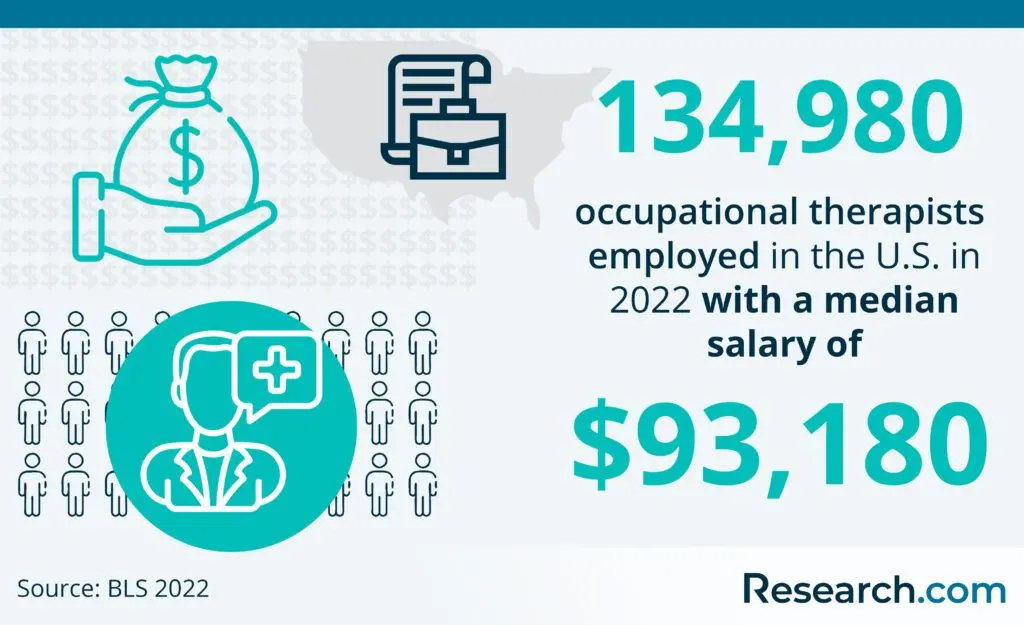
As of 2024, the average annual occupational therapist salary in the United States was approximately $97,200. Pay is not uniform across the profession. Occupational therapists in home health care, outpatient care centers, management-related roles, specialty hospitals, and some high-cost states often report higher wages than OTs in lower-paying education or traditional therapy office settings.
Salary should be evaluated alongside licensure requirements, graduate education costs, clinical fieldwork, preferred patient population, schedule flexibility, benefits, productivity expectations, and long-term advancement options. A higher hourly rate is not always the best offer if the role has heavy travel, limited benefits, high documentation burden, or little room for specialization.
What is an occupational therapist?
An occupational therapist is a licensed healthcare professional who helps people participate more fully in daily activities after illness, injury, disability, developmental delay, cognitive change, mental health difficulty, or environmental barriers. In occupational therapy, “occupation” does not only mean paid work. It includes self-care, school participation, household tasks, mobility, caregiving, play, community participation, and other meaningful routines.
Based on Bureau of Labor Statistics data, there were a total of 138,900 occupational therapists employed in the US in 2024. OTs assess physical function, cognition, emotional health, sensory processing, home or workplace environments, and the demands of daily tasks. From there, they build intervention plans that may include adaptive equipment, therapeutic activities, safety training, ergonomic changes, caregiver education, mobility strategies, or task modification.
Occupational therapy is also expanding into areas beyond traditional rehabilitation. One emerging role for occupational therapy is organizational workplace mental health. As employers look for ways to reduce anxiety, burnout, injury risk, and productivity loss, OTs can contribute practical interventions that connect health, function, environment, and work design.
Compensation matters because pay, staffing, workload, and workplace quality can affect retention and performance. Research on occupational change during the Great Resignation shows that worker dissatisfaction can influence career movement, which is relevant when evaluating how job conditions eventually affect job performance.
Where do occupational therapists work?
Occupational therapists work across healthcare, education, home-based care, community programs, and workplace environments. The setting shapes the patient population, schedule, documentation load, physical demands, and earning potential.
| Work setting | What OTs typically do | Salary and lifestyle considerations |
| Hospitals and rehabilitation centers | Support patients recovering from surgery, stroke, injury, serious illness, or functional decline. | Often more clinically complex and fast-paced, with competitive pay but potentially heavier caseloads. |
| Schools and educational institutions | Help students with fine motor skills, sensory processing, classroom participation, adaptive tools, and school-based functional goals. | May offer predictable schedules and school breaks, though salaries can be lower than some clinical roles. |
| Private practices | Provide outpatient therapy services for children, adults, or specialty populations. | Income can grow with referrals and niche services, but owners must manage billing, staffing, marketing, and compliance. |
| Home healthcare | Visit patients at home to improve safety, self-care, mobility, and independence after illness or injury. | Can offer strong pay and flexibility, but travel time, mileage, documentation, and scheduling should be reviewed carefully. |
| Workplace and corporate settings | Address ergonomics, injury prevention, return-to-work planning, productivity, and employee well-being. | May appeal to OTs interested in consulting, prevention, and organizational health rather than traditional clinical care. |
Some people comparing healthcare careers also look at nursing pathways. If your goal is direct hospital-based patient care rather than rehabilitation-focused practice, it may be useful to compare OT preparation with fast RN certification program options, nursing career timelines, and faster routes into registered nursing.
What are the benefits of pursuing occupational therapy specialties?
Specialization can help occupational therapists move beyond generalist roles and build expertise in a defined patient population, condition, or service model. It can also strengthen a salary negotiation, support private practice development, and make an OT more competitive for advanced clinical or leadership roles.
- Higher earning potential: Specialized occupational therapists may qualify for roles that require advanced clinical judgment, such as hand therapy, pediatrics, neurological rehabilitation, or geriatrics.
- More targeted job opportunities: Employers in rehabilitation hospitals, outpatient clinics, home health, specialty practices, and complex care settings may seek OTs with focused skills.
- Stronger professional credibility: A recognized specialty can help an OT become known for a specific area of practice, which may support referrals, teaching, consulting, or leadership work.
- Improved patient care: Advanced training helps therapists select better interventions for specific diagnoses, functional barriers, or populations.
- Ongoing professional development: Specialty practice usually requires continuing education, which helps OTs stay current with evidence, tools, and regulatory expectations.
- Private practice potential: A defined specialty, such as pediatric therapy or hand rehabilitation, can make it easier to communicate value to patients, physicians, families, and referral partners.
What is the average annual occupational therapist salary?
As of 2024, the average annual occupational therapist salary in the United States was approximately $97,200. Actual earnings can be higher or lower depending on state, city, work setting, years of experience, specialty, employer type, productivity expectations, and whether compensation is salaried, hourly, per visit, or contract-based.
Most people should not evaluate OT pay without also considering the cost and length of required education. Registration with a national, regional, or state regulatory organization is required to practice as an occupational therapist in most World Federation of Occupational Therapists member organizations. A 2024 WFOT survey found that a bachelor's degree or equivalent remained the most frequently cited minimum entry requirement to practice occupational therapy, with 65% of survey respondents identifying it as essential. However, becoming licensed as an occupational therapist requires an advanced degree.
Students comparing rehabilitation and diagnostic healthcare paths may also want to look at related allied health programs, such as a sonography associate’s degree, before committing to the longer OT licensure route.
Rehab therapy students expect to earn between $70,000 and $90,000 once they enter the field. Among rehabilitation therapists, inpatient, outpatient multidisciplinary, outpatient private practice, and physician-owned or orthopedic settings showed the strongest representation of professionals earning more than $75,000 per year.
Occupational Therapist Projected Job Growth
From 2024 to 2034, employment of occupational therapists is projected to grow by 15%, which is much faster than the average for all occupations. About 13,200 job openings are projected each year through 2034. Many openings are expected because workers retire, leave the labor force, or move into different occupations.
Demand for occupational therapy is shaped by healthcare capacity, delayed intervention, caregiver availability, and broader referral patterns. One survey identified several pressure points: 83% cited lack of capacity in the health and care system, 69% pointed to deterioration in occupational performance due to delayed intervention, 55% identified lack of available carers, and 45% cited a wider range of referrals received by practitioners.
Occupational therapists are important in rehabilitation, chronic disease management, aging-related care, and functional independence. People with diabetes, cardiovascular disease, musculoskeletal conditions, neurological disorders, injuries, developmental needs, and mental health challenges may need OT services to complete daily activities safely and effectively. As with other high-demand healthcare fields, workforce need can influence compensation; similar market forces may affect specialized medical careers such as those discussed in this guide to plastic surgeon salary considerations.
The aging population, healthcare system growth, rehabilitation needs, and chronic disease management all contribute to demand. Older adults often need support with home safety, mobility, activities of daily living, adaptive equipment, and caregiver education. Healthcare expansion can also increase openings for OTs in hospitals, outpatient care, home health, skilled nursing, and community-based services.
Occupational Therapist Salary Comparison Across Industries
Industry is one of the biggest salary variables for occupational therapists. Two OTs with similar education and experience can earn different wages if one works in a school system and the other works in home health, management, or outpatient care. Pay differences often reflect reimbursement models, staffing shortages, patient complexity, travel demands, funding sources, and employer budgets.
A 2024 survey of rehabilitation therapists found that 52.1% of practitioners, including occupational therapists, were connected with outpatient private practice, 14.3% worked in outpatient hospital-based rehabilitation facilities, and 11.2% worked in inpatient hospitals. OTs in these settings often coordinate with physicians, nurses, physical therapists, speech-language pathologists, educators, social workers, caregivers, and case managers.
Occupational therapists in healthcare settings such as hospitals, medical centers, and outpatient clinics often receive competitive annual salaries ranging from $87,000 to $105,000. These roles may involve medically complex patients, detailed documentation, interdisciplinary care planning, and productivity requirements.
School-based OT salaries can vary depending on district funding, union agreements, location, and contract length. Private practice and outpatient clinic pay depends on referral volume, payer mix, service niche, local competition, and business performance. Private practice owners can influence their own pricing and service model but also take on financial, compliance, staffing, and marketing responsibilities.
Government agencies, public health organizations, and research institutions may use pay scales tied to public funding, grants, or institutional budgets. These jobs can offer stability and benefits, though salary ranges may be lower than in high-demand clinical or private-sector settings.
Occupational therapists in corporate, consulting, ergonomics, vocational rehabilitation, or industry-based roles often work outside traditional care delivery. In 2024, the average occupational therapist salary working in industry roles was approximately $105,000, reflecting ongoing market trends.
| Industry | Annual Mean Wage |
| Offices of other health practitioners | $90,750 |
| General Medical and Surgical Hospitals | $95,730 |
| Home Health Care Services | $105,700 |
| Nursing Care Facilities (Skilled Nursing Facilities) | $98,000 |
| Specialty (except Psychiatric and Substance Abuse) Hospitals | $99,040 |
| Educational Support Services | $80,400 |
| Management of Companies and Enterprises | $117,790 |
| Outpatient Care Centers | $102,840 |
Industries Where Highest-Paid Occupational Therapists Are Employed
The highest-paying OT settings are often those where therapists bring specialized expertise, manage complex cases, work in high-demand environments, or support business-critical functions. Home health care, for example, can pay well because OTs deliver individualized care in patients’ homes and may help reduce hospital readmissions, improve safety, and support independence after acute care.
Management, scientific, and technical consulting roles may also pay more because OTs apply their knowledge to organizational problems, workplace design, injury prevention, productivity, and compliance. Specialty hospitals, including rehabilitation, orthopedic, neurological, or geriatric-focused hospitals, may offer higher salaries because patient needs are complex. In these specialized areas, the annual occupational therapist salary can reach $102,700.
Occupational therapists working in physician-owned medical offices or clinics receive an average of $97,750 annually. These roles may involve outpatient rehabilitation, orthopedic recovery, post-surgical care, or other specialized services.
OTs employed in nursing homes, assisted living facilities, or residential care settings may earn $98,000 annually. This is more than figures discussed in some nursing comparisons, including how much do nurses make per hour. OT wages may also compare favorably with some related nursing roles, such as a forensic nurse, depending on setting and location.
| Industry | Annual Mean Wage |
| Management of Companies and Enterprises | $ 117,790 |
| Home Health Care Services | $ 105,700 |
| Outpatient Care Centers | $ 102,840 |
| Specialty (except Psychiatric and Substance Abuse) Hospitals | $ 99,040 |
| Nursing Care Facilities (Skilled Nursing Facilities) | $ 98,000 |
| General Medical and Surgical Hospitals | $ 95,370 |
| Offices of Other Health Practitioners | $ 90,750 |
| Offices of physical, occupational and speech therapists, and audiologists | $ 80,450 |
Occupational Therapist Salary Comparison by Geographic Location
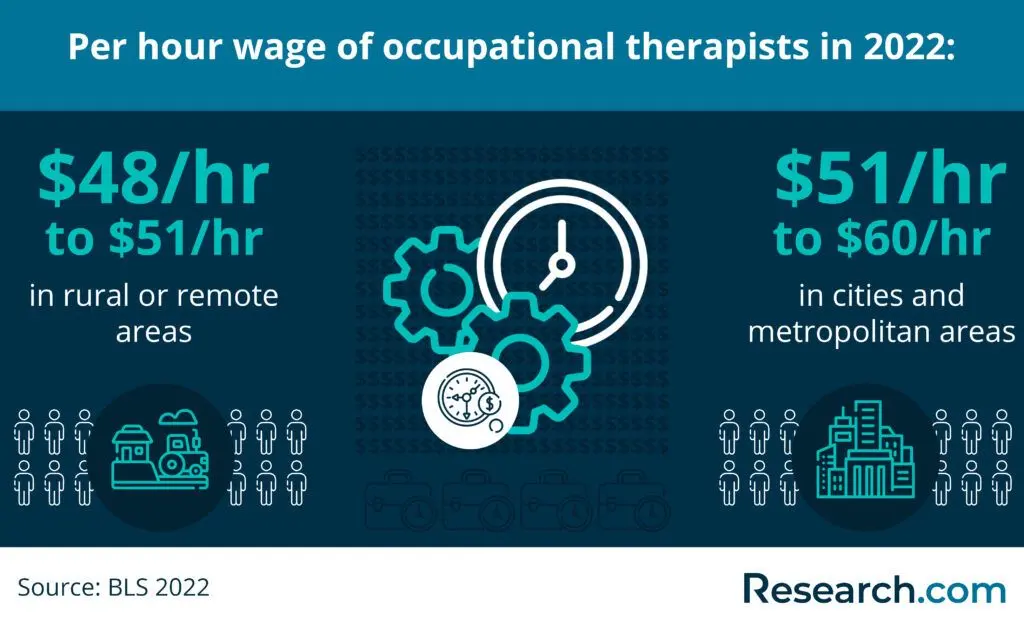
Location affects occupational therapist salary because pay must compete with local cost of living, healthcare demand, workforce shortages, reimbursement patterns, and state or regional funding. In major metropolitan areas and high-cost cities, OT wages may range from $63 to $79 per hour. Higher hourly pay, however, should be weighed against housing, transportation, taxes, commute time, and workload.
In rural or remote areas, salaries may be lower, often around $50 to $53 per hour. However, some rural regions have shortages of healthcare professionals, which can create opportunities for better offers, loan repayment, flexible schedules, or broader clinical responsibilities.
State-level differences can be significant. Healthcare infrastructure, population size, aging demographics, state reimbursement policies, hospital density, school funding, and local labor markets all influence compensation. A state with higher wages may not always produce higher disposable income if the cost of living is also high.
Occupational therapy pay also varies internationally. Economic conditions, healthcare systems, regulation, workforce supply, and cultural expectations shape compensation across countries. Developed countries with high demand for rehabilitation professionals may offer stronger salaries than regions with fewer healthcare resources.
States Where Highest-Paid Occupational Therapists Are Located
Some states are known for higher occupational therapist wages because of healthcare demand, cost of living, labor shortages, or strong regional healthcare systems. California is often associated with higher OT salaries, with annual pay at $113,250. Its high cost of living, large healthcare market, and diverse patient population contribute to wage pressure.
Nevada is another high-paying state for OTs, with salaries at $106,470. The demand for healthcare professionals in the state, especially in areas such as Las Vegas, can support competitive compensation. Texas also has a large healthcare sector and growing population, creating opportunities in metropolitan markets such as Houston and Dallas.
Occupational therapists in New Jersey receive $110,050 on average, which is above the national average. Proximity to New York City and Philadelphia, combined with high living costs, can contribute to stronger pay. Connecticut and Massachusetts also benefit from established healthcare systems, major hospitals, rehabilitation centers, and higher-cost labor markets.
| State | Annual Mean Wage |
| California | $ 109,220 |
| Nevada | $ 105,020 |
| New Jersey | $ 104,710 |
| Alaska | $ 100,810 |
| Virginia | $ 97,980 |
| Texas | $ 96,100 |
| New Mexico | $ 95,060 |
| New York | $ 93,190 |
How can I increase my earning potential as an occupational therapist?
Increasing OT income usually requires a mix of clinical skill, specialization, strategic job selection, negotiation, and sometimes geographic mobility. The best path depends on whether you want higher direct-care pay, more predictable hours, leadership responsibility, private practice ownership, consulting work, or a transition into administration.
| Strategy | When it makes sense | What to check first |
| Specialize clinically | You want to become more competitive in pediatrics, hand therapy, neurological rehabilitation, geriatrics, or complex care. | Confirm whether the specialty is in demand in your region and whether certification costs are justified by pay or career growth. |
| Move into home health or outpatient care | You want higher earning potential and are comfortable with documentation, productivity standards, travel, or variable caseloads. | Review mileage reimbursement, benefits, scheduling expectations, cancellation policies, and paid documentation time. |
| Pursue leadership | You enjoy supervision, operations, compliance, quality improvement, or program development. | Compare salary increases with added responsibility, overtime expectations, and loss of clinical flexibility. |
| Build a private practice or consulting service | You want autonomy and can manage business risk. | Understand payer contracts, billing, liability coverage, marketing, referral development, and local competition. |
| Negotiate strategically | You have measurable outcomes, specialty skills, strong references, or competing offers. | Use current salary data, know your walk-away point, and compare total compensation rather than base pay alone. |
- Further your education. Advanced degrees and certifications can strengthen your profile for specialty, leadership, or academic roles. Specializations such as hand therapy, pediatrics, or neurological rehabilitation may support higher-paying opportunities. Based on recent Bureau of Labor Statistics data, occupational therapists that specialize in geriatrics earn approximately 20% more than the average therapist salary.
- Build experience in varied settings. Experience across acute care, outpatient rehabilitation, home health, schools, and specialty clinics can make you more adaptable. If you want to strengthen sports medicine or movement-related skills, reviewing the best athletic training programs can help you compare related training areas.
- Explore advanced practice or supervisory roles. Clinical specialist, clinical supervisor, manager, program coordinator, and director roles may offer higher compensation. OTs who began in adjacent therapy support roles can also compare career progression with associate in physical therapy assistant programs.
- Consider geographic mobility. Some areas offer higher pay because of demand, workforce shortages, or cost of living. Occupational therapists in metropolitan areas may earn higher per-hour wages by as much as $32 compared to non-metropolitan areas.
- Negotiate using evidence. Before accepting or renewing a position, compare occupational therapist average salary data by industry, state, and setting. Salary reports used by students in related healthcare programs, including BSN DNP programs online, can help you understand broader healthcare compensation trends.
- Consider private practice or consulting. Owning a practice can increase control over services and income, but it requires business planning, billing knowledge, compliance awareness, and referral development. Management-focused study, such as a master in nursing administration, may help clinicians understand healthcare operations.
- Develop a strong professional network. Conferences, alumni groups, clinical mentors, specialty communities, and professional associations can lead to referrals, job leads, and better market knowledge. A strong professional network can also help you identify higher-paying roles before they are widely advertised.
- Seek promotion pathways inside your organization. Ask about clinical ladders, lead therapist roles, committee participation, quality improvement projects, supervision, and management openings. Some professionals also compare OT advancement with nursing mobility through accredited RN to BSN online programs.
How Do Healthcare Policy Changes and Digital Innovations Influence Occupational Therapy Salaries?
Healthcare policy can affect occupational therapy compensation because reimbursement rules, documentation standards, coverage decisions, quality reporting, and funding priorities influence how employers budget for therapy services. When reimbursement becomes more restrictive, employers may increase productivity expectations or limit hiring. When policy supports home-based care, preventive services, rehabilitation access, or value-based outcomes, demand for occupational therapy may improve in certain settings.
Digital tools also matter. Telehealth, electronic health records, remote monitoring, assistive technology, scheduling systems, and digital documentation platforms can change how OTs deliver care and prove outcomes. Therapists who understand compliance, coding, documentation quality, and reimbursement may be better positioned for leadership or revenue-sensitive roles. For clinicians who want stronger administrative fluency, billing and coding classes can provide useful context for documentation and revenue cycle management.
How Can Mentorship and Professional Networking Elevate Occupational Therapy Careers?
Mentorship can help occupational therapists avoid slow career growth, underpaid roles, and poorly matched specialties. Experienced mentors can explain which settings are demanding, which certifications are respected, how to document outcomes, how to prepare for leadership, and how to negotiate from a stronger position.
Networking also helps OTs understand the real job market beyond posted salaries. Conversations with peers can reveal whether a high-paying job has excessive productivity expectations, unpaid travel, limited mentorship, or high turnover. Professionals with science backgrounds who are still comparing career directions may also find it useful to review jobs you can get with a biology degree to understand adjacent healthcare and life science opportunities.
Emerging Career Paths and Non-Traditional Roles for Occupational Therapists
Occupational therapists are no longer limited to hospitals, schools, and outpatient clinics. Some are moving into ergonomics, workplace wellness, assistive technology, inclusive design, vocational rehabilitation, aging-in-place consulting, home modification, mental health programming, disability services, community health, and product development.
Workplace mental health is a particularly relevant area because employers are trying to address burnout, stress, retention, and productivity. OTs can help organizations design routines, environments, and workflows that support function and participation rather than only treating problems after they become severe.
Nonprofit and international development roles may also appeal to OTs who want community-based rehabilitation experience. These roles may not always be the highest-paying, but they can build program development, advocacy, and population-level intervention skills.
Additional interdisciplinary education can support broader roles. For example, an online masters in human services may be useful for occupational therapists interested in case management, social service leadership, community programs, policy, or advocacy.
Advance Your Career with Specialized Education in Occupational Therapy
Advanced education can help occupational therapists qualify for specialty practice, leadership, teaching, research, administration, or consulting. The right program depends on your career goal. A clinical specialty credential may be more useful for direct patient care, while a management degree may be better for department leadership or healthcare operations.
Occupational therapists interested in administrative roles can compare programs such as 1 year masters in healthcare administration programs online. This type of pathway may help clinicians build skills in budgeting, staffing, compliance, quality improvement, and healthcare strategy.
Before enrolling in any program, compare accreditation, cost, employer tuition support, transfer policies, clinical requirements, time to completion, and whether the credential is valued by employers in your desired setting. Do not assume that every advanced degree automatically leads to a higher salary.
Can Accelerated PharmD Programs Enhance Interdisciplinary Patient Care?
Occupational therapists often collaborate with pharmacists, physicians, nurses, and other clinicians, especially when medication side effects influence balance, cognition, fatigue, pain, or daily functioning. While OT and pharmacy are separate professions, understanding medication management can improve interdisciplinary communication and patient safety.
Professionals who want to understand the pharmacy pathway can review PharmD programs accelerated. This route is most relevant for people considering a pharmacy credential or a major interdisciplinary career shift, not for OTs who only need continuing education in medication-related care considerations.
Can Accelerated Healthcare Administration Degrees Propel My Occupational Therapy Career?
Healthcare administration training can be valuable for occupational therapists who want to move into management, operations, compliance, quality improvement, program development, or executive leadership. These roles require more than clinical skill. They require budgeting, staffing, workflow design, payer awareness, data interpretation, and organizational communication.
Accelerated healthcare administration programs may appeal to working therapists who want management preparation without a long academic timeline. Before choosing one, compare cost, accreditation, faculty experience, course format, employer recognition, and whether the curriculum includes healthcare finance and leadership. To explore this pathway, review the quickest online degrees in healthcare administration.
What other career paths can I pursue with a master's degree in a related field?
Occupational therapists who want to move beyond individual clinical care may consider graduate study in public health, healthcare administration, human services, education, rehabilitation science, or policy. These pathways can support roles in program management, population health, disability advocacy, community intervention, research coordination, or healthcare leadership.
If public health is one of your options, review What can you do with a masters in public health to compare career paths, specializations, and how an MPH can complement clinical experience.
Can a Public Health Perspective Enhance My Occupational Therapy Career?
Public health training can help occupational therapists think beyond one-on-one care and address population-level risks, prevention, accessibility, community participation, workplace health, and health equity. This can be useful for OTs interested in school systems, aging programs, community rehabilitation, disability policy, nonprofit leadership, or preventive care initiatives.
For professionals who want to build a formal foundation in this area, an online bachelors in public health may help develop knowledge in prevention, epidemiology, community health planning, and program evaluation.
How can I negotiate a higher salary as an occupational therapist?
Salary negotiation should start before the interview. Research salary by state, setting, specialty, and employer type. Then compare the full compensation package, including base pay, benefits, retirement contributions, paid time off, productivity requirements, travel reimbursement, continuing education support, student loan assistance, schedule flexibility, and supervision expectations.
When negotiating, focus on evidence. Use patient outcomes, productivity, specialty training, referral development, leadership contributions, documentation quality, staff mentoring, or program growth to show your value. If you are seeking management responsibilities, credentials from a cheapest online healthcare administration degree may help demonstrate that you understand operations as well as clinical practice.
| Common mistake | Better approach |
| Accepting the highest hourly rate without reviewing the full job structure. | Compare benefits, travel time, documentation expectations, cancellation policy, and workload. |
| Assuming a specialty certification will automatically raise pay. | Confirm employer demand, reimbursement relevance, and local job openings before investing. |
| Choosing a graduate or continuing education program without checking accreditation or employer recognition. | Verify accreditation, licensure relevance, cost, and return on investment. |
| Negotiating based only on personal financial need. | Use market data and measurable professional value to support your request. |
| Ignoring geographic cost of living. | Calculate net income after housing, commuting, taxes, and benefits differences. |
Is an Occupational Therapy Career Worth It Financially?
Occupational therapy can be financially worthwhile for people who want a licensed healthcare career focused on function, rehabilitation, independence, and meaningful daily participation. The profession offers multiple settings, projected job growth, and opportunities to specialize. However, the return on investment depends heavily on education cost, debt, state wages, licensure requirements, job setting, and long-term career goals.
Before entering the field, ask these questions:
- What degree and licensure requirements apply in my state? Do not assume requirements are identical everywhere.
- How much will my OT education cost after scholarships, grants, employer support, and loans? Tuition alone does not show total cost.
- Which settings pay well in my region? Home health, outpatient care, management, and specialty hospitals may differ from local school or clinic salaries.
- What type of work do I want daily? Higher pay may come with travel, productivity quotas, complex documentation, or less predictable scheduling.
- Is specialization worth the investment? Compare certification costs with actual salary growth and job openings.
- What is my backup plan? Consider leadership, consulting, administration, education, public health, or program development if direct care no longer fits your goals.
Key Insights
- Occupational therapist salary depends on more than the national average. As of 2024, the average annual occupational therapist salary in the United States was approximately $97,200, but pay varies by industry, state, setting, specialty, and experience.
- Demand is supported by healthcare and workforce trends. From 2024 to 2034, employment of occupational therapists is projected to grow by 15%, with about 13,200 openings projected each year through 2034.
- Industry choice can change earning potential. Management of Companies and Enterprises reported $117,790, Home Health Care Services reported $105,700, and Outpatient Care Centers reported $102,840 in annual mean wages.
- Location matters, but cost of living matters too. California, Nevada, New Jersey, Alaska, Virginia, Texas, New Mexico, and New York appear among higher-paying states in the salary table, but high wages should be compared with living expenses.
- Specialization can strengthen both pay and career options. Areas such as geriatrics, pediatrics, hand therapy, neurological rehabilitation, workplace health, and home modification can help OTs differentiate themselves.
- Higher pay is not always the better job. Review productivity standards, travel requirements, benefits, documentation burden, supervision, continuing education support, and advancement pathways before accepting an offer.
- Career growth requires strategy. The strongest salary path usually combines clinical competence, market-aware specialization, networking, negotiation, and careful evaluation of education ROI.
References:
- Bureau of Labor Statistics (2024). Occupational therapist wage and employment data.
- Brassey, J., Coe, E., Dewhurst, M. (2024). Employee burnout and workplace behavior analysis
- Indeed (2024). Occupational therapy specialty salary discussion
- Royal College of Occupational Therapists (2024). Occupational therapy workforce pressure findings.
- Hubspot (2024). Rehab therapy workforce report.
- Zweck, C. and Ledgerd, R. (2024). Global occupational therapy education survey.
Other Things You Should Know About Occupational Therapists
As of October 2027, occupational therapists in the U.S. earn an average annual salary of approximately $85,000. Salaries can vary based on factors like experience, specialization, and location within the country.
To increase income in 2027, occupational therapists should consider pursuing specialization certifications, gaining experience in high-demand fields like pediatrics, and seeking positions in metropolitan areas where salaries tend to be higher. Networking and collaborating across interdisciplinary teams can also open doors to higher-paying roles and opportunities for career advancement.
Salaries are influenced by factors such as geographic location, industry of employment, level of education, years of experience, and specialization. For example, occupational therapists in home healthcare services or management companies typically earn higher salaries than those in educational support services.
Most U.S. states require 24 weeks of supervised fieldwork before licensure, split between two Level II placements under a licensed occupational therapist. Candidates must also pass the NBCOT certification exam and meet state board rules before earning full practice authority.
To become an occupational therapist in 2027, a master's degree in occupational therapy is required, along with passing the NBCOT (National Board for Certification in Occupational Therapy) exam. State-specific licensing may also be needed, so it's important to check local regulations.
Industries offering the highest salaries for occupational therapists include management companies ($117,790), home healthcare services ($105,700), and outpatient care centers ($102,840). These industries demand specialized expertise and provide complex or high-demand services.
Salaries for occupational therapists vary by geographic location due to factors such as cost of living, demand for services, and regional economic conditions. States like California ($109,220) and Nevada ($105,020) offer higher salaries compared to states with lower costs of living and less demand for occupational therapy services.


