2027 MBA in Healthcare Management Careers: Guide to Career Paths, Options & Salary

Co-Founder and Chief Data Scientist
Choosing an MBA in healthcare management is not just a degree decision; it is a career strategy decision. Healthcare professionals, business graduates, nurses, administrators, and clinical workers often consider this path when they want to move from direct service or entry-level operations into leadership roles that influence staffing, budgets, technology, patient experience, compliance, and organizational growth.
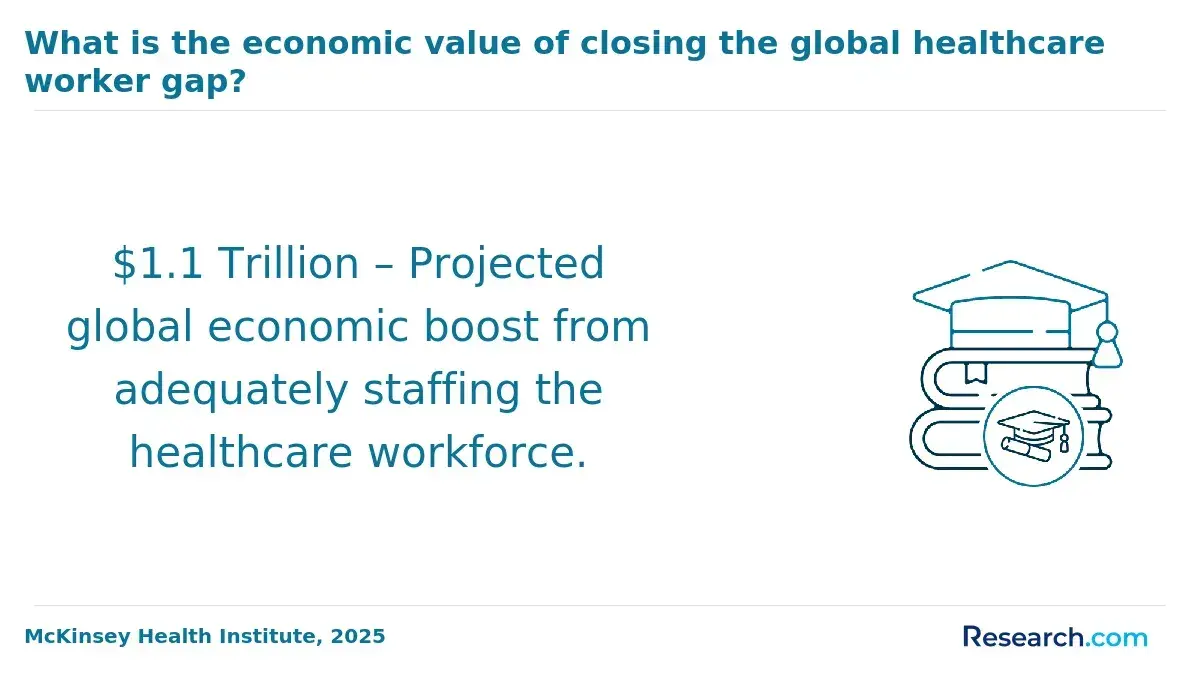
The appeal is understandable. The Bureau of Labor Statistics (BLS) reports an estimated healthcare management salary of $101,340, and the field is tied to long-term demand created by population growth, an aging workforce, digital health adoption, and increasingly complex healthcare delivery systems. The World Health Organization (WHO) has also warned of an estimated shortage of 15 million health workers by 2030, which makes capable healthcare leaders essential to keeping hospitals, clinics, long-term care facilities, insurers, and health systems functioning effectively.
This guide explains what MBA in healthcare management careers actually look like, how much healthcare administrators can make, which roles are realistic at different degree levels, what skills employers value, how digital transformation is changing the field, and how to decide whether an MBA, MHA, MPH, certificate, or related credential is the right next step.
MBA in Healthcare Management Careers Guide
- Why healthcare management careers are worth considering
- Career outlook for MBA in healthcare management graduates
- Skills healthcare managers need to build
- How to begin a healthcare management career
- How to move into higher-level healthcare leadership roles
- How digital transformation is changing healthcare management
- Career alternatives for healthcare management professionals
- How to choose an online healthcare management program
- Challenges to expect in healthcare management
- Affordable healthcare management degree options
- How an MBA prepares leaders for the future of healthcare
- When dual degrees make sense for healthcare leaders
- How pharmacy training can complement healthcare management
- How an MBA can affect salary and career growth
- Certifications that can strengthen an MBA advantage
- Typical MBA in healthcare management admission requirements
- MBA vs. 1-year MPH: which path fits your goals?
- When specialized healthcare administration training is useful
- Key takeaways for building an MBA healthcare management career
Quick Answer: What Can You Do With an MBA in Healthcare Management?
An MBA in healthcare management can prepare graduates for leadership roles in hospitals, physician practices, long-term care organizations, insurance companies, consulting firms, healthcare technology companies, public health agencies, and nonprofit healthcare organizations. Common career paths include healthcare administrator, medical and health services manager, healthcare consultant, operations director, patient relations director, chief operating officer, and health system executive.
The degree is most useful for professionals who want a business-focused leadership credential with healthcare specialization. It is less ideal for people who want direct clinical licensure, epidemiology-heavy public health work, or research-intensive academic roles unless they combine the MBA with another credential or clinical background.
Why pursue a career in healthcare management?
Healthcare management appeals to people who want to improve care delivery without necessarily working in a clinical role. Managers influence how healthcare organizations hire staff, allocate resources, follow regulations, adopt technology, protect patient data, reduce delays, improve quality, and respond to changing patient needs.
The employment outlook is also a major reason professionals explore this field. The BLS projects medical and health services manager employment to grow by 28% from 2024 to 2034, which is far faster than many other occupations. Demand is connected to the expansion of healthcare services, the need for better coordination across care teams, the use of electronic health records, and the operational complexity of modern health systems.
Salary potential is another factor, but it should be evaluated carefully. The healthcare administrator salary rate cited in this guide is around $101,340, though actual pay depends on role, employer size, location, experience, performance, and education. Completing an accredited MBA program can help healthcare professionals compete for leadership roles, but no degree guarantees a specific salary or promotion.
MBA in Healthcare Management Career Outlook
The labor market for healthcare management remains strong for professionals who can combine business judgment with healthcare-specific knowledge. According to the BLS, medical and health services managers are projected to see 28% job growth from 2024-2034, with about 54,300 annual job opportunities projected. That outlook reflects both industry expansion and replacement needs as current managers change roles or leave the workforce.
Other management occupations that can overlap with healthcare MBA career paths also show positive growth. Administrative services and facilities managers are projected to see a 7% increase in work opportunities between 2024 and 2034, while top executives are expected to grow by 6%. These roles may exist inside hospitals, health systems, insurers, pharmaceutical organizations, medical device companies, and healthcare nonprofits.
| Career category | Salary figure cited | Projected demand cited |
| Medical and Health Services Managers | $101,340 | 28% |
| Administrative Services and Facilities Managers | $99,290 | 7% |
| Top Executives | $98,980 | 6% |
These figures are useful for benchmarking, but they should not be read as automatic outcomes for MBA graduates. A new graduate moving into a first supervisory role will usually have different compensation prospects than an experienced healthcare executive leading a large facility or regional system.
Required Skills for MBA in Healthcare Management Careers
Healthcare management requires more than general business training. Leaders must understand how decisions affect patient safety, clinical workflows, reimbursement, privacy, compliance, staff workload, community access, and organizational finances. That is why many professionals pair business education with healthcare-specific study, such as a health administration degree or an MBA concentration in healthcare management.
Workforce data can vary depending on the source and method used. In 2024, Data USA reported 690,000 medical and health services managers, while the BLS reported 476,750 medical and health services managers as of 2024. The salary figures cited in the original data also differ, including $89,059 in 2024 and $104,830 in 2026. The practical takeaway is that healthcare management is a large occupational category, but readers should compare data sources carefully and look at local salary information before making enrollment or career decisions.
The WHO has emphasized the importance of stronger healthcare workforce planning, leadership, and management capacity. The same discussion noted that nearly 30% of managers feel insufficiently prepared to manage competence, according to recent studies in 2024. For aspiring leaders, this points to a real development need: education, mentoring, supervised management experience, and ongoing professional training matter.
Healthcare-Specific Skills Employers Often Value
Before comparing healthcare management salary potential or looking at accelerated online MBA programs, assess whether you are prepared to build the skills that healthcare employers typically expect from managers.
- Patient-centered decision-making: Managers must evaluate policies, budgets, staffing choices, and workflows through the lens of patient access, safety, experience, and outcomes.
- Healthcare system literacy: Effective leaders understand regulations, payer structures, delivery models, accreditation expectations, quality reporting, and how different parts of the healthcare system interact.
- Cultural competence: Healthcare managers need to support respectful care for patients and employees across different cultures, languages, ages, socioeconomic backgrounds, and health needs.
- Ethical judgment: Leaders regularly face decisions involving privacy, resource allocation, consent, compliance, conflicts of interest, and competing priorities.
- Burnout and fatigue awareness: Managers must recognize workload risks, staffing pressures, and signs of burnout so they can protect team performance and patient care.
- Coaching and staff development: Strong managers help employees grow through training, feedback, mentoring, performance support, and clear expectations.
- Quality improvement: Healthcare leaders should know how to use performance indicators, root-cause analysis, process improvement methods, and safety initiatives to improve care delivery.
Business and Leadership Skills Healthcare Managers Need
Healthcare management is a people-centered leadership field. Technical knowledge matters, but managers also need the soft skills and business skills required to lead teams under pressure.
- Leadership: Managers must set priorities, make decisions, motivate teams, and create accountability across departments with different professional cultures.
- Adaptability: Healthcare organizations respond constantly to policy changes, staffing shortages, new technologies, patient demand, reimbursement updates, and public health pressures.
- Communication: Clear communication is essential when working with physicians, nurses, executives, patients, families, vendors, insurers, and regulators.
- Collaboration: Many healthcare problems require cross-functional solutions involving clinical, administrative, financial, technology, and compliance teams.
- Digital literacy: Managers increasingly need comfort with EHR systems, dashboards, telehealth platforms, cybersecurity concerns, analytics, and information communication technologies.
- Problem-solving: Healthcare leaders must make practical decisions even when resources are limited, regulations are complex, and the consequences are significant.
- Continuous learning: The field changes quickly, so managers need to keep learning about policy, technology, quality standards, workforce issues, and care models.
- Professionalism: Integrity, discretion, accountability, and ethical behavior are nonnegotiable because healthcare managers handle sensitive information and high-impact decisions.
How to Start Your MBA in Healthcare Management Career
Most MBA in healthcare management candidates begin with a bachelor’s degree in health administration, business, biology, health science, nursing, public health, or another related field. However, your starting point does not have to be identical to everyone else’s. Some professionals come from clinical work, some from office administration, some from finance or operations, and others from patient services.
If you are still asking what you can do with a healthcare management degree, the answer depends heavily on degree level, experience, and the type of organization you target. The table below shows common pathways and salary examples cited for different levels of responsibility.
| Career stage | Health Services Path | Operations Management Path | Patient Relations Path | Case Management Path |
| Primary focus | Overseeing healthcare service delivery for patients, departments, or populations | Managing administrative systems, staffing, resources, and workflows that support patient care | Improving patient relationships, advocacy, communication, and service experience | Coordinating care plans, provider communication, and resource use to support patient outcomes |
| Entry Level Jobs | Healthcare Specialist ($53,766 per year) | Front Desk Supervisor ($41,000 per year) | Patient Care Specialist ($34,157 per year) | Case Specialist ($39,646 per year) |
| Junior Management Jobs | Patient Care Manager ($65,369 per year) | Medical Office Manager ($50,000 per year) | Patient Care Manager ($65,369 pear year) | Case Manager ($43,118 per year) |
| Middle Management Jobs | Director of Healthcare Services ($80,298 per year) | Healthcare Administrator ($104,280 per year) | Program Director ($80,664) | Resident Services Director ($62,648 per year) |
| Senior Management Jobs | Service Director ($114,981 per year) | Chief Operating Officer ($192,440 per year) | Patient Relations Director ($94,921 per year) | Hospice Director ($90,235 per year) |
What can I do with an associate’s degree in healthcare management?
Front Desk Supervisor. A front desk supervisor manages the front-office flow of a medical practice or healthcare facility. Duties may include scheduling, patient intake, records coordination, staff coverage, supply needs, and basic billing or insurance coordination.
Median Salary: $41,000
Health Information Technician. Health information technicians organize and maintain patient records, check records for accuracy, support coding and billing processes, and help ensure that documentation is complete and current.
Median salary: $44,000
Medical Biller. Medical billers prepare claims, submit billing information, review insurance details, follow up on unpaid claims, and help resolve errors that affect reimbursement.
Median salary: $41,000
What can I do with a bachelor’s degree in healthcare management?
Medical Office Manager. Medical office managers coordinate the administrative side of a practice, including scheduling systems, billing processes, staff responsibilities, patient records, supplies, and day-to-day office operations.
Median salary: $50,000
Health Information Manager. Health information managers oversee patient record systems, documentation quality, privacy practices, coding workflows, and health data processes that support clinical and administrative decisions.
Median Salary: $76,540
Physician Practice Manager. Physician practice managers supervise the business operations of a medical practice, including staffing, budgeting, workflow improvement, patient service, and coordination between providers and administrative teams.
Median Salary: $76,540
Can you get a healthcare management job with just a certificate?
Yes, a certificate can help you qualify for some healthcare office, billing, records, or entry-level administrative roles. However, a certificate alone usually offers a narrower range of opportunities than a bachelor’s degree or master’s degree, especially for leadership positions that involve budgeting, strategy, compliance, or department-level management.
Certificate holders may qualify for roles such as front desk supervisor, medical biller, or health information technician. Some positions may also require role-specific certifications, technical training, or state-specific requirements. If you are comparing certificate routes with entry-level MBA healthcare jobs, focus on the responsibilities employers list, not only the job title.
How can I advance my career in healthcare management career?
Career advancement in healthcare administration careers usually comes from a combination of education, measurable experience, leadership visibility, professional networks, and specialized expertise. Higher-level jobs often involve larger budgets, more staff, more regulatory responsibility, and greater accountability for outcomes.
| Advancement strategy | When it makes sense | What to watch for |
| Pursue a master’s degree | You want to move into department leadership, operations, consulting, executive administration, or strategic roles. | Compare MBA, MHA, MPH, and specialized master’s options before enrolling. |
| Earn professional certifications | You need proof of expertise in compliance, risk, finance, health IT, medical practice management, or executive leadership. | Choose credentials recognized by employers in your target role. |
| Build management experience | You are moving from individual contributor work into supervisory or operations responsibility. | Document outcomes such as improved workflows, reduced denials, stronger patient satisfaction, or better staffing processes. |
| Network intentionally | You want access to leadership openings, mentorship, association resources, or industry insight. | Prioritize healthcare associations, alumni networks, conferences, and employer leadership programs. |
- Pursue a Master's Degree: A general business degree can be useful, including an online business administration degree at the undergraduate level, but an MBA in healthcare management is more targeted for people who want leadership roles in healthcare organizations. The specialization can help connect finance, strategy, operations, and leadership concepts to healthcare settings.
- Pursue Professional Certifications: Credentials can demonstrate focused knowledge in areas such as healthcare finance, compliance, health information systems, risk management, or medical practice operations. Examples cited include the Certified Healthcare Financial Professional (CHFP) and the Certified Medical Practice Executive (CMPE).
- Pursue Apprenticeship Programs: Structured apprenticeships can help professionals gain practical exposure to healthcare administration while learning on the job. Examples cited include the Healthcare Apprenticeship Consortium, the Healthcare Leadership Apprenticeship Program, and the Healthcare Management Apprenticeship Program.
- Network and Gain Experience: Advancement often depends on being trusted with larger responsibilities. Professional associations, employer committees, volunteer leadership, industry events, and cross-functional projects can help you build credibility and contacts.
What can I do with a master’s in healthcare management?
Healthcare Consultant. Healthcare consultants help organizations improve operations, control costs, comply with requirements, redesign workflows, adopt technology, or solve strategic business problems.
Median salary: $77,000
Healthcare Administrator. Healthcare administrators manage the daily operations of healthcare facilities, departments, or programs. Their responsibilities may include staffing, budgeting, patient care coordination, compliance, and performance improvement.
Median salary: $104,280
Medical and Health Services Manager. Medical and health services managers plan, direct, and coordinate healthcare services. They may lead a clinical department, business unit, outpatient center, long-term care facility, or entire organization.
Median salary: $104,280
What kind of job can I get with a doctorate in healthcare management?
Healthcare Policy Analyst. Healthcare policy analysts examine data, regulations, financing models, and program outcomes to help governments, health systems, nonprofits, and other stakeholders improve healthcare policy.
Median salary: $85,000
Hospital Chief Operating Officer (COO). A COO oversees operational performance across a healthcare organization. Professionals who complete traditional or online MBA programs may pursue this level after gaining substantial leadership experience.
Median salary: $192,440
Hospital Chief Executive Officer (CEO). A hospital CEO sets the organization’s strategic direction, manages executive leadership, oversees financial performance, works with boards and stakeholders, and carries ultimate responsibility for organizational performance.
Median salary: $203,953
Which certification is best for healthcare management?
The best certification depends on your target role. A health IT manager, compliance officer, practice manager, risk leader, and hospital executive may all benefit from different credentials. Certifications can strengthen your profile by showing specialized knowledge beyond an MBA curriculum, but they are most valuable when matched to a clear career goal.
- Certified Professional in Healthcare Information and Management Systems (CPHIMS): Offered through the Healthcare Information and Management Systems Society (HIMSS), this credential is relevant for professionals focused on healthcare information technology.
- Certified Professional in Healthcare Risk Management (CPHRM): Offered by the American Hospital Association (AHA), this certification supports professionals working in healthcare risk management.
- Certified Medical Manager (CMM): Offered by the Professional Association of Health Care Office Management (PAHCOM), this option fits professionals involved in medical office management.
- Fellow of the American College of Healthcare Executives (FACHE): Offered through the American College of Healthcare Executives (ACHE), this credential is designed for healthcare administration professionals pursuing executive credibility.
- Certified in Healthcare Compliance (CHC): Offered by the Compliance Certification Board (CCB), this certification is relevant for healthcare professionals focused on compliance responsibilities.
The Role of Digital Transformation in Healthcare Management
Digital transformation has become a core management issue in healthcare. Leaders are expected to understand how technology affects patient access, data security, care coordination, staffing, reimbursement, reporting, and operational efficiency.
Electronic health records remain one of the most important examples. EHR systems support real-time information sharing, but they also create challenges around implementation, staff training, interoperability, documentation burden, cybersecurity, and privacy. Healthcare managers often coordinate the people, processes, and vendor relationships that make these systems work.
Telemedicine is another major operational area. After rapid expansion during the pandemic, telehealth remains part of many care models. Managers must consider scheduling, patient access, clinician workflow, insurance reimbursement, technology support, privacy, and regulatory requirements when integrating telehealth services.
AI and analytics are also affecting healthcare leadership. Managers may use data tools to forecast staffing needs, review patient volume, track quality indicators, analyze revenue cycle performance, and identify operational bottlenecks. However, leaders must also evaluate bias, accuracy, privacy, governance, and staff readiness before relying on automated insights.
Professionals who want more focused preparation in healthcare administration and technology-enabled operations may compare MBA options with online MHA programs. The right choice depends on whether your career goal is broader business leadership, healthcare administration specialization, public health, analytics, or clinical leadership.
Alternative Career Options for Healthcare Management
An MBA from an online MBA school with a healthcare management focus does not limit graduates to hospital administration. The skills can transfer to nonprofit healthcare organizations, human resources, finance, consulting, insurance, public agencies, health technology, and pharmaceutical operations.
What else can a healthcare management professional do?
Healthcare management professionals often develop transferable strengths in budgeting, compliance, stakeholder communication, process improvement, staffing, project management, and strategic planning. The following roles are examples of adjacent career paths with compensation figures cited in the source material.
- Nonprofit Manager: A nonprofit manager in a healthcare-related organization may oversee budgets, programs, staff, partnerships, fundraising priorities, and daily operations. The cited pay figure is $103,693.
- Human Resources Manager: HR managers coordinate hiring, workforce planning, employee relations, compensation processes, compliance, and organizational development. The cited pay figure is around $126,230.
- Financial Manager: Financial managers prepare reports, guide investment activity, oversee financial planning, and develop strategies for long-term financial goals. The cited pay figure is around $131,710.
What should you consider when selecting an online healthcare management program?
Do not choose an online healthcare management program based only on convenience or tuition. A stronger evaluation looks at accreditation, curriculum relevance, faculty experience, healthcare industry connections, student support, transfer policies, technology requirements, graduation timelines, and whether the program fits your career goal.
For graduate-level healthcare administration pathways, many professionals compare master in healthcare administration online programs with MBA programs. An MBA may be better for broad business leadership, while an MHA may offer deeper healthcare administration specialization.
| Program factor | Why it matters | Question to ask |
| Accreditation | Accreditation can affect employer recognition, transfer credit, financial aid eligibility, and academic quality assurance. | Is the institution accredited, and does the business or healthcare program have relevant programmatic accreditation? |
| Curriculum | A strong program should connect leadership, finance, operations, healthcare policy, quality, ethics, analytics, and compliance. | Are healthcare-specific courses built into the degree, or is healthcare covered only through electives? |
| Faculty background | Faculty with healthcare leadership experience can connect theory to real operational problems. | Have instructors worked in hospitals, health systems, insurance, consulting, public health, or healthcare technology? |
| Flexibility | Working professionals need realistic scheduling, predictable course loads, and support for online learning. | Can I complete the program while working full time, and what happens if I need to pause? |
| Career support | Networking, internships, projects, and alumni access can affect job mobility. | Does the program provide healthcare-specific career coaching, employer partnerships, or applied projects? |
| Total cost | Tuition is only one part of the cost; fees, books, travel, technology, and lost work hours also matter. | What is the full estimated cost through graduation, and what financial aid options are available? |
Challenges in Healthcare Management Careers
Healthcare management can be rewarding, but it is not an easy leadership track. Managers often work in environments where financial pressure, staffing shortages, patient needs, regulations, technology demands, and ethical issues collide.
Regulatory change is one challenge. Healthcare leaders must keep up with laws, payer rules, privacy requirements, quality standards, insurance policies, and reporting expectations. Falling behind can create financial, legal, or patient care risks.
Workforce pressure is another major concern. Healthcare teams may face long hours, emotional strain, burnout, difficult patient situations, and staffing gaps. Managers need to support employees while still meeting operational goals.
Financial decision-making can also be difficult. Leaders must manage budgets, control costs, improve efficiency, and allocate resources without weakening patient care. This often requires uncomfortable trade-offs.
Ethical judgment is equally important. Healthcare managers may encounter dilemmas involving patient privacy, access to care, resource scarcity, compliance, conflicts among stakeholders, and the responsible use of data.
What are the most affordable options for pursuing a degree in healthcare management?
Affordability should be evaluated through total cost, not just posted tuition. Compare tuition, fees, technology charges, books, travel requirements, transfer credit acceptance, employer tuition assistance, financial aid eligibility, and the time it will take to finish. A lower-cost program can become expensive if few credits transfer or if the schedule delays graduation.
Students looking for lower-cost options can start by reviewing the cheapest online healthcare administration degree options and then comparing those programs against accreditation, curriculum fit, and career support. The least expensive option is not always the best value if it does not support your target role.
How can an MBA in healthcare management prepare you for the future of healthcare?
An AACSB accredited online MBA in healthcare management can help professionals build the strategic, financial, operational, and leadership skills needed to guide organizations through healthcare change. The strongest programs connect business fundamentals to real healthcare problems rather than treating healthcare as a minor add-on.
- Technology adoption: Students learn to evaluate tools such as telemedicine platforms, analytics systems, AI-supported workflows, and EHR-related processes through business, clinical, and ethical lenses.
- Policy awareness: Healthcare leaders need to understand how insurance rules, public health priorities, regulations, and reimbursement changes affect operations.
- Value-based care: MBA coursework can help managers think beyond volume and focus on quality, outcomes, patient experience, and sustainable performance.
- Workforce leadership: Future-ready managers need strategies for hiring, retention, remote collaboration, employee well-being, and multidisciplinary teamwork.
- Sustainability and resilience: Leaders must plan for long-term organizational viability, resource constraints, technology shifts, and changing community needs.
Can dual degree programs accelerate your healthcare leadership journey?
Dual-degree pathways can make sense for professionals who need both clinical credibility and business leadership training. A clinician moving into administration, for example, may benefit from combining healthcare expertise with finance, strategy, operations, and organizational leadership.
This path is not necessary for everyone. It may add cost and workload, so it should be chosen only when the second credential clearly supports your target role. Clinicians exploring accelerated clinical options alongside management education may want to compare routes such as the quickest PharmD programs.
Can an advanced pharmacy degree enhance an MBA in healthcare management?
An advanced pharmacy background can strengthen an MBA pathway for professionals who want to lead in pharmaceutical operations, medication safety, pharmacy administration, managed care, regulatory strategy, or healthcare policy. Clinical knowledge can improve decision-making in settings where medication management, evidence-based practice, compliance, and patient safety are central.
For professionals comparing options, affordable online PharmD programs may be relevant if pharmacy leadership is the goal. However, an advanced pharmacy degree is not required for most general healthcare administration roles.
How does an MBA in healthcare management impact salary and career growth?
An MBA in healthcare management can improve career mobility by helping professionals qualify for roles that require business leadership, healthcare operations knowledge, budgeting ability, and strategic decision-making. It may support advancement into hospital administration, consulting, executive operations, healthcare finance, insurance management, or health system leadership.
Salary outcomes vary widely. The BLS figure cited for medical and health services managers is $110,680 in 2024, while other figures in this guide include $101,340 and $104,280 for healthcare administrator or medical and health services manager roles. Higher-level leadership roles in large healthcare organizations may exceed these figures, but compensation depends on employer size, region, experience, responsibility level, and performance.
Students who want to maximize the value of the degree should focus on accredited institutions, relevant healthcare coursework, applied projects, internships or employer-sponsored projects, and strong networking. Programs such as AACSB online MBA options may appeal to students who want business-school accreditation alongside online flexibility.
Can supplementary certifications boost your MBA advantage in healthcare management?
Yes, targeted certifications can strengthen an MBA when they fill a specific skill gap. For example, a healthcare operations leader may benefit from compliance training, while a revenue cycle manager may need deeper knowledge of coding, billing, reimbursement, and documentation workflows.
Supplemental credentials can also help professionals understand compensation and job expectations in adjacent roles. Reviewing resources such as how much medical coders make can provide useful context for revenue cycle, billing, and coding-related career decisions.
What are the admission prerequisites for an MBA in healthcare management?
Admissions requirements differ by school, but most MBA in healthcare management programs expect applicants to have an accredited bachelor’s degree, a satisfactory academic record, a resume, letters of recommendation, and a statement explaining career goals. Some programs prefer applicants with healthcare or management experience, especially for executive or part-time formats.
GMAT or GRE scores may be required at some schools, while others offer waivers based on professional experience, prior academic performance, or other criteria. Applicants without healthcare experience can strengthen their profile through relevant work, volunteering, certifications, or short healthcare training options such as fast track medical assistant programs online.
Is a 1-Year MPH Program a Valuable Alternative to an MBA in Healthcare Management?
A 1-year MPH and an MBA in healthcare management serve different goals. An MBA is usually better for people who want roles in operations, finance, strategy, consulting, executive leadership, or organizational management. An MPH is generally more aligned with public health practice, epidemiology, population health, health promotion, policy, and community-level intervention.
If you want to run a hospital department, manage a service line, lead healthcare operations, or move into executive administration, the MBA may fit better. If you want to work on public health programs, disease prevention, population data, or health policy, an MPH may be more appropriate. Candidates seeking a faster public health route can compare the cheapest 1-year MPH programs online.
Should You Consider Supplementing Your MBA with Specialized Healthcare Administration Training?
Supplemental healthcare administration training can be valuable if your MBA is broad and does not go deeply into healthcare regulation, quality improvement, reimbursement, patient safety, compliance, or health systems operations. It can also help professionals transitioning from non-healthcare industries build credibility faster.
Before adding another credential, ask whether it solves a real gap. If your target job requires deeper healthcare administration knowledge, reviewing the benefits of a master's degree in healthcare administration can help you decide whether an MHA, certificate, or focused coursework is worth the extra investment.
Common Mistakes to Avoid When Planning a Healthcare Management Career
- Choosing a program without checking accreditation: Accreditation can affect employer confidence, transfer credit, financial aid eligibility, and graduate school options.
- Looking only at salary averages: Salary data is useful, but it does not guarantee your personal outcome. Compare roles by experience level, region, employer type, and responsibility.
- Assuming an MBA replaces healthcare experience: Many employers still expect practical exposure to healthcare operations, clinical environments, compliance, or patient-facing systems.
- Ignoring the MBA vs. MHA vs. MPH distinction: These degrees overlap, but they are not interchangeable. Match the degree to the work you actually want to do.
- Underestimating technology requirements: Healthcare managers increasingly need to understand EHRs, analytics, telehealth, cybersecurity, and digital workflow design.
- Overpaying without calculating value: Compare total program cost, employer tuition support, graduation timeline, career services, and likely role outcomes before enrolling.
- Relying only on rankings: Rankings can help you build a shortlist, but fit, accreditation, cost, curriculum, and career support matter more for your individual decision.
Building a Strong MBA in Healthcare Management Career
A healthcare management career can offer strong growth potential, meaningful work, and access to leadership roles that shape how care is delivered. An MBA in healthcare management may be a smart choice if you want business training that applies directly to healthcare operations, strategy, finance, technology, and organizational leadership.
It is not the only route. Some professionals may be better served by an MHA, MPH, certificate, clinical degree, or a shorter business program such as one-year MBA programs. Nurses and other clinical professionals considering leadership roles may also compare healthcare-focused graduate options with broader business degrees.
The best next step is to identify your target role, compare degree requirements in real job postings, evaluate accredited programs, estimate total cost, and speak with professionals already working in the positions you want.
Key Insights
- Healthcare management is a leadership path, not just an administrative job: Managers influence staffing, budgets, compliance, technology, quality, patient experience, and organizational strategy.
- The outlook is strong, but outcomes vary: The cited BLS projection for medical and health services managers is 28% from 2024 to 2034, but salary and advancement depend on experience, employer, location, and role scope.
- An MBA is best for business-focused healthcare leadership: Choose it if you want operations, finance, strategy, consulting, or executive management roles. Consider an MHA for deeper administration specialization or an MPH for public health-focused work.
- Digital skills are now central: EHRs, telehealth, AI, analytics, cybersecurity, and data governance are increasingly part of healthcare management responsibilities.
- Accreditation and fit matter more than speed alone: Before enrolling, check accreditation, curriculum, faculty background, total cost, career support, and whether the program aligns with your target jobs.
- Certifications can help when they are targeted: Credentials in compliance, risk, health IT, medical practice management, finance, billing, or executive leadership are most useful when they match your career direction.
- Do the ROI work before committing: Compare program cost against realistic career pathways, not just average salary numbers or promotional claims.
Resources:
- McKinsey & Company. (2025). Heartbeat of health: Reimagining the healthcare workforce of the future. https://www.mckinsey.com/mhi/our-insights/heartbeat-of-health-reimagining-the-healthcare-workforce-of-the-future
- U.S. Bureau of Labor Statistics. (2025). Employment Projections 2024-2034. https://www.bls.gov/emp/
- U.S. Bureau of Labor Statistics. (2025). Occupations with the Most Job Growth. https://www.bls.gov/emp/tables/occupations-most-job-growth.htm
- U.S. Bureau of Labor Statistics. (2025). Medical and Health Services Managers. Occupational Outlook Handbook. https://www.bls.gov/ooh/management/medical-and-health-services-managers.htm
- U.S. Bureau of Labor Statistics medical and health services manager data; World Health Organization. (2024). Healthcare Leadership and Management Report. https://www.who.int/publications/i/item/healthcare-leadership-2024
- World Health Organization. (2024, January 9). WHO unveils new initiative to bolster health workforce data and planning. https://www.who.int/news/item/09-01-2024-who-unveils-new-initiative-to-bolster-health-workforce-data-and-planning
Other Things You Should Know About MBA in Healthcare Management Careers
In 2027, the job outlook for MBA graduates in healthcare management is expected to remain strong due to the ongoing growth in the healthcare sector. Demand for professionals who can navigate the complexities of healthcare operations and strategies is anticipated to increase, providing ample career opportunities.
Essential skills for healthcare managers include patient-centered care, health system awareness, cultural competency, ethical decision-making, stress and fatigue management, mentoring, and quality improvement. General skills like leadership, adaptability, communication, and digital literacy are also crucial.
Yes. MBA graduates can pursue Fellow of the American College of Healthcare Executives (FACHE) status if they meet ACHE eligibility requirements, complete the required healthcare management experience, pass the Board of Governors Exam, and submit references and continuing education documentation.
Advancing in healthcare management can be achieved through further education, obtaining professional certifications, gaining experience, and networking. Specializations and apprenticeships can also provide additional opportunities for career growth.
In 2027, top employers for MBA graduates in healthcare management include hospitals such as Mayo Clinic and Cleveland Clinic, healthcare consulting firms like McKinsey & Company, and government bodies like the Department of Health and Human Services. These organizations often seek candidates with advanced management skills and industry expertise.
In 2027, MBA graduates in healthcare management can pursue certifications such as Certified Healthcare Financial Professional (CHFP) and Fellow of the American College of Healthcare Executives (FACHE) to enhance their careers. These certifications can provide additional credibility and potentially lead to higher salary prospects.