
2027 Highest-Paying Exercise Science Degree Jobs: Salary & Careers

Co-Founder and Chief Data Scientist
Choosing an exercise science career is not just a question of liking fitness, sports, or human performance. The bigger decision is which path can realistically lead to strong pay, stable demand, and the right level of patient care, graduate education, licensure, or management responsibility. According to Data USA, the kinesiology and exercise science workforce currently includes 735,654 professionals and has grown by 6.52% in one year, which reflects expanding interest in fitness, rehabilitation, wellness, and performance-related services. This guide explains the highest-paying exercise science degree jobs for 2027, how clinical and non-clinical paths differ, what credentials may increase earning potential, and how to compare career options before investing in additional education.
Quick Answer: What are the best-paying exercise science careers?
- The highest-paying exercise science-related role listed in this guide is medical and health services manager, with a median annual salary of $110,680.
- Many of the strongest-paying careers connected to exercise science require more than a bachelor’s degree, including physical therapy, occupational therapy, chiropractic care, postsecondary teaching, and some psychology-related roles.
- Clinical careers usually involve direct patient care, licensure, supervised training, and strict credential requirements, while non-clinical careers may focus on coaching, wellness leadership, teaching, program management, research, or healthcare administration.
- Exercise science can be a strong starting point, but your long-term salary often depends on specialization, state, employer type, certifications, graduate education, and whether you move into leadership.
- Highest-paying exercise science degree jobs for 2027
- What exercise science means as an academic and career field
- Why a master’s in exercise science can improve salary potential
- Clinical vs. non-clinical exercise science careers
- Job outlook for exercise science professionals in 2027
- Best states for high-paying exercise science jobs
- How to move up in exercise science careers
- ROI of continuing education in exercise science
- Certifications that may increase your exercise science salary
- Using accelerated certification programs for faster career entryCompare certification options
- Healthcare administration options for exercise science graduates
- Accelerated healthcare administration degrees for leadership roles
- Affordable online science degrees and career growth
- Technology trends reshaping exercise science careers
- Interdisciplinary credentials for exercise science professionals
- Alternative high-paying careers for exercise science graduates
- Exercise science salary potential compared with related degrees
- Online health programs that can support an exercise science careerCompare related career paths
What are the highest-paying exercise science degree jobs for 2027?
The best-paying jobs for exercise science graduates are not limited to personal training or entry-level fitness roles. The strongest salary paths often connect exercise science knowledge with healthcare licensure, rehabilitation, nutrition, sports performance, psychology, education, or healthcare operations. The right option depends on how much schooling you are willing to complete, whether you want patient-facing work, and whether you prefer coaching, clinical care, research, teaching, or management.
| Career path | How exercise science applies | Typical advancement consideration | Best fit for students who want... |
| Medical and health services managers | Use health, wellness, and clinical program knowledge to manage departments, facilities, or service lines. | Leadership experience and healthcare administration training are often important. | A management-focused career with less direct patient care. |
| Physical therapists | Apply movement science, anatomy, and rehabilitation principles to help patients restore mobility and reduce pain. | Requires advanced clinical preparation and licensure. | Hands-on rehabilitation work with clear clinical responsibility. |
| Occupational therapists | Help people rebuild daily living and functional skills through therapeutic activities and adaptive strategies. | Requires professional preparation and licensure. | Patient-centered work focused on independence and quality of life. |
| Chiropractors | Use musculoskeletal and biomechanics knowledge to evaluate and treat movement-related concerns. | Requires chiropractic education and licensure. | A clinical path focused on non-invasive musculoskeletal care. |
| Dietitians and nutritionists | Connect exercise, metabolism, performance, and health goals with nutrition planning. | Credential and practice requirements vary by role and state. | Nutrition, wellness, sports performance, or clinical diet planning. |
| Athletic trainers | Prevent, assess, and support recovery from sports and activity-related injuries. | Credentialing and state requirements are central to practice. | Working directly with athletes in schools, teams, clinics, or sports organizations. |
| Exercise physiologists | Design exercise programs for health improvement, performance, or recovery based on physiological responses. | Certifications and clinical specialization can strengthen prospects. | Applied exercise programming in healthcare, wellness, or research settings. |
| Exercise science postsecondary teachers | Teach, mentor, conduct research, and prepare future professionals in kinesiology and exercise science. | Graduate education is typically expected, especially for full-time faculty roles. | Academic work, research, and curriculum development. |
| Sports psychologists | Support athletes’ mental performance, focus, motivation, and coping strategies. | Advanced psychology education and appropriate credentials are usually necessary. | Combining performance science with mental health or psychology. |
| Entertainment and recreation managers | Oversee programs, staff, budgets, and facilities connected to leisure, recreation, fitness, and wellness. | Management, budgeting, and program leadership experience matter. | Operational leadership in recreation, resorts, community programs, or fitness organizations. |
| Recreational therapists | Use structured activity programs to support physical, emotional, cognitive, and social functioning. | Credentialing may improve access to certain roles. | Therapeutic programming in rehabilitation, senior care, or community settings. |
| Coaches and scouts | Apply training principles, performance analysis, motivation, and athlete development strategies. | Experience, results, networks, and sport-specific credentials can be decisive. | A sports-centered career focused on team or athlete performance. |
| Occupational therapy assistants and aides | Support therapy plans that help patients regain functional abilities. | Assistant and aide roles have different preparation and responsibility levels. | A shorter route into rehabilitation support compared with becoming a therapist. |
Coaches and Scouts
Coaches and scouts help athletes improve performance, evaluate talent, plan training strategies, and identify players who may fit a team or program. Exercise science graduates can bring value through knowledge of conditioning, injury prevention, biomechanics, and performance testing. Pay can vary widely because employer level, sport, competition tier, reputation, and results all matter.
Exercise Physiologists
Exercise physiologists use scientific knowledge of the cardiovascular, respiratory, muscular, and metabolic systems to build exercise plans for health, rehabilitation, and performance goals. They may work in hospitals, wellness programs, research settings, or fitness organizations. Students who want flexible preparation can compare an online exercise science degree with campus-based programs, especially if they need to balance school with work.
Recreational Therapists
Recreational therapists design activity-based interventions that support recovery, independence, social participation, and emotional well-being. Their work can involve patients in rehabilitation centers, older adults in senior communities, individuals with disabilities, or community-based wellness participants. This path may appeal to students who want therapeutic work but do not want the same training route as physical therapy or occupational therapy.
Athletic Trainers
Athletic trainers help prevent, recognize, and respond to sports and activity-related injuries. They may provide immediate care, coordinate rehabilitation, educate athletes, and communicate with coaches, physicians, and families. This career suits students who want a fast-paced role tied closely to sports medicine and athlete health.
Occupational Therapy Assistants and Aides
Occupational therapy assistants and aides support treatment that helps patients rebuild daily living skills, workplace abilities, and independence. Assistants typically have more direct therapeutic responsibility than aides, while aides often focus more on preparation, support tasks, and administrative help. Exercise science graduates interested in rehabilitation should compare assistant-level roles with the longer path required to become an occupational therapist.
Dietitians and Nutritionists
Dietitians and nutritionists help individuals and groups use food choices to support health, recovery, performance, and disease prevention. Exercise science students who enjoy physiology and wellness may find this path appealing, particularly in sports nutrition, clinical nutrition, community health, or corporate wellness. Because credentialing rules can vary, students should check requirements before choosing a program.
Entertainment and Recreation Managers
Entertainment and recreation managers oversee programs, facilities, staffing, scheduling, safety, budgets, and guest or participant experience. Exercise science graduates may move into these roles after building experience in fitness centers, recreation departments, resorts, youth programs, or wellness organizations. If your goal is leadership rather than clinical care, an affordable online sports management degree may help you add business and management skills to your science background.
Chiropractors
Chiropractors evaluate and treat conditions related to the musculoskeletal system, often using hands-on methods, patient education, and movement-related guidance. Exercise science provides a strong foundation in anatomy, biomechanics, and injury prevention, but chiropractic practice requires additional professional education and licensure. Students should confirm accreditation and state requirements before committing to this route.
Exercise Science Postsecondary Teachers
Postsecondary teachers in exercise science teach college courses, advise students, develop curriculum, conduct research, and publish scholarly work. This is often a good fit for people who enjoy research, academic mentoring, and evidence-based teaching. Full-time academic positions generally require graduate-level preparation, and research-focused roles may expect substantial scholarly experience.
Sports Psychologists
Sports psychologists work with athletes and performers on motivation, focus, stress, confidence, team dynamics, and performance pressure. Exercise science can provide useful context for understanding athletes’ physical demands, but psychology careers usually require advanced study and appropriate credentials. Students should distinguish between mental performance consulting, counseling, and licensed psychology practice because the training requirements are not the same.
Occupational Therapists
Occupational therapists help people regain or improve the ability to complete everyday tasks after illness, injury, disability, or developmental challenges. They may work in hospitals, schools, rehabilitation centers, outpatient clinics, home health, or community programs. Exercise science can be a useful undergraduate foundation, but becoming an occupational therapist requires a professional pathway beyond the bachelor’s degree.
Physical Therapists
Physical therapists develop treatment plans that improve movement, restore function, manage pain, and support recovery after injury or illness. They work in hospitals, outpatient clinics, sports settings, private practices, and other healthcare environments. Exercise science is one of the common preparatory fields for students interested in physical therapy, but admission requirements and licensure expectations should be reviewed early.
Medical and Health Services Managers
Medical and health services managers coordinate healthcare operations, supervise staff, manage budgets, improve processes, and support quality care. Exercise science graduates may enter this path through wellness program management, rehabilitation administration, population health, or healthcare operations. This is one of the strongest options for graduates who want higher earning potential without spending most of their career in direct patient treatment.
How to choose among these high-paying exercise science careers
The best career is not always the one with the highest median salary. A strong choice should match your tolerance for graduate school, licensure, patient responsibility, schedule demands, and debt. For example, a future physical therapist may need to plan for a longer professional education route, while a future recreation manager may benefit more from leadership experience and business training. Students considering accelerated graduate study should evaluate whether programs such as best 6 month online master's degree programs actually match their career requirements, accreditation needs, and employer expectations.
Short-format graduate programs can be useful for some professionals, especially those moving into leadership, public health, sports management, or administrative roles. They are not a substitute for regulated clinical training when a profession requires licensure. Before enrolling, confirm whether the degree will qualify you for the specific job title you want.
What is exercise science as a field?
Exercise science studies how the human body responds and adapts to physical activity. It draws from physiology, anatomy, biomechanics, motor learning, nutrition, psychology, statistics, and health behavior to understand movement, performance, injury prevention, rehabilitation, and wellness.
Students comparing exercise science with a kinesiology major should know that the terms can overlap, but programs may differ by emphasis. Some exercise science programs focus heavily on pre-health preparation, strength and conditioning, or clinical exercise physiology. Others may lean toward wellness, coaching, research, or fitness leadership. Always review course lists, internship options, lab requirements, and graduate school prerequisites before choosing.
Exercise science graduates work in many settings, including healthcare facilities, athletic departments, corporate wellness programs, fitness organizations, rehabilitation centers, research labs, schools, and community agencies. The field is practical, but it is also science-based; strong programs should teach students how to interpret research, assess movement, communicate with clients or patients, and apply evidence-based exercise principles.
The following preserved chart summarizes median annual salary information for the occupations discussed in this guide, using US Bureau of Labor Statistics (BLS) data.
Why does a master’s in exercise science increase earning potential?
A master’s degree can increase earning potential when it helps you qualify for more specialized, advanced, or leadership-oriented roles. Graduate study may deepen your knowledge of exercise physiology, research design, biomechanics, performance assessment, program evaluation, rehabilitation science, or population health. That added expertise can matter when employers need professionals who can manage programs, interpret data, train staff, work with complex clients, or support evidence-based care.
However, a master’s degree is not automatically a salary guarantee. Its value depends on the career target. For some roles, certifications, supervised experience, licensure, or a professional doctorate may matter more than a general master’s degree. For other roles, especially wellness leadership, strength and conditioning, applied research, coaching administration, or academic preparation, a master’s can be a meaningful advantage.
If you are already working, online masters in exercise science programs may offer a more flexible way to continue your education. Compare tuition, accreditation, faculty expertise, internship requirements, transfer policies, and whether the curriculum aligns with the role you want next.
| When a master’s may be worth it | When another credential may be better |
| You want to teach, conduct research, manage programs, or qualify for advanced wellness and performance roles. | You need a license-specific pathway, such as physical therapy, occupational therapy, chiropractic care, or psychology practice. |
| Your employer rewards graduate education with promotion opportunities or higher responsibility. | Your target job primarily values experience, sport-specific results, or a specialized certification. |
| You want to strengthen graduate school or doctoral program preparation. | You are unsure of your career goal and would need to borrow heavily without a clear salary path. |
Clinical vs. Non-Clinical Exercise Science Degree Jobs
Exercise science careers generally fall into two broad categories: clinical and non-clinical. Clinical roles involve patient evaluation, treatment, rehabilitation, or health intervention and often require licensure, supervised training, and strict education standards. Non-clinical roles may focus on coaching, education, research, wellness programming, administration, recreation, or business operations.
| Category | Examples | Education and credential pattern | Main trade-off |
| Clinical exercise science careers | Physical therapists, occupational therapists, chiropractors, athletic trainers, exercise physiologists in some healthcare settings | Often require advanced degrees, certification, licensure, or supervised clinical experience depending on the occupation. | More regulated and training-intensive, but often offers clear professional identity and patient-care impact. |
| Non-clinical exercise science careers | Coaches and scouts, recreation managers, postsecondary teachers, sports performance roles, wellness managers, healthcare administrators | May depend more on experience, graduate education, business skills, teaching background, research ability, or industry certifications. | Can offer flexibility and leadership options, but job duties and salary ranges may vary widely by employer. |
Clinical roles such as physical therapy and occupational therapy require a higher level of responsibility because professionals may evaluate patient needs, create treatment plans, document progress, and coordinate care. These roles can be rewarding for students who want direct impact, but they also require careful planning because admissions prerequisites, clinical placements, exams, and state licensure rules can affect the timeline.
Non-clinical careers can be attractive for graduates who enjoy performance, business, education, or program leadership. A student who wants broad preparation across both tracks may compare programs such as the best online kinesiology degree options, while paying close attention to whether the curriculum includes labs, internships, anatomy, physiology, statistics, and career-specific electives.
Certification considerations for administrative and non-clinical roles
Some exercise science graduates move into healthcare operations, billing-related support, clinic administration, or wellness program coordination. In those cases, knowledge of documentation, reimbursement, coding, and compliance can be useful. A comparison such as CBCS vs CPC certification can help you understand how billing and coding credentials differ. CBCS stands for Certified Billing and Coding Specialist, while CPC stands for Certified Professional Coder. These credentials are not core exercise science certifications, but they may support certain administrative roles in healthcare settings.
Compensation differences between clinical and non-clinical roles
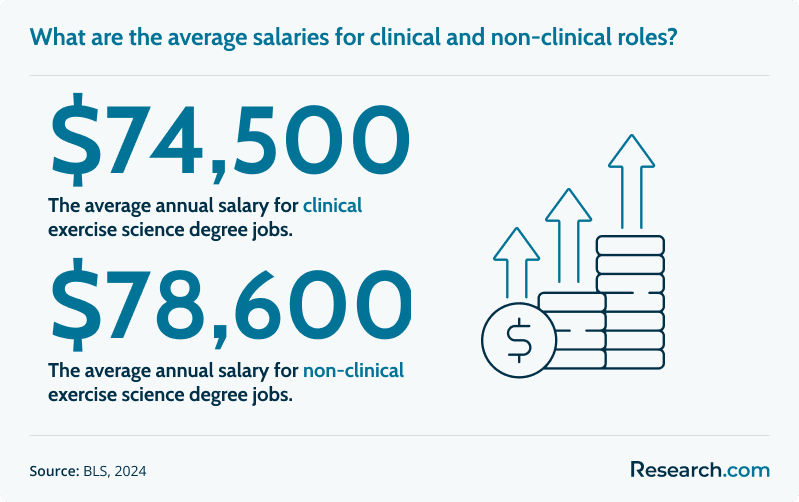
The clinical-versus-non-clinical choice should not be made on salary alone. The figures cited in this article indicate that clinical roles such as physical and occupational therapy average around $74,500 annually, while non-clinical academic and managerial roles average approximately $78,600. Those numbers should be interpreted carefully because individual pay depends on occupation, state, employer, experience, credentials, and responsibility level.
What is the job outlook for exercise science professionals in 2027?
The employment outlook for exercise science-related careers is supported by several forces: continued interest in preventive health, demand for rehabilitation services, sports participation, employer wellness programs, and the need for healthcare organizations to manage services efficiently. Data USA reports a 6.52% annual growth rate for the kinesiology and exercise science workforce, while BLS projections show different growth rates depending on the specific occupation.
The strongest projection in this list belongs to medical and health services managers, reflecting the broader need for healthcare operations leadership. Clinical rehabilitation roles also show notable projected growth, especially where aging, injury recovery, chronic disease management, and mobility support drive demand.
The table below keeps the BLS 2033 projected employment figures and 2024-2033 percent changes for the occupations discussed.
| Occupation | 2033 Projected Employment | 2024-2033 Percent Change |
| Coaches and Scouts | 334,000 | 9 |
| Exercise Physiologists | 23,700 | 10 |
| Recreational Therapists | 17,300 | 4 |
| Athletic Trainers | 38,700 | 13 |
| Occupational Therapy Assistants Aides | 62,900 | 21 |
| Dietitians and Nutritionists | 87,300 | 7 |
| Entertainment and Recreation Managers | 39,700 | 11 |
| Chiropractors | 67,300 | 10 |
| Exercise Science Postsecondary Teachers | 16,700 | 3 |
| Sports Psychologists | 59,400 | 5 |
| Occupational Therapists | 167,300 | 11 |
| Physical Therapists | 296,000 | 14 |
| Medical and Health Services Managers | 723,300 | 29 |
Which are the best states for high-paying exercise science degree jobs?
Location can significantly affect exercise science earnings, especially for specialized clinical and healthcare-adjacent roles. Cost of living, employer concentration, hospital systems, sports organizations, insurance markets, state credential rules, and demand for rehabilitation or wellness services can all influence pay.
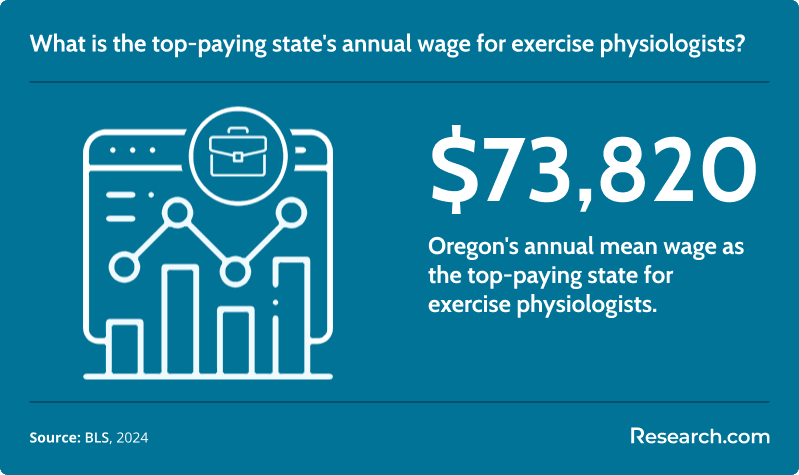
For exercise physiologists, the highest annual mean wage listed is in Oregon at $73,820. New York follows at $72,730, while Massachusetts is listed at $69,530 and Connecticut at $69,100. Indiana is also included with an annual mean wage of $67,500. These differences show why students should compare local salary data, licensing rules, job openings, and living costs before relocating or choosing a school based only on reputation.
| State | Annual mean wage for exercise physiologists | Career planning note |
| Oregon | $73,820 | Highest figure listed for exercise physiologists in this guide. |
| New York | $72,730 | Strong wage figure, but students should also consider cost of living. |
| Massachusetts | $69,530 | May appeal to graduates interested in healthcare, research, and academic environments. |
| Connecticut | $69,100 | Another high-wage state for exercise physiologists in the listed data. |
| Indiana | $67,500 | Included among the higher-paying states listed for this occupation. |
How to Advance in Exercise Science Jobs
Career advancement in exercise science usually comes from a combination of targeted education, documented experience, professional relationships, and credentials that match a specific role. The most successful path is rarely “collect as many credentials as possible.” A better strategy is to identify the job you want, study its requirements, then fill the exact gaps in your education or experience.
- Choose a direction early. Decide whether you are aiming for clinical practice, sports performance, wellness leadership, teaching, research, or healthcare administration.
- Check credential requirements. Look up licensure, certification, supervised experience, and degree expectations before enrolling in a program.
- Build practical experience. Internships, assistant roles, labs, clinics, athletic departments, and wellness programs can help you test your fit and strengthen your resume.
- Add a targeted certification. Select certifications that employers in your chosen niche actually request.
- Develop business and communication skills. Higher-paying roles often require budgeting, documentation, staff supervision, data interpretation, and client or patient communication.
- Use networking strategically. Conferences, professional associations, alumni connections, and faculty mentors can lead to internships, referrals, and specialty opportunities.
Some students seek flexible or less demanding pathways to complete prerequisites or strengthen their academic record. Options such as the easiest kinesiology degree programs may be worth reviewing, but “easy” should never be the only selection factor. Accreditation, course quality, internship access, and graduate school compatibility matter more for long-term outcomes.
What is the ROI of continuing education in exercise science?
The return on investment of additional education depends on whether the credential leads to a specific, realistic career gain. A low-cost certificate may be worthwhile if it qualifies you for a better job quickly. An expensive graduate degree may be worth it if it is required for licensure or advancement. The same degree may be a poor investment if it does not change your job options or salary trajectory.
| ROI factor | What to evaluate before enrolling |
| Total cost | Include tuition, fees, books, technology, commuting, lost work hours, and exam costs. |
| Credential requirement | Confirm whether the job you want requires the degree or certification, or whether it is only preferred. |
| Accreditation and recognition | Make sure employers, graduate schools, or licensing boards recognize the program. |
| Time to completion | Compare full-time, part-time, online, accelerated, and hybrid formats against your work schedule. |
| Salary impact | Look for employer-specific promotion policies, local job postings, and occupation-level salary data. |
| Transferability | Choose credentials that remain useful if you change employers, states, or career tracks. |
Students comparing career-adjacent training should weigh cost against job relevance. For example, reviewing medical billing and coding classes cost can be useful if you plan to move into healthcare administration, clinic support, reimbursement, or operations. It may be less relevant if your goal is hands-on sports performance or clinical rehabilitation.
Top Certifications That Increase Your Salary in Exercise Science
Certifications can improve employability when they verify skills employers need. In exercise science, certifications are most useful when they align with a clear specialty, such as strength and conditioning, clinical exercise physiology, athletic performance, wellness coaching, or healthcare operations.
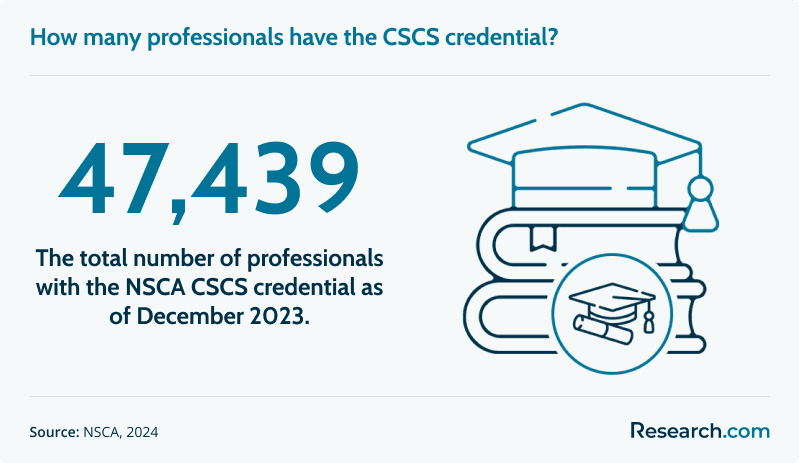
Two commonly discussed credentials are the Certified Strength and Conditioning Specialist (CSCS) from the National Strength and Conditioning Association (NSCA) and the Clinical Exercise Physiologist (CEP). These certifications can signal advanced knowledge, but they should be selected based on job postings, eligibility requirements, and the type of clients or patients you want to serve.
| Certification area | Potential value | Important caution |
| Strength and conditioning | Supports work with athletes, teams, tactical populations, and performance clients. | Experience and sport-specific credibility still matter. |
| Clinical exercise physiology | Can strengthen qualifications for healthcare, rehabilitation, or medically supervised exercise settings. | May not replace licensure or degree requirements for regulated clinical roles. |
| Healthcare administration or coding | May help exercise science graduates transition into operations, billing, compliance, or clinic management support. | Only useful if your target role includes administrative or reimbursement responsibilities. |
| Wellness and coaching credentials | Can support corporate wellness, behavior change, and lifestyle programming roles. | Quality and employer recognition vary widely. |
Can accelerated certification programs expedite my career transition?
Accelerated certification programs can help exercise science graduates move into adjacent allied health or healthcare support roles more quickly, but they should be used for the right purpose. They work best when you already know the role you want, the program teaches job-ready skills, and employers in your area recognize the credential.
For example, students who want a shorter route into patient-facing support work may research how to become a medical assistant. This type of pathway can complement exercise science training by adding exposure to clinical procedures, patient communication, scheduling, documentation, and basic healthcare workflows. It is not the same as becoming a licensed therapist, athletic trainer, or clinician, so students should compare scope of practice carefully.
Can exercise science graduates excel in healthcare administration?
Yes, exercise science graduates can move into healthcare administration when they combine their understanding of health, movement, wellness, and patient needs with business and operations training. This can be a practical path for people who enjoy healthcare but prefer systems, staffing, budgeting, quality improvement, or program management over daily clinical treatment.
Common transition areas include rehabilitation department coordination, wellness program management, population health initiatives, fitness center operations within healthcare systems, and administrative roles in clinics or community health organizations. If cost is a major concern, comparing the cheapest online healthcare administration degree options can help you identify programs that may add management skills without unnecessary expense.
Can an accelerated healthcare administration degree propel my leadership transition?
An accelerated healthcare administration degree can be useful if you already have health-related experience and need formal business training to move into supervision or management. Exercise science professionals may use this route to build skills in operations, finance, compliance, strategic planning, human resources, and healthcare quality.
An accelerated healthcare administration degree online may be especially helpful for working adults who need flexibility. Before enrolling, confirm whether the program is respected by employers, whether it includes practical projects or internships, and whether its pace is manageable alongside work responsibilities.
Are affordable online science degrees a smart investment for career growth?
Affordable online science degrees can be a smart investment when they strengthen your scientific foundation, meet accreditation expectations, and support a defined career move. They are less useful when they add unrelated coursework without improving your qualifications for a target role.
For example, a graduate interested in research, lab-based health science, nutrition science, or biomedical pathways may compare options such as a cheap biochemistry degree online. The key question is whether the added science coursework makes you more competitive for graduate study, specialized employment, or interdisciplinary roles.
How are emerging trends and technology reshaping exercise science careers?
Exercise science careers are being influenced by wearable devices, remote coaching, telehealth, digital fitness platforms, movement-tracking tools, and data-informed wellness programs. These tools do not replace professional judgment, but they can change what employers expect. Graduates may be asked to interpret fitness data, monitor client progress remotely, design hybrid exercise programs, or coordinate care with digital health teams.
Technology also increases the importance of privacy awareness, documentation, communication, and interdisciplinary teamwork. Professionals who understand both human movement and healthcare systems may be better positioned for roles in remote wellness, performance analytics, population health, and virtual rehabilitation support. Programs such as the best online healthcare certificate programs can help some graduates add healthcare context, but the best choice depends on the credential’s relevance to your target job.
How can interdisciplinary credentials boost my exercise science career?
Interdisciplinary credentials can expand your options when they connect exercise science to another field with clear employer demand. Useful combinations may include exercise science plus healthcare administration, public health, nutrition, data analytics, sports management, rehabilitation science, or clinical support training.
Some graduates consider more specialized health science pathways, including pharmacy-related education. Options such as affordable doctor of pharmacy online programs may be relevant for people planning a major shift into pharmaceutical or clinical medication-related work. This is a substantial career pivot, so students should carefully compare prerequisites, accreditation, licensure implications, time commitment, and total cost.
What are alternative high-paying careers for exercise science graduates?
Exercise science graduates are not locked into one career ladder. Many use their background in anatomy, physiology, health behavior, and performance to move into related fields. The best alternatives usually combine your science foundation with another marketable skill, such as management, sales, analytics, compliance, education, or clinical support.
| Alternative path | Why exercise science can help | What you may need next |
| Corporate wellness | Exercise science supports program design, health education, and employee wellness initiatives. | Experience in program coordination, communication, and outcomes tracking. |
| Healthcare administration | Health science knowledge can help you understand clinical teams and patient-centered operations. | Business, finance, compliance, or healthcare management training. |
| Sports technology | Movement and performance knowledge can support product testing, data interpretation, or customer education. | Technical literacy, analytics skills, or experience with performance tools. |
| Medical sales or fitness equipment sales | Understanding anatomy, rehabilitation, and performance can help explain products to buyers. | Sales training, product knowledge, and strong communication skills. |
| Pharmacy technician | Health science coursework may make the healthcare environment more familiar. | Role-specific training and credential research; start by reviewing how to become a pharmacy technician. |
Alternative careers can be financially rewarding, but they also require honest self-assessment. A graduate who dislikes sales may not thrive in medical device sales, even if the pay potential is attractive. Someone who wants direct movement coaching may feel disconnected in healthcare administration. Choose the path that fits both your skills and your day-to-day work preferences.
How does exercise science compare to other degrees for salary potential?
Exercise science offers broad career flexibility, but its salary potential depends heavily on what you do after the degree. Compared with some narrowly defined healthcare programs, exercise science may require additional specialization before it leads to a high-paying role. Compared with general wellness or fitness credentials, it can provide a stronger scientific base for graduate school, clinical careers, performance roles, or health-related management.
Students often compare exercise science with kinesiology, sports medicine, nutrition, physical therapy preparation, public health, healthcare administration, and allied health programs. The right choice depends on whether you want a direct-to-work degree, a pre-professional foundation, a clinical license, or a management pathway.
| Degree or pathway | Strength | Potential limitation |
| Exercise science | Broad preparation in movement, physiology, wellness, and performance. | May require graduate school or certification for higher-paying roles. |
| Kinesiology | Similar movement-focused foundation with possible emphasis on human movement, sport, or health. | Program focus varies, so students must review curriculum carefully. |
| Physical therapy pathway | Clear clinical destination for students committed to rehabilitation. | Requires a longer professional education route and licensure planning. |
| Healthcare administration | Stronger direct preparation for management and operations. | Less focused on exercise programming or human performance science. |
| Dental hygiene | Can offer a more defined allied health route for students who want oral healthcare practice. | Different patient-care focus; compare timelines by reviewing how long does it take to become a dental hygienist. |
If your main goal is high salary, compare final career outcomes rather than degree titles. Exercise science can be valuable, but the strongest earnings often come after you add a license, graduate degree, management experience, or specialized credential.
What do graduates say about their science degree careers and salaries?
My exercise science background helped me understand movement, recovery, and patient motivation before I became a physical therapist. The career is demanding, but helping people move better and return to daily life makes the work meaningful. Jason
I started with exercise science and later moved toward healthcare management. Now I oversee wellness programs and use both my science background and leadership training every day. Amanda
Sports psychology allowed me to combine my interest in athletic performance with the mental side of competition. Working with athletes on confidence, focus, and pressure has been a rewarding direction. Marcus
Can online health programs boost my exercise science career?
Online health programs can strengthen an exercise science career when they fill a practical gap, such as patient care skills, healthcare documentation, administrative knowledge, or exposure to clinical workflows. They are especially useful for working adults who need flexible scheduling while exploring allied health or healthcare support roles.
For example, affordable online medical assistant programs may help exercise science graduates add patient-facing and administrative skills. This can be useful for clinic support, wellness operations, or future healthcare experience. As with any program, check accreditation, hands-on training requirements, employer recognition, and whether the credential matches your target job.
Common mistakes to avoid when choosing an exercise science career path
| Mistake | Why it can hurt you | Better approach |
| Choosing a degree without checking career requirements | Some high-paying roles require licensure, graduate education, supervised practice, or specific prerequisites. | Start with the job title, then work backward to the required education and credentials. |
| Assuming every online program meets clinical requirements | Clinical careers may require labs, in-person placements, exams, or state-approved training. | Ask programs directly how they support licensure, internships, and clinical experience. |
| Focusing only on tuition | A cheaper program may cost more in the long run if it lacks accreditation, placement support, or required coursework. | Compare total cost, outcomes, accreditation, transfer policies, and career services. |
| Collecting unrelated certifications | Credentials that employers do not value may not improve your salary or job options. | Review job postings and choose certifications that appear repeatedly in your target role. |
| Relying only on salary averages | Median or mean salaries do not guarantee what you will earn as a new graduate. | Compare local openings, entry-level pay, experience requirements, and cost of living. |
| Ignoring state rules | Licensure and scope-of-practice rules can vary by occupation and state. | Check state boards and employer requirements before enrolling or relocating. |
Questions to ask before investing in more education
- Does this degree or certificate qualify me for a specific job, promotion, license, or graduate program?
- Is the program accredited or otherwise recognized by employers, licensing boards, or professional organizations?
- What are the total costs, including fees, exams, materials, travel, and lost work time?
- Will I need in-person labs, internships, practicums, or clinical placements?
- What jobs have recent graduates actually obtained?
- Does the program publish career support services, transfer policies, and prerequisite information clearly?
- Can I complete the program while maintaining my current job and personal responsibilities?
- Will this credential still be useful if I change states, employers, or specialties?
Key Insights
- Exercise science can lead to high-paying careers, but the highest earnings usually require specialization beyond the bachelor’s degree.
- Medical and health services managers stand out in this guide with a median annual salary of $110,680 and projected growth of 29% from 2024-2033.
- Clinical careers such as physical therapy, occupational therapy, athletic training, chiropractic care, and clinical exercise physiology require careful planning because credentials and licensure matter.
- Non-clinical paths such as healthcare administration, recreation management, coaching, teaching, and sports performance may offer flexibility, but outcomes depend heavily on experience and employer type.
- Location matters. For exercise physiologists, Oregon is listed with the highest annual mean wage at $73,820, followed by New York at $72,730.
- Certifications can improve salary potential only when they match the job you want; unrelated credentials can waste time and money.
- Before enrolling in a graduate degree, accelerated program, or online certificate, compare accreditation, total cost, career fit, licensure implications, and local employer demand.
References:
- BLS. (2024, April 3). Exercise Physiologists. BLS.
- BLS. (2024, August 29). Athletic trainers. BLS.
- BLS. (2024, September 30). Chiropractors. BLS.
- BLS. (2024, August 29). Coaches and scouts. BLS.
- BLS. (2024, August 29). Dietitians and nutritionists. BLS.
- BLS. (2024, August 29). Entertainment and recreation managers. BLS.
- BLS. (2024, August 29). Exercise physiologists. BLS.
- BLS. (2024, August 29). Medical and health services managers. BLS.
- BLS. (2024, August 29). Occupational therapists. BLS.
- BLS. (2024, August 29). Occupational therapy assistants and aides. BLS.
- BLS. (2024, August 29). Physical therapists. BLS.
- BLS. (2024, August 29). Postsecondary teachers. BLS.
- BLS. (2024, August 29). Psychologists. BLS.
- BLS. (2024, August 29). Recreational therapists. BLS.
- NSCA. (2024, August 8). Statistical Policy Directive No. 10 SOC—Request for Comments on Possible Revision for 2028. NSCA.
Other Things You Should Know About the Highest-Paying Exercise Science Degree Jobs
In 2027, the industries offering the highest paying exercise science jobs include healthcare, corporate wellness, sports management, and academia. Specialized roles like exercise physiologists in clinical settings or performance analysts in professional sports often command top salaries due to the expertise required.
In 2027, California, New York, and Texas are among the U.S. regions offering the highest salaries for exercise science professionals, especially those specializing in sports management or occupational therapy. Salaries can exceed $75,000 annually in these states.
A master’s degree in exercise physiology, kinesiology, or sports science opens the top-paying exercise science roles in 2027. Clinical exercise physiologists, strength and conditioning directors, and corporate wellness managers often need 30–36 graduate credit hours plus certifications such as ACSM-CEP, NSCA-CSCS, or ACE credentials.


