
2027 Highest Paying Healthcare Administration Jobs and Careers

Co-Founder and Chief Data Scientist
Healthcare administration can be a high-earning path for professionals who want to lead hospitals, clinics, health systems, long-term care facilities, medical practices, health IT teams, or healthcare business units without becoming physicians. The field matters because healthcare organizations now face pressure from rising costs, staffing shortages, digital transformation, cybersecurity risk, value-based care requirements, and strict compliance rules. Administrators who can manage people, budgets, technology, quality, and patient access are central to how healthcare organizations perform.
This guide explains which healthcare administration jobs tend to pay the most, what each role actually does, how salaries compare across related healthcare occupations, which states and sectors report higher wages, and what education, skills, certifications, and career choices can improve your long-term earning potential. It is designed for students, working healthcare professionals, nurses, health information specialists, business graduates, and mid-career professionals deciding whether healthcare administration is worth pursuing.
Quick Answer: What are the highest-paying healthcare administration jobs?
Some of the highest-paying healthcare administration jobs include healthcare chief information officer, hospital chief executive officer, chief nursing officer, hospital chief financial officer, medical and health services manager, ambulatory care director, clinical informatics manager, nursing home administrator, healthcare database administrator, and healthcare quality improvement manager. Pay varies by employer, state, facility size, experience, education, and whether the role is department-level, system-level, or executive-level.
Healthcare chief information officers had an average annual salary of $159,468 in 2024 (ZipRecruiter, 2024). Medical and health services managers had a median annual wage of $110,680 in 2023 (US BLS, 2024). Physicians remained among the highest-paid healthcare professionals overall, with physicians and surgeons reporting a median annual wage of $239,200 in 2023 (US BLS, 2024), but healthcare administration can offer strong income potential for professionals who prefer leadership, operations, finance, strategy, technology, or compliance work.
Key Points About High-Paying Healthcare Administration Jobs
- The strongest-paying roles are usually executive, technical, financial, or system-wide leadership positions, including medical and health services manager, hospital CEO, healthcare CIO, hospital CFO, and chief nursing officer.
- Healthcare CIOs in the US had an average annual salary of $159,468 in 2024 (ZipRecruiter, 2024), reflecting the growing importance of health IT, data security, EHR systems, and digital operations.
- Higher-paying healthcare administration roles commonly favor candidates with advanced education, such as an MHA, MBA, or MPH, along with experience in leadership, financial management, compliance, analytics, quality improvement, and communication. Credentials alone rarely guarantee advancement; employers usually look for measurable results in operations, patient care quality, revenue cycle performance, technology implementation, or workforce management.
List of the Highest Paying Healthcare Administration Jobs for 2027
Healthcare administration includes both broad management roles and specialized leadership positions. The best-paid jobs often combine administrative authority with accountability for financial performance, clinical operations, regulatory compliance, patient outcomes, technology systems, or organizational strategy. The salary figures below come from the sources cited in the original article and should be treated as benchmarks, not guaranteed earnings.
| Role | Reported Salary Figure | Best Fit For | Typical Advancement Advantage |
| Healthcare Chief Information Officer | $159,468 average annual salary (ZipRecruiter, 2024) | Administrators with health IT, cybersecurity, EHR, analytics, and digital strategy experience | Combines technology leadership with enterprise-level decision-making |
| Hospital Chief Executive Officer | $157,740 average annual salary for Select Specialty Hospital CEO (Zippia, 2024) | Senior leaders with broad experience in hospital strategy, finance, operations, and stakeholder management | Highest organizational authority and responsibility |
| Chief Nursing Officer | $155,833 average annual salary (ZipRecruiter, 2024) | Experienced nurses and nurse leaders moving into executive administration | Links clinical workforce leadership with organizational strategy |
| Ambulatory Care Director | $155,016 average annual salary for ambulatory services manager (Salary.com, 2024) | Leaders in outpatient operations, access, scheduling, and patient flow | Strong fit for the shift toward outpatient and ambulatory care delivery |
| Hospital Chief Financial Officer | $123,586 average annual salary (ZipRecruiter, 2024) | Finance professionals with healthcare budgeting, revenue cycle, compliance, and reporting expertise | Direct control over financial planning and resource allocation |
| Nursing Home Administrator | $121,986 average annual salary (ZipRecruiter, 2024) | Administrators interested in long-term care operations, resident services, staffing, and compliance | Facility-wide leadership in a highly regulated care setting |
| Clinical Informatics Manager | $117,168 average annual salary (Glassdoor, 2024) | Professionals who bridge clinical workflows, health data, EHRs, and process improvement | Specialized value in technology-enabled care delivery |
| Medical and Health Services Manager | $110,680 median annual wage (US BLS, 2024) | General healthcare managers overseeing departments, practices, programs, or facilities | Core management pathway into senior administration |
| Database Administrator | $102,260 average annual salary (ZipRecruiter, 2024) | Data-focused professionals supporting secure healthcare information systems | Technical specialization in protected health data and systems reliability |
| Healthcare Quality Improvement Manager | $95,659 average annual salary (Glassdoor, 2024) | Administrators focused on safety, quality metrics, accreditation, and performance improvement | Strong alignment with value-based care and compliance priorities |
1. Medical and Health Services Manager
Medical and health services managers coordinate the business and operational side of healthcare delivery. Depending on the employer, they may supervise an entire facility, a physician practice, a hospital department, a service line, or an administrative program. Their work often includes budgeting, hiring, scheduling, compliance monitoring, policy implementation, vendor coordination, workflow improvement, and performance tracking.
This role is one of the most common entry points into healthcare administration leadership. It can also align with human services, public health, nursing, business, health information management, or clinical backgrounds. Medical and health services manager is also relevant to readers researching the highest paying jobs with a human services degree.
Medical and Health Services Manager Median Annual Wage: $110,680 (US BLS, 2024)
2. Hospital Chief Executive Officer (CEO)
A hospital CEO is responsible for the overall direction of a hospital or healthcare facility. The CEO works with the board, executive team, medical staff leaders, community partners, regulators, and financial stakeholders to keep the organization clinically effective, financially stable, and strategically positioned.
Unlike department-level administrators, CEOs are accountable for the entire organization. Their decisions may affect staffing models, service expansion, capital investments, quality targets, compliance priorities, public reputation, and long-term sustainability.
Select Specialty Hospital CEO Average Annual Salary: $157,740 (Zippia, 2024)
3. Healthcare Chief Information Officer (CIO)
A healthcare CIO leads the technology strategy of a healthcare organization. This role typically covers electronic health records, cybersecurity, data governance, IT infrastructure, interoperability, digital patient access tools, vendor systems, and technology support for clinical and administrative teams.
The role pays well because healthcare organizations depend on secure, reliable, and compliant technology. A strong CIO understands both technical systems and healthcare operations, making this path especially attractive for professionals with experience in health informatics, information systems, analytics, or enterprise IT leadership.
Healthcare CIO Average Annual Salary: $159,468 (ZipRecruiter, 2024)
4. Hospital Chief Financial Officer (CFO)
A hospital CFO oversees financial strategy, budgeting, forecasting, reporting, reimbursement, payroll, revenue cycle, investment planning, and cost management. In healthcare, financial leadership is complex because organizations must balance patient care quality, payer rules, regulatory requirements, staffing costs, technology investments, and facility operations.
This role is best suited for professionals who combine finance expertise with healthcare-specific knowledge. CFOs often work closely with CEOs, department leaders, clinical executives, billing teams, auditors, and board members.
Hospital CFO Average Annual Salary: $123,586 (ZipRecruiter, 2024)
5. Chief Nursing Officer (CNO)
A chief nursing officer leads nursing strategy across a healthcare organization. CNOs typically oversee staffing models, nursing standards, professional development, patient care quality, compliance, workforce retention, and collaboration between nursing teams and executive leadership.
This is one of the strongest administrative tracks for experienced nurses who want to move into executive leadership while continuing to influence clinical care delivery. The role requires credibility with clinical staff as well as the ability to manage budgets, policy, operations, and organizational change.
CNO Average Annual Salary: $155,833 (ZipRecruiter, 2024)
6. Clinical Informatics Manager
Clinical informatics managers improve how healthcare organizations use data and technology in patient care workflows. They may help implement, optimize, and troubleshoot EHR systems; train staff; evaluate documentation processes; improve clinical decision support; and translate operational needs into technology requirements.
This role is valuable because many healthcare organizations struggle to connect data systems with real clinical work. Professionals who understand both care delivery and information systems can help reduce inefficiency, improve documentation, support quality reporting, and strengthen compliance.
Clinical Informatics Manager Average Annual Salary: $117,168 (Glassdoor, 2024)
7. Ambulatory Care Director
Ambulatory care directors manage outpatient service operations. Their responsibilities may include scheduling, patient flow, staffing, quality standards, access improvement, budget oversight, compliance, and coordination across clinics or outpatient departments.
This role is increasingly important as many services move outside traditional inpatient settings. Leaders in ambulatory care need to understand patient experience, access metrics, care coordination, reimbursement, and efficient use of clinical staff.
Ambulatory Services Manager Average Annual Salary: $155,016 (Salary.com, 2024)
8. Nursing Home Administrator
Nursing home administrators run long-term care facilities and are responsible for resident care operations, staffing, budgets, compliance, family communication, facility policies, and relationships with regulators and healthcare providers. The role requires strong knowledge of long-term care regulations and the ability to lead in a highly sensitive care environment.
This path can be a good fit for administrators who want facility-level authority and are comfortable managing both business operations and resident-centered care priorities.
Nursing Home Administrator Average Annual Salary: $121,986 (ZipRecruiter, 2024)
9. Database Administrator
Healthcare database administrators maintain the systems that store, protect, organize, and support access to healthcare data. Their duties often include database performance, backups, recovery planning, access controls, data integrity, and collaboration with IT, compliance, clinical, and analytics teams.
Because healthcare data is sensitive and highly regulated, this role requires technical skill and careful attention to security, availability, and privacy expectations.
Database Administrator Average Annual Salary: $102,260 (ZipRecruiter, 2024)
10. Healthcare Quality Improvement Manager
Healthcare quality improvement managers lead initiatives that improve patient safety, care quality, efficiency, and compliance with standards. They analyze performance metrics, identify gaps, coordinate improvement projects, prepare for accreditation reviews, and help teams adopt better processes.
This role is a strong fit for professionals who are detail-oriented, data-literate, and comfortable working across clinical and administrative departments. It may not always pay as much as executive-level jobs, but it can create a strong foundation for broader leadership.
Quality Improvement Manager Average Annual Salary: $95,659 (Glassdoor, 2024)
- What skills matter most for healthcare administrators?
- Which certifications and programs can support career growth?
- How do healthcare administration salaries compare with related healthcare jobs?
- Which states report the highest wages for healthcare administrators?
- Should healthcare administrators choose rural or urban jobs?
- Where do healthcare administrators work most often?
- Which healthcare sectors pay administrators the most?
- How is a healthcare administrator different from a hospital CEO?
- What trends are changing healthcare administration?
- Can an accelerated online healthcare administration degree help you move faster?
- Can a doctorate strengthen healthcare administration leadership?
- How should you evaluate the ROI of an advanced healthcare degree?
- What challenges do healthcare administrators face now?
- How can cross-functional clinical training help administrators?
- Is an affordable online health information management degree worth considering?
- Can short-term clinical training improve administrative decision-making?
- Can an accelerated health information management degree support career growth?
- How can data analytics and bioinformatics improve healthcare administration?
- Which professional organizations help healthcare administrators advance?
- Can a one-year MHA program improve career mobility?
- Can healthcare administrators move into other high-paying industries?
What skills are most in-demand for healthcare administrators?
Healthcare administration is not just “management in a hospital.” The strongest candidates can connect business decisions to clinical realities, regulatory requirements, patient experience, and financial constraints. Employers often look for administrators who can solve operational problems without losing sight of care quality.
- Leadership and strategic planning: Administrators must set priorities, guide teams, manage conflict, communicate change, and translate organizational goals into workable plans. This skill becomes more important as professionals move from department management into executive leadership.
- Financial management: Budgeting, cost control, forecasting, financial reporting, reimbursement awareness, and resource allocation are essential. Healthcare leaders must make financially responsible decisions while protecting service quality and patient access.
- Health information technology expertise: Administrators increasingly need working knowledge of EHR systems, analytics dashboards, interoperability, cybersecurity, data privacy, and digital workflow tools. Leaders do not always need to code, but they must understand how technology affects operations, compliance, and care delivery.
- Regulatory and compliance judgment: Healthcare is heavily regulated, so administrators must know how policies, documentation, billing, privacy rules, accreditation standards, and reporting requirements affect daily operations.
- Communication across clinical and business teams: Successful administrators can speak with physicians, nurses, IT staff, finance teams, patients, vendors, and board members in ways that are clear, credible, and action-oriented.
Are there certifications or programs that can help healthcare administrators advance their careers?
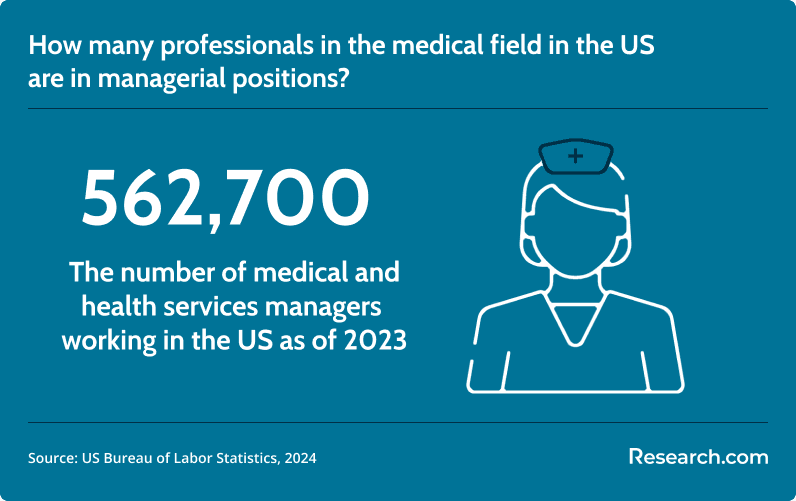
Certifications can strengthen a healthcare administrator’s profile when they match the person’s career direction. They are not substitutes for experience, but they can signal commitment, specialized knowledge, and readiness for leadership. This matters in a large workforce: there were 562,700 medical and health services managers as of 2023 (US BLS, 2024).
| Credential | Best For | What It Signals |
| Fellow of the American College of Healthcare Executives® (FACHE) | Healthcare leaders pursuing senior management or executive roles | Leadership, ethics, strategic thinking, and healthcare management experience |
| Certified Professional in Healthcare Information and Management Systems (CPHIMS®) | Administrators working in health IT, informatics, data systems, or digital transformation | Competence in health information and management systems |
| Fellow in the American College of Medical Practice Executives (FACMPE) | Practice managers and administrators in outpatient, physician group, or medical practice settings | Advanced knowledge of practice operations, finance, compliance, and management |
- Fellow of the American College of Healthcare Executives® (FACHE): Offered by the American College of Healthcare Executives, the FACHE credential is aimed at healthcare leaders who want to demonstrate advanced professional achievement in healthcare management.
- Certified Professional in Healthcare Information and Management Systems (CPHIMS®): The CPHIMS credential from the Healthcare Information and Management Systems Society, Inc. can be useful for administrators whose work centers on health IT, informatics, technology implementation, or information systems strategy.
- Fellow in the American College of Medical Practice Executives (FACMPE): The FACMPE credential from the Medical Group Management Association is especially relevant for leaders managing medical groups, physician practices, ambulatory operations, or outpatient business functions.
How do healthcare administrator salaries compare to the salaries of professionals in related fields?
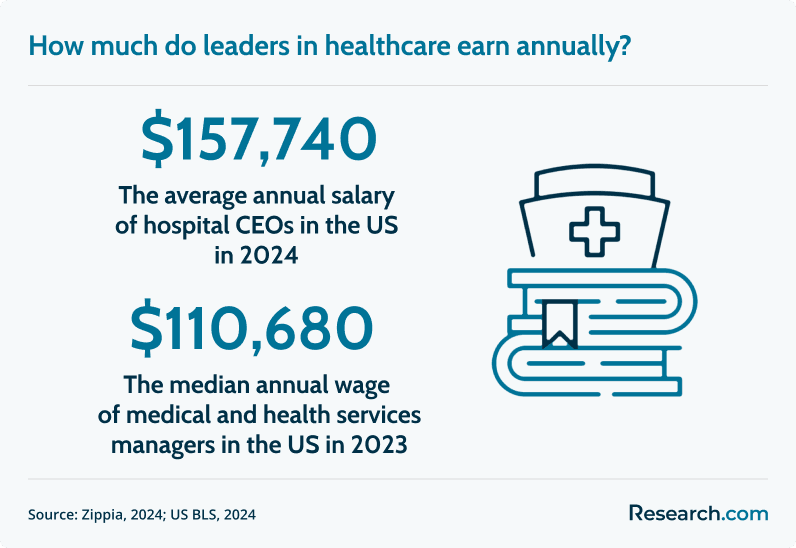
Healthcare administration salaries are generally competitive because these roles carry responsibility for people, money, compliance, systems, and organizational performance. In 2024, hospital CEOs in the US had an average annual salary of $157,740 (Zippia, 2024), and healthcare CIOs had an average annual salary of $159,468 (ZipRecruiter, 2024). Medical and health services managers had a median annual wage of $110,680 in 2023 (US BLS, 2024).
By comparison, several clinical and health information roles reported lower median wages. Medical records specialists had a median annual wage of $48,780 in 2023, registered nurses had $86,070, and graduates of regular or accelerated radiology tech programs had a median annual wage of $75,250. Nurses who want to specialize clinically and potentially improve their career options may compare the cheapest nurse practitioner programs.
Physicians and surgeons, however, remained much higher on the healthcare pay scale, with a median annual wage of $239,200 in 2023 (US BLS, 2024). This comparison is important: healthcare administration can pay well, but it is a different career bet than clinical medicine. It rewards leadership, operations, finance, technology, and systems thinking more than direct diagnosis and treatment.
Advanced business or healthcare management education can help professionals compete for higher-responsibility positions. Those comparing graduate routes may want to review MBA healthcare management online degrees and compare them with MHA or MPH options.
The chart below shows median annual salary comparisons for selected healthcare professions in the US, based on 2024 data from the US BLS.
What are the highest-paying states for healthcare administrators?
Healthcare administrator pay differs by state because labor markets, employer size, healthcare infrastructure, competition, and cost of living vary. High wages can be attractive, but they should be weighed against housing, taxes, commuting costs, relocation expenses, licensure or credential expectations, and promotion opportunities.
The highest-paying states for medical and health services managers in the US in 2023, based on annual mean wages, were (US BLS, 2024):
- New York: $179,160
- District of Columbia: $170,710
- Delaware: $164,190
- New Jersey: $162,430
- Massachusetts: $158,540
For medical records specialists, the highest-paying states in 2023 based on annual mean wages were (US BLS, 2024):
- District of Columbia: $70,900
- Washington: $64,250
- California: $64,070
- Connecticut: $63,250
- Maryland: $62,930
When comparing states, do not focus only on the wage number. Ask whether the state has major health systems, academic medical centers, outpatient networks, payer organizations, pharmaceutical employers, or health technology firms that match your target role.
Are rural or urban areas better for healthcare administration jobs?
Urban and rural healthcare administration jobs can both be valuable, but they offer different trade-offs. Urban markets often have larger hospitals, academic medical centers, specialized departments, complex health systems, and more executive layers. These settings may offer higher salaries and more specialized roles, but competition can be stronger and living costs may be higher.
Rural healthcare settings may have fewer openings, but administrators often gain wider responsibility earlier. A rural administrator may handle staffing, budgeting, community outreach, compliance, operations, patient access, and emergency planning in a more hands-on way. These roles can be especially meaningful for professionals who want to serve underserved communities. Rural facilities also need clinical providers, including nurse practitioners; those interested in advanced practice nursing may compare the cheapest psychiatric nurse practitioner programs.
| Setting | Potential Advantages | Possible Trade-Offs | Best Fit |
| Urban healthcare administration | More large employers, specialized departments, executive tracks, and complex systems | Higher competition, higher living costs, and narrower responsibilities in some roles | Professionals seeking specialization, large-system leadership, or health tech exposure |
| Rural healthcare administration | Broader responsibilities, community impact, and hands-on leadership experience | Fewer openings, potentially lower pay, and limited specialty departments | Professionals who want generalist leadership and mission-driven work |
Which industries employ the most healthcare administrators?
Healthcare administrators work in many settings, but employment is concentrated in sectors that deliver, coordinate, or support patient care. The following industries employed the largest numbers of medical and health services managers in the US in 2023 (US BLS, 2024):
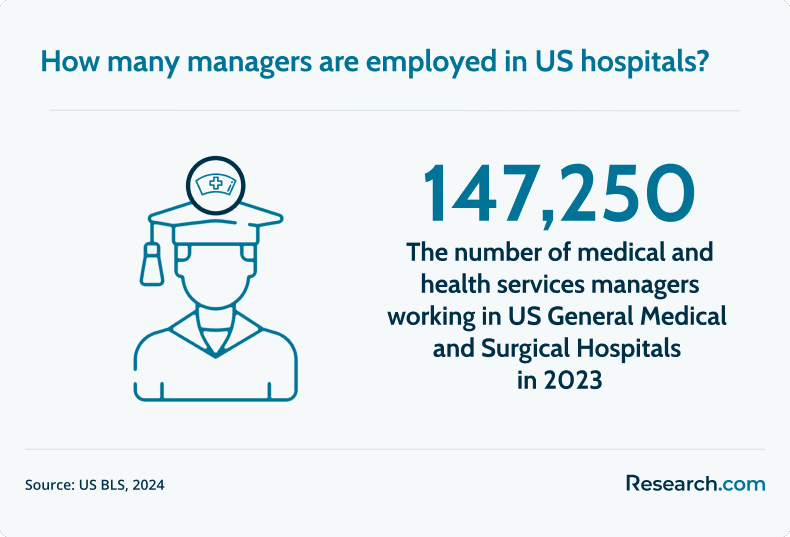
- General Medical and Surgical Hospitals: Hospitals employed 147,250 medical and health services managers across the US in 2023. Administrators in this setting may oversee departments, service lines, budgets, staffing, compliance, patient flow, quality initiatives, and system-wide projects.
- Offices of Physicians: Physicians’ offices employed 68,370 medical and health services managers across the US in 2023. These administrators often manage scheduling, billing, staffing, patient service processes, compliance, and practice operations. Readers considering a more clinical route in this environment can review physician assistant school requirements.
- Outpatient Care Centers: Outpatient care centers employed 38,150 medical and health services managers across the US in 2023. Administrators in this sector often focus on access, throughput, staffing efficiency, care coordination, and patient satisfaction.
- Nursing Care Facilities: Nursing care facilities employed 28,100 medical and health services managers in the US in 2023. Administrators in this environment manage resident care operations, staffing, compliance, quality, family communication, and facility resources. The best online nutrition certification programs may be useful for administrators who want stronger knowledge of nutrition-related services in long-term care settings.
- Home Health Care Services: Home health care services employed 25,750 medical and health services managers in the US in 2023. Leaders in this sector coordinate in-home care operations, staff scheduling, regulatory compliance, budgets, and patient service quality.
Which healthcare sectors offer the highest salaries for administrators?
The highest-paying industries for medical and health services managers are not always traditional hospitals. Some of the top-paying sectors involve medical products, pharmaceuticals, research, supply chains, or advanced device manufacturing. These roles may require healthcare knowledge plus business, regulatory, scientific, technical, or logistics expertise.
- Wholesale Trade Agents and Brokers: Medical and health services managers in this sector had an annual mean wage of $254,660 in 2023. These administrators may support distribution, compliance, and operational strategy for healthcare products or medical equipment.
- Merchant Wholesalers, Nondurable Goods: Medical and health services managers working for merchant wholesalers had an annual mean wage of $233,160 in 2023 (US BLS, 2024). This sector can include operations connected to essential healthcare goods such as pharmaceuticals.
- Pharmaceutical and Medicine Manufacturing: Medical and health services managers in pharmaceutical and medicine manufacturing had an annual mean wage of $231,070 in 2023 (US BLS, 2024). The work may involve compliance, production processes, operations management, or strategic coordination in a tightly regulated environment.
- Scientific Research and Development Services: Medical and health services managers in scientific research and development services had an annual mean wage of $228,170 in 2023 (US BLS, 2024). Administrators in this area may manage research operations, funding compliance, project coordination, and organizational strategy.
- Navigational, Measuring, Electromedical, and Control Instruments Manufacturing: Medical and health services managers in this sector had an annual mean wage of $218,900 in 2023 (US BLS, 2024). These roles can involve operational leadership in organizations producing advanced medical or technical devices.
How does being a healthcare administrator compare to a hospital CEO?
A healthcare administrator and a hospital CEO may both lead people and operations, but the scope is different. A healthcare administrator often manages a department, practice, facility function, service line, or operational area. A hospital CEO is responsible for the entire organization and must coordinate strategy, finance, quality, compliance, public trust, board relationships, and executive decision-making across all departments.
| Comparison Point | Healthcare Administrator | Hospital CEO |
| Scope | Department, practice, program, facility function, or operational area | Entire hospital or healthcare organization |
| Main Focus | Workflow, staffing, compliance, budgets, quality, and departmental goals | Strategic direction, financial sustainability, organizational performance, and stakeholder confidence |
| Typical Background | Healthcare management, business, nursing, public health, health information, finance, or operations | Senior leadership experience across multiple business and clinical functions |
| Reported Pay | $110,680 median annual wage for medical and health services managers in 2023 (US BLS, 2024) | $157,740 average annual salary for hospital CEOs across the US in 2024 (Zippia, 2024) |
Professionals aiming for either path often benefit from graduate-level preparation in healthcare administration, business, or public health. Depending on career goals, options may include MBA degrees, MHA programs, or the cheapest MPH programs in USA.
What emerging trends are shaping the future of healthcare administration?
Healthcare administration is being reshaped by technology, cost pressure, and changing care models. Administrators are increasingly expected to understand AI-supported decision tools, cybersecurity risk, interoperable health records, telemedicine operations, data governance, patient access platforms, and value-based care reporting. These trends do not eliminate the need for administrators; they raise expectations for leaders who can evaluate tools, manage risk, train teams, and connect digital systems to real operational outcomes.
Business-trained professionals may pursue roles where strategy, technology, and healthcare delivery overlap, including MBA jobs in healthcare. The most competitive candidates are often those who can show evidence of improving processes, reducing delays, supporting compliance, protecting data, or helping clinical teams work more effectively.
Can an accelerated healthcare administration degree online fast-track your career advancement?
An accelerated online healthcare administration degree may help motivated students finish coursework faster, but it is not automatically the best choice for everyone. These programs can be useful for working adults who already have healthcare or management experience and need a credential to qualify for promotions. However, the faster pace can be demanding, and students should confirm accreditation, transfer policies, internship or capstone expectations, faculty experience, and employer recognition.
Before enrolling, compare program length, workload, tuition, student support, healthcare-specific curriculum, and career outcomes. Readers comparing fast-track options can review accelerated healthcare administration degree online.
Can pursuing a doctorate amplify leadership in healthcare administration?
A doctorate can strengthen a healthcare administrator’s research, policy, teaching, consulting, or executive leadership profile, but it is usually most useful for professionals with clear goals. It may make sense for leaders who want to work in academia, senior policy analysis, organizational consulting, research-driven strategy, or high-level executive roles that value advanced scholarship.
It may not be necessary for every administrative career. Many healthcare leaders advance through an MHA, MBA, MPH, specialized certifications, and strong operational results. Administrators considering doctorate-level study should compare healthcare administration doctorates with related professional paths, including the option of pharmacy school online for those whose interests overlap with pharmacy leadership or medication-related systems.
Is the ROI of advanced healthcare degrees worth the investment?
The return on investment of an advanced healthcare degree depends on more than salary. Students should compare tuition, fees, time away from work, employer tuition assistance, promotion requirements, local job openings, alumni outcomes, transfer credit, program reputation, and whether the curriculum matches their target role. A degree that is valuable for hospital operations may not be the best fit for health IT, finance, public health policy, nursing leadership, or pharmaceutical administration.
Some interdisciplinary programs may help professionals combine administrative knowledge with clinical or scientific expertise. For example, online PharmD programs may be relevant for professionals whose goals involve pharmacy leadership, medication systems, or healthcare operations connected to pharmaceutical care. The key is to evaluate whether the degree solves a specific career barrier rather than assuming more education always produces higher pay.
What challenges do healthcare administrators face in today's dynamic healthcare environment?
Healthcare administrators work in a demanding environment. Common challenges include regulatory complexity, budget constraints, staffing shortages, cybersecurity risks, technology implementation issues, patient access problems, payer requirements, documentation accuracy, quality reporting, and pressure to improve outcomes while controlling costs.
Revenue cycle accuracy is especially important because coding, billing, documentation, and compliance affect both finances and patient safety. Administrators who supervise or collaborate with health information teams may benefit from understanding training pathways such as accredited medical coding programs.
How can healthcare administrators benefit from cross-functional clinical training?
Administrators who understand frontline clinical work often make better operational decisions. Cross-functional training can help leaders see how scheduling, documentation, staffing, room turnover, supply management, patient communication, and technology systems affect care teams. This perspective can improve trust between administrative and clinical staff.
Short clinical training is not a replacement for professional licensure or advanced clinical practice, but it can help administrators communicate more effectively and design more realistic workflows. Programs such as the best online medical assistant programs may offer useful exposure for professionals who want a clearer view of day-to-day patient care processes.
Is pursuing an affordable online degree in health information management a sound investment?
An online health information management degree can be a practical option for students who want to work with medical records, coding systems, data quality, privacy, compliance, revenue cycle, or healthcare analytics. It may also help administrators who want to strengthen their technical understanding of health data systems.
Affordability matters, but low tuition should not be the only factor. Compare accreditation, curriculum, faculty qualifications, transfer credit, certification preparation, internship options, student support, and how well the program aligns with your intended job. One pathway to evaluate is a health information management associate degree online.
Can short-term clinical training programs enhance administrative effectiveness?
Short-term clinical training can help administrators better understand patient-facing workflows, but its value depends on the role. A healthcare operations manager, practice administrator, or quality improvement professional may benefit from direct exposure to clinical routines, documentation demands, patient intake, and team communication.
For example, 6 week medical assistant programs can introduce core clinical support functions. Administrators should treat this type of training as supplemental knowledge, not as a substitute for formal healthcare management education, licensure where required, or supervised professional experience.
Is an accelerated online health information management degree beneficial for career growth?
An accelerated online health information management degree can be useful for professionals who want to move quickly into roles involving health data, medical records, compliance, coding, privacy, analytics, or EHR support. It can also support healthcare administrators who need stronger technical fluency in information management.
The trade-off is intensity. Faster programs may require more weekly study time and less flexibility than expected. Before choosing an accelerated online health information management degree, ask whether the pace fits your work schedule, whether the curriculum prepares you for your target role, and whether the school provides enough academic and career support.
Can integrating data analytics and bioinformatics empower healthcare administration strategies?
Data analytics can help healthcare administrators make better decisions about staffing, utilization, patient access, quality, cost, and performance improvement. Bioinformatics is more specialized, but it can be relevant in research hospitals, precision medicine programs, pharmaceutical settings, public health analytics, and organizations that work with complex biological or clinical datasets.
Administrators do not all need advanced bioinformatics training, but leaders in data-heavy healthcare environments may benefit from deeper technical education. Professionals interested in this intersection can explore bioinformatics graduate programs to understand how analytics and biological data can support healthcare strategy.
What are the best professional organizations for healthcare administrators?
Professional associations can help healthcare administrators build networks, keep up with industry changes, prepare for certifications, and access leadership development resources. The best organization depends on your specialization.
- American College of Healthcare Executives (ACHE): ACHE is a major professional organization for healthcare executives and administrators. It is especially relevant for professionals pursuing leadership development and credentials such as FACHE.
- Healthcare Financial Management Association (HFMA): HFMA is useful for administrators focused on healthcare finance, revenue cycle, reimbursement, budgeting, and financial strategy.
- HIMSS (Healthcare Information and Management Systems Society): HIMSS is a strong fit for professionals working in health IT, informatics, EHR systems, digital health, and information management.
Can a one-year MHA program boost your healthcare administration career?
A one-year MHA program can be a good option for professionals who already have relevant experience and want an intensive graduate credential without the longer timeline of a traditional program. It may support advancement into management or senior administrative roles, especially when the curriculum includes healthcare finance, policy, operations, quality, analytics, leadership, and practical projects.
However, speed should not be the only reason to enroll. Compare accreditation, workload, admissions expectations, practicum or capstone requirements, tuition, alumni outcomes, and whether employers in your target market recognize the program. Those exploring accelerated graduate options can review 1 year MHA programs online.
Can healthcare administrators transition to other high-paying industries?
Healthcare administrators can sometimes move into other high-paying sectors because their skills transfer well. Leadership, budgeting, compliance, process improvement, analytics, vendor management, project management, and change management are valuable in technology, consulting, finance, insurance, pharmaceuticals, medical devices, and operations management.
The easiest transitions usually build on a clear specialty. A health IT administrator may move toward technology project leadership. A healthcare finance leader may transition into financial operations or consulting. A quality improvement manager may move into process improvement, compliance, or performance management. Additional training or credentials may be needed, but healthcare administration experience can be a strong foundation when framed around measurable business results.
Common Mistakes to Avoid When Pursuing High-Paying Healthcare Administration Jobs
| Mistake | Why It Hurts | Better Approach |
| Choosing a degree without checking accreditation or employer recognition | A weak credential may not support promotion, graduate admission, or hiring goals | Confirm accreditation, curriculum quality, outcomes, and whether employers value the program |
| Focusing only on salary | High-pay roles may involve high stress, relocation, long hours, or heavy accountability | Compare compensation with workload, advancement path, location, culture, and role scope |
| Assuming an online degree automatically leads to executive roles | Leadership jobs usually require experience, results, and strong references in addition to education | Build a portfolio of operational wins, internships, projects, and leadership responsibilities |
| Ignoring health IT and data skills | Many organizations now expect administrators to understand EHRs, analytics, privacy, and cybersecurity risk | Develop practical fluency in healthcare data, dashboards, compliance, and digital workflows |
| Relying only on rankings or program speed | A fast or highly ranked program may not match your career goal, budget, or schedule | Compare fit, cost, support, curriculum, transfer policies, and target job alignment |
| Underestimating clinical context | Administrative decisions can fail if they ignore frontline care realities | Learn how nurses, physicians, medical assistants, coders, and patient access teams actually work |
Questions to Ask Before Choosing a Healthcare Administration Career Path
- Do I want to manage people, systems, finances, quality, technology, policy, or clinical operations?
- Am I aiming for a department-level role, facility leadership, or executive leadership?
- Which setting fits me best: hospital, physician practice, outpatient center, long-term care, home health, insurance, pharmaceutical, medical device, or health IT?
- Do I need an MHA, MBA, MPH, health information degree, nursing leadership background, or specialized certification for my target role?
- Will my chosen program help me build practical experience through projects, internships, capstones, or employer partnerships?
- How much debt or tuition cost is reasonable compared with my current salary and realistic promotion opportunities?
- Does my target job require state-specific licensure, especially in long-term care administration?
- Can I show measurable leadership results, such as improved workflow, reduced delays, better compliance, stronger budgeting, or successful technology implementation?
Here’s What Professionals Have to Say about Their Healthcare Administration Jobs
- “Healthcare administration helped me turn operational problems into better patient care processes while continuing to move forward professionally. I value the mix of leadership, strategy, and real-world impact.” —Julie
- “This field has given me challenging work, strong earning potential, and enough flexibility to maintain family time. Leading teams and improving operations is demanding, but it is also rewarding.” —David
- “My work has included facility growth, technology projects, and major process changes. Healthcare administration keeps evolving, which makes it an exciting field for people who like innovation and leadership.” —Benjamin
Key Insights
- Healthcare administration can pay well, especially in executive, finance, IT, ambulatory care, nursing leadership, informatics, and specialized business sectors.
- Medical and health services managers had a median annual wage of $110,680 in 2023 (US BLS, 2024), while healthcare CIOs and hospital CEOs reported higher average salary figures from the cited sources.
- Hospitals employ many administrators: 147,250 medical and health services managers worked in general medical and surgical hospitals across the US in 2023.
- Advanced education can help, but it should match your goal. An MHA, MBA, MPH, health information degree, doctorate, or certification has the most value when it fills a specific career gap.
- Top-paying states and industries may offer strong salaries, but cost of living, role scope, employer type, competition, and career mobility matter just as much as the wage figure.
- Credentials such as FACHE, CPHIMS, and FACMPE can strengthen a career strategy when aligned with executive leadership, health IT, or medical practice management.
- The strongest administrators combine leadership, financial judgment, compliance awareness, technology fluency, data literacy, and respect for clinical workflows.
- Healthcare administrators can transition into technology, consulting, finance, insurance, pharmaceuticals, medical devices, and operations roles if they can translate their experience into measurable business value.
References
- Glassdoor. (2024, June 06). How much does a Clinical Informatics Manager make? https://www.glassdoor.com/Salaries/clinical-informatics-manager-salary-SRCH_KO0,28.htm
- Glassdoor. (2024, June 06). How much does a Quality Improvement Manager make? https://www.glassdoor.com/Salaries/quality-improvement-manager-salary-SRCH_KO0,27.htm
- Salary.com. (2024, December 01). Top Ambulatory Services Executive Salary in the United States. https://www.salary.com/research/salary/benchmark/top-ambulatory-services-executive-salary
- US Bureau of Labor Statistics. (2024, August 29). Licensed Practical and Licensed Vocational Nurses. Occupational Outlook Handbook. https://www.bls.gov/ooh/healthcare/licensed-practical-and-licensed-vocational-nurses.htm
- US Bureau of Labor Statistics. (2024, April 03). May 2023 National Occupational Employment and Wage Estimates, United States. Occupational Employment and Wage Statistics. https://www.bls.gov/oes/current/oes_nat.htm
- US Bureau of Labor Statistics. (2024, August 29). Medical and Health Services Managers. Occupational Outlook Handbook. https://www.bls.gov/ooh/management/medical-and-health-services-managers.htm
- US Bureau of Labor Statistics. (2024, August 29). Medical Records Specialists. Occupational Outlook Handbook. https://www.bls.gov/ooh/healthcare/medical-records-and-health-information-technicians.htm
- US Bureau of Labor Statistics. (2024, August 29). Nursing Assistants and Orderlies. Occupational Outlook Handbook. https://www.bls.gov/ooh/healthcare/nursing-assistants.htm
- US Bureau of Labor Statistics. (2024, April 03). Occupational Employment and Wages, May 2023, 11-9111 Medical and Health Services Managers. Occupational Employment and Wage Statistics. https://www.bls.gov/oes/2023/may/oes119111.htm
- US Bureau of Labor Statistics. (2024, April 03). Occupational Employment and Wages, May 2023, 29-2072 Medical Records Specialists. Occupational Employment and Wage Statistics. https://www.bls.gov/oes/2023/may/oes292072.htm
- US Bureau of Labor Statistics. (2024, August 29). Physician Assistants. Occupational Outlook Handbook. https://www.bls.gov/ooh/healthcare/physician-assistants.htm
- US Bureau of Labor Statistics. (2024, August 29). Physicians and Surgeons. Occupational Outlook Handbook. https://www.bls.gov/ooh/healthcare/physicians-and-surgeons.htm
- US Bureau of Labor Statistics. (2024, August 29). Registered Nurses. Occupational Outlook Handbook. https://www.bls.gov/ooh/healthcare/registered-nurses.htm
- Zippia. (2024, April 05). Select Specialty Hospital chief executive officer salary. https://www.zippia.com/select-specialty-hospital-cincinnati-careers-1959979/salary/chief-executive-officer
- ZipRecruiter. (2024, December 03). Chief Nursing Officer Salary. https://www.ziprecruiter.com/Salaries/Chief-Nursing-Officer-Salary
- ZipRecruiter. (2024, December 03). Hospital Chief Financial Officer Salary. https://www.ziprecruiter.com/Salaries/Hospital-Chief-Financial-Officer-Salary
- ZipRecruiter. (2024, December 03). Healthcare CIO Salary. https://www.ziprecruiter.com/Salaries/Healthcare-Cio-Salary
- ZipRecruiter. (2024, December 03). Healthcare Database Administrator Salary. https://www.ziprecruiter.com/Salaries/Healthcare-Database-Administrator-Salary#Yearly
- ZipRecruiter. (2024, December 03). Nursing Home Administrator Salary. https://www.ziprecruiter.com/Salaries/Nursing-Home-Administrator-Salary
Other Things You Should Know About Healthcare Administration Jobs
In 2027, top-paying healthcare administration roles typically require a master's degree in healthcare administration or a related field, strong leadership skills, and extensive experience in healthcare management. Proficiency in data analysis, financial management, and a deep understanding of healthcare laws and regulations are also essential.
Certifications like the Fellow of the American College of Healthcare Executives (FACHE) or the Certified Healthcare Financial Professional (CHFP) enhance salary potential in 2027. These credentials demonstrate expertise and dedication, often leading to higher-paying roles in healthcare administration.
An MBA with a healthcare management focus or a master’s in healthcare administration is the most valued graduate degree for senior roles in 2027. Employers often look for 2–5 years of leadership experience, budget oversight, and familiarity with hospital operations, quality improvement, and regulatory compliance.


