2027 Online vs Campus Regulatory Science & Affairs Outcomes Report: Graduation Rates, Cost, and Career Trade-Offs

Co-Founder and Chief Data Scientist
This report dissects graduation rates, financial implications, and career outcomes to help readers evaluate the practical returns of online versus campus regulatory science & affairs education.
Key Things to Know About Online vs Campus Regulatory Science & Affairs Outcomes
- Graduation rates for campus-based regulatory science & affairs programs average 15% higher, reflecting structured environments that reduce dropout risks but may lengthen time-to-degree compared to flexible online formats.
- Average total costs are typically 20-30% lower online, yet this tradeoff can impact access to employer-recognized internships, which remain a key workforce integration factor in campus programs.
- Employer surveys from 2024 reveal a growing acceptance of online credentials, but campus graduates still benefit from stronger on-site networking, influencing recruitment, especially in highly regulated industry sectors.
- Key Things to Know About Online vs Campus Regulatory Science & Affairs Outcomes Key Things to Know About Online vs Campus Regulatory Science & Affairs Outcomes
- What Are the Biggest Differences Between Online and Campus Regulatory Science & Affairs Program Outcomes? Online vs Campus Outcomes
- How Do Graduation Rates Compare Between Online and Campus Regulatory Science & Affairs Programs? Comparing Graduation Rates
- Why Do Online and Campus Regulatory Science & Affairs Students Have Different Completion Rates? Why Completion Rates Differ
- How Do Online and Campus Regulatory Science & Affairs Programs Compare on Total Cost? Total Cost Comparison
- What Hidden Costs Should Students Expect in Online vs Campus Regulatory Science & Affairs Programs? Hidden Program Costs
- How Does Financial Aid Affect the Cost of Online and Campus Regulatory Science & Affairs Programs? Financial Aid Impact
- Do Online and Campus Regulatory Science & Affairs Graduates Have Different Career Outcomes? Comparing Career Outcomes
- How Do Employers View Online vs Campus Regulatory Science & Affairs Degrees? How Do Employers View Online vs Campus Regulatory Science & Affairs Degrees?
- Which Regulatory Science & Affairs Degree Format Offers Better Flexibility for Working Adults? Which Regulatory Science & Affairs Degree Format Offers Better Flexibility for Working Adults?
- How Should Students Choose Between an Online and Campus Regulatory Science & Affairs Program? Choosing Your Program Format
What Are the Biggest Differences Between Online and Campus Regulatory Science & Affairs Program Outcomes?
Cost and career trade-offs in regulatory science & affairs education further complicate decisions between modalities. Although online tuition may appear lower upfront, total program cost often rises with fees for technology and materials, coupled with reduced access to institutional scholarships, shifting the financial burden onto students. Employers frequently value the immersive experiences, such as on-site internships and faculty interaction available on campus, which enhance professional networks and better prepare graduates for regulatory roles, impacting career mobility.
Prospective students must therefore weigh these factors strategically, balancing short-term convenience and location independence against the long-term signaling and networking advantages associated with campus programs, particularly important in an industry with increasing demand across healthcare systems and regulatory bodies.
Those navigating online vs. campus regulatory science & affairs program completion rates and career outcomes should carefully align selection with their personal and professional goals. For learners prioritizing flexibility, the online path offers accessibility but may extend timelines and total costs while limiting hands-on regulatory skill development and peer engagement.
Conversely, campus programs foster direct mentorship and practicum opportunities critical for compliance proficiency, though they require geographic and schedule commitments. Understanding these trade-offs is essential for individuals aiming to maximize employability and minimize long-term debt risk, especially when seeking fields valued as the highest paying degrees with measurable career trajectories tied to practical regulation experience.
How Do Graduation Rates Compare Between Online and Campus Regulatory Science & Affairs Programs?
Graduation rates between online and campus regulatory science & affairs programs reveal complex factors beyond simple modality distinctions. Campus-based programs tend to report six-year graduation rates near 65-70%, while online formats often fall between 45 and 55%, influenced heavily by the higher prevalence of part-time students balancing employment and family commitments. This demographic imbalance, coupled with varying levels of academic advising, peer support, and cohort cohesion, significantly impacts persistence and timely completion.
Additionally, campus programs frequently benefit from structured course pacing and institutional resources that foster engagement, whereas some online programs admit a broader range of students with diverse academic backgrounds, complicating direct comparisons.
Differences in reporting practices also affect how graduation outcomes are understood, with some institutions not clearly separating online from campus data, which can obscure real performance patterns. The presence or absence of in-person practicums or clinical requirements further complicates completion timelines in regulatory science & affairs, as these components often require scheduling flexibility and additional support.
Prospective students should interpret graduation rates within the context of these structural and demographic realities, recognizing that lower online completion rates often reflect external challenges rather than program quality alone. Those considering online pathways must evaluate their ability to self-manage and access advising, while campus options may better suit learners seeking cohort-based momentum and immediate resource availability.
One graduate recalled hesitating between an online and campus regulatory science & affairs program due to concerns over part-time enrollment and juggling a full-time job with family care. After reviewing graduation trends and speaking with advisors, the student chose a campus program largely for its fixed schedule and stronger cohort connection, which provided accountability amid competing priorities.
Although the online option offered more schedule flexibility, the unpredictability of pacing and limited direct faculty access raised doubts about staying on track. The decision reflected a nuanced weighing of graduation risk factors tied to format, support, and life circumstances rather than an inherent preference for either delivery mode.
Why Do Online and Campus Regulatory Science & Affairs Students Have Different Completion Rates?
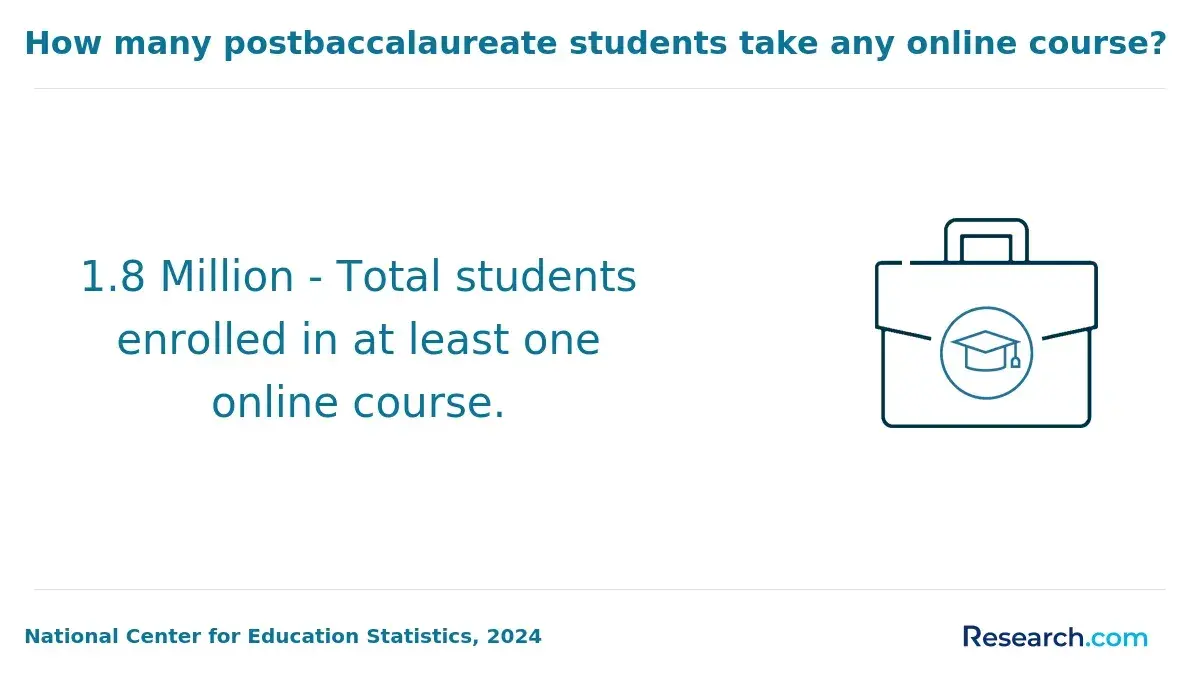
Differences in completion rates between online and campus regulatory science & affairs students often arise from variations in enrollment status, support access, and program design rather than instructional quality alone. Online students, who are more than twice as likely to attend part-time compared to their campus peers, frequently juggle full-time jobs and family obligations, leading to interruptions that extend time to degree or increase dropout risk. For example, a working professional enrolling remotely may face challenges maintaining steady progress without the built-in cohort pacing and immediate advisor availability that campus settings provide.
Campus programs typically offer structured, sequential course pathways with cohort models that encourage peer accountability and timely completion. In contrast, online learners navigate flexible but often self-directed schedules, making it easier to pause studies due to unforeseen life events or shifting work demands. According to data from the National Center for Education Statistics in 2024, six-year graduation rates for full-time, first-time campus students average around 62%, while fully online cohorts lag closer to 45%, reflecting the compounded impact of these factors.
Demographically, online regulatory science & affairs programs attract older and more diverse populations whose priorities may emphasize career adaptability over rapid program completion. While online students benefit from virtual support services, lower engagement and time zone differences may limit their practical impact compared to the in-person advising and tutoring accessible on campus. Prospective students should weigh the tradeoffs between flexibility and structured progression, considering how their personal and professional stability aligns with each format's demands and resources.
How Do Online and Campus Regulatory Science & Affairs Programs Compare on Total Cost?
Total cost comparisons between online and campus Regulatory Science & Affairs programs hinge on more than just tuition rates, demanding careful evaluation of added expenses and personal circumstances. Campus-based students commonly face $12,000 to $15,000 extra annually for housing, meal plans, transportation, and mandatory fees, which often swell their overall educational budget beyond advertised costs.
In contrast, online learners avoid most living and commuting expenses but encounter technology fees of $200 to $600 per semester plus occasional charges for course materials or proctored exams, which slightly reduce the financial advantage but maintain a lower baseline investment. These distinctions impact not only affordability but also debt accumulation and the timeline to graduation, especially when student employment continuity or work flexibility is essential.
Differences in eligibility for financial aid and employer tuition assistance further shape total cost dynamics in the online vs. campus regulatory science & affairs program total cost comparison. Campus learners typically access more institutional scholarships and work-study opportunities tied to physical presence, while many employers extend tuition support to employees pursuing online options due to their schedule adaptability.
A working professional weighing these factors must also consider how living arrangements and program length influence out-of-pocket expenses and practical feasibility. For those balancing jobs and studies, the flexibility of online learning often offsets some cost differences, a tradeoff requiring judgment about personal priorities and career goals. Prospective students may find more detailed data on cost-effective pathways by reviewing academic options like accounting online offerings, which share comparable affordability considerations across fields.
What Hidden Costs Should Students Expect in Online vs Campus Regulatory Science & Affairs Programs?
Hidden costs often shift the financial balance when comparing online and campus regulatory science & affairs programs, influencing both affordability and completion feasibility. While online learners may initially perceive lower tuition, technology-related fees averaging between $100 and $500 per term, as reported by the National Center for Education Statistics, add up quickly alongside expenses for reliable hardware, software, and proctoring fees that range from $25 to $100 per exam.
Conversely, campus-based students face significant indirect costs such as commuting, parking permits costing several hundred dollars annually, and housing expenses that can exceed $8,500 a year. These ancillary costs can substantially affect net program costs, and for students balancing work or childcare, campus schedules may reduce earning potential due to decreased flexibility, whereas online students might face productivity challenges that complicate steady income flow.
These financial nuances have practical consequences beyond raw tuition comparisons: institutional aid packages vary and may be more generous for campus students, while fieldwork requirements in both formats can involve unpredictable travel or temporary relocation expenses. For some, the necessity of on-site clinical components or residency requirements erodes the convenience advantage of online options, altering cost-benefit calculations.
Decisions about format selection must weigh these hidden expenses against career goals, recognizing that underestimated costs or lost income can extend time-to-degree or increase debt burden, especially in a field where employer expectations include not only academic knowledge but also demonstrated industry readiness.
A recent regulatory science & affairs graduate recalled hesitating between formats after discovering the online program's mandatory technology fees and proctoring costs combined with occasional travel for required lab work nearly matched the campus program's commuting and housing expenses.
While the online option seemed initially more affordable, the student had to reassess total costs after factoring in software licenses and weekend trips for clinical placements. This prompted careful budgeting and strategic work scheduling to manage both time and expenses, illustrating how real-world program demands often complicate straightforward cost comparisons. The experience highlighted that transparent, comprehensive cost exploration is critical before committing to either learning pathway.
How Does Financial Aid Affect the Cost of Online and Campus Regulatory Science & Affairs Programs?
Financial aid disparities shape the net cost differences between online and campus regulatory science & affairs programs more than headline tuition figures. Campus students often have access to scholarships, assistantships, and grants linked to on-site involvement or residency, which are typically unavailable to online learners. For example, an online student balancing work may face part-time enrollment limitations that reduce eligibility for certain need-based aid, increasing reliance on loans or out-of-pocket payment. This dynamic means comparing gross tuition alone understates the real affordability gap driven by aid packages and enrollment intensity.
Employer tuition reimbursement and military benefits partially offset these challenges for many online students, especially working adults prioritizing flexible pacing and remote study. Yet, online programs may charge additional technology or course fees, which, combined with less institutional aid, can raise total cost burdens. Students planning to enter regulatory science & affairs fields should carefully evaluate how aid availability, loan dependency, and net price differences intersect with their career timelines and debt tolerance. The accelerated MFT programs online model offers a useful parallel in balancing speed, cost, and financial support when selecting between modalities.
Ultimately, assessing financial aid impact on the cost of online regulatory science & affairs programs versus campus regulatory science & affairs program financial aid benefits requires close scrutiny of aid eligibility, enrollment status, and institutional policies. This evaluation helps clarify long-term financial exposure and return on investment beyond sticker price comparisons, supporting informed decisions attuned to individual career objectives and resource constraints.
Do Online and Campus Regulatory Science & Affairs Graduates Have Different Career Outcomes?
Employer perceptions and practical career impacts reveal key distinctions between online and campus Regulatory Science & Affairs graduates despite similar graduation rates and initial employment outcomes. While most employers accept online degrees for entry-level roles, only about 62% consider online formats equally effective for preparing candidates for complex regulatory tasks requiring in-person collaboration and negotiation. This difference often stems from the limited experiential learning and internship access available in online settings, a crucial factor in developing nuanced industry skills and professional judgment valued in many regulatory environments.
Beyond employer acceptance, graduates' networking and mentorship opportunities diverge sharply by format, influencing long-term career mobility and local versus national job market access. Campus programs typically provide richer alumni connections and embedded professional networks, which enhance referrals and job leads in this relationship-driven field. Conversely, online students benefit from greater schedule flexibility and geographic mobility, enabling work-study balance or relocation but often with weaker connection to localized industry hubs, potentially constraining subtle career growth signals that arise from face-to-face interaction.
Licensure readiness and credential evaluation show little format bias since transcripts rarely indicate delivery mode, and both pathways adhere to accreditation standards overseen by regulatory bodies. However, cost advantages for online learners come with tradeoffs in the scope of career services and mentoring traditionally more accessible on campus. Prospective students must weigh these operational trade-offs carefully, considering how format relates to their professional goals, lifestyle demands, and the importance of embedded experience and networking within regulatory science & affairs career trajectories.
How Do Employers View Online vs Campus Regulatory Science & Affairs Degrees?
Employer acceptance of online regulatory science & affairs degrees hinges less on delivery format and more on demonstrable program quality and practical experience. A 2024 National Association of Colleges and Employers (NACE) survey found that approximately 65% of employers consider online degrees equally credible to campus counterparts when issued by accredited and reputable institutions. However, this acceptance often depends on whether the online program clearly signals rigorous academic standards and provides meaningful experiential learning—such as virtual simulations or industry-partnered internships—that replicates the hands-on opportunities traditionally found in campus settings.
In hiring scenarios, employers managing regulatory roles within pharmaceutical or healthcare systems often scrutinize not just the degree but the extent of applied skills and real-world exposure. Candidates with online degrees lacking robust internships or practicum components may face additional vetting or require supplementary verification of competencies. Conversely, campus graduates benefit from on-site networking and direct access to lab-based learning, which can influence early-career opportunities. Employer familiarity with online education is growing, especially in sectors aligned with regulatory science & affairs, yet transparency about program rigor and reputational factors remains crucial in overcoming potential bias and ensuring graduates' employment prospects.
Which Regulatory Science & Affairs Degree Format Offers Better Flexibility for Working Adults?
Online regulatory science & affairs programs often provide working adults with greater control over scheduling, essential for managing variable work shifts or caregiving responsibilities. However, this flexibility is not absolute; many online formats include synchronous sessions, labs, or clinical practicums that require fixed times or occasional on-site attendance, limiting full schedule autonomy.
In contrast, campus programs enforce rigid class times and commuting, which can disrupt employment continuity and increase costs, especially for those in shift-based roles. These trade-offs matter significantly since time spent commuting or attending fixed classes can reduce study hours or wage-earning opportunities for adult learners.
Flexibility in online regulatory science & affairs degree formats generally supports pacing adjustments and fewer residency requirements, but the decreased structure may impact persistence and graduation rates. National data indicate online completion rates are roughly 10% lower than campus counterparts over six years, reflecting the need for disciplined time management and self-motivation absent in more cohort-centric campus environments.
Employer tuition assistance increasingly favors online learners, recognizing that virtual study better accommodates full-time STEM-adjacent work. Still, students weighing options must consider how these differences influence total costs, academic support, and long-term enrollment strategies.
For those evaluating regulatory science & affairs degree flexibility for working adults, decisions hinge on balancing academic demands with employment realities. Online formats afford adaptability but may require stricter self-regulation, while campus options provide structured interaction and support at the expense of convenience.
Prospective students should also explore alternatives such as hybrid or evening classes and, when relevant, consult lists like this online college with no GPA requirements to identify accessible pathways suited to their unique circumstances.
How Should Students Choose Between an Online and Campus Regulatory Science & Affairs Program?
Students choosing between online and campus regulatory science & affairs programs must weigh graduation likelihood against the total costs and career relevance of each format. Campus-based programs typically achieve higher completion rates-around 65% compared to 50% for fully online options-reflecting stronger academic support structures and closer faculty engagement, which matter in navigating complex course sequencing and licensing requirements. However, the increased expenses associated with on-campus attendance, including housing and commuting, can raise total costs by 20-40%, making affordability and opportunity cost crucial to consider, especially for working adults balancing family and job commitments.
Scheduling flexibility tips the scale for many toward online programs, which often provide asynchronous classes adaptable to varied professional timetables. Yet, students prioritizing hands-on lab experience, mentorship, or networking in regulatory science & affairs careers may find campus formats better aligned with employer expectations and skill development. Access to internships, career services, and peer collaboration also differs by format, influencing career mobility post-graduation. For those juggling competing demands, evaluating programs like online MBA programs that accept transfer credits highlights how transferability and format choice play into longer-term workforce positioning and credential acceptance.
Ultimately, comparing graduation rates and career outcomes for regulatory science & affairs students involves balancing work-life stability, financial impact, and post-degree opportunities. Aligning individual career goals and licensing prerequisites with program delivery reduces risks of extended time-to-degree or underqualification. Students should carefully assess employer preferences for in-person collaboration or compliance training, alongside their need for schedule flexibility and total educational investment, to select a format that maximizes their readiness for evolving roles in regulatory science & affairs.
References
- Upcoming events https://www.topra.org/TOPRA/TOPRA_Member/Careers/case-studies/starting-ra.aspx
- How to Become a Regulatory Affairs Specialist - Education & Certification https://www.mhaonline.com/faq/how-do-i-become-a-regulatory-affairs-specialist
- Online Master’s in Regulatory Science and Affairs Degree Programs https://www.onlineeducation.com/healthcare/masters-in-regulatory-science-affairs-programs
- Introduction to the Online Learning Regulatory Landscape - UPCEA https://upcea.edu/news/government-affairs/introduction-to-the-online-learning-regulatory-landscape/
- How to get a job in regulatory affairs | Proclinical Recruitment Blogs https://www.proclinical.com/blogs/2021-2/how-to-get-a-job-in-regulatory-affairs
- Regulatory affairs https://www.abpi.org.uk/careers/working-in-the-industry/research-and-development/regulatory-affairs/
Other Things You Should Know About Regulatory Science & Affairs
Campus programs naturally facilitate more immediate collaboration and networking through face-to-face interactions, which can enhance problem-solving skills and offer richer perspectives on regulatory challenges. Online students often miss spontaneous peer discussions, which may limit real-time feedback and nuanced debate critical for mastering complex regulatory issues. Prospective students should consider their comfort with virtual communication and self-driven engagement; those prioritizing direct peer learning may find campus programs better suited for developing collaborative competencies valued by employers.
On-campus programs frequently offer easier access to hands-on workshops, lab sessions, and direct mentorship, which can significantly deepen understanding of regulatory processes and tools. Online programs must adapt through virtual simulations or asynchronous projects, which vary widely in quality and real-world relevance. For learners aiming to build immediately applicable skills in regulatory science & affairs, this suggests prioritizing campus programs or thoroughly vetting online curricula for experiential components before enrolling.
Online programs generally offer flexibility that helps working professionals balance job duties with coursework; however, this often comes with higher expectations for self-motivation and time management. Campus programs may have a more structured schedule, potentially making it easier to allocate dedicated study times but harder to juggle alongside full-time employment. Working adults should realistically assess their daily schedules and discipline levels-online formats suit disciplined, autonomous learners, while campus programs may benefit those who prefer regimented learning environments despite a tighter schedule.
While both online and campus degrees are increasingly accepted by employers, campus graduates may gain a slight edge in initial career networking due to on-site recruitment events and stronger alumni connections. Over time, however, demonstrated skills and professional experience overshadow mode of study in promotions or lateral moves. Candidates prioritizing rapid early-career advancement might lean toward campus programs for initial exposure, whereas those with established careers might prefer the flexibility of online studies to upskill without interrupting their trajectory.