2027 Regulatory Science & Affairs Transfer Credit Trends: How Schools Are Adapting for Adult Learners

Co-Founder and Chief Data Scientist
A military veteran returning to school for a Regulatory Science & Affairs degree discovers that only half of their previously earned credits transfer, forcing an extra semester of costly courses. This scenario reflects a 2024 National Student Clearinghouse report showing transfer-credit acceptance rates dropped by 12% in adult-focused programs, signaling tighter institutional standards and less credit mobility. These shifts often result from concerns about course relevance, accreditation alignment, and evolving competencies in regulatory fields, complicating academic planning and budget management.
Understanding these dynamics is critical for students seeking to leverage prior learning without prolonged enrollment or inflated expenses. This article examines how schools are adjusting transfer policies, acceptance practices, and flexible pathways in Regulatory Science & Affairs programs to help prospective students navigate credit transfer more strategically and complete degrees efficiently.
Key Things to Know About Regulatory Science & Affairs Transfer Credit Trends for Adult Learners
- Expanded recognition of military and workforce experience supplements traditional credit, but requires students to navigate complex documentation that can delay credit application and disrupt degree timelines.
- Institutions increasingly use technology-enabled transcript evaluations, improving transfer accuracy but often excluding nontraditional or outdated credit sources, which limits adult learners' full credit mobility in regulatory science & affairs.
- Community college partnerships growing to lower access barriers, yet employer expectations still demand degree programs align with current regulations, pressuring students to prioritize accredited foundational credits over alternative credentials.
- Key Things to Know About Regulatory Science & Affairs Transfer Credit Trends for Adult Learners Key Things to Know About Regulatory Science & Affairs Transfer Credit Trends for Adult Learners
- How Are Regulatory Science & Affairs Programs Changing Transfer Credit Policies for Adult Learners? Evolving Adult Transfer Policies
- Why Are More Regulatory Science & Affairs Schools Accepting Credit for Prior Learning and Work Experience? Prior Learning Credit Benefits
- How Do Regulatory Science & Affairs Colleges Evaluate and Award Transfer Credits Today? Transfer Credit Evaluation Process
- Which Alternative Credits Are Most Commonly Accepted by Regulatory Science & Affairs Programs? Accepted Alternative Credits
- How Are Regulatory Science & Affairs Schools Improving Transfer Pathways for Community College Students? Improved Community College Pathways
- How Can Transfer Credits Help Regulatory Science & Affairs Students Graduate Faster? Accelerating Degree Completion
- How Much Money Can Students Save Through Regulatory Science & Affairs Transfer Credit Opportunities? Cost Saving Through Transfers
- How Are Regulatory Science & Affairs Programs Supporting Military Students and Workforce Learners Through Transfer Credits? Military Credit Transfer
- What Transfer Credit Innovations Are Shaping the Future of Regulatory Science & Affairs Education? Transfer Credit Innovations
- How Can Adult Learners Maximize Transfer Credits in a Regulatory Science & Affairs Program? Maximizing Your Transfer Credits
How Are Regulatory Science & Affairs Programs Changing Transfer Credit Policies for Adult Learners?
Regulatory Science & Affairs programs are shifting transfer credit policies to better serve adult learners by expanding acceptance of diverse prior learning experiences, including credits from regionally accredited community colleges and military training. This adaptation helps reduce time-to-degree and overall costs but introduces a critical decision point for students who must carefully navigate program-specific limits on transferable credits and onsite coursework requirements to maintain academic rigor.
For example, a working professional transferring from a community college may find greater opportunity to apply work-based learning credits but still face constraints if core courses demand campus attendance, requiring strategic academic planning to balance accessibility with compliance. Research from the National Student Clearinghouse Research Center reveals that about 65% of transfer students experience credit loss, underscoring the importance of strengthened articulation agreements and transparent transfer policies within Regulatory Science & Affairs programs.
These programs incorporate advanced transcript evaluation systems that go beyond course title matching by recognizing competencies earned through professional certifications or military service, reflecting broader transfer credit acceptance trends in regulatory science & affairs programs. Such innovations promote credit mobility and more flexible degree completion pathways but vary across institutions, thus prospective students should assess how schools recognize alternative credentials to maximize their previously earned credits effectively.
Integrating these flexible transfer policies into degree-completion strategies aligns with growing accessibility demands but also requires students to engage in early advising to avoid surprises related to credit applicability and course sequencing restrictions. This pragmatic approach can shorten the path for adult learners and military-affiliated students while preserving employer expectations for program quality and workforce readiness. Many choose to explore accelerated bachelor degree programs designed to optimize credit transfer and accommodate professional responsibilities, though outcomes remain contingent on nuanced institutional policies and individual academic backgrounds.
Why Are More Regulatory Science & Affairs Schools Accepting Credit for Prior Learning and Work Experience?
The increased acceptance of credit for prior learning and work experience in regulatory science & affairs programs stems from broader institutional imperatives to balance academic rigor with practical workforce demands. Accrediting agencies and policy frameworks now emphasize flexible educational models that reduce time to degree and costs, especially for adult learners juggling professional and personal responsibilities.
Programs increasingly evaluate military training, professional certifications, and employer-validated competencies against core curricular outcomes, though the extent of credit awarded varies widely and requires careful alignment with industry expectations to maintain technical standards. A 2024 report from the Council for Adult and Experiential Learning highlights that students leveraging such credits graduate at rates 40% higher, underscoring the tangible benefits-and challenges-of integrating experiential learning into degree completion pathways.
This shift influences key decisions for transfer students and working professionals who must weigh the value of their prior experience against institutional credit policies that often include detailed documentation and competency assessments. While these pathways can accelerate qualification and address workforce shortages, uneven credit acceptance can create uncertainty, forcing some students to repeat content despite relevant backgrounds.
For degree completion strategies, this results in a tradeoff between expedited graduation and ensuring preparedness for regulatory roles, where technical precision and compliance knowledge remain non-negotiable. Expanding CPL acceptance thus reflects a strategic balancing act among accessibility, quality control, and alignment with evolving employer demands in a field experiencing sustained growth.
How Do Regulatory Science & Affairs Colleges Evaluate and Award Transfer Credits Today?
Transfer credit evaluation in regulatory science & affairs programs has shifted from a routine administrative step to a strategic process that directly impacts enrollment management and student success. Institutions now scrutinize prior coursework with greater precision, weighing factors such as accreditation status, detailed course equivalencies, and alignment with program-specific competencies.
For example, a student transferring credits from a community college must often provide syllabi to demonstrate that classes meet the specialized regulatory content required, which affects both the quantity and relevance of accepted credits and, ultimately, the time and cost needed to complete their degree. Work experience and military training often enter evaluations through formal prior learning assessments, reflecting a broader acceptance of non-traditional credits that can accelerate degree progress for adult learners.
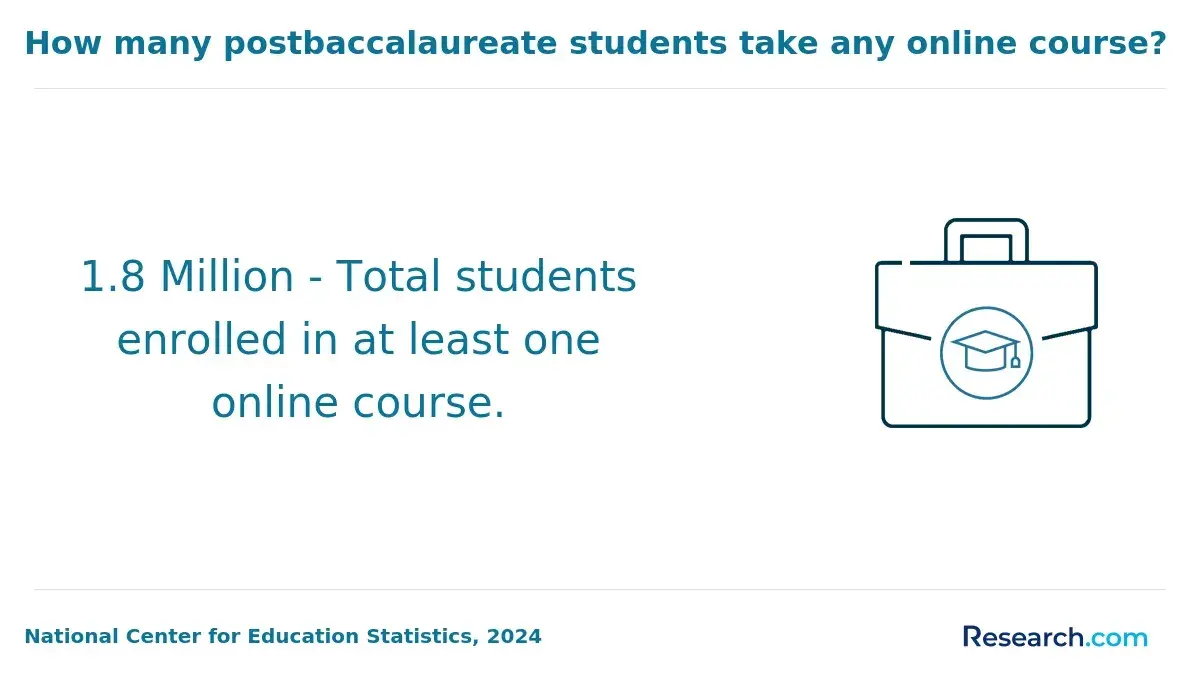
Nonetheless, residency rules and upper-division credit requirements impose limits on how much transfer credit applies toward specialized degree milestones, maintaining academic rigor but occasionally restricting credit mobility. According to recent data from the National Center for Education Statistics, around 63% of relevant programs incorporate prior learning assessments, illustrating a significant trend toward flexible credit policies. These practices influence academic planning by requiring students to balance transfer credit opportunities against institutional constraints, program focus areas, and employer expectations for current regulatory knowledge.
Which Alternative Credits Are Most Commonly Accepted by Regulatory Science & Affairs Programs?
Acceptance of alternative credits within regulatory science & affairs programs has evolved beyond mere policy adjustments into a deliberate strategy to enhance degree accessibility and shorten completion timelines for adult learners. Credit for prior learning (CPL), including workforce certifications and documented professional experience, is increasingly leveraged to reduce time-to-degree by as much as 25%, though institutions often apply strict residency rules and limit upper-division credit applicability.
Military training credits-validated through American Council on Education recommendations-remain particularly vital for veterans transitioning to civilian roles, reflecting a consistent priority among programs to recognize these credentials amid growing demand across healthcare systems. Exams such as CLEP and DSST provide additional pathways for demonstrating subject mastery, yet acceptance varies substantially based on program-specific credit equivalencies and accreditation standards. Community college coursework and employer-sponsored learning offer potential credit avenues but are subject to close scrutiny regarding content relevance and institutional rigor.
These transfer credit options for regulatory science & affairs programs require adult learners to carefully assess policies to balance affordability and flexibility without compromising degree validity. For those navigating alternatives, planning ahead to align previously earned credits with program expectations can significantly influence educational outcomes and professional trajectories, as highlighted in comparisons including the cheapest construction management degree archetype.
How Are Regulatory Science & Affairs Schools Improving Transfer Pathways for Community College Students?
Improving transfer pathways has become essential for regulatory science & affairs programs seeking to attract and retain community college students who balance diverse responsibilities while aiming to minimize lost credits and prolonged degree timelines. Expanded articulation agreements and dual-admission arrangements increasingly define clear credit equivalencies, yet students still face challenges when technical or vocational coursework does not seamlessly transfer, requiring careful scrutiny of program-specific transfer policies.
Incorporating prior learning assessments allows programs to recognize professional and military experience, potentially accelerating degree completion by several months, as reported by the National Student Clearinghouse Research Center in 2024. Such measures improve credit applicability and maintain academic momentum, but students must navigate institutional variations in evaluating transfer credits, which can influence enrollment planning and long-term workforce readiness.
Dedicated transfer advising plays a pivotal role in mediating these complexities by helping students align course selections with regulatory certification requirements and institutional degree maps, especially in flexible formats like part-time or hybrid programs designed for adult learners. While these adaptations broaden educational access, uneven alignment of prerequisite courses remains a barrier in some community colleges, forcing students to weigh the cost-benefit of pursuing supplemental coursework. For working professionals or those with prior credentials, these nuanced pathways can facilitate on-ramps to regulatory roles but demand informed decision-making to avoid credit loss and extended graduation timelines.
How Can Transfer Credits Help Regulatory Science & Affairs Students Graduate Faster?
Transfer credit strategies for regulatory science & affairs students present both opportunities and challenges that directly influence degree timelines and educational costs. While articulation agreements and prior learning assessments can allow many adult learners and working professionals to bypass foundational courses, the real-world impact hinges on how extensively those credits meet upper-division and specialized program requirements.
For example, a student transferring credits from a community college might avoid introductory classes but still need to complete core regulatory science courses due to strict residency or course sequencing policies, limiting the actual acceleration of graduation. Accelerated graduation pathways through transfer credits in regulatory science & affairs depend heavily on institutional flexibility and credit applicability. Military and workforce training credits often require alignment with accreditation standards and program-specific competencies to be accepted, which varies widely among schools.
This variability compels students to engage proactively with academic advisors to navigate which credits qualify and how to incorporate them effectively without extending time-to-degree. Such strategic planning is essential, especially for those balancing work or military commitments, because credit acceptance differences can alter enrollment strategies and affordability considerations. For those evaluating options, exploring resources like a UX design degree online can provide broader context on cost-effective pathways outside traditional regulatory science programs.
Ultimately, students aiming to leverage transfer credits must balance the benefits of reduced credit loads against institutional restrictions that preserve program integrity through required major-specific coursework. While transfer-friendly policies are evolving, they do not guarantee uniform outcomes, and some credits may not translate into meaningful reductions in time-to-degree. Especially for adult learners and military-affiliated students, careful assessment of credit acceptance and alignment with workforce goals is crucial to maximizing the practical value of previously earned credits within regulatory science & affairs curricula.
How Much Money Can Students Save Through Regulatory Science & Affairs Transfer Credit Opportunities?
Transfer credit policies within regulatory science & affairs programs can significantly alter the financial and temporal investment required for degree completion, particularly for students balancing professional and personal commitments. Adult learners and military-affiliated students often benefit most, as block credit transfers or recognition of prior training can truncate course loads by up to 30 credits, thereby reducing tuition expenses by several thousand dollars.
However, these savings are constrained by institutional residency mandates and credit transfer limits, which may necessitate retaking courses despite relevant prior work or military experience, impacting both costs and time to graduation. A 2024 report from the National Student Clearinghouse Research Center highlights that effective credit transfer can shorten time-to-degree by an average of 18 months, translating into tuition reductions between 20% and 40%, yet this varies widely depending on each institution's policies and partnerships.
While some regulatory science & affairs programs streamline transfer pathways through collaboration with feeder schools or flexible recognition of professional certifications, others impose more rigid equivalency rules that can erode potential savings by causing credit loss. This variation means transfer students and working professionals must closely assess program-specific articulation agreements and credit acceptance practices before enrolling.
In practical terms, the financial benefits gained through transfer credits hinge not only on the volume of accepted credits but also on how efficiently these credits integrate with degree requirements without triggering repetitive coursework. Thus, prospective students should weigh the real-world implications of transfer credit policies on their overall academic trajectory, balancing anticipated cost reductions against possible delays or additional course obligations imposed by institutional constraints.
How Are Regulatory Science & Affairs Programs Supporting Military Students and Workforce Learners Through Transfer Credits?
Regulatory science & affairs programs increasingly recognize prior military training and workforce credentials as critical assets for academic credit, yet the practical value of these transfer policies varies across institutions. Although more than 85% of schools offering such degrees revised their credit acceptance frameworks per the American Council on Education's 2024 guidelines, the extent to which military occupational specialties, vendor certifications, or apprenticeship experiences shorten degree timelines depends on how rigorously programs tailor prior learning assessments (PLAs) to current regulatory competencies.
For example, a military-affiliated student with extensive pharmaceutical compliance training may find significant credit awarded, cutting total coursework by nearly a fifth, while another with less directly aligned experience might still confront large credit gaps and rigid curricular requirements. These frameworks often hinge on collaborations between academic institutions and credentialing bodies, enhancing predictability in transfer credit evaluation yet still exposing workforce learners to uneven recognition depending on state or sector standards.
The dynamic nature of regulatory science, particularly its rapid evolution in areas like medical devices, demands continual curricular updates to ensure that transfer credits reflect up-to-date industry criteria, a process some programs have not fully realized. For working adults balancing education with employment, this means that despite increased access through online or hybrid pathways, transfer credit policies may not universally translate into shorter degree completion times or reduced financial investment, underscoring the need for careful academic advising tailored to each learner's prior experiences.
What Transfer Credit Innovations Are Shaping the Future of Regulatory Science & Affairs Education?
Transfer credit innovations are actively reshaping how regulatory science & affairs education accommodates adult learners, military-affiliated students, and transfer populations by enhancing access and degree mobility. The integration of AI-assisted transcript evaluation notably reduces processing time by up to 40%, accelerating admission and credit awarding decisions.
However, institutions face complex challenges balancing automation efficiency with maintaining academic quality and consistency in credit acceptance, which can vary widely and impact students' ability to plan timely degree completion. Competency-based education (CBE) pathways also play a significant role by recognizing mastery rather than time spent, a crucial adaptation for professional and military learners whose experiential knowledge often remains undercredited.
Credit for prior learning initiatives and technology-driven credit portability systems are expanding options for converting workplace and military training into academic credits, yet verifying learning quality and alignment with regulatory science & affairs standards remain significant hurdles. For example, transfer pathway agreements between community colleges and four-year programs are evolving to support smoother credit mobility, but such arrangements require constant reassessment to reflect shifting labor market demands.
These developments influence not only educational accessibility but also workforce preparedness by potentially shortening time to degree while ensuring qualification relevance. Adult learners must strategically evaluate how alternative credentialing fits into their long-term goals, especially compared with more traditional, time-based credit systems found in programs like asha accredited online SLP programs. Adopting transfer credit innovations in regulatory science & affairs education is not without tradeoffs.
Institutions must negotiate the tension between expanding credit acceptance for nontraditional learning and safeguarding employer expectations to maintain credential validity. This reality underscores the importance of informed decision-making for students weighing the practical benefits of accelerated pathways against potential inconsistencies in how credits translate across programs. Attention to these factors can optimize educational outcomes by aligning transfer credit strategies with both academic standards and evolving workforce needs.
How Can Adult Learners Maximize Transfer Credits in a Regulatory Science & Affairs Program?
Maximizing transfer credits in regulatory science & affairs programs requires a deliberate evaluation of how previously earned credits align with program-specific competencies and institutional policies. Adult learners transferring from community colleges, universities, or with professional certifications must navigate not only course equivalencies but also residency requirements that often cap transferable credits between 60% and 75%.
For example, a military-affiliated student leveraging Joint Services Transcript credits might face challenges aligning those with core regulatory science coursework, underscoring the need for early and comprehensive transcript evaluations to avoid late-stage surprises that could extend time-to-degree and increase costs. Credit for prior learning (CPL) is a critical but unevenly applied factor, as many regulatory science & affairs graduate programs differ in their acceptance of military service, professional experience, or credit-by-exam options such as CLEP and DSST.
Effective transfer credit strategies for adult learners in regulatory science & affairs programs therefore involve prioritizing institutions with established articulation agreements and flexible transfer pathways, which according to recent National Student Clearinghouse Research Center data, can improve credit acceptance rates by 25%.
Planning tradeoffs also include balancing immediate credit maximization against maintaining academic flexibility for future specialization, a factor influencing both course sequencing and employability outcomes in the regulatory workforce. Adult learners should also consider broader degree pathways, including options like best 1 year MBA programs, to complement their regulatory science & affairs expertise and enhance long-term career options.
References:
- CAEL | Why Credit for Prior Learning (CPL) or Prior Learning Assessment (PLA) Matters https://www.cael.org/lp/cpl-pla
- Increasing Community College Transfers: Progress and Barriers - Public Policy Institute of California https://www.ppic.org/publication/increasing-community-college-transfers-progress-and-barriers/
- How Regulatory Affairs Is Shaping Tomorrow’s Innovation Landscape | PharmExec https://www.pharmexec.com/view/how-regulatory-affairs-is-shaping-tomorrow-s-innovation-landscape
- Hard up for students, more colleges are offering college credit for life experience, or ‘prior learning’ https://hechingerreport.org/to-fill-seats-more-colleges-offer-credit-for-life-experience/
- Developing regulatory science to advance healthcare https://www.ukri.org/news/developing-regulatory-science-to-advance-healthcare/
- Centre for Innovation in Regulatory Science | CIRS https://cirsci.org/
- Blog https://www.straighterline.com/blog/
- 2.04 – Transfer and Exam-based Credit | Ozarks Technical Community College https://ozarkstech.edu/policy/2-04-transfer-of-credit/
- STARS https://ecrin.org/projects/stars
- Regulatory Science Program https://c-path.org/program/regulatory-science-program/
Other Things You Should Know About Regulatory Science & Affairs
Accepting many transfer credits may speed degree completion but could reduce engagement with essential regulatory science & affairs concepts taught in later-year courses. Programs often require completed credits in advanced regulatory law, compliance, or clinical trial management to ensure readiness for professional roles. Students should assess whether their transfer credits align closely with these core areas; otherwise, they might miss crucial, current instruction that employers expect, which can impact job market competitiveness.
Transfer credits from general science or business courses rarely cover the specialized, applied training regulatory science & affairs programs emphasize, such as hands-on regulatory strategy or case studies. Over-reliance on transfer credits might result in a degree that leans heavily on theory without sufficient practical experience, which can weaken employer perceptions of readiness. Prospective students should prioritize programs that offer direct engagement with regulatory practice alongside transfer credit acceptance to maintain educational and professional relevance.
While flexible programs may accommodate more transfer credits and expedite graduation, they sometimes trade off the prestige or rigor valued by regulatory employers. Adult learners focused on advancing careers in competitive markets should weigh whether a flexible transfer policy aligns with recognized accreditation and strong employer networks. Prioritizing program reputation often yields better long-term returns in employment opportunities, even if the path to credit acceptance appears less straightforward.
Transferability often depends on course content overlap and institution-specific credits evaluation, meaning not all credits fully satisfy regulatory science & affairs curriculum needs. Misestimating transfer credit applicability can prolong degree completion or leave skill gaps, especially in accreditation-required subjects. Students should verify how credits map onto their target program's required competencies and consult academic advisors to avoid surprises that delay graduation or affect professional preparation.