2027 Regulatory Science & Affairs Degree Oversupply or Undersupply? Student Volume vs Employer Demand

Co-Founder and Chief Data Scientist
A recent report indicates that the number of regulatory science & affairs graduates increased by 12% nationally in 2023, reaching approximately 3,800 new entrants. However, the same period saw only a 5% growth in related job openings, creating a noticeable gap between graduate output and employer demand.
This discrepancy raises concerns about regional oversaturation, particularly in established biotech hubs, where underemployment and credential mismatches have become more frequent. For prospective students and degree holders, understanding these dynamics is crucial, as an imbalance could lead to heightened competition and limited career advancement.
This article compares regulatory science & affairs student volume with employer demand, job growth, industry needs, regional conditions, and skill gaps to help readers judge whether the field offers sustainable opportunities or rising competition.
Key Things to Know About Regulatory Science & Affairs Graduate Supply and Employer Demand
- Graduate output grew 12% nationally in 2024, yet 40% of entry-level roles cluster in biotechnology hubs, indicating regional oversupply elsewhere and suggesting geographic flexibility is key for employment.
- Employers report a widening preference for specialized skills in digital submission and real-world evidence, creating gaps where generalist graduates struggle-highlighting the need for targeted curriculum adjustments.
- Program duration and cost often delay workforce entry, compounding competition as some students opt for quicker certifications, which pressures traditional degree pathways and reshapes candidate pools.
- Is There an Oversupply or Undersupply of Regulatory Science & Affairs Graduates? Graduate Oversupply or Shortage
- How is Regulatory Science & Affairs Degree Enrollment Changing? Degree Enrollment Trends
- How Many Regulatory Science & Affairs Graduates Enter the Workforce Each Year? Annual Graduate Workforce Entry
- Does Job Growth Support the Rising Supply of Regulatory Science & Affairs Graduates? Job Growth Versus Supply
- How Competitive is the Entry-Level Market for Regulatory Science & Affairs Graduates? Entry-Level Market Competition
- Which Industries Have the Greatest Demand for Regulatory Science & Affairs Graduates? Top Hiring Industries
- Where are Regulatory Science & Affairs Graduates Most in Demand? Top Geographic Demand
- Which Regulatory Science & Affairs Specializations and Degree Levels Face the Strongest Demand? Which Regulatory Science & Affairs Specializations and Degree Levels Face the Strongest Demand?
- Are Employer Skill Gaps Affecting Demand for Regulatory Science & Affairs Graduates? Are Employer Skill Gaps Affecting Demand for Regulatory Science & Affairs Graduates?
- What is the Future Supply-and-Demand Outlook for Regulatory Science & Affairs Graduates? Future Supply-Demand Outlook
Is There an Oversupply or Undersupply of Regulatory Science & Affairs Graduates?
Current labor-market dynamics reveal a nuanced balance between regulatory science & affairs graduate employment trends in the US and actual employer demand. While degree completions in related programs have increased moderately, many employers, particularly in specialized sectors like oncology therapeutics and advanced biologics, consistently report difficulties finding candidates with the precise combination of advanced degrees and relevant regulatory experience.
This reflects a fragmented market where certain high-demand niches experience genuine undersupply, even as overall program enrollment rises, creating pockets of competition primarily at entry-level positions outside specialized clusters.
Regional disparities further complicate the simple assessment of regulatory science & affairs workforce demand versus student enrollment. High-demand pharmaceutical hubs on the Northeast and select West Coast locales contrast with oversaturated markets elsewhere, where graduates holding generalist or less differentiated credentials face stiff competition for limited roles.
Additionally, evolving employer expectations for specialized expertise and practical experience challenge many new graduates, often requiring them to pursue targeted specialization or supplementary training such as online PhD programs to maintain long-term viability in the field.
How is Regulatory Science & Affairs Degree Enrollment Changing?
Enrollment growth in regulatory science & affairs graduate programs, particularly at the master's level, is contributing to increased competition among new entrants rather than signaling straightforward employer shortages. The rise in online program availability has expanded access for working professionals and geographically diverse candidates, which accelerates supply growth, especially in regions with limited local offerings.
However, the relatively stable bachelor's completions and modest doctoral enrollments indicate the field prioritizes applied expertise over research specialization, underscoring employer preferences for practical skills.
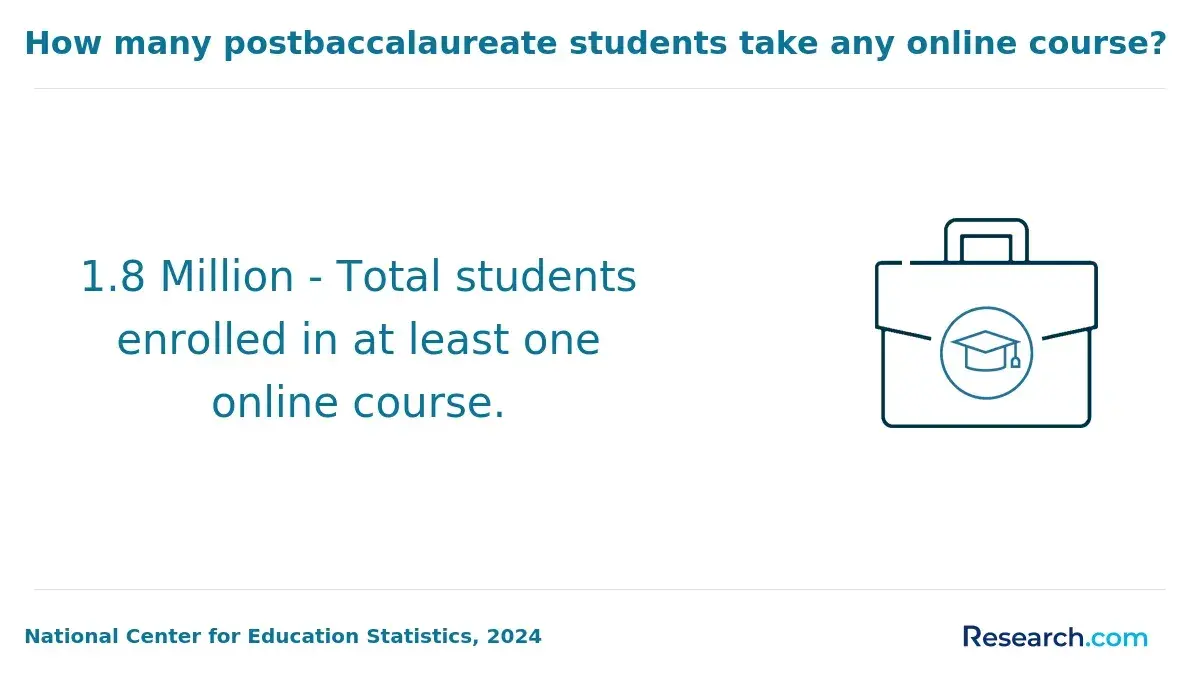
According to 2024 data from the National Center for Education Statistics, master's degree completions increased by roughly 8% over two years, but this volume does not uniformly translate into job openings, as labor market nuances and employer expectations for experience and advanced competencies can create regional and sub-specialty saturation.
Demographic diversification and the inclusion of nontraditional students reflect broader shifts in higher education but also pose challenges for program delivery and employer integration efforts. Institutions expanding online enrollment must balance maintaining curriculum rigor with accommodating varying student backgrounds and expectations, which directly influences graduate readiness in fast-evolving regulatory environments.
Employers frequently report a preference for candidates who combine academic credentials with demonstrable, specialized experience, meaning supply growth must be weighed against potential oversaturation in some local markets. Overreliance on national enrollment trends without considering regional labor dynamics may mislead decision-makers about actual career prospects and the true balance of supply and demand.
A current master's student shared that their program cohort has grown noticeably due to expanded online enrollment options, drawing individuals from diverse sectors and locations. While this diversity enriches learning, the student expressed uncertainty about whether the increased class sizes translate into better employment chances or simply more competition for the same roles.
The student also noted that program adjustments to meet broader learner needs sometimes affect course depth, raising questions about whether these shifts enhance or dilute the practical readiness valued by employers in regulatory careers.
How Many Regulatory Science & Affairs Graduates Enter the Workforce Each Year?
Evaluating the annual supply of Regulatory Science & Affairs graduates in relation to employer demand requires more than raw degree completion numbers. Data from the National Center for Education Statistics and the Integrated Postsecondary Education Data System offers enrollment and graduation details from accredited programs, including distinctions by degree type and specialization.
Still, many graduates delay entering the workforce or pivot to allied fields like clinical research or quality assurance, making direct comparisons with job openings problematic. Moreover, graduates' entry patterns vary regionally, influenced by the geographic concentration of programs and local industry demand, which complicates a straightforward assessment of over- or undersupply based solely on volume.
Workforce studies indicate that approximately 65% to 75% of these graduates secure positions with regulatory responsibilities within 12 to 18 months, reflecting an estimated 800 to 1,100 new entrants annually. However, employers often prioritize candidates with relevant experience or certifications beyond academic credentials, creating an uneven competitive landscape between fresh graduates and internally transitioning professionals.
This dynamic means that while the annual graduate volume appears sufficient to meet baseline replacement needs and modest job growth, mismatches in skills, timing, and regional distribution lead to localized hiring challenges and nuanced workforce absorption trends that raw numbers alone do not capture.
Does Job Growth Support the Rising Supply of Regulatory Science & Affairs Graduates?
Despite projected growth in regulatory science & affairs employment, the rising number of graduates entering the workforce often outpaces available job openings, especially at the entry level. Data from the U.S. Bureau of Labor Statistics and Lightcast in 2024 underscores that while employment is expected to increase by approximately 6% to 8% over the next decade, this growth closely matches or slightly exceeds average occupational growth but may not sufficiently absorb the surge in graduates.
Many positions require specialized experience, certifications, or geographic flexibility that new graduates might lack, leading to heightened competition, underemployment, or extended job searches for recent degree holders.
For example, a recent graduate from a regulatory science & affairs program in a non-urban region might face limited opportunities compared to peers near biotech or pharmaceutical hubs where demand is stronger. Replacement demand driven by retirements adds openings but is often insufficient to balance the influx of new entrants.
The mismatch between student volume and employer demand warns against overestimating youthful market entry prospects without advanced qualifications or practical experience. Those evaluating growth should also consider regional disparities and evolving employer expectations before assuming that rising educational output aligns with robust job creation in regulatory science & affairs.
This nuanced employment landscape highlights the importance of strategically investing in skills and credentials. Prospective students and professionals would benefit from understanding how local job markets differ and exploring pathways like advanced degrees or cross-disciplinary options such as online executive MBA programs to enhance competitive positioning, balancing ambition with realistic labor market conditions.
How Competitive is the Entry-Level Market for Regulatory Science & Affairs Graduates?
Entry-level job seekers in regulatory science & affairs face a market where graduate numbers outpace available roles, but this imbalance is nuanced by employer preferences and sector-specific needs. Employers often demand experience beyond entry-level credentials, particularly 1-3 years in related environments, which prolongs the transition from graduate to permanent hire.
Market activity data from Lightcast in early 2024 confirms steady posting volumes but underscores that many positions require practical expertise or cross-disciplinary capabilities. These factors create a challenging environment that is neither a clear-cut oversupply nor an outright shortage, instead reflecting uneven demand and skill mismatches across industries and regions. Key elements shaping this competitive landscape include:
- Applicant Volume: Graduate numbers have increased with more programs but outnumber entry-level job openings, elevating competition intensity and requiring strategic targeting of roles with realistic qualification alignment.
- Experience Expectations: Many postings specify prior regulatory-related experience, leading graduates to pursue internships, contract roles, or supplementary skill-building before securing full-time positions.
- Industry Concentration: Demand is strongest in pharmaceuticals and medical devices, where regulatory complexities drive hiring, but these sectors also attract the highest applicant pools, intensifying competition.
- Geographic Variation: Job availability fluctuates regionally, with clusters near industry hubs often saturated, pushing candidates to consider roles in emerging or less concentrated areas.
- Specialization and Skills: Employers value candidates combining regulatory knowledge with data analytics or quality assurance, signaling a preference for multidimensional expertise over narrowly focused credentials.
- Remote and Contract Roles: An increase in flexible or temporary positions provides interim opportunities but can delay permanent placement and benefits acquisition.
- Networking and Practical Experience: Proactive internships and connections within regulatory circles remain critical differentiators amid crowded applicant pools, highlighting the importance of early engagement beyond academic achievement.
A recent graduate's experience illustrates these dynamics: despite a strong academic record, she found most openings required more than her internship exposure, leading to multiple contract roles that paid less but expanded her network and technical skills.
Geographic limitations compounded her challenges, as job clusters near her city attracted many applicants. After several narrowly missed interviews, she shifted focus to smaller firms in adjacent regulatory domains, cautiously navigating a path between saturation and opportunity.
This gradual approach underscores how strategic flexibility and sustained effort often determine success for entry-level regulatory science & affairs professionals facing a complex and competitive market.
Which Industries Have the Greatest Demand for Regulatory Science & Affairs Graduates?
Demand for regulatory science & affairs graduates is particularly concentrated in sectors where compliance complexity and regulatory scrutiny directly impact product approval and market sustainability. These industries require professionals who not only understand detailed regulatory frameworks but also bring practical experience in managing cross-functional projects and regulatory submissions.
The volume of available jobs does not uniformly translate into access or advancement opportunities, as employers often prioritize hands-on expertise and specialized knowledge. Graduates choosing among industries should weigh job availability against competition and consider skill requirements that influence both entry-level hiring and long-term career growth.
Below are key sectors generating the strongest regulatory science & affairs industry demand trends.
- Pharmaceutical and Biotechnology: This sector leads in volume due to ongoing innovation and vast regulatory oversight by agencies like the FDA and EMA. Roles span from regulatory affairs associate to global regulatory strategy manager, favoring candidates skilled in drug development processes, clinical trial documentation, and international compliance standards.
- Medical Device Manufacturing: Increasing regulatory scrutiny on safety and quality has driven strong demand. Entry-level positions often focus on documentation and compliance audits, moving toward advanced roles requiring expertise in quality system regulations and clinical trial management.
- Environmental and Chemical Industries: Steady growth reflects the need to comply with EPA regulations and chemical safety laws. Graduates here often support regulatory submissions and sustainability initiatives, with employers valuing knowledge of hazardous materials regulations and international treaties.
- Food and Dietary Supplements: Moderate but niche demand centers on regulatory challenges related to labeling, safety monitoring, and claims substantiation. Candidates with combined regulatory and food science experience tend to have a competitive edge.
- Cross-Functional Corporate Roles: Employers increasingly seek graduates who combine regulatory knowledge with data analysis and project management skills, reflecting a shift toward versatile professionals capable of navigating complex regulatory environments and business objectives.
For those assessing volume and competition, pharmaceutical and biotech offer the most opportunities but also feature intense rivalry, especially at larger firms. In contrast, sectors like environmental or food may have fewer openings but lower applicant density, potentially offering steadier hiring odds.
Practical experience, including internships or relevant job history, significantly improves employability across all sectors. Prospective students might also explore diverse pathways, such as the best online degrees for stay-at-home moms, when considering degree programs aligned with these industry demands.
Where are Regulatory Science & Affairs Graduates Most in Demand?
National statistics on demand for regulatory science & affairs graduates often obscure significant regional disparities driven by industry clustering and local workforce dynamics. States like California, Massachusetts, and New Jersey lead hiring activity due to dense concentrations of pharmaceutical companies, contract research organizations, and regulatory consulting firms.
However, graduates entering these saturated markets must weigh intense competition and elevated living costs against the volume of opportunities; for example, a candidate relocating to the San Francisco Bay Area may find more openings but face higher applicant pools and housing expenses compared to less congested regions.
In contrast, areas without established life sciences hubs typically offer fewer regulatory science & affairs roles, which can prolong job searches or require relocation for those seeking timely employment.
The availability of specialized certifications and advanced degrees increasingly influences employer preferences, particularly in high-demand urban centers where employers expect nuanced expertise aligned with current regulatory trends like digital health software and biosimilars. For many, willingness to move to innovation hubs is critical, as remote work options remain limited by the need for hands-on regulatory compliance engagement within tightly regulated sectors.
These geographic and sectoral nuances suggest that prospective students and current graduates must critically assess local market saturation, credential expectations, and personal cost-of-living considerations rather than relying solely on aggregate job counts.
Workforce planners should likewise calibrate program capacities to regional placement realities, avoiding oversupply in established clusters that intensify credential inflation and competition. Employers' growing focus on specialized knowledge and urban concentrations indicates that regulatory science & affairs graduates outside major metro areas may need strategic geographic flexibility to convert their qualifications into sustainable employment.
Which Regulatory Science & Affairs Specializations and Degree Levels Face the Strongest Demand?
Employer demand within Regulatory Science & Affairs is highly concentrated among candidates with specialized master's degrees rather than a broad, even distribution across all credentials or specializations. Labor-market data from Lightcast and the U.S. Bureau of Labor Statistics for 2024 highlight that job postings favor graduate-level professionals with focused expertise in pharmaceutical and medical device regulatory compliance.
By contrast, bachelor's level generalists face a more saturated market with limited openings. For example, a master's graduate specializing in clinical trial oversight often encounters more targeted industry roles compared to a bachelor's degree holder who may need supplemental certification or practical experience to compete. The following specializations demonstrate the most consistent employer interest and hiring activity:
- Pharmaceutical Regulatory Affairs: High demand driven by drug development regulations and FDA approval processes. Employers prioritize candidates with knowledge of quality assurance and lifecycle management in pharmaceutical firms and contract research organizations.
- Medical Device Regulation and Compliance: Growing need for experts in device approval pathways and post-market surveillance. Roles are prevalent in manufacturing, healthcare providers, and federal regulatory bodies, requiring familiarity with ISO standards and FDA guidance.
- Biotechnology and Life Sciences Regulatory Strategy: Employers seek candidates who can navigate complex product development and regulatory frameworks across multiple jurisdictions, especially in biotech firms focusing on novel therapies and biologics.
- Clinical Trials Oversight and Compliance: Essential for roles in CROs and pharmaceutical sponsors, this specialization demands proficiency in GCP compliance, data integrity, and evolving trial regulations across regions.
- Global Regulatory Policy and Risk Management: Candidates with the ability to analyze and implement regulatory strategy across the U.S., EU, and Asia-Pacific markets are increasingly sought by multinational companies and regulatory consultancies.
Doctoral degrees tend to align with research and policy-oriented roles rather than the more prevalent operational and compliance positions industry prioritizes, reinforcing that practical, applied expertise at the master's level commands stronger hiring focus currently.
Are Employer Skill Gaps Affecting Demand for Regulatory Science & Affairs Graduates?
The perceived shortage in regulatory science & affairs talent often masks a more complex issue: a deficit not in graduate numbers but in candidates with the precise mix of technical, professional, and industry-specific competencies employers require.
Employers frequently struggle to fill regulatory affairs roles because many available graduates lack practical experience with electronic submissions platforms, digital compliance tools, or nuanced agency communication protocols-skills now prioritized in sectors like pharmaceuticals and biotechnology.
This mismatch leads to unfilled positions despite a steady supply of graduates, which can distort labor-market signals and intensify competition, particularly for entry-level roles where hands-on regulatory experience or certifications often outweigh formal degrees.
This disconnect highlights the impact of credential mismatches on regulatory science and affairs job market dynamics. Advanced degrees alone do not guarantee alignment with hiring expectations.
Employers favor candidates demonstrating targeted certifications, project management in regulated environments, and internships that translate to immediate operational readiness.
For prospective students and current degree holders, program selection should prioritize curricula incorporating emerging regulatory technologies and digital tools alongside opportunities for practical industry exposure. Understanding these priorities can help mitigate underemployment risks and strengthen positioning in a competitive field.
Addressing employer skill gaps in regulatory science and affairs hiring requires a strategic approach that balances academic credentials with applied skills development. Given the constrained availability of internships, students may also consider alternative pathways such as cooperative education or specialized projects to build relevant expertise.
Those evaluating degree options might find value in exploring the most affordable online colleges for working adults that offer flexible programs integrating these components, thereby enhancing employability in a labor market sensitive to both volume and competency nuances.
What is the Future Supply-and-Demand Outlook for Regulatory Science & Affairs Graduates?
Targeted job searches generally outperform broad, unfocused applications for regulatory science & affairs graduates because employers prioritize candidates with directly relevant experience and tailored qualifications.
For example, a recent graduate aiming solely at generic regulatory roles may face stiff competition and delayed employment compared to one who identifies precise entry-level titles in pharmaceutical compliance or medical device regulatory affairs within regional biotech hubs, where demand is notably higher.
Those who customize their resumes to match employer language, demonstrate pertinent skills through internships or projects, and concentrate efforts on industries and geographic areas with documented job growth typically achieve better interview conversion rates.
Applying without market research or timing consideration often results in wasted effort and missed opportunities in this field, as many employers require demonstrated familiarity with FDA or EMA frameworks and evolving digital health regulations. Allocating application efforts to positions where a candidate's credentials closely align with stated requirements, while leveraging evidence of job readiness, can reduce the competitive disadvantage caused by increased graduate numbers.
Insight into the future supply and demand of Regulatory Science & Affairs graduates in the United States reveals that regional variability and employer trends must guide strategic job search decisions rather than relying on volume alone.
Students and professionals evaluating career pathways should recognize how such informed, selective approaches mitigate oversupply risks in some markets and enhance outcomes. This nuanced view contrasts with generic advice to broadly apply and reflects findings from educational and workforce data sources.
For those interested in regulatory science & affairs as a career, understanding comparable occupational trends, such as those in high paying jobs with animals, underscores the importance of evidence-based job targeting within evolving professional landscapes.
References
- Pharmaceutical Regulatory Affairs Market Forecast 2025–2030 | Trends & Growth Analysis https://www.vistaar.ai/blog/pharmaceutical-regulatory-affairs-market-trends-and-forecast-2025-2030/
- Developing careers for regulatory affairs professionals https://www.topra.org/CMDownload.aspx
- Life Sciences Recruitment Trends in Pharma & Medical Device https://www.experis.com/pl/insights/articles/life-sciences-recruitment-trends
- Regulatory Science and the FDA | Triangle CERSI https://trianglecersi.org/regulatory-science
- Regulatory affairs https://www.abpi.org.uk/careers/working-in-the-industry/research-and-development/regulatory-affairs/
- Online Master’s in Regulatory Science and Affairs Degree Programs https://www.onlineeducation.com/healthcare/masters-in-regulatory-science-affairs-programs
- Entry level regulatory affairs work experience and course https://www.entrytoregulatory.com/how-to-get-a-job-in-regulatory-affairs
- Cliniminds Blogs https://cliniminds.com/blogs/projected-job-growth-in-drug-regulatory-affairs-in-india-a-five-year-outlook-37
- In-Demand Pharma Roles: AI, Manufacturing & Clinical Jobs | IntuitionLabs https://intuitionlabs.ai/articles/in-demand-pharma-roles
- How to get a job in regulatory affairs | Proclinical Recruitment Blogs https://www.proclinical.com/blogs/2021-2/how-to-get-a-job-in-regulatory-affairs
Other Things You Should Know About Regulatory Science & Affairs
Students should carefully evaluate how well a program's curriculum aligns with current industry needs rather than assuming any regulatory science & affairs degree provides equal career value. Programs that emphasize practical skills, regulatory writing, and hands-on internship opportunities tend to produce graduates who meet employer expectations more effectively, especially when demand tightens.
Prioritizing programs with strong industry connections and experiential components can mitigate risks associated with shifts in hiring patterns.
While advanced degrees can differentiate candidates with specialized knowledge, they may also delay workforce entry and accumulate additional debt. Given fluctuating market absorption rates for regulatory science & affairs graduates, students should weigh whether extended academic specialization translates into tangible job opportunities or if gaining early professional experience might offer better long-term leverage.
For many, targeted certification combined with work experience can be more immediately valuable than an additional degree.
Employers increasingly seek candidates who demonstrate adaptability to rapidly evolving regulatory environments and interdisciplinary teamwork capacity. Degrees focused narrowly on regulatory compliance without cultivating problem-solving agility or data literacy may limit graduates' competitiveness.
Prospective students should assess whether programs integrate cross-disciplinary skills and realistic project work that reflect the workload demands and dynamic nature of regulatory roles, as meeting employer expectations requires more than foundational knowledge.
Educators should focus on building robust career services, professional networking channels, and co-op or internship frameworks to bridge the gap between academic training and employer demand. Emphasizing soft skills such as communication, critical thinking, and regulatory strategy alongside technical expertise can improve graduate resilience amidst supply fluctuations.
Prioritizing advisory input from industry practitioners ensures curriculum relevance, which directly impacts graduates' ability to secure and retain positions during market shifts.