
2027 Best Online Degrees for Moms

Co-Founder and Chief Data Scientist
Choosing an online degree as a mom is not just an academic decision. It affects your schedule, childcare needs, budget, career options, and long-term earning potential. The right program can help you move into a more stable field, qualify for advancement, or restart your career without requiring you to pause family responsibilities.
This guide is written for mothers comparing online degree options, including working moms, single moms, stay-at-home moms returning to school, and parents who need flexible study formats. You will learn which online degrees can fit family life, how employers view online credentials, what to check before enrolling, how to reduce costs, and how to avoid common mistakes that can waste time or money.
Quick Answer: What Are the Best Online Degrees for Moms?
The best online degrees for moms are flexible, accredited, career-relevant, and realistic to complete alongside parenting responsibilities. Strong options often include nursing, healthcare administration, social work, special education, business administration, psychology, counseling, speech language pathology, human services, and human resources. The best choice depends on your current education level, state licensure rules, time availability, budget, and preferred work environment.
- Online programs can make college more manageable because many offer asynchronous coursework, reduced commuting time, and broader school choice.
- Moms should prioritize accredited programs, clear clinical or fieldwork requirements, strong student support, transparent costs, and career services.
- Fields such as healthcare, education, business, social services, and technology-related administration can provide practical pathways for mothers seeking long-term career growth.
Affordable Quick Online Degree Programs With High Acceptance Rates
For many mothers, the ideal degree is not simply the “fastest” one. It is the program that can be completed without derailing family life, carries recognized accreditation, and leads to realistic career opportunities. Below are online degree fields that often match the needs of moms returning to school because they connect to stable industries, transferable skills, and flexible career paths.
1. Nursing
Nursing prepares students to provide direct patient care, coordinate treatment, educate patients, and work with healthcare teams in hospitals, clinics, long-term care facilities, and community health settings. Online nursing programs commonly include subjects such as anatomy, physiology, pharmacology, medical-surgical nursing, pediatric nursing, and clinical practice. Moms considering nursing should pay close attention to in-person clinical requirements, state licensure rules, and whether the program is approved for the credential they want to pursue. Graduates may move into roles such as registered nurse, nurse practitioner after advanced education, nurse educator, or nurse administrator.
2. Healthcare Administration
Healthcare administration is a strong option for moms who want to work in healthcare without necessarily providing bedside care. Students learn how hospitals, clinics, insurance organizations, and health systems manage operations, staff, budgets, policies, and quality improvement. Online programs often cover healthcare finance, health policy, human resources, organizational leadership, and compliance. Graduates may pursue roles such as healthcare administrator, hospital manager, health services manager, or healthcare consultant, depending on education level and experience.
3. Social Work
Social work focuses on helping individuals, families, and communities navigate challenges such as poverty, trauma, disability, family conflict, housing instability, and access to care. Online social work programs typically include coursework in human behavior, social welfare policy, cultural competence, ethics, and intervention methods. Many programs also require supervised field placements, so moms should confirm how placements are arranged locally. Graduates may work as case managers, school social workers, medical social workers, child welfare specialists, or, with the required graduate education and licensure, clinical social workers. Students comparing options can also review accredited online BSW programs.
4. Special Education
Special education prepares educators to support students with disabilities and diverse learning needs. Online programs usually address inclusive instruction, assessment, individualized education plans, classroom behavior support, assistive technology, and collaboration with families and school teams. This degree can be a practical fit for moms who are interested in teaching, advocacy, or educational support services. Career paths may include special education teacher, inclusion coordinator, behavior support specialist, or educational consultant. Because teaching is regulated, students should confirm whether the program meets licensure requirements in their state.
5. Business Administration
Business administration is one of the most versatile online degrees for mothers because it can apply across industries. Students study areas such as accounting, marketing, finance, operations, human resources, management, and strategy. This path may suit moms who want remote-friendly work, advancement in their current company, or a broad credential that supports roles in administration, management, operations, marketing, finance, or human resources. A business degree can also pair well with specialized interests such as healthcare, logistics, or entrepreneurship.
6. Psychology
Psychology examines behavior, thought, development, mental processes, and social interaction. Online psychology programs commonly include developmental psychology, abnormal psychology, cognitive psychology, social psychology, statistics, and research methods. A bachelor’s degree in psychology can support entry-level roles in behavioral health, human resources, research support, social services, and case management. Moms who want to become licensed psychologists or counselors should understand that additional graduate education, supervised experience, and state licensure are usually required.
7. Counseling
Counseling programs prepare students to support people facing emotional, academic, career, family, or mental health challenges. Coursework often includes counseling theories, ethics, human development, assessment, multicultural counseling, and supervised practice. This field can be meaningful for moms who want people-centered work, but licensure rules are important. Students should verify whether an online counseling program meets the requirements for school counseling, mental health counseling, rehabilitation counseling, or another credential in their state.
8. Speech Language Pathology
Speech language pathology focuses on communication, speech, language, voice, fluency, and swallowing disorders. Online programs may include speech and hearing anatomy, language development, phonetics, assessment, and therapy methods. Moms interested in this field should look closely at clinical placement requirements and credentialing standards, since becoming a speech-language pathologist generally involves graduate-level preparation and supervised clinical experience. Work settings can include schools, hospitals, rehabilitation centers, early intervention programs, and private practice.
9. Human Services
Human services programs prepare students to support people through community agencies, nonprofit organizations, social programs, and public service systems. Coursework often covers case management, crisis intervention, social policy, community resources, and program coordination. This degree may appeal to moms who want mission-driven work but prefer a broader path than licensed social work. Graduates may pursue roles such as case manager, community outreach coordinator, family services worker, program assistant, or social services specialist.
10. Human Resources
Human resources focuses on recruiting, hiring, employee relations, benefits, training, compliance, and workforce planning. Online HR programs commonly include employment law, compensation, organizational behavior, talent management, and strategic HR practices. This can be a practical choice for moms seeking business roles that may offer remote or hybrid work. Graduates may work as HR specialists, recruiters, benefits coordinators, training coordinators, or HR managers with experience.
- Why online degrees can work well for moms
- How employers evaluate online degrees earned by mothers
- How moms can balance parenting and online coursework
- Skills moms can build through online learning
- What to look for in a flexible online program
- Why accreditation matters for online students
- How to choose a program that supports career success
- Support services online colleges may offer moms
- Financial aid options for moms in online programs
- How to manage money while earning an online degree
- How moms can build networks and find mentors online
- How moms can protect mental and emotional well-being
- Whether accelerated online degrees make sense for busy moms
- Ways moms can lower the cost of online education
- Affordable online degree choices for moms
- Fields with growth potential for moms with online degrees
- Whether short-term online degrees can support career advancement
- Online degrees that may offer stronger return on investment
- Mistakes moms should avoid when choosing online degrees
- How to move from online education into a career
- When accelerated degree programs are the right fit
- How dual degree programs can help some moms
- Additional planning questions for mothers comparing programs
Key Findings
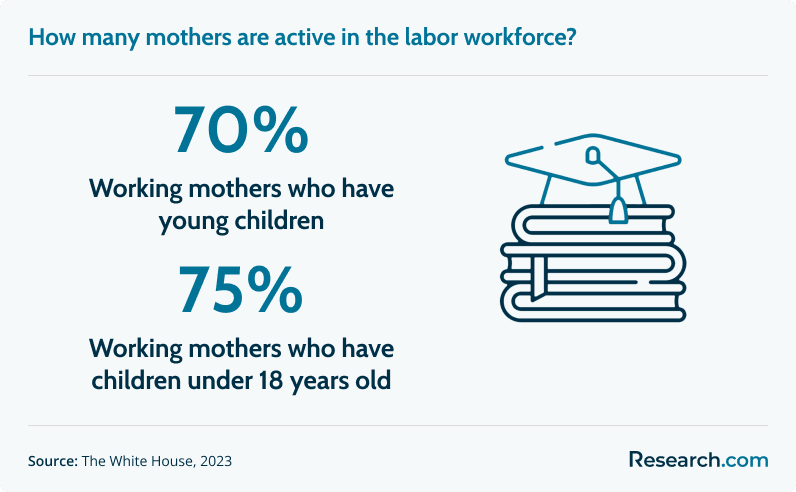
- 70% of the working population consists of mothers with young children.
- 75% of the working population consists of mothers of children under 18 years old.
- 95% of employers recognize the advantages of employees acquiring microcredentials.
- 39% of working moms express optimism in the talent availability outlook for 2023.
- Single moms have access to several financial aid pathways, including scholarships, Federal Grants, and State Grants.
Why Are Online Degrees a Good Option for Moms?
Online degrees can work well for mothers because they reduce some of the barriers that make campus-based programs difficult: commute time, rigid class schedules, limited local program choices, and conflicts with childcare. This is true across many disciplines, whether a mom is considering business, marketing, healthcare, teaching, or a specialized path such as a degree in logistics.
- Flexible scheduling. As of March 2023, labor force participation among mothers of young children was 70%, while participation among mothers with any children under 18 years old was 75% (The White House, 2023). Many mothers are already balancing paid work, caregiving, school events, and household responsibilities. Online programs, especially those with asynchronous coursework, can make it easier to study early in the morning, during naps, after bedtime, or around work shifts.
- Remote access to student support. Online students are not automatically on their own. Many colleges provide academic advising, faculty office hours, library access, tutoring, writing support, technical help, and career services through digital platforms. This matters for moms who may not be able to stay on campus after class for help.
- No daily commute. Removing the commute can save time, reduce transportation costs, and make coursework easier to fit into family routines. For stay-at-home moms and single parents, the ability to study from home can be the difference between enrolling and delaying school again.
- Broader school selection. Online learning allows moms to compare programs beyond their local area. That can make it easier to find a stronger academic fit, a better tuition structure, a specialized major, or a program designed for adult learners.
How Do Employers Perceive Online Degrees Obtained by Mothers?
Employers increasingly focus on whether a candidate has relevant skills, recognized credentials, and evidence of performance rather than only on whether courses were completed online or on campus. A mother who earns an online degree, whether in business, healthcare, social work, or an advanced technical area such as an MS Industrial Engineering online, can strengthen her candidacy by clearly explaining what she learned and how it applies to the role.
According to Collegis Education and UPCEA (2023), 95% of employers see benefits in employees earning microcredentials. While a microcredential is not the same as a full degree, the finding reflects an important employer trend: skills-based and career-relevant education can matter when it is understandable, reputable, and connected to job needs.
For moms, the key is to present online education as evidence of discipline, time management, digital communication, and persistence. Employers may also respect the ability to complete school while managing family obligations. However, the degree should come from an accredited institution, and job seekers should be ready to show projects, practicum work, certifications, portfolios, or measurable achievements.
How Can Moms Effectively Balance Parental Duties With an Online Degree Program?
Balancing parenting and online college requires more than motivation. It requires a practical system. Moms should plan around predictable family routines, build backup support for emergencies, communicate early with instructors, and avoid overloading their first term.
- Set expectations with your family. Explain when study time is protected, what support you need, and how your degree may help the household long term. Children may not fully understand the workload, but consistent routines can help them adjust.
- Start with a realistic course load. If you are unsure how school will fit into your life, begin with fewer credits. A slower start is often better than withdrawing from courses you paid for but cannot complete.
- Use weekly planning blocks. Look at assignments every week, not every day. Identify deadlines, childcare gaps, work shifts, meals, appointments, and study windows before the week becomes chaotic.
- Create backup plans. Sick children, school closures, work emergencies, and family obligations can disrupt even the best schedule. Identify backup childcare, flexible study times, or assignment buffers before problems happen.
- Protect recovery time. Burnout can reduce academic performance and parenting patience. Short breaks, sleep, movement, and quiet time are not luxuries; they help sustain the degree plan.
What Skills Can Moms Develop Through an Online Degree Program?
Online degrees do more than deliver academic content. They can help moms build workplace-ready habits that employers often value, especially in remote, hybrid, and digitally managed work environments.
| Skill | How online learning develops it | Why it matters at work |
| Time management | Students must manage deadlines, readings, discussions, projects, and exams around family and work responsibilities. | Employers need workers who can prioritize tasks, meet deadlines, and manage competing demands. |
| Digital literacy | Online students use learning platforms, video tools, digital libraries, collaboration software, and online submission systems. | Many roles now require confidence with workplace technology and remote communication tools. |
| Written communication | Discussion boards, emails, research papers, and project documentation require clear written expression. | Clear writing supports teamwork, customer communication, reporting, and leadership. |
| Independent problem-solving | Students often troubleshoot schedules, technology, research questions, and project requirements without in-person prompting. | Self-directed employees can adapt faster and require less constant supervision. |
| Collaboration | Group projects and peer discussions require coordination across different schedules and locations. | Modern workplaces rely on cross-functional and distributed teams. |
These skills can develop in many programs, from nursing and business to a hospitality management degree online. The exact skill mix depends on the major, assignments, and how intentionally the student documents her work.
The Future of Jobs Report 2023 reported that 39% of companies were optimistic about talent availability compared to 38% that were pessimistic, a net 1% positive outlook (World Economic Forum, 2023). For moms returning to school, this reinforces the value of choosing programs that build current, demonstrable skills rather than only completing credits.
This data from The Future of Jobs Report 2023 illustrates the outlook on talent availability among surveyed organizations.
What Features Should Moms Look for in a Flexible Online Degree Program?
The best online program for a mom is not always the easiest or cheapest one. It is the program that fits her life while still meeting academic, career, accreditation, and licensure expectations. Students comparing online degrees should look beyond marketing language and examine how the program actually operates week to week.
| Feature to Check | Why It Matters for Moms | Questions to Ask Before Enrolling |
| Asynchronous coursework | Allows students to complete lectures and assignments at flexible times instead of logging in at fixed class hours. | Are any live sessions required? Are they recorded? What time zone does the program use? |
| Self-paced or flexible pacing | Can help mothers move faster during easier seasons and slow down during busy family periods. | Does the school offer self paced online college options? Are there limits on completion time? |
| Adult learner support | Working parents often need advising, scheduling help, and policies designed for nontraditional students. | Is there a dedicated advisor for online or adult students? How quickly do instructors respond? |
| Accelerated options | May reduce time to completion for students who can handle heavier workloads. | Are accelerated online degree programs for working adults available, and what is the weekly workload? |
| Academic quality | A convenient program still needs strong curriculum, qualified faculty, and recognized accreditation. | Who accredits the institution? Does the program have programmatic accreditation if required? |
| Realistic workload | Some programs may be among the easiest online degree options to manage, but “easy” should not mean low quality. | How many hours per week do students typically spend per course? |
How Does Accreditation Affect a Mom’s Online Education?
Accreditation is one of the most important checks before enrolling in any online program. It signals that a school or program has been reviewed against established quality standards. For moms, accreditation can affect financial aid eligibility, transfer credits, graduate school admission, employer recognition, and licensure pathways.
This is especially important in regulated fields. Nursing, teaching, counseling, psychology, social work, and some healthcare careers may require graduates to complete an approved or accredited program before they can sit for licensure exams or qualify for state credentials. A mom interested in fields connected to school psychology careers, nursing, or education should confirm requirements with the relevant state board before enrolling.
What Should Moms Consider When Choosing an Online Degree for Career Success?
A good online degree should connect to a realistic career plan. Before applying, moms should compare programs based on outcomes, requirements, costs, transfer policies, student support, and fit with family life.
- Accreditation and reputation. Avoid diploma mills and programs with unclear accreditation. Research the institution, program quality, student support, and graduate outcomes. A reputable credential can matter in many fields, from entry-level roles discussed in an entry level accountant salary guide to leadership positions.
- Career relevance. Review the curriculum and ask whether courses match current job requirements. A program should teach tools, methods, and concepts used in the field now.
- In-person requirements. Online does not always mean fully remote. Nursing, education, counseling, social work, and allied health programs may require labs, practicums, clinicals, internships, or student teaching.
- Pacing and workload. Check whether the program is full-time, part-time, accelerated, self-paced, cohort-based, or term-based. The right format depends on your family schedule and support system.
- Total cost. Tuition is only part of the price. Ask, How much do online colleges cost? Also consider books, technology, fees, exams, transportation to placements, and lost work hours. Graduate students should compare costs using resources such as how much does it cost to get a master's degree. If cost is a major concern, targeted options such as an affordable computer science degree may be worth comparing.
Online education has become a major part of the global education market. Statista (2023) reported 22.9 million online university education users in 2022 and 27.4 million users in 2023. More access creates more choice, but it also makes careful comparison more important. Moms should not choose a program based only on convenience or advertising.
This data from Statista presents a chart of individuals engaging in online university education.
What Support Services Do Online Colleges Offer for Moms?
Strong online colleges recognize that many students are adults with jobs, children, and caregiving responsibilities. The most useful support services are practical, easy to access remotely, and available outside traditional office hours when possible.
- Flexible scheduling options
- Asynchronous classes
- Fully online degree pathways where possible
- Programs or resources for student parents
- Career-focused advising
- Accelerated or part-time formats
- Online tutoring, writing help, and library access
- Academic advisors who understand adult learner needs
- Career services, resume help, and interview preparation
For licensure-linked fields such as nursing, psychology, social work, and elementary education online, support should also include clear guidance on state requirements, field placements, and exam preparation. If a school cannot clearly explain whether the program meets requirements in your state, treat that as a warning sign.
What Financial Aid Options Are Available to Moms Pursuing Online Degrees?
Financial aid can make online education more realistic for mothers, especially single moms and parents with limited budgets. The main options include scholarships, federal grants, state grants, childcare-related support, employer assistance, and institutional payment plans.
- Scholarships. Some colleges and outside organizations offer scholarships for women, parents, single parents, adult learners, or students in specific majors. Examples include the Phyllis A. Keltner Foundation for Women Scholarship at the University of Arkansas-Little Rock and the Single Parents Scholarship at Washington State University. Requirements vary, so moms should check deadlines, enrollment rules, GPA requirements, and whether awards are renewable.
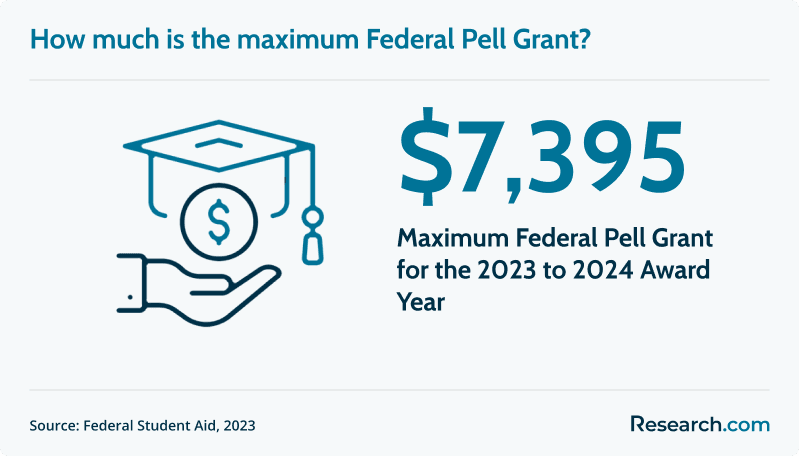
- Federal Grants. The Pell Grant is a major federal grant for eligible undergraduate students with financial need. Students generally need to complete the Free Application for Federal Student Aid, or FAFSA, each school year. According to Federal Student Aid (2023), the maximum Federal Pell Grant for the 2023 to 2024 award year is $7,395.
- State Grants. Many states operate grant programs for residents, adult learners, parents, or students entering high-need fields. Award rules and amounts vary by state, and state grants can often be combined with federal aid.
- Childcare payments or reimbursements. Some schools consider childcare costs in financial aid planning or offer parent-focused assistance. Policies differ widely, so ask whether the institution provides childcare grants, reimbursements, fee waivers, or referrals to community resources.
How Can Moms Plan and Manage Finances While Studying Online?
A degree can be a smart investment, but only if the cost is manageable. This matters for moms pursuing advancement in fields such as healthcare, education, business, or a management career path. The goal is to reduce borrowing where possible and avoid surprise expenses.
- Build a full education budget. Include tuition, fees, textbooks, technology, internet, exam fees, background checks, uniforms, travel to clinicals or practicums, childcare, and reduced work hours.
- Apply for aid early. Complete the FAFSA, search for scholarships, ask about institutional grants, and check state aid programs before each deadline.
- Use low-cost credit options. If appropriate, ask about transfer credits, community college pathways, credit for prior learning, employer training credits, and competency-based formats.
- Plan for childcare gaps. Online classes still require focused study time. Budget for occasional childcare during exams, major projects, clinical hours, or high-workload weeks.
- Create a small emergency fund. Even a modest cushion can help prevent a car repair, medical bill, or childcare issue from forcing a course withdrawal.
- Ask for financial counseling. Many schools have financial aid counselors who can explain aid packages, loan obligations, payment plans, and satisfactory academic progress rules.
How Can Moms Build a Professional Network and Find Career Mentors During Online Education?
Online students need to be intentional about networking because casual hallway conversations and campus events may not happen naturally. Moms can build connections by joining virtual career events, alumni groups, professional associations, class discussion groups, LinkedIn communities, and program-sponsored mentoring opportunities.
Students considering graduate study can also compare online master degree programs that offer structured mentorship, capstone projects, employer partnerships, or alumni networking. A mentor can help a mom understand hiring expectations, choose electives, prepare for interviews, and identify career paths that fit both professional goals and family responsibilities.
How Can Moms Maintain Mental and Emotional Well-Being While Pursuing an Online Degree?
Online college can be empowering, but it can also be exhausting when combined with parenting, work, financial pressure, and household responsibilities. Moms should treat well-being as part of the academic plan rather than something to handle only after burnout appears.
- Use small self-care routines. Short walks, breathing exercises, quiet breaks, or brief screen-free time can help reset stress during demanding weeks.
- Set achievable goals. A perfect schedule is unlikely. Focus on completing the next assignment, passing the next course, and maintaining steady progress.
- Build a support circle. Family, friends, classmates, other student parents, advisors, and instructors can provide practical and emotional support.
- Take breaks before focus collapses. Short breaks during study sessions can improve attention and reduce frustration.
- Use counseling services when needed. If stress, anxiety, or overwhelm becomes persistent, ask whether your school offers virtual counseling or referrals.
Are Accelerated Online Degree Programs a Viable Option for Busy Moms?
Accelerated online programs can work for moms who have reliable study time, strong support at home, and the ability to handle compressed coursework. They may be useful for students who already have transfer credits, prior college experience, or a clear career target. However, faster is not always better. A program that moves too quickly can create stress, lower grades, or make it difficult to complete clinicals, internships, or major projects.
Before enrolling, compare credit load, weekly time expectations, refund policies, accreditation, and support services. Moms exploring faster bachelor’s options can review accelerated bachelors degree programs for adults.
How Can Moms Save Money on Online Education?
Mothers can reduce college costs by comparing total program price, maximizing aid, transferring credits, and avoiding unnecessary fees. Small savings at each step can make a large difference over a full degree.
- Search for scholarships and grants. Look for awards for mothers, single parents, adult learners, women, first-generation students, and students in your field.
- Consider schools with no application fee. Applying to online colleges no application fee programs can reduce upfront costs when comparing multiple options.
- Ask about payment plans. Monthly payment options may reduce the need for short-term borrowing.
- Use employer tuition assistance. If you are working, ask whether your employer reimburses tuition or supports degrees related to your role.
- Review tax benefits carefully. Education-related credits or deductions may apply in some situations, but a tax professional can help determine eligibility.
- Avoid paying twice for credits. Transfer eligible credits whenever possible and confirm the school’s transfer policy before enrolling.
What Affordable Online Degree Options Are Available for Moms?
Affordable online degree options include associate degrees, bachelor’s completion programs, community college transfer pathways, competency-based programs, and selected online graduate programs. For moms who need a lower-cost starting point, a cheap associate's degree online can provide a foundation before transferring into a bachelor’s program.
The best affordable option depends on career goals. An associate degree may help with entry-level roles or transfer savings. A bachelor’s degree may be necessary for management, teaching, nursing advancement, or business roles. A master’s degree may be appropriate when it leads to licensure, promotion, or a specialized career path.
What Fields With High Job Growth Can Fit Moms With Online Degrees?
Moms often look for fields that combine opportunity, stability, flexibility, and meaningful work. No degree can guarantee a specific salary or job, but some fields offer practical paths for online students because they connect to essential services, remote-capable roles, or broad employer demand.
- Healthcare. Nursing, healthcare administration, medical coding, and health services management can lead to roles in hospitals, clinics, insurance organizations, and public health settings. Moms should check whether programs include clinical or in-person requirements.
- Technology and IT-adjacent roles. Computer science, data analysis, cybersecurity, and management information systems can support remote-friendly careers. Students should look for programs with projects, technical skill development, and career support.
- Education and special education. Teaching, instructional support, and special education can fit moms who want school-based or education-related work. Licensure requirements vary by state.
- Social services. Social work, human services, family services, and community programs can be meaningful options for mothers interested in advocacy and support roles.
- Business and management. Business administration, human resources, project coordination, healthcare management, and operations can offer broad career mobility across industries.
Moms who already hold a bachelor’s degree and want to move into higher-level roles may also compare affordable online master's programs.
Can Short-Term Online Degrees Meet Moms' Career Advancement Needs?
Short-term online credentials can help moms build targeted skills quickly, but they are not always a substitute for a full degree. They work best when the credential matches a specific job requirement, supports promotion in a current field, or provides stackable credits toward a longer program.
Some students explore 6-month associate degree online programs or other accelerated pathways because they need faster results. Before choosing this route, verify accreditation, credit transferability, employer recognition, and whether the timeline is realistic with parenting responsibilities.
What Online Degree Options Offer the Best Return on Investment for Moms?
The strongest return on investment usually comes from a program that is affordable, accredited, aligned with in-demand skills, and connected to a career path with realistic advancement. ROI is not only about salary. Moms should also consider schedule flexibility, childcare costs, time to completion, licensure value, debt, and whether the degree supports remote or hybrid work.
Students comparing potential earnings can review options in online degrees that pay well, but salary outcomes should never be treated as guaranteed. Location, experience, employer type, credentials, and labor market conditions all matter.
What Pitfalls Should Moms Avoid When Pursuing Online Degrees?
Many online degree problems can be prevented before enrollment. The most common mistakes involve choosing too quickly, overlooking accreditation, underestimating workload, and failing to check licensure or costs.
| Common Mistake | Why It Can Hurt | Better Approach |
| Choosing a program without verifying accreditation | Credits may not transfer, financial aid may be limited, and employers or licensing boards may not recognize the credential. | Confirm institutional accreditation and programmatic accreditation when relevant. |
| Focusing only on tuition | Fees, books, technology, travel, childcare, and lost work hours can change the real cost. | Compare total cost of attendance and ask for a full fee breakdown. |
| Assuming online means no in-person requirements | Clinical, lab, practicum, internship, or student teaching requirements may be mandatory. | Ask where and when in-person requirements occur before enrolling. |
| Taking too many credits at once | Overload can lead to missed deadlines, stress, lower grades, or withdrawal. | Start with a manageable course load and increase only if your schedule supports it. |
| Relying only on rankings or ads | A highly promoted program may not fit your state, budget, schedule, or career goal. | Use rankings as one input, then verify fit, outcomes, support, and requirements. |
| Choosing speed over quality | Fast programs can be useful, but poor structure or weak recognition can reduce value. | Compare options such as a fast associates degree online while checking accreditation and transfer policies. |
How Can Moms Successfully Transition From Online Education to a Fulfilling Career?
Moms can improve the transition from school to work by treating career preparation as part of the degree, not something to begin after graduation. Build a resume around projects, practicum work, certifications, transferable parenting and work skills, and measurable achievements from coursework.
- Update your resume and online profiles before the final term.
- Use your school’s career services for resume reviews, mock interviews, and job search planning.
- Ask instructors, supervisors, and classmates for references or professional connections.
- Complete internships, practicums, capstones, or portfolio projects when possible.
- Translate online learning skills into employer language, such as remote collaboration, deadline management, digital communication, and independent problem-solving.
Moms seeking advanced credentials on a shorter timeline can compare masters in one year programs, but should still confirm quality, accreditation, workload, and career fit.
Are Accelerated Degree Programs the Optimal Solution for Busy Moms?
Accelerated degrees can be a smart solution for some mothers, but they are not automatically the best path. They are most useful for students with strong time management, transfer credits, clear goals, and dependable support. They may be risky for moms with unpredictable childcare, heavy work schedules, or programs that require extensive fieldwork.
Before choosing an accelerated path, compare the calendar, credit load, weekly expectations, faculty access, tutoring, refund rules, and whether the program’s speed affects learning quality. Students can explore broader options in accelerated degrees.
What Are the Advantages of Pursuing Dual Degree Programs for Moms?
Dual degree programs allow students to earn two complementary credentials, often with shared credits or a coordinated curriculum. For some moms, this can be efficient because it builds broader expertise without completing two entirely separate programs. Examples may include business and healthcare management, public health and social work, or technology and cybersecurity.
This option is best for mothers with a clear career goal that genuinely requires or rewards both areas of study. It may not be ideal for students who need the lowest-cost option, have limited study time, or are still unsure about their career direction. Dual programs can carry heavier workloads and more complex advising requirements.
Moms researching advanced combined pathways can review dual masters programs and compare whether the additional credential supports leadership, licensure, specialization, or long-term mobility.
Online vs. Campus Programs for Moms: Which Is Better?
Online learning is often more flexible, but campus programs may provide stronger in-person networking, labs, facilities, or structured schedules. The better format depends on the student’s family routine, learning style, career field, and support system.
| Option | Best For | Trade-Offs |
| Fully online program | Moms who need maximum flexibility, have transportation limits, or live far from campus. | Requires strong self-discipline and may offer less face-to-face connection. |
| Hybrid program | Moms who want online convenience but need labs, clinicals, or occasional campus support. | Requires travel and schedule planning for in-person sessions. |
| Campus program | Students who prefer structured class times, in-person interaction, and direct access to facilities. | Commute time and childcare coordination can be harder. |
| Self-paced program | Independent learners who want control over speed and already understand how to manage deadlines. | Less structure can be difficult for students who need regular instructor pacing. |
Questions Moms Should Ask Before Enrolling
- Is the institution accredited, and does the program have programmatic accreditation if my field requires it?
- Will this program meet licensure or certification requirements in my state?
- How many hours per week should I expect to study for each course?
- Are there live class meetings, and are they required?
- Are clinicals, internships, labs, practicums, or student teaching required?
- How are field placements arranged for online students?
- What is the total cost, including fees, books, technology, travel, and childcare?
- How many of my previous credits will transfer?
- What support is available after normal business hours?
- What career services are available to online students and graduates?
Key Insights
- The best online degree for a mom is the one that fits her schedule, budget, state requirements, and career goal—not simply the fastest or cheapest option.
- Accreditation is nonnegotiable, especially for nursing, teaching, counseling, social work, psychology, and other regulated fields.
- Online learning can help moms build valuable workplace skills, including time management, digital literacy, written communication, and independent problem-solving.
- Financial planning should include the full cost of attendance, not only tuition. Grants, scholarships, transfer credits, employer assistance, and no-fee applications can reduce costs.
- Accelerated and short-term programs can be useful, but only when the workload is realistic and the credential is recognized by employers or licensing bodies.
- Moms should use career services, mentorship, networking, and portfolio-building throughout the program to make the transition from school to work smoother.
References:
- Collegis Education and UPCEA (2023). The Effect of Employer Understanding and Engagement on Non-Degree Credentials. https://collegiseducation.com/resources/effect-of-employer-understanding-and-engagement-non-degree-credentials/
- Federal Student Aid. (2023). Pell Grant Maximum for 202324 Announced. https://studentaid.gov/announcements-events/pell-max-award
- Statista. (2023). Online Education Worldwide. https://www.statista.com/outlook/dmo/eservices/online-education/worldwide
- The White House. (2023). This Mother’s Day, More Moms Back at Work, but Care Challenges Remain. https://www.whitehouse.gov/cea/written-materials/2023/05/16/this-mothers-day-more-moms-back-at-work-but-care-challenges-remain/
- World Economic Forum. (2023). The Future of Jobs Report 2023. https://www.weforum.org/publications/the-future-of-jobs-report-2023/in-full/5-workforce-strategies/#5-workforce-strategies
Other things you should know about online degrees for moms
Moms pursuing online degrees in 2027 may access financial aid like the Federal Pell Grant, scholarships designed for parents, and government-subsidized student loans. These programs help alleviate costs, making education more attainable while balancing family commitments.
Yes, many online degree programs in 2027 offer flexible scheduling options, including asynchronous classes and self-paced coursework, accommodating moms with irregular schedules. Look for programs that allow access to course materials and lectures 24/7 for optimal flexibility.
Moms should check whether the school accepts up to 90 transfer credits for a bachelor’s degree and whether credits must come from a regionally accredited institution. Some programs also award credit for prior military training or professional certifications, which can shorten completion time.





