
2027 Requirements for a Career in Accounting

Co-Founder and Chief Data Scientist
Accounting can be a stable career path for people who like working with numbers, solving business problems, and helping organizations make better financial decisions. It can also be a practical next step for bookkeepers, finance employees, business graduates, and working adults who want a clearer route into higher-responsibility roles. But the path is not the same for everyone. Some accounting jobs require only entry-level training, while CPA-track roles usually demand specific education, exams, supervised experience, and state approval.
This guide explains what accountants do, how to become one, which degrees and certifications matter, how online accounting programs compare with campus programs, and what salary and job outlook data suggest about the profession. It also covers common specializations, CPA requirements, career-growth strategies, and mistakes to avoid before investing in a degree or credential.
Quick answer: Is accounting a good career path?
- Accounting careers exist across nearly every sector, including corporations, accounting firms, government agencies, nonprofits, small businesses, and independent practices.
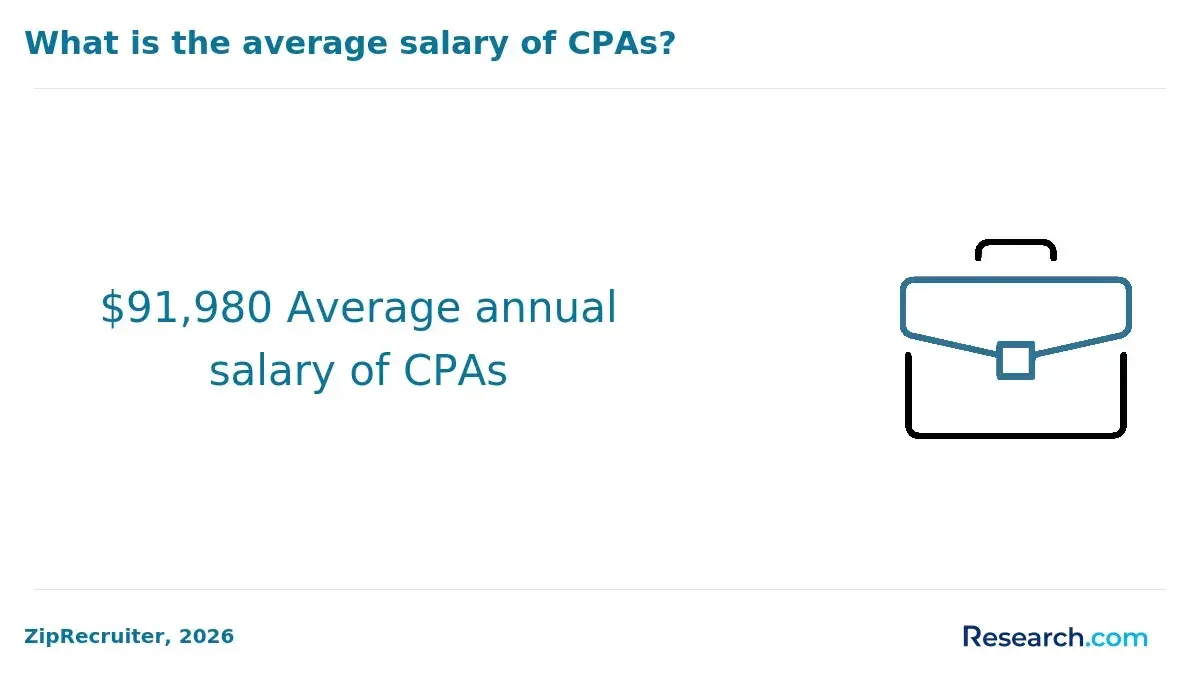
- A CPA credential can improve access to senior accounting, audit, tax, compliance, and advisory roles. With a CPA certification, one can earn a median salary of $78,000 per year in a career in accounting.
- An online accounting degree may reduce commuting and housing costs, make it easier to continue working, and give students regular access to classmates, instructors, and practicum contacts through digital platforms.
- What does an accountant do?
- What do graduates say about earning an accounting degree online?
- Key findings about accounting careers
- How do you become an accountant?
- What qualifications do accountants need?
- Which accounting specializations should you consider?
- Which accounting certifications can improve career options?
- What is the job outlook for accountants in the U.S.?
- How much do accounting roles pay by field?
- How does job satisfaction differ across accounting jobs?
- Which states report the highest accountant salaries?
- Do online and traditional accounting degrees lead to different outcomes?
- Which online accounting programs are popular in the U.S.?
- Which free resources can support an accounting career?
- Which accounting jobs have the strongest earning potential?
- Why consider forensic accounting as a specialization?
- What trends are shaping the U.S. accounting industry?
- Can you work in accounting without a four-year degree?
- What is the ROI of an online accounting degree?
- How should you compare affordable online accounting degrees?
- How can accountants raise their salary over time?
- Why does continuing education matter in accounting?
- Which professional certifications can strengthen your accounting profile?
What does an accountant do?
Accountants collect, review, organize, interpret, and report financial information. Their work helps businesses, government offices, nonprofits, and individuals understand financial performance, meet tax and reporting obligations, manage risk, and make informed decisions.
Core responsibilities
- Review financial records through audits and internal checks to confirm accuracy.
- Prepare tax-related reports and help organizations comply with relevant rules.
- Maintain records of income, expenses, assets, liabilities, and transactions.
- Analyze financial risk, create forecasts, and support planning decisions.
- Prepare financial statements such as balance sheets and profit-and-loss reports.
- Explain financial information to managers, clients, regulators, or stakeholders.
Where accountants work
- Corporations and private companies
- Federal, state, and local government agencies
- Independent accounting practices
- Nonprofit organizations
- Public accounting firms
When the CPA matters
The Certified Public Accountant designation is especially important for accountants who want to sign audit reports, move into public accounting leadership, work in regulated roles, or compete for senior tax, assurance, forensic, advisory, and controller positions. Not every accounting job requires the CPA, but it is often a differentiator for higher-level accounting careers.
What do graduates say about earning an accounting degree online?
“Online accounting study changed what I thought was possible. I could keep my full-time job while completing coursework, and the digital simulations helped make difficult accounting concepts easier to apply. I finished feeling more prepared for the next stage of my career." -John
“My online accounting program gave me a solid grounding in accounting principles. The discussions with classmates in different locations helped me see how accounting connects to broader business practices around the world." -Paula
“Choosing an online accounting degree gave me the structure I needed without forcing me to leave work. The coursework was demanding, but the format let me manage my schedule and build confidence in my technical skills." -Jonesy
Key findings about accounting careers
- Accounting careers can offer strong pay potential. Accountants and auditors earn $78,000, while CPAs at the entry level start at $44,480 and average $64,000. Sectors such as Finance & Insurance and Management exceed $81,000, while accounting firms average $78,320 and government roles pay $77,440.
- An accounting degree can lead to a $77,250 median salary in an $868 billion global market, with projected job growth at 4% and 126,500 new openings annually.
- In 2024, U.S. median accounting and auditing salaries reached $84,210 in finance and insurance, $83,300 in management, $80,950 in core accounting, and $79,930 in government.
- There are 1,099,751 accountants currently employed in the United States; 61.8% are women and 38.2% are men.
- Certified Public Accountant salaries in the U.S. range from $70,235 to $461,014, and accountants can choose from many certifications depending on their specialty.
How do you become an accountant?
The path into accounting depends on the role you want. Bookkeeping, payroll, and accounting clerk positions may be available with an associate degree, certificate, or relevant experience. Staff accountant, auditor, tax accountant, and CPA-track roles usually require a bachelor’s degree and, for licensure, additional state-specific requirements.
Some schools, including the best open enrollment colleges, may offer flexible admissions policies. However, professional accounting practice has stricter requirements when licensure is involved, especially for CPA candidates.
Typical path to becoming an accountant
- Choose a target role, such as bookkeeper, staff accountant, tax preparer, auditor, forensic accountant, or CPA.
- Complete the education level required for that role, commonly a certificate, associate degree, bachelor’s degree, or graduate accounting coursework.
- Build experience through internships, entry-level accounting jobs, tax-season work, or bookkeeping roles.
- Learn widely used accounting software, spreadsheet tools, financial reporting concepts, and tax or audit basics.
- If pursuing the CPA, confirm your state’s education, exam, ethics, and experience rules before enrolling in additional courses.
- Pass the required exam or certification assessment for your chosen credential.
- Continue updating your knowledge as tax rules, reporting standards, technology, and compliance expectations change.
CPA exam requirements to understand
- Pass the Uniform CPA Exam: CPA candidates complete a four-section exam.
- Complete the three Core sections: Auditing and Attestation (AUD), Financial Accounting and Reporting (FAR), and Taxation and Regulation (REG). Each Core section is 4 hours.
- Select one Discipline section: Candidates also choose and pass one four-hour Discipline section.
- Meet the exam window: In most states, candidates must pass all sections within 18 months.
- Verify state rules: Education, experience, and ethics requirements vary by state.
- Confirm ethics requirements: Most states require a separate ethics assessment.
- Use the official source: Contact your state Board of Accountancy before making enrollment, exam, or licensure decisions.
Selected CPA state requirement examples
| State | Credits to sit for exam | Credits for license | Age | Citizenship | Residency | Social Security | Experience | Ethics exam |
| Alabama | 150 | 150 | 19 | Yes | No | Yes | Yes | Yes |
| Alaska | 120 (B.A.) or 18 semester hours within completing B.A. | 150 | 19 | No | No | Yes | Yes | Yes |
| Arizona | 120 (B.A.) | 150 | 18 | No | No | Yes | Yes | Yes |
| Arkansas | 150 | 150 | No requirement | No | No | Yes | Yes | No |
| California | 120 (B.A.) | 150 | No requirement | No | No | Yes | Yes | Yes |
What qualifications do accountants need?
Most professional accounting roles require a bachelor’s degree in accounting or a closely related field. A master’s degree in accounting or business administration is optional for many jobs, but it can help candidates meet CPA credit requirements, specialize, or compete for management roles. If you are comparing graduate business options, remember that online MBA programs cost differently because each institution sets its own pricing, fees, and program structure.
Degree and credential options
| Option | Best for | Common outcome | Important limitation |
| Accounting certificate | Career changers, bookkeepers, payroll workers, and tax-preparation beginners | Entry-level technical skills in a focused area | May not qualify graduates for CPA-track roles by itself |
| Associate degree in accounting | Students seeking lower-cost entry into bookkeeping, accounting clerk, or transfer pathways | Foundational accounting and business coursework | Often not enough for staff accountant or CPA roles |
| Bachelor’s degree in accounting | Students targeting staff accountant, auditor, tax accountant, and CPA-track positions | Standard preparation for many accounting careers | Additional credits may be required for CPA licensure |
| Master’s degree or graduate certificate | CPA candidates, specialists, and professionals seeking advancement | Advanced technical preparation and possible credit-hour completion | Higher cost and time commitment than undergraduate options |
Certifications
- Certified Public Accountant (CPA): Requires passing the Uniform CPA Examination and meeting state rules.
- Certified Management Accountant (CMA): Useful for accounting professionals focused on internal reporting, budgeting, analysis, and management decisions.
- Certified Internal Auditor (CIA): Helpful for accountants who want to specialize in internal controls, risk, and audit processes.
Experience
Internships, seasonal tax work, bookkeeping positions, and entry-level staff accounting jobs help students apply classroom concepts and build the experience employers expect.
Skills employers value
- Strong quantitative reasoning and careful attention to detail
- Working knowledge of financial rules, reporting processes, and compliance requirements
- Clear communication skills for explaining financial information to non-accountants
- Spreadsheet, accounting software, and data-analysis ability
- Ethical judgment and comfort working with confidential information
Continuing education
Accounting does not stay still. Tax law, audit expectations, reporting rules, and business technology can change quickly, so accountants need ongoing professional education throughout their careers.
Which accounting specializations should you consider?
Specialization can make an accounting career more focused and, in some cases, more competitive. The right choice depends on whether you prefer client service, investigation, tax strategy, business planning, compliance, systems, or public-sector work.
| Specialization | What the work focuses on | Good fit for |
| Auditing | Reviewing financial statements and processes for accuracy | Detail-oriented professionals who like testing evidence and controls |
| Bookkeeping | Recording routine business transactions | Entry-level accounting workers and small-business support professionals |
| Cost accounting | Tracking, analyzing, allocating, and controlling costs | People interested in manufacturing, operations, and pricing decisions |
| Environmental accounting | Accounting for environmental costs and regulatory obligations | Professionals interested in sustainability, compliance, and reporting |
| Fiduciary accounting | Managing finances for entrusted assets | Accountants working with estates, trusts, and guardianships |
| Financial accounting | Tracking incoming and outgoing company money | Students who want a broad corporate accounting foundation |
| Forensic accounting | Investigating financial activity for fraud, illegality, or misconduct | Analytical professionals who enjoy investigative work; students may also see programs related to forensic accounting masters pathways |
| Government accounting | Accounting for public agencies and government entities | People interested in public finance and accountability |
| Internal financial reporting | Tracking revenues and expenses for business units | Corporate accountants who support management decisions |
| International accounting | Applying international financial reporting standards | Accountants working across borders or in multinational companies |
| Management accounting | Planning, organizing, recording, classifying, and summarizing financial data | Professionals who want to support internal business strategy |
| Nonprofit accounting | Managing the unique financial rules of nonprofit organizations | Mission-driven accountants and grant-focused finance staff |
| Public accounting | Providing accounting services to many types of clients | CPA-track students and client-service professionals |
| Project accounting | Tracking the cost and profitability of individual projects | Accountants in construction, consulting, engineering, and project-based firms |
| Real estate accounting | Accounting for real estate transactions and property management | Professionals interested in real estate, development, or property portfolios |
| Tax accounting | Preparing tax returns and supporting compliance with tax laws | Accountants who enjoy research, deadlines, and tax planning |
Which accounting certifications can improve career options?
Certifications can help accountants signal expertise, qualify for specialized work, and compete for promotions. They are not interchangeable, so choose based on your target role rather than selecting the credential with the most recognizable name.
| Certification | Primary focus | Salary information stated |
| CAPS (Certified Accounts Payable Specialist) | Accounts payable operations | Average salary information is not available, but the average salary for a Certified Public Accountant (CPA) in the U.S. is between $70,235 and $461,014. |
| CBA (Certified Bank Auditor) | Banking and financial services auditing | Average salary information is not available, but the average salary for a Certified Public Accountant (CPA) in the U.S. is between $70,235 and $461,014. |
| CFA (Chartered Financial Analyst) | Portfolio management, economics, ethics, and investment analysis | Average U.S. salary: $95,000 per year. |
| CFP (Certified Financial Planner) | Retirement, investment, education, insurance, and tax planning | Average U.S. salary: around $66,000 per year. |
| CIA (Certified Internal Auditor) | Internal auditing; professionals can also explore an internal auditor career path | Average U.S. salary: $64,000 per year. |
| CIMA (Chartered Global Management Accountant) | Management accounting expertise | Average U.S. salary: $155,000 per year. |
| CISA (Certified Information Systems Auditor) | Auditing, controlling, monitoring, and assessing IT and business systems | Average U.S. salary: around $106,267 per year. |
| CITP (Certified Information Technology Professional) | Technology-focused accounting and advisory work | Average salary information is not available, but the average salary for a Certified Public Accountant (CPA) in the U.S. is between $70,235 and $461,014. |
| CMA (Certified Management Accountant) | Management accounting and financial management | Average U.S. salary: about $113,799 per year. |
| CPA (Certified Public Accountant) | Public accounting, tax, audit, compliance, forensic accounting, and risk management | Average U.S. salary: around $96,714 per year. |
| CPS (Certified in Financial Forensics) | Financial forensics | Average salary information is not available, but the average salary for a Certified Public Accountant (CPA) in the U.S. is between $70,235 and $461,014. |
| CGAP (Certified Government Auditing Professional) | Public-sector auditing | Average salary information is not available, but the median annual wage for accountants and auditors was $79,880 in May 2024. |
| CFE (Certified Fraud Examiner) | Fraud detection and deterrence | Salary information not stated. |
| CPP (Certified Payroll Professional) | Payroll administration | Average U.S. salary: $77,000 per year. |
| CTP (Certified Treasury Professional) | Treasury and cash management | Average U.S. salary: around $103,915 per year. |
| EA (Enrolled Agent) | Federal tax practice and taxpayer representation before the IRS | Salary information not stated. |
If your long-term plans include cross-border work, multinational employers, or global finance roles, you may also want to compare accounting with international business careers.
How can networking help an accounting career?
Networking is valuable in accounting because many opportunities depend on trust, referrals, and professional reputation. It can help students find internships, new graduates learn about firm culture, and experienced accountants move into specialized or leadership roles.
- Job access: Referrals and professional contacts can surface roles that are not widely advertised.
- Mentorship: Experienced accountants can explain career paths, certification choices, busy-season realities, and promotion expectations.
- Knowledge exchange: Professional associations, webinars, and conferences can help accountants keep up with tools, standards, and regulatory changes.
- Skill development: Workshops and industry events can strengthen both technical and communication skills.
- Career mobility: A strong network may lead to project invitations, promotion recommendations, or introductions to employers in higher-growth specialties.
What is the job outlook for accountants in the U.S.?
The U.S. outlook for accountants and auditors remains favorable for people with strong technical skills, current software knowledge, and a willingness to keep learning. The median annual wage for 2024 was $79,880, and the top 10% earn more than $137,280.
The top-paying industry listed was media streaming distribution services, social networks, media networks & content providers, at $144,780 per year.
Students seeking advanced preparation for these types of roles may compare programs such as an online master of accounting, especially if they need additional coursework for career advancement or CPA eligibility.
Accountant and auditor salary and outlook snapshot
- Median annual wage: $79,880 (2024)
- Top 10% earn: More than $132,690
- Lowest 10% earn: Less than $48,560
- Top-paying industries by annual average: Media streaming distribution services, social networks, media networks & content providers: $144,780; drinking places (alcoholic beverages): $134,270; computer and peripheral equipment manufacturing: $124,180
- Job growth outlook for 2024-2034: As fast as the average for all occupations (6%)
- Projected openings each year: 126,500
How much do accounting roles pay by field?
Accounting pay varies by specialization, employer type, location, credential, and level of responsibility. The figures below show stated salary examples for common accounting areas.
| Accounting field or role | Stated salary | Typical focus |
| Accounting | $54,844 | Preparing and reviewing financial records |
| Accounting Information Systems (AIS) | $63,000 | Managing systems and processes used for financial data |
| Accounts Payable/Receivable Clerk (AR/AP Clerk) | $39,250 | Handling invoices, billing, and payments |
| Auditing | $69,000 | Checking financial statements and controls |
| Bookkeeping | $40,240 | Recording business transactions |
| Cost Accounting | $58,000 | Tracking and analyzing costs |
| Controllers (Corporate Accounting) | $125,250 | Overseeing company accounting operations |
| Financial Accounting | $70,500 | Tracking company money in and out |
| Forensic Accounting | $89,000 | Investigating fraud, illegal activity, or unethical financial conduct |
| Government Accounting | $52,000 | Managing accounting for government entities |
| Internal Auditor (Manager) | $120,500 | Evaluating internal controls, governance, and financial processes |
| Internal Financial Reporting | $75,000 | Tracking business-unit revenue and expenses |
| Management Accounting | $61,000 | Organizing and summarizing financial information for decision-making |
| Staff Accountants | $66,750 | Supporting daily accounting functions |
| Tax Accounting | 62,000\ | Preparing tax returns and supporting tax compliance |
How does job satisfaction differ across accounting jobs?
Job satisfaction in accounting depends heavily on role design. Accountants who enjoy analysis, investigation, client advising, or strategy may feel more satisfied in roles that involve problem-solving and decision support. Those who prefer routine and accuracy may find bookkeeping, payroll, tax preparation, or compliance-heavy work a better fit.
Specializations can also affect satisfaction. Forensic accounting and financial analysis may appeal to professionals who want variety and investigative work. Bookkeeping and tax-preparation roles can be rewarding for people who value structure, but they may feel repetitive to professionals seeking broader advisory or management responsibilities.
Education and credentials can change the type of work available. A CPA, graduate coursework, or targeted certification may open roles with more autonomy, leadership responsibility, and compensation potential. If you are still deciding whether formal study is worth the investment, compare costs, outcomes, and alternatives in a guide on whether an accounting degree is worth it.
The best satisfaction strategy is to choose a role that matches your preferred work style, then use mentorship, networking, and credentials to move toward the accounting tasks you find most meaningful.
Which states report the highest accountant salaries?
Salary differs by state because of employer concentration, cost of living, demand, industry mix, and role seniority. The chart below shows the highest-paying states for accountants in the U.S. at the time of writing.
The top three listed states are New York at $68,366, New Jersey at $67,833, and Massachusetts at $62,7431 per year.
Actual earnings can differ based on experience, credentials, employer size, industry, and job responsibilities. Before making relocation or salary-negotiation decisions, compare the latest data for your specific role and location.
Do online and traditional accounting degrees lead to different outcomes?
Online and campus accounting degrees can both lead to accounting careers when the program is properly accredited, academically rigorous, and aligned with employer or CPA requirements. The better choice depends on your schedule, learning style, budget, and need for in-person services.
| Factor | Online accounting degree | Traditional campus accounting degree |
| Schedule | Often better for working adults and students with family obligations | Better for students who want a fixed weekly routine |
| Networking | May rely on virtual events, online discussion, remote advising, and digital career services | May offer easier access to in-person clubs, recruiters, faculty, and campus events |
| Cost considerations | May reduce commuting, relocation, and housing expenses | May include campus-related fees, travel, housing, or relocation costs |
| Learning style | Works best for self-directed students who manage deadlines well | Works best for students who prefer face-to-face structure and classroom interaction |
| Career outcomes | Can be competitive if the school is credible and the student gains experience and credentials | Can be competitive if the curriculum, career support, and employer connections are strong |
For a more focused comparison, review the guide to online degree vs traditional degree options in accounting.
Which online accounting programs are popular in the U.S.?
The programs and providers below are examples of well-known online accounting or accounting-related learning options. This is not a complete ranking, and students should independently verify accreditation, cost, transfer credit policies, CPA alignment, and career support. Some schools also offer online Masters in Accounting programs beyond bachelor’s-level study.
- Florida Atlantic University: Offers a Bachelor of Business Administration in Accounting with emphasis on financial reporting and analysis.
- IESE Business School: Offers a course covering principles of financial accounting.
- Intuit Academy: Provides a bookkeeping professional certificate with topics such as accounting, general accounting, financial accounting, business analysis, data analysis, financial analysis, cash management, finance, and financial management.
- Intuit QuickBooks: Widely used accounting software for small businesses, known for broad bookkeeping and accounting features.
- Penn State World Campus: Offers a Bachelor of Science in Accounting accredited by the Association to Advance Collegiate Schools of Business.
- SUNY College at Plattsburgh: Offers a Bachelor of Science in Accounting.
- University of Massachusetts Amherst: Offers a Bachelor of Business Administration in Accounting.
- University of Minnesota Crookston: Offers a Bachelor of Science in Accounting accredited by the Accreditation Council for Business Schools and Programs.
- University of Pennsylvania: Offers an introduction to finance and accounting covering accounting, finance, financial accounting, general accounting, and financial analysis.
If you are comparing business majors, the choice between a finance vs accounting degree should come down to the type of work you want: financial markets and investment analysis, or accounting systems, reporting, tax, and compliance.
Which free resources can support an accounting career?
Free resources can help accounting students and professionals explore roles, track salary expectations, practice technical skills, and understand credential options before paying for a degree or certification. Useful sources include career guides, professional association materials, free software tutorials, tax-agency resources, employer webinars, and school career centers.
Research.com’s accountancy career resource can help readers compare accounting roles, salary benchmarks, and possible certification paths. The best resources are current, transparent about sources, and specific enough to help with real decisions.
Which accounting jobs have the strongest earning potential?
The highest-paying accounting paths usually combine technical expertise with leadership, advisory, regulatory, or strategic responsibility. Senior roles such as Chief Financial Officer and Corporate Controller often require deep accounting knowledge, business judgment, and experience managing teams or financial systems. Specialized mid-career paths such as forensic accounting, internal audit management, systems audit, and financial analysis can also support strong compensation when paired with relevant credentials.
To compare advanced pathways and compensation benchmarks, review the guide to becoming a highest paid accountant.
Why consider forensic accounting as a specialization?
A forensic accounting degree can be useful for accountants who want investigative, litigation, fraud-detection, or compliance-focused work. Forensic accountants may examine financial statements, trace transactions, support legal teams, assist with insurance or financial-services investigations, and help organizations respond to suspected misconduct.
This specialization may be a strong fit if you enjoy research, documentation, interviews, evidence review, and problem-solving. It may be less appealing if you prefer predictable monthly close work, routine bookkeeping, or general tax preparation.
What trends are shaping the U.S. accounting industry?
The accounting field is being shaped by technology adoption, continuing demand for skilled talent, CPA pipeline concerns, changing employer expectations, and the need for stronger advisory skills. The chart below summarizes U.S. accounting industry salary information in 2025.
The summarized figures are:
Overall industry snapshot
- Actively licensed CPAs in the USA: 672,587
- Median annual wage for accountants & auditors: $78,000
- CAGR for 2024-2028: 6.2% projected
- Job growth for 2023-2033: 6%, steady and matching average
- Projected new openings by 2032: 67,400
- Overall outlook: Positive, rewarding career with high earning potential
CPA exam and hiring indicators
- Unique CPA exam candidates: 72,271
- 2022: 67,335
- 2023: 84,980 (NASBA, 2025)
- 2024: 74,165 (NASBA, 2025)
- Accounting firm hiring expectations: 91% plan to hire the same or more new graduates in 2024, and 60% plan for same or more CPAs on staff in 2024
Median annual wages by industry in 2022
- Accounting, tax preparation, and related services: $79,480
- Finance and insurance: $82,340
- Government: $78,890
- Management of companies and enterprises: $84,330
These numbers suggest continuing opportunities for CPA candidates and accounting degree holders, especially as employers look for graduates who can combine accounting fundamentals with technology, communication, and analytical skills.
The chart below shows 2024 U.S. median annual wages for accountants and auditors by industry and accounting career type.
Because bookkeeping remains a common entry point into the field, students who want a shorter training route may also compare the best bookkeeping certification programs before committing to a full degree.
Can you work in accounting without a four-year degree?
Yes, but your options will usually be more limited. A bachelor’s degree is the most common route for professional accounting and CPA-track careers, but certificates and associate degrees can lead to bookkeeping, payroll, tax-preparation support, accounts payable, accounts receivable, and accounting clerk roles.
| Path | Possible roles | Best use | Limitations |
| Accounting certificate | Bookkeeping assistant, payroll assistant, tax-preparation support | Quick skill-building or career exploration | May not meet degree requirements for many accountant roles |
| Associate degree in accounting | Bookkeeper, accounting clerk, AR/AP clerk | Entry-level work or transfer toward a bachelor’s degree | May not qualify for CPA-track positions |
| Bachelor’s degree in accounting | Staff accountant, auditor, tax accountant, financial accountant | Standard professional accounting preparation | Additional CPA credits and experience may still be required |
Should you choose an online program?
Online accounting programs can work well for students who need flexibility, especially working adults. Before enrolling, check accreditation, faculty qualifications, course delivery, exam proctoring rules, CPA alignment, internship options, and career services. Research.com reviews top online accounting programs for students comparing bachelor’s-level options.
What is the ROI of an online accounting degree?
The return on investment of an online accounting degree depends on the total cost of attendance, the student’s existing credits, work experience, target role, and whether the program supports licensure or certification goals. An online format may reduce commuting, relocation, or housing expenses, but students should still account for tuition, fees, books, technology, exam costs, and lost work time if course loads become demanding.
An affordable, accredited program can be a practical choice when it helps students keep working while building skills that employers value. To compare lower-cost options, review programs such as an accounting online program and evaluate whether each one fits your timeline and career plan.
How should you compare affordable online accounting degrees?
Do not choose the cheapest accounting program without checking whether it can actually support your goals. A low advertised tuition rate may not include fees, books, software, transfer-credit limits, CPA-related coursework, or required in-person components.
Questions to ask before enrolling
- Is the institution properly accredited?
- Does the accounting curriculum align with your target career or CPA requirements in your state?
- How many of your prior credits will transfer?
- Are courses asynchronous, synchronous, or a mix of both?
- What accounting software, data tools, or tax platforms are included?
- Does the program provide internship support, career coaching, tutoring, and faculty access?
- What is the full cost after fees, books, technology, and exam-related expenses?
Students who want a lower-cost starting point may compare options such as a cheap accounting associate degree online before moving into a bachelor’s program.
How can accountants raise their salary over time?
Salary growth in accounting usually comes from a mix of experience, credentials, specialization, software fluency, leadership ability, and negotiation. The best strategy is to build evidence of measurable value rather than relying only on years in the field.
- Benchmark your current pay against your state, specialization, and experience level using resources such as CPA accountant salary data.
- Choose a specialization with advancement potential, such as audit management, forensic accounting, systems audit, tax planning, corporate controllership, or management accounting.
- Earn credentials that match your target role, not just credentials that are popular.
- Document achievements such as process improvements, audit findings, tax savings, compliance improvements, faster close cycles, or successful system implementations.
- Develop communication and advisory skills so you can explain financial information to executives, clients, and non-finance teams.
- Use performance reviews to discuss responsibilities, market value, and the business impact of your work.
Why does continuing education matter in accounting?
Accounting professionals must keep learning because the profession changes through tax updates, reporting standards, regulation, software, automation, artificial intelligence, data analytics, and cybersecurity expectations. A skill set that was enough for an entry-level job may not be enough for advancement.
Graduate education and focused credentials can help accountants deepen expertise. For example, an accounting graduate certificate may help professionals strengthen technical knowledge without completing a full master’s degree.
Many credentials, including CPA and CMA pathways, also require continuing professional education. These courses help accountants stay current and maintain professional credibility with employers, clients, and licensing bodies.
Which professional certifications can strengthen your accounting profile?
The best certification is the one that fits your intended role. A CPA may be the clearest choice for public accounting, audit, tax, and senior accounting roles. A CMA can fit corporate management accounting. A CIA or CISA can support audit and systems-focused work. Bookkeeping credentials can be useful for entry-level or small-business accounting paths.
Before paying for a certification, compare eligibility rules, exam requirements, maintenance costs, employer recognition, and career relevance. Students focused on bookkeeping can start by reviewing bookkeeping certifications that cover core financial practices and compliance basics.
Common mistakes to avoid when planning an accounting career
- Ignoring accreditation: A low-cost program is risky if employers, graduate schools, or licensing boards do not recognize it.
- Assuming every degree meets CPA rules: CPA education requirements vary by state, so verify requirements before enrolling.
- Looking only at tuition: Fees, software, books, technology, exam preparation, and lost income can change the real cost.
- Choosing a specialization too early: Explore tax, audit, corporate accounting, systems, and bookkeeping before narrowing your path.
- Underestimating communication skills: Accountants who can explain financial information clearly are often better positioned for advisory and leadership roles.
- Relying only on rankings: Program fit, credit transfer, CPA alignment, support services, and career outcomes matter more than brand recognition alone.
- Assuming salaries are guaranteed: Pay depends on location, role, experience, credentials, industry, and performance.
Key Insights
- Accounting is not one career but a family of roles, from bookkeeping and payroll to audit, tax, forensic accounting, controllership, and CPA practice.
- A bachelor’s degree is the most common route into professional accounting, while certificates and associate degrees can support entry-level roles or transfer pathways.
- The CPA remains one of the most influential accounting credentials, but state requirements differ, so students should confirm education, exam, experience, and ethics rules early.
- Online accounting degrees can be valuable when they are accredited, affordable, flexible, and aligned with the student’s target role or licensure plan.
- Salary potential improves when accountants combine technical ability with specialization, software skills, communication, credentials, and documented business impact.
- Before enrolling in any program, compare full cost, accreditation, transfer credit, CPA alignment, faculty support, career services, and whether the curriculum reflects current accounting technology.
References:
- BLS. (2024). May 2024 Occupational Employment and Wage Statistics. Occupational Employment and Wage Statistics Query System. Retrieved January 2026, from https://data.bls.gov/oes/#/industry/000000
- BLS. (2025, August 28). Occupational projections and worker characteristics. Employment Projections. https://www.bls.gov/emp/tables/occupational-projections-and-characteristics.htm
- NASBA. (2025, August 18). Explore the Numbers Behind CPA Exam Success: 2024 NASBA Report Released. https://nasba.org/blog/2025/08/18/explore-the-numbers-behind-cpa-exam-success-2024-nasba-report-released/
- Robert Half. (2025). Demand for skilled talent: Accounting and finance. https://www.roberthalf.com/us/en/insights/salary-hiring-trends/demand-for-skilled-talent/accounting-finance
- The Business Research Company. (2024). Accounting Services Global Market Report 2024. https://www.thebusinessresearchcompany.com/report/accounting-services-global-market-report
- U.S. Bureau of Labor Statistics. (2024, April 3). Occupational Employment and Wage Statistics: Accountants and Auditors (13-2011). https://www.bls.gov/oes/current/oes132011.htm
- U.S. Bureau of Labor Statistics. (2024, April 17). Accountants and Auditors: Pay. Occupational Outlook Handbook. https://www.bls.gov/ooh/business-and-financial/accountants-and-auditors.htm#tab-5
- U.S. Bureau of Labor Statistics. (2024, August 29). Accountants and Auditors: Occupational Outlook Handbook. https://www.bls.gov/ooh/business-and-financial/accountants-and-auditors.htm
- U.S. Bureau of Labor Statistics. (2025, April 17). Accountants and Auditors: Occupational Outlook Handbook. https://www.bls.gov/ooh/business-and-financial/accountants-and-auditors.htm
- ZipRecruiter. (2026). Certified Public Accountant salary. https://www.ziprecruiter.com/Salaries/Certified-Public-Accountant-Salary
Other Things You Should Know about a Career in Accounting
Accountants must follow the AICPA Code of Professional Conduct, which requires integrity, objectivity, due care, and confidentiality. CPAs are also bound by state board rules and, in public accounting, independence standards from the PCAOB or SEC when auditing public companies.
In 2027, proficiency in accounting software like QuickBooks, Microsoft Excel, and ERP systems such as SAP or Oracle is expected. Employers often require candidates to have hands-on experience with these tools, reflecting industry standards and technological advancements.


