2027 Is an Accounting Degree Worth It?

Co-Founder and Chief Data Scientist
Choosing an accounting degree in 2026 is not just a question of whether you like numbers. It is a decision about cost, program format, CPA eligibility, career flexibility, technology skills, and long-term return on investment. The field still offers broad career options, but the education pipeline has changed: the 2025 Trends Report from the American Institute of Certified Public Accountants (AICPA) reported that U.S. colleges and universities awarded 55,152 combined bachelor’s and master’s degrees in accounting in the 2024 academic year, a 6.6% drop from the prior year. Provisional federal education data also show about 40,817 accounting bachelor’s degrees awarded during that period.
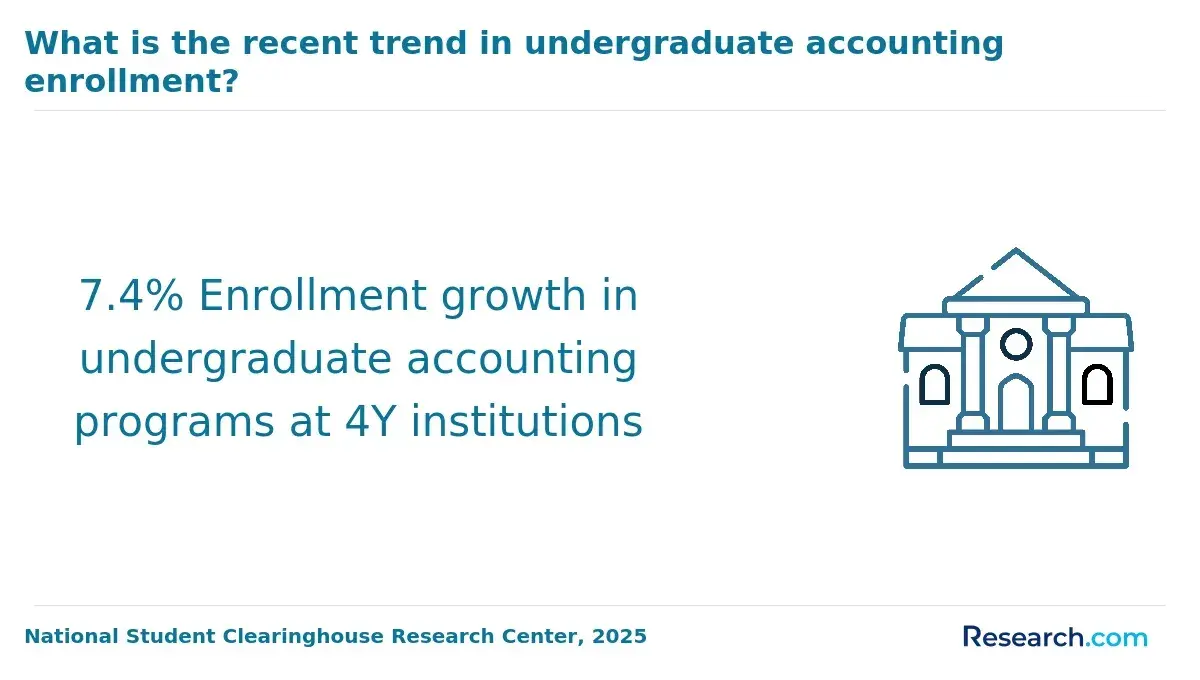
At the same time, undergraduate accounting enrollment has started to improve, with notable student increases reported through 2025. That matters because employers continue to need accountants who can interpret financial data, support compliance, use automation tools, and advise organizations on risk and strategy. This guide explains what an accounting degree can lead to, how online and campus programs compare, what different degree levels cost, how to judge ROI, and which questions to ask before enrolling.
Quick Answer: Is an Accounting Degree Worth It?
An accounting degree can be worth it for students who want a practical business credential with applications in public accounting, corporate finance, government, nonprofit work, technology, audit, tax, and compliance. The degree is especially valuable if the program is accredited, aligns with CPA or certification requirements in your state, offers internships, and teaches current tools such as data analytics, accounting software, spreadsheet modeling, and automation-supported workflows.
It may not be the best fit if you dislike detailed rules, deadlines, documentation, ethical accountability, or ongoing professional education. Accounting careers can be stable and portable, but salary outcomes depend on degree level, location, credentials, experience, industry, and whether you pursue roles such as CPA, auditor, tax specialist, controller, forensic accountant, or financial analyst.
What are the benefits of getting an accounting degree?
If you are asking, “Is accounting a good major?” the strongest reasons to consider it are practical rather than abstract:
- An accounting degree can prepare you for roles in public accounting, business management, finance, insurance, government, nonprofit organizations, consulting, technology, and entrepreneurship.
- Accountants’ median annual wage was $84,000, and master’s degree holders may earn 10 to 20% more depending on role, employer, location, and credentials.
- Accounting programs build skills in financial reporting, audit, tax, compliance, internal controls, budgeting, data interpretation, and decision support, all of which help organizations make more reliable financial decisions.
- The degree can support multiple credential pathways, including CPA, CMA, CIA, CFE, CISA, bookkeeping credentials, and specialized graduate study.
- Because every organization needs accurate financial information, accounting knowledge remains useful even for students who later move into operations, consulting, analytics, compliance, or executive leadership.
What can I expect from an accounting degree?
An accounting degree teaches you how organizations record, report, verify, analyze, and explain financial activity. At the associate level, the focus is usually bookkeeping, payroll, business math, basic taxation, and accounting software. At the bachelor’s level, students move into intermediate accounting, auditing, tax, cost accounting, business law, information systems, ethics, and financial analysis. Graduate programs often add advanced tax, forensic accounting, analytics, research, leadership, regulation, and strategic decision-making.
With a bachelor’s degree, students commonly qualify for entry-level accountant, auditor, tax associate, financial analyst, accounting analyst, staff accountant, or internal audit roles. According to the Bureau of Labor Statistics (BLS), accountants and auditors can expect a median annual salary of $84,000, with a bachelor’s degree listed as the typical entry-level education. Master’s degree holders often fall into a 10-20% higher income bracket, though this depends heavily on experience, certification, employer type, and region.
What can you do with an accounting major? You can work with financial statements, audit evidence, budgets, tax records, internal controls, risk assessments, payroll systems, software reports, or fraud investigations. The work is becoming less about manual data entry and more about judgment, interpretation, system oversight, and advisory services. AI, robotic process automation, and analytics tools are changing routine accounting tasks, but they also increase demand for professionals who understand controls, data quality, compliance, and business context.
| Degree level | Typical focus | Common next step | Best for |
| Associate degree | Bookkeeping, payroll, basic accounting, spreadsheets, business fundamentals | Entry-level accounting support roles or transfer to a bachelor’s program | Students seeking a lower-cost start or a faster route into accounting work |
| Bachelor’s degree | Financial accounting, auditing, tax, cost accounting, business law, analytics, ethics | Staff accountant, auditor, tax associate, analyst roles, or CPA preparation | Students who want the broadest entry-level career access |
| Master’s degree | Advanced accounting, taxation, forensic work, analytics, research, leadership | CPA credit completion, specialization, promotion, or advanced roles | Students targeting CPA eligibility, leadership, or specialized practice areas |
| Doctorate degree | Accounting research, theory, teaching, policy, quantitative methods | Academic, research, senior policy, or high-level consulting paths | Students who want to teach, publish research, or work in advanced analysis |
Where can I work with an accounting degree?
An accounting degree can lead to work in nearly every sector because organizations need reliable financial records, audit trails, tax reporting, budgeting, and compliance systems. The accounting workforce includes approximately 1.38 million professionals. About 24% of accountants work in accounting, tax preparation, bookkeeping, and payroll services, while others work in finance and insurance, government, corporate management, nonprofits, consulting, and self-employment.
Large business markets such as New York, California, and Texas tend to offer many opportunities because they host major employers, financial institutions, public accounting firms, headquarters operations, and regulatory activity. Salaries in these states may be higher, but students should compare compensation against local cost of living, commute expectations, licensing rules, and the availability of hybrid or remote work.
| Work setting | What accountants usually do there | When this path makes sense |
| Public accounting firms | Audit, tax preparation, advisory, assurance, consulting, client service | You want broad exposure, CPA experience, and structured advancement |
| Corporate accounting departments | Financial reporting, budgeting, reconciliations, internal controls, management reports | You prefer working inside one organization and learning its operations deeply |
| Government agencies | Compliance, auditing, budgeting, grant accounting, tax administration, oversight | You value public service, regulation, and structured career paths |
| Finance and insurance | Investment reporting, risk analysis, regulatory reporting, financial controls | You are interested in markets, risk, analytics, or financial institutions |
| Technology and software companies | Revenue recognition, systems controls, billing, compliance, analytics, automation | You want to combine accounting knowledge with data and systems work |
| Self-employment | Bookkeeping, tax services, payroll support, small-business advisory | You want independence and are prepared to manage clients, compliance, and business development |
How much can I make with an accounting degree?
Accounting salaries vary by job title, credential, state, industry, employer size, and years of experience. The potential earnings for accountants vary widely, with the median annual wage at $68,326 as of May 2026, according to the BLS. Some industries pay more: accountants in securities, commodity contracts, and other financial investments can earn an annual mean wage of up to $118,650, while those in software publishing can earn $106,170.
Location also affects compensation. Accountants in the District of Columbia and New York have some of the highest annual mean wages, listed at $121,500 and $111,000, respectively. California, New Jersey, and Massachusetts are also among the top-paying regions. Before choosing a school or relocating for work, compare wages with housing costs, commuting, state tax obligations, licensing rules, and the industries concentrated in that region.
| Factor | How it can affect earnings | What to check before deciding |
| Degree level | Higher credentials may support specialization, promotion, or CPA eligibility | Whether the extra tuition is necessary for your target role |
| Certification | CPA, CMA, CIA, CFE, CISA, and bookkeeping credentials can signal specialized competence | Eligibility requirements, exam costs, experience requirements, and renewal rules |
| Industry | Finance, software, consulting, and specialized advisory roles may pay more than some general accounting jobs | Whether you have the technical and industry knowledge those employers expect |
| Region | High-demand or high-cost markets can offer higher wages | Cost of living, remote work options, and licensing portability |
| Experience | Internships, public accounting experience, supervisory work, and systems skills can increase competitiveness | Program internship support, employer partnerships, and career placement resources |
- 2027 Best Accounting Degrees
- How long does an accounting degree take?
- Online accounting degree vs. campus accounting degree
- Average accounting degree cost
- Financial aid for accounting students
- Accounting degree admission requirements
- Common accounting degree courses
- Accounting specializations
- Accounting degree career paths
- Technology trends in accounting
- Choosing an accounting specialization
- Improving ROI from an online accounting degree
- Regulatory and compliance trends and ROI planning for online programs
- Factors that influence accounting degree ROI
- Affordable online accounting education
- Certifications and continuing education
- Regional CPA salary differences
- Accelerated accounting degree options
- Accounting certificate job market
- Skills employers want in accounting graduates
- Accounting certifications beyond CPA
- Internships and networking strategies, certification planning, and career-building steps
2027 Best Accounting Degrees
The best accounting degree for you is the one that matches your career goal, budget, preferred format, transfer plan, accreditation needs, and certification timeline. A student who wants bookkeeping work quickly may need a different program than a student preparing for CPA licensure, graduate school, forensic accounting, or academic research. Use the program examples below as a starting point, then verify tuition, curriculum, accreditation, delivery format, CPA alignment, and graduation requirements directly with each institution.
How do we rank schools?
Research.com evaluates accounting programs using structured data review and program analysis. For a broader explanation of how institutional data are assessed, review our methodology. The rankings draw on recognized education and program data sources, including:
Featured associate accounting degree options
| School | Program | Length | Cost and credits | Accreditation |
| Indiana Wesleyan University-National & Global | Associate of Science in Accounting | Typically 2 years | $309.00/credit hour; 60 credits | Higher Learning Commission; Business school accredited by the Accreditation Council for Business Schools and Programs |
| Fox Valley Technical College | Associate of Applied Science in Accounting | Varies by full-time or part-time schedule | $146.20/credit hour; 63 credits | Higher Learning Commission |
Indiana Wesleyan University-National & Global
Indiana Wesleyan University, a Christian institution based in Marion, offers an online Associate of Science in Accounting designed to introduce students to accounting through a Christian educational framework. Students study accounting principles, payroll accounting and taxation, spreadsheet use in accounting, the legal environment of business, and economics. The program can support entry-level work or continued study toward a bachelor’s degree.
- Program Length: Typically 2 years
- Tracks/Concentrations: General Accounting
- Tuition or Cost per Credit: $309.00/credit hour
- Required Credits to Graduate: 60 credits
- Accreditation: Higher Learning Commission; Business school accredited by the Accreditation Council for Business Schools and Programs
Fox Valley Technical College
Fox Valley Technical College in Appleton, Wisconsin, offers a fully online Associate of Applied Science in Accounting. The 63-credit curriculum includes 44 credits of technical studies, with topics such as QuickBooks Accounting, Introduction to Microsoft Office Suite, Advanced Payroll, Business Law, and Business Communications. Applicants need a minimum high school GPA of 2.75 or a GED score of 165, along with placement exams or SAT/ACT scores.
- Program Length: Varies (full-time or part-time schedule)
- Tracks/Concentrations: General Accounting
- Tuition or Cost per Credit: $146.20/credit hour
- Required Credits to Graduate: 63 credits
- Accreditation: Higher Learning Commission
Featured bachelor’s accounting degree options
| School | Program | Length | Cost and credits | Accreditation |
| University of Illinois Urbana-Champaign | Bachelor of Science in Accountancy | Typically 4 years | $382.00/credit hour in-state; $937.00/credit hour out-of-state; 124 credits | Southern Association of Colleges and Schools Commission on Colleges |
| Brigham Young University | Bachelor of Science in Accountancy program | Typically 4 years | $3,248 (Latter-Day Saint); $6,496 (non-Latter-Day Saint); 24 credits | Southern Association of Colleges and Schools Commission on Colleges |
University of Illinois Urbana-Champaign
The University of Illinois Urbana-Champaign’s Bachelor of Science in Accountancy combines accounting, assurance, taxation, data analytics, communication, leadership, critical thinking, and strategic decision-making. Students study accounting for business entities, audit concepts, accounting information analysis, and methods used in assurance, corporate accounting, tax, consulting, advisory, government, and nonprofit work.
- Program Length: Typically 4 years
- Tracks/Concentrations: General Accountancy
- Tuition or Cost per Credit: $382.00/credit hour (in-state resident), $937.00/credit hour (out-of-state resident)
- Required Credits to Graduate: 124 credits
- Accreditation: Southern Association of Colleges and Schools Commission on Colleges
Brigham Young University
Brigham Young University’s Bachelor of Science in Accountancy uses a junior core structure built around industry and educator competencies. The program includes nine courses over two semesters, covering Accounting Information Systems, Intermediate Financial Accounting, Financial Statement Auditing, and Data Analytics in Accounting. The curriculum is intensive and designed to prepare students for the expectations of professional accounting work.
- Program Length: Typically 4 years
- Tracks/Concentrations: General Accountancy
- Tuition or Cost per Credit: $3,248 (Latter-Day Saint), $6,496 (non-Latter-Day Saint)
- Required Credits to Graduate: 24 credits
- Accreditation: Southern Association of Colleges and Schools Commission on Colleges
Featured master’s accounting degree options
| School | Program | Length | Cost and credits | Accreditation |
| University of Florida | Master of Accounting | Varies by concentration and preparatory coursework | $18,043.46 for Florida residents; $42,683.94 for non-Florida residents; 34 credits | Southern Association of Colleges and Schools Commission on Colleges |
| Franklin University | Master of Science in Accounting | As few as 17 months | $20,100 total program tuition; 30 credit hours | International Assembly for Collegiate Business Education (IACBE) |
University of Florida
The University of Florida offers a Master of Accounting through the Fisher School of Accounting for students seeking advanced accounting preparation after undergraduate study. The face-to-face MAcc in Gainesville assumes prior undergraduate accounting preparation. When combined with UF’s Bachelor of Science in Accounting, the program meets Florida’s CPA Examination and licensure requirements.
- Program Length: Varies based on the chosen concentration and preparatory coursework
- Tracks/Concentrations: Auditing, Taxation, No Concentration
- Tuition or Cost per Credit: $18,043.46 for Florida residents, $42,683.94 for non-Florida residents
- Required Credits to Graduate: 34 credits (additional credits may be required for preparatory courses)
- Accreditation: Southern Association of Colleges and Schools Commission on Colleges
Franklin University
Franklin University’s Master of Science in Accounting is built for students who want to strengthen accounting knowledge while developing research, communication, and technology skills. The curriculum connects accounting theory with applied practice and offers flexibility for working professionals. Franklin also partners with many workplaces to reduce tuition, so students should ask whether their employer or professional organization participates.
- Program Length: As few as 17 months
- Tracks/Concentrations: Financial Operations, Taxation
- Tuition or Cost per Credit: $20,100 total program tuition
- Required Credits to Graduate: 30 credit hours
- Accreditation: International Assembly for Collegiate Business Education (IACBE)
Featured doctorate accounting degree options
| School | Program | Length | Cost and credits | Accreditation |
| The University of Texas at Austin | Accounting PhD program | Varies based on individual progress | $4,342 for in-state residents; $$8,656 for out-of-state residents; required credits not specified | Southern Association of Colleges and Schools Commission on Colleges |
| University of Pennsylvania | PhD program in Accounting | Varies based on individual progress | 16 Course Units; required credits not specified | AACSB |
The University of Texas at Austin
The University of Texas at Austin offers an Accounting PhD through McCombs that emphasizes research training, academic writing, and teaching preparation. Students can explore areas such as financial accounting, auditing, managerial accounting, and taxation while preparing for scholarly careers and contributions to accounting policy and research.
- Program Length: Varies based on individual progress
- Tracks/Concentrations: Financial Accounting, Auditing, Managerial, Taxation
- Tuition or Cost per Credit: $4,342 for in-state residents, $$8,656 for out-of-state residents (price may change depending on the living situation)
- Required Credits to Graduate: Not specified, but includes coursework, research, and dissertation
- Accreditation: Southern Association of Colleges and Schools Commission on Colleges
University of Pennsylvania
The University of Pennsylvania’s Wharton School offers a PhD in Accounting for students who want to become academic researchers. The program centers on research ideas, methods, faculty collaboration, doctoral coursework, dissertation development, and publishable research. It is designed for students whose goal is scholarly work rather than standard professional accounting practice.
- Program Length: Varies based on individual progress
- Tracks/Concentrations: All Wharton doctoral students receive a full fellowship covering tuition expenses and a living stipend.
- Tuition or Cost per Credit: 16 Course Units
- Required Credits to Graduate: Not specified, but includes coursework, research, and dissertation
- Accreditation: AACSB
How long does it take to complete an accounting degree?
The time required for an accounting degree depends on degree level, enrollment intensity, transfer credits, prerequisite coursework, and whether the program follows a traditional, accelerated, part-time, or competency-based structure. An associate degree usually takes two years, such as programs offered by Indiana Wesleyan University-National & Global and Fox Valley Technical College. A bachelor’s degree usually takes around 4 years, including examples such as the University of Illinois at Urbana-Champaign and Brigham Young University. A master’s degree, such as those offered by the University of Florida or Franklin University, may take 1-2 years. A doctorate at institutions such as the University of Texas at Austin or the University of Pennsylvania can take several years because progress depends on coursework, research, exams, teaching, and dissertation completion.
| Program type | Typical completion time | What may shorten or extend the timeline |
| Associate degree | Typically 2 years | Part-time enrollment, remedial courses, or transfer pathway requirements |
| Bachelor’s degree | Usually around 4 years | Transfer credits, double majors, CPA credit planning, internships, or part-time study |
| Master’s degree | Often 1-2 years | Accounting prerequisites, concentration choice, full-time vs. working-student schedules |
| Doctorate degree | Several years based on progress | Research milestones, dissertation scope, teaching requirements, and faculty review |
Students considering accounting as a foundation for business management careers should think beyond the shortest possible timeline. A fast program is useful only if it still offers the courses, accreditation, advising, internship access, and CPA preparation needed for your target job.
How does an online accounting degree compare to an on-campus program?
An online accounting degree can be a strong option when it is offered by an accredited institution, uses the same academic standards as campus programs, provides faculty access, and supports internships, career services, and certification planning. Online learning is especially useful for working adults, parents, military students, rural learners, and students comparing programs outside their local area. A cited analysis reports that 76% of academic leaders affirming their parity view online and traditional degrees as comparable. Favorability rises to 89% when the online program is connected to an institution with campus-based education, compared with 70% for online-only colleges.
An online master’s degree in accounting may work well if you already have accounting experience and need flexibility to meet graduate or CPA credit goals. Campus programs may be better if you want face-to-face recruiting, structured peer interaction, easier access to faculty offices, and local employer pipelines. The stronger choice is not always the most convenient one; it is the one that fits your learning style, schedule, budget, and licensing goals.
| Comparison point | Online accounting degree | On-campus accounting degree |
| Flexibility | Often better for working students or students with fixed schedules | Usually more structured and location-dependent |
| Networking | Depends on virtual events, alumni access, and internship support | Often easier through campus recruiting, clubs, and local firm visits |
| Cost control | May reduce relocation, commuting, and housing costs | May include higher living or transportation expenses |
| Learning style | Requires self-management, time discipline, and comfort with digital tools | Provides routine classroom interaction and scheduled support |
| CPA preparation | Must be checked carefully by state and credit category | Also must be checked, but advising may be more direct in some programs |
What is the average cost of an accounting degree?
The cost of an accounting degree depends on school type, residency status, degree level, delivery format, fees, books, technology requirements, housing, transportation, and how many credits you transfer. Average undergraduate tuition and fees are approximately $9,853 for state residents and $28,099 for out-of-state students. Graduate tuition averages around $11,365 for in-state students and $21,890 for out-of-state students. Vocational accounting programs average $14,132.
Do not compare programs by tuition alone. A school with higher tuition may offer stronger transfer acceptance, employer partnerships, CPA advising, internships, scholarships, or faster completion. A lower-cost program may be the better choice if it is accredited, transparent, and aligned with your career goal. Always calculate the total price through graduation, not just the advertised per-credit rate.
| Cost category | Why it matters | Question to ask |
| Tuition and mandatory fees | These form the base cost of attendance | What is the total tuition and fee estimate for all required credits? |
| Books, software, and technology | Accounting courses may require spreadsheets, tax software, analytics tools, or proctoring services | Which tools are included and which must be purchased separately? |
| Transfer credit policy | Accepted credits can lower both cost and time | How many prior credits will apply to the accounting major and general education requirements? |
| Residency rules | Public institutions often charge different in-state and out-of-state rates | Can online students qualify for a reduced or special tuition rate? |
| CPA credit planning | Extra credits may be needed beyond the degree in some states | Will the program meet my state’s education requirements for CPA exam or licensure eligibility? |
What are the financial aid options for students enrolling in an accounting degree?
Accounting students should build a funding plan before choosing a school. This is true whether you are starting an associate or bachelor’s degree, entering a master’s program, or comparing advanced business options such as a Doctor of Business Administration online. The main aid options include:
- Federal Grants: Pell Grants and Federal Supplemental Educational Opportunity Grants (FSEOG) for eligible students.
- State Grants: State-based need aid that differs by location, enrollment status, and eligibility rules.
- Scholarships: Awards from colleges, accounting associations, private companies, foundations, civic organizations, and professional groups.
- Federal Student Loans: Direct Subsidized Loans, Direct Unsubsidized Loans, and Direct PLUS Loans for graduate students.
- Work-Study Programs: Federal Work-Study jobs for eligible undergraduate and graduate students with financial need.
- Private Student Loans: Loans from banks or other lenders, usually requiring credit review and careful comparison of interest terms.
- Tuition Reimbursement: Employer support that may cover part or all of a job-related accounting program.
- Tax Credits: The American Opportunity Tax Credit (AOTC) and Lifetime Learning Credit (LLC), which may reduce tax liability for eligible students.
- Education Savings Accounts: 529 Plans and Coverdell Education Savings Accounts that may offer tax advantages.
- Fellowships and Assistantships: Graduate funding options that may include tuition coverage, stipends, research work, or teaching responsibilities.
Apply early, because aid deadlines often arrive before admission decisions are finalized. Also ask whether scholarships continue after the first year, what GPA is required to keep them, and whether aid applies to summer, online, part-time, or accelerated courses.
What are the prerequisites for enrolling in accounting degrees?
Admission requirements differ by institution and degree level. Some programs focus on open access and placement testing, while others require strong grades, standardized test scores, prerequisite coursework, professional experience, or research preparation.
Associate degree admission requirements
- High school diploma or equivalent, such as a GED.
- Acceptable high school GPA, often around 2.0 or higher.
- Placement testing when required by the college.
- Basic readiness for math, writing, and computer-based coursework.
Bachelor’s degree admission requirements
- High school diploma or equivalent.
- High school coursework in math, English, and possibly business or economics.
- SAT or ACT scores when required by the institution.
- Letters of recommendation for more selective programs.
- Transfer transcripts if applying after community college or prior college enrollment.
Master’s degree admission requirements
- Bachelor’s degree in accounting or a related field.
- Minimum undergraduate GPA, usually around 3.0 or higher.
- GMAT or GRE scores when required by the program.
- Professional experience when preferred or required.
- Prerequisite accounting courses if your bachelor’s degree was in another field.
Doctorate degree admission requirements
- Master’s degree, often in accounting, business, or a related discipline.
- Strong academic performance in previous graduate-level study.
- GMAT or GRE scores.
- Research proposal or statement of purpose.
- Academic writing samples or published research when required.
Before applying, request a written prerequisite review. This is especially important if you are changing careers, transferring credits, applying from outside the United States, or trying to meet CPA education rules in a specific state.
What courses are typically in an accounting degree?
Accounting curricula usually move from transaction-level skills to analysis, reporting, compliance, strategy, and research. Students in an associate program learn how to record and organize financial information. Bachelor’s students study the frameworks used by auditors, tax professionals, and corporate accountants. Master’s and doctoral students often specialize in advanced topics, research, regulation, and leadership. Students planning deeper academic study can compare options such as a doctorate in accounting.
Associate degree courses
- Principles of Accounting
- Business Mathematics
- Microeconomics and Macroeconomics
- Computer Applications in Business
Bachelor’s degree courses
- Intermediate Accounting
- Cost Accounting
- Auditing Principles
- Federal Taxation
- Business Law and Ethics
- Corporate Finance
- Management Information Systems
Master’s degree courses
- Advanced Financial Accounting
- Forensic Accounting
- International Accounting
- Strategic Management Accounting
- Taxation Policy and Strategy
- Financial Statement Analysis
Doctorate degree courses
- Quantitative Research Methods in Accounting
- Seminar in Accounting Theory
- Dissertation in Accounting
- Advanced Topics in Taxation
- Corporate Governance and Accountability
How to choose the best accounting degree
The right accounting degree should fit your intended job, certification plan, finances, learning format, and time frame. If you are comparing a finance vs accounting degree, remember that accounting usually emphasizes reporting, auditability, tax, controls, compliance, and financial accuracy, while finance often focuses more on capital, investments, valuation, and markets. Many careers overlap, but the coursework and credentials can differ.
- Confirm accreditation: Look for institutional accreditation and, where relevant, business or accounting accreditation such as AACSB or ACBSP. Accreditation can affect transferability, employer perception, financial aid, and certification eligibility.
- Match the curriculum to your goal: CPA preparation, bookkeeping, tax, audit, forensic accounting, corporate accounting, government accounting, analytics, and research may require different course mixes.
- Review faculty and support: Ask whether instructors have professional accounting experience, research expertise, CPA backgrounds, or industry connections.
- Evaluate career services: Strong programs help students secure internships, prepare for interviews, connect with firms, and access alumni networks.
- Check flexibility honestly: Online, evening, accelerated, part-time, and campus formats can all work, but only if they match your schedule and learning habits.
- Calculate total cost: Include tuition, fees, books, software, exam preparation, commuting, housing, lost work time, and additional credits needed for certification.
- Verify CPA alignment: CPA education requirements vary by state, so ask whether the program satisfies your state board’s coursework and credit rules.
- Look at outcomes: Ask for graduation rates, internship participation, employer partners, CPA exam support, and graduate employment information when available.
| If your goal is... | Consider... | Be careful about... |
| Fast entry into accounting support work | Associate degree or certificate with bookkeeping, payroll, and software courses | Choosing a program that does not transfer if you later want a bachelor’s degree |
| CPA pathway | Bachelor’s plus additional credits or a master’s program aligned with state rules | Assuming every accounting degree automatically meets CPA requirements |
| Career change into accounting | Post-baccalaureate accounting courses, master’s bridge options, or online programs | Ignoring prerequisites that can add time and cost |
| Forensic or fraud work | Accounting degree plus forensic, audit, fraud, analytics, and legal coursework | Relying only on general accounting courses without investigative training |
| Academic research or teaching | PhD in accounting with strong research mentorship | Choosing a professional doctorate when your goal requires scholarly research training |
What career paths are available for graduates of accounting degrees?
Accounting degree careers vary by education level, certification, industry, and specialization. Associate graduates may begin in support roles. Bachelor’s graduates often qualify for staff-level accounting, audit, tax, or analysis roles. Master’s graduates may pursue advanced practice, CPA credit completion, advisory work, or specialization. Doctoral graduates usually focus on research, teaching, policy, or senior-level analysis.
Associate degree career options
- Bookkeeper: Maintains transaction records, accounts, and financial documentation. Estimated salary: $40,000 to $50,000 annually.
- Accounting Clerk: Supports invoices, reconciliations, data entry, and basic accounting tasks. Estimated salary: $35,000 to $45,000 annually.
- Payroll Clerk: Processes payroll records, deductions, and employee payment information. Estimated salary: $35,000 to $45,000 annually.
Bachelor’s degree career options
- Certified Public Accountant (CPA): Provides audit, tax, consulting, compliance, and financial advisory services. Estimated salary: $60,000 to $75,000 annually.
- Auditor: Reviews financial statements, internal controls, and documentation for accuracy and compliance. Estimated salary: $55,000 to $70,000 annually.
- Financial Analyst: Uses financial data to support planning, investment, budgeting, or business decisions. Estimated salary: $60,000 to $85,000 annually.
Master’s degree career options
- Forensic Accountant: Investigates fraud, financial irregularities, disputes, and litigation-related accounting issues. Estimated salary: $65,000 to $90,000 annually.
- Management Accountant: Supports business strategy through budgeting, forecasting, internal reporting, and performance analysis. Estimated salary: $70,000 to $100,000 annually.
- Tax Advisor: Handles tax planning, compliance, reporting, and strategy for individuals or organizations. Estimated salary: $70,000 to $100,000 annually.
Doctorate degree career options
- Accounting Professor: Teaches accounting students, conducts research, and contributes to academic knowledge. Estimated salary: $85,000 to $120,000 annually.
- Senior Research Analyst: Leads complex financial, economic, or policy research. Estimated salary: $100,000 to $150,000 annually.
- Chief Financial Officer: Oversees an organization’s financial strategy, reporting, controls, and financial leadership. Estimated salary: $120,000 to $250,000+ annually.
How are emerging technologies reshaping accounting practices?
AI, automation, blockchain-related systems, cloud platforms, and advanced analytics are changing how accounting work is performed. Routine reconciliations, invoice processing, document classification, and some reporting tasks are increasingly supported by software. That does not eliminate the need for accountants; it changes the skill mix. Employers need professionals who can validate outputs, interpret exceptions, monitor controls, protect data integrity, and explain financial results to decision-makers.
Students should look for accounting programs that teach Excel at an advanced level, accounting information systems, analytics, audit technology, data visualization, cybersecurity awareness, and responsible use of automation tools. Shorter credentials can also help. For example, a bookkeeper certification course may strengthen practical software and transaction-processing skills for students pursuing bookkeeping or small-business accounting work.
Which accounting specializations best suit my career goals?
The best specialization depends on what kind of problems you want to solve. Tax students often enjoy rules, planning, and research. Audit students need evidence evaluation, professional skepticism, and communication. Forensic accounting suits students interested in fraud, investigation, litigation support, and detailed documentation. Management accounting fits students who want to work inside organizations on budgets, forecasts, cost analysis, and strategic decisions. Government and nonprofit accounting may appeal to students interested in public accountability, grants, and fund accounting.
Before choosing, compare daily tasks, credential expectations, salary potential, seasonal workload, travel requirements, and industry demand. Research.com’s guide to accounting specializations can help you connect interests with training options and career paths.
| Specialization | Best fit for students who like... | Common roles |
| Tax accounting | Rules, research, planning, deadlines, client advising | Tax associate, tax advisor, tax manager |
| Audit and assurance | Evidence, controls, financial statement review, risk assessment | Auditor, internal auditor, assurance associate |
| Forensic accounting | Investigation, fraud detection, litigation support, documentation | Forensic accountant, fraud examiner, investigative auditor |
| Management accounting | Budgeting, forecasting, cost analysis, performance reporting | Management accountant, controller-track roles, financial planning analyst |
| Government accounting | Public accountability, compliance, budgets, program oversight | Government auditor, budget analyst, compliance accountant |
| Accounting information systems | Technology, controls, systems, data quality, automation | IT auditor, systems accountant, controls analyst |
How can I ensure a high ROI with an online accounting degree?
To improve ROI, choose an online accounting program that is accredited, affordable, transfer-friendly, career-aligned, and recognized by employers. A lower tuition price is helpful, but it is not enough. The program should also help you finish on time, meet licensing or certification goals, build experience, and compete for roles that justify the cost.
Students comparing affordable options can review the cheapest accredited online accounting degree programs as a starting point. Then ask whether the program includes live faculty access, tutoring, accounting software, CPA advising, internship support, and employer connections.
How do regulatory changes and compliance trends affect accounting careers?
Accounting work is heavily shaped by changing tax rules, reporting standards, audit expectations, privacy requirements, internal control practices, and industry-specific compliance obligations. Professionals who stop learning can fall behind quickly. Students and working accountants should expect continuing education, professional updates, software training, and periodic credential renewal to be part of the career.
Regulatory knowledge can also create career mobility. Accountants who understand compliance, risk, documentation, and financial reporting controls are useful in public accounting, corporate finance, government, healthcare, banking, technology, and nonprofit work. To compare role options and compensation paths, review Research.com’s guide to accounting career paths and salaries.
What factors affect the ROI of your accounting degree?
ROI depends on what you pay, how quickly you finish, what job you obtain, and whether the program helps you qualify for higher-value opportunities. Tuition is only one part of the equation. You should also consider program reputation, accreditation, completion rate, transfer credits, location, internships, certification readiness, employer partnerships, and whether your chosen specialization has strong demand.
Students aiming for higher-paying roles should compare degree costs with the skills and credentials needed for advanced positions. Salary benchmarks for accounting jobs salary outcomes can help you understand which roles may require extra education, experience, or certification.
| ROI factor | Why it matters | Better decision |
| Accreditation | Can affect aid, transfer, employer acceptance, and certification eligibility | Verify accreditation before applying |
| Total program cost | Fees, books, software, housing, and extra credits can change the real price | Request a full cost-to-graduation estimate |
| Transfer credits | Accepted credits can reduce both cost and time | Get a written transfer evaluation |
| CPA or certification alignment | Missing required coursework can delay licensing plans | Compare the program with state board requirements |
| Internship access | Experience can improve hiring outcomes | Ask where recent students interned |
| Career support | Recruiting help can influence first-job opportunities | Review employer partners, job fairs, and alumni connections |
Can I obtain a high-quality and low-cost accounting education online?
Yes, but you need to verify quality as carefully as price. A low-cost online accounting program should be accredited, transparent about tuition and fees, clear about required credits, and strong enough to prepare students for real accounting tasks. It should also provide faculty interaction, advising, technology support, career services, and curriculum that reflects current accounting software and regulatory expectations.
Students who want a lower-cost starting point may compare a low cost associate's degree in accounting online. This route can be practical for bookkeeping, payroll, accounting clerk roles, or transfer into a bachelor’s program, but students should confirm transferability before enrolling.
How can specialized certifications and ongoing training enhance my accounting career?
Certifications can help accountants signal focused expertise beyond the degree. They may support advancement in public accounting, management accounting, internal audit, fraud examination, information systems audit, bookkeeping, tax, or compliance. Certifications also show employers that you are willing to keep learning as technology, regulation, and reporting expectations change.
For students building practical accounting and bookkeeping credentials, a certified professional bookkeeper certification can strengthen credibility for bookkeeping, payroll, and small-business accounting roles. More advanced certifications may require education, experience, exams, and continuing education, so review requirements before paying for preparation materials.
How do regional differences impact CPA salaries?
CPA salaries differ by state because labor demand, cost of living, industry concentration, tax complexity, public accounting presence, and local regulation vary. A salary that looks high in one market may offer less purchasing power after housing, commuting, and taxes. Conversely, a lower salary in a lower-cost region may still produce a strong quality of life.
If you are considering relocation, remote work, or CPA licensure in another state, compare compensation and requirements before making a move. Research.com’s guide to CPA salaries by state can help you evaluate regional differences more carefully.
What accelerated accounting degree options are available for career advancement?
Accelerated accounting programs compress coursework so students can finish faster than in a traditional schedule. They may be useful for career changers, working professionals, transfer students, or students who already have general education credits. Accelerated bachelor’s or master’s options are commonly designed around intensive courses and shorter terms, with 12 to 18 months noted for some bachelor’s or master’s degree paths.
Accelerated accounting degree programs online can reduce time away from the workforce and may lower some costs by shortening enrollment. However, faster does not always mean easier. Students should check weekly workload, course sequencing, faculty availability, CPA alignment, and whether the program allows time for internships or exam preparation.
What is the job market for graduates with an accounting certificate?
An accounting certificate can be useful for students who want focused training in bookkeeping, payroll, tax preparation, accounting software, or entry-level accounting support. It can also help career changers test the field before committing to a full degree. The broader employment outlook is favorable: employment of accountants and auditors is projected to grow 5% through 2034, according to the BLS. That projection equals about 130,000 openings for accountants and auditors each year over the decade, mainly because workers retire or move into other careers.
Demand is influenced by two major forces:
- Globalization and complex regulations: Business expansion, tax requirements, international transactions, mergers, and compliance obligations continue to create a need for accounting expertise.
- Technology change: Automation and AI can reduce manual work, but they also increase the need for accountants who can interpret data, advise organizations, test controls, and manage exceptions.
A certificate, accounting degree, or specialized program such as a forensic accounting degree can support different career goals. The best choice depends on whether you need a quick skill credential, a transfer pathway, CPA preparation, or specialized graduate training.
What skills do employers seek in accounting graduates?
Employers want accounting graduates who can do accurate technical work and explain what the numbers mean. Strong candidates combine accounting knowledge with software fluency, communication, ethics, curiosity, and attention to detail.
- Technical proficiency:
- Accounting software skills: Employers value comfort with tools such as QuickBooks, SAP, Microsoft Excel, spreadsheets, reporting systems, and financial software.
- Data analysis: Graduates should be able to interpret financial information, identify patterns, investigate exceptions, and support decisions with evidence.
- Regulatory understanding: Candidates need working knowledge of tax rules, audit standards, reporting requirements, internal controls, and compliance expectations.
- Attention to detail:
- Small accounting mistakes can create financial, tax, audit, or compliance problems. Employers look for candidates who can review work carefully and document decisions.
- Analytical thinking:
- Accountants must go beyond recording numbers; they need to explain trends, risks, variances, and opportunities.
- Communication skills:
- Accounting graduates must translate technical findings for managers, clients, auditors, regulators, and nonfinancial colleagues.
- Problem-solving ability:
- Reconciliations, audit issues, missing documentation, system errors, and cost questions require practical troubleshooting.
- Organizational skills:
- Deadlines, reports, records, client requests, month-end close, and tax calendars require strong time management.
- Adaptability and continuous learning:
- Technology and regulation keep changing, so employers value graduates who update their knowledge and learn new tools.
Students weighing graduate study should ask is getting a masters in accounting worth it based on their target role, state CPA requirements, employer expectations, and the cost of additional study.
What are the different types of accounting certifications beyond CPA?
The CPA is the best-known accounting credential, but it is not the only option. Other certifications can support careers in management accounting, internal audit, fraud investigation, information systems audit, investment analysis, and bookkeeping. Choose credentials based on the work you actually want to do, not simply because a credential is popular.
- Certified Management Accountant (CMA): Focuses on financial management, budgeting, cost management, planning, analysis, and strategic decision support in corporate settings.
- Certified Internal Auditor (CIA): Supports careers in internal auditing, risk management, governance, controls, and compliance.
- Chartered Financial Analyst (CFA): Although more finance-oriented, this credential can be useful for accountants working in investment management, portfolio analysis, economics, or financial reporting.
- Certified Fraud Examiner (CFE): Designed for professionals who investigate, detect, and prevent fraud, especially in forensic accounting or investigative audit roles.
- Certified Information Systems Auditor (CISA): Fits accountants interested in IT audit, cybersecurity controls, systems reliability, and technology-driven assurance work.
| Credential | Best aligned with | Career direction |
| CPA | Public accounting, audit, tax, assurance, advisory | Public accounting firms, corporate accounting leadership, regulated financial work |
| CMA | Budgeting, forecasting, cost management, internal reporting | Corporate finance and management accounting |
| CIA | Internal controls, risk, governance, audit processes | Internal audit and compliance |
| CFE | Fraud detection, investigation, litigation support | Forensic accounting and fraud examination |
| CISA | Information systems, IT controls, security, systems audit | Technology audit and control assurance |
How to maximize the value of your accounting degree through internships and networking
A degree alone is rarely enough to stand out. Internships, professional relationships, accounting clubs, alumni contacts, and practical software experience can turn classroom knowledge into employable skills. Start building experience early, even if you are studying through a fast track bachelor degree online.
- Apply for relevant internships: Target public accounting firms, corporate accounting teams, nonprofits, government offices, and finance departments.
- Start before senior year: Early experience helps you choose a specialization and build a stronger resume.
- Join professional organizations: Consider accounting associations, student accounting societies, local CPA groups, and campus business organizations.
- Attend recruiting events: Use career fairs, employer panels, webinars, and school-hosted seminars to meet recruiters and practitioners.
- Use alumni networks: Ask graduates about hiring cycles, interview expectations, busy season realities, and recommended electives.
- Build a professional LinkedIn profile: Highlight coursework, software skills, certifications in progress, projects, internships, and career interests.
- Find mentors: A mentor can help you compare CPA, CMA, audit, tax, corporate, government, or forensic paths.
- Practice soft skills: Communication, teamwork, leadership, and client service matter in almost every accounting role.
- Earn strong references: Treat internships and part-time accounting jobs as extended interviews.
- Track industry changes: Follow developments in AI, audit tools, tax rules, cybersecurity, reporting standards, and compliance.
Common mistakes to avoid when choosing an accounting degree
- Choosing a school without checking accreditation: Accreditation can affect financial aid, transfer credits, certification eligibility, and employer acceptance.
- Looking only at tuition: Fees, software, books, transfer losses, prerequisite courses, and extra CPA credits can change the real cost.
- Assuming every online program meets licensure rules: CPA requirements are state-specific. Ask for written confirmation before enrolling.
- Ignoring internships: Accounting is practical work. Experience can help you compete for stronger entry-level roles.
- Relying only on rankings: Rankings can help you build a shortlist, but they do not replace fit, cost, accreditation, curriculum, and outcomes.
- Skipping software and analytics skills: Modern accounting increasingly requires Excel, accounting systems, data analysis, and automation awareness.
- Assuming salaries are guaranteed: Degree level, credentials, location, industry, experience, and performance all influence earnings.
- Waiting too long to plan for CPA credits: If you want the CPA, map state education requirements early so you do not pay for unnecessary or missing coursework later.
Questions to ask before enrolling in an accounting program
- Is the institution accredited, and does the business or accounting program hold separate accreditation?
- Does the curriculum align with CPA education requirements in my state?
- How many of my transfer credits will apply to the major and degree total?
- What is the full cost through graduation, including fees, books, software, and exam preparation?
- Does the program offer internships, employer recruiting, alumni mentoring, or career placement support?
- Which accounting software, analytics tools, and spreadsheet skills are taught?
- Are courses synchronous, asynchronous, hybrid, or campus-based?
- What support is available for online students, part-time students, and working adults?
- What are the graduation requirements, GPA requirements, and course sequencing rules?
- What jobs have recent graduates entered, and what certifications do they commonly pursue?
Here’s what graduates have to say about their accounting degrees
- : "My accounting degree gave me a clear professional direction and helped me understand how financial systems support business decisions. Solving difficult reporting and analysis problems has been one of the most satisfying parts of my career. — Helen"
- : "Studying accounting online let me continue working while building practical skills. The simulations, discussions, and applied assignments helped me prepare for my first role in financial analysis. — Michael"
- : "Earning a master’s in accounting expanded my options across industries. I learned that accounting is not only about calculations; it is also about strategy, judgment, and understanding economic context. — Jayson"
Key Insights
- An accounting degree can be a strong investment when it is accredited, career-aligned, affordable, and connected to internships or employer networks.
- The accounting education pipeline has tightened, with 55,152 bachelor’s and master’s degrees awarded in the 2024 academic year and a 6.6% decline from the prior year, but undergraduate enrollment growth through 2025 suggests renewed student interest.
- A bachelor’s degree is the most common entry point for accountant and auditor roles, while associate, master’s, certificate, and doctorate options serve different career goals.
- Online accounting degrees can be credible when offered by accredited institutions with strong academic support, CPA advising, career services, and employer recognition.
- CPA eligibility is not automatic. Students should check state-specific education requirements before selecting courses or assuming a degree will qualify them.
- Technology is changing accounting work. Graduates who can combine accounting knowledge with analytics, systems, automation oversight, and communication will be better positioned.
- ROI depends on total cost, completion time, transfer credits, internships, certification readiness, location, and target role—not tuition alone.
- Before enrolling, ask direct questions about accreditation, CPA alignment, transfer credits, software training, internships, career outcomes, and total cost through graduation.
References:
- American Institute of Certified Public Accountants report: Accounting graduate numbers and hiring outlook. (2025, October 31). OHIO Society of CPAs – For the Public. AICPA accounting graduate numbers and hiring outlook
- U.S. Bureau of Labor Statistics. (2025, April 3). Occupational Employment and Wage Statistics, May 2024: 13-2011 Accountants and Auditors. BLS Occupational Employment and Wage Statistics
- U.S. Bureau of Labor Statistics. (2025, September 1). Occupational Outlook Handbook: Accountants and Auditors. BLS Occupational Outlook Handbook for accountants and auditors
- U.S. Bureau of Labor Statistics. (2025, May). Occupational Employment and Wage Statistics, May 2024: Accountants and Auditors. BLS accountants and auditors wage data
- ZipRecruiter. (n.d.). Accountant salary. ZipRecruiter. ZipRecruiter accountant salary data
Other things you should know about accounting degrees
In 2027, both BSA (Bachelor of Science in Accounting) and BSBA (Bachelor of Science in Business Administration) degrees offer strong career prospects. A BSA is ideal for those pursuing CPA certification, offering specialized accounting skills. Meanwhile, a BSBA provides a broader business education, suitable for versatile roles in management or finance. Your choice should align with your career goals.
Accountancy is traditionally a 4-year course leading to a bachelor’s degree, such as a Bachelor of Science in Accounting or a Bachelor of Arts in Accounting. This program is designed to provide a comprehensive understanding of accounting principles, business strategies, and ethical guidelines. However, the duration can vary based on the educational institution, the specific program structure, and whether you study full-time or part-time.
Yes, it is generally possible to shift from a Bachelor of Science in Business Administration (BSBA) to a Bachelor of Science in Accounting (BSA). However, the process depends on the policies of the educational institution you are attending. Typically, you would need to meet the prerequisites for the BSA program and possibly make up for any coursework not covered in your BSBA. It’s important to consult academic advisors at your institution to understand the specific requirements and implications of making such a shift.