2027 Fastest Online Humanities Degree Programs

Co-Founder and Chief Data Scientist
Going through a humanities degree program can equip you with the knowledge and skills necessary to land entry-level roles with good income potential and a promising career trajectory. For instance, market research analysts in the United States (US) had a median annual wage of $76,950 in May 2024 and a faster-than-average job growth rate of 8% from 2023 to 2033 [US Bureau of Labor Statistics (BLS), 2025].
Notably, earning your degree online can get you into the workforce even quicker. Online humanities degree programs can provide you with several convenient options in areas such as enrollment status, pace, and payment plans. To help you with your search, I created this in-depth guide to online humanities degree programs. Explore program curricula, tuition rates, financial-aid options, available roles, and income potential.
What are the benefits of completing an online humanities degree program?
- Having an online humanities degree can help you land different roles in various industries, including writer, teacher, market research analyst, legal assistant, and community service manager.
- In May 2024, writers and authors in the US had a median annual wage of $72,270 (US BLS, 2025).
- An online humanities degree offers flexibility, enabling students to balance studies with work or family, while gaining critical thinking, communication, and cultural analysis skills applicable across diverse careers.
What can I expect from an online humanities degree program?
Students of online humanities degree programs are offered a well-rounded, flexible education that emphasizes critical thinking, communication, and cultural analysis. Courses often include key subjects, such as literature, history, philosophy, and the arts. These courses encourage students to explore human experiences across time and cultures.
Online platforms usually feature interactive discussion boards, video lectures, digital readings, and regular instructor feedback to stimulate engagement and understanding. Most programs enable students to study at their own pace. Thus, online humanities degree programs may be suitable for working professionals and individuals with personal commitments.
Moreover, students gain transferable skills, such as research, writing, and analytical reasoning, which prepare them for a wide range of careers in education, media, business, and public service, among others.
Where can I work with an online humanities degree?
Graduates of humanities programs can work in various industries, as they are trained in a wide range of academic disciplines.
Let's take writers, for example. In 2023, around 150,700 writers and authors were employed in the US. The following employers held the largest shares of these professionals this year (US BLS, 2025):
- Self-employed Workers: 66%
- Professional, Scientific, and Technical Services: 10%
- Information: 8%
- Educational Services (State, Local, and Private): 2%
- Religious, Grantmaking, Civic, Professional, and Similar Organizations: 2%
Another industry where humanities graduates can find jobs is in research. About 903,400 market research analysts worked across the country in 2023. The following employers held the largest shares of these professionals this year (US BLS, 2025):
- Management, Scientific, and Technical Consulting Services: 10%
- Finance and Insurance: 9%
- Information: 9%
- Wholesale Trade: 8%
- Management of Companies and Enterprises: 7%
How much can I make with an online humanities degree?
Graduates of online humanities degree programs can pursue a variety of well-paying careers that build upon their analytical, writing, and communication skills. For example, writers and authors in the US had a median annual wage of $72,270 in May 2024 (US BLS, 2025).
Humanities majors can also transition into roles as market research analysts. These professionals had a median annual salary of $76,950 in the same period (US BLS, 2025).
Another popular path is in public service. Social and community service managers employed in the US had a median annual wage of $78,240 in May 2024 (US BLS, 2025).
- List of Online Humanities Degree Programs for 2027 Programs List
- How long does it take to complete an online humanities degree program? How long does it take to complete an online humanities degree program?
- How does an online humanities degree program compare to an on-campus program? How does an online humanities degree program compare to an on-campus program?
- What is the average cost of an accelerated online humanities degree program? Program Cost
- What are the financial aid options for students enrolling in an online humanities degree program? Financial Aid Options
- What are the prerequisites for enrolling in an accelerated online humanities degree program? Admission Prerequisites
- What courses are typically in an online humanities degree program? Common Courses
- What types of specializations are available in online humanities degree programs? What types of specializations are available in online humanities degree programs?
- How do you choose the best fast-track online humanities degree programs? How do you choose the best fast-track online humanities degree programs?
- What career paths are available to graduates of online humanities degree programs? Career Paths
- What is the job market like for graduates of online humanities degree programs? Job Outlook
- What student support services are available for online humanities degree programs? What student support services are available for online humanities degree programs?
- Are online humanities degree programs accredited and recognized? Are online humanities degree programs accredited and recognized?
- How do accelerated online humanities degree programs influence career readiness? How do accelerated online humanities degree programs influence career readiness?
- How can I assess the return on investment for an online humanities degree program? How can I assess the return on investment for an online humanities degree program?
Best Online Humanities Degree Programs for 2027
An online humanities degree can be a flexible way to finish a bachelor’s degree, broaden your career options, or build transferable skills in writing, research, communication, ethics, culture, history, and analysis. The main challenge is choosing a program that is legitimate, affordable, flexible enough for your schedule, and aligned with the kind of work you want after graduation.
This guide is for students comparing online humanities, liberal arts, communication, and related interdisciplinary bachelor’s programs. It explains what these programs cover, how long they take, what they cost at featured schools, how online study compares with campus study, what financial aid may be available, and which career paths commonly fit humanities graduates. It also highlights practical selection criteria so you can avoid expensive mistakes before enrolling.
Quick answer: Is an online humanities degree worth considering?
An online humanities degree can be worth considering if you want a broad bachelor’s education that strengthens communication, interpretation, research, writing, cultural literacy, and critical thinking skills. It is often a good fit for students interested in careers in communications, education, nonprofit work, public service, media, legal support, research, or graduate study. It may be less suitable if your target career requires a highly technical credential, state licensure, or a specialized degree path from the start.
The best choice is usually a regionally accredited program with transparent tuition, strong transfer credit policies, relevant concentrations, online student support, and career services that match your goals.
How these schools were selected
The programs below were identified using Research.com’s established research methodology. The review draws on recent information from the IPEDS database, Peterson's database, the College Scorecard database, and the National Center for Education Statistics. Use this list as a starting point, then verify current tuition, transfer policies, course availability, and graduation requirements directly with each school.
| School | Online program | Program length | Cost per credit | Credits required | Accreditation |
| Campbellsville University | BS in Liberal Arts and Science | 4 years | $440 | 120 credits | Southern Association of Colleges and Schools Commission on Colleges (SACSCOC) |
| University of Massachusetts-Lowell (UMass Lowell) | Bachelor of Liberal Arts | 1 to 3 years | $385 | 120 to 122 credits | New England Commission of Higher Education (NECHE) |
| Montana State University-Billings | BA in Communication | 4 years | $220.21 | 120 credits | Northwest Commission on Colleges and Universities (NWCCU) |
| New England College | BA in Humanities | 4 years | $375 | 120 credits | NECHE |
| University of Maryland Global Campus (UMGC) | Bachelor’s degree in Humanities | 4 years | $330 (Resident); $499 (Non-resident) | 120 credits | Middle States Commission on Higher Education (MSCHE) |
1. Campbellsville University
Campbellsville University offers an online Bachelor of Science in Liberal Arts and Science designed for students who want a broad degree with room to tailor electives and concentration coursework. The curriculum includes 41 credits of general education courses, 21 credits tied to the selected concentration, and 58 credits of electives, giving students significant flexibility to shape the degree around career or graduate school interests.
- Program Length: 4 years
- Areas of Concentration: Business Administration; Christian Studies; Criminal Justice Administration; Economics; History; Human Performance; Mass Communication; Political Science; Psychology; Social Work; Sociology
- Cost per Credit: $440
- Required Credits to Graduate: 120 credits
- Accreditation: Southern Association of Colleges and Schools Commission on Colleges (SACSCOC)
2. University of Massachusetts-Lowell (UMass Lowell)
The University of Massachusetts-Lowell offers an online Bachelor of Liberal Arts for students who want an interdisciplinary degree with more than one academic focus. The program includes coursework in social sciences, arts and humanities, foundations in liberal studies, and world languages. Students choose 2 of the 13 available concentrations, which can help them combine interests such as English and legal studies, psychology and sociology, or history and political science.
- Program Length: 1 to 3 years
- Areas of Concentration: Art History; Criminal Justice, Disability Studies; Economics; English; Gender Studies; Graphic Design; History; Legal Studies; Philosophy; Political Science; Psychology; Sociology
- Cost per Credit: $385
- Required Credits to Graduate: 120 to 122 credits
- Accreditation: New England Commission of Higher Education (NECHE)
3. Montana State University-Billings
Montana State University-Billings offers an online Bachelor of Arts in Communication with two major options: organizational communication and media studies. The organizational communication path includes courses such as introduction to public speaking, communication in small groups, and principles of media studies. The media studies path includes coursework such as introduction to interpersonal communication, visual rhetoric, and principles of public relations.
- Program Length: 4 years
- Areas of Concentration: Organizational Communication; Media Studies
- Cost per Credit: $220.21
- Required Credits to Graduate: 120 credits
- Accreditation: Northwest Commission on Colleges and Universities (NWCCU)
4. New England College
New England College offers an online Bachelor of Arts in Humanities for students seeking a focused humanities major rather than a broad liberal studies degree. The program includes 48 credits of humanities major requirements, 40 credits of liberal arts and sciences core courses, and 32 credits of electives. Major coursework covers subjects such as literature, world civilizations, and global issues.
- Program Length: 4 years
- Areas of Concentration: Humanities
- Cost per Credit: $375
- Required Credits to Graduate: 120 credits
- Accreditation: NECHE
5. University of Maryland Global Campus (UMGC)
The University of Maryland Global Campus (UMGC) offers an online bachelor’s degree in humanities that examines ideas, cultures, historical development, artistic expression, and social issues. Courses may include philosophy, world history, western civilization, music as cultural expression, and contemporary social justice issues. UMGC also offers Bachelor of Arts programs in History and Communication Studies for students who want a more defined disciplinary focus.
- Program Length: 4 years
- Areas of Concentration: Humanities
- Cost per Credit: $330 (Resident); $499 (Non-resident)
- Required Credits to Graduate: 120 credits
- Accreditation: Middle States Commission on Higher Education (MSCHE)
How Long Does an Online Humanities Degree Take?
Most full-time students should expect an online humanities bachelor’s degree to take around 4 years. That timeline assumes the student completes a standard course load and enters without substantial transfer credit.
Some students finish faster. Many accelerated or degree-completion formats allow motivated learners to graduate in 1.5 to 3 years by transferring previous college credits, taking heavier course loads, enrolling year-round, or choosing shorter academic terms. Students who already have general education credits may be especially well positioned for a faster path.
Part-time students usually need more time. Learners balancing work, caregiving, military service, or other responsibilities may take 5 to 6 years, depending on course load and program policies. Before enrolling, ask how often required courses are offered, whether classes are asynchronous, and how many credits you can realistically complete each term.
Students who plan to specialize after earning a humanities degree may need additional credentials. For example, those interested in counseling-related graduate preparation may compare the best graduate certificate in counseling online options after reviewing their long-term education goals.
| Student situation | Likely timeline | What affects completion speed |
| First-time, full-time bachelor’s student | Around 4 years | Standard course load, major requirements, general education sequence |
| Transfer or degree-completion student | 1.5 to 3 years | Accepted transfer credits, year-round enrollment, accelerated terms |
| Part-time working adult | 5 to 6 years | Course load, work schedule, family responsibilities, course availability |
Online vs. On-Campus Humanities Degrees: Which Format Fits You?
Online and campus-based humanities programs can lead to the same type of degree, but the learning experience is different. The better option depends on your schedule, learning style, need for campus access, and comfort with independent study.
| Factor | Online humanities degree | On-campus humanities degree |
| Scheduling | Often more flexible, especially when courses are asynchronous. This can help working adults, parents, and students with fixed schedules. | Usually follows set class times and campus calendars, which can support structure but may limit flexibility. |
| Class interaction | Discussion boards, video meetings, group projects, and online feedback are common. Self-motivation matters. | Face-to-face discussion, in-person debate, and immediate classroom interaction are easier to access. |
| Student resources | Online advising, digital libraries, virtual writing centers, and remote career support may be available. | Students can use physical libraries, campus events, faculty office hours, clubs, and in-person networking. |
| Best for | Students who need flexibility and can manage deadlines independently. | Students who want a traditional college experience and regular in-person engagement. |
Students interested in communications-focused humanities work may also compare broader humanities programs with a specialized online strategic communication degree, especially if their goal is public relations, media strategy, organizational messaging, or marketing communication.
How Much Does an Online Humanities Degree Cost?
The cost of an online humanities degree depends on the school, tuition model, transfer credits, residency rules, fees, and how long you remain enrolled. The featured programs list per-credit tuition from $220.21 to $440, with UMGC listing $330 (Resident) and $499 (Non-resident).
Some adjacent fields may use different tuition structures because of software, equipment, studio, or production requirements. For example, students comparing humanities with media production may want to review top digital cinematography degrees online before deciding which curriculum best fits their goals.
| School | Published cost per credit in this guide | Why it matters |
| Campbellsville University | $440 | Higher per-credit tuition can increase total cost unless offset by aid, transfer credits, or employer support. |
| University of Massachusetts-Lowell (UMass Lowell) | $385 | Students should confirm whether tuition differs by residency, course type, or program format. |
| Montana State University-Billings | $220.21 | A lower per-credit rate may reduce total tuition, but students should still review fees and transfer policies. |
| New England College | $375 | Total cost depends on required credits, accepted transfer credits, and financial aid eligibility. |
| University of Maryland Global Campus (UMGC) | $330 (Resident); $499 (Non-resident) | Residency status can significantly affect tuition for students in programs with different rates. |
Key cost factors to review before applying include:
- Institution type: Public universities may offer lower tuition than private schools, especially when resident rates apply.
- Cost per credit: Per-credit tuition is only part of the total price; multiply it by required credits and then account for accepted transfer credits.
- Residency status: Some universities charge separate resident and non-resident tuition, while others use one online rate.
- Technology and course fees: Online learning fees, digital course materials, exam proctoring, and platform fees can change the final bill.
- Transfer credits: Previously earned credits can reduce the number of courses you must take, lowering both time and cost.
The chart below visualizes current tuition data from the featured institutions.
Financial Aid Options for Online Humanities Students
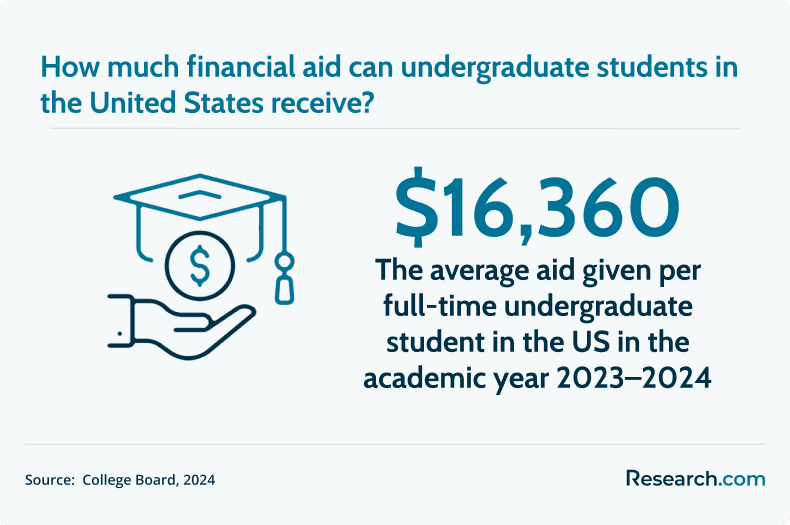
Online humanities students may be eligible for scholarships, grants, loans, work-study, employer tuition assistance, military education benefits, or institutional aid, depending on the school and the student’s circumstances. The most important first step is to confirm that the institution participates in federal student aid programs and that the online program is eligible.
Against The Grain (ATG) Artistic Scholarship
The Against The Grain (ATG) Artistic Scholarship is offered by Against The Grain (ATG) Productions. This scholarship program supports Asian American college students majoring in the performing arts, visual arts, journalism, and/or mass communications. Qualified recipients receive $1,000 for tuition and fees.
Media Fellows Scholarship
The Washington Media Scholars Foundation provides Media Fellows scholarships for students whose academic interests connect to advertising and public policy. Eligible fields include advertising, marketing, communications, political science, and strategic media. Awards may consider merit, financial need, and academic focus.
Call to Action Scholarship Program
The Call to Action Foundation offers scholarships of up to $25,000 per year for 4 years. Applicants must meet the following requirements:
- Be a graduating high school senior
- Be a resident of qualified states
- Have at least a 3.0 high school GPA
- File a Free Application for Federal Student Aid (FAFSA)
- Work toward earning an associate’s degree in 2 years or a bachelor’s degree in 4 years
Questions to ask about financial aid
- Is the online humanities program eligible for federal financial aid?
- What is the full cost of attendance, including fees and books?
- How many of my transfer credits will count toward the degree?
- Are scholarships available for online, transfer, adult, military, or part-time students?
- Will changing from full-time to part-time enrollment affect my aid package?
Admission Requirements for Online Humanities Degree Programs
Admission requirements vary by institution, but most online bachelor’s programs in humanities expect applicants to show readiness for college-level study. Transfer students may have additional documentation requirements because the school must evaluate previous credits.
| Requirement | What it means | Why it matters |
| High school diploma or GED | Applicants generally need proof of secondary education or an equivalent credential. | This is the basic academic requirement for bachelor’s-level admission. |
| Minimum GPA requirement | Some schools require a cumulative GPA, often around 2.0 to 2.5. | GPA standards help schools assess academic preparation. |
| Official transcripts | Students submit high school and/or prior college transcripts. | Transcripts verify academic history and allow the school to assess transfer credit. |
Students who want to combine humanities strengths with business analytics, leadership, or data-driven decision-making may later compare graduate business options such as the best online MBA in analytics programs.
Common Courses in an Online Humanities Degree
Humanities programs are interdisciplinary by design. They help students interpret texts, evaluate ideas, understand cultural and historical context, communicate clearly, and build evidence-based arguments. Exact course titles differ by school, but the subjects below are common.
- Ethics: Students examine moral reasoning, social responsibility, and how individuals and communities make judgments about right and wrong.
- Critical Thinking and Logic: These courses help students evaluate claims, identify weak reasoning, build stronger arguments, and interpret evidence carefully.
- Global Studies: Students explore culture, identity, globalization, tradition, and cross-cultural perspectives.
- Writing and Research: Coursework develops academic writing, source evaluation, research methods, documentation, and persuasive communication.
- Communication: Students practice written, oral, interpersonal, digital, and audience-centered communication for academic and professional settings.
If you want a degree that pairs humanities-style communication with technical training, you may also compare humanities programs with the top information technology bachelor's degrees.
Humanities Degree Concentrations and When to Choose Them
Many online humanities and liberal arts programs allow students to choose a concentration. The best concentration is not simply the one that sounds interesting; it should connect to your likely career path, graduate school plans, and the skills employers or admissions committees expect.
| Concentration | What you study | Good fit for students interested in |
| History | Historical periods, social change, cultural movements, evidence analysis, and interpretation of primary and secondary sources. | Education, museums, archives, public history, research, law preparation, policy work. |
| Communication | Message design, media, public speaking, persuasion, public relations, and organizational communication. | Public relations, journalism, marketing, nonprofit communications, internal communications. |
| Political Science | Government, public policy, political systems, civic institutions, international relations, and law-related topics. | Public administration, advocacy, policy research, law school preparation, government roles. |
| Psychology | Human behavior, mental processes, development, social behavior, and emotional health foundations. | Human services, graduate counseling preparation, community programs, research support. Students considering a Christian counseling degree may find this concentration useful when combined with appropriate graduate study. |
| Sociology | Social systems, inequality, institutions, communities, culture, group behavior, and research perspectives. | Community development, advocacy, social services, nonprofit work, research, public policy. |
The chart below visualizes employment levels for selected humanities-related occupations in the US in 2023, using 2025 data from the US BLS.
How to Choose the Best Fast-Track Online Humanities Degree
A fast online degree is only valuable if it is credible, affordable, manageable, and useful for your next step. Do not choose a program solely because it promises speed. A compressed schedule can help you graduate sooner, but it can also create workload pressure if you are working or managing other responsibilities.
Selection checklist
- Confirm accreditation: Choose a regionally accredited institution so your degree, credits, and financial aid eligibility are more likely to be recognized. Relevant accrediting bodies include the Higher Learning Commission (HLC), the New England Commission of Higher Education (NECHE), and the Southern Association of Colleges and Schools Commission on Colleges (SACSCOC).
- Review the curriculum and concentrations: Make sure the program includes subjects that support your goals, such as communication, history, psychology, political science, or legal studies. For example, students exploring how to become a digital marketing specialist may benefit from coursework in media, communication, audience research, and marketing analysis.
- Ask about transfer credits: A generous transfer policy can shorten completion time, but only if credits apply to major, general education, or elective requirements.
- Compare flexibility: Look for asynchronous courses, multiple start dates, part-time options, and clear policies for taking breaks if needed.
- Evaluate support services: Online students should have access to academic advising, tutoring, library resources, writing support, technical help, and career guidance.
- Calculate total cost: Include tuition, fees, books, technology costs, and the cost of extra terms if you study part time.
Common mistakes to avoid
| Mistake | Why it can hurt you | Better approach |
| Choosing the cheapest tuition without checking fees | Technology fees, course materials, and extra terms can raise the final cost. | Compare the full cost of attendance, not only cost per credit. |
| Assuming all transfer credits will count | Some credits may transfer as electives but not satisfy major or general education requirements. | Request a written transfer evaluation before committing. |
| Ignoring accreditation | Non-recognized programs may create problems with financial aid, transfer, employment, or graduate admission. | Verify institutional accreditation through official sources. |
| Choosing speed over fit | An accelerated format can become overwhelming if courses are reading- and writing-intensive. | Match the pace to your work schedule, family obligations, and study habits. |
| Relying only on rankings | A highly ranked program may not offer the concentration, support, price, or schedule you need. | Use rankings as one input, then compare curriculum, cost, outcomes, and support. |
Career Paths for Online Humanities Degree Graduates
Humanities graduates often pursue roles that rely on communication, interpretation, writing, research, relationship-building, cultural awareness, and problem-solving. Some careers may require additional credentials, certifications, graduate education, or state licensure, so students should review requirements early.
| Career path | How a humanities degree can help | Important note |
| Writers and Authors | Humanities coursework strengthens storytelling, research, analysis, editing, and audience awareness. Students comparing writing-focused programs may review online degrees in creative writing. | Portfolio quality and publishing experience can matter as much as the degree. |
| Kindergarten and Elementary School Teachers | Humanities courses can support reading, social studies, communication, and cultural understanding. | Public school teaching usually requires additional teacher certification. |
| Market Research Analysts | Humanities graduates can bring interpretation, qualitative analysis, communication, and consumer insight skills. | Quantitative research, statistics, and software skills may strengthen competitiveness. |
| Paralegals and Legal Assistants | Research, writing, legal studies, organization, and document analysis can support legal support roles. | Some employers prefer paralegal training or legal studies coursework. |
| Social and Community Service Managers | Sociology, psychology, ethics, and communication can support program coordination and community-focused leadership. | Experience in nonprofit, public service, or human services settings can be important. Some students may later explore a marriage and therapy career path if they pursue counseling-related graduate preparation. |
The chart below visualizes median annual wages for selected humanities-related occupations in the US in May 2024, using 2025 data from the US BLS.
Job Market Outlook for Humanities Graduates
The job market for humanities graduates depends heavily on the student’s concentration, work experience, internships, writing samples, technical skills, certifications, and location. A humanities degree is broad, so graduates often improve their prospects by building a portfolio, adding software or data skills, completing internships, or targeting a specific industry.
According to US BLS data cited for 2025:
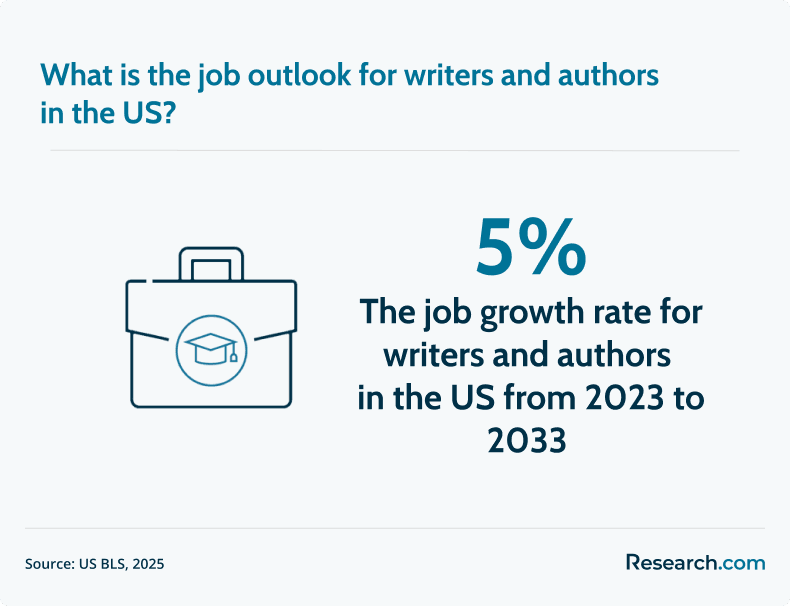
- Writers and Authors: Employment for writers and authors in the US is projected to grow by 5% from 2023 to 2033, with about 15,100 job openings each year on average over the decade.
- Kindergarten and Elementary School Teachers: Employment for kindergarten and elementary school teachers is projected to decline by 1% during the same period, while about 106,500 job openings are expected each year on average over the decade.
- Market Research Analysts: Employment for market research analysts is projected to grow by 8%, with about 88,500 job openings each year on average from 2023 to 2033.
Students interested in legal, compliance, policy, or governance work may also review whether Master of Legal Studies career opportunities fit their long-term plans.
Student Support Services to Look for in an Online Humanities Program
Support services can make the difference between enrolling and actually finishing. Online humanities students often complete reading-heavy, discussion-based, and writing-intensive courses, so access to academic and technical help matters.
- Academic advising: Advisors should help you map courses, understand prerequisites, plan transfer credits, and avoid unnecessary delays.
- Writing center support: Humanities students write frequently, so tutoring, paper feedback, citation help, and research support are especially useful.
- Library access: Strong digital libraries, databases, research guides, and librarian support are important for humanities coursework.
- Career services: Look for resume reviews, portfolio guidance, internship support, interview practice, and job search coaching.
- Technical support: Online students need reliable help with learning platforms, video tools, assignment submission, and access issues.
- Student community: Virtual events, discussion groups, mentoring, and online clubs can reduce isolation and support persistence.
Working adults who need affordability and flexibility may also compare options in Research.com’s guide to low cost online colleges for working adults.
Do Accelerated Online Humanities Degrees Improve Career Readiness?
Accelerated online humanities programs can improve career readiness when they combine faster degree completion with practical assignments, strong advising, writing-intensive work, career services, and opportunities to apply skills. Speed alone is not enough. A shorter program should still help you produce work samples, practice communication, conduct research, and connect coursework to a specific career direction.
Fast-track formats may be especially useful for adult learners who already have college credits and want to complete a bachelor’s degree for promotion, career change, graduate school admission, or personal advancement. However, because humanities courses often require substantial reading, writing, and discussion, students should be realistic about weekly workload before choosing an accelerated schedule.
For a broader comparison of compressed bachelor’s formats, review Research.com’s guide to accelerated online bachelor's degree programs.
What Graduates Say About Online Humanities Degree Programs
- Francis: "My online humanities program changed how I understood history, art, and philosophy. The mix of global classmates and thoughtful discussions made the coursework feel relevant instead of abstract."
- Mike: "I was unsure about studying humanities online, but the program pushed me to become a stronger writer and sharper thinker. Those skills helped me move into nonprofit communications."
- Camille: "The online format let me keep working and parenting while finishing my degree. Flexible classes and responsive professors helped me reconnect with literature, analysis, and ideas I had missed studying."
Are Online Humanities Degrees Accredited and Recognized?
Online humanities degrees can be fully recognized when they are offered by appropriately accredited institutions. Accreditation matters because it can affect federal financial aid eligibility, transfer credit acceptance, graduate school admission, employer recognition, and overall academic quality assurance.
Prospective students should verify institutional accreditation before applying. Do not rely only on a school’s marketing language. Confirm the accreditor, check whether the institution is in good standing, and ask whether the specific online program has any additional requirements that affect transfer or completion.
Students who plan to continue into graduate school may also compare advanced options such as 1 year masters programs, but they should first make sure their undergraduate degree comes from a recognized accredited institution.
How to Evaluate the ROI of an Online Humanities Degree
Return on investment for a humanities degree should be evaluated carefully because career outcomes vary by field, location, experience, and added skills. Instead of asking only whether the degree is “worth it,” compare the total cost of the program with the specific opportunities it may help you access.
ROI checklist
- Total program cost: Add tuition, required fees, books, technology costs, and the cost of any extra terms.
- Financial aid: Compare grants, scholarships, loans, employer assistance, and schools that participate in federal aid. Students looking for aid-eligible low-cost options can review online schools that accept FAFSA.
- Transfer credit value: The more credits accepted toward graduation, the lower your remaining cost may be.
- Career alignment: Check whether the curriculum supports a specific job direction, such as communications, teaching preparation, legal support, public service, or research.
- Work experience opportunities: Internships, capstone projects, portfolios, writing samples, and applied research can improve employability.
- Graduate school plans: If your goal requires a master’s degree, certification, or licensure, include those future costs in your planning.
- Salary and employment data: Use independent sources such as the US BLS and school-level outcomes where available, but do not treat any salary figure as guaranteed.
Key Insights
- An online humanities degree is strongest when it is tied to a plan. The degree builds flexible skills, but students should choose courses, electives, internships, and concentrations that point toward a career or graduate program.
- Accreditation is non-negotiable. A regionally accredited institution is important for financial aid, transfer credits, employer recognition, and future graduate study.
- Program length varies widely. A traditional full-time path often takes around 4 years, while transfer-friendly or accelerated programs may take 1.5 to 3 years. Part-time students may need 5 to 6 years.
- Cost per credit is only one part of affordability. Compare fees, transfer credit policies, residency pricing, aid eligibility, and the total number of credits you still need.
- Online and campus degrees serve different learners. Online programs work best for disciplined students who need flexibility; campus programs may be better for students who want in-person discussion, campus life, and face-to-face networking.
- Career outcomes depend on specialization and experience. Humanities graduates can pursue writing, education, research, communications, legal support, nonprofit, and public service paths, but some roles require additional credentials or technical skills.
- Do not choose a fast-track program only because it is fast. Make sure the workload is realistic and that the program still provides advising, writing support, career services, and meaningful academic depth.
References:
- Ma, J., Pender, M., & Oster, M. (2024). Trends in College Pricing and Student Aid 2024. CollegeBoard. https://research.collegeboard.org/media/pdf/Trends-in-College-Pricing-and-Student-Aid-2024-ADA.pdf
- US Bureau of Labor Statistics. (2025, April 18). Advertising, Promotions, and Marketing Managers. Occupational Outlook Handbook. https://www.bls.gov/ooh/management/advertising-promotions-and-marketing-managers.htm
- US Bureau of Labor Statistics. (2025, April 18). Kindergarten and Elementary School Teachers. Occupational Outlook Handbook. https://www.bls.gov/ooh/education-training-and-library/kindergarten-and-elementary-school-teachers.htm
- US Bureau of Labor Statistics. (2025, April 18). Lawyers. Occupational Outlook Handbook. https://www.bls.gov/ooh/legal/lawyers.htm
- US Bureau of Labor Statistics. (2025, April 18). Market Research Analysts. Occupational Outlook Handbook. https://www.bls.gov/ooh/business-and-financial/market-research-analysts.htm
- US Bureau of Labor Statistics. (2025, April 18). Paralegals and Legal Assistants. Occupational Outlook Handbook. https://www.bls.gov/ooh/legal/paralegals-and-legal-assistants.htm
- US Bureau of Labor Statistics. (2025, April 18). Social and Community Service Managers. Occupational Outlook Handbook. https://www.bls.gov/ooh/management/social-and-community-service-managers.htm
- US Bureau of Labor Statistics. (2025, April 18). Writers and Authors. Occupational Outlook Handbook. https://www.bls.gov/ooh/media-and-communication/writers-and-authors.htm
Other Things You Need to Know About Fast-Track Online Humanities Degree Programs
Yes, many of 2027's fastest online humanities degree programs offer accelerated timelines, allowing students to complete their degrees in as little as one year. These programs often require full-time study and may include summer courses to expedite graduation.
Yes, entrance requirements for 2027's fastest online humanities degree programs often include a high school diploma or equivalent, a minimum GPA, and sometimes standardized test scores like the SAT or ACT. Exact criteria vary by institution, so it's important to check with each program.
Yes. Many accelerated online humanities programs accept up to 60 transfer credits for a bachelor's degree, which can shorten completion time to about 12 to 18 months. Schools usually require official transcripts and a minimum GPA, often 2.0 or 2.5, for transfer review.