
2027 Fastest Online Bachelor's in History Degree Programs

Co-Founder and Chief Data Scientist
A fast online bachelor’s in history can be a smart option if you want to finish a degree without putting work, family, or military responsibilities on hold. The key decision is not simply “Which history program is fastest?” It is whether the program will accept your prior credits, fit your schedule, keep costs manageable, and help you turn historical research and writing skills into a practical career path.
History is often associated with teaching, museums, and archives, but the labor market is broader than that. Government data shows that 25% of historians work in professional, scientific, and technical services, while 23% work in state and local government. That means an online bachelor's in history can support careers in research, policy, law-related work, communications, public history, archives, and data-informed analysis.
This guide explains how fast online history degrees work, what they cost, how to compare accredited programs, and which career paths may make sense after graduation. It is designed for transfer students, working adults, veterans, career changers, and first-time college students who want a flexible humanities degree with real professional utility.
Quick answer: Is a fast online bachelor’s in history worth it?
A fast online bachelor’s in history is most worthwhile for students who can transfer previous college credits, need a flexible format, and want to build strong research, writing, source evaluation, and argumentation skills. Most programs still require 120 credits, so “fast” usually means accelerated terms, year-round enrollment, generous transfer policies, or prior learning credit rather than a shorter academic standard.
The degree is a good fit if you are aiming for careers in public policy, law school preparation, journalism, public history, archives, government, nonprofit management, corporate research, or strategic communications. It may be less suitable if you need a credential that leads directly to a licensed profession without graduate study.
Core benefits of a fast online bachelor’s in history
- Career flexibility: History graduates can apply research and analytical skills in law, policy, journalism, education, nonprofit work, archives, and public-facing cultural institutions.
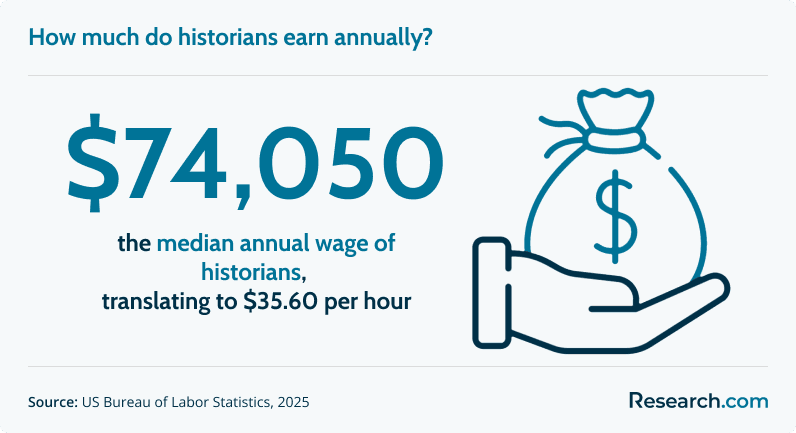
- Professional earning potential: The U.S. Bureau of Labor Statistics reports a median annual wage of $74,050 for historians, although actual salaries depend on job title, employer, location, experience, and graduate education.
- Scheduling flexibility: Online delivery can make it easier to complete a bachelor’s degree while working, caregiving, or relocating.
- Transfer-friendly completion: Students with an associate degree or prior college coursework may be able to finish faster if the program accepts a substantial number of transfer credits.
- Durable skills: Historical study strengthens evidence evaluation, persuasive writing, digital research, and the ability to explain complex events clearly.
What can I expect from a fast online bachelor’s in history?
You can expect a writing- and research-heavy degree focused on interpretation rather than rote memorization. A strong history program teaches you how to read primary sources, compare competing explanations, identify bias, build evidence-based arguments, and communicate conclusions in clear prose.
Most online history degrees include general education courses, broad surveys in U.S. and world history, historical methods, upper-division electives, and a senior seminar or capstone project. The work often involves essays, discussion posts, source analyses, annotated bibliographies, presentations, and a final research paper.
The fastest programs are usually not academically easier. Instead, they are structured for efficient completion through transfer credit, shorter terms, asynchronous coursework, year-round scheduling, or flexible enrollment options. Students who are self-directed and comfortable reading and writing independently tend to adapt best.
Who should consider this degree?
- Transfer students who want to turn previous credits into a completed bachelor’s degree.
- Working adults who need asynchronous or flexible coursework.
- Pre-law students who want intensive practice analyzing texts, evidence, and precedent.
- Students interested in public policy, government, archives, museums, journalism, or nonprofit work.
- Career changers who want a broad liberal arts credential with strong communication and research training.
Who may want a different path?
- Students who need a direct pathway into a licensed occupation should check whether another major is required.
- Students who dislike extensive reading and writing may find the workload challenging.
- Students seeking highly technical roles may need to pair history with data analytics, computer skills, cybersecurity, GIS, business, or another applied field.
- Students who want to become K-12 teachers should confirm whether the program includes teacher preparation and meets state requirements.
Where can I work with a fast online bachelor’s in history?
History graduates are not limited to classrooms and museums. The degree builds a skill set that employers use in many settings: investigating questions, organizing information, evaluating evidence, writing for specific audiences, and explaining why events unfolded the way they did.
| Career area | How history training applies | Typical roles to explore |
| Government and public policy | Researching laws, programs, communities, and historical context for decisions | Legislative aide, policy researcher, public affairs assistant |
| Law and compliance | Reading complex documents, comparing precedents, and building arguments from evidence | Paralegal, legal assistant, compliance coordinator |
| Archives and information management | Organizing records, preserving institutional memory, and making materials searchable | Archives assistant, records specialist, research assistant |
| Communications and journalism | Turning complex information into accurate, compelling narratives | Reporter, content strategist, public relations specialist |
| Public and digital humanities | Using historical knowledge to create exhibits, digital collections, podcasts, or educational media | Museum educator, digital archive assistant, public history coordinator |
| Research and intelligence | Identifying patterns, assessing source reliability, and preparing concise analytical reports | Research analyst, intelligence support specialist, market research assistant |
Digital humanities is especially relevant for students who want to combine historical thinking with technology. Work in this area may include digital archives, metadata, online exhibits, mapping projects, databases, and public education platforms.
How much can I make with a fast online bachelor’s in history?
Salary depends heavily on the role you pursue. The U.S. Bureau of Labor Statistics reports a median annual wage of $74,050 for historians, but many graduates do not hold the job title “historian.” They may work in policy, communications, legal support, research, public administration, education, or information management.
When evaluating salary potential, focus on the skills the degree gives you and the market you plan to enter. Research, writing, evidence assessment, and clear communication can support professional roles across sectors, but income is influenced by location, employer type, internships, technical skills, graduate education, and prior experience.
How to think about return on investment
- Compare total cost, not just tuition: Include fees, books, technology charges, and the number of credits you must still complete.
- Ask how many credits will transfer: Transfer credit can make the largest difference in both cost and speed.
- Look at career support: Internships, writing support, alumni networks, and advising can affect your ability to translate the degree into work.
- Plan for add-on credentials if needed: Some paths, such as archives, teaching, law, or advanced policy work, may require graduate education, certification, or state-specific requirements.
- Fastest Online Bachelor's in History Degree Programs for 2027
- How long does it take to complete a fast online bachelor's degree program?
- How does a fast online bachelor's degree compare to an on-campus program?
- What is the average cost of the fastest online bachelor's degree programs?
- What are the financial aid options for students enrolling in a fast online bachelor's degree program?
- What are the prerequisites for enrolling in a fast online bachelor's degree program?
- What courses are typically in a fast online bachelor's degree program?
- What types of specializations are available in fast online bachelor's degree programs?
- How can I verify the accreditation and quality of an online bachelor's degree program?
- What advanced education options are available after a fast online bachelor's degree?
- How to choose the best fast online bachelor's degree program?
- What career paths are available for graduates of fast online bachelor's degree programs?
- What is the job market for graduates with a fast online bachelor's degree program?
- How can interdisciplinary studies enhance your career opportunities?
- How can I ensure academic success in a fast online bachelor's degree program?Job market details
Fastest Online Bachelor's in History Degree Programs for 2027
The programs below are designed for students who want an online history degree with efficient completion options, transfer-friendly structures, or flexible scheduling. If you are comparing speed across fields, you may also want to look at how accelerated humanities programs differ from the fastest online bachelor's in mathematics degree programs, where course sequencing and quantitative prerequisites can affect completion time differently.
How Research.com evaluates these programs
Research.com developed this ranking to help students compare online bachelor’s in history programs using a transparent, data-informed process. Our team reviewed schools using Research.com’s established ranking methodology, with attention to program structure, completion speed, affordability, institutional quality, and student-relevant outcomes.
Program and institutional information was checked against established data sources, including the IPEDS database, Peterson’s database, the College Scorecard, and the National Center for Education Statistics.
| Rank | School and program | Program length | Credits | Cost per credit | Accreditation |
| 1 | University of Louisiana at Monroe Bachelor of Arts in History | 4 years | 120 | $613.40 | Southern Association of Colleges and Schools Commission on Colleges (SACSCOC) |
| 2 | American Public University Online Bachelor of Arts in History | 4 years | 120 | $350 | Higher Learning Commission (HLC) |
| 3 | University of Maine at Presque Isle Online History Degree | 3-4 years | 120 | $268.00 resident/Canadian, $457.00 non-resident | New England Commission of Higher Education (NECHE) |
| 4 | University of Illinois at Springfield Bachelor of Arts in History | 4 years | 120 | $299.50 resident, $632.00 non-resident | Higher Learning Commission (HLC) |
| 5 | Nicholls State University Bachelor of Arts in History | 4 years | 120 | $402.13 | Southern Association of Colleges and Schools Commission on Colleges (SACSCOC) |
| 6 | Arizona State University Online Bachelor of Arts in History | 4 years | 120 | $580 resident, $3,480 non-resident | Higher Learning Commission (HLC) |
| 7 | Valley City State University BA in History | 4 years | 120 | $232.76 resident, $260.70 Minnesota reciprocity, $290.95 Midwest student exchange program, $407.34 non-resident/international | Higher Learning Commission (HLC) |
| 8 | University of Central Florida Online History, BA | 4 years | 120 | $179.19 resident, $715.80 non-resident | Southern Association of Colleges and Schools Commission on Colleges (SACSCOC) |
| 9 | University of Memphis Bachelor of Arts in History Online | 4 years | 120 | $447 | Southern Association of Colleges and Schools Commission on Colleges (SACSCOC) |
| 10 | University of North Alabama BA or BS in History | 4 years | 120 | $340 | Southern Association of Colleges and Schools Commission on Colleges (SACSCOC) |
1. University of Louisiana at Monroe Bachelor of Arts in History
The University of Louisiana at Monroe offers a Bachelor of Arts in History built around liberal arts learning, historical knowledge, and evidence-based analysis. Students develop research and interpretation skills that can support pathways in law, journalism, public relations, civil service, and related fields.
- Program Length: 4 years
- Required Credits to Graduate: 120
- Cost per Credit: $613.40
- Accreditation: Southern Association of Colleges and Schools Commission on Colleges (SACSCOC)
2. American Public University Online Bachelor of Arts in History
American Public University’s Online Bachelor of Arts in History examines the people, events, and cultures that shaped modern societies. The program emphasizes critical reading, source evaluation, historical argumentation, and independent research that culminates in a major research paper.
- Program Length: 4 years
- Concentrations: General; American History; Global History; and European History
- Required Credits to Graduate: 120
- Cost Per Credit: $350
- Accreditation: Higher Learning Commission (HLC)
3. University of Maine Presque Isle Online History Degree
The University of Maine at Presque Isle offers an online history degree with year-round flexibility and advisor support. Students study major historical forces while strengthening interpretation, communication, and analytical skills for professional and academic settings.
- Program Length: 3-4 years
- Required Credits to Graduate: 120
- Cost per Credit: $268.00 resident/Canadian, $457.00 non-resident
- Accreditation: New England Commission of Higher Education (NECHE)
4. University of Illinois at Springfield Bachelor of Arts in History
The University of Illinois at Springfield provides a Bachelor of Arts in History that can be completed online or on campus. The program is particularly relevant for transfer students with at least 30 credit hours and includes training in primary-source analysis, historical narrative, and public-facing projects.
- Program Length: 4 years
- Concentrations: World History
- Required Credits to Graduate: 120
- Cost per Credit: $299.50 resident, $632.00 non-resident
- Accreditation: Higher Learning Commission (HLC)
5. Nicholls State University Bachelor of Arts in History
Nicholls State University’s online Bachelor of Arts in History focuses on modern America, Europe, and Asia. The program supports students preparing for graduate study or professional fields that require coherent writing, critical thinking, and awareness of major modern developments.
- Program Length: 4 years
- Required Credits to Graduate: 120
- Cost per Credit: $402.13
- Accreditation: Southern Association of Colleges and Schools Commission on Colleges (SACSCOC)
6. Arizona State University Online Bachelor of Arts in History
Arizona State University’s Online Bachelor of Arts in History studies human societies through political, social, economic, and cultural perspectives. The program is suited for students interested in law, business, education, and policymaking who want to strengthen evidence-based reasoning.
- Program Length: 4 years
- Required Credits to Graduate: 120
- Cost per Credit: $580 resident, $3,480 non-resident
- Accreditation: Higher Learning Commission (HLC)
7. Valley City State University BA in History
Valley City State University’s BA in History offers coursework in U.S., European, and World history. This non-teaching degree is designed for students considering law, government service, archival work, or graduate study and emphasizes research, precise writing, and critical analysis.
- Program Length: 4 years
- Required Credits to Graduate: 120
- Cost per Credit: $232.76 resident, $260.70 Minnesota reciprocity, $290.95 Midwest student exchange program, $407.34 non-resident/international
- Accreditation: Higher Learning Commission (HLC)
8. University of Central Florida – Online History, BA
The University of Central Florida’s Online History, B.A. helps students analyze the forces that shape societies and institutions. Coursework develops critical thinking, archival awareness, historical interpretation, and persuasive written communication.
- Program Length: 4 years
- Required Credits to Graduate: 120
- Cost per Credit: $179.19 resident, $715.80 non-resident
- Accreditation: Southern Association of Colleges and Schools Commission on Colleges (SACSCOC)
9. University of Memphis – Bachelor of Arts in History Online
The University of Memphis offers a Bachelor of Arts in History in online, campus-based, and hybrid formats. Students learn to evaluate primary sources, understand historical methods, compare interpretations, and present well-supported arguments.
- Program Length: 4 years
- Required Credits to Graduate: 120
- Cost per Credit: $447
- Accreditation: Southern Association of Colleges and Schools Commission on Colleges (SACSCOC)
10. University of North Alabama – BA or BS in History
The University of North Alabama offers a BA or BS in History with a foreign language component and a minor or second major. Students complete core work in World and U.S. history, then move into electives and a senior thesis.
- Program Length: 4 years
- Required Credits to Graduate: 120
- Cost per Credit: $340
- Accreditation: Southern Association of Colleges and Schools Commission on Colleges (SACSCOC)
How long does it take to complete a fast online bachelor's degree program?
Most online bachelor’s in history programs require 120 credits. A full-time student who starts with no college credit typically finishes in 4 years. The phrase “fast online bachelor’s degree” usually refers to how the school structures those credits, not to a lower graduation requirement.
Programs become faster when they accept transfer credits, allow year-round enrollment, offer shorter academic terms, or provide flexible course sequencing. This is similar to the way the fastest online bachelor's degree programs in sustainability may use compressed scheduling while still requiring students to complete the expected curriculum.
| Student situation | What affects speed most | What to ask before applying |
| No prior college credit | Course load, term length, summer enrollment, and general education requirements | Can I take courses year-round, and what is the recommended full-time plan? |
| Some prior college credit | How many credits transfer and whether they meet major or general education requirements | Can I receive a preliminary transfer evaluation before enrolling? |
| Associate degree holder | Articulation agreements, block transfer policies, and remaining upper-division requirements | How many credits will I still need after transfer? |
| Working adult | Asynchronous courses, part-time options, and course availability each term | Can I progress steadily without logging in at fixed class times? |
A recent survey found that a majority of people are drawn to history because they want to understand the present. A fast online format can help students act on that interest efficiently, but the first step should be a formal review of prior credits by the admissions or registrar’s office.
How does a fast online bachelor's degree compare to an on-campus program?
An accredited online bachelor’s in history should meet the same academic standards as the campus version. The major difference is delivery. Online students may complete readings, papers, discussions, exams, and research projects through a learning management system rather than in a physical classroom.
Employer acceptance is strongest when the degree comes from an accredited institution. Similar considerations apply in graduate fields such as the fastest online master's degree programs in educational counseling, where accreditation, field requirements, and student support matter more than the delivery format alone.
| Factor | Online history degree | On-campus history degree |
| Schedule | Often asynchronous or flexible, depending on the program | Usually follows set class meeting times |
| Interaction | Discussion boards, video meetings, email, and online office hours | In-person classroom discussion and campus events |
| Best for | Working adults, transfer students, remote learners, and students needing flexibility | Students who want daily campus structure and face-to-face engagement |
| Academic expectations | Reading, writing, research, and participation are still required | Reading, writing, research, and participation are still required |
| Main risk | Falling behind without a self-managed schedule | Less flexibility for work or family obligations |
Choose online if you need flexibility and can manage deadlines independently. Choose campus if you want routine, in-person mentorship, and access to physical archives, campus organizations, or local internships.
What is the average cost of the fastest online bachelor's degree programs?
The cost of an online bachelor’s in history varies widely. In the programs listed above, per-credit tuition ranges from $179.19 resident at the University of Central Florida to $3,480 non-resident at Arizona State University. American Public University lists $350 per credit, while other schools use resident, non-resident, reciprocity, or international rates.
Do not compare programs by tuition alone. Online students may also pay technology fees, course fees, graduation fees, transcript fees, and textbook or digital material costs. Students comparing short credentials, such as the fastest online medical billing and coding certificate programs, face a different cost structure because certificates usually require fewer credits than a bachelor’s degree.
Cost factors to verify before enrolling
- Per-credit tuition: Confirm whether your rate is resident, non-resident, online-only, military, or special-program pricing.
- Credits remaining: Your final cost depends on how many of the 120 credits you still need.
- Fees: Ask for a complete tuition and fee schedule, not just the advertised credit hour rate.
- Books and digital materials: History courses may require multiple texts, databases, or primary-source collections.
- Transfer credit limits: A low tuition rate may not save money if the school accepts fewer credits.
- Time to completion: Extending enrollment can increase indirect costs even when tuition is affordable.
How to evaluate ROI without overestimating salary
The BLS median annual wage of $74,050 for historians is a useful benchmark, but it should not be treated as a guaranteed outcome for every graduate. A realistic return-on-investment review should compare your net cost after aid with the roles you are actually targeting, the experience you already have, and whether your desired field requires graduate education.
What are the financial aid options for students enrolling in a fast online bachelor's degree program?
Students in accredited online bachelor’s degree programs generally have access to the same major financial aid categories as campus-based students. The first step is to confirm that the institution is accredited and participates in federal student aid programs.
This differs from some short-term, nondegree training options. For example, students comparing a bachelor’s program with fast online cybersecurity bootcamps should verify aid eligibility separately because not every bootcamp qualifies for federal aid.
- Free Application for Federal Student Aid: The FAFSA is used to determine eligibility for many federal, state, and institutional aid programs.
- Federal grants: Grants do not have to be repaid if students meet the requirements. The Pell Grant is the best-known federal grant for undergraduates with financial need.
- Federal student loans: These loans must be repaid with interest and may include subsidized or unsubsidized options.
- Scholarships: Schools, history departments, community organizations, and professional associations may offer awards based on merit, need, military status, transfer status, or academic interest.
- Institutional aid: Some universities provide online student discounts, transfer scholarships, or degree-completion grants.
- Public Service Loan Forgiveness: Graduates who work for qualifying government or nonprofit employers may be eligible after making 120 qualifying monthly payments, subject to federal program rules.
Steps to reduce the cost of an online history degree
- Complete the FAFSA as early as possible.
- Request a transfer credit evaluation from every school you are considering.
- Ask whether community college credits, military credits, AP credits, CLEP exams, or prior learning assessments are accepted.
- Compare net cost after grants and scholarships, not just sticker tuition.
- Ask whether you can take lower-cost general education courses elsewhere before transferring.
- Confirm whether part-time enrollment affects aid eligibility.
What are the prerequisites for enrolling in a fast online bachelor's degree program?
Admission requirements depend on whether you are a first-time college applicant or a transfer student. The process is similar to many online bachelor’s programs, including an accelerated online bachelor's degree in early childhood education, but history programs usually do not require a technical prerequisite sequence.
Requirements for first-time college students
- Completed undergraduate application.
- Official high school transcript or GED equivalent.
- Standardized test scores if required by the university.
- Personal essay or recommendation letters if requested.
- Proof of English proficiency for applicants who need it.
Requirements for transfer students
- Transfer application.
- Official transcripts from every college or university previously attended.
- Minimum GPA, often around 2.0 to 2.5, with higher requirements at some schools.
- Course descriptions or syllabi if the school needs them for transfer evaluation.
- Documentation for military, prior learning, or alternative credit if applicable.
A bachelor’s degree can also serve as a foundation for later specialization. Students exploring investigative or science-adjacent fields can compare history’s research emphasis with options discussed in guides such as what you can do with a forensic science degree.
What courses are typically in a fast online bachelor's degree program?
A public survey found that 66% of the public defines history as a collection of facts. College-level history is different. The main goal is to teach interpretation: how to evaluate evidence, understand context, identify patterns, and explain competing arguments.
Like fast online ESL graduate certificate programs, accelerated online history degrees often organize coursework so students build skills quickly and apply them in increasingly advanced assignments.
- U.S. history surveys: These courses introduce major political, social, cultural, and economic developments in the United States.
- World or global history surveys: Students study broad patterns across regions, empires, migrations, trade, conflict, and cultural exchange.
- Historical methods: This course teaches how historians frame questions, assess sources, use archives, and construct arguments. Evidence-based analysis is also relevant in fields with investigative standards, including those described in homicide detective qualifications.
- Historiography: Students learn how interpretations of the past change over time and how historians debate evidence.
- Upper-division electives: Topics may include American history, European history, global history, military history, modern Asia, cultural history, political history, or public history.
- Senior seminar or capstone: Many programs end with a major research project that requires independent inquiry and polished academic writing.
What types of specializations are available in fast online bachelor's degree programs?
A specialization helps you connect a broad history degree to a clearer career direction. Not every program offers formal concentrations, but students can often shape their focus through electives, minors, internships, and capstone topics.
| Specialization | Best for students interested in | Career connection |
| Public History | Museums, archives, historic preservation, and community history | Useful for students considering graduate work such as an affordable online master's in library science |
| American History | U.S. politics, society, law, culture, and public institutions | Relevant to government, journalism, policy research, and civic organizations |
| European or Global History | International affairs, diplomacy, global business, and cross-cultural analysis | Supports roles requiring historical awareness of regions and institutions |
| Digital Humanities | Archives, data, maps, online exhibits, digital collections, and educational media | Helps pair humanities research with technology and public engagement |
| Military History | Conflict, strategy, defense institutions, and security studies | Can support interest in defense, government, intelligence, or military-related research |
| Legal and Constitutional History | Law, courts, rights, governance, and legal institutions | Strong fit for pre-law students and those comparing history with fields covered in political science career options |
How specialization affects employment strategy
Choosing a specialization is not just an academic preference. It can help you target internships, writing samples, graduate programs, and employers. Public History and American History align well with government and cultural institutions. Digital Humanities can be useful for students who want to work with online collections, metadata, public education, or digital storytelling. Legal and Constitutional History can support law-related career goals.
How can I verify the accreditation and quality of an online bachelor's degree program?
Start by confirming institutional accreditation through a recognized accrediting body. Regional accreditation, such as HLC, SACSCOC, or NECHE, matters because it affects credit transfer, federal financial aid eligibility, graduate school recognition, and employer confidence.
Accreditation is only the first screen. You should also review faculty credentials, online student support, course availability, transfer policies, graduation requirements, internship options, library access, writing support, and career advising. Students comparing advanced online pathways can use similar quality checks when reviewing options such as the fastest EdD online programs.
Questions to ask before choosing an online history program
- Is the university regionally accredited?
- Will my diploma or transcript indicate online delivery?
- How many of my prior credits will apply to the 120-credit requirement?
- Are courses asynchronous, synchronous, or mixed?
- Are upper-division history courses offered often enough for me to graduate on time?
- Can online students complete internships, research projects, or public history experiences?
- What academic writing, library, and research support is available remotely?
- Does the program offer concentrations that match my career goals?
What advanced education options are available after a fast online bachelor's degree?
A bachelor’s in history can be a foundation for graduate education in several fields. Common next steps include master’s programs in history, public history, library and information science, museum studies, education, public administration, law, policy, international affairs, or archival studies.
Students interested in leadership roles in education or administration may compare graduate pathways such as the most affordable online doctorate in educational leadership programs. The best choice depends on whether you want deeper subject expertise, professional licensure, management preparation, or a research-focused academic route.
How to choose the best fast online bachelor's degree program?
The best program is the one that fits your credits, budget, schedule, and career plan. A school with a low tuition rate may not be the fastest option if it accepts fewer transfer credits. A highly flexible program may not be the best choice if it lacks the specialization you need.
The same decision logic applies to other accelerated credentials, including an accelerated online graduate certificate in early childhood education: speed is useful only when the credential is accredited, affordable, and aligned with your next step.
| Decision factor | Why it matters | Best action |
| Accreditation | Protects degree legitimacy, transferability, and aid eligibility | Verify the accreditor before applying |
| Transfer credits | Usually the biggest factor in faster completion | Request a preliminary credit evaluation |
| Course format | Determines whether the program fits your work and family schedule | Ask whether courses are asynchronous or require live attendance |
| Specializations | Helps connect the degree to a target career field | Review electives, faculty expertise, and capstone options |
| Total cost | Prevents surprises beyond advertised tuition | Compare tuition, fees, books, and aid packages |
| Student support | Online students need accessible advising, library help, and writing support | Ask how support works for remote learners |
Common mistakes to avoid
| Mistake | Why it can hurt you | Better approach |
| Choosing the cheapest tuition without checking transfer credit | You may pay for more credits than expected | Compare your remaining credits at each school |
| Assuming “online” means self-paced | Some courses have live meetings or strict weekly deadlines | Confirm synchronous and asynchronous requirements |
| Ignoring accreditation | Credits may not transfer, and aid or graduate school options may be limited | Verify recognized institutional accreditation |
| Relying only on rankings | A ranked program may not match your goals or schedule | Use rankings as a shortlist, then evaluate fit |
| Waiting to plan career skills | A broad humanities degree works best when paired with a clear portfolio | Build writing samples, internships, digital projects, or research experience early |
| Assuming salary outcomes are guaranteed | Pay depends on role, location, employer, and experience | Research specific jobs in your region and target sector |
What career paths are available for graduates of fast online bachelor's degree programs?
A history degree is best understood as a skill-based liberal arts degree. It teaches students to investigate, interpret, write, and communicate. Those abilities can lead to several professional directions, especially when students add internships, minors, certificates, or graduate study.
Legal and policy analysis
History students spend years learning how to interpret documents, compare perspectives, and build evidence-based arguments. Those skills align well with law-related work, policy research, legislative offices, advocacy organizations, and public administration.
Archives, records, and information management
Organizations need people who can preserve records, organize information, and make materials usable for researchers, employees, and the public. A history degree can support entry-level work in records management or archives, though advanced roles may require graduate study.
Strategic communications and journalism
History students learn to explain complicated events accurately and persuasively. That training can support roles in journalism, public relations, nonprofit communications, content strategy, and institutional storytelling.
Research and intelligence analysis
Historical research requires careful source evaluation, pattern recognition, and concise reporting. Those abilities overlap with analytical roles in government, business, and public safety. Students interested in investigative analysis can compare related expectations in crime analyst job requirements.
Public and digital humanities
Public history brings scholarship to audiences outside the classroom. Digital humanities adds tools such as online archives, maps, databases, podcasts, and interactive exhibits. This path is well suited to students who want creative, technical, and educational work.
What is the job market for graduates with a fast online bachelor's degree program?
The job market for history graduates is broader than the job title “historian.” The U.S. Bureau of Labor Statistics projects job growth for historians to be on par with the average for all occupations, but many graduates apply their skills in other fields. Workforce data on history graduates and historians shows how widely the major can connect to different sectors.
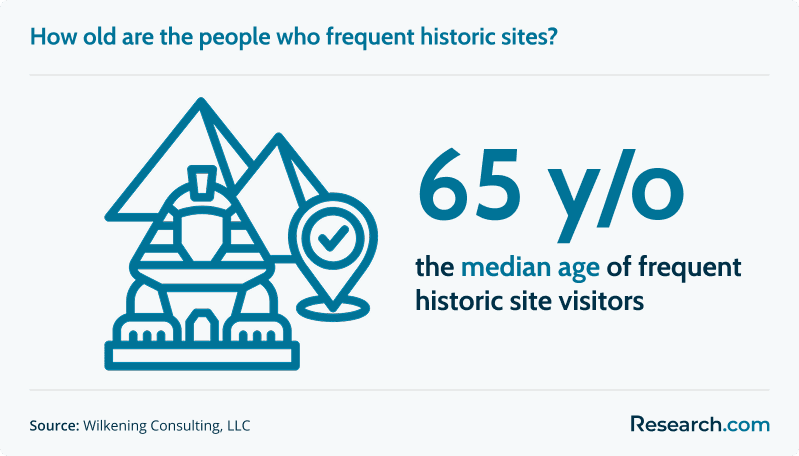
Public engagement is one area where history graduates can add value. With the median age of visitors to historic sites being 65, museums, archives, and cultural organizations need professionals who can reach younger audiences through digital content, interactive programming, and community-centered interpretation.
The degree can also support work that requires careful observation, documentation, and reporting. Those abilities are relevant in adjacent investigative fields, including roles described in guides on the steps to become a crime scene technician, though specific technical or legal requirements vary by occupation.
Current trends affecting history graduates
- Digital archives and online collections: More historical materials are being digitized, increasing the value of metadata, database, and digital exhibit skills.
- Demand for source evaluation: Employers need workers who can assess credibility, context, and evidence in information-heavy environments.
- Interdisciplinary hiring: History pairs well with policy, data analysis, communications, law, education, cybersecurity, and public administration.
- Public history modernization: Cultural institutions need new ways to engage younger and more diverse audiences.
- Graduate credential stacking: Some students use a history bachelor’s as a base for law school, library science, education, public administration, or doctoral study.
How can interdisciplinary studies enhance your career opportunities?
History becomes more marketable when paired with another field. A student interested in law might add political science or legal studies. A student drawn to archives might add information science or digital humanities. A future communicator might add journalism, public relations, rhetoric, or media production.
Communication-focused study can be especially useful because history graduates often succeed by explaining complex material to different audiences. Students exploring specialized communication fields can compare how graduate options such as affordable online master's in speech pathology programs differ from humanities-based communication pathways. Speech pathology has distinct prerequisites and professional expectations, so it should be evaluated as a separate career route rather than a simple add-on.
Strong pairings for a history major
- History plus political science: Useful for policy, law, campaigns, government, and civic organizations.
- History plus data analytics: Useful for digital humanities, intelligence analysis, research, and consulting.
- History plus communications: Useful for journalism, public relations, content strategy, and nonprofit outreach.
- History plus library science: Useful for archives, records, museums, and information management.
- History plus philosophy: Useful for logic, ethics, argumentation, and graduate study preparation. Students can compare this route with fast online philosophy degree programs.
How can I ensure academic success in a fast online bachelor's degree program?
Success in an accelerated online history program depends on consistency. The workload is reading- and writing-intensive, so waiting until the end of the week can quickly create a backlog. Build a weekly routine that includes reading time, note-taking, discussion participation, writing drafts, and revision.
- Create a fixed study calendar: Treat online coursework like scheduled work shifts.
- Read actively: Take notes on argument, evidence, author perspective, and historical context.
- Start papers early: Historical writing improves through drafting, feedback, and revision.
- Use the library: Online students should learn how to access databases, primary-source collections, and librarian support.
- Meet with advisors: Confirm that every course you take counts toward your degree plan.
- Build a portfolio: Save strong research papers, digital projects, presentations, and writing samples for employers or graduate applications.
- Ask for feedback: Use writing centers, faculty office hours, and peer review before final deadlines.
Key Insights
- A fast online bachelor’s in history usually still requires 120 credits; speed comes from transfer credit, flexible terms, and efficient course sequencing.
- The degree is strongest for students who want research, writing, source evaluation, and argumentation skills they can apply in law, policy, communications, archives, public history, and analytical roles.
- The U.S. Bureau of Labor Statistics reports a median annual wage of $74,050 for historians, but graduates should evaluate salary by target occupation rather than assuming a single outcome.
- Career options extend beyond traditional teaching and museum roles; 25% of historians work in professional, scientific, and technical services, and 23% work in state and local government.
- Accreditation is nonnegotiable. It affects financial aid, credit transfer, graduate school eligibility, and employer trust.
- Transfer students should request credit evaluations before applying because accepted credits can change both graduation timeline and total cost.
- Specializations such as Public History, American History, Digital Humanities, Military History, and Legal and Constitutional History help connect academic interests to specific career directions.
- Students who want the best ROI should pair the degree with internships, digital skills, writing samples, language skills, data tools, or a planned graduate pathway.
References:
- Fairbank, Maslin, Maullin, Metz & Associates (FM3), & American Historical Association (AHA). (2021, August). History, the Past, and Public Culture in the United States: A Survey of the American Public [Report]. American Historical Association report.
- Schmidt, B. M. (2024, April). Tracking undergraduate history enrollments in 2023. American Historical Association Perspectives.
- U.S. Bureau of Labor Statistics. (2023, September 6). Historians. Occupational Outlook Handbook.
- University of Wisconsin–Madison. (n.d.). Why history? Department of History.
- Wilkening Consulting. (2024, February 28). Breaking down visitation by museum type: A 2024 annual survey of museum-goers data story. American Alliance of Museums.
Other Things You Should Know About Online Bachelor's in History Degree Programs
In 2027, institutions like Southern New Hampshire University and Liberty University offer some of the fastest online Bachelor's in History programs. These programs stand out for their accelerated formats, which allow students to complete degrees in as little as three years, while maintaining strong curricula and flexible scheduling.
To complete an accelerated online Bachelor's in History in 2027, students typically need between 120 to 126 credit hours. Programs often allow students to transfer previous credits, reducing the total time needed to graduate efficiently.
Most accelerated online history bachelor’s programs require 30 to 45 credits of general education, including composition, college-level math, natural science, and humanities. These courses are usually taken before upper-division history seminars, and transfer credits from regionally accredited schools often reduce the total time to graduation.


