2027 Most Affordable Online History Degree Programs

Co-Founder and Chief Data Scientist
Choosing an affordable online history degree is not just about finding the lowest tuition. The better question is whether the program is accredited, flexible enough for your schedule, strong enough academically, and practical enough to support your career goals after graduation. This guide is designed for prospective students comparing online history bachelor’s programs, adult learners returning to college, transfer students, military-affiliated learners, and anyone who wants a humanities degree with strong research, writing, and analytical training.
You will learn which affordable online history programs stand out for 2027, how online and campus-based programs compare, what costs to expect, what financial aid options may apply, which careers history graduates commonly pursue, and how to decide whether this degree is a smart investment for your goals.
Quick Answer: Is an Online History Degree Worth Considering?
An online history degree can be a strong option if you want a flexible bachelor’s program that develops research, writing, critical thinking, cultural analysis, and communication skills. It can prepare graduates for roles in archives, museums, education, research, records management, public service, communications, and other fields that value evidence-based analysis.
- The most affordable programs in this ranking include annual tuition figures starting at $5,694 and $6,624.
- Most bachelor’s programs require 120 credits and are designed to take about four years, although some online options may be completed faster.
- Salary outcomes vary widely by job title, employer, location, education level, and experience. Listed annual salaries include $86,280 for historians, $54,400 for archivists, $71,800 for curators, and $133,400 for records managers.
- Students should confirm institutional accreditation, transfer credit rules, online fees, internship options, and whether the degree supports their intended career path before enrolling.
What are the benefits of getting an online history degree?
- An online history degree can support several career directions, including historian, museum curator, archivist, librarian, data analyst, intelligence analyst, educator, researcher, and records manager.
- History programs train students to evaluate evidence, compare perspectives, write clearly, and understand how past events shape present-day institutions and conflicts. These skills are useful in education, government, business, public policy, communications, and nonprofit work.
- Online delivery can make a history degree more accessible for working adults, parents, military students, transfer students, and learners who do not live near a campus with the right program.
- Students may save money by avoiding relocation, commuting, and some campus-based expenses, although tuition, fees, books, technology costs, and residency requirements still need careful review.
What can I expect from an online history degree program?
An online history degree usually combines broad survey courses with upper-level seminars, research methods, writing-intensive assignments, and electives in specific regions, eras, or themes. Students examine primary sources, compare historical interpretations, analyze social and political change, and learn to build arguments using evidence.
Many online programs use asynchronous courses, which allow students to complete weekly readings, lectures, discussions, and assignments on a flexible schedule. Some programs also include synchronous sessions, hybrid requirements, capstone projects, research papers, internships, or senior theses. The best programs make online students part of the academic community through library access, faculty advising, tutoring, career services, digital archives, and peer discussion.
Where can I work with an online history degree?
History graduates work in more places than museums and classrooms. The degree is especially useful in roles that require research, writing, documentation, public interpretation, policy analysis, cultural literacy, or careful handling of records.
| Work setting | Possible roles | Why history training fits |
| Museums, galleries, and cultural organizations | Curator, exhibit assistant, collections assistant, museum educator | Historical interpretation, artifact context, public communication, and research skills |
| Libraries and archives | Archivist, records assistant, special collections staff, digital archive associate | Source evaluation, cataloging, preservation awareness, and documentation skills |
| Government and public agencies | Researcher, policy assistant, records manager, analyst | Ability to review evidence, summarize complex issues, and understand institutional history |
| Education | Teacher, curriculum assistant, postsecondary instructor with advanced education | Subject knowledge, writing ability, and capacity to explain historical change |
| Private sector and nonprofits | Communications specialist, researcher, analyst, consultant, content writer | Research, writing, critical thinking, and project organization |
Traditional history-related positions include historians, archivists, curators, records managers, researchers, and educators. However, graduates may also apply their skills in technology, communications, consulting, publishing, law-related roles, intelligence analysis, and business research.
How much can I make with an online history degree?
Salaries for history graduates depend heavily on the role, industry, location, employer, credentials, and years of experience. The degree alone does not guarantee a specific income, and some history-related careers require graduate education or additional certification.
| Career path | Listed annual salary | Important note |
| Historian | $86,280 | Many professional historian roles require a master’s degree or doctorate. |
| Archivist | $54,400 | Graduate study in history, archival studies, or library science may improve competitiveness. |
| Curator | $71,800 | Museum roles often value internships, collections experience, and subject specialization. |
| Records manager | $133,400 | Records and information governance roles may reward technical, compliance, and management skills. |
| Researcher | $93,750 | Research roles vary widely across academia, government, nonprofits, and private industry. |
| Educator | $59,166 | Teaching roles may require state licensure, a master’s degree, or other credentials depending on level and location. |
Several factors can change salary expectations:
- Education level: Postsecondary teaching, advanced research, law, and senior education roles often require graduate study.
- Employer and location: Large institutions, government agencies, metropolitan employers, and specialized private-sector roles may pay differently than smaller organizations or rural employers.
- Experience: Entry-level roles typically pay less than mid-career or senior positions that involve project leadership, collections management, policy work, or supervision.
- Complementary skills: Digital archiving, data analysis, grant writing, public history, teaching credentials, or records management experience can expand career options.
- Most Affordable Online History Degree Programs for 2027
- How long does it take to complete an online history degree program?
- How does an online history degree program compare to an on-campus program?
- What is the average cost of an online history degree program?
- What are the financial aid options for students enrolling in an online history degree program?
- What are the prerequisites for enrolling in an online history degree program?
- What courses are typically in an online history degree program?
- What types of specializations are available in an online history degree program?
- How to Choose the Best Online History Degree Program
- How does an online history degree compare to other things to study in college?
- How do online history degree programs maintain academic quality and accreditation?
- Are online history degrees well-suited for non-traditional learners and seniors?
- Do employers value online history degrees?
- What challenges might students face in online history degree programs?
- How can additional certifications enhance an online history degree?
- What is the return on investment for an online history degree?
- How can experiential learning boost career readiness in online history degree programs?
- What career paths are available for graduates of an online history degree program?
- What are the career advancement opportunities with an online history degree?
- What is the job market for graduates with an online history degree?
- How can an online history degree help in developing transferable skills for diverse career paths?
- How can networking and mentorship opportunities accelerate career growth for online history graduates?
List of the Most Affordable Online History Programs for 2027
How do we rank schools?
Cost is one of the biggest concerns for online students, but a low price is only helpful when the program also offers academic quality, credible accreditation, and student support. Research.com developed this ranking to highlight affordable online history degree options for 2027 using current and comprehensive data sources, including:
- The Integrated Postsecondary Education Data System (IPEDS) database
- Peterson’s database, including the Distance Learning Licensed Data Set
- College Scorecard database
- National Center for Education Statistics
The ranking also considers factors such as graduation rate, student-faculty ratio, and program focus. Details about Research.com’s ranking process are available on this methodology page.
1. Clayton State University
Clayton State University offers a Bachelor of Arts in History that gives students broad exposure to historical study across multiple periods and themes. The curriculum emphasizes research, interpretation, and communication, with opportunities that may support careers in education, public service, business, and related fields.
- Program Length: 4 years
- Tracks/concentrations: N/A
- Annual tuition listed for this ranking: $5,694
- Required Credits to Graduate: 120
- Accreditation: Southern Association of Colleges and Schools Commission on Colleges (SACSCOC)
2. Eastern New Mexico University (Main Campus)
Eastern New Mexico University offers online Bachelor of Arts and Bachelor of Science options in History. The program includes U.S., European, and non-Western history while building written communication, oral communication, critical analysis, and problem-solving skills for graduate study or a range of career paths.
- Program Length: 4-5 years
- Tracks/concentrations: N/A
- Annual tuition listed for this ranking: $6,624
- Required Credits to Graduate: 120
- Accreditation: Higher Learning Commission (HLC)
3. Fort Hays State University
Fort Hays State University provides an online Bachelor of General Studies with a Historical Studies focus. This option is useful for students who want a flexible, interdisciplinary degree that includes history coursework but is not structured as a traditional single-discipline history major.
- Program Length: N/A
- Tracks/concentrations: Historical Studies (combination of 21 history courses)
- Annual tuition listed for this ranking: $6,806
- Required Credits to Graduate: 120
- Accreditation: HLC
4. University of Alaska Fairbanks
The University of Alaska Fairbanks offers an online Bachelor of Arts in History that examines global and regional issues through courses such as East Asian Civilization, U.S. History, and Western Civilization Before 1500. Students complete advanced research and critical analysis, including a senior thesis capstone.
- Program Length: 4 years
- Tracks/concentrations: Special emphasis on America, East Asia, Europe, and the North
- Annual tuition listed for this ranking: $7,020
- Required Credits to Graduate: 120
- Accreditation: Northwest Commission on Colleges and Universities (NWCCU)
5. Southern Utah University
Southern Utah University offers an online Bachelor of Science in History that focuses on human cultures, inquiry, analysis, critical thinking, and communication. The 120-credit program can be completed in less than three years and uses Canvas for asynchronous, synchronous, and hybrid online learning. Students have access to career services, disability support, an online library, and tutoring.
- Program Length: less than 3 years
- Tracks/concentrations: N/A
- Annual tuition listed for this ranking: $7,200
- Required Credits to Graduate: 120
- Accreditation: NWCCU
6. Valley City State University
Valley City State University offers an online Bachelor of Arts in History built around U.S., European, and World history. Students complete 43 credits in history courses, including U.S. history, world civilizations, historiography, and non-Western history topics, along with nine credits in social science electives and a senior capstone.
- Program Length: less than 3 years
- Tracks/concentrations: N/A
- Annual tuition listed for this ranking: $7,955
- Required Credits to Graduate: 120
- Accreditation: HLC
7. Nicholls State University
Nicholls State University offers a Bachelor of Arts in History for students who want online access while managing full-time work or other responsibilities. The 120-credit program uses asynchronous and synchronous delivery and includes American, European, and non-Western history.
- Program Length: 4 years
- Tracks/concentrations: N/A
- Annual tuition listed for this ranking: $8,250
- Required Credits to Graduate: 120
- Accreditation: SACSCOC
8. University of Idaho
The University of Idaho offers Bachelor of Arts and Bachelor of Science degrees in History. Students build historical knowledge along with research, writing, problem-solving, and critical thinking skills. The program can support future work or study in fields such as business, education, medicine, law, and agriculture.
- Program Length: 4 years
- Tracks/concentrations: N/A
- Annual tuition listed for this ranking: $8,340
- Required Credits to Graduate: 120
- Accreditation: NWCCU
9. University of Maine at Presque Isle
The University of Maine at Presque Isle offers an online Bachelor of Arts in History and Political Science with an emphasis in history. The interdisciplinary curriculum examines historical and political forces through topics such as contemporary conflicts, ancient cultures, American and European history, Native American history, and historical methods.
- Program Length: 4 years
- Tracks/concentrations: History
- Annual tuition listed for this ranking: $8,400
- Required Credits to Graduate: 120
- Accreditation: New England Commission of Higher Education (NECHE)
10. Thomas Edison State University
Thomas Edison State University offers an online Bachelor of Arts in History designed with adult learners in mind. The program can support career change, advancement, graduate study, or personal enrichment by combining a liberal arts foundation with deeper study of selected historical periods and themes.
- Program Length: 4 years
- Tracks/concentrations: N/A
- Annual tuition listed for this ranking: $9,278
- Required Credits to Graduate: 120
- Accreditation: Middle States Commission on Higher Education (MSCHE)
What online history graduates say about the experience
-
: "
"Earning my history degree online allowed me to balance my full-time job and family commitments while pursuing my passion for history. The program's flexibility let me study at my own pace, and the comprehensive curriculum deepened my understanding of world events." – Alex
"
-
: "
"The online history program provided me with an engaging and interactive learning experience, despite not being in a traditional classroom. The access to a wealth of digital resources and supportive faculty made my academic journey both enriching and enjoyable." – Maria
"
-
: "
"Studying history online was a transformative experience that broadened my critical thinking skills and historical knowledge. The ability to connect with classmates and professors from around the world added a unique and diverse perspective to my education." – James
"
Key Findings
- Affordable online history programs in this list include options with annual tuition of $5,694 at Clayton State University and $6,624 at Eastern New Mexico University.
- Online history programs can work well for students who need flexible scheduling, including asynchronous, part-time, and accelerated formats.
- Career options include historian, curator, archivist, librarian, data analyst, intelligence analyst, records manager, educator, researcher, and writer.
- Listed salaries vary by role, ranging from $54,400 for archivists to $133,400 for records managers.
- Financial aid may include federal aid, scholarships, institutional aid, military benefits, employer tuition reimbursement, transfer credits, and state-specific aid.
- Employment of historians is projected to grow by 3% from 2022 to 2032, while employment for postsecondary teachers is expected to grow by 8% during the same period.
How long does it take to complete an online history degree program?
Completion time depends on the degree level, transfer credits, enrollment pace, course availability, and whether the program offers accelerated terms. Typical timelines include:
| Degree level | Typical completion time | Best fit |
| Associate degree | About two years | Students seeking lower-cost general education and introductory history coursework before transfer |
| Bachelor's degree | About four years | Students pursuing entry-level professional roles or graduate school preparation |
| Master's degree | About two years | Students targeting teaching, research, archival, museum, or advanced public history roles |
| Doctorate | Four to seven years | Students pursuing advanced academic research, university teaching, or specialized scholarship |
Accelerated online programs can shorten the path if students can handle heavier workloads. This is similar to other fast-paced options, including online history programs, fast-track Master of Business Administration (MBA) programs, and a 2-year computer science degree online.
If speed is a priority, compare course schedules, transfer policies, and workload expectations in fast-track accelerated degree programs before committing.
How does an online history degree program compare to an on-campus program?
Online and on-campus history degrees often share the same academic expectations, but the student experience can be very different. The right choice depends on your schedule, learning style, budget, and need for in-person networking.
| Factor | Online history degree | On-campus history degree |
| Curriculum | Often mirrors the campus curriculum, including readings, research, papers, and discussions | Typically includes the same academic content with in-person class meetings |
| Diploma | The awarded degree usually does not state that the program was completed online | The awarded degree reflects the same institutional credential |
| Flexibility | Better for students balancing work, caregiving, military service, or location constraints | Better for students who prefer fixed schedules and face-to-face learning |
| Interaction | Requires intentional participation in discussion boards, video meetings, office hours, and online groups | Offers easier access to informal conversations, campus events, and in-person collaboration |
| Access | Lets students consider schools outside their local area | Usually limited by commuting distance, relocation plans, or campus housing |
| Cost considerations | May reduce commuting, relocation, housing, and meal-plan expenses | May involve higher transportation and living costs, depending on the student’s situation |
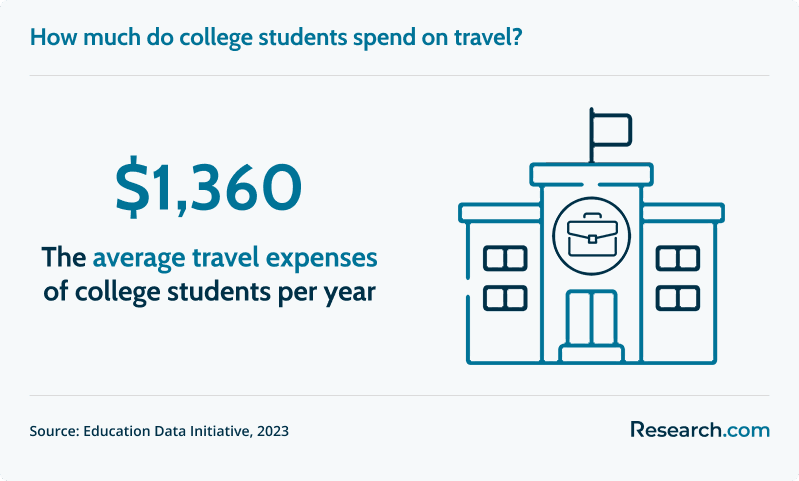
Students who commute to college for in-person classes incur $1,360 per year in transportation costs that online students avoid. Students attending in-person classes also pay $600 more for a campus meal plan compared to preparing meals at home for a year.
What is the average cost of an online history degree program?
Based on our research, the average cost of an online history degree program is approximately $46,400 for a four-year degree. However, the actual cost can be higher or lower depending on school type, residency status, transfer credits, fees, and pace of completion.
Several cost drivers deserve close attention:
- Private institutions: Private schools generally charge higher tuition than public schools. Private institutions charge an average of $60,593 for an online degree compared to $185,252 for an in-person degree. An online degree from a public university costs roughly $54,183, compared to $85,348 for the same degree in person.
- Out-of-state tuition: Public universities may charge more to nonresident students, although some online programs offer flat online rates.
- Technology and online fees: Online students may pay extra fees for platforms, proctoring, digital services, or virtual course tools.
- Books and materials: History courses often require books, document collections, database access, or digital texts. Costs vary by course.
- Transfer credit rules: A generous transfer policy can reduce the number of credits you must complete at the institution. Restrictive policies can extend time and increase cost.
- Program length: More semesters or additional credits can raise the total price.
- Campus requirements: Some online programs include orientations, residencies, or in-person experiences that add travel and lodging expenses.
The chart below shows average per-credit-hour tuition for private and public four-year institutions.
Students looking for affordable and faster pathways can also compare cheap and quick online degrees, especially if their priority is entering the workforce quickly.
What are the financial aid options for students enrolling in an online history degree program?
Online history students may qualify for many of the same aid sources as campus students, provided the school and program meet eligibility requirements. Start with the FAFSA, then compare school-based, employer-based, military, state, and private funding options.
- Federal financial aid: Eligible online students may access federal aid, including the Pell Grant.
- Scholarships: Schools, foundations, historical societies, professional organizations, and community groups may offer merit-based or need-based awards.
- Institutional aid: Colleges may provide grants, loans, work-study opportunities, or online student discounts.
- Transfer credits: Applying previous credits can reduce the number of courses you must pay for.
- Military benefits: Eligible service members, veterans, and family members may use programs such as the GI Bill.
- Private loans: Private lenders may cover funding gaps, but terms, rates, and repayment protections differ from federal loans.
- Employer tuition reimbursement: Some employers help pay for degrees that improve writing, research, communication, compliance, or analytical skills.
- State-specific aid: Some states offer grants, scholarships, or tuition programs that may apply to online learners.
What are the prerequisites for enrolling in an online history degree program?
Admission requirements vary by school and whether you are applying as a first-year student, transfer student, adult learner, or degree-completion student. Common requirements include:
- Transferable associate degree or higher: Some degree-completion programs prefer or require prior college credits.
- Minimum grade point average: Schools may require a GPA ranging from 2.0 to 3.0 or higher.
- Standardized tests: Some colleges may request SAT or ACT scores, while others use test-optional or test-free admissions.
- General education coursework: Students may need English, social science, natural science, mathematics, fine arts, or humanities credits.
- Transfer credit evaluation: Prior college work must usually be reviewed course by course to determine applicability.
- Prior learning assessment: Some schools award credit for military training, professional experience, exams, or portfolios.
- Online readiness requirements: Programs may require access to a reliable computer, internet, learning management system, and proctoring tools.
What courses are typically in an online history degree program?
Online history programs commonly combine survey courses, historical methods, regional history, thematic electives, and research-based writing. Students learn to interpret primary sources, evaluate secondary scholarship, and explain change over time.
- The American Experience I and II: These courses examine U.S. development from discovery to Reconstruction and from Reconstruction to the present, including cultural, intellectual, political, economic, religious, racial, and diplomatic history.
- World History: These courses introduce major global developments across regions and time periods, helping students connect historical events to contemporary society.
- World Civilization I and II: Students study human cultures and institutions across Western and non-Western civilizations from ancient periods to the modern era.
- Historical and Cultural Studies: These courses explore topics such as society and environment, social movements, political change, cultural conflict, and the continuing influence of past events.
- Historical Methods or Historiography: Many programs teach students how historians ask questions, evaluate sources, build arguments, and engage with scholarly debate.
- Capstone or senior thesis: Advanced students may complete a major research project that demonstrates source analysis, writing, and historical interpretation.
What types of specializations are available in an online history degree program?
Specializations help students connect historical interests with career goals. Availability varies by school, so review the actual course rotation before enrolling.
| Specialization | What it covers | Career relevance |
| American History | Colonization, independence, domestic policy, social change, war, reform, and modern U.S. history | Teaching, public history, government research, museums, and civic education |
| European History | Middle Ages, Renaissance, revolutions, imperialism, World War I and II, and modern Europe | Graduate study, teaching, museum work, and international research |
| Ancient History | Ancient civilizations such as Greece and Rome | Classical studies, archaeology-related pathways, education, and museum support roles |
| Labor History | Labor movements, worker rights, unions, industrial change, and social policy | Policy research, labor organizations, advocacy, public history, and nonprofit work |
| Digital History | Digital archives, databases, mapping, online exhibits, and technology-supported historical research | Digital humanities, archiving, content strategy, public history, and research support |
How to Choose the Best Online History Degree Program
The best online history degree is the one that fits your budget, transfer profile, career direction, learning style, and need for support. Use the following checklist before applying.
- Verify accreditation: Choose an institution accredited by a recognized accrediting agency. If you are comparing online schools, review what online schools are nationally accredited and confirm the school’s current status through official sources.
- Compare the curriculum: Look beyond the degree title. Check whether the program offers the historical regions, methods courses, electives, capstones, or public history experiences you want.
- Review graduation and retention rates: These indicators can help you understand student persistence and completion, though they should not be the only factors.
- Ask about faculty access: Online students benefit from professors who offer virtual office hours, prompt feedback, and research guidance.
- Calculate total cost: Include tuition, fees, books, proctoring, residency travel, technology, and how many credits you still need.
- Check transfer credit policies: Ask for an official transfer evaluation before enrolling if you already have college credits.
- Look for career support: Strong programs provide resume help, internship guidance, alumni access, and support for graduate school applications.
- Confirm licensure implications: If you want to teach K-12, verify that the program meets state teacher licensure requirements or whether you need a separate education pathway.
Research.com uses transparent ranking standards across fields such as history, nursing, education, engineering, and design. If you are comparing creative and humanities-adjacent options, you can also review online graphic design degrees.
How does an online history degree compare to other things to study in college?
A history degree is strongest for students who enjoy reading, writing, research, interpretation, debate, and understanding social change. It is less direct than some professional degrees, so students should think carefully about how they will pair the major with internships, certifications, minors, teaching credentials, technical skills, or graduate study.
| Field of study | What it emphasizes | When it may be a better fit than history |
| History | Research, writing, evidence evaluation, historical context, cultural analysis | Best for students interested in education, public history, archives, research, law preparation, writing, or civic work |
| Political science | Government, policy, institutions, law, campaigns, international relations | Better if your main interest is politics, public administration, law, or policy analysis |
| Anthropology | Culture, human societies, archaeology, language, field methods | Better if you want cultural research, archaeology, or social science fieldwork |
| Computer science | Programming, software systems, algorithms, technical problem-solving | Better if you want a direct technical pathway into software or computing roles |
| Healthcare fields | Patient care, health systems, clinical or administrative practice | Better if you want a more occupationally specific route into medical or health-related work |
| Business | Management, finance, marketing, operations, entrepreneurship | Better if you want a direct corporate, management, or financial career pathway |
If you are still weighing broad options, compare different things to study in college and evaluate each major by career fit, cost, required credentials, salary expectations, and your willingness to pursue internships or graduate education.
How do online history degree programs maintain academic quality and accreditation?
Quality online history programs are not defined by format alone. They are defined by institutional accreditation, qualified faculty, rigorous assignments, clear learning outcomes, student support, library access, and meaningful assessment. Accreditation matters because it can affect credit transfer, financial aid eligibility, graduate school admission, and employer confidence.
Students should confirm accreditation directly through the school and accreditor, then review program materials for faculty credentials, course requirements, research expectations, and online student services. Reading program details for history majors can also help you understand what a credible history curriculum should include.
Are online history degrees well-suited for non-traditional learners and seniors?
Online history programs can be a good fit for non-traditional students, working adults, retirees, and senior learners because they often allow flexible pacing and remote participation. Students with professional or life experience may find history especially rewarding because the coursework connects social, cultural, political, and economic change to real-world events.
However, online study still requires consistent reading, writing, deadlines, technology use, and self-management. Seniors and adult learners who want a lighter academic path may compare degree programs with individual online college courses for seniors before committing to a full bachelor’s degree.
Do employers value online history degrees?
Employers generally focus more on the institution’s credibility, the student’s skills, relevant experience, and job fit than on whether the courses were online or in person. An accredited online history degree can signal discipline, independence, written communication ability, research skill, and comfort with digital tools.
For competitive roles, the degree is strongest when paired with work samples, internships, writing portfolios, teaching credentials, archival experience, data skills, or graduate education. Some students who plan to pursue academic or senior professional roles may later explore advanced online credentials, including short doctorate programs, if those programs align with their field and career requirements.
What challenges might students face in online history degree programs?
Online history programs can be flexible, but they are not effortless. Students often face challenges that are different from those in a traditional classroom.
| Common challenge | Why it matters | Better approach |
| Poor time management | History courses involve heavy reading, writing, and discussion deadlines | Block weekly reading and writing time before the term begins |
| Isolation | Online students may miss informal peer and faculty interactions | Use office hours, discussion boards, study groups, and alumni networks intentionally |
| Underestimating writing demands | Upper-level history courses often require long research papers | Use writing centers, citation tools, library workshops, and faculty feedback early |
| Technology issues | Digital archives, learning platforms, and proctoring systems require reliable access | Test required platforms and maintain backup internet options when possible |
| Choosing speed over fit | Accelerated programs can be intense and may not suit every learner | Compare workload carefully before enrolling in accelerated programs |
How can additional certifications enhance an online history degree?
Certifications can make a history degree more career-focused by adding applied skills. Depending on your goals, useful add-ons may include digital archiving, geographic information systems, data analysis, grant writing, museum studies, records management, teaching preparation, project management, or technical writing.
Students who want a shorter credential before or alongside a bachelor’s degree can compare the fastest associates degree online, but the best choice depends on whether the credential actually supports the job you want.
What is the return on investment for an online history degree?
The ROI of an online history degree depends on total cost, debt, transfer credits, time to completion, career goal, salary potential, and whether the student needs additional graduate study. A low-cost program can improve ROI, but only if it is accredited and aligned with realistic employment plans.
To estimate value, compare the full cost of attendance with expected career paths. For some students, an affordable online associates degree may reduce costs before transferring into a bachelor’s program. Others may benefit from combining history with internships, public history projects, technical skills, education credentials, or graduate study.
How can experiential learning boost career readiness in online history degree programs?
Experiential learning helps history students turn academic skills into evidence employers can evaluate. Strong online programs may offer virtual internships, archival projects, oral history work, digital exhibits, local history research, public history collaborations, or capstone projects.
These experiences can produce writing samples, research portfolios, digital projects, references, and practical knowledge of professional settings. Students considering short-term credentials can also review associate degrees that can be completed in 6 months online, but hands-on relevance matters more than speed alone.
What career paths are available for graduates of an online history degree program?
Online history graduates can pursue careers that use research, documentation, interpretation, writing, and communication. Some roles may require graduate study, licensure, or specialized experience.
- Archivists: Archivists preserve, organize, and provide access to historical records and documents in museums, libraries, universities, government agencies, and other institutions.
- Curators: Curators manage collections, develop exhibits, interpret artifacts, and help museums or galleries present materials to the public.
- Researchers: History graduates may conduct research for academic institutions, government agencies, nonprofits, businesses, media organizations, or consulting firms.
- Teachers: Teaching requirements vary by level and state. At the college level, a master's degree is typically required, and history majors who teach at that level may earn a median annual salary of $107,500.
- Writers: Graduates may work in writing, editing, journalism, publishing, or content development, especially when they can explain complex events clearly.
Students interested in archives, information organization, or library careers may compare a library science degree online. Those drawn to reporting and media work can also explore affordable bachelor’s degree programs in journalism online.
What are the career advancement opportunities with an online history degree?
A history degree can be a foundation for long-term advancement, especially when graduates build experience and add credentials that match their target field.
- Pursuing an advanced degree: A master’s degree or Ph.D. in history or a related field may be needed for senior research, academic, archival, or postsecondary teaching roles.
- Specializing: Areas such as archival science, digital history, public history, historical preservation, military history, or museum studies can help graduates pursue more focused roles.
- Earning certifications: Targeted credentials can support advancement in museum work, records management, digital archives, education, or administration. Some learners also compare Online certification programs when seeking practical add-on skills.
- Moving into leadership: Experienced graduates may pursue roles such as museum director, chief archivist, program manager, department chair, historical society leader, or records management supervisor.
Advancement usually depends on demonstrated skill, relevant experience, professional networks, and education beyond the bachelor’s level when required.
What is the job market for graduates with an online history degree?
According to the Bureau of Labor Statistics, employment of historians is projected to grow by 3% from 2022 to 2032, matching the average for all occupations. The chart below shows this percent change. Employment of postsecondary teachers is expected to grow by 8% during the same period.
Students who want to teach history at the college level should plan for graduate education. A master's degree is typically required, and some states may also require a master's degree in education or a related field in addition to a master's in history. Prospective educators can begin by comparing cheap master's programs for teachers.
Salary comparisons across fields can also help students evaluate options. For example, how much do ultrasound technicians make? The listed figure is $89,020 per year, compared with $86,280 per year for historians.
How can an online history degree help in developing transferable skills for diverse career paths?
One of the main advantages of studying history is that the skills transfer across industries. Employers may not always hire specifically for “history” knowledge, but they often need people who can research accurately, write clearly, interpret evidence, and explain complex issues.
- Critical thinking and analysis: Students learn to evaluate conflicting evidence, recognize patterns, and develop reasoned conclusions. This is useful in policy analysis, consulting, market research, and decision support.
- Research proficiency: History coursework teaches students to locate sources, judge credibility, synthesize information, and document findings. These abilities matter in law, journalism, intelligence analysis, academic research, and public service.
- Writing and communication: Research papers, essays, presentations, and discussion posts strengthen clarity, structure, persuasion, and audience awareness.
- Attention to detail: Historical interpretation often turns on dates, context, authorship, bias, and source limitations. This precision can support editing, compliance, records work, and quality control.
- Project organization: Long-term research assignments require planning, source management, deadlines, revision, and documentation.
- Global and cultural awareness: Studying diverse societies and time periods helps graduates understand cultural differences, conflict, social change, and international context.
- Digital literacy: Online learners often use digital archives, databases, learning platforms, citation tools, and collaborative technologies.
How can networking and mentorship opportunities accelerate career growth for online history graduates?
Networking is especially important for history graduates because many roles are discovered through museums, archives, universities, government offices, nonprofits, alumni groups, professional associations, and local historical organizations. Online students should not wait until graduation to build these connections.
- Join student history associations, digital humanities groups, archival organizations, museum networks, or alumni communities.
- Ask faculty members about research assistant roles, independent studies, conference opportunities, and graduate school preparation.
- Use internships, volunteer projects, and public history collaborations to meet professionals and create work samples.
- Seek mentors in the specific field you want, such as teaching, museums, records management, law, public policy, or writing.
- Consider targeted credentials, including top paying certificate programs, only when they add skills that employers in your target field actually request.
How do online history degrees align with future career trends and evolving job markets?
History remains relevant because many workplaces need employees who can interpret context, evaluate information, communicate clearly, and understand social change. At the same time, students should recognize that career outcomes are strongest when historical training is paired with applied experience or complementary skills.
Digital history and technology
Digital archives, online exhibits, database research, mapping tools, content platforms, and digital preservation are changing how historical materials are stored, analyzed, and presented. Students interested in digital history should look for programs that include technology-supported research, digital humanities projects, or archival tools.
AI and information literacy
AI tools can summarize text, search records, and support drafting, but they also create risks around accuracy, source quality, bias, and misinformation. History students who are trained to verify evidence, read closely, and cite sources can be valuable in workplaces that need responsible information analysis.
Global perspective and cultural competency
Organizations operating across regions need employees who understand cultural context, conflict, migration, political change, and historical memory. History graduates can apply these strengths in international relations, education, communications, nonprofits, and global business support roles.
Teaching and online education
Education remains a common pathway for history graduates, but requirements vary. Students who want to teach should identify early whether they need state licensure, student teaching, a graduate degree, or a separate teacher preparation program.
If you are comparing broader online options, review history degree online programs to find a school that matches your budget, academic interests, and long-term goals.
Common Mistakes to Avoid When Choosing an Online History Degree
| Mistake | Why it can hurt you | What to do instead |
| Choosing only by lowest tuition | A cheap program may cost more if credits do not transfer, support is weak, or completion takes longer | Compare total cost, accreditation, transfer credits, completion support, and career services |
| Ignoring accreditation | Accreditation can affect financial aid, graduate school, employer recognition, and credit transfer | Confirm accreditation through official school and accreditor sources |
| Assuming online means self-paced | Many online courses still have weekly deadlines, group work, and fixed term schedules | Ask whether courses are asynchronous, synchronous, accelerated, or self-paced |
| Overlooking career preparation | A history degree is broad, so experience and skill-building matter | Look for internships, capstones, writing portfolios, digital projects, and advising |
| Assuming the degree alone qualifies you to teach | K-12 teaching often requires licensure, and college teaching usually requires graduate education | Check state and employer requirements before enrolling |
| Not asking about online fees | Technology, proctoring, books, and residency costs can change affordability | Request a full cost breakdown before applying |
Questions to Ask Before Enrolling
- Is the institution accredited by a recognized accrediting agency?
- How many of my previous credits will transfer into the program?
- Are courses asynchronous, synchronous, hybrid, accelerated, or self-paced?
- What is the total estimated cost, including tuition, fees, books, and technology expenses?
- Does the program include a capstone, thesis, internship, archival project, or public history experience?
- Which history specializations are actually available online?
- How often are required courses offered?
- Will this degree support graduate school, teaching preparation, museum work, archives, or another target career?
- What career services are available to fully online students?
- Are there faculty members whose expertise matches my interests?
Key Insights
- The best affordable online history degree is not simply the cheapest one; it is the accredited program that helps you graduate efficiently with useful research, writing, and career-ready experience.
- Most online bachelor’s programs in history require 120 credits, with common completion times around four years, although transfer credits and accelerated formats can shorten that timeline.
- History graduates can pursue careers in archives, museums, education, research, records management, communications, public service, and private-sector analysis, but some roles require graduate education or additional credentials.
- Listed salaries vary significantly by occupation, from $54,400 for archivists to $133,400 for records managers, so students should evaluate likely career paths before estimating ROI.
- Online programs can reduce commuting and relocation costs, but students should still account for technology fees, books, transfer rules, and possible campus requirements.
- Digital history, AI-driven information work, online education, and cultural analysis make historical training relevant, especially for students who pair the degree with applied skills and professional experience.
References:
- Hanson, M. (2023, August 23). Cost of online education vs. traditional education. Education Data Initiative. Retrieved June 7, 2024, from https://educationdata.org/cost-of-online-education-vs-traditional-education
- Indeed Editorial Team. (2024). 20 high-paying history jobs (plus salaries and duties). Indeed. Retrieved June 7, 2024, from https://www.indeed.com/career-advice/finding-a-job/high-paying-history-jobs
- Salary.com. (2024). Archivists salary in the United States. Retrieved June 7, 2024, from https://www.salary.com/research/salary/benchmark/archivists-salary
- Salary.com. (2024). College professor - education salary in the United States. Retrieved June 7, 2024, from https://www.salary.com/research/salary/alternate/college-professor-education-salary
- Salary.com. (2024). Educator salary in the United States. Retrieved June 7, 2024, from https://www.salary.com/research/salary/listing/educator-salary
- Salary.com. (2024). Historian salary. Retrieved June 7, 2024, from https://www.salary.com/research/salary/recruiting/historian-salary
- Salary.com. (2024). Records manager salary in the United States. Retrieved June 7, 2024, from https://www.salary.com/research/salary/alternate/records-manager-salary
- Salary.com. (2024). Researchers salary. Retrieved June 7, 2024, from https://www.salary.com/research/salary/recruiting/researchers-salary
- U.S. Bureau of Labor Statistics. (2024). Historians. Occupational Outlook Handbook. Retrieved June 7, 2024, from https://www.bls.gov/ooh/life-physical-and-social-science/historians.htm#tab-6
- U.S. Bureau of Labor Statistics. (2024). Postsecondary teachers. Occupational Outlook Handbook. Retrieved June 7, 2024, from https://www.bls.gov/ooh/education-training-and-library/postsecondary-teachers.htm#tab-6
Other Things You Should Know About the Online History Degree Program
In 2027, students can apply for federal grants, scholarships, and low-interest student loans for online history degree programs. Many programs also offer institution-specific scholarships aimed at reducing costs for enrolled students. Eligibility often requires submission of FAFSA results.
Prospective students should consider tuition costs, additional fees, accreditation, faculty qualifications, and available financial aid. Comparing these factors across institutions will ensure you make an informed decision about the most affordable options for online history degree programs in 2027.
Yes. Many online history programs accept transfer credit from regionally accredited colleges, often up to 90 credits toward a bachelor’s degree. Schools usually require official transcripts and a minimum grade of C or better for most courses.