2027 Best Online General Studies Degree Programs

Co-Founder and Chief Data Scientist
Choosing the best online general studies degree programs can be a smart move for students who want flexibility and breadth in their education. Unlike traditional majors that focus on a single subject, general studies degrees allow you to explore multiple disciplines while building strong communication, problem-solving, and critical thinking skills.
Online programs add convenience, making it easier for working adults, transfer students, or anyone with a busy schedule to complete a degree on their own terms.
In this guide, we will highlight the top accredited online general studies degree programs, explain what to expect from the curriculum, and explore career paths available after graduation. By the end, you’ll have the clarity needed to choose a program that aligns with your goals and offers real value for your future.
What are the benefits of getting an online general studies degree?
- Graduates can move into generalist and support roles such as administrative assistant, customer service representative, marketing or sales coordinator, education support staff, and project/operations coordinator—jobs that value communication, critical thinking, and adaptability.
- The median annual wage for liberal arts/general studies degree holders is roughly $52,000–$55,000, with starting salaries in related fields often in the low $50Ks. However, outcomes improve when paired with targeted certificates or relevant experience.
- An online delivery format lets students work while earning the degree, offering self-paced or accelerated terms and eliminating commute or relocation costs, which increases access and retention for nontraditional learners.
- The interdisciplinary nature of general studies makes it a flexible foundation for transfer into specialized bachelor’s or graduate programs, or for layering in pre-professional prep (e.g., pre-law, business, health) without surrendering breadth.
What can I expect from an online general studies degree?
An online general studies degree is a flexible, interdisciplinary credential that lets students blend courses across humanities, social sciences, natural sciences, and practical electives to build a customized education. It’s designed for people who want breadth over narrow specialization—undecided students, working adults, transfer credit holders, or those preparing to pivot into a more focused field later.
Core concepts include foundational general education, elective customization, and optional concentration tracks (like pre-law, business, or health) that signal intent without locking you into a single major. Many programs accept prior credits and offer capstone or integrative experiences to tie learning together.
Delivered online, the degree adds scheduling freedom, accelerated pacing, and accessibility for nontraditional learners while still enabling transfer into advanced study or entry into generalist career roles.
Where can I work with an online general studies degree?
Graduates with an online general studies degree often land in industries that value adaptability, communication, and broad problem-solving skills. Common sectors include education support (tutoring centers, school administration, academic advising), nonprofit and human services (community outreach, program coordination, case management support), and business operations (administrative support, project coordination, customer service, and sales/marketing support roles). These employers prize the generalist background because graduates can wear multiple hats, learn on the job, and bridge gaps between departments.
Other frequent workplaces include healthcare administration (scheduling, patient services, support roles that don’t require clinical credentials), government and public service agencies (clerical, constituent services, policy support), and small to mid-sized companies that need flexible staff for operations or client relations.
Many grads also use the degree as a stepping stone—transitioning into specialized fields via additional certificates or transferring into bachelor’s/graduate programs—so you’ll see them in entry-level roles while they build toward more targeted careers.
How much can I make with an online general studies degree?
Graduates with an online general studies degree often land in generalist and support roles where broad skills matter more than deep specialization. Typical positions include administrative assistants, customer service representatives, and operations or project support—roles with solid demand but moderate pay.
For example, the median annual wage for secretaries and administrative assistants was $47,460 in May 2024, and customer service representatives earned about $20.59 per hour (roughly $42,800 annually). The wider office and administrative support group had a median annual wage of $46,320, reflecting the kind of entry-to-mid-level jobs many general studies grads take.
On the broader spectrum, holders of liberal arts or general studies bachelor’s degrees earn a median annual wage of around $55,000, with starting salaries often near $52,000; outcomes improve when graduates add targeted certificates or relevant experience. That interdisciplinary foundation lets some pivot into higher-paying directions or ladder up internally, especially if they combine the degree with in-demand skills or clear career-focused storytelling.
- Best Online General Studies Degree Programs for 2027 List of Programs
- How long does it take to complete an online general studies degree program? Completion Time
- How does an online general studies degree program compare to an on-campus program? How does an online general studies degree program compare to an on-campus program?
- What is the average cost of an online general studies degree program? Program Cost
- What are the financial aid options for students enrolling in an online general studies degree program? Financial Aid
- What are the prerequisites for enrolling in an online general studies degree program? Program Requirements
- What courses are typically in an online general studies degree program? What courses are typically in an online general studies degree program?
- What types of specializations are available in online general studies degree programs? What types of specializations are available in online general studies degree programs?
- How do you choose the best online general studies degree program? How do you choose the best online general studies degree program?
- What career paths are available for graduates of online general studies degree programs? Career Paths
- What complementary credentials can boost my career after an online general studies degree? What complementary credentials can boost my career after an online general studies degree?
- Is an online general studies degree a worthwhile investment? Is an online general studies degree a worthwhile investment?
- What is the job market like for graduates of an online general studies degree? Job Outlook
- What challenges might I encounter with an online general studies degree? What challenges might I encounter with an online general studies degree?
Best Online General Studies Degree Programs for 2027: Flexible Paths for Degree Completion
An online general studies degree can be a practical option if you have transfer credits, want a broad academic foundation, or need a degree that fits around work, family, military service, or other commitments. Unlike a highly specialized major, general studies lets you combine coursework across areas such as communication, humanities, social sciences, business, technology, and natural sciences.
This guide is designed for students comparing online general studies programs and trying to decide whether this flexible degree is the right fit. You will learn how programs differ, how long they take, what they cost, what admissions requirements look like, how online and campus formats compare, and how to evaluate career value before enrolling.
Quick answer: What is the best online general studies degree?
The best online general studies degree is one that is accredited, accepts the maximum number of usable transfer credits, offers electives or concentrations aligned with your career goals, provides strong online student support, and has a total cost you can realistically afford. For many students, the “best” program is not simply the highest-ranked school; it is the program that helps them finish efficiently without sacrificing accreditation, transferability, or long-term value.
How do we rank schools?
This ranking is based on a transparent Research.com methodology that uses multiple data sources to evaluate online programs. These sources include the Integrated Postsecondary Education Data System (IPEDS), Peterson's databases, including the Distance Learning Licensed Data Set, and the College Scorecard from the National Center for Education Statistics.
Because general studies programs often serve transfer students, working adults, and degree-completion learners, students should use rankings as a starting point rather than a final decision. Compare each school’s credit transfer policy, tuition structure, course format, advising quality, and available concentrations before applying.
| Rank | School | Online general studies program | Credits required | Starting or listed cost |
| 1 | University of Central Florida | Bachelor of Integrative General Studies | 120 credit hours | Starts at $179 per credit |
| 2 | Minot State University | Bachelor of General Studies | 120 credit hours | $283 per credit |
| 3 | Trine University | Associate of General Studies | 60 credit hours | $299 per credit hour |
| 4 | Oklahoma State University-Main Campus | Bachelor of University Studies | 120 credit hours | Varies. Starts ats $421.40 per credit |
| 5 | Texas Tech University | Bachelor of General Studies | 120 credit hours | The average is $415-500 per credit hour |
| 6 | University of Louisiana at Lafayette | Bachelor of General Studies | 120 credit hours | $380 per credit hour |
| 7 | University of Nebraska at Omaha | Bachelor of General Studies | 120 credit hours. | Starts at $285 per credit |
| 8 | University of North Dakota | Bachelor of General Studies | 120 credits | Starts at $356 per credit |
| 9 | Arkansas State University | Bachelor of General Studies | 120 credit hours | $282 per credit hour |
| 10 | Southern New Hampshire University | Bachelor of Arts in General Studies | 120 credit hours | $342 per credit hour |
1. University of Central Florida
University of Central Florida offers an online Bachelor of Integrative General Studies for students who want to build a multidisciplinary degree plan rather than follow a traditional single-major structure. The 120-credit program is fully online and emphasizes six workforce-relevant learning outcomes, making it especially useful for students who want to connect prior coursework, broad academic interests, and career goals.
- Program length: 2-4 years
- Program cost: Starts at $179 per credit
- Credits required: 120 credit hours
- Accreditation: Southern Association of Colleges and Schools Commission on Colleges (SACSCOC).
2. Minot State University
Minot State University provides an online Bachelor of General Studies for learners who want to shape their education across several departments. The 100% online format is asynchronous, so students do not have scheduled class meetings. The program is also structured to support students in the U.S. Air & Space Force through the AU-ABC program.
- Program length: 2-4 years
- Program cost: $283 per credit
- Credits required: 120 credit hours
- Accreditation: Higher Learning Commission (HLC)
3. Trine University
Trine University offers an online Associate of General Studies for students seeking a broad foundation in communication, critical thinking, and general education. The 60-credit program is asynchronous, and new courses begin every eight weeks, which can help students who need multiple start dates throughout the year.
- Program length: 2-4 years
- Program cost: $299 per credit hour
- Credits required: 60 credit hours
- Accreditation: Higher Learning Commission (HLC)
4. Oklahoma State University-Main Campus
Oklahoma State University-Main Campus offers a Bachelor of University Studies for students who want to design an academic path around specific objectives not covered by an existing major. The program requires a minimum of 120 credit hours and is best suited to self-directed students who can clearly explain how their customized curriculum supports their goals. Students may also have opportunities to take courses on campus.
- Program length: 4 years
- Program cost: Varies. Starts ats $421.40 per credit
- Credits required: 120 credit hours
- Accreditation: Higher Learning Commission (HLC)
5. Texas Tech University
Texas Tech University offers an online Bachelor of General Studies for working adults and transfer students who want to complete a degree through an interdisciplinary plan. The 120-credit program is fully online and asynchronous, with eight-week accelerated courses designed for students who need a more flexible academic schedule.
- Program length: 2-4 years
- Program cost: The average is $415-500 per credit hour
- Credits required: 120 credit hours
- Accreditation: Southern Association of Colleges and Schools Commission on Colleges (SACSCOC).
6. University of Louisiana at Lafayette
University of Louisiana at Lafayette provides an online Bachelor of General Studies for adult learners and transfer students who want a customized interdisciplinary degree. Courses are delivered fully online in 8-week or 16-week terms, and students complete 120 credit hours.
- Program length: 2-4 years
- Program cost: $380 per credit hour
- Credits required: 120 credit hours
- Accreditation: Higher Learning Commission (HLC)
7. University of Nebraska at Omaha
University of Nebraska at Omaha offers an online Bachelor of General Studies for students who want to connect multiple academic areas rather than prepare for one narrowly defined occupation. The program supports broad scholarly exploration and can lead to many different career or graduate study paths. Most courses use a traditional semester schedule, though eight-week sessions are also available.
- Program length: 2-4 years
- Program cost: Starts at $285 per credit
- Credits required: 120 credit hours.
- Accreditation: Higher Learning Commission (HLC).
8. University of North Dakota
University of North Dakota offers an online Bachelor of General Studies that lets students select courses from multiple academic departments. The 120-credit degree can be completed online through two asynchronous options: self-paced courses with flexible enrollment or semester-based courses that follow the standard university calendar.
- Program length: 2-4 years
- Program cost: Starts at $356 per credit
- Credits required: 120 credits
- Accreditation: Higher Learning Commission (HLC)
9. Arkansas State University
Arkansas State University offers an online Bachelor of General Studies for working adults and students with prior college credit who want to apply earlier coursework toward degree completion. The 120-credit program uses accelerated coursework and multiple start dates, which can help students maintain momentum while studying online.
- Program length: 2-3 years
- Program cost: $282 per credit hour
- Credits required: 120 credit hours
- Accreditation: Higher Learning Commission (HLC)
10. Southern New Hampshire University
Southern New Hampshire University offers an online Bachelor of Arts in General Studies designed as a degree-completion option for students with previous college credits. The program is asynchronous, fully online, and customizable, with concentration options such as business administration or psychology and multiple term starts during the year.
- Program length: 2-4 years
- Program cost: $342 per credit hour
- Credits required: 120 credit hours
- Accreditation: New England Commission of Higher Education (NECHE)
How long does it take to complete an online general studies degree program?
An online general studies degree usually takes two years at the associate level and four years at the bachelor’s level for full-time students starting with no previous college credit. The timeline can be shorter if you transfer credits, enroll year-round, take accelerated terms, or choose a self-paced format.
General studies programs are built around interdisciplinary learning. Instead of concentrating all upper-level coursework in one major, students often combine courses from humanities, social sciences, natural sciences, communication, business, technology, and other fields. This structure can be especially helpful for students who have completed credits at multiple institutions and want a path that uses as many of those credits as possible.
| Degree level | Typical credits | Common full-time timeline | Who may finish faster? |
| Online associate degree in general studies | Around 60 credits | About two years | Students with transfer credits or those in accelerated programs that allow completion in 12 to 18 months |
| Online bachelor’s degree in general studies | 120 credits | About four years | Students who already hold an associate degree or have a substantial number of transfer credits and finish in two to three years |
Your actual completion time depends on course availability, how many credits the school accepts, whether your credits satisfy requirements or only count as electives, and whether you study full time or part time. Eight-week terms, multiple annual start dates, and self-paced courses can speed up progress, but only if you can handle the workload consistently.
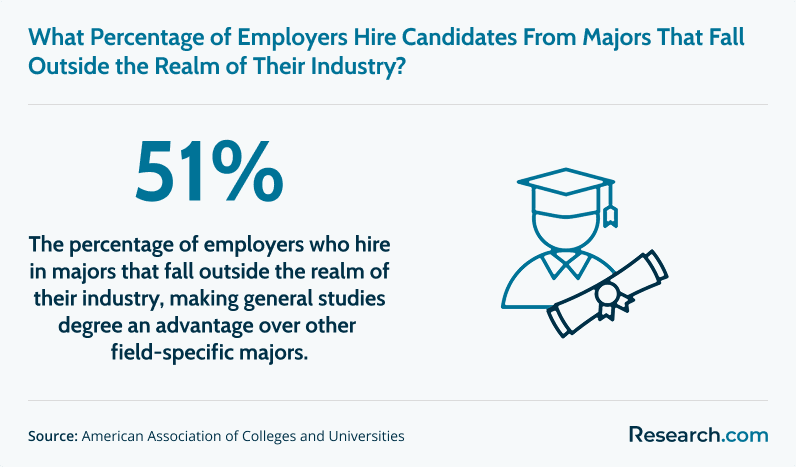
The degree’s value often comes from transferable skills. Employers do not always hire strictly by major; for instance, 51% hire in majors that fall outside the realm of their industry. A general studies curriculum can help students build skills such as communication, critical thinking, analysis, and problem-solving that can apply across different roles.
How does an online general studies degree program compare to an on-campus program?
Online and on-campus general studies programs can lead to the same credential when offered by the same accredited institution, but the learning experience is different. The right format depends on your schedule, learning style, need for structure, and access to campus resources.
| Factor | Online general studies program | On-campus general studies program | Best fit |
| Schedule | Often asynchronous or flexible, with coursework available around work and family responsibilities | Requires attendance at fixed class times and campus locations | Online works better for working adults, caregivers, military students, and students far from campus |
| Pace | May include self-paced courses, accelerated eight-week terms, or multiple start dates | Usually follows a traditional semester calendar | Online may be better for motivated students who want faster or more flexible progress |
| Interaction | Uses discussion boards, video meetings, email, online advising, and digital collaboration tools | Provides in-person access to faculty, classmates, clubs, and campus events | Campus may be better for students who want frequent face-to-face connection |
| Learning style | Requires strong self-management, organization, and comfort with technology | Provides more built-in routine and immediate classroom feedback | Online suits independent learners; campus suits students who need external structure |
| Costs | May reduce commuting, relocation, parking, and housing expenses, though fees vary | May include housing, transportation, campus fees, and activity costs | Compare total cost, not tuition alone |
| Resources | Can include online tutoring, digital libraries, virtual career coaching, and remote advising | Offers direct access to campus offices, libraries, events, and peer networks | Choose the format with the support services you will actually use |
Flexibility and schedule
Online programs are usually the stronger option for students who need control over when and where they study. This is true across many online fields, whether a student is pursuing general studies or comparing an online cosmetology program. Campus programs provide more structure but less scheduling freedom.
Pace and format
Some online general studies programs allow accelerated pacing through eight-week terms or self-paced classes. On-campus programs tend to follow a more predictable semester schedule, which can be helpful for students who want a steady routine but may be less convenient for those trying to finish quickly.
Interaction and community
Campus students often build relationships through informal conversations, student organizations, office hours, and in-person projects. Online students can still network, but they usually need to be more intentional by attending virtual events, contacting faculty, joining online groups, and using career services early.
Accreditation and quality
A degree is not automatically better because it is on campus or worse because it is online. The key question is whether the institution is properly accredited and whether online students receive the same academic standards, transcript recognition, and support services as campus students.
Because general studies emphasizes broad skills rather than one technical specialty, graduates often use the degree as a foundation for several career directions. The chart below highlights career paths that may be available to graduates who combine the degree with experience, targeted coursework, or additional credentials.
What is the average cost of an online general studies degree program?
The cost of an online general studies degree depends on the school, degree level, residency status, fees, transfer credits, and financial aid. Costs can also differ widely across online programs in other fields, including biotechnology graduate certificate online programs, so students should compare full program expenses rather than relying only on advertised tuition.
| Cost category | Associate degree | Bachelor’s degree | What to check before enrolling |
| Typical tuition range | About $6,000 to $15,000 total for most online community colleges or public schools | About $20,000 to $45,000 total for the entire program at accredited public universities | Ask whether the estimate includes all required credits or only major coursework |
| Typical per-credit cost | Typically $100 to $300 per credit, with around 60 credits required | Typically $200 to $500 per credit, with around 120 credits required | Confirm whether online students pay in-state, out-of-state, or separate online tuition |
| Private school cost | Varies by institution | Can charge $50,000 or more for the full program, though financial aid may lower the net cost | Compare net cost after grants, scholarships, and employer benefits |
| Fees and materials | May include textbooks, technology fees, or course materials | May include technology, distance-learning, proctoring, or graduation fees | Some programs charge technology or distance-learning fees, usually between $50 and $150 per term |
How to reduce the cost
- Use transfer credits strategically: Ask for a preliminary transfer evaluation before committing to a program.
- Start at a lower-cost institution when appropriate: Community colleges often offer lower tuition, and transferring credits to a bachelor’s program can reduce the overall cost.
- Look for open educational resources: Some online courses use e-textbooks or free materials that lower book expenses.
- Compare net price: The lowest tuition is not always the lowest final cost after fees, aid, and transfer-credit decisions.
What are the financial aid options for students enrolling in an online general studies degree program?
Online general studies students can often use the same major forms of financial aid as campus students if the institution is accredited and eligible to participate in aid programs. Before applying, confirm both institutional accreditation and aid eligibility directly with the school.
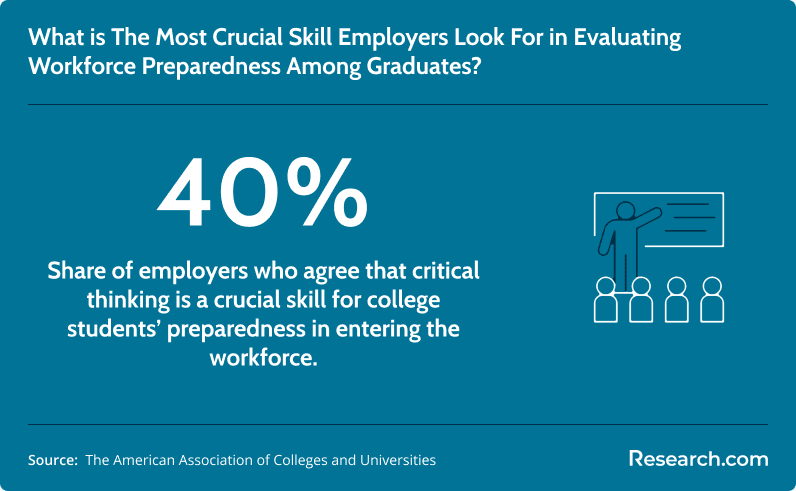
General studies can be useful because employers often value broad learning across disciplines, including liberal arts, humanities, social sciences, and STEM-related coursework. Among employers, 40% agree that critical thinking is crucial for college students’ preparedness in entering the workforce. Students who want to apply those skills to government, civic, or nonprofit work may also explore related pathways such as public policy careers.
Federal financial aid
Students typically begin by submitting the Free Application for Federal Student Aid (FAFSA). Depending on eligibility, aid may include:
- Pell Grants: Need-based undergraduate grants that do not require repayment.
- Federal student loans: Subsidized and unsubsidized loans that must be repaid with interest.
- Federal Work-Study: Part-time work opportunities, which may be remote or local for some online students.
State financial aid
Some states offer grants, scholarships, or tuition assistance to residents attending eligible in-state institutions. Online students should ask whether distance learners qualify under the same rules as campus students.
Scholarships
- Merit-based scholarships: Awards based on academic achievement, leadership, service, or talent.
- Need-based scholarships: Awards that consider financial need.
- Adult learner and online student scholarships: Awards designed for nontraditional students, returning students, or distance learners.
Employer tuition assistance
Some employers help employees pay for school through reimbursement, direct billing, or professional development benefits. Ask whether your employer requires a minimum grade, continued employment after graduation, or approval before courses begin.
Military and veteran benefits
Active-duty service members, veterans, and eligible family members may be able to use GI Bill® benefits, Tuition Assistance (TA), or Yellow Ribbon Program benefits for eligible online programs.
Institutional aid and payment plans
Colleges may offer scholarships, tuition discounts, grants, or payment plans for online students. A monthly payment plan can help manage cash flow, but it does not reduce the overall price unless paired with aid or discounts.
What are the prerequisites for enrolling in an online general studies degree program?
Admissions requirements for online general studies programs vary by degree level and institution. Related flexible degree pathways, such as an online bachelor's in applied sciences, may have similar transfer-friendly policies, but students should review each school’s rules carefully.
| Requirement | Associate degree in general studies | Bachelor’s degree in general studies |
| Prior education | High school diploma or GED | High school diploma or GED |
| Transcripts | Official high school transcripts and prior college transcripts if transferring credits | Official transcripts from all prior schools |
| Testing | Some schools require math or English placement tests unless SAT/ACT scores or prior college credits are accepted | SAT or ACT scores may be required, though some online programs are test-optional |
| GPA | Minimum GPA, usually 2.0 or higher, if transferring credits | Commonly 2.0–2.5 for incoming freshmen, or higher if transferring credits |
| Technology | Reliable internet and a computer that meets school requirements | Reliable internet and a computer that meets program specifications |
Associate degree admissions
Many online associate programs in general studies have accessible admissions policies. Community colleges often use open admissions, meaning students who meet the basic education requirement can enroll, though placement testing may determine whether they start in college-level or developmental coursework.
Bachelor’s degree admissions
Bachelor’s programs usually review prior academic records more closely. Transfer students should ask not only how many credits can transfer, but also how those credits apply to general education, electives, upper-division requirements, and graduation rules.
Other enrollment considerations
- Online orientation: Some schools require new distance learners to complete orientation before classes start.
- Placement exams: Math, writing, or language placement may be required before registration.
- English proficiency: International students may need TOEFL or IELTS scores.
- Prior learning credit: Military training, professional certifications, exams, or work experience may count at some institutions.
Students should also look for programs that connect coursework to applied learning. Experiences such as internships, work-study roles, leadership activities, and community-based experiences can help turn a broad degree into stronger career evidence.
What courses are typically in an online general studies degree program?
An online general studies degree usually includes general education requirements, electives, concentration courses, and sometimes a capstone or portfolio. Unlike a focused technical option such as an appliance repair course online, general studies is designed to build academic breadth and transferable skills.
| Course area | Common subjects | Why it matters |
| Writing and communication | English composition, rhetoric, technical writing, public speaking, interpersonal communication, media literacy | Supports workplace writing, presentations, collaboration, and professional communication |
| Mathematics and quantitative reasoning | College algebra, statistics, logic, quantitative reasoning | Builds data interpretation, problem-solving, and analytical habits |
| Natural sciences | Biology, environmental science, physical science, astronomy, lab or non-lab science | Develops scientific literacy and evidence-based thinking |
| Social sciences | Psychology, sociology, anthropology, political science, economics | Helps students understand people, institutions, behavior, and society |
| Humanities and fine arts | History, philosophy, literature, ethics, cultural studies, art appreciation | Strengthens interpretation, ethical reasoning, and cultural awareness |
| Electives | Business, health, technology, creative fields, applied problem-solving | Lets students tailor the degree to professional interests or transfer goals |
Core general education
General education courses provide the broad academic base of the degree. A student interested in media, writing, or professional communication may also compare options such as an accelerated communications degree if they want a more specialized path.
Electives and customization
Electives are one of the main advantages of general studies. Students may use them to explore business basics, health and wellness, digital literacy, creative fields, public service, or other interests. The best programs help students choose electives intentionally instead of treating them as random course slots.
Capstone or integrative experience
Many bachelor’s programs include a final project, senior seminar, or portfolio. This assignment asks students to connect ideas from several disciplines and demonstrate how their learning applies to real problems, work settings, or future academic plans.
Transfer and prior learning credits
General studies programs often work well for students with prior college, AP, military, workplace, or professional learning. However, accepted credit is not always the same as useful credit. Ask whether transferred courses satisfy specific requirements or only count toward elective totals.
Employers often look for graduates who can communicate clearly, evaluate information, collaborate, and solve unfamiliar problems. The chart below summarizes core skills that hiring managers often value when reviewing recent graduates.
What types of specializations are available in online general studies degree programs?
Many online general studies programs allow students to choose a concentration or informal focus area. A specialization can make the degree easier to explain to employers because it shows direction within a broad curriculum.
| Specialization | What it usually includes | When it makes sense |
| Liberal or interdisciplinary studies | Humanities, social sciences, arts, culture, and broad electives | Good for undecided students or those seeking maximum academic flexibility |
| Business foundations | Management, marketing, personal finance, entrepreneurship, organizational behavior | Useful for administrative, sales, operations, or future business study goals |
| Health and wellness | Introductory health science, nutrition, public health, wellness, healthcare basics | Helpful for students exploring allied health or healthcare administration pathways |
| Social sciences | Psychology, sociology, political science, anthropology, economics | Fits students interested in human services, community work, policy, or behavioral fields |
| Science and technology preparation | Math, basic science, digital literacy, information systems, analytical coursework | Works for students building a foundation before more technical study |
| Digital media and communication | Writing, media literacy, digital content, communication, audience analysis | Supports marketing support, content, coordination, and communication-related roles |
| Education or teaching preparation | Learning theory, child development, communication, education foundations | Useful for students considering education support roles or later licensure pathways |
| Human services or public service | Ethics, community outreach, nonprofit basics, public service topics | Good for students aiming at nonprofit, government, or support-service settings |
| Environmental and sustainability studies | Environmental science, policy, ethics, sustainability topics | May support entry-level sustainability interests or future environmental study |
| Pre-professional planning | Prerequisite clusters for law, business, health, public administration, or other graduate paths | Best for students who know their next credential requirements and plan electives carefully |
Some students use general studies to prepare for a more specialized credential later. For example, a student interested in coordination, leadership, and operations may compare a project management major if they want a clearer professional focus. Students interested in sustainability or public affairs may also use electives as preparation for one of the top environmental policy degree programs.
How do you choose the best online general studies degree program?
Choosing an online general studies program requires more than comparing tuition and school names. The strongest option is the one that turns your prior credits and future goals into the shortest, most affordable, and most useful path to graduation.
1. Confirm accreditation first
Choose an accredited institution so your degree is more likely to be recognized by employers, graduate schools, and financial aid programs. If you plan to transfer again later, ask whether credits from the school are widely accepted by other institutions.
2. Request a transfer-credit evaluation
For transfer students, this is one of the most important steps. Ask the school to show exactly which credits apply to graduation requirements, which count only as electives, and which do not transfer.
3. Match electives to a career or graduate-school plan
A general studies degree should not become a collection of unrelated courses. Choose electives that point toward a recognizable goal, such as business support, communication, healthcare administration, human services, education support, policy, or operations.
4. Compare format and workload
Accelerated terms can shorten completion time, but they compress readings, assignments, and exams. Self-paced options require discipline. Semester-based formats may move more slowly but can provide structure. Pick the format you can sustain.
5. Calculate total cost
Review tuition per credit, technology fees, books, proctoring costs, graduation fees, and the number of credits you must complete at the institution. A school with higher tuition may still cost less if it accepts more of your credits.
6. Evaluate online student support
Look for remote advising, tutoring, writing support, library access, technical help, career services, and degree-planning tools. Online students need support that is easy to access without visiting campus.
7. Review outcomes and reputation
Check graduation rates, student reviews, employer connections, alumni support, and available career data. Rankings can help you create a shortlist, but they should not replace your own review of fit, cost, and outcomes.
| Question to ask | Why it matters |
| How many of my credits will apply directly to graduation? | This affects both completion time and total cost. |
| Are online students eligible for the same aid and services as campus students? | Support quality can strongly affect persistence and success. |
| Can I choose a concentration or planned elective pathway? | A focused plan makes the degree easier to explain to employers. |
| Are courses asynchronous, synchronous, self-paced, or semester-based? | The format must fit your schedule and learning style. |
| Will this degree support my next step? | Students planning graduate study, such as the shortest public policy masters programs online, should confirm prerequisite and admissions expectations early. |
What career paths are available for graduates of online general studies degree programs?
General studies graduates enter a wide range of roles because the degree emphasizes transferable skills such as writing, communication, research, critical thinking, and analysis. Career outcomes are usually strongest when the degree is paired with work experience, internships, certifications, a portfolio, or a clear concentration.
| Career area | Possible roles | How to strengthen your candidacy |
| Administrative and office support | Administrative assistant, office coordinator, executive assistant | Build skills in organization, professional writing, spreadsheets, scheduling, and office software |
| Customer service and client relations | Customer support specialist, client onboarding assistant, account coordinator | Emphasize communication, problem-solving, conflict resolution, and service experience |
| Sales and marketing support | Sales associate, marketing coordinator, social media assistant | Add coursework or certificates in digital marketing, analytics, writing, or business basics |
| Human services and nonprofit support | Caseworker assistant, community outreach coordinator, program support specialist, fundraising assistant | Choose electives in psychology, sociology, ethics, public service, or nonprofit administration |
| Education and academic support | Paraprofessional, tutoring support, academic advising assistant, education program coordinator | Add education, child development, communication, or learning theory coursework |
| Project and operations support | Project coordinator, operations assistant, logistics support | Develop documentation, planning, spreadsheet, process improvement, and team coordination skills |
| Further education | Graduate, professional, or specialized bachelor’s pathways | Plan electives around prerequisites and admissions requirements before graduating |
| Freelance and remote work | Content writer, virtual assistant, research support, small business support | Create a portfolio that proves writing, research, organization, and client communication skills |
Employers often value graduates who can work with different viewpoints and communicate across groups. That broad preparation can be an advantage, but students should be ready to explain how their coursework connects to a specific job function.
What complementary credentials can boost my career after an online general studies degree?
Because general studies is broad, complementary credentials can help make your profile more targeted. The best add-on depends on your intended role. For example, project coordination, digital marketing, data analysis, human resources, nonprofit administration, healthcare administration, and education support credentials may help translate a general studies background into a clearer employment story.
Some graduates also use general studies as a bridge to advanced education. Students interested in education leadership or specialized academic roles may explore options such as the shortest online EdD degrees, but they should confirm admissions requirements, prerequisite coursework, and professional experience expectations before assuming the degree will qualify them.
Is an online general studies degree a worthwhile investment?
An online general studies degree can be worthwhile when it helps you finish a credential efficiently, use prior credits, qualify for roles that require a bachelor’s degree, or prepare for a more specialized next step. It is less likely to pay off if you choose a program without a plan, take on high debt, ignore accreditation, or graduate without any career-focused experience or skills evidence.
The degree is strongest for students who value flexibility and can pair broad coursework with a defined direction. For example, a student interested in culture, research, and human behavior may later compare an online degree in anthropology for deeper subject expertise. A student focused on operations may consider an online project management degree or project-related credential to create a more specialized career path.
What is the job market like for graduates of an online general studies degree?
The job market for online general studies graduates is flexible but competitive. The degree can support many entry-level and advancement pathways, yet it does not point as directly to one occupation as nursing, accounting, engineering, or computer science. Students improve their outcomes by adding experience, internships, targeted electives, certifications, and a strong resume narrative.
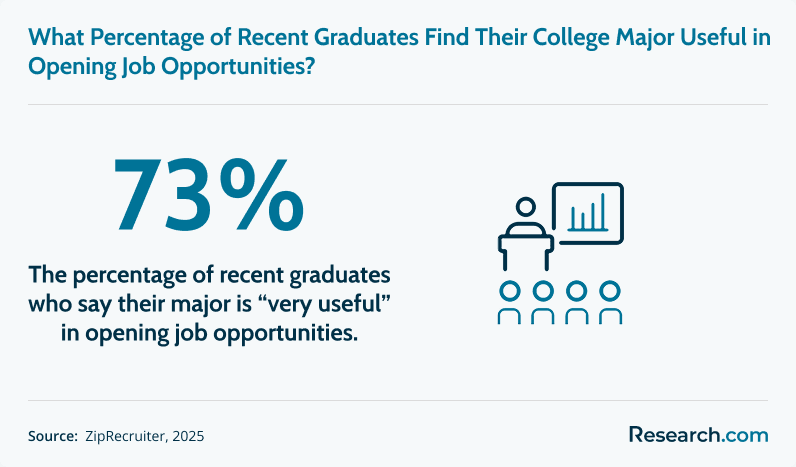
Nearly three-quarters of college students (73%) who are about to graduate believe their major will be very useful for finding job opportunities. Only 27% express dissatisfaction with their field of study, a decrease from the 30% reported in 2023. Even so, recent graduates face a more difficult labor market in 2025: the unemployment rate for recent grads rose to about 5.8%, and underemployment climbed.
Expectations and outcomes do not always match. Around 82% of the class of 2025 expect full-time work soon after graduation, while only roughly 77% of recent grads have achieved that. For general studies students, this makes practical preparation especially important.
Labor data for liberal arts-related bachelor’s degrees shows that graduates hold hundreds of thousands of jobs, with a median annual wage around $55,000. However, these graduates are often less concentrated in occupations that strictly require their exact degree. That means general studies graduates should position the degree as evidence of communication, adaptability, analysis, and problem-solving while also showing role-specific skills.
What do graduates say about online general studies degrees?
- Jessica: "“Completing general studies online let me keep working full time while finishing my degree. I liked being able to combine different subjects instead of being locked into one narrow track, and that flexibility helped me identify a career direction I had not considered before.” –"
- Marcus: "“The online option made returning to college realistic for me. I brought in community college credits, avoided starting over, and completed the program while caring for my children at home.” –"
- Elena: "“I built a plan that included communication, business, and psychology courses, all online. The variety helped me connect what I was learning to my current job and gave me more confidence applying for new opportunities.” –"
What challenges might I encounter with an online general studies degree?
Online general studies programs are flexible, but that flexibility creates several risks. Students may struggle with procrastination, weak time management, limited networking, unclear career direction, or difficulty explaining the degree to employers. The broad curriculum can be an asset only if students make intentional course choices.
| Common mistake | Why it can hurt you | Better approach |
| Choosing a program without checking accreditation | Credits may not transfer, and employers or graduate schools may not recognize the credential as expected | Verify accreditation before applying and confirm financial aid eligibility |
| Focusing only on tuition per credit | Fees, rejected credits, books, and extra required courses can raise the final cost | Compare total program cost after transfer evaluation and aid estimates |
| Taking unrelated electives | The degree may look unfocused to employers | Group electives around a theme such as business, communication, human services, healthcare, or technology |
| Assuming online means easier | Online courses require self-discipline and consistent weekly work | Create a weekly study schedule and use advising, tutoring, and tech support early |
| Waiting until graduation to think about careers | You may finish with a degree but no job-specific evidence | Build experience through internships, projects, volunteer roles, certificates, or a portfolio |
| Relying only on rankings | A highly ranked school may not be the best fit for your credits, schedule, budget, or goals | Use rankings to shortlist programs, then compare transfer policy, format, cost, and support |
Students who want to stand out may add a specialized credential after graduation. For example, someone interested in information organization, archives, or library-related roles might compare the best affordable MLIS online degree programs as a potential next step.
References
- AAC&U and Morning Consult. (2023). The career-ready graduate: What employers say about the difference college makes.
- Bauer-Wolf, J. (2023). Employers value a college degree, but think students lack some skills, survey finds. Higher Ed Dive.
- Cappelli, P. (2024). College and the job market today. Trusteeship Magazine, 32(2).
- CBI Economics. (2024). To what degree?: Understanding what UK businesses look for in graduates. University Alliance.
- National Association of Colleges and Employers (NACE). (2024). Job outlook 2025.
- Ramotowski, S. (2025). Highest paying jobs with general studies degree. Nexford University.
- ZipRecruiter. (n.d.). 2024 annual grad report.
Key Insights
- An online general studies degree is best for students who need flexibility, have transfer credits, or want a broad academic foundation rather than a single specialized major.
- Associate programs usually require around 60 credits, while bachelor’s programs usually require 120 credits; transfer credits can significantly shorten the timeline.
- Accreditation, transfer-credit acceptance, online student support, and total cost matter more than ranking position alone.
- The degree is broad, so students should choose electives or concentrations that point toward a clear goal such as business support, communication, human services, education support, healthcare administration, public service, or operations.
- Career outcomes improve when graduates add practical experience, certifications, internships, portfolios, or further education that makes their general studies background more job-specific.
- The degree can be worthwhile if it helps you finish efficiently and advance toward a defined goal; it is a weaker investment if you enroll without a plan, overborrow, or ignore accreditation and career preparation.
Other Things You Should Know About the Best Online General Studies Degree Programs
Most online general studies bachelor’s programs require about 120 semester credits, including 30 to 45 upper-division credits. Students with transfer coursework can often finish faster, but the exact total depends on the school’s residency policy and whether prior credits are accepted.
In 2027, universities like Arizona State University, University of Maryland Global Campus, and Southern New Hampshire University are recognized for their exceptional online general studies programs. These institutions provide flexible schedules, accredited courses, and a wide range of subjects tailored to diverse interests.
Admission requirements for top online general studies programs in 2027 often include a high school diploma or equivalent, a minimum GPA, and submission of transcripts. Some programs may also require standardized test scores, like the SAT or ACT, and personal statements.