2027 Best Online Bachelor’s Degrees in English Programs

Co-Founder and Chief Data Scientist
Choosing an online bachelor’s degree in English is not just a choice about studying novels, grammar, or essays. It is a decision about whether a flexible writing-focused degree can help you build marketable skills in communication, research, analysis, editing, digital content, education, publishing, or graduate study.
This guide is for prospective students comparing online English programs, working adults returning to school, transfer students, and anyone wondering whether an English degree still has value in a labor market shaped by digital media, AI writing tools, remote work, and employer demand for clear communication. You will learn what an online bachelor’s in English covers, how it compares with a campus program, what it may cost, how employers view online degrees, what requirements to expect, and how to choose a program that fits your goals.
English remains a broad and adaptable major. The U.S. Bureau of Labor Statistics reports there are over 1.9 million English degree majors employed in various industries and business sectors. The degree can support careers in publishing, media, marketing, corporate communications, education, public relations, technical writing, and other fields where people need to explain ideas clearly and persuasively.
Students can complete English coursework through accredited colleges and universities that use online course platforms to deliver lectures, writing workshops, peer review, research assignments, and instructor feedback. The best programs do more than assign readings; they help students build a portfolio of writing, understand audience and context, and use digital tools responsibly.
Online Bachelor’s Degree in English Table of Contents
- Can you get a degree completely online?
- Will employers take my online degree seriously?
- Are online degrees recognized all over the world?
- Online vs. Traditional Bachelor’s Degree in English
- How much does an online bachelor’s degree in English cost?
- What are the requirements of an online bachelor’s degree in English?
- Courses to Expect in an Online Bachelor’s Degree in English
- What Alternatives to Traditional Online Bachelor’s Degree Programs Are Available to Students?
- Can an Online Bachelor's Degree in English Lead to Affordable Graduate Studies?
- How Do Online English Programs Support Digital Literacy and Professional Networking?
- What Career Support Services Enhance Success in an Online English Program?
- How Can a Fast Associates Degree Complement Your Online Bachelor's in English Journey?
- What Challenges Should You Anticipate in an Online English Degree Program?
- How Do Curriculum Innovations and Faculty Credentials Elevate Your Online English Degree?
- Things to Look for in an Online Bachelor’s Degree in English
- How to Accelerate Your Online Bachelor’s Degree in English
- How do online bachelor’s degrees in English prepare students for diverse career paths?
- Financial Considerations and Support for Online English Majors
- Can additional certifications complement your online English degree?
Quick Answer: Is an Online Bachelor’s Degree in English Worth Considering?
An online bachelor’s degree in English can be a practical choice if you want a flexible degree centered on writing, reading, research, editing, argumentation, and communication. It is most useful when the program is accredited, offers strong writing feedback, includes digital communication or professional writing options, and helps students build a portfolio or career plan before graduation.
It may not be the best fit if you want a highly technical credential with a direct licensure path, if you dislike extensive reading and revision, or if you need a program that guarantees a specific job outcome. English graduates often succeed by pairing the major with internships, professional writing samples, teaching credentials, certifications, technical skills, or graduate education.
| Best fit for | Use caution if | What to verify before enrolling |
| Students who enjoy reading, writing, editing, research, and communication | You want a degree with one fixed career path and little need for self-directed career planning | Institutional accreditation, transfer policy, tuition and fees, faculty feedback practices, and career support |
| Working adults who need schedule flexibility | You struggle with independent learning or online deadlines | Whether courses are asynchronous, synchronous, or hybrid |
| Future writers, editors, teachers, content professionals, communicators, or graduate students | You assume the degree alone will be enough without a portfolio or related experience | Internship options, writing labs, alumni network, and portfolio-building assignments |
Can you get a degree completely online?
Yes. Many accredited colleges and universities now offer fully online degrees at the associate, bachelor’s, master’s, and doctoral levels. In an online bachelor’s degree in English, students typically complete readings, essays, discussion posts, research projects, writing workshops, exams, and presentations through a learning management system rather than by attending campus-based classes.
Online study has become a normal part of higher education. According to the CHLOE 10 (2025) survey, 46% of chief online learning officers report at least half of traditional undergraduate students were enrolled in fully online asynchronous courses.
Some programs are fully online, while others use a hybrid structure. A hybrid English program may let students complete most coursework remotely but require occasional campus visits, seminars, writing residencies, exams, or field experiences. Before enrolling, students should confirm whether “online” means 100% remote or partly in person.
Completion time depends on transfer credits, enrollment status, course load, and the number of credits required. An online associate’s degree typically takes two years to complete, while an online bachelor’s degree can be completed within four years. Online master’s and doctoral programs may take two to five years to finish depending on the field and program design.
Will employers take my online degree seriously?
Most employers care more about the school’s legitimacy, the degree level, your skills, and your experience than whether each class was completed online. If you are wondering how to write your bachelor’s degree on a resume, list the institution, degree, major, and graduation date in the same way you would for a campus degree. You generally do not need to label it “online” unless the employer specifically asks about the format.
The strongest signal is accreditation. As more recognized institutions deliver online programs, hiring managers have become more familiar with the credibility of online degrees. An online English degree from an accredited school is easier for employers to verify and is more likely to be treated as comparable to a campus-based credential.
A bachelor’s degree can also affect earning potential and access to graduate study. According to the BLS, bachelor's degree holders earned $1,543 weekly, while associate degree holders earned $1,099 in 2024. Professionals with master's degrees earned $1,840 per week, and those with doctorates or professional degrees took home more than $2,000.
Are online degrees recognized all over the world?
Online degrees can be recognized internationally when they come from properly accredited and reputable institutions. The key issue is not the delivery method but whether the college or university is legitimate, recognized in its home country, and acceptable to employers, graduate schools, licensing bodies, or credential evaluators in the country where you plan to work or study.
As online education has grown, it has also changed how students think about what is a bachelor’s degree. A bachelor’s degree is no longer defined by sitting in a physical classroom; it is defined by curriculum level, credit requirements, institutional approval, and demonstrated learning outcomes.
Demand is one reason institutions continue to expand online options. According to the CHLOE 10 report (2025), the increase in enrollment (72%) and student demand (65%) are the top reasons for online program expansion. Moreover, 11% of chief online learning officers anticipate opening 10 or more new online programs within the next three years.
Online vs. Traditional Bachelor’s Degree in English
An online bachelor’s degree in English usually covers the same academic territory as an on-campus program: literary study, writing, rhetoric, grammar, research methods, cultural analysis, and communication. Students may study literary techniques such as imagery literary device, compare texts across historical periods, and practice writing for different audiences.
The degree can support careers in publishing, media, education, communications, marketing, and library-related pathways. English degree holders typically earn a mean annual wage of $53,610. However, earnings vary by occupation, location, experience, industry, and additional credentials.
Like a campus-based English degree program, an online program usually begins with general education courses and then moves into major courses such as British literature, American literature, rhetoric, literary theory, creative writing, grammar, digital writing, cultural studies, or professional communication. Typically, it takes four years to complete an online bachelor’s degree in English.
| Factor | Online bachelor’s in English | Campus bachelor’s in English |
| Course content | Often similar to the campus curriculum, with readings, essays, peer review, and research assignments delivered online | Often similar curriculum, delivered through in-person lectures, seminars, and workshops |
| Schedule | May be asynchronous, synchronous, or a mix of both | Usually follows scheduled in-person class times |
| Best for | Working adults, transfer students, parents, military learners, and students who need location flexibility | Students who want face-to-face seminars, campus activities, and in-person networking |
| Costs to compare | Tuition, online fees, technology fees, books, proctoring, and software | Tuition, campus fees, housing, transportation, meal plans, books, and other campus expenses |
| Main risk | Choosing a low-feedback program or underestimating the self-discipline required | Paying more for location-based access without using campus resources fully |
Learning format
Online English courses may be asynchronous, synchronous, or hybrid. Asynchronous courses let students review lectures, complete readings, submit essays, and join discussions on a flexible schedule within weekly deadlines. Synchronous courses require real-time attendance through video meetings, live workshops, or scheduled seminars.
English majors spend significant time reading, interpreting, discussing, and writing. Online students may annotate texts digitally, participate in discussion boards, join virtual writing groups, complete peer reviews, and meet instructors through video conferences. The format works well for students who can manage deadlines independently and are comfortable communicating in writing.
Because English is reading- and writing-intensive, the quality of feedback matters. A strong online program should provide regular instructor comments on drafts, opportunities for revision, access to writing support, and clear rubrics for analytical and creative assignments.
Learning experience
Online education can make college more accessible for students who cannot relocate, commute, or attend classes at fixed times. It is especially useful for adult learners balancing employment, caregiving, military service, or other responsibilities.
Research has also identified benefits and challenges in online learning. In the study “Online education: Benefits, challenges and strategies during and after COVID-19 in higher education,” published in the International Journal on Studies in Education, Pitambar Paudel reported that students and teachers “found online education beneficial though it was their first experience of having only online courses. They found that online education is highly beneficial to promoting online research, connecting the practitioners to the global community, getting huge and authentic resources of knowledge required for professional and academic endeavors, and make them self -disciplined" (Paudel, 2020).
In the same study, 76.9% of students learned to become independent learners, while 69.2% indicated that online education increased their self-discipline. On the other hand, 61.5% believed that online degree courses provide a huge resource of knowledge and flexibility on modes and modalities.
Faculty quality should be a major comparison point. Some online English courses are taught by published writers, literary scholars, editors, rhetoricians, or communication specialists. Students should look for instructors who are active in teaching, scholarship, publishing, professional writing, or the fields they want to enter.
Skills and knowledge developed
An English bachelor’s degree develops transferable skills that can be useful across many industries. Students learn to read closely, evaluate evidence, build arguments, interpret context, revise prose, communicate with different audiences, and manage long-form projects.
The major is especially useful for students who want to write, edit, teach, research, communicate complex ideas, or continue to graduate school. Like writing majors, English students often strengthen their ability to produce polished work through drafting, critique, and revision.
| Skill | How English students practice it | Where it can be useful |
| Analytical reading | Interpreting literature, theory, historical context, and rhetoric | Research, editing, law preparation, education, policy, and communications |
| Clear writing | Drafting essays, reports, creative work, and professional documents | Marketing, publishing, public relations, technical writing, and business communication |
| Revision and feedback | Using instructor and peer comments to improve drafts | Editorial roles, content production, project work, and client communication |
| Research | Locating, evaluating, citing, and synthesizing sources | Graduate school, journalism, content strategy, library science, and policy work |
| Audience awareness | Adapting tone, structure, and evidence for different readers | Corporate communications, UX writing, teaching, social media, and nonprofit work |
Is an online degree cheaper?
An online degree can be less expensive than a campus program, but it is not automatically cheaper in every case. Students should compare total cost, not just advertised tuition. Online learners may save on housing, commuting, parking, and some campus-related expenses, but they may still pay technology fees, online course fees, books, software, exam proctoring, and graduation fees.
According to the College Board, local students usually paid an average college cost of $11,950 in public four-year institutions during the academic year 2025-2026. This is not yet inclusive of room and board fees, transportation, and other costs associated with staying within campus. Online colleges typically charge between $300 to $650 per credit for an undergraduate degree. In contrast, on-campus courses usually cost $350 to $800 per credit. Costs also differ by institution type; for example, the cost of attending private schools can be different from public schools.
Is an online degree as good as a regular degree?
An online English degree can be as academically valuable as a campus degree when it is offered by an accredited institution, taught by qualified faculty, and built around rigorous reading, writing, research, and assessment. The delivery format alone does not determine quality.
Students should judge quality by curriculum depth, faculty qualifications, writing feedback, accreditation, student support, graduation requirements, career services, transfer acceptance, and outcomes information. A weak online program can be a poor investment, but a well-designed accredited program can provide a strong education.
How much does an online bachelor’s degree in English cost?
An online bachelor’s degree in English typically costs between $10,174 in-state and $32,207 out-of-state for undergraduate students. That figure does not necessarily include every expense, so students should ask for a full cost breakdown before committing.
Common added costs include admission fees, technology fees, course materials, e-books, software, placement assessments, proctored exam charges, graduation fees, and transcript fees. If a program includes any campus visits, students should also budget for travel and lodging.
| Cost item | Why it matters | Question to ask |
| Tuition per credit | This is the largest direct academic cost for most students | Is the rate different for in-state, out-of-state, or online-only students? |
| Required fees | Online, technology, proctoring, and student service fees can raise the real price | Can the school provide a complete fee list before enrollment? |
| Transfer credits | Accepted credits can shorten the degree and reduce tuition | How many credits can transfer, and which ones count toward the major? |
| Books and materials | English courses can require many texts and research resources | Are digital texts, library access, or open educational resources available? |
| Financial aid | Grants, scholarships, and loans can change out-of-pocket cost | Are online students eligible for the same aid as campus students? |
Students can reduce costs by transferring prior credits from a regionally accredited institution, choosing a public institution when appropriate, comparing fees carefully, taking advantage of employer tuition benefits, applying for scholarships, and avoiding excess credits that do not apply to graduation requirements.
Some universities offer financial aid options for online learners, including grants, loans, scholarships, payment plans, and military-related benefits. Students should complete the required aid applications early and ask whether enrollment status affects eligibility.
Is an online English degree worth it?
An online English degree is most likely to be worth it when the student has a clear plan for using the degree. Strong outcomes often come from combining the major with internships, teaching certification, editing experience, a writing portfolio, technical writing skills, content strategy experience, communication internships, or preparation for graduate study.
English graduates may work as editorial assistants, copywriters, journalists, proofreaders, public relations staff, communication specialists, content writers, or educators, depending on credentials and experience. According to the U.S. Bureau of Labor Statistics, most English majors earn between $60,000 and $120,000 per year, depending on the specific role.
The degree can also support international and cross-cultural work because students practice language, interpretation, and communication across contexts. However, no degree guarantees salary or employment. Students should evaluate the program’s cost against likely career paths, local job markets, portfolio opportunities, and their willingness to build experience during school.
What are the requirements of an online bachelor’s degree in English?
Admissions requirements vary by institution, but most online English bachelor’s programs look for evidence that applicants are ready for college-level reading, writing, and research. Students should expect to submit academic records and may also need recommendations, placement information, or proof of English proficiency depending on the school.
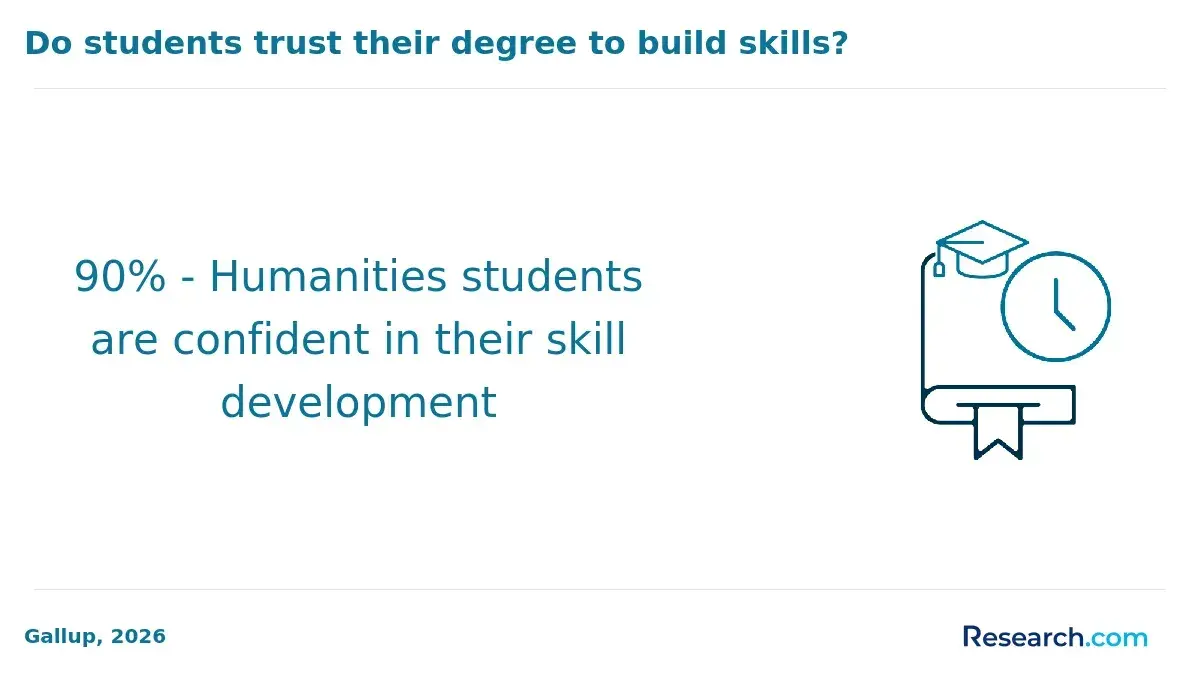
Humanities programs can also help students build confidence in broad professional skills. According to a recent Gallup report, 90% of humanities students are confident in their skill development.
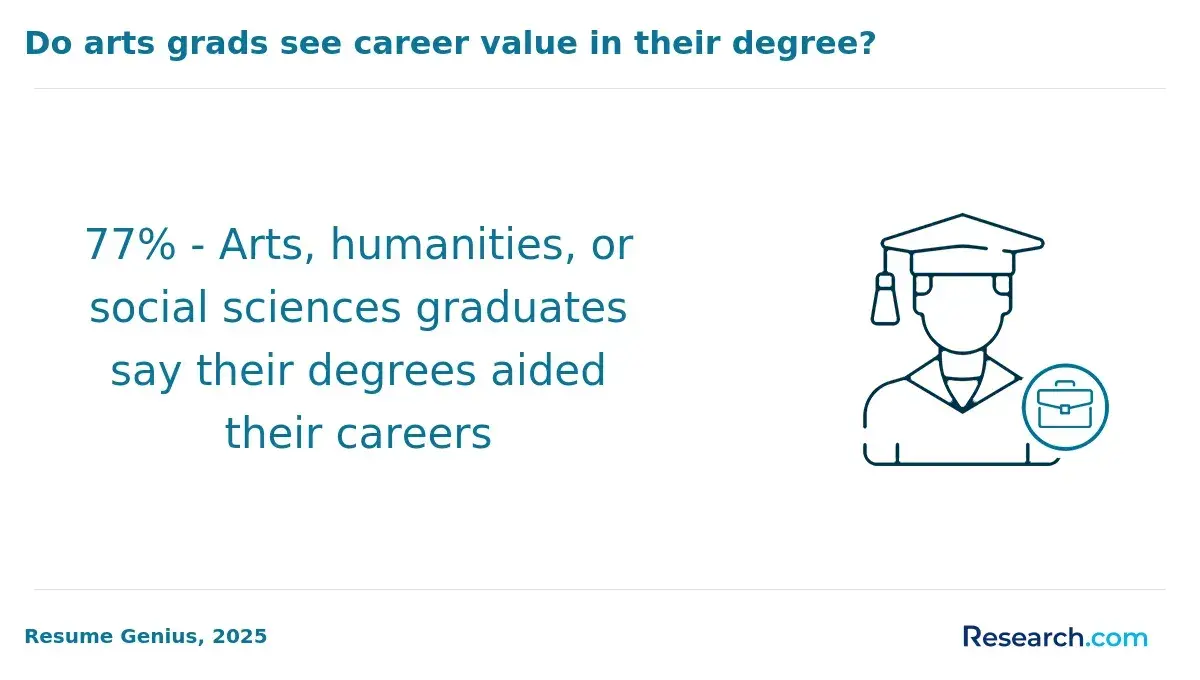
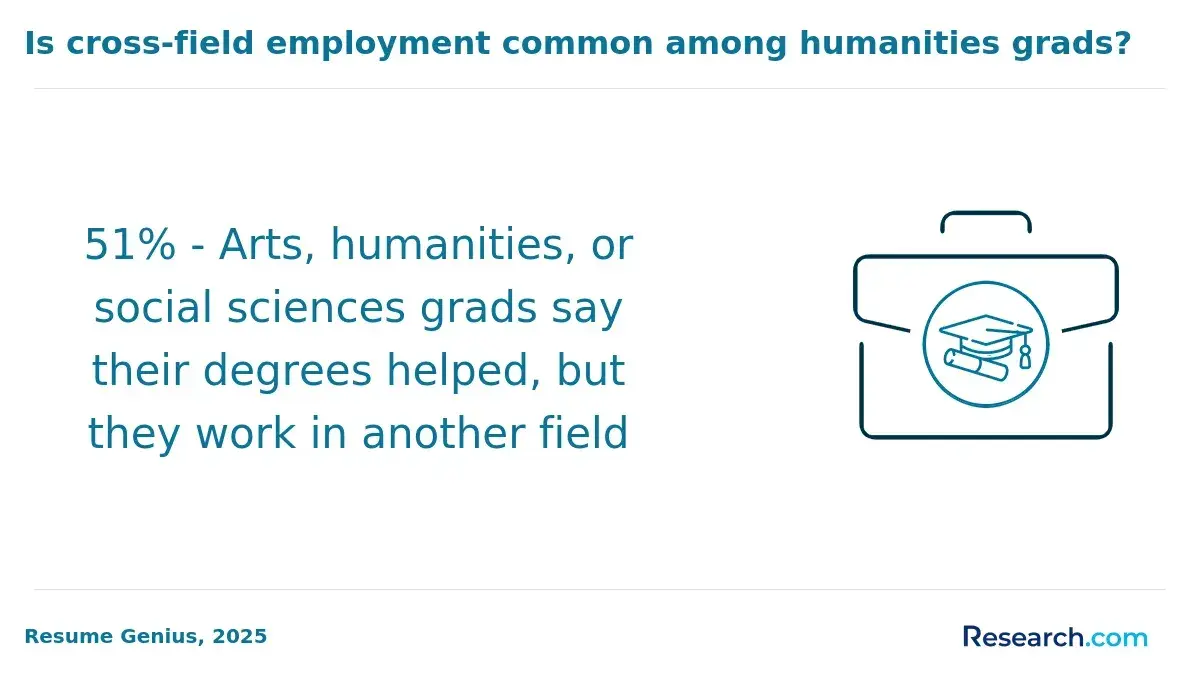
In addition, many Gen Z learners still choose degrees in the arts, humanities, and social sciences (Resume Genius, 2025). For English degree holders, this can translate into opportunities in organizations that value analysis, writing, persuasion, and communication.
Gen Z's Top Fields of Study

Admission requirements
- High school diploma or GED certificate. Most bachelor’s programs require proof of secondary education. Schools use this documentation to verify academic preparation and eligibility for college-level coursework.
- Minimum GPA. Some online English programs require a minimum GPA, which is usually 2.5 and above. Applicants below the threshold may be asked to complete placement testing, conditional admission steps, or non-credit preparation courses.
- Official transcripts. Colleges typically require transcripts from high school and any previously attended colleges. Transfer students should request an evaluation showing which credits will apply to general education, electives, and major requirements.
- Letters of recommendation. Some programs ask for recommendations from teachers, counselors, supervisors, or mentors who can speak to the applicant’s writing ability, academic habits, and readiness for online study.
Academic and personal readiness
- Strong vocabulary and language awareness. English majors benefit from curiosity about word choice, tone, grammar, style, and meaning. The goal is not just to know more words but to use language accurately and effectively.
- Critical thinking. Students must analyze texts, evaluate arguments, interpret evidence, and explain ideas logically. This is central to literary analysis, professional writing, and research-based assignments.
- Self-management. Online students need to track deadlines, plan reading time, participate in discussions, and revise work without daily in-person reminders.
- Comfort with technology. Students should be able to use learning platforms, digital libraries, video tools, file-sharing systems, and citation resources.
Courses to Expect in an Online Bachelor’s Degree in English
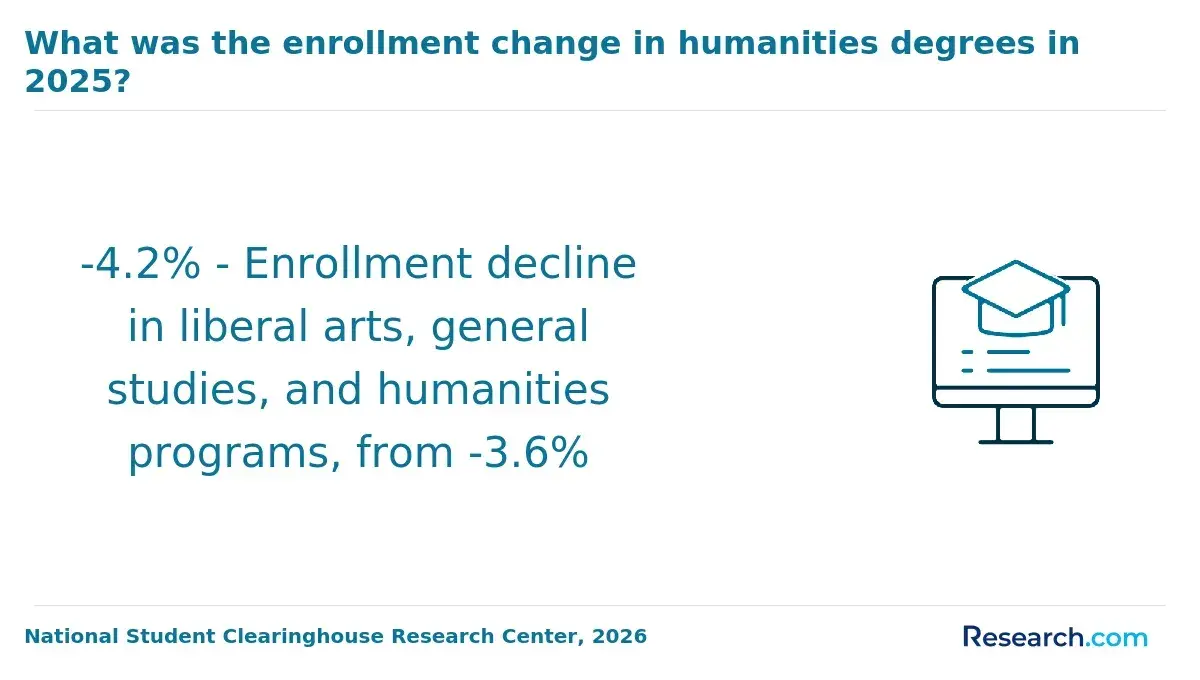
According to the National Student Clearinghouse Research Center, in fall 2025, a total of 98,789 undergraduate students enrolled in English programs. However, this number is dwindling, decreasing by 8% in 2025. Even with enrollment pressure, English programs continue to serve students interested in media, publishing, teaching, communication, writing, and graduate education.
A bachelor’s in English usually combines literary study with writing and language-focused coursework. Students may study major authors and traditions, but they also learn how texts shape culture, identity, argument, media, and public communication.
- Popular and contemporary fiction. Students examine modern narrative forms, genre conventions, pacing, audience expectations, and subgenres such as road novels, true crime, and extreme adventure.
- World mythology. This course studies myths from different cultures, including their structures, themes, social purposes, recurring symbols, and influence on later literature.
- Creative writing. Students practice fiction, poetry, drama, and creative nonfiction while learning techniques such as scene development, voice, imagery, dialogue, revision, and workshop critique.
- Principles in journalism. This course introduces reporting, news judgment, news values, interviewing, ethics, and common forms of news writing.
| Course area | What students usually learn | Career connection |
| Literature | Close reading, interpretation, historical context, genre, and theory | Teaching, editing, research, publishing, and graduate study |
| Rhetoric and composition | Argument, audience, structure, style, and persuasive writing | Communications, marketing, public relations, and business writing |
| Creative writing | Storytelling, voice, workshop feedback, revision, and literary craft | Publishing, content creation, screenwriting, and freelance writing |
| Professional or technical writing | Clear documentation, user-focused communication, reports, and digital formats | Technical writing, UX writing, corporate communication, and training materials |
| Digital media writing | Writing for online audiences, platforms, and multimedia environments | Content strategy, social media, web editing, and digital marketing |
What Alternatives to Traditional Online Bachelor’s Degree Programs Are Available to Students?
Students who want more flexibility than a standard semester-based program can consider competency based degree programs. These programs emphasize demonstrated mastery rather than only time spent in class. They may work well for motivated adults who already have writing, communication, or workplace experience and can move quickly through material they already understand.
Other alternatives include part-time enrollment, degree-completion programs for transfer students, accelerated terms, hybrid programs, and associate-to-bachelor’s pathways. The best option depends on how many credits you already have, how much structure you need, how quickly you want to graduate, and whether you can maintain writing quality in a faster format.
Can an Online Bachelor's Degree in English Lead to Affordable Graduate Studies?
An accredited online bachelor’s in English can prepare students for graduate programs in English, education, rhetoric and composition, creative writing, linguistics, library science, journalism, communication, or related fields. Students who plan early can choose electives, capstone projects, writing samples, and research topics that support graduate applications.
Cost planning matters. Students can reduce the expense of future graduate study by preserving strong grades, building relationships with faculty for recommendations, comparing assistantships or scholarships, and researching a low cost masters degree online when online graduate study fits their goals.
How Do Online English Programs Support Digital Literacy and Professional Networking?
Modern online English programs often require students to work with digital libraries, citation systems, discussion platforms, collaborative documents, e-portfolios, video meetings, and sometimes multimedia writing tools. These experiences can build digital literacy, which is increasingly important for writers, editors, educators, content strategists, and communication professionals.
Networking is also possible online, but students usually need to be intentional. Virtual writing labs, alumni panels, online mentorship, webinars, peer workshops, and digital conferences can help students connect with faculty, classmates, and industry professionals. Students considering research-intensive or academic careers can also use an online bachelor’s degree as a foundation for advanced options such as PhD online programs.
What Career Support Services Enhance Success in an Online English Program?
Career support can make a major difference for English students because the degree is broad. Strong programs help students translate academic skills into job language, build portfolios, identify internships, and prepare for interviews in writing-heavy fields.
Useful services include resume reviews, LinkedIn profile support, mock interviews, writing portfolio guidance, internship databases, graduate school advising, alumni mentoring, employer panels, and virtual career fairs. These services are especially valuable for students pursuing media, publishing, corporate communications, education, public relations, or content roles.
Students who want to finish quickly should also compare support quality before choosing accelerated options. Time-efficient pathways such as fast degrees are most useful when they still include advising, writing feedback, and career preparation.
How Can a Fast Associates Degree Complement Your Online Bachelor's in English Journey?
A fast-track associate degree can help some students complete general education requirements before transferring into an online bachelor’s in English. This path may reduce time and cost if the credits transfer cleanly and apply to the bachelor’s program rather than only counting as electives.
Students exploring a fast associates degree should confirm accreditation, transfer agreements, course equivalencies, and minimum grade requirements. The fastest path is not always the cheapest if credits fail to transfer or if students must repeat courses after entering the bachelor’s program.
What Challenges Should You Anticipate in an Online English Degree Program?
Online English students should expect heavy reading, frequent writing, discussion participation, revision cycles, and independent research. Flexibility is helpful, but it also means students must manage deadlines without the routine of commuting to class.
Common challenges include procrastination, limited face-to-face interaction, difficulty getting timely feedback, technology problems, weak peer engagement, and uncertainty about career direction. Students can reduce these risks by creating a weekly study schedule, using writing center services, attending virtual office hours, joining study groups, and meeting with advisors early.
Transfer students should be especially careful. Credits from cheapest online associate programs may be useful, but affordability alone is not enough. Students need to know whether credits are accepted by the bachelor’s institution and whether they satisfy major, general education, or elective requirements.
How Do Curriculum Innovations and Faculty Credentials Elevate Your Online English Degree?
A strong online English curriculum should reflect both traditional literary study and current communication environments. Look for programs that include digital writing, rhetoric, professional communication, multicultural literature, research methods, editing, and portfolio work when those areas match your goals.
Faculty credentials also matter. Students should review instructor backgrounds, publication records, teaching experience, professional work, research interests, and availability for mentoring. Faculty with academic and industry experience can help students understand pathways in writing, editing, publishing, communications, education, and other fields. Students who are comparing income-focused pathways can also review broader guides on degrees that make 100k a year, while remembering that English career outcomes depend heavily on role, skills, experience, and location.
Things to Look for in an Online Bachelor’s Degree in English
Choosing an online English program should involve more than comparing tuition or picking the best-known school. Students should evaluate academic quality, feedback, support, flexibility, transfer policies, and career alignment.
Student-to-teacher ratio
Smaller online classes can make it easier to receive detailed feedback on writing. In general, online institutions maintain a 25:1 student-to-professor ratio to ensure that everyone in the class has the chance to receive individual guidance and feedback. According to a report by the University of Potomac, online learners often score higher on standardized tests than traditional students (University of Potomac, 2020).
Accreditation
Accreditation should be nonnegotiable. While English programs do not have one single required programmatic accreditor, the institution itself should hold recognized accreditation. Accreditation affects credit transfer, financial aid eligibility, employer trust, and graduate school admission.
On-site requirements
Do not assume every online program is fully remote. Some programs may require campus visits, proctored exams, residencies, orientations, or in-person events. These requirements can add travel and lodging costs, especially for students who live far from campus.
| Question to ask before enrolling | Why it matters |
| Is the institution accredited? | Accreditation supports credit transfer, employer recognition, and financial aid eligibility. |
| How much writing feedback will I receive? | English students need meaningful comments and revision opportunities to improve. |
| Are courses asynchronous or live? | The format affects scheduling, participation, and work-life balance. |
| Can I transfer previous credits? | Transfer credit can reduce both cost and time to graduation. |
| Does the program include career support? | English majors benefit from portfolio help, internships, networking, and career translation. |
| Are there hidden fees or campus requirements? | Total cost may be higher than tuition if fees or travel are required. |
How to Accelerate Your Online Bachelor’s Degree in English
An online bachelor’s degree in English does not always require four full years, especially for students with prior college credit or professional learning. However, speed should not come at the expense of writing development, faculty feedback, or transfer accuracy.
1. Transfer Credits
Students with prior coursework or an associate degree from a regionally accredited institution may be able to transfer credits into the bachelor’s program. This can shorten the duration of your studies by up to two years, depending on the number of transferable credits.
2. Accelerated Programs
Some institutions offer shorter terms, year-round enrollment, condensed courses, or accelerated degree-completion options. Students comparing accelerated degree programs online should ask whether the faster pace still allows enough time for reading, drafting, revision, and research.
3. Credit for Prior Learning
Many online programs evaluate prior learning, military training, workplace experience, certifications, or portfolios for possible credit. This can be useful for adult learners, but policies vary widely. Students should request written confirmation of how many credits will be awarded and how those credits apply to the degree plan.
How do online bachelor’s degrees in English prepare students for diverse career paths?
An online English degree prepares students for multiple career directions because it builds transferable skills rather than training for only one job. Graduates may pursue writing, editing, communications, teaching-related roles, media, marketing, public relations, nonprofit work, corporate communication, or graduate school.
Students interested in education can use the degree as a foundation for teacher preparation, literacy work, English as a second language pathways, or graduate study. Those comparing affordability can also review options such as the cheapest online college bachelor degree programs, while confirming that any selected program meets their academic and career needs.
Publishing and media pathways often require more than coursework. Students should build editing samples, published clips, internships, campus publication experience, freelance work, or digital portfolio pieces. Employers want evidence that graduates can write accurately, revise under feedback, meet deadlines, and adapt to different audiences.
Corporate roles may include public relations, internal communications, brand writing, proposal writing, advertising, or content marketing. In these fields, English majors can stand out when they understand audience strategy, digital platforms, analytics basics, and professional collaboration.
Digital content careers are another common direction. Companies need writers who can produce clear web copy, social media content, newsletters, blog posts, scripts, UX microcopy, and marketing materials. Students should consider electives or certifications that strengthen digital communication skills.
An English degree can also support graduate study in law, library science, journalism, education, communication, creative writing, or related fields. Students who may pursue graduate school should save strong writing samples and seek faculty mentoring early.
Financial Considerations and Support for Online English Majors
Online English programs can be cost-effective, but students should evaluate the full financial picture before enrolling. Tuition is only one part of the decision. Program length, transfer credits, fees, financial aid, course load, employment plans, and career goals all affect value.
Students who need flexible and affordable options can compare institutions designed for working learners through resources such as online college for adults. The right program should fit both the student’s budget and their academic needs.
Financial aid may include federal and state grants, scholarships, loans, payment plans, employer tuition assistance, military benefits, and school-specific awards. Some scholarships may be available for academic achievement, creative writing, journalism, education, or humanities students.
Transfer credit and prior learning assessment can reduce costs by lowering the number of credits needed to graduate. Students should avoid assuming all previous credits will transfer; the school’s registrar or transfer advisor should provide a clear evaluation.
Students should also budget for technology, internet access, books, digital materials, software, proctoring, and graduation fees. A program with transparent pricing is easier to compare than one that advertises low tuition but adds multiple required charges later.
Can additional certifications complement your online English degree?
Yes. Certifications can help English majors target specific career paths and show employers practical skills beyond the broad degree. Useful areas may include digital communication, technical writing, content strategy, editing, project management, social media, SEO writing, teaching English as a second language, or instructional design.
Students should choose certifications based on job postings in their target field, not just on popularity. A student interested in corporate communications may need different credentials than one pursuing publishing, teaching, technical writing, or content marketing. To compare practical credential options, students can explore certificates that make money and then match those options to their professional goals.
Common Mistakes to Avoid When Choosing an Online English Degree
| Mistake | Why it can hurt you | Better approach |
| Choosing a program without checking accreditation | Credits may not transfer, employers may question the degree, and financial aid eligibility may be affected | Verify institutional accreditation before applying |
| Comparing tuition but ignoring fees | The advertised price may not reflect the true cost | Ask for a full cost sheet including technology, course, proctoring, and graduation fees |
| Assuming every online program is fully remote | Unexpected campus visits can add cost and scheduling problems | Confirm all on-site, residency, or proctored exam requirements |
| Neglecting career preparation | A broad degree requires intentional career planning | Build a portfolio, seek internships, and use career services early |
| Rushing through courses without revision | Writing skill improves through feedback and rewriting | Choose programs that emphasize drafts, comments, workshops, and revision |
| Relying only on rankings | A highly ranked program may still be a poor fit for your budget, schedule, or goals | Compare curriculum, support, cost, transfer policy, and outcomes together |
The Future of English Degree Holders
English degree holders are not limited to classrooms, libraries, or publishing houses. Their skills can apply in business, finance, technology, media, nonprofits, education, government, and global organizations that need people who can interpret information and communicate clearly.
AI writing tools are changing the work of writers and editors, but they do not eliminate the need for judgment, audience awareness, ethics, originality, research, and revision. English students who learn to use digital tools critically and responsibly may be better positioned for roles that require both language expertise and technology awareness.
An online bachelor’s degree in English can be a strong pathway when students choose an accredited program, build practical experience, and connect the major to a specific career direction. Students who also want to compare campus-based and broader English degree options can use this guide to English degrees.
Key Insights
- An online English degree can be legitimate and useful when it is accredited. Employers are more likely to respect the credential when the institution is recognized and the student can demonstrate strong writing, research, and communication skills.
- The degree is broad, so career planning matters. English majors should build portfolios, internships, writing samples, certifications, or graduate school plans instead of assuming the degree alone will define a career path.
- Cost comparisons should include more than tuition. Students need to review fees, transfer credits, course materials, technology costs, and any in-person requirements before choosing a program.
- Online learning rewards self-discipline. The format can be flexible, but students must manage reading loads, discussion participation, drafts, and deadlines independently.
- Program quality depends heavily on feedback and faculty support. Strong English programs provide instructor comments, revision opportunities, writing center access, and career guidance.
- Digital literacy is now part of the value proposition. Students who combine literary and writing skills with digital communication, content strategy, technical writing, or responsible AI use may have more adaptable career options.
References:
- Hrynowski, Z. & Marken, S. (2026, February 24). College Students, Grads See Strong Career Value in Degree. Gallup. https://news.gallup.com/poll/702284/college-students-grads-strong-career-value-degree.aspx
- National Student Clearinghouse Research Center. (2026, January 15). Final Fall Enrollment Trends. https://nscresearchcenter.org/final-fall-enrollment-trends
- Paudel, P. (2020). Online education: Benefits, challenges and strategies during and after COVID-19 in higher education. International Journal on Studies in Education, 3(2), 70-85. Retrieved from https://doi.org/10.46328/ijonse.32
- Resume Genius. (2025). 2025 Gen Z Career Prospects Report: What They Really Think About Their Future. https://resumegenius.com/blog/career-advice/gen-z-career-prospects
- Simunich, B., Garrett, R., Fredericksen, E. E., & Gay, K. (2025). CHLOE 10 Meeting the Moment: Navigating Growth, Competition, and AI in Online Higher Education. Quality Matters. https://qualitymatters.org/qa-resources/resource-center/articles-resources/CHLOE-10-report-2025
- U.S. Bureau of Labor Statistics. (2025, August 28). Education Pays, 2024. https://www.bls.gov/emp/chart-unemployment-earnings-education.htm
- U.S. Bureau of Labor Statistics. (2025, August 28). Occupational projections, 2024–2034, and worker characteristics. Retrieved March 2026, from https://www.bls.gov/emp/tables/occupational-projections-and-characteristics.htm
- University of the Potomac. (2020, November 17). Online classes vs. traditional classes A learning comparison. Retrieved from https://potomac.edu/learning/online-learning-vs-traditional-learning/
- ZipRecruiter. (2026). English Degree Salary. Retrieved March 2026, from https://www.ziprecruiter.com/Salaries/English-Degree-Salary
Other Things You Should Know About Online Bachelor’s Degrees in English Programs
Yes, many 2027 online bachelor’s degrees in English require a senior capstone, thesis, or portfolio in the final year. Programs often set this at 3 to 6 credit hours and require department approval before enrollment. Some also require a minimum GPA, usually 2.5 or 3.0, to begin the project.
Students in an online bachelor’s degree in English develop critical thinking, analytical, and communication skills. The curriculum typically includes literary analysis, effective writing techniques, and understanding various cultural perspectives, preparing graduates for diverse career opportunities.
Yes, many online bachelor’s degree programs in English allow credit transfer from previous studies. However, policies vary by institution. It’s important to check the specific credit transfer policies of your chosen program to ensure compatibility with your past coursework.
Most online bachelor's degrees in English are designed to be completed in around four years with full-time study. However, part-time options may extend the duration. Program flexibility allows students to manage their workload, especially for those balancing other commitments.
In 2027, top-ranked universities offering online bachelor's degrees in English include Arizona State University, University of Florida, and University of Illinois at Urbana-Champaign. These programs are recognized for their quality faculty, flexible learning options, and strong academic support services.
Admission requirements often include a high school diploma or equivalent, a minimum GPA of 2.5, and standardized test scores like the SAT or ACT. Some programs may also require a personal statement or letters of recommendation.