2027 How to Get a PPS Credential in California: Requirements for School Counselors

Co-Founder and Chief Data Scientist
Becoming a school counselor in California is a rewarding career path, but it requires navigating the specific requirements set by the state. The crucial authorization needed to work in a public school setting is the Pupil Personnel Services (PPS) credential, a professional license that validates your expertise in student support and guidance. This credential is mandated by the California Commission on Teacher Credentialing (CTC) and covers specializations like School Counseling, School Social Work, and School Psychology.
This article serves as your essential guide to the process, focusing specifically on the School Counseling specialization. You will gain a clear, step-by-step breakdown of the prerequisites, required education, and application procedures necessary to earn your PPS credential. By reading this, you’ll understand the commitment involved and the exact roadmap to becoming a licensed school counselor in California.
What are the benefits of getting a PPS Credential in California?
- The credential is the only legal authorization for public school positions in student support, including school counselor, school psychologist, school social worker, and child welfare and attendance specialist. It is the gateway to a stable career advocating for students' academic, career, and personal-social development.
- Professionals holding this credential, particularly school counselors, benefit from some of the highest salaries in the nation. The median annual salary for school and career counselors in California is $85,820, significantly higher than the national median wage for the occupation ($65,140, according to recent BLS data).
- Many California universities and external programs offer PPS coursework, often combined with a master's degree, in online or hybrid formats. This flexibility allows working professionals or those outside a university's local area to complete the required academic preparation and meet standards aligned with the American School Counselor Association (ASCA) National Model.
- PPS credential programs provide specialized training in critical areas like crisis intervention, legal and ethical mandates specific to minors in education, data-driven program development, and systemic change. This comprehensive education prepares professionals to act as social justice leaders and mental health professionals within the school environment.
What can I expect from a PPS Credential in California?
The Pupil Personnel Services (PPS) credential is the fundamental professional license required for specialized student support roles within California's public school system. Issued by the California Commission on Teacher Credentialing (CTC), this authorization is essential for professionals who provide direct services to students and families in grades Pre-K through 12.
The PPS credential includes several distinct specializations, such as School Counseling, School Psychology, and School Social Work, each requiring a specific master’s degree and a rigorous, state-approved preparation program that integrates both academic coursework and extensive, supervised fieldwork. The primary goal of the PPS credential is to ensure all practitioners possess the competencies necessary to remove barriers to learning and promote the academic and socio-emotional success of all students in California.
Where can I work with a PPS credential in California?
The vast majority of PPS Credential holders work directly for Local Educational Agencies (LEAs), which include school districts, County Offices of Education (COEs), and Special Education Local Plan Areas (SELPAs), spanning pre-K through 12th grade.
PPS-credentialed professionals are core members of the school community, providing essential support in all public settings, from small rural schools to large metropolitan districts. While the primary workplace is public education, a PPS credential can also open doors to closely related organizations in the broader youth support sector.
Holders, particularly those with a School Counseling or School Social Work specialization, may work for private schools that seek credentialed staff, non-profit youth development organizations, or community mental health agencies that contract services with school districts.
How much can I make with a PPS credential in California?
Since the PPS credential covers professionals like School Counselors, School Psychologists, and School Social Workers, salaries are diverse.
For example, School Counselors in California earn a median annual salary of approximately $94,320, with the top 10% of earners making upwards of $149,290 annually. Professionals in this field tend to earn more in metropolitan areas, with mean salaries in regions like Los Angeles-Long Beach-Anaheim and San Francisco-Oakland-Hayward often exceeding $83,770 and $91,880, respectively.
Salaries are often determined by the specific role and experience level within a school district's salary schedule. School Psychologists, who also require a PPS credential, typically command higher salaries due to their advanced specialization, with an average salary reported around $79,894 and potential for six-figure earnings.
In contrast, an average for all "PPS" job listings in California shows a broader range, with an average of around $67,744 and the majority of salaries falling between $42,900 and $83,400. These figures reflect a strong earning potential for professionals dedicated to student support services, particularly for those with experience and in high-cost-of-living areas.
- What is the PPS Credential in California? PPS Credential
- What is the process for getting a PPS Credential in California? How To Apply
- Is the PPS Credential required to be a school counselor in a California public school? Is the PPS Credential required to be a school counselor in a California public school?
- How is the PPS Credential different from an LPCC or a general teaching credential in California? How is the PPS Credential different from an LPCC or a general teaching credential in California?
- What specific prerequisite coursework is needed to apply for a PPS Credential-School Counseling program in California? Requirements
- What are the additional units required for the CWA authorization in California? What are the additional units required for the CWA authorization in California?
- Can I get a PPS Credential without a master’s degree in counseling? Can I get a PPS Credential without a master’s degree in counseling?
- What are the typical costs and tuition fees for a PPS Credential program in California? Credential Cost
- How long does it take to complete a master's degree and PPS Credential program? How long does it take to complete a master's degree and PPS Credential program?
- How Can I Evaluate the Quality of a PPS Credential Program in California? How Can I Evaluate the Quality of a PPS Credential Program in California?
- What are the typical PPS Credential school counselor salaries in California? Salary
PPS Credential in California: What It Is and Who Needs It
If you want to work as a school counselor, school social worker, school psychologist, or child welfare and attendance specialist in a California public school, the Pupil Personnel Services Credential is the key credential to understand. It determines whether a district can legally place you in a certificated student-support role and whether your preparation meets California Commission on Teacher Credentialing standards.
This guide explains what the PPS Credential covers, how to qualify, how it differs from clinical counseling and teaching credentials, what costs and timelines to expect, and how to compare programs before enrolling. It is written for prospective graduate students, out-of-state applicants, current educators considering a support-services role, and professionals deciding whether a PPS pathway is worth the time and cost.
Quick Answer: What Is the PPS Credential?
The Pupil Personnel Services Credential is the California Commission on Teacher Credentialing credential that authorizes qualified professionals to provide specialized student-support services in California public schools from Pre-K through grade 12. It is not one broad credential for every role; it is issued with a specific specialization tied to the services the professional may provide.
The main PPS specializations are:
- School Counseling: Prepares professionals to design, deliver, and assess comprehensive school counseling and guidance programs.
- School Social Work: Authorizes support focused on how family, school, community, and personal circumstances affect student learning and well-being.
- School Psychology: Covers psychoeducational assessment, school-based psychological services, intervention planning, and consultation.
- Child Welfare and Attendance: Usually added to another PPS specialization and focused on attendance, student welfare, legal requirements, and intervention related to truancy or disengagement.
Preliminary vs. Clear PPS Credential
A Clear PPS Credential is the fully recognized professional version of the credential issued by the California Commission on Teacher Credentialing. It confirms that the holder has completed the required education, approved preparation, supervised experience, and any additional California-specific conditions needed to continue working in the role.
The clear credential follows the Preliminary PPS Credential, which is the initial credential stage. The preliminary credential allows entry into the profession, while the clear credential indicates that the educator has completed the remaining requirements within the required credentialing window.
To move from preliminary to clear status, candidates commonly must satisfy requirements such as:
- Meeting the California Basic Educational Skills Test requirement when applicable.
- Completing California-focused law and ethics coursework.
- Completing the California Reading Requirement.
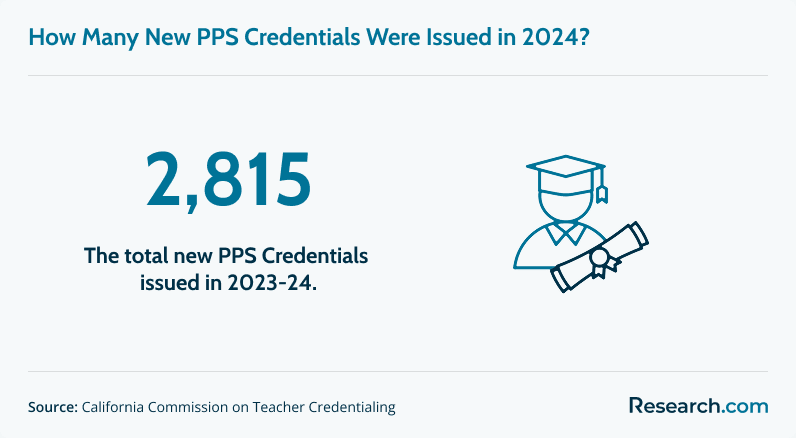
According to the CCTC database, 2,815 new Pupil Personnel Services Credentials were issued during the 2023-24 period.
Clearing a PPS Credential Through National Board Certification
Some candidates may use National Board for Professional Teaching Standards certification to clear the credential. For example, a professional who holds the Early Childhood to Young Adulthood – School Counseling certificate in the equivalent area may apply directly to the CCTC for a clear PPS Credential in School Counseling. This route may also satisfy or exempt certain requirements, including the Basic Skills Requirement, depending on the applicant’s situation.
The preliminary-to-clear sequence is similar to progression models in other regulated professions. For instance, this overview of LISW, LICSW, and LCSW licensure differences shows how professionals often move from an initial authorization to a more advanced practice status after additional supervised experience or requirements.
How to Get a PPS Credential in California
To earn a PPS Credential in California, you generally complete a Commission-approved post-baccalaureate preparation program in your specialization, complete supervised fieldwork, obtain the required clearance, and apply through the California Commission on Teacher Credentialing. The exact pathway depends on whether you trained in California or completed comparable preparation in another state.
Step 1: Confirm Eligibility Before Applying
- Earn a bachelor’s degree: Applicants must hold a bachelor’s degree or higher from a regionally accredited college or university.
- Satisfy the Basic Skills Requirement: A baccalaureate degree from a regionally accredited institution should meet the Basic Skills Requirement. In the past, many candidates met this requirement by passing the CBEST or using another approved option.
- Complete background clearance: Candidates complete Live Scan fingerprinting and obtain a CCTC-issued Certificate of Clearance. The clearance must remain active while completing fieldwork.
Step 2: Complete a CCTC-Approved Professional Preparation Program
The center of the PPS process is the approved graduate-level preparation program. These programs combine specialized coursework with supervised field experience in the selected area, such as school counseling, school psychology, school social work, or child welfare and attendance.
Students interested in the counseling specialization often compare campus, hybrid, and online options, including fast online master’s in school counseling programs. The School Counseling specialization represented the largest share of new PPS Credentials issued in 2023-24, accounting for 43.5% of the total.
Step 3: Receive the University Recommendation and Complete the CCTC Application
After you finish the approved program, the university typically initiates the credential recommendation process. The final steps usually include:
- Program recommendation: The university submits an online recommendation to the CTC for the PPS Credential and the correct specialization.
- Application and payment: The CCTC sends an email notice that the recommendation has been submitted and that the application processing fee is due.
- Credential issuance: Once the fee and processing steps are complete, the CCTC issues the credential and specialization online.
Pathway for Out-of-State Prepared Applicants
If you completed a comparable PPS preparation program outside California, you may apply directly to the CCTC by mail. Out-of-state applicants should prepare documentation carefully because the Commission must determine whether the program and fieldwork are comparable to California requirements.
- A completed Form 41-4 application.
- Evidence of completing a comparable post-baccalaureate program, with units varying by specialization.
- Official transcripts documenting supervised field experience with school-aged children.
- A copy of the comparable out-of-state credential or an official university letter confirming program completion and eligibility.
- A completed Live Scan receipt or two FD-258 fingerprint cards for applicants who live outside California.
- The required application processing fee.
The chart below shows how new PPS Credentials were distributed across CCTC specializations during the 2023-24 academic year. The pattern highlights the large role of the School Counseling specialization among new entrants to California school support positions.
Is a PPS Credential Required to Be a School Counselor in a California Public School?
Yes. To serve as a school counselor in a California public school, you need a PPS Credential with a School Counseling specialization. The requirement comes from the California Commission on Teacher Credentialing, the state agency that regulates certificated roles in public education.
People exploring counseling work more broadly should also compare school-based roles with other counseling career paths, because not every counseling job uses the same credential, setting, or scope of practice.
The PPS School Counseling credential verifies that the counselor completed an approved post-baccalaureate preparation program, often as part of a master’s degree. The preparation includes graduate coursework, supervised fieldwork, and competencies tied to academic, college and career, and social-emotional support for students from Pre-K through grade 12.
Without the PPS School Counseling credential, a person generally cannot be assigned the certificated duties of a school counselor in California’s public school system. The credential functions as a public-school authorization, confirming preparation in legal and ethical responsibilities, student advocacy, crisis response, collaboration with families and educators, and data-informed counseling programs. For a deeper role breakdown, review this guide to what school counselors do.
What a PPS School Counselor Is Authorized to Do
| School Counseling Function | Examples of Authorized Duties |
| Program planning | Create, coordinate, implement, and evaluate a comprehensive counseling and guidance program, often using a model such as the ASCA National Model. |
| Student advocacy | Promote equitable access to academic opportunities, social development, and support services for all students. |
| Direct student services | Provide prevention activities, intervention services, and individual or group counseling within the school setting. |
| Academic and career planning | Help students choose courses, understand graduation requirements, plan for college or careers, and prepare for postsecondary options. |
| Consultation | Work with teachers, families, administrators, and community partners on student needs, behavior concerns, and available resources. |
| Advisory program support | Supervise or support district-approved advisory programs, including programs described in California Education Code, Section 49600. |
| School-based mental health support | Help students build coping skills, manage challenges, and address barriers that interfere with learning. |
PPS Credential vs. LPCC vs. Teaching Credential in California
The PPS Credential, the Licensed Professional Clinical Counselor license, and a general teaching credential serve different purposes. The right path depends on whether you want to work in a public school counseling role, provide clinical mental health treatment, or teach in a classroom.
If your goal is educational counseling, it can help to compare graduate options such as online master’s programs in educational counseling before choosing a credential route.
| Credential or License | Issuing Body | Primary Purpose | Typical Work Settings | What It Does Not Do |
| PPS Credential in School Counseling | California Commission on Teacher Credentialing | Authorizes school counseling services in California public schools. | Public elementary, middle, and high schools; district student support offices. | Does not authorize independent private psychotherapy practice outside school employment. |
| Licensed Professional Clinical Counselor | Board of Behavioral Sciences | Authorizes clinical mental health counseling, diagnosis, treatment, and psychotherapy. | Private practice, community mental health, clinics, hospitals, and related settings. | Does not automatically authorize assignment as a general public school counselor. |
| General Teaching Credential | California Commission on Teacher Credentialing | Authorizes classroom instruction in a subject area or self-contained classroom. | California public school classrooms. | Does not authorize school counseling, school psychology, or school social work duties without the relevant PPS specialization. |
PPS Credential in School Counseling
- Scope: Focuses on comprehensive school counseling, student development, collaboration, prevention, intervention, academic planning, and family-school coordination.
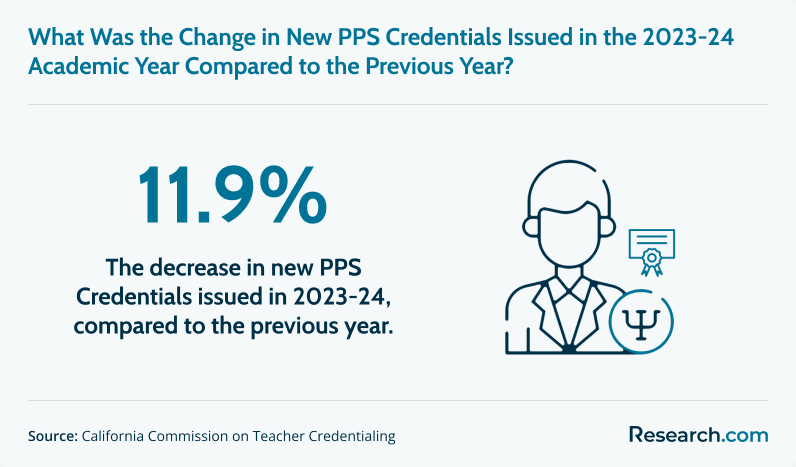
- Regulator: The credential is issued by the California Commission on Teacher Credentialing. Based on the CCTC report, the total number of new PPS Credentials issued in 2023-24 decreased by 11.9% compared with the prior year.
- Best fit: The PPS route is appropriate for people who want to work as school counselors in California public schools.
Licensed Professional Clinical Counselor
- Scope: The LPCC is a clinical mental health license that permits diagnosis, treatment, and psychotherapy for mental and emotional disorders.
- Training requirement: LPCC preparation includes extensive post-graduate supervised clinical experience, with a 3,000-hour minimum, and a clinical examination.
- Regulator: The license is issued by the Board of Behavioral Sciences, which regulates clinical mental health professionals, including Marriage and Family Therapists and Clinical Social Workers.
- Best fit: The LPCC is designed for clinical work in settings such as private practice, hospitals, clinics, and community mental health agencies.
An LPCC may provide mental health services in school-related settings, but that does not necessarily make the person eligible for assignment as a general public school counselor. Some universities offer combined PPS and LPCC tracks for students who want broader career flexibility.
General Teaching Credential
- Scope: Teaching credentials prepare educators for classroom instruction, curriculum planning, pedagogy, assessment, and classroom management.
- Regulator: Like the PPS Credential, the general teaching credential is issued by the California Commission on Teacher Credentialing.
- Best fit: This credential is for people who want to be teachers of record in California public school classrooms.
Prerequisite Coursework for PPS School Counseling Programs in California
Prerequisites for PPS School Counseling programs are not identical across California universities. The credential itself is tied to completion of an approved graduate-level professional preparation program, but individual schools may require certain undergraduate courses before admission or before graduate coursework begins.
Common Courses Applicants May Need
Many programs look for foundational preparation in psychology, development, and statistics. Fresno Pacific University, for example, commonly requires coursework such as Child Growth and Development, General Psychology, and Introduction to Statistics, though some requirements may be waived for applicants with a qualifying psychology bachelor’s degree.
Cal State East Bay requires Introduction to Statistics, while courses such as Developmental Psychology and Psychopathology are required only for candidates pursuing the Marriage and Family Therapy option.
Other universities do not require specific undergraduate prerequisites. Cal State Long Beach, for example, states that its program has no prerequisite courses and that applicants may hold an undergraduate degree in any major.
Admission Requirements Most Applicants Should Expect
- Bachelor’s degree: A baccalaureate degree from a regionally accredited institution is required. Programs often accept many majors, although psychology, education, social work, and related fields are common backgrounds.
- Minimum GPA: Many programs use a GPA threshold, often around 3.0 in the last 60 units of coursework.
- Basic Skills Requirement: Applicants must show that they meet California’s Basic Skills Requirement. This can often be met with a bachelor’s degree or higher from a regionally accredited institution, effective June 29, 2024, or by passing the CBEST.
Applicants who are still comparing graduate study options may also find it useful to understand broader degree differences, such as how a Master of Arts differs from a Master of Fine Arts, because graduate programs may emphasize applied practice, research, counseling skills, or creative work depending on the discipline.
Questions to Ask Before Applying
- Does the program require prerequisite courses before admission, or can they be completed after acceptance?
- Will prior coursework in psychology, education, statistics, or social work satisfy any requirements?
- Does the program lead to the PPS Credential only, or to both a master’s degree and the PPS Credential?
- Are field placements arranged by the university, or must students find their own sites?
- Does the program support candidates who work full time?
Child Welfare and Attendance Authorization: Additional Unit and Fieldwork Requirements
To add the Child Welfare and Attendance authorization to an existing California PPS Credential, candidates complete at least 9 semester units of post-baccalaureate study. The authorization may be added to a PPS Credential in School Counseling, School Social Work, or School Psychology.
The CWA authorization also requires supervised field experience. The California Commission on Teacher Credentialing specifies at least 150 clock hours focused on CWA performance expectations, including at least 90 hours in a school setting with direct pupil contact.
When the CWA Authorization Makes Sense
- You already hold or are earning a PPS Credential: Candidates must have a valid California PPS Credential, or be issued one at the same time, in School Counseling, School Psychology, or School Social Work.
- Your work involves attendance and welfare issues: The authorization is especially relevant for professionals addressing truancy, chronic absenteeism, student welfare, family engagement, and legal compliance.
- Your original PPS program did not include CWA: Because recent CCTC program standards have changed, newer PPS programs may embed CWA preparation, while stand-alone 9-unit added authorization programs often serve professionals credentialed under older standards.
The decision to add CWA is similar to choosing a specialty focus in other applied fields. For example, this comparison of MPH, MSPH, and MHS pathways shows how differences in practice-oriented and research-oriented preparation can shape later career options.
Can You Get a PPS Credential Without a Master’s Degree in Counseling?
In most cases, candidates for the PPS Credential in School Counseling complete an approved graduate program that is structured as both a master’s degree and a PPS Credential pathway. Many California universities design their school counseling programs this way because the credential preparation is graduate-level and includes extensive coursework and supervised practice.
There are limited credential-only options in some situations:
- Credential-only tracks: Some universities offer a PPS Credential-only option that includes nearly the same professional preparation sequence but does not award a master’s degree.
- State unit requirement: The CCTC requirement for the PPS Credential in School Counseling includes post-baccalaureate degree study totaling at least 48 semester units in a Commission-approved professional preparation program, plus supervised practicum.
- Post-master’s route: Applicants who already hold a master’s degree in a related field, such as clinical counseling, psychology, or social work, may be eligible for a post-master’s PPS Credential program that fills in missing coursework and fieldwork rather than requiring a second master’s degree.
For students comparing formats, the distinction is not always about whether the content is easier or harder. It is often about whether the program awards a degree, a credential, or both. A similar distinction appears in this explanation of the difference between thesis and non-thesis master’s programs.
The chart below provides national wage context for school and career counselors and advisors. At the national level, the mean wage for counselors in elementary and secondary schools was $76,960 in 2024.
PPS Credential Program Costs in California
The cost of a PPS Credential program depends heavily on the institution, whether the school is public or private, and whether the credential is bundled with a full master’s degree or completed as a post-master’s credential-only program.
Master’s Degree Plus PPS Credential
The most common path is a Master of Arts or Master of Science in Counseling with the PPS Credential embedded. These programs commonly require 48 to 60 units.
| Program Type | Typical Cost Per Unit | Estimated Total Program Tuition |
| Private university | $815 to over $2,244 | $40,000 to over $102,000 for 48–60 units |
| Public university | Based on semester or term fees | $4,274 - $4,748 per semester |
Post-Master’s or Stand-Alone PPS Credential
Candidates who already have a related master’s degree may be able to complete a shorter post-master’s certificate or credential-only sequence. At schools that offer this option in areas such as counseling or social work, cost per unit is generally in the $510 to $810 range. Because these programs may require fewer units, such as 6 to 20 units, the total tuition is often lower than a full master’s program.
Cost Factors Students Often Overlook
- Total units, not just tuition per unit: A lower per-unit price can still lead to a high total cost if the program requires more units.
- Fieldwork logistics: Commuting, reduced work hours, professional liability requirements, and placement schedules can affect affordability.
- Public vs. private tuition structure: Public programs may charge by term, while private programs often charge by unit.
- Credential-only eligibility: A post-master’s option may be cheaper, but only if your prior graduate work satisfies the program’s admission and equivalency rules.
How Long Does a Master’s and PPS Credential Program Take?
A combined master’s degree and PPS Credential program in California usually takes longer or shorter depending on the specialization, fieldwork structure, and whether the student attends full time or part time. Students seeking flexibility may compare options such as an online school counseling degree.
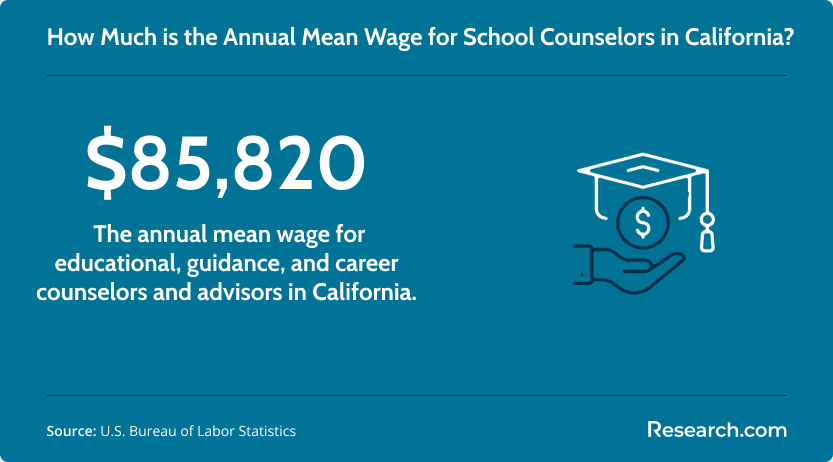
For wage context, the annual mean wage for educational, guidance, and career counselors and advisors in California was $85,820 in 2024. Candidates interested in the PPS Credential should evaluate the graduate degree requirement, program cost, and salary schedule in the districts where they hope to work.
Full-Time Enrollment
- 2 years, or 5 semesters: Many full-time master’s in School Counseling and PPS Credential programs, especially in the California State University system, are designed around this timeline and may include summer coursework.
- 3 years: School Psychology programs and some School Counseling programs may take three years because of higher unit totals, specialized assessments, and more complex fieldwork or internship requirements.
Part-Time Enrollment
- 3 to 4 years: Part-time master’s and PPS Credential programs often stretch the sequence to 3 to 4 years. Some schools offer a two-year full-time option and a three-year part-time plan, with evening or online coursework for working adults. Students who want a shorter timeline can also review an accelerated online master’s in educational counseling.
Timeline Comparison
| Path | Typical Timeline | Best For | Main Trade-Off |
| Full-time master’s plus PPS | 2 years, or 5 semesters; some programs take 3 years | Students who can prioritize graduate study and fieldwork | Less scheduling flexibility while enrolled |
| Part-time master’s plus PPS | 3 to 4 years | Working adults or students with family obligations | Longer time before credential completion |
| Post-master’s PPS | Varies by prior coursework and program requirements | Professionals who already hold a related graduate degree | Eligibility depends on how prior coursework maps to PPS requirements |
How to Evaluate the Quality of a PPS Credential Program in California
A strong PPS program should do more than meet minimum unit requirements. It should be CCTC-approved, transparent about field placement expectations, clear about whether the program leads to a credential, degree, or both, and honest about costs and timelines. Students comparing programs should also look for practical advising, experienced faculty, support for working adults, and strong school-district relationships.
Affordability matters, but the cheapest option is not always the best option if it creates problems with placement, credential recommendation, or completion. If cost is a major concern, compare accredited and approved programs alongside resources such as Research.com’s guide to the most affordable online counseling degree options.
Program Quality Checklist
| What to Check | Why It Matters | Question to Ask |
| CCTC approval | Only approved preparation programs can recommend candidates for the California PPS Credential. | Is this program currently approved for my exact PPS specialization? |
| Degree and credential structure | Some programs award both a master’s and credential; others are credential-only. | Will I graduate with a master’s degree, a PPS recommendation, or both? |
| Fieldwork placement support | Field experience is required, and placement quality affects readiness. | Does the program secure placements, or am I responsible for finding one? |
| Schedule format | Evening, online, hybrid, and full-time options affect completion speed and work-life balance. | Can I complete this program while working? |
| Cost transparency | Total cost includes more than tuition. | What are all required fees, placement costs, and credential application costs? |
| Outcomes and support | Advising, completion support, and district partnerships can affect your job search. | What support is available for credential filing and employment preparation? |
PPS Credential School Counselor Salaries in California
School counselor salaries in California vary widely by district, region, education level, and years of service. Because public school counselors are often paid on step-and-column salary schedules, two counselors with the same credential may earn different salaries depending on where they work and how much experience or graduate credit they bring.
Factors That Affect Salary
- Location and cost of living: Salaries are often higher in expensive metropolitan areas, including the Bay Area and parts of Southern California, where average salaries frequently exceed $90,000 to over $110,000.
- Years of experience: Starting salaries can range from $52,000 to $78,000 depending on the district, while experienced counselors in large districts may exceed $100,000 to $120,000.
- Education and units: Because PPS candidates commonly hold a master’s degree, they may begin on a higher salary column. Additional post-graduate units can move some counselors to higher salary levels.
- District salary schedule: Pay can differ significantly between districts. A large or affluent district may offer a higher starting salary and a higher maximum than a smaller or rural district.
- Extra assignments: Additional responsibilities such as Head Counselor, Master Schedule Coordinator, or WASC Coordinator may come with annual stipends that increase total compensation.
How to Estimate Your Likely Pay
- Identify the districts where you are most likely to apply.
- Find each district’s counselor or certificated salary schedule.
- Look for how the district places master’s degree holders and candidates with extra graduate units.
- Check whether counselors are on the teacher schedule or a separate counselor schedule.
- Review stipends for extended work year, department leadership, scheduling, or accreditation duties.
- Compare the expected salary against total program cost and the time required to finish the credential.
What PPS Credential Holders Say About the Work
- Maria: "Completing the PPS Credential in School Counseling gave me a structured way to move into a career centered on student growth. The training helped me build data-informed counseling programs and support students across academic, college and career, and social-emotional needs. The workdays can be long, but being an advocate for students makes the role deeply meaningful."
- David: "The PPS Credential in School Social Work prepared me to address barriers that students bring with them from home, school, and the community. I valued the emphasis on connecting families with resources and working within systems instead of trying to solve problems in isolation. It is challenging work, but it is also one of the most human-centered roles in education."
- Jessica: "My PPS path in School Psychology was demanding, especially with the coursework and 1,200 hours of required fieldwork. That rigor mattered. It prepared me to complete legally sound psychoeducational assessments, collaborate on intervention plans, and better understand how each student learns."
Common Mistakes to Avoid When Choosing a PPS Credential Program
- Assuming every counseling master’s leads to a PPS Credential: A general counseling degree may not qualify you for public school counselor positions unless it is tied to a CCTC-approved PPS preparation program.
- Ignoring the specialization: School Counseling, School Psychology, School Social Work, and CWA are different authorizations. Choose the one aligned with the job you want.
- Comparing tuition without comparing total cost: Look at total units, fees, commuting, fieldwork requirements, and lost work hours.
- Overlooking field placement requirements: A program may look convenient online, but fieldwork still happens in real school settings.
- Assuming out-of-state preparation transfers automatically: California reviews comparability, transcripts, fieldwork, and credential documentation before issuing the PPS Credential.
- Choosing based only on speed: Fast programs can be useful, but they still need to meet credential standards and provide adequate placement support.
- Not checking the salary schedule before enrolling: District pay varies. ROI depends on where you work, not only on statewide wage context.
Current Trends Affecting PPS Credential Candidates
Several practical trends are shaping how students should evaluate PPS pathways. Public schools continue to rely on credentialed specialists to address academic planning, attendance, mental health concerns, family engagement, and special education-related needs. At the same time, candidates face rising attention to affordability, flexible program formats, and clear credential outcomes.
Online and hybrid graduate programs can improve access for working adults, but students should verify that remote coursework still leads to the correct PPS recommendation and includes approved fieldwork. Technology and data systems are also changing the daily work of school counselors, social workers, and psychologists by making documentation, student tracking, intervention monitoring, and program evaluation more central to the job.
AI may assist with drafting communications, organizing information, or analyzing trends, but it does not replace the professional judgment required for student support, legal compliance, crisis response, confidentiality, assessment, and ethical decision-making. PPS candidates should expect employers to value both human-centered skills and comfort using school data systems responsibly.
Is the PPS Credential Worth It?
The PPS Credential is worth pursuing if your goal is to work in a certificated student-support role in California public schools. It is not optional for public school counseling assignments, and it provides a direct pathway into roles that combine education, student development, family collaboration, and school-based intervention.
It may not be the right fit if you primarily want private clinical practice, adult therapy, hospital-based mental health work, or classroom teaching. In those cases, an LPCC, another clinical license, or a teaching credential may better match your goals.
| Choose the PPS Path If... | Consider Another Path If... |
| You want to work in a California public school as a counselor, psychologist, social worker, or CWA specialist. | You want to provide independent psychotherapy in private practice. |
| You are comfortable working with students, families, teachers, administrators, and community agencies. | You prefer one-on-one clinical counseling outside school systems. |
| You want a role tied to academic success, attendance, social-emotional support, and educational access. | You want to be the teacher of record in a classroom. |
| You are prepared for graduate study, supervised fieldwork, and credential requirements. | You need the shortest possible route into a non-school counseling job. |
Key Insights
- The PPS Credential is the required California authorization for several public school student-support roles, including school counselor, school psychologist, school social worker, and child welfare and attendance specialist.
- School Counseling is the largest PPS specialization by new credentials issued, accounting for 43.5% of new PPS Credentials in 2023-24.
- Most school counseling candidates complete a combined master’s degree and PPS Credential program, though credential-only and post-master’s options exist at some institutions.
- The PPS Credential is different from the LPCC. PPS authorizes school-based certificated services; LPCC authorizes clinical mental health practice.
- Program approval matters. Before enrolling, confirm that the program is CCTC-approved for your exact specialization and that it can recommend you for the credential.
- Cost varies widely. Private master’s plus PPS programs may cost $40,000 to over $102,000, while public universities use semester or term fee structures such as $4,274 - $4,748 per semester.
- Full-time programs often take 2 years or 5 semesters, while part-time options commonly take 3 to 4 years.
- Salary outcomes depend on district salary schedules, experience, graduate units, location, and stipends. Review local district pay scales before estimating return on investment.
References:
- California Commission on Teacher Credentialing. (n.d.). Educator supply and other data.
- California Commission on Teacher Credentialing. (2025). Pupil Personnel Services Credential for Individuals Prepared in California (CL-606C).
- National Center for O*NET Development. (n.d.). Local training resources for 21-1012.00 Educational, Guidance, and Career Counselors and Advisors in California.
- U.S. Bureau of Labor Statistics. (2023). Occupational employment and wages, May 2023: 21-1012 Educational, Guidance, and Career Counselors and Advisors. U.S. Department of Labor.
- U.S. Bureau of Labor Statistics. (2025). School and career counselors and advisors. In Occupational Outlook Handbook. U.S. Department of Labor.
Other Things You Should Know About How to Get a PPS Credential in California
The California Commission on Teacher Credentialing, or CTC, approves PPS school counselor programs. Candidates must complete a CTC-approved preparation program and then apply for the credential through the CTC. Districts and universities cannot issue the PPS credential themselves.
To obtain a PPS Credential in California in 2027, school counseling candidates must complete a supervised field experience that lasts at least 600 hours. This must occur in a public school setting and be supervised by a qualified school counselor.