2027 Fastest Accredited Online Political Communication Programs: Accelerated Degrees and Completion Times

Co-Founder and Chief Data Scientist
The fastest online political communication degree is usually not the one with the shortest advertisement; it is the one that fits your transfer credits, workload, and career goal. The Bureau of Labor Statistics reported a May 2024 median pay of $69,780 for public relations specialists, a common political communication pathway. This guide is for students comparing accredited online bachelor's and master's options, including accelerated terms, prior learning credit, prerequisites, internships, and course sequencing, so you can estimate a realistic graduation date before enrolling.
Key Things You Should Know
- The shortest realistic accredited path is often a 12- to 24-month online master's for students who already have a bachelor's degree, or a 12- to 24-month bachelor's-completion route for students transferring 60 to 90 approved credits.
- Accelerated online political communication programs commonly use 7- or 8-week courses, but the weekly workload is compressed; two short courses at once can feel like a full-time job when reading, writing, campaign analysis, and group projects overlap.
- Many bachelor's programs require about 120 credits, and transfer-friendly schools may accept up to 90 credits toward the degree, but residency rules, major-course minimums, GPA limits, and unaccepted electives can extend the actual timeline.
Which Colleges Offer the Fastest Accredited Online Political Communication Programs?
Political communication is a specialized field, so the fastest accredited options often appear under related names such as communication studies, mass communication, strategic communication, political management, public relations, or advocacy communication. The table below focuses on institutionally accredited U.S. online programs that are either directly political communication-oriented or closely aligned with campaign, advocacy, government, and public affairs communication careers.
| College | Online program fit | Credential level | Published speed factors to verify | Best-fit student |
| Regent University | Communication Studies with political communication emphasis | Bachelor's | Online delivery, short course sessions, transfer-credit review, major residency requirements | Students who want an undergraduate degree directly tied to political messaging, media, and persuasion |
| Louisiana State University Online | Mass Communication pathway with political communication focus | Bachelor's | Online coursework, accelerated-style terms, transfer evaluation, required upper-division credits | Students seeking a media-centered route into campaigns, public affairs, or advocacy |
| George Washington University | Political Management | Master's | 36-credit curriculum, online format, part-time and full-time pacing options | Working professionals who already hold a bachelor's degree and want a faster graduate route into campaigns, policy advocacy, or political consulting |
| Johns Hopkins University | Communication with strategic and public-facing communication applications | Master's | 10-course structure, online courses, elective planning, capstone or portfolio requirements | Students who want a respected communication degree that can be shaped toward public affairs, media strategy, or institutional communication |
| Southern New Hampshire University | Communication with public relations or media-focused options | Bachelor's | 8-week undergraduate terms, transfer-friendly policies, remaining major and general education requirements | Transfer students who need maximum flexibility and want communication skills applicable to political or nonprofit messaging |
The fastest choice depends on where you are starting. A student with no college credits usually needs a full bachelor's plan, while a student with an accredited bachelor's degree may move faster through a political management or strategic communication master's program.
When comparing schools, separate advertised speed from your personal completion time. Ask each admissions office for a written degree plan after transfer evaluation, not just a general estimate from a program page.
How Long Does It Take to Complete an Accredited Online Political Communication Degree?
"Fastest" means the shortest credible path to graduation without skipping accreditation, required credits, or core learning outcomes. "Completion time" means the calendar time from first enrolled term to degree conferral, including accepted transfer credits, course availability, prerequisites, capstone projects, and any internship or applied experience requirement.
The table below summarizes realistic timelines by starting point. Use it to identify which pathway matches your credit history before assuming an advertised timeline applies to you.
| Starting point | Common credential | Typical credits remaining | Realistic accelerated timeline | What can slow it down |
| No prior college credit | Bachelor's in political communication, communication, or mass communication | About 120 credits | 3 to 4 years with heavy year-round enrollment | General education sequence, writing-intensive courses, course limits, work schedule |
| Associate degree or 60 transferable credits | Bachelor's-completion program | About 60 credits | 18 to 24 months for strong full-time students | Credits that do not meet major requirements, upper-division residency rules |
| 90 transferable credits | Bachelor's-completion program | About 30 credits | 12 to 18 months when required courses are offered frequently | Capstone timing, missing prerequisites, minimum institutional-credit rules |
| Completed bachelor's degree | Online master's in political management, strategic communication, or public affairs communication | Often 30 to 36 graduate credits | 12 to 24 months depending on course load | Part-time enrollment, thesis or capstone requirements, limited elective rotations |
| Professional experience but limited credits | Prior-learning-assisted bachelor's route | Varies after evaluation | Potentially shortened if credit is awarded | Portfolio documentation, credit caps, school-specific review timelines |
A shorter term is not the same as a lighter course. In a 7- or 8-week format, students often complete the same credit value in about half the time of a traditional 15- or 16-week semester course, which usually means more reading, writing, discussion, and deadlines each week.
How Do Accelerated and Competency-Based Online Political Communication Programs Work?
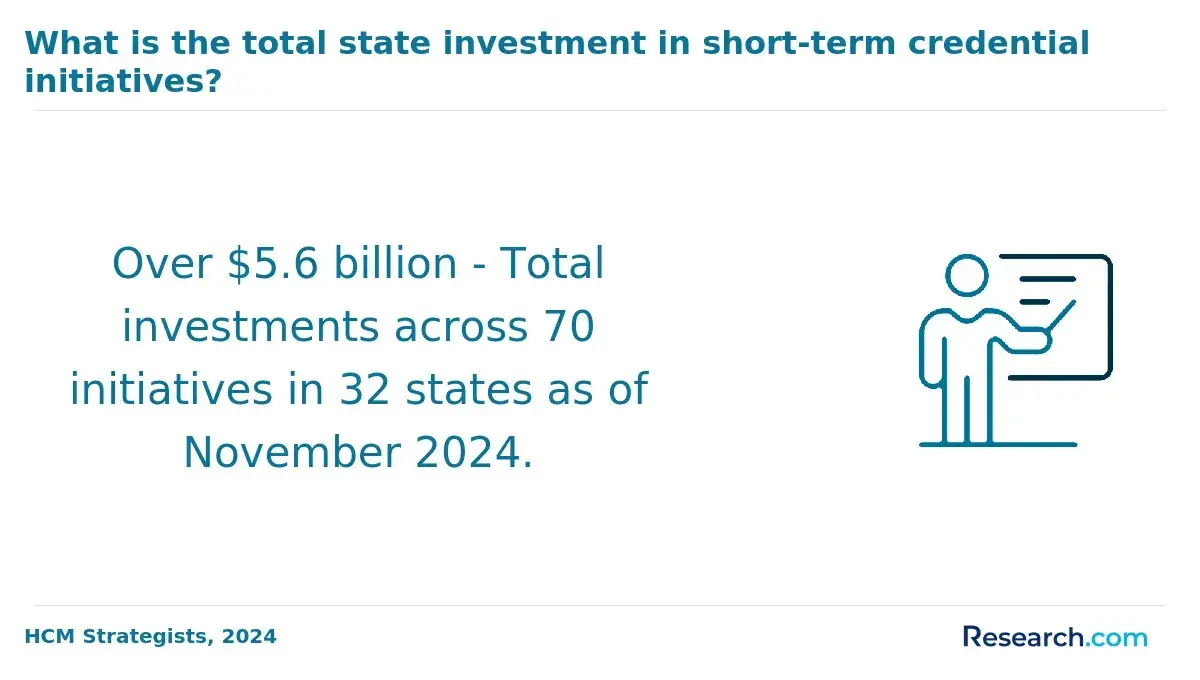
Accelerated online programs shorten calendar time by changing the academic format, not by reducing degree standards. Many accelerated degree programs use compressed terms, year-round enrollment, overlapping sessions, and transfer-credit policies to help students complete more credits each year.
These formats can reduce time to graduation, but each one has a trade-off. Review the common models below before choosing the fastest schedule available.
- Short-term courses: Seven- or 8-week classes let students take more course starts per year, but weekly deadlines arrive quickly and writing-heavy communication courses can be demanding.
- Year-round enrollment: Summer and winter terms can shorten the calendar, especially for students who can avoid long breaks between sessions.
- Stacked course loads: Taking two accelerated courses at once can speed progress, but it may be unrealistic for students with full-time jobs, caregiving responsibilities, or campaign-season workloads.
- Competency-based education: Students advance by demonstrating mastery, which can help experienced writers, media workers, veterans, or campaign staff move faster if the program allows self-paced progress.
- Asynchronous online classes: Students do not need to log in at fixed times, but they still have weekly assignments, group work, exams, presentations, or recorded speeches.
Competency-based political communication degrees are less common than term-based communication degrees. If a school advertises self-paced completion, ask whether major courses, capstones, and electives are also self-paced or only the general education courses are.
What Accreditation Should an Online Political Communication Program Have?
The minimum accreditation standard is institutional accreditation from an agency recognized by the U.S. Department of Education or the Council for Higher Education Accreditation. This matters because accreditation can affect federal financial aid, transfer credit, graduate school eligibility, and employer confidence.
Political communication does not have a single required programmatic accreditor in the way some health fields do. For example, students in speech-language pathology often need ASHA accredited programs for specific professional pathways, but political communication students usually focus first on institutional accreditation and then on curriculum relevance.
Some journalism, communication, or mass communication programs may hold specialized accreditation or external recognition, but it is typically not required for campaign, public affairs, advocacy, or strategic communication jobs. What matters most is whether the program teaches research, persuasion, media strategy, ethics, writing, analytics, public speaking, and applied campaign communication.
Before enrolling, verify accreditation directly rather than relying only on marketing language. Follow this sequence to avoid unrecognized or weak credentials.
- Search the institution in the U.S. Department of Education accreditation database or the accreditor's own directory.
- Confirm that the online campus or online division is covered by the same institutional accreditation.
- Ask whether credits from the program commonly transfer to other accredited colleges.
- For graduate study plans, ask target master's or doctoral programs whether the degree satisfies their admission expectations.
- Be cautious with schools that advertise extreme speed but do not clearly identify recognized accreditation.
How Can Transfer Credits and Prior Learning Shorten an Online Political Communication Degree?
Transfer credit is usually the biggest time-saver for bachelor's students. A school may accept prior general education, elective, or lower-division communication courses, but it may still require a minimum number of upper-division major credits completed through the institution granting the degree.
The table below shows how different types of credit may affect completion time. It is not a guarantee, because every college evaluates credits differently.
| Credit source | How it may help | Common limitation | Best use case |
| Community college coursework | Can satisfy general education and lower-division electives | Some credits may transfer as electives rather than major requirements | Students entering with an associate degree or transfer pathway agreement |
| Prior bachelor's coursework | May reduce general education requirements for a second bachelor's or support master's admission | Older credits or low grades may be rejected | Adults returning to finish a degree after stopping out |
| AP, IB, or CLEP exams | Can remove introductory requirements | Score thresholds and credit caps vary by school | Students who need to clear general education faster |
| Military training | May convert documented training into elective or general education credit | Major-specific credit is less common | Veterans or active-duty students with Joint Services Transcript records |
| Professional portfolio | Can award credit for documented learning from work or civic experience | Requires evidence and faculty review; not all schools offer it | Campaign staff, nonprofit communicators, journalists, or public affairs workers |
To graduate as quickly as possible, request an unofficial transfer estimate before applying and an official degree audit before committing. The most important number is not total accepted credits; it is the number of credits that actually apply to your remaining degree requirements.
What Are the Admission Requirements and Start Dates for Accelerated Online Political Communication Programs?
Admissions requirements vary by level. Bachelor's programs usually require a high school diploma or equivalent, transcripts from all prior colleges, and sometimes a minimum GPA for transfer admission. Master's programs usually require a bachelor's degree, transcripts, a resume, a statement of purpose, and sometimes writing samples or recommendations.
Accelerated programs often offer multiple start dates each year, which can reduce waiting time. Rolling admissions and frequent 7- or 8-week sessions are especially helpful for students who do not want to wait until a fall semester.
Before applying, gather the items that most commonly delay enrollment and credit evaluation. A missing transcript can push your start date back even if the program itself is flexible.
- Official transcripts from every college previously attended, including schools where you took only one or two courses
- High school transcript or GED documentation for first-time bachelor's applicants
- Updated resume showing campaign, media, public affairs, nonprofit, government, or communication experience
- Writing sample if the program emphasizes persuasion, journalism, public relations, or political analysis
- Transfer-credit appeal documents, such as syllabi, course descriptions, military records, or certification records
- Financial aid documents, including FAFSA information and employer tuition assistance forms when applicable
If you plan to continue into graduate research or teaching later, ask whether the bachelor's or master's curriculum includes research methods, thesis options, or faculty-supervised projects. Students considering an online PhD should be especially careful to choose programs that build research and academic writing skills, not only practical campaign skills.
How Much Does a Fast Online Political Communication Degree Cost, and Is Financial Aid Available?
Faster graduation can reduce living costs and opportunity costs, but it does not automatically make a degree cheaper. Tuition is usually charged per credit, so the biggest cost drivers are credits remaining, transfer acceptance, fees, books, technology costs, and whether you qualify for in-state, military, employer, or scholarship rates.
For context, College Board's 2024 Trends in College Pricing reported average published tuition and fees of $11,610 for in-state students at public four-year institutions and $43,350 at private nonprofit four-year institutions for 2024-25. Online program pricing can be lower, higher, or flat-rate, so use these figures as a benchmark rather than a direct estimate.
Common cost components include the following. Ask each school to provide a total program estimate after your transfer evaluation, not just a per-credit tuition quote.
- Per-credit tuition for remaining undergraduate or graduate credits
- Online learning, technology, graduation, transcript, or student service fees
- Books, media production tools, polling or analytics software, and subscription platforms
- Internship-related costs, such as travel, professional attire, or unpaid work time
- Interest costs if you borrow federal or private loans
- Lost income if you reduce work hours to carry an accelerated course load
Accredited online students may qualify for federal financial aid if they meet eligibility rules and enroll at a participating institution. If cost is your main constraint, compare communication and public affairs options the same way you would compare the cheapest online master's degree: look beyond tuition and calculate the total cost to finish.
Can You Work Full Time While Completing an Accelerated Online Political Communication Degree?
Yes, many students work full time while studying online, but the fastest schedule may not be the best schedule. Political communication courses often require writing, media analysis, campaign planning, presentations, research, and peer feedback, which can be difficult to compress around unpredictable work hours.
The table below shows how course load affects both speed and workload. Use it to decide whether an accelerated path is sustainable for your weekly schedule.
| Enrollment pace | Typical pattern | Calendar impact | Who it fits best |
| Part time | One course per accelerated term | Slower but more manageable | Full-time workers, caregivers, campaign staff during election cycles |
| Moderate full time | Two courses per term or alternating heavier and lighter sessions | Can shorten completion while preserving flexibility | Students with stable work hours and strong writing skills |
| Aggressive full time | Multiple overlapping courses year-round | Fastest but highest burnout risk | Students with few outside obligations or temporary ability to study intensively |
| Self-paced or competency-based | Progress depends on demonstrated mastery | Can be fast for experienced learners | Professionals with documented communication experience and strong independent study habits |
A good rule is to test your capacity before committing to the maximum load. Start with one accelerated writing-heavy course if you have been out of school for several years, then increase your pace once you understand the weekly rhythm.
Are Accelerated Online Political Communication Degrees Respected by Employers and Graduate Schools?
Employers and graduate schools generally care more about accreditation, curriculum quality, writing ability, relevant experience, and portfolio strength than whether the courses were online or accelerated. A fast degree can be respected when it comes from a properly accredited institution and requires meaningful work in research, ethics, message strategy, media analysis, and public communication.
Career outcomes vary because political communication graduates enter different fields, including campaign operations, public relations, public affairs, nonprofit advocacy, legislative communication, digital strategy, speechwriting, and media relations. The Bureau of Labor Statistics projects employment for public relations specialists to grow 6% from 2024 to 2034, which suggests continued demand for communication professionals, but it does not guarantee a specific role or salary for any degree holder.
To strengthen employer confidence, build evidence of skill while you study. Prioritize courses and projects that produce campaign memos, press releases, op-eds, social media analytics reports, crisis communication plans, speeches, polling summaries, or advocacy messaging portfolios.
If you are comparing online degrees across fields, the evaluation logic is similar to choosing the best online finance degree: the credential should be accredited, career-aligned, affordable enough to justify the investment, and rigorous enough to be taken seriously.
How Should You Compare the Fastest Accredited Online Political Communication Programs?
The best fast program is the one that gets you to a credible credential quickly without creating avoidable transfer, cost, workload, or career-fit problems. Use a comparison process rather than ranking programs by advertised speed alone.
Start with these practical steps. They help you estimate your actual completion time before you enroll.
- Confirm institutional accreditation through an official accreditor or federal database.
- Request a written transfer-credit evaluation showing which credits apply to general education, major, elective, and upper-division requirements.
- Ask for a term-by-term degree plan based on your intended course load.
- Confirm whether courses are 7-week, 8-week, 15-week, asynchronous, synchronous, self-paced, or cohort-based.
- Ask how often required major courses are offered and whether any are available only once per year.
- Check whether the program requires an internship, capstone, portfolio, thesis, practicum, or proctored exam.
- Calculate total cost to finish, including fees and remaining credits after transfer.
- Compare career support, faculty experience, alumni outcomes, and portfolio-building opportunities.
Watch for common red flags. These mistakes often lead students to choose a program that looks fast but takes longer than expected.
- Assuming all credits transfer: A school may accept credits generally but still require you to repeat major or upper-division coursework.
- Confusing short terms with easy courses: Accelerated communication courses can be writing-intensive and deadline-heavy.
- Ignoring course rotation: A missing prerequisite or once-a-year capstone can add months to your completion date.
- Choosing speed over fit: A general communication degree may be fast, but it may not offer enough political media, advocacy, policy, or campaign content for your goals.
- Overlooking internship timing: Applied requirements can be valuable, but they may be difficult to schedule around full-time work or election-cycle commitments.
- Skipping graduate-school alignment: If you plan to continue to a master's or doctorate, make sure the program includes research and advanced writing preparation.
For broader comparison habits, review how other accelerated fields are evaluated and then apply the same discipline to political communication. The strongest online education decisions weigh accreditation, speed, cost, transfer policy, and career fit together rather than treating any single factor as decisive.
Other Things You Should Know About Political Communication
No. Political science focuses on government, institutions, public policy, and political behavior. Political communication focuses on how political messages are created, delivered, interpreted, and measured through media, speeches, campaigns, advocacy, and public relations.
Usually not for bachelor's programs. Master's programs may prefer applicants with professional or civic experience, but many accept students from communication, journalism, public policy, government, nonprofit, marketing, or liberal arts backgrounds.
It can support law school preparation if the program develops writing, argumentation, research, ethics, and public policy analysis. Law schools do not require one specific undergraduate major, so GPA, LSAT or other admission requirements, writing ability, and overall application strength matter more.
Useful portfolio pieces include press releases, campaign message briefs, speeches, debate analysis, social media strategy reports, crisis communication plans, voter outreach materials, op-eds, policy explainers, and analytics summaries.
References
- What do you learn in a bachelor's in communication? | edX https://www.edx.org/resources/what-do-you-learn-in-a-bachelors-in-communication
- Public Policy and Political Communication https://en.ehuniversity.lt/study-programs/public-policy-and-political-communication/
- 2025 Most Affordable Online Master's in Communications https://www.onlineu.com/most-affordable-colleges/communications-masters-degrees
- Master’s in Communication Specializations and Concentration Options https://www.mastersincommunications.com/specializations/
- Best Fastest Online Communication Degree Programs 2026 https://www.mastersincommunications.org/fastest-online-communication-degree/
- Political Communication Major: What to Study, Career Paths, and How to Build Your Profile - CIS University https://www.cis-spain.com/en/blog/political-communication-major-what-to-study-career-paths-and-how-to-build-your-profile/
- 2025's Fastest Online Master’s Degrees & Accelerated Programs https://www.onlinemastersdegrees.org/features/fastest-online-masters-degrees/
- Accrediting Council on Education in Journalism and Mass Communications - (ACEJMC) https://www.chea.org/accrediting-council-education-journalism-and-mass-communications
- Online Communication Degree Programs - OnlineEducation.com https://www.onlineeducation.com/communication/