2027 How to Become a School Counselor in Louisiana

Co-Founder and Chief Data Scientist
Becoming a school counselor in Louisiana is a graduate-level career path for people who want to support students’ academic planning, mental health, college readiness, behavior, and social-emotional development in K-12 schools. The role matters more now because schools are expected to respond not only to academic performance but also to student wellness, attendance, crisis response, and career preparation.
This guide explains how to become a school counselor in Louisiana, including the degree you need, supervised fieldwork, certification, renewal rules, salary expectations, job outlook, alternative routes, and advancement options. It is designed for bachelor’s degree holders, educators considering a counseling transition, graduate students comparing programs, and licensed counselors who want to understand how school counseling differs from LPC practice.
Quick answer: How do you become a school counselor in Louisiana?
To work as a school counselor in Louisiana public K-12 schools, you generally need a graduate degree in school counseling, supervised school-based field experience, a passing score on the Praxis Professional School Counselor exam, a background check, and School Counselor K-12 certification through the Louisiana Department of Education. The state projects a 12% growth in school counseling positions over the next decade, and Louisiana school counselors earn an average salary of $58,000, though salary figures vary by source, district, role, and experience level.
- Required education: A master’s-level school counseling program, commonly offered as an M.Ed. or M.A. with a school counseling concentration.
- Required fieldwork: A supervised practicum and internship in a school setting, including at least 100 direct contact hours and a minimum of 600 internship contact hours.
- Required exam: Praxis Professional School Counselor exam, test code 5421 or the current version required by the state.
- Credentialing agency: Louisiana Department of Education.
- Renewal cycle: Every five years for the Ancillary School Counselor K-12 certificate.
- Important caution: School counseling certification is not the same as Licensed Professional Counselor licensure, and Louisiana does not provide automatic interstate license transfer.
- Degree requirements for Louisiana school counselors
- School counseling specializations in Louisiana programs
- How long the school counseling pathway takes
- Louisiana school counselor certification requirements
- Moving a Louisiana school counseling credential to another state
- Credential renewal requirements
- Alternative routes into school counseling
- School counselor salaries in Louisiana
- Using school psychology concepts in school counseling
- School counseling certification versus LPC licensure
- Job outlook for Louisiana school counselors
- Career growth and advancement options
- Professional development for school counselors Key insights References
What degree do I need to become a school counselor in Louisiana?
Louisiana school counselors need graduate preparation that combines counseling theory, ethical practice, child and adolescent development, career planning, assessment, consultation, and supervised experience in K-12 schools. For most candidates, the central requirement is a master’s degree in school counseling or a closely aligned counseling program that meets Louisiana Department of Education expectations.
- Master’s degree in school counseling: Candidates commonly complete a CACREP-accredited graduate program. Full-time study often takes 2.5 to three years and includes advanced coursework in counseling methods, human development, group counseling, ethics, assessment, and school counseling program design.
- School-based practicum: The practicum gives candidates early supervised experience with students. Programs typically require at least 100 direct contact hours in a school environment so candidates can begin applying counseling skills before the full internship.
- School-based internship: The internship is the major hands-on training requirement. Louisiana candidates should expect a minimum of 600 contact hours in a school setting, with supervision and documentation through the graduate program.
- Common degree titles: Louisiana universities may use titles such as Master of Education, Master of Arts, or Master of Science with a school counseling concentration. The title matters less than whether the program satisfies state certification standards.
Before enrolling, confirm that the program prepares graduates for Louisiana School Counselor K-12 certification. If you are still comparing counseling fields, Research.com’s guide to counseling career requirements can help you understand how school counseling compares with clinical counseling, career counseling, rehabilitation counseling, and related paths.
| Requirement | What it means for students | Why it matters |
| Graduate degree | You complete a master’s-level counseling program with school counseling preparation. | Louisiana certification requires advanced training, not only a bachelor’s degree. |
| School practicum | You begin supervised work with students, usually before the internship. | It helps you develop counseling, documentation, and consultation skills in a real school setting. |
| Internship | You complete a minimum of 600 contact hours in a school setting. | The state expects evidence that you can perform school counselor duties under supervision. |
| Praxis exam | You pass the Professional School Counselor exam, test code 5421 or the current version. | The exam verifies knowledge needed for school counseling practice. |
| State application | You submit transcripts, test results, fieldwork verification, and background clearance. | Certification is issued by the Louisiana Department of Education, not by the university alone. |
Are there school counseling specializations in Louisiana?
Louisiana school counseling programs usually prepare students for broad K-12 practice, but many include focused coursework or training experiences that build expertise in high-need areas. These are not always separate majors. In many programs, they appear as concentrations, electives, field placement emphases, or supervised practice experiences.
- K-12 school counseling: This is the core preparation area. Students learn to support academic achievement, personal development, social-emotional growth, career exploration, and transitions across elementary, middle, and high school settings.
- Multicultural and diversity counseling: This focus prepares counselors to work ethically and effectively with students from different racial, cultural, linguistic, economic, and community backgrounds.
- Leadership and advocacy: School counselors often help remove barriers that interfere with student success. Training in leadership and advocacy prepares them to use data, collaborate with administrators, and improve schoolwide support systems.
- Consultation and collaboration: Counselors rarely work alone. This area emphasizes communication with teachers, families, school leaders, social workers, and community organizations.
- Crisis and trauma response: Schools need counselors who can respond to grief, violence, bullying, self-harm concerns, natural disasters, and other urgent student needs using trauma-informed approaches.
- Career and college readiness: This training helps counselors guide students through career exploration, course planning, financial aid awareness, postsecondary options, and transitions into college, technical education, employment, or military pathways.
Students who may want to work outside K-12 schools should look carefully at program design. A school counseling program may prepare you for school certification, but it may not automatically satisfy the full requirements for private counseling practice. If your long-term plan includes clinical counseling or private practice, review the path to LPC careers before choosing electives or field placements.
| Specialization area | Best fit for | Questions to ask a program |
| K-12 comprehensive counseling | Students who want certification for elementary, middle, or high school roles. | Does the program place interns in multiple grade levels? |
| Crisis and trauma response | Candidates interested in student safety, grief support, and intervention teams. | What training is provided in suicide risk, trauma-informed care, and crisis protocols? |
| College and career readiness | Future high school counselors or postsecondary transition advisers. | How does the curriculum cover FAFSA awareness, career pathways, and course planning? |
| Multicultural counseling | Candidates serving diverse or underserved communities. | How are equity, cultural humility, and community context built into supervision? |
| Leadership and advocacy | Counselors aiming for lead counselor, coordinator, or district roles. | Does the program teach data-driven program evaluation and schoolwide intervention planning? |
How long does it take to complete a school counseling degree in Louisiana?
A school counseling master’s degree in Louisiana usually takes about three years for full-time students. Some candidates look for the fastest way to become a counselor, but speed should not come at the expense of certification eligibility, field placement quality, or accreditation alignment.
Programs such as those at Southeastern Louisiana University and the University of Louisiana at Lafayette commonly require a 60-credit-hour curriculum. Students should also plan for 600 to 700 hours of supervised practicum and internship work in K-12 settings, which can affect work schedules, transportation, childcare, and the ability to remain employed full time.
- Credit load: Full-time graduate students often take 9–12 credits per semester. Part-time students can reduce weekly workload but should expect a longer completion timeline.
- Fieldwork scheduling: Practicum and internship hours typically occur during school hours, which can be difficult for students who work traditional daytime jobs.
- Exam timing: After completing the required preparation, candidates must pass the Praxis exam for school counseling certification.
- Additional credentials: Candidates who also want LPC or National Certified School Counselor credentials should expect extra supervised experience, exams, or documentation beyond the school certification pathway.
Louisiana school counseling programs are designed around CACREP and Louisiana Department of Education expectations. Some students may qualify for accelerated or modified plans with faculty approval, but most should treat three years as the realistic full-time benchmark. Part-time students, working adults, and students who delay fieldwork placements may need more time.
| Path | Typical timeline | Best for | Main trade-off |
| Full-time master’s program | About three years | Students who can manage graduate coursework and school-based fieldwork together. | Faster completion but heavier weekly demands. |
| Part-time master’s program | Longer than three years | Working adults, caregivers, and students who need a lighter course load. | More flexibility but delayed entry into full certification. |
| Accelerated option | Varies by university approval | Highly prepared students with strong availability for coursework and placements. | Can be intense and may not be offered by every program. |
| Post-master’s pathway | Depends on missing requirements | Candidates who already hold a graduate degree in a related field. | May still require school counseling coursework, internship hours, and exams. |
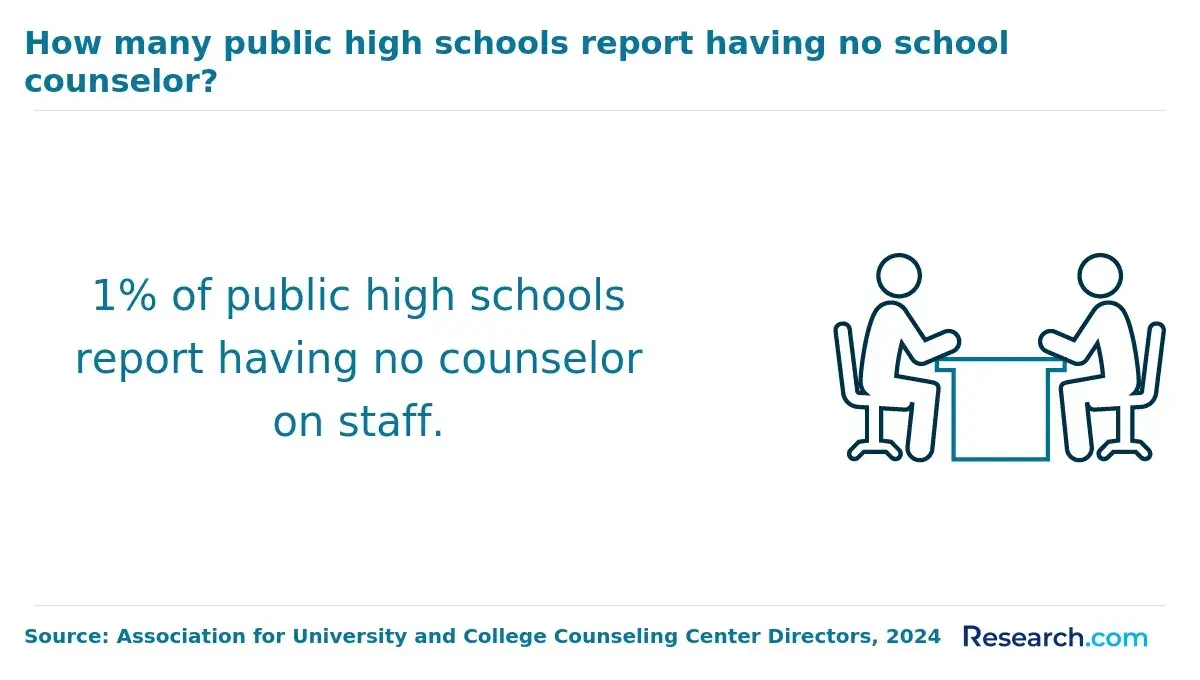
As of 2025, most school counselors worked in the education sector, while the rest were employed by private organizations outside traditional education, government agencies, and other public-sector settings, as shown in the chart below.
What certification is required to work as a school counselor in Louisiana?
Louisiana public school counselors need the School Counselor K-12 certification issued by the Louisiana Department of Education. This credential is separate from a teaching license and separate from LPC licensure. It confirms that the candidate has completed school counseling preparation and meets state requirements for service in K-12 settings.
- Complete an approved graduate program: Your degree should include school counseling coursework, supervised practicum, and internship experiences that meet Louisiana expectations.
- Pass the required Praxis exam: Candidates must pass the Praxis Professional School Counselor exam, test code 5421 or its current required version.
- Finish supervised school-based internship: The graduate program verifies that required fieldwork was completed under appropriate supervision.
- Clear a background check: Applicants must complete fingerprinting and criminal background screening because the role involves direct work with minors.
- Submit the certification application: Required documentation typically includes official transcripts, Praxis scores, internship verification, and background clearance.
- Maintain the credential: Once certified, school counselors must meet renewal and professional development requirements on the state’s schedule.
| Certification step | What to prepare | Common mistake to avoid |
| Choose a program | Confirm school counseling certification alignment before enrolling. | Assuming any counseling master’s degree qualifies for school counseling certification. |
| Complete fieldwork | Track practicum and internship hours carefully. | Waiting until the final year to ask how placements are arranged. |
| Take Praxis | Verify the required test code and current passing expectations. | Registering for the wrong counseling exam. |
| Submit paperwork | Gather transcripts, score reports, background clearance, and fieldwork verification. | Submitting incomplete documentation and delaying certification. |
| Plan renewal | Keep records of evaluations, CLUs, and employment status. | Thinking certification is permanent after initial approval. |
Can I transfer my Louisiana school counseling license between states?
Louisiana school counseling certification does not automatically transfer to every other state. If you move, the receiving state may review your Louisiana credential through an endorsement, equivalency, or state-specific application process. Requirements can differ substantially, so candidates should check the new state’s education agency before accepting a job or relocating.
School counselors moving from Louisiana may be asked to provide:
- Proof that the Louisiana credential is active and in good standing.
- Official transcripts showing graduate coursework and degree completion.
- Documentation of supervised practicum, internship, or experience hours.
- Evidence of exam scores, plus any additional state-specific tests in counseling, ethics, or education law.
- A new background check, fingerprinting process, and application fee.
- Additional coursework if the receiving state’s standards differ from Louisiana’s.
- A provisional, temporary, or conditional license while outstanding requirements are completed.
The most practical strategy is to keep detailed records from the beginning of your graduate program. Save syllabi, fieldwork logs, supervisor evaluations, test score reports, certification letters, and employment verifications. These documents can reduce delays if another state asks you to prove that your preparation matches its standards.
-
: "
One Louisiana school counselor who moved to another state described the process as “more complicated than I initially expected.” Even though her Louisiana credential was respected, she still needed additional coursework and a new state exam. A provisional license helped her begin working, but she advised future applicants to start early and keep complete records.
"
How often do Louisiana school counselors need to renew their credentials?
Louisiana school counselors renew the Ancillary School Counselor K-12 certificate every five years. Renewal is not just a personal application; it is tied to employment and documentation through the Louisiana school system.
- Five-year renewal cycle: The credential must be renewed every five years to remain active.
- Employer request: The employing Louisiana school system must request renewal and verify that the counselor has received at least three effective evaluations during the certification period.
- Continuing learning units: Counselors certified after July 1, 2013, must complete 150 continuing learning units, or CLUs, connected to their Individual Professional Growth Plan during each five-year cycle.
- LPC substitution option: A current Louisiana Licensed Professional Counselor license may be submitted instead of the 150 CLU requirement.
- Submission format: Renewal documentation must be submitted as one PDF through the Teach Louisiana online certification portal by the employing district.
- Fees: Renewal fees apply, and current fee information should be confirmed through the Louisiana Department of Education or the employing district.
- Background check: A current background check may be required after a break in service or when requested by an employer.
- Employment requirement: Counselors who are not employed by a Louisiana school system cannot renew the credential, although they may receive an eligibility letter for job applications.
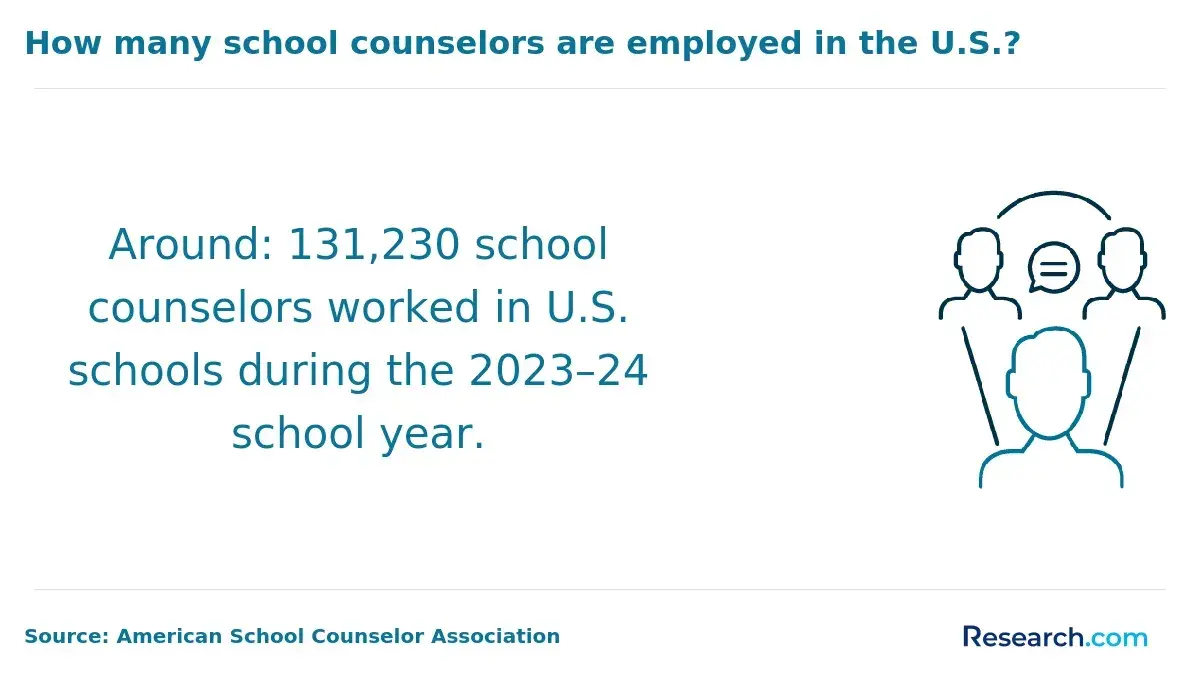
These renewal rules are designed to keep counselors professionally current while ensuring that schools document performance and ongoing learning. The image below shows the broader size of the school counselor workforce in the United States.
What are the alternative pathways to become a school counselor in Louisiana?
Louisiana offers alternatives for career changers, educators, and graduate degree holders who did not follow a traditional school counseling sequence from the start. These routes can be useful, but they still require candidates to meet state education, fieldwork, exam, and certification standards.
- Alternative certification programs: Some candidates may pursue routes that allow them to work while completing required coursework and internships, including pathways connected with a Practitioner License 2, or PL 2.
- Post-baccalaureate certificate programs: Bachelor’s degree holders may complete structured coursework and field experiences after the undergraduate degree, sometimes with online or hybrid flexibility.
- Graduate certificate or non-degree licensure coursework: Candidates who already hold a master’s degree in another field may complete missing school counseling requirements rather than earning a second full degree, depending on prior preparation.
- Provisional licensure plus exam completion: Some candidates may work under a provisional arrangement while finishing remaining requirements, but full certification still requires the appropriate exams and supervised experience.
Alternative pathways are not shortcuts around state standards. They are different sequencing options. Before enrolling, ask the provider to state in writing which Louisiana certification requirements the program satisfies and which requirements you must complete separately. Candidates interested in doctoral-level counseling education can also compare long-term options such as the cheapest PhD in counseling online, although a doctorate is not the standard entry requirement for Louisiana school counseling certification.
| Pathway | Who it may fit | What to verify before enrolling |
| Traditional master’s in school counseling | Students starting from a bachelor’s degree. | Certification alignment, accreditation status, field placement support, and Praxis preparation. |
| Post-baccalaureate certificate | Bachelor’s degree holders seeking a structured transition. | Whether the certificate alone is enough or must be paired with a graduate degree. |
| Post-master’s coursework | Candidates with a related graduate degree. | Which courses and internship hours remain missing for Louisiana certification. |
| Alternative certification | Career changers or educators who need work-compatible training. | Whether paid employment, supervised practice, and coursework can be completed on the required timeline. |
What is the average salary of school counselors in Louisiana?
School counselor salary figures in Louisiana vary by source and job category. This article includes several reported figures: an average salary of $58,000, a median salary of approximately $73,710, and an average annual salary of approximately $51,657 as of June 2025. These differences can occur because salary sources may use different datasets, job titles, time periods, geographic areas, and employer types.
When evaluating salary, candidates should look beyond one statewide number. District salary schedules, years of service, advanced credentials, contract length, local funding, and additional duties can all affect actual pay.
- Education and credentials: Advanced degrees, specialty training, and additional credentials may improve compensation in some districts.
- Experience: Counselors with more years of service often move up salary schedules or qualify for leadership responsibilities.
- Location: Urban districts and better-funded areas, including places such as Lake Charles and Baton Rouge, may offer different pay levels than rural or lower-funded regions.
- Employer type: Public schools, private schools, charter schools, colleges, government agencies, and nonprofit organizations may use different compensation models.
- Market demand: Increased focus on mental health, college readiness, and student support can strengthen demand for qualified counselors.
- Collective bargaining and district policy: Salary schedules, benefits, supplements, and negotiated agreements can shape total compensation.
| Salary factor | How it affects pay | What applicants should ask |
| District salary schedule | Pay may be tied to degree level and years of experience. | Where would I start on the salary schedule with my education and prior experience? |
| Contract length | Some roles may follow a school-year contract, while others include extra days. | Is this a 9-month, 10-month, 11-month, or 12-month position? |
| Additional duties | Testing coordination, crisis response, or leadership duties may or may not include supplements. | Are stipends available for extra responsibilities? |
| Benefits | Health insurance, retirement, leave, and tuition support can change total compensation. | What is the full benefits package, not just base pay? |
| Advancement options | Lead counselor or coordinator roles may offer higher pay. | What leadership tracks exist for experienced counselors? |
How can school counselors integrate school psychology into their practice?
School counselors can strengthen their practice by using school psychology concepts such as early intervention, data-informed supports, behavior observation, consultation, crisis response, and evidence-based intervention planning. This does not mean a school counselor becomes a school psychologist; the two roles have different training and scopes of practice. However, understanding school psychology can improve collaboration and help counselors respond more effectively to complex emotional, behavioral, and learning concerns.
Examples include joining multidisciplinary student support teams, using screening data to identify students who need help earlier, coordinating with school psychologists on intervention plans, and referring students for assessment when concerns fall outside the counselor’s role. Counselors who want deeper expertise in assessment and psychological intervention can review Research.com’s guide on how to become a school psychologist in Louisiana.
How do school counseling and LPC licensure requirements compare in Louisiana?
School Counselor K-12 certification and Louisiana LPC licensure are different credentials for different work settings. School counseling certification prepares professionals to serve students in K-12 educational environments. LPC licensure is a clinical counseling credential that can support broader mental health practice, including private practice when all requirements are met.
| Credential | Main work setting | Training focus | Important limitation |
| School Counselor K-12 certification | Louisiana public K-12 schools. | Academic, career, social-emotional, and school-based student support. | It does not automatically authorize independent private clinical practice. |
| Licensed Professional Counselor | Clinical, community, agency, and private counseling settings. | Diagnosis-related clinical skills, therapy, ethics, and supervised clinical practice. | It does not automatically replace all school certification requirements for K-12 employment. |
Professionals who want both options should plan early because fieldwork, supervision, exams, and coursework may not fully overlap. For a detailed explanation of the clinical route, see Research.com’s guide to LPC licensure requirements in Louisiana.
What is the job outlook for school counselors in Louisiana?
The job outlook for school counselors in Louisiana is shaped by student enrollment, district budgets, state education priorities, mental health needs, and turnover from retirements or career changes. The article’s reported figures include a 12% growth projection for school counseling positions over the next decade and a projected 4% increase in employment for school and career counselors from 2023 to 2033. Because these figures may come from different sources or occupational definitions, candidates should use them as directional signals rather than guaranteed local hiring outcomes.
- Student support needs: Schools continue to rely on counselors for academic planning, social-emotional support, behavior intervention, and postsecondary readiness.
- Mental health awareness: Greater attention to anxiety, depression, trauma, bullying, and crisis prevention has expanded expectations for school counseling services.
- Enrollment changes: Hiring often follows student population patterns in public, private, and charter schools.
- Education initiatives: Policies tied to academic achievement, college and career readiness, and social-emotional learning can increase demand for counseling support.
- Openings from turnover: Nationally, about 29,100 annual openings are expected for school and career counselors, largely because of retirements and workforce movement.
- Regional competitiveness: Louisiana is often described as having favorable employment conditions and competitive regional pay for school counselors, though opportunities vary by district.
Technology is also changing the job. Counselors increasingly use digital student information systems, scheduling tools, college and career platforms, tele-support options, and data dashboards. AI tools may help with administrative tasks, but they do not replace the human judgment required for crisis response, ethical decision-making, student trust, and family collaboration.
What are the career advancement opportunities for school counselors in Louisiana?
Louisiana school counselors can advance by building leadership experience, earning additional credentials, specializing in high-need student services, or moving into district and postsecondary roles. Advancement is usually strongest for counselors who document outcomes, understand school data, lead collaborative initiatives, and continue professional learning.
- Lead school counselor or counseling coordinator: Experienced counselors may supervise program implementation, support newer counselors, coordinate schoolwide initiatives, and communicate with administrators.
- Director of guidance or pupil services: District-level roles may involve supervising counseling programs, leading student support services, and managing compliance or reporting responsibilities.
- Licensed Professional Counselor: Counselors who complete clinical requirements can expand into private practice or other mental health settings.
- Postsecondary or career counselor: Some school counselors move into colleges, technical schools, workforce programs, or career advising roles.
- Education administrator: Counseling experience can support a move into assistant principal or other leadership positions if the counselor completes required leadership certification and exams.
- Student support specialist: Counselors may specialize in attendance, behavior supports, crisis intervention, college readiness, social-emotional learning, or student life services.
- Advanced education and continuing credentials: Maintaining an LPC credential or completing 150 continuing learning units every five years can support growth and renewal.
If you need additional graduate preparation, compare affordability, accreditation, delivery format, and field placement requirements before choosing a program. Research.com’s list of affordable online masters in counseling degree programs can help you evaluate lower-cost options, but always confirm whether an online program meets Louisiana certification requirements.
| Advancement goal | Helpful preparation | Best next step |
| Lead counselor | Experience, strong evaluations, program coordination, and data use. | Volunteer for schoolwide initiatives and document measurable outcomes. |
| District counseling leader | Leadership skills, policy knowledge, supervision experience, and possibly administrative preparation. | Ask about district committees, mentoring roles, and leadership certification expectations. |
| LPC or private practice | Clinical coursework, supervised clinical hours, and state exam completion. | Map school counseling coursework against LPC requirements before graduation. |
| College or career counseling | Postsecondary planning experience, workforce knowledge, and career assessment skills. | Build partnerships with colleges, technical schools, and employers. |
| School psychology-related collaboration | Training in intervention planning, data use, and multidisciplinary teamwork. | Work closely with school psychologists and student support teams. |
What do school counselors in Louisiana say about their careers?
- My school counseling preparation at Tulane University changed the way I understood student support. When I began working in a Louisiana school, I quickly saw that effective counseling requires cultural awareness, family engagement, and practical problem-solving. The work is demanding, but it gives me a stable career and the chance to build relationships that matter. Andrew
- Becoming a school counselor in Louisiana has been personally meaningful and professionally steady. My education at Louisiana State University gave me the foundation, but working with students taught me how important community context is. I spend a lot of time helping students connect their goals with real opportunities, and I am proud to do that work here. Barry
- I became interested in school counseling while studying at the University of Louisiana at Lafayette. In practice, I have learned that Louisiana students bring many strengths along with serious challenges. The role requires patience, empathy, and constant learning, but it also offers room to grow into leadership and specialized student support. Harold
How can school counselors maintain ongoing professional development?
Professional development helps Louisiana school counselors keep pace with student needs, legal and ethical expectations, mental health concerns, digital tools, and changing college and career pathways. The most effective counselors do not treat continuing education as a renewal requirement only; they use it to improve the services students receive.
- Use the Individual Professional Growth Plan: Choose CLUs that match your actual school needs, not just convenient training topics.
- Attend state and regional workshops: Prioritize sessions on crisis response, ethics, career readiness, trauma-informed practice, and data use.
- Join professional networks: Peer consultation helps counselors share resources and avoid working in isolation.
- Track documentation continuously: Keep certificates, agendas, evaluation records, and CLU documentation organized throughout the five-year cycle.
- Build technology fluency: Learn how to use student data systems, college planning platforms, secure communication tools, and ethical digital documentation practices.
- Plan credential growth: If you want a faster transition or an additional counseling credential, review the fastest way to become a counselor in Louisiana and compare it with your current certification status.
Common mistakes to avoid when becoming a school counselor in Louisiana
| Mistake | Why it causes problems | Better approach |
| Choosing a counseling program without checking certification alignment. | You may graduate with a degree that does not meet Louisiana school counseling requirements. | Ask the program to confirm in writing that it prepares graduates for Louisiana School Counselor K-12 certification. |
| Looking only at tuition. | Fees, books, travel to field placements, exam costs, and unpaid internship hours can change the real cost. | Compare total program cost and the time required for school-based fieldwork. |
| Assuming online programs automatically qualify. | Some online programs may have state restrictions or placement limitations. | Verify Louisiana eligibility, practicum support, internship placement rules, and any residency requirements. |
| Confusing school counseling with LPC licensure. | The credentials serve different work settings and have different requirements. | Map both credential pathways early if you want K-12 and clinical practice options. |
| Waiting to prepare for the Praxis exam. | A delayed or failed exam can postpone certification and employment. | Build exam preparation into your final year and confirm the current test code. |
| Failing to save fieldwork records. | Missing documentation can create problems during certification, renewal, or interstate moves. | Keep digital and paper copies of logs, evaluations, syllabi, and supervisor forms. |
Key Insights
- Louisiana school counseling is a graduate-level pathway that typically requires a school counseling master’s degree, supervised school-based practicum and internship hours, the Praxis Professional School Counselor exam, and certification through the Louisiana Department of Education.
- The standard full-time timeline is about three years, especially for 60-credit-hour programs with 600 to 700 hours of supervised field experience.
- Salary information varies by source: this article includes an average salary of $58,000, a median salary of approximately $73,710, and an average annual salary of approximately $51,657 as of June 2025. Candidates should evaluate district salary schedules rather than relying on one statewide number.
- Louisiana credentials must be renewed every five years, and counselors certified after July 1, 2013, generally need 150 CLUs unless they use a current Louisiana LPC license as an alternative credential.
- School counseling certification and LPC licensure are not interchangeable. If you want to work in both K-12 schools and private clinical practice, plan coursework, supervision, and exams carefully.
- Louisiana does not provide automatic interstate transfer for school counseling credentials, so counselors who may relocate should keep detailed records from the start.
- The best program choice is not always the fastest or cheapest. Prioritize certification eligibility, supervised placement quality, accreditation alignment, Praxis preparation, and total cost.
Related Articles for Nearby States
- 2027 How to Become a School Counselor in Mississippi
- 2027 How to Become a School Counselor in Arkansas
- 2027 How to Become a School Counselor in Texas
- 2027 How to Become a School Counselor in Alabama
- 2027 How to Become a School Counselor in Tennessee
- 2027 How to Become a School Counselor in Missouri
- 2027 How to Become a School Counselor in Oklahoma
- 2027 How to Become a School Counselor in Florida
- 2027 How to Become a School Counselor in Kentucky
- 2027 How to Become a School Counselor in Georgia
References:
- Butler University. (n.d.). MS in school counseling online state restrictions. Butler University. https://educationonline.butler.edu/programs/masters-school-counseling/state-restrictions/
- Counseling Degree Guide. (n.d.). Counseling license reciprocity guidelines by state. Counseling Degree Guide. https://www.counselingdegreeguide.org/reciprocity/
- Counselor Education, Department of. (n.d.). Career opportunities | Department of counseling. University of Louisiana. https://counselor.louisiana.edu/programs/school-counseling/career-opportunities
- Graduate Programs for Educators. (n.d.). How you can advance your career with a master's degree in school counseling. Graduate Programs for Educators. https://www.graduateprogram.org/blog/how-you-can-advance-your-career-with-a-masters-degree-in-school-counseling/
- School Counselor Association. (n.d.). State/territory certification and degree programs - American School Counselor Association (ASCA). https://www.schoolcounselor.org/About-School-Counseling/Careers-in-School-Counseling/State-Requirements-Programs
- Simply Coach. (2024). School counselor certification requirements by state 2024. Simply Coach. https://simply.coach/blog/guidance-counselor-requirements-state-certification/
- Louisiana Department of Education. (n.d.). System support. https://doe.louisiana.gov/educators/counselor-support/system-support
- Louisiana State University. (n.d.). Master of education in counseling | SOE. https://www.lsu.edu/chse/education/academics/graduate/counselor-ed/index.php
Other Things You Need to Know About Becoming a School Counselor in Louisiana
To become a school counselor in Louisiana, you must hold a master's degree in counseling or a related field from an accredited institution, including specific coursework in school counseling as mandated by the Louisiana Department of Education.
The Louisiana Department of Education issues the school counselor certificate through its Office of Certification. Applicants must meet state preparation requirements, submit official transcripts, and complete the state application process before the credential can be granted.