
2027 How to Become a Mental Health Counselor in Chicago, IL: Education Requirements & Certification

Co-Founder and Chief Data Scientist
A psychology bachelor’s degree can start your counseling career, but it does not qualify you to practice independently as a mental health counselor in Chicago. In Illinois, the route to professional practice runs through a graduate counseling degree, supervised clinical training, state licensure, national exams, and ongoing renewal requirements.
This guide is for students, career changers, and licensed professionals relocating to Chicago who want a realistic map of the process. You will learn what degree you need, how LPC and LCPC licensure work, what costs and financial aid options to consider, where counselors work, which specializations are in demand, and how to avoid delays that can make the path longer or more expensive than necessary.
Quick Answer: How Do You Become a Mental Health Counselor in Chicago?
To become a mental health counselor in Chicago, you generally need to earn a bachelor’s degree, complete a master’s or doctoral degree in counseling or a related field, pass the National Counselor Examination for Licensed Professional Counselor eligibility, complete supervised post-graduate clinical experience, and pass the National Clinical Mental Health Counseling Examination to qualify for Licensed Clinical Professional Counselor status. The Illinois Department of Financial and Professional Regulation oversees licensure for counselors practicing in Chicago and across Illinois.
Key Things You Should Know About Becoming a Mental Health Counselor in Chicago, IL
- Chicago can be a strong market for counseling careers because hospitals, schools, clinics, private practices, and community organizations all rely on behavioral health professionals.
- Illinois expects 18% job growth for mental health counselors by 2030, but candidates still need the correct graduate education, exams, and supervised clinical experience before they can practice independently.
- Salary figures vary by credential, employer, specialization, and experience. Some sources place average pay for mental health counselors in Chicago at approximately $55,000 to $65,000 annually, while licensed counselor salary data cited later in this guide reports about $77,700 on average.
- Chicago’s large and diverse population creates demand for counselors trained in trauma-informed care, multicultural counseling, substance abuse treatment, school counseling, and integrated behavioral health.
- The most important early decision is choosing a graduate program that aligns with Illinois licensure requirements; choosing the wrong program can delay LPC or LCPC eligibility.
- What education do you need to become a mental health counselor in Chicago?
- What financial aid options are available for counseling students in Chicago?
- How does Illinois counseling licensure work?
- Can out-of-state counselors transfer a license to Illinois?
- Which counseling credentials and certifications can you pursue?
- Which counseling specializations are in demand in Chicago?
- How much do mental health counselors earn in Chicago?
- What are the continuing education and renewal requirements?
- How is mental health counseling different from substance abuse counseling?
- How is counseling different from marriage and family therapy?
- Are mental health counselors in demand in Chicago?
- Where do counselors work in Chicago?
- How difficult is the path to becoming a counselor?
What are the academic requirements to become a mental health counselor in Chicago, IL?
Chicago follows Illinois licensing rules, so your education must prepare you for state review by the Illinois Department of Financial and Professional Regulation. A bachelor’s degree alone is not enough for counselor licensure. The required academic path is graduate-level training in counseling or a closely related field, paired with supervised field experience and coursework that supports competent clinical practice.
The typical education sequence includes:
- Bachelor’s degree: Start with an accredited undergraduate degree. Majors such as psychology, social work, human services, sociology, or a related behavioral science field can help prepare you for graduate admissions, although individual programs set their own prerequisites.
- Graduate degree: Complete a master’s or doctoral degree in counseling or a closely related area from a regionally accredited institution. The curriculum should cover counseling theories, legal and ethical practice, Illinois-specific professional standards, assessment, diagnosis, and substance abuse topics.
- Practicum or internship: Finish a supervised field placement of at least three semester credits. Programs with CACREP or APA accreditation are often easier for students to evaluate because they follow recognized training standards, but candidates should still confirm Illinois licensure alignment directly.
- Core coursework: Expect classes in human growth and development, counseling methods, group counseling, multicultural counseling, appraisal and assessment, diagnosis of mental disorders, professional ethics, and clinical documentation.
- Licensure exams: Pass the National Counselor Examination to qualify for Licensed Professional Counselor status. Candidates pursuing the Licensed Clinical Professional Counselor credential must also complete additional post-graduate supervised experience and pass the National Clinical Mental Health Counseling Examination.
- State documentation: Submit transcripts, exam records, supervised experience verification, and other required materials to the Illinois Department of Financial and Professional Regulation.
| Stage | What You Complete | Why It Matters |
| Undergraduate preparation | Bachelor’s degree from an accredited college or university | Builds the academic foundation for graduate counseling admission |
| Graduate education | Master’s or doctoral degree in counseling or a related field | Meets the core education requirement for Illinois counselor licensure |
| Field training | Practicum or internship of at least three semester credits | Provides supervised experience before post-graduate clinical work |
| LPC exam step | National Counselor Examination | Supports eligibility for the initial Illinois counseling license |
| LCPC advancement | Supervised post-graduate experience and National Clinical Mental Health Counseling Examination | Leads toward independent clinical practice eligibility |
Before enrolling, ask each graduate program whether its curriculum is designed to meet Illinois LPC and LCPC requirements. This is especially important for online or out-of-state programs, where coursework and practicum rules may not automatically match Illinois standards.
Are there financial aid programs for mental health counselors in Chicago, IL?
Yes. Counseling students in Chicago may be able to combine federal aid, institutional scholarships, employer tuition benefits, graduate assistantships, and local scholarship programs. Because licensure requires graduate education, cost planning should begin before you apply, not after you receive an admission offer.
Examples of financial aid and scholarship options cited for Chicago-area counseling students include:
- Transformative Growth Mental Health Awareness Scholarship: Provides $500 for full-time students studying mental health, social work, or psychiatric nursing at select Chicago-area institutions. Applicants are expected to meet GPA requirements and submit an essay. Funds can help with tuition, books, or other academic costs.
- North Park University Alumni Grant: Offers a 20% tuition discount for alumni who enroll in the Clinical Mental Health Counseling master’s program. The discount may apply to individual courses or the full program and is available to online and in-person students. Swedish Hospital employees qualify for a 15% tuition reduction.
- JVS Chicago Scholarship Program: Awards up to $4,000 to students pursuing psychology or counseling degrees, with additional awards ranging from $1,000 to $10,000 depending on eligibility and background. Applications are typically due early in the year.
- School-based and population-focused awards: Chicago-area universities may offer scholarships, fellowships, tuition discounts, and assistantships for counseling students, including support for students from underrepresented groups or those planning to serve underserved communities.
| Cost Strategy | Best For | What to Check Before Relying on It |
| Graduate assistantship | Students who can work for the university while studying | Whether the award includes tuition remission, a stipend, or both |
| Federal student loans | Students who need predictable financing for graduate school | Borrowing limits, interest rates, repayment terms, and deferment rules |
| Employer tuition benefits | Healthcare, education, or nonprofit employees | Required employment period, reimbursement caps, and eligible programs |
| Institutional scholarships | Applicants comparing multiple counseling programs | Renewal criteria, GPA rules, and whether awards apply to online students |
| External scholarships | Students willing to apply broadly and meet separate deadlines | Eligibility restrictions, essay requirements, and award timing |
Cost should be evaluated against licensure fit. A cheaper program can become expensive if it does not satisfy Illinois requirements or if you must complete extra coursework later. Students comparing the requirements to become a LMHC should review financial aid and curriculum requirements together so they can estimate both total cost and time to licensure.
What is the licensure process for mental health counselors in Chicago, IL?
Illinois uses a two-level counselor licensure structure. The Licensed Professional Counselor credential is the entry-level professional license, while the Licensed Clinical Professional Counselor credential is the advanced clinical license associated with independent practice. Chicago counselors follow the same state process used throughout Illinois.
The licensure pathway generally includes these steps:
- Earn a master’s or doctoral degree in counseling or a related field from an accredited institution.
- Complete a practicum or internship component of at least three semester credits.
- Pass the National Counselor Examination, which is required for the Licensed Professional Counselor credential.
- Apply to the Illinois Department of Financial and Professional Regulation for LPC licensure and pay the $150 application fee.
- Work under approved supervision as an LPC. Supervision may be provided by an LCPC, licensed clinical social worker, psychologist, or psychiatrist.
- Complete two years or 3,360 hours of supervised post-graduate clinical experience, with substantial direct client contact.
- Pass the National Clinical Mental Health Counseling Examination for clinical licensure eligibility.
- Submit the LCPC application, supervised experience documentation, and the additional $150 fee.
| Credential | Typical Role | Exam Requirement | Practice Independence |
| Licensed Professional Counselor | Post-graduate counselor working under supervision | National Counselor Examination | Does not authorize fully independent clinical practice |
| Licensed Clinical Professional Counselor | Advanced clinical counselor qualified for broader clinical responsibilities | National Clinical Mental Health Counseling Examination | Supports independent clinical practice when all state requirements are met |
Illinois issued over 4,000 new counselor licenses in 2023, which reflects the size and activity of the state’s counseling workforce. If you are trying to estimate how long does it take to become a counselor, remember that the timeline depends on your graduate program length, exam timing, supervision placement, and how quickly you accumulate approved clinical hours.
Is there license reciprocity for mental health counselors in Chicago, IL?
Illinois does not automatically accept a mental health counseling license from another state through simple reciprocity. Counselors who are already licensed elsewhere must apply through licensure by endorsement and submit documentation showing that their education, exams, and supervised experience meet Illinois standards.
Applicants generally need a master’s degree or higher in counseling from an accredited program. The current requirement is 48 semester hours, and that requirement will increase to 60 semester hours starting July 2026. Applicants must also pass both the National Counselor Examination and the National Clinical Mental Health Counseling Examination.
The endorsement process is handled by the Illinois Department of Financial and Professional Regulation and includes required forms, documentation, and fees. Illinois has not joined the ACA Counseling Compact, although 37 states have enacted legislation to participate as of September 2024. Advocacy efforts continue, but counselors relocating to Chicago should plan around Illinois’ current endorsement process rather than assuming compact-based mobility.
| If You Are Licensed in Another State | What to Do Before Moving to Chicago |
| Review your graduate credits | Compare your transcript with Illinois requirements, including the upcoming 60 semester hour standard starting July 2026 |
| Confirm exam history | Make sure you can document passing the National Counselor Examination and National Clinical Mental Health Counseling Examination |
| Collect supervision records | Request official verification of post-graduate clinical supervision before leaving your current employer or supervisor |
| Budget for processing time | Do not accept a Chicago role requiring independent practice until your Illinois license status is clear |
What counseling certifications can you get in Chicago, IL?
Counseling credentials are not interchangeable. Some are state licenses that determine your legal scope of practice in Illinois, while others are national certifications that can strengthen your professional profile. Chicago employers may value both, but state licensure is the key requirement for providing regulated counseling services.
- Licensed Professional Counselor: This Illinois credential is issued by the Illinois Department of Financial and Professional Regulation. It typically requires a qualifying counseling graduate degree, supervised practicum experience, and a passing score on the National Counselor Examination. LPCs work under supervision and use this credential as a bridge toward advanced clinical licensure.
- Licensed Clinical Professional Counselor: This Illinois clinical license allows qualified counselors to practice independently, including in private practice settings. Candidates must hold the LPC, complete over 3,000 hours of supervised post-graduate work, and pass the National Clinical Mental Health Counseling Examination. LCPCs may diagnose and treat mental health disorders within their scope of practice.
- Certified Clinical Mental Health Counselor: Offered by the National Board for Certified Counselors, this national certification signals advanced clinical preparation. Requirements include the National Certified Counselor credential, 60 graduate credits, clinical experience, and passing the clinical exam. It can be useful for counselors seeking roles in hospitals, outpatient clinics, and community agencies.
| Credential | Type | When It Makes Sense |
| LPC | Illinois state license | You have completed graduate education and are beginning supervised professional practice |
| LCPC | Illinois state clinical license | You want independent clinical practice authority and broader counseling career options |
| CCMHC | National certification | You want to demonstrate advanced clinical preparation beyond the minimum state license |
Graduates from accredited Chicago master’s programs, including Roosevelt University and The Chicago School, are often positioned for licensure preparation and regional job searches. Still, candidates should verify exam preparation, practicum support, and Illinois licensure alignment directly with each program rather than relying only on reputation or location.
Students comparing counseling paths should also understand how related fields differ. Substance abuse counseling, for example, may involve separate credentials, treatment settings, and client populations.
What types of counseling specializations are in demand in Chicago, IL?
Chicago’s counseling workforce serves children, adults, families, people in crisis, trauma survivors, students, immigrants, veterans, people experiencing homelessness, and clients managing co-occurring mental health and substance use concerns. Because needs vary widely across neighborhoods and care settings, specialization can influence practicum options, job prospects, salary potential, and long-term career direction.
- Clinical mental health counseling: This is the broadest pathway for counselors who want to work in hospitals, outpatient clinics, trauma centers, community agencies, or private practice. It is a strong fit for students interested in assessment, diagnosis, treatment planning, crisis response, and ongoing therapy.
- School counseling: Chicago’s large K-12 system creates steady need for professionals who can support students facing academic, social, emotional, and behavioral challenges. School counselors may address bullying, family stress, trauma exposure, attendance issues, and college or career readiness.
- Substance abuse counseling: Counselors with addiction and recovery training are needed in treatment centers, community programs, hospitals, and integrated care settings. This specialization often emphasizes relapse prevention, harm reduction, motivational interviewing, group counseling, and co-occurring disorder care.
- Multicultural counseling: Chicago’s racial, ethnic, linguistic, and socioeconomic diversity makes cultural responsiveness essential. Counselors with strong multicultural training can better serve clients whose mental health is shaped by identity, migration, discrimination, community violence, poverty, or access barriers.
| Specialization | Best Fit For Students Interested In | Common Chicago Work Settings |
| Clinical mental health counseling | Therapy, diagnosis, crisis work, and treatment planning | Hospitals, clinics, trauma programs, private practice |
| School counseling | Children, adolescents, academic support, and student wellness | K-12 schools, district programs, youth agencies |
| Substance abuse counseling | Addiction recovery, relapse prevention, and co-occurring disorders | Treatment centers, community agencies, integrated care teams |
| Multicultural counseling | Equity-focused care and culturally responsive therapy | Community organizations, clinics, schools, nonprofit programs |
If you already hold a counseling degree or want to add focused graduate-level training, the ranking of the best online graduate counseling certificate programs can help you compare certificate options. Before enrolling, confirm whether a certificate is for professional development only or whether it helps meet a specific license, endorsement, or employer requirement.
How much do mental health counselors typically earn in Chicago, IL?
Reported earnings for mental health counselors in Chicago vary because job titles, credentials, employers, and data sources do not always define the occupation in the same way. Entry-level LPC roles, fully licensed LCPC roles, private practice positions, hospital jobs, school-based roles, and telehealth jobs can all pay differently.
One cited salary range places the average salary for mental health counselors in Chicago at approximately $55,000 to $65,000 annually. Another cited figure reports that licensed mental health counselors in Chicago earn about $77,700 per year on average, or roughly $37.37 per hour. The cited pay range runs from $60,300 at the 25th percentile to $90,700 at the 75th percentile, with top earners exceeding $100,000 per year. Entry-level counselors are cited at around $66,300 annually, or $31.88 per hour.
| Career Stage or Pay Measure | Cited Chicago Salary Figure | What May Affect Actual Pay |
| General average estimate | Approximately $55,000 to $65,000 annually | Job title, agency type, degree level, and licensure status |
| Licensed counselor average | About $77,700 annually or roughly $37.37 per hour | LCPC status, clinical specialization, employer, and years of experience |
| 25th percentile | $60,300 | Early-career roles, supervised positions, or lower-paying settings |
| 75th percentile | $90,700 | Advanced experience, specialized clinical skills, or higher-paying employers |
| Top earners | Exceeding $100,000 per year | Independent practice, leadership roles, niche specialization, or high-demand settings |
| Entry-level counselors | Around $66,300 annually or $31.88 hourly | Employer budget, supervision status, and clinical experience |
Higher earnings are not guaranteed by a degree alone. Licensure level, specialization, caseload expectations, reimbursement structure, location, and work setting all matter. If you are weighing graduate school debt against expected income, review program cost, completion time, internship support, and whether is getting a Masters in Counseling difficult for your situation before committing.
What are the Continuing Education and License Renewal Requirements in Chicago, IL?
Licensed counselors in Chicago must follow Illinois Department of Financial and Professional Regulation renewal rules to keep their credentials active. Continuing education is intended to help counselors stay current with ethics, clinical methods, legal responsibilities, cultural competence, and emerging treatment issues.
Because renewal rules can change, counselors should check the current IDFPR requirements before each renewal cycle. Do not wait until the end of a renewal period to confirm eligible courses, required topics, or documentation rules. Keep certificates of completion, course descriptions, provider information, and dates in a dedicated file in case the state requests verification.
Students and early-career professionals can use renewal requirements as a planning tool. If you know you want to work with trauma, addiction, youth, or couples, choose continuing education that strengthens your clinical niche instead of selecting random courses only to meet the minimum. For a broader overview of the early licensure path, see how to become a therapist in Chicago.
What distinguishes mental health counseling from substance abuse counseling in Chicago, IL?
Mental health counseling and substance abuse counseling overlap, but they are not the same career path. Mental health counselors typically assess and treat a broad range of emotional, behavioral, and psychological concerns. Substance abuse counselors focus more directly on addiction, recovery planning, relapse prevention, harm reduction, and the behavioral patterns connected to substance use.
| Comparison Point | Mental Health Counseling | Substance Abuse Counseling |
| Primary focus | Anxiety, depression, trauma, adjustment issues, emotional distress, and mental disorders | Substance use, addiction recovery, relapse prevention, and co-occurring concerns |
| Common methods | Individual therapy, group counseling, assessment, diagnosis, treatment planning, and crisis support | Recovery planning, motivational interviewing, psychoeducation, group treatment, and relapse prevention |
| Training emphasis | Broad clinical counseling preparation across mental health conditions | Specialized preparation in addiction treatment and recovery systems |
| Best fit for | Students who want broad clinical practice options | Students who want to focus on addiction services and recovery support |
If your main interest is addiction treatment, review the specialized steps in how to become a substance abuse counselor in Chicago before choosing a graduate program or practicum site.
How do mental health counseling and marriage and family therapy careers differ in Chicago, IL?
Mental health counselors and marriage and family therapists both provide behavioral health services, but their training models and professional focus differ. Mental health counseling often centers on individual emotional and psychological functioning, while marriage and family therapy emphasizes relationships, family systems, communication patterns, and how problems develop within relational contexts.
| Career Path | Main Focus | Good Fit If You Want To |
| Mental health counseling | Individual mental health, diagnosis, treatment planning, and broad clinical care | Work with individuals, groups, crisis cases, trauma, mood concerns, or general clinical populations |
| Marriage and family therapy | Couple, family, and relational systems | Work with partners, families, parent-child dynamics, communication issues, and relationship patterns |
Prospective MFTs should review the MFT license requirements in Chicago before assuming that a counseling degree and an MFT degree lead to the same credential. The right choice depends on the population you want to serve and the license you want to hold.
Are mental health counselors in demand in Chicago, IL?
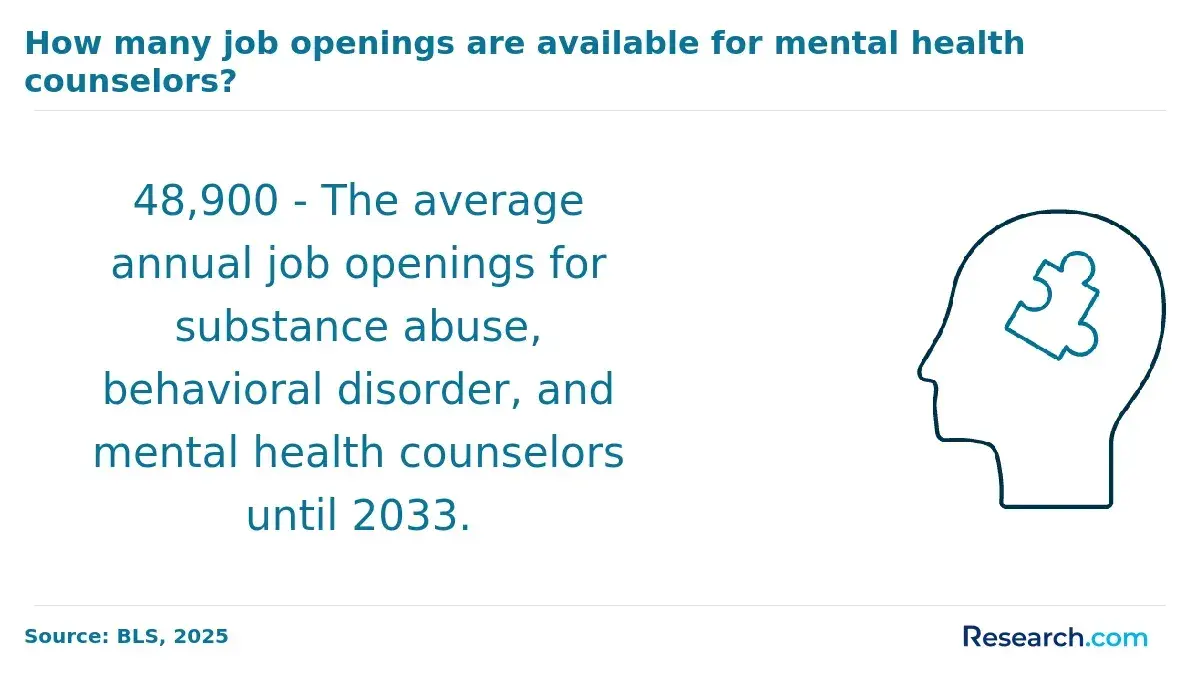
Yes. Demand for mental health counselors in Chicago is supported by rising awareness of behavioral health needs, expanded care models, and persistent shortages of qualified professionals. Illinois expects 18% job growth for mental health counselors by 2030, and nearly 50,000 new counseling roles are expected nationally by 2030.
Local job postings and employer needs often include outpatient therapy, integrated healthcare, school-based support, community mental health, crisis services, trauma-informed care, and telehealth. Chicago employers are cited as offering competitive pay between $60,000 and $75,000 for Licensed Mental Health Counselors, including some remote work options. National therapist salaries are cited as ranging from $68,000 to $72,000, with steady annual increases anticipated.
Demand does not remove the need for credentials. Employers may interview candidates before licensure is complete, but clinical scope, supervision requirements, billing rules, and job title eligibility depend on your license level. Candidates who complete licensure steps efficiently and develop a clear specialization are usually better positioned than those who graduate without a supervision plan.
-
: "
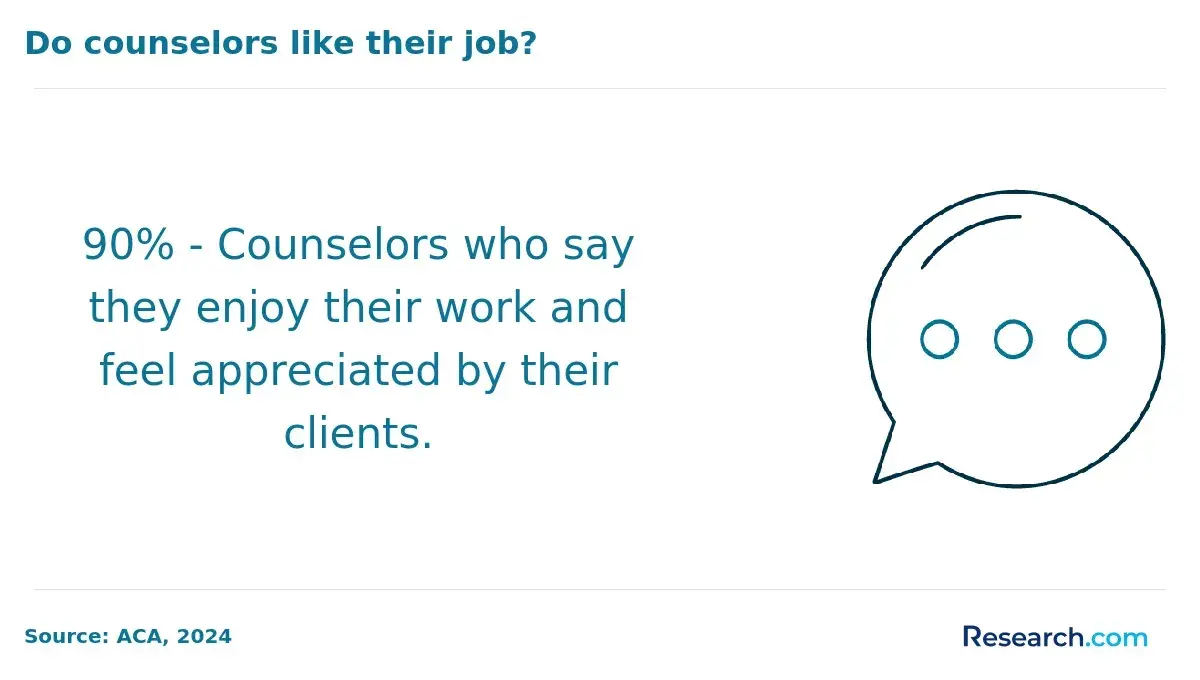
A Chicago counselor described the market as competitive but active: “Finding the right fit took patience, especially because I wanted trauma-informed work. The advantage was that demand created several interview opportunities, so I could compare settings instead of taking the first opening.”
"
Where do mental health counselors typically work in Chicago, IL?
Mental health counselors in Chicago work across clinical, educational, medical, nonprofit, and private settings. The right workplace depends on your license level, preferred population, supervision needs, tolerance for crisis work, and interest in individual, group, or systems-based care.
- Healthcare and behavioral health clinics: Counselors provide individual therapy, group counseling, crisis support, treatment planning, and referrals for clients experiencing anxiety, depression, trauma, substance use, and other concerns. Clinics such as Behavioral Services, P.C. may use team-based care models.
- Educational institutions: School-based counselors support students facing academic stress, bullying, family disruption, trauma, behavioral concerns, and mental health symptoms. Chicago Public Schools employs counselors who coordinate student support and outside referrals.
- Hospitals and medical centers: Counselors may help patients and families cope with chronic illness, injury, rehabilitation, trauma, psychiatric crises, and major life changes. Facilities such as Shirley Ryan AbilityLab use counseling professionals to address the emotional impact of illness and recovery.
| Work Setting | Typical Responsibilities | What to Consider Before Choosing It |
| Community mental health agency | Therapy, case coordination, crisis response, referrals, and support for underserved clients | Caseload size, supervision quality, documentation demands, and burnout risk |
| Hospital or medical center | Assessment, crisis intervention, discharge planning support, and collaboration with medical teams | Fast pace, interdisciplinary teamwork, and comfort with medical complexity |
| School or youth program | Student counseling, prevention programming, family coordination, and academic support | School calendar, mandated reporting, youth development expertise, and collaboration with educators |
| Private practice | Individual, group, family, or specialty therapy services | Licensure level, business skills, insurance billing, marketing, and income variability |
| Telehealth provider | Remote therapy, digital documentation, and virtual client engagement | State practice rules, technology systems, privacy requirements, and client fit |
Is it challenging to become a mental health counselor in Chicago, IL?
Yes, the path is demanding. The difficulty is not only academic; it also involves securing supervised placements, passing national exams, documenting clinical hours, managing emotional workload, and understanding the limits of each license level. The process is manageable, but it rewards careful planning.
Prospective counselors must complete a master’s or doctoral degree in counseling or a related field from a regionally accredited institution. Coursework typically includes counseling theory, assessment, diagnosis, ethics, treatment planning, group work, multicultural practice, and substance abuse counseling. Students exploring cost-conscious pathways may find a list of most affordable online Master's in Substance Abuse Counseling degrees useful when comparing programs, especially if addiction counseling is a potential specialization.
Illinois candidates must also complete supervised practicum or internship training. To become a Licensed Professional Counselor, candidates pass the National Counselor Examination. Those pursuing Licensed Clinical Professional Counselor status face the National Clinical Mental Health Counseling Examination and must complete two years of supervised clinical practice, including at least 960 hours of direct counseling within 48 weeks.
The hardest parts for many candidates are finding quality supervision, balancing work with clinical hour accumulation, preparing for exams, and managing emotionally intense caseloads. Administrative burdens can also be significant, especially in settings that involve insurance, reimbursement documentation, productivity targets, or crisis coverage.
| Common Mistake | Why It Causes Problems | Better Approach |
| Choosing a program only because it is affordable | Low tuition does not help if the curriculum does not meet Illinois licensure expectations | Compare cost, accreditation, practicum support, licensure alignment, and graduation requirements together |
| Assuming any psychology degree qualifies for counseling licensure | Illinois requires graduate counseling preparation and supervised experience | Confirm the exact degree and coursework required for LPC and LCPC eligibility |
| Waiting until graduation to plan supervision | Post-graduate hours can be delayed if you do not have an approved supervisor or eligible job | Ask programs about internship partners, alumni employers, and supervision pathways before enrolling |
| Ignoring online program restrictions | Out-of-state online programs may not align with Illinois rules | Request written confirmation that the program supports Illinois licensure preparation |
| Focusing only on rankings | A highly ranked program may not be the best fit for your budget, schedule, or specialization | Use rankings as one data point alongside cost, placement support, faculty expertise, and licensure outcomes |
| Assuming salary outcomes are guaranteed | Pay depends on employer, credential, experience, specialization, and setting | Compare actual job postings and ask programs about typical graduate roles |
The chart below highlights the anticipated workforce gaps in key behavioral health roles through 2037, based on current trends in demand and provider availability.
How to Choose the Right Counseling Program in Chicago
The best counseling program is not always the closest, cheapest, or most recognizable. It is the one that prepares you for Illinois licensure, fits your schedule and budget, offers strong field placement support, and aligns with the population you want to serve.
- Confirm licensure alignment first. Ask whether the program is designed to meet Illinois LPC and LCPC educational requirements.
- Review accreditation and institutional approval. Make sure the college or university is properly accredited and that the counseling curriculum matches state expectations.
- Compare field placement support. Ask where students complete practicum and internship hours in Chicago and how placements are secured.
- Check exam preparation. Find out how the program prepares students for the National Counselor Examination and National Clinical Mental Health Counseling Examination.
- Estimate total cost. Include tuition, fees, books, commuting, technology, exam fees, application fees, lost work time, and unpaid internship hours.
- Ask about completion flexibility. Compare full-time, part-time, online, hybrid, evening, and weekend options.
- Match the curriculum to your goals. Look for electives, faculty expertise, and placements in trauma, youth counseling, substance use, multicultural counseling, or other areas that interest you.
| Question to Ask a School | Why It Matters |
| Does this program meet Illinois LPC educational requirements? | Prevents licensure delays after graduation |
| Will the curriculum satisfy the 60 semester hour standard starting July 2026? | Helps students avoid credit shortages under the upcoming requirement |
| Who helps students secure practicum and internship placements? | Field placement quality affects clinical readiness and networking |
| What percentage of students complete the program on time? | Completion patterns can reveal scheduling, advising, or placement issues |
| How does the program support exam preparation? | Licensure exams are major milestones in the counseling career path |
| Are online students eligible for the same scholarships and placement help? | Online flexibility is useful only if support services are equal |
What Mental Health Counselors in Chicago, IL Say About Their Careers
Building a counseling career in Chicago has given me both stability and purpose. The need for services is real, and competitive compensation has made it easier for me to stay focused on client care rather than constantly worrying about finances. Anthony
Practicing in Chicago means working with clients whose backgrounds, stressors, and strengths vary widely. That complexity can be demanding, but it has also made me more culturally aware, flexible, and grounded as a clinician. Erica
The professional community here has helped me keep growing. University workshops, peer networks, and local training opportunities have sharpened my skills and helped me bring better care into sessions. Ariana
Related Articles for Nearby Cities
- 2027 How to Become a Mental Health Counselor in Milwaukee, WI: Education Requirements & Certification
- 2027 How to Become a Mental Health Counselor in Madison, WI: Education Requirements & Certification
- 2027 How to Become a Mental Health Counselor in Fort Wayne, IN: Education Requirements & Certification
- 2027 How to Become a Mental Health Counselor in Indianapolis, IN: Education Requirements & Certification
- 2027 How to Become a Mental Health Counselor in Toledo, OH: Education Requirements & Certification
- 2027 How to Become a Mental Health Counselor in Detroit, MI: Education Requirements & Certification
- 2027 How to Become a Mental Health Counselor in Cincinnati, OH: Education Requirements & Certification
- 2027 How to Become a Mental Health Counselor in St. Louis, MO: Education Requirements & Certification
- 2027 How to Become a Mental Health Counselor in Louisville, KY: Education Requirements & Certification
- 2027 How to Become a Mental Health Counselor in Columbus, OH: Education Requirements & Certification
Key Insights
- A bachelor’s degree in psychology or a related field is only the starting point; Illinois counselor licensure requires graduate education, exams, supervised experience, and state approval.
- The main Illinois counseling credentials are LPC and LCPC. LPC is the initial supervised license, while LCPC is the advanced clinical license associated with independent practice.
- Program choice matters. Before enrolling, confirm licensure alignment, practicum support, accreditation, total cost, and whether the curriculum will satisfy the 60 semester hour requirement starting July 2026.
- Chicago offers counseling opportunities in clinics, hospitals, schools, community agencies, private practice, and telehealth, but your role and independence depend on your credential level.
- In-demand areas include clinical mental health counseling, school counseling, substance abuse counseling, and multicultural counseling.
- Salary expectations should be realistic. Cited Chicago figures range from approximately $55,000 to $65,000 for average mental health counselor pay, while another cited licensed counselor average is about $77,700, with top earners exceeding $100,000 per year.
- Out-of-state counselors should not assume automatic reciprocity. Illinois uses licensure by endorsement and has not joined the ACA Counseling Compact.
- The best next step is to compare graduate programs against Illinois licensure requirements and speak with admissions, field placement, and financial aid staff before applying.
References:
- Concordia University Chicago. (2025). Clinical mental health counseling (MA). Concordia University Chicago.
- DePaul University. (2025). Clinical mental health counseling specialty area requirements. College of Education. DePaul University.
- Governors State University. (2025). Get your clinical mental health counselor certificate near Chicago. Governors State University.
- Illinois Counseling Association. (2025). Counselor licensure application. Illinois Counseling Association.
- The Chicago School of Professional Psychology. (2025). M.A. clinical mental health counseling – Chicago. The Chicago School of Professional Psychology.
Other Things You Need to Know About Becoming a Mental Health Counselor in Chicago, IL
The Illinois Department of Financial and Professional Regulation, or IDFPR, issues the licensed clinical professional counselor credential used in Chicago. Applicants must meet education, supervised experience, and exam requirements before submitting materials to IDFPR under the Illinois Professional Counselor and Clinical Professional Counselor Licensing Act.
In 2027, to practice as a mental health counselor in Chicago, IL, you need to obtain the Licensed Clinical Professional Counselor (LCPC) certification. This requires completing a master's degree in counseling, passing the National Counselor Examination (NCE) or the National Clinical Mental Health Counseling Examination (NCMHCE), and fulfilling supervised clinical experience.



