2027 How to Become a Paralegal in Illinois

Co-Founder and Chief Data Scientist
Becoming a paralegal in Illinois can be a practical route into the legal field without attending law school, but the path is not always obvious. Illinois does not license paralegals, so employers rely heavily on education, experience, technical ability, ethics, and voluntary credentials when deciding whom to hire.
This guide explains how to become a paralegal in Illinois in 2026, including what the job involves, which education routes make sense, how certification works, what costs to expect, where jobs are concentrated, and how to improve your chances of landing an internship or entry-level role. It is written for career changers, recent high school graduates, college students, and working professionals who want a realistic plan before investing time and money.
Quick Answer: Becoming a Paralegal in Illinois
- Illinois does not require a state paralegal license, but many employers prefer candidates with a paralegal certificate, associate degree, bachelor’s degree, or related legal training.
- Nearly 25% of legal support positions in Illinois remain unfilled due to a shortage of qualified paralegals, creating a clear opening for prepared applicants.
- Illinois anticipates a 12% paralegal job growth from 2020 to 2030, compared with the national average of 10%.
- The median annual salary for paralegals in Illinois is approximately $56,000, though pay varies by location, employer, specialization, education, and experience.
- Most accredited paralegal certificate programs in Illinois require 6 to 12 months of full-time study, making them one of the faster training options for people who already have college experience.
- What does a paralegal do in Illinois?
- What are the basic requirements to become a paralegal in Illinois?
- What education options are available for paralegals in Illinois?
- How much does it cost to become a paralegal in Illinois?
- How do you get certified as a paralegal in Illinois?
- What is the job outlook for paralegals in Illinois?
- What are the career advancement opportunities for paralegals in Illinois?
- How can interdisciplinary education in finance enhance my paralegal career in Illinois?
- How can paralegals pursue continuous professional development in Illinois?
- How can paralegals leverage forensic science expertise in Illinois?
- What are the common challenges for paralegals in Illinois?
- How much do paralegals make in Illinois?
- What are the steps to switch careers and become a paralegal in Illinois?
- What skills do successful paralegals need in Illinois?
- How do I find a paralegal job or internship in Illinois?
What does a paralegal do in Illinois?
A paralegal supports attorneys by handling substantive legal work that does not require a law license. In Illinois, that can mean preparing documents for litigation, researching Illinois statutes and court rules, organizing evidence, coordinating filings, and helping attorneys keep cases moving. Paralegals may work in law firms, corporate legal departments, government agencies, nonprofits, insurance companies, healthcare organizations, or real estate offices.
The key limitation is important: paralegals may assist with legal work, but they cannot give legal advice, set legal fees, represent clients in court, or act independently as attorneys. Their work must be performed under attorney supervision and within professional ethics rules.
- Drafting pleadings, affidavits, discovery requests, correspondence, and other case documents for attorney review.
- Maintaining organized case files so attorneys can quickly access evidence, deadlines, client records, and court materials.
- Researching Illinois statutes, court decisions, administrative rules, and procedural requirements.
- Interviewing clients or witnesses to collect facts, clarify timelines, and prepare case summaries.
- Assisting in practice areas such as family law, criminal defense, corporate law, real estate, immigration, personal injury, labor law, and government work.
- Using e-filing systems, digital case management platforms, document review tools, and legal research databases.
- Protecting confidential information and avoiding unauthorized practice of law.
The role is best suited for people who are detail-oriented, comfortable with deadlines, and interested in legal problem-solving. It is not a purely administrative job; strong paralegals combine research, writing, technology, client communication, and judgment.
What are the basic requirements to become a paralegal in Illinois?
Illinois does not have one official state-mandated path for paralegals. That flexibility can help career changers, but it also means applicants need to build a resume that employers trust. Most hiring managers look for a combination of formal education, practical experience, legal technology skills, and professional ethics.
Education employers commonly expect
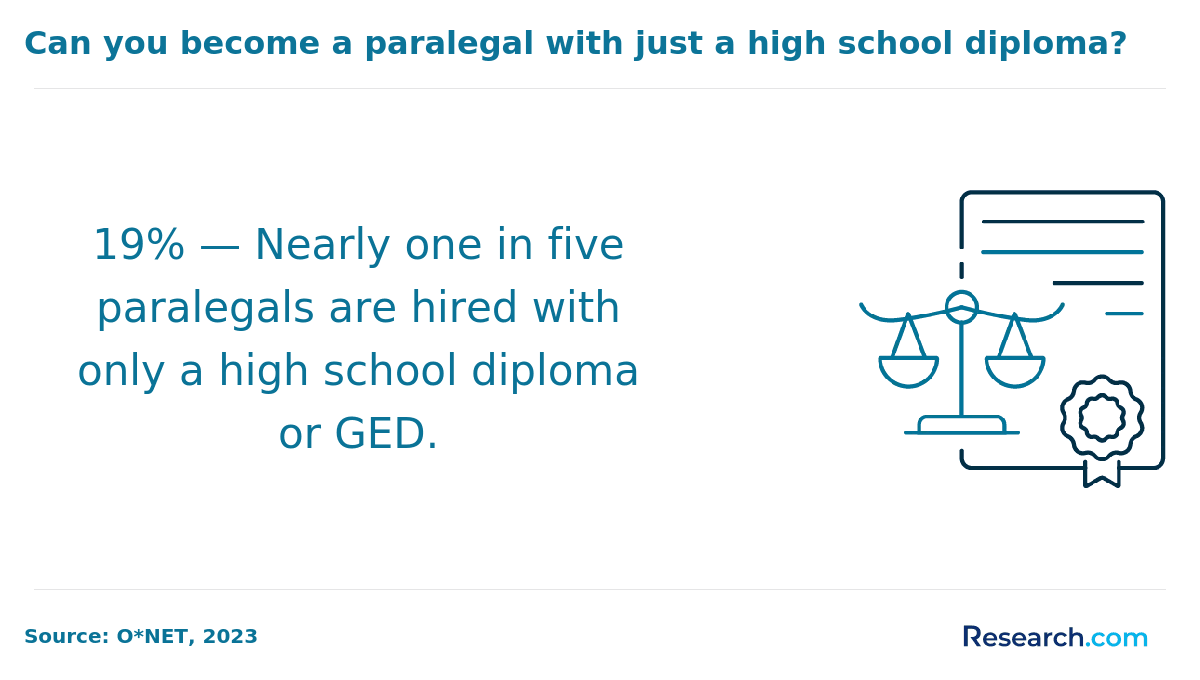
Some entry-level legal assistant roles may accept candidates with a high school diploma and strong office experience, but paralegal roles usually favor applicants with postsecondary training. An associate degree in paralegal studies, a bachelor’s degree with legal coursework, or a paralegal certificate can show that you understand legal research, civil procedure, legal writing, and document preparation.
Certification is voluntary but useful
Illinois does not require paralegals to hold a state license. However, national credentials such as the Certified Paralegal (CP) or Professional Paralegal (PP) can help demonstrate competence, especially if you are competing for roles in Chicago, corporate legal departments, litigation support, or specialized practice areas. Certification is not a substitute for job experience, but it can strengthen a candidate’s profile.
Practical experience matters early
Internships, legal aid volunteering, campus clinics, court-related placements, and supervised office work can make a major difference for new applicants. Illinois employers often want evidence that you can meet deadlines, format legal documents correctly, communicate with clients, and work within attorney instructions.
Ethics and boundaries are nonnegotiable
Paralegals must understand what they are allowed to do and where attorney supervision is required. A strong candidate knows how to protect client confidentiality, avoid conflicts, handle sensitive information, and decline tasks that would cross into unauthorized legal practice.
If you are interested in litigation or criminal defense work, Research.com’s criminal law paralegal guide can help you understand how that specialty differs from general legal support roles.
| Requirement | Is it legally required in Illinois? | Why it matters to employers |
| High school diploma or equivalent | No single state paralegal license requirement applies | May qualify you for some legal assistant or office support roles |
| Paralegal certificate or degree | Not mandated by the state | Shows formal preparation in legal research, writing, ethics, and procedure |
| Internship or supervised legal experience | Not mandated by the state | Proves you can apply classroom knowledge in real legal settings |
| Voluntary certification | Not mandated by the state | Can improve credibility and help distinguish you from other applicants |
| Ethics and confidentiality awareness | Expected in legal workplaces | Protects clients, attorneys, and the firm from serious professional risks |
What education options are available for paralegals in Illinois?
Illinois students can choose from short certificate programs, associate degrees, bachelor’s degrees, and continuing education. The right option depends on your previous education, budget, timeline, and career goal. A career changer with a bachelor’s degree may not need another full degree, while a recent high school graduate may benefit from an associate or bachelor’s pathway.
| Education option | Best for | Typical advantage | Trade-off |
| Paralegal certificate | Students who already have college credits or a degree | Focused training that can be completed relatively quickly | May not provide as broad a foundation as a degree |
| Associate degree | New college students or career changers seeking structured preparation | Combines general education with paralegal coursework and may include internships | Usually takes longer than a certificate |
| Bachelor’s degree | Students seeking broader academic preparation, advancement options, or possible law school preparation | Can support roles requiring stronger writing, research, and analytical skills | Requires a larger time and cost commitment |
| Continuing legal education and professional training | Working paralegals who want to stay current or specialize | Helps maintain credentials and adapt to changes in law and technology | Usually builds on, rather than replaces, entry-level education |
- Certificate programs: These are often the fastest option for people who already have college experience. Coursework usually emphasizes legal research, writing, litigation support, ethics, and practical document preparation.
- Associate degrees: Community colleges often offer two-year programs that combine paralegal courses with writing, communication, technology, and general education. Students comparing remote options can review Research.com’s best associate in legal studies online degree programs.
- Bachelor’s degrees: Four-year programs may be helpful for students who want broader legal studies, stronger research training, or future graduate or law school flexibility. Universities such as DePaul and UIC are examples of Illinois institutions associated with legal education pathways.
- Continuing education: Professional groups such as the Illinois Paralegal Association can help working paralegals pursue training, networking, certification preparation, and renewal education.
Online vs. campus paralegal programs in Illinois
Online study can be convenient for working adults, parents, and career changers, but students should confirm that the program teaches practical legal skills and is respected by local employers. Campus programs may offer easier access to internships, local networking, and court-related learning opportunities.
| Program format | When it makes sense | What to check before enrolling |
| Online | You need flexibility because of work, family, or location | Accreditation, internship support, legal research tools, faculty experience, and employer reputation |
| Campus-based | You want in-person instruction, local networking, or structured career services | Commute time, schedule fit, internship placement, tuition, and local hiring connections |
| Hybrid | You want flexibility but still value some in-person support | Required campus visits, technology requirements, and availability of evening or weekend courses |
How much does it cost to become a paralegal in Illinois?
The cost of becoming a paralegal in Illinois depends mainly on the credential you choose, the type of school, whether you study full time or part time, and whether you live in a higher-cost area such as Chicago. Tuition is only one part of the budget; books, software, transportation, exam fees, and lost work hours can also affect the total cost.
Public community college associate degree programs typically range from $3,500 to $6,000 per year for in-state residents. Certificate programs are usually less expensive, often costing between $2,000 and $5,000. Private institutions and accelerated or specialized programs may charge upwards of $10,000.
Certification adds another layer of cost. Exams for credentials such as NALA’s Certified Paralegal or NFPA’s Professional Paralegal can range from $225 to $350, and continuing education can add $100 to $300 annually.
Students should also plan for textbooks and study resources, which can exceed $500. A dependable laptop, software, and related technology may add $600 to $1,200. Some students may also need access to premium research databases or pay fees tied to course materials.
Location can change the budget significantly. In Chicago, where the cost of living is roughly 20% above the national average, housing, commuting, parking, food, and childcare can increase the real cost of completing a program.
| Cost category | Amount stated | Planning tip |
| Public community college associate degree | $3,500 to $6,000 per year for in-state residents | Ask about transfer credits, payment plans, and internship support |
| Certificate program | $2,000 and $5,000 | Best value if you already have college credits or a degree |
| Private or accelerated program | Upwards of $10,000 | Compare job placement support and employer recognition before paying more |
| Certification exam | $225 to $350 | Budget for exam prep materials and possible retesting |
| Continuing education | $100 to $300 annually | Check whether employers reimburse professional development |
| Books and study aids | Can exceed $500 | Ask whether digital materials or library access can reduce costs |
| Technology | $600 to $1,200 | Confirm software requirements before buying equipment |
How to reduce the cost
- Choose a community college or certificate program if it fits your background and career goals.
- Ask whether prior college credits can transfer.
- Use financial aid, scholarships, employer tuition assistance, or payment plans when available.
- Compare total program cost, not only tuition.
- Prioritize programs with internship access or strong employer connections, because practical experience can shorten the job search.
How do you get certified as a paralegal in Illinois?
Paralegal certification in Illinois is voluntary, but it can make your qualifications easier for employers to evaluate. Certification is most useful when paired with education and supervised legal experience. It may be especially helpful for career changers, applicants without a long legal work history, and paralegals seeking advancement.
Step 1: Complete formal paralegal education
Start with a program that teaches legal research, legal writing, civil litigation, ethics, technology, and Illinois-related procedures. If you are comparing schools, ask whether the curriculum prepares students for national certification exams and whether instructors have legal practice experience.
Step 2: Build supervised legal experience
Experience helps translate coursework into workplace skill. Internships, legal aid volunteering, part-time legal assistant roles, and court-related placements can help you learn filing systems, client communication, case organization, and attorney expectations.
Step 3: Select the credential that matches your goals
Common options include national credentials such as NALA’s Certified Paralegal and NFPA’s Professional Paralegal. Choose based on eligibility requirements, exam content, renewal rules, employer recognition, and the practice area you plan to enter.
Step 4: Prepare for the exam
Certification exams generally test knowledge such as legal terminology, ethics, research, writing, judgment, and procedure. Many candidates use exam guides, review courses, practice questions, and study groups to stay organized while balancing work or school.
Step 5: Maintain the credential
Certification is not a one-time event. Continuing legal education helps paralegals stay current with changes in law, court procedures, legal technology, privacy expectations, and ethics standards.
| Certification decision | Choose this if... | Be careful if... |
| Earn a credential soon after graduation | You need to stand out for entry-level roles | You have not yet confirmed eligibility rules or exam costs |
| Wait until after gaining experience | You want practical context before testing | You may lose momentum after school ends |
| Focus first on a specialty | You know you want litigation, corporate law, real estate, or another niche | You have not yet built broad paralegal fundamentals |
What is the job outlook for paralegals in Illinois?
The job outlook for Illinois paralegals is favorable for candidates who combine legal knowledge with technology skills and practical experience. Illinois anticipates a 12% paralegal job growth from 2020 to 2030, compared with the national average of 10%. Demand is strongest where legal services, corporate offices, insurance, healthcare, real estate, and government work are concentrated.
Chicago remains the state’s largest legal market, with opportunities in law firms, corporate legal departments, healthcare, intellectual property, finance, compliance, and litigation support. Outside Chicago, openings may be fewer, but local firms, public agencies, courts, nonprofits, and regional businesses still need paralegal support.
Technology is changing the role. Employers increasingly value paralegals who can use e-discovery platforms, document management systems, e-filing tools, online legal research databases, and secure communication systems. AI-assisted document review and legal research tools may reduce some repetitive tasks, but they also increase the need for paralegals who can verify information, manage workflows, protect confidentiality, and spot errors.
Students who need flexibility can compare online paralegal bachelor's degree programs while checking whether each option offers practical training, legal technology exposure, and career support relevant to Illinois employers.
Where Illinois paralegals can find opportunity
- Litigation: Discovery, document review, trial preparation, pleadings, and deadlines.
- Corporate legal departments: Contracts, compliance, governance, transactions, and records management.
- Healthcare and insurance: Regulatory files, claims support, privacy-related documentation, and litigation coordination.
- Real estate: Closings, title documents, leases, zoning materials, and transaction support.
- Government and nonprofits: Public records, legal aid, administrative law, client intake, and case preparation.
What are the career advancement opportunities for paralegals in Illinois?
Paralegals can move beyond entry-level case support by specializing, earning credentials, supervising other staff, or shifting into legal operations. Advancement is usually based on reliability, writing quality, technology skill, judgment, and subject-matter knowledge.
| Advancement path | What the role may involve | How to prepare |
| Senior paralegal | Managing larger caseloads, training junior staff, and handling complex documents | Build deep experience in one or two practice areas |
| Litigation support specialist | Working with e-discovery, databases, document review, and trial preparation | Learn tools such as Relativity or other litigation support platforms |
| Corporate or compliance paralegal | Supporting contracts, governance, regulatory records, and internal legal processes | Study business law, compliance, contracts, and document management |
| Paralegal manager or legal operations role | Overseeing workflows, budgets, vendors, technology, and staff coordination | Develop project management, leadership, and legal technology skills |
| Law school or graduate legal studies | Moving toward attorney training or advanced legal policy work | Strengthen writing, research, academic credentials, and long-term career planning |
Cross-disciplinary education can also help in certain settings. For example, professionals who study public systems, client advocacy, or regulated services may gain useful context from fields such as social work; Research.com’s guide to social worker education requirements in Illinois shows how another regulated helping profession approaches training and service delivery.
How can interdisciplinary education in finance enhance my paralegal career in Illinois?
Finance knowledge can be valuable for paralegals who work in corporate law, mergers and acquisitions, banking, bankruptcy, tax-related matters, real estate, litigation involving damages, or compliance. A paralegal who can understand financial statements, transaction documents, invoices, accounting records, and business terminology can support attorneys more effectively in document review and case preparation.
This does not mean every paralegal needs an accounting degree. It does mean that targeted coursework in accounting, business finance, spreadsheets, and financial documentation can make you more competitive for corporate and transactional legal roles. If this path interests you, explore programs connected to the best accounting schools in Illinois and compare whether the coursework complements your legal career goals.
How can paralegals pursue continuous professional development in Illinois?
Professional development is essential because legal procedures, technology, privacy expectations, and employer needs change over time. Illinois paralegals can stay current through bar association programs, paralegal association events, employer training, certification renewal courses, legal technology webinars, and practice-area workshops.
- Attend training on Illinois court procedures, e-filing, discovery, legal ethics, and confidentiality.
- Join local legal associations to build a professional network and learn about job openings.
- Track changes in the practice area you support, such as family law, criminal defense, real estate, corporate law, or immigration.
- Build technology fluency in research databases, document management systems, spreadsheets, e-discovery tools, and secure communication platforms.
- Consider adjacent fields when relevant. For example, land use and municipal law paralegals may benefit from understanding how to become an urban planner in Illinois because urban planning intersects with zoning, development, and public policy.
How can paralegals leverage forensic science expertise in Illinois?
Forensic science knowledge can help paralegals who work in criminal law, personal injury, medical malpractice, insurance defense, product liability, or complex litigation. These roles may involve organizing evidence, tracking chain of custody, summarizing expert reports, preparing exhibits, and helping attorneys understand technical records.
Paralegals do not replace forensic experts, but they can add value by knowing how scientific evidence is documented, challenged, and presented. If you want to understand this technical side of case preparation, review Research.com’s guide on how to become a forensic scientist in Illinois and consider whether forensic coursework or workshops fit your legal specialty.
What are the common challenges for paralegals in Illinois?
Paralegal work can be rewarding, but it is deadline-driven and detail-heavy. Illinois paralegals often manage competing priorities while supporting attorneys, communicating with clients, and staying within ethical boundaries. The pressure can be especially high in litigation, high-volume practices, and understaffed offices.
| Common mistake or challenge | Why it causes problems | Better approach |
| Choosing a program without checking reputation or accreditation | Employers may not value the credential | Ask about accreditation, faculty experience, internships, graduate outcomes, and employer relationships |
| Looking only at tuition | Books, transportation, technology, and lost work time can raise the real cost | Compare total cost of attendance and available financial support |
| Assuming online programs automatically fit Illinois employers | Some programs may lack Illinois-specific procedure, networking, or practical experience | Confirm curriculum, career services, and internship access before enrolling |
| Ignoring legal technology | Modern paralegal work often relies on e-filing, research databases, and case management systems | Practice with tools used in legal workplaces |
| Crossing ethical boundaries | Unauthorized legal practice can create serious professional risk | Know what must be reviewed or handled by an attorney |
| Relying only on rankings | A highly ranked option may not fit your budget, schedule, or local job market | Compare outcomes, costs, flexibility, and employer connections |
Some paralegals also work closely with law enforcement records, investigations, or public-sector legal teams. Understanding training expectations in related justice careers, such as Illinois police academy requirements, can provide useful context for legal support roles connected to criminal justice.
How much do paralegals make in Illinois?
Paralegal pay in Illinois depends on location, experience, employer type, specialty, education, certification, and technical skill. Entry-level candidates usually earn less while they build experience, while paralegals in specialized or high-demand areas may earn more.
New paralegals commonly see salaries between $40,000 and $45,000 annually. With more than five years of experience and a specialization such as corporate law or intellectual property, compensation can reach $70,000 or more.
Location matters. Chicago’s large legal market can push median wages past $65,000 because of its concentration of law firms and corporate legal departments. Smaller Illinois cities and rural areas are closer to the $58,000 to $62,000 median range.
Education and credentials can improve competitiveness. Candidates with associate or bachelor’s degrees from ABA-recognized programs, along with credentials such as Certified Paralegal (CP) or Registered Paralegal (RP), may be better positioned for higher-paying roles.
Compared with the national median of $56,230, Illinois offers a competitive market. Neighboring states such as Indiana and Wisconsin report median wages around $54,000 and $57,000 respectively.
| Salary factor | Amount stated | What it means for planning |
| Entry-level pay | $40,000 and $45,000 annually | Internships and legal technology skills can help you compete for stronger first roles |
| Experienced or specialized paralegal | $70,000 or more | Specialization and years of experience can improve earning potential |
| Chicago median wages | Past $65,000 | Higher salaries may come with higher living and commuting costs |
| Smaller cities and rural Illinois | $58,000 to $62,000 median range | Lower competition and lower costs may balance lower pay |
| National median | $56,230 | Illinois compares favorably, but individual outcomes vary |
| Indiana and Wisconsin | Around $54,000 and $57,000 respectively | Regional comparisons can help if you are open to nearby markets |
What are the steps to switch careers and become a paralegal in Illinois?
Career changers can enter the paralegal field without starting over completely. The most efficient path is to identify your transferable skills, fill legal knowledge gaps, get practical experience, and present your background in a way legal employers understand.
- Assess your current skills. Research, writing, customer service, project coordination, records management, finance, healthcare, insurance, HR, and government experience can all transfer into legal work.
- Choose the right education route. If you already have a degree, a certificate may be enough. If you do not have college experience, an associate degree may provide a stronger foundation.
- Study Illinois legal basics. Focus on civil procedure, court deadlines, legal ethics, legal research, document drafting, and e-filing.
- Gain practical experience. Look for internships, legal aid volunteer roles, part-time legal assistant jobs, or clinic-based projects.
- Consider certification. National credentials from organizations such as NALA or NFPA can help validate your new career direction.
- Build a legal resume. Translate your past work into legal employer language: deadlines, documentation, confidentiality, client service, research, compliance, and technology.
- Network locally. Attend Illinois paralegal association events, bar association programs, legal career fairs, and LinkedIn networking groups.
- Target practice areas that value your prior background. For example, healthcare workers may fit medical malpractice or health law; finance workers may fit corporate or bankruptcy law; teachers may fit education law.
- Prepare for interviews. Be ready to explain why you are changing careers and how your background helps you support attorneys and clients.
- Keep learning after hire. Early success depends on asking good questions, tracking procedures, learning software, and meeting deadlines consistently.
What skills do successful paralegals need in Illinois?
Successful Illinois paralegals combine legal knowledge with accuracy, organization, communication, and technology skills. Employers want people who can produce reliable work under deadlines and know when attorney review is required.
| Skill area | Examples | Why it matters |
| Legal knowledge | Illinois Compiled Statutes (ILCS), Illinois Rules of Evidence, Illinois Code of Civil Procedure, legal terminology, and ethics | Helps you understand the legal context behind assignments |
| Research and writing | LexisNexis, Westlaw, case summaries, memoranda, pleadings, discovery documents, and correspondence | Attorneys rely on clear, accurate research and drafting |
| Technology | Microsoft Office Suite, Illinois eFile system, time-tracking tools, case management systems, Zoom, Microsoft Teams, Relativity, and Concordance | Modern legal work depends on digital workflows |
| Data security | Confidentiality, secure file handling, and awareness of the Illinois Personal Information Protection Act (PIPA) | Legal teams handle sensitive client and case information |
| Soft skills | Communication, organization, adaptability, teamwork, tact, and problem-solving | Paralegals coordinate with attorneys, clients, courts, vendors, and other staff |
| Additional strengths | Bilingual ability, especially Spanish, and familiarity with real estate, labor law, immigration, or other local practice areas | Specialized knowledge can improve employability in specific legal markets |
If you want structured training that builds these competencies, compare ABA approved online paralegal programs and ask how each program teaches research, writing, ethics, and practical technology.
How do I find a paralegal job or internship in Illinois?
Finding a paralegal job in Illinois is easier when you combine education with local networking and practical experience. Many entry-level openings are filled through internships, referrals, school career services, legal aid connections, and direct outreach to firms.
- Complete a paralegal program that includes Illinois law, legal writing, research, ethics, and practical assignments.
- Use your school’s career services office for resume reviews, mock interviews, internship leads, and employer introductions.
- Search job boards connected to the Illinois State Bar Association (ISBA), Chicago Bar Association (CBA), legal staffing agencies, and local law firms.
- Join Illinois Paralegal Association events and legal networking groups to meet working professionals.
- Volunteer with legal aid organizations, public defender offices, courthouse help desks, or nonprofit legal programs to build experience.
- Tailor your resume for each role by emphasizing relevant coursework, writing samples, technology tools, deadlines, confidentiality, and practice-area interest.
- Apply to both paralegal and legal assistant roles if you are new; a legal assistant position can be a stepping stone to paralegal duties.
- Show Illinois-specific readiness by referencing e-filing, court procedures, statutes, and local practice knowledge when relevant.
- Think beyond law firms. Corporate legal departments, insurance companies, hospitals, real estate firms, universities, and government agencies may hire legal support staff.
- If you are considering graduate-level legal education later, Research.com’s guide to what you can do with a master's in legal studies can help you compare longer-term options.
Questions to ask before accepting an internship or entry-level role
- Will I work under attorney supervision?
- What types of documents and cases will I handle?
- Will I receive training on e-filing, case management, and research tools?
- Is there a path from internship to paid employment?
- How does the employer define the difference between legal assistant and paralegal duties?
- What ethical guidelines and confidentiality procedures will I be expected to follow?
What do paralegals say about their careers in Illinois?
-
: "
Completing the paralegal program through the University of Illinois gave me a strong base in legal research and professional ethics. That preparation helps me support attorneys more effectively while working with the details of Illinois law every day. - Sarah J.
"
-
: "
The state’s paralegal certification program helped me strengthen practical skills, especially document preparation and case management. I like knowing that my work helps clients move toward timely resolutions and that I am part of the Illinois legal community. - Mae
"
-
: "
Volunteering with a nonprofit legal aid organization in Chicago showed me how much paralegals can contribute to access to justice. Client interviews and filings taught me that accuracy and empathy both matter in this career. - Sylvia
"
Related Articles for Nearby States
- 2027 How to Become a Paralegal in Indiana
- 2027 How to Become a Paralegal in Wisconsin
- 2027 How to Become a Paralegal in Iowa
- 2027 How to Become a Paralegal in Missouri
- 2027 How to Become a Paralegal in Kentucky
- 2027 How to Become a Paralegal in Michigan
- 2027 How to Become a Paralegal in Minnesota
- 2027 How to Become a Paralegal in Ohio
- 2027 How to Become a Paralegal in Tennessee
- 2027 How to Become a Paralegal in Arkansas
Key Insights
- Illinois does not license paralegals, so your employability depends on education, experience, ethics, writing ability, and technology skills.
- A certificate can be the fastest option for people who already have college experience, while an associate or bachelor’s degree may offer a stronger foundation for new students.
- Certification is voluntary, but credentials such as CP or PP can help candidates stand out, especially in competitive markets and specialized roles.
- Chicago offers the largest concentration of paralegal opportunities, but smaller markets may still provide strong options through firms, public agencies, nonprofits, and regional businesses.
- Total cost matters more than tuition alone. Include books, software, transportation, exam fees, continuing education, and living costs in your plan.
- Technology is now central to paralegal work. E-filing, document management, research databases, e-discovery, and secure communication skills can improve job prospects.
- The best way to enter the field is to combine formal training with an internship, legal aid experience, or another supervised legal role before graduation.
- Do not choose a program based only on convenience or price. Check accreditation, employer reputation, career services, internship access, and whether the curriculum matches Illinois legal practice.
References:
- How Lawyers can Properly Utilize their Paralegal – CBA's @theBar https://cbaatthebar.chicagobar.org/2019/08/26/how-lawyers-can-properly-utilize-their-paralegal/
- Paralegal Skills for Thriving in Court - Brown & Crouppen https://www.brownandcrouppen.com/blog/paralegal-skills-court/
- Five ethics rules you may not know | State of Illinois Office of the Illinois Courts https://www.illinoiscourts.gov/News/1050/Five-ethics-rules-you-may-not-know/news-detail/
- Illinois Paralegal Career and Salary Guide https://www.paralegal411.org/careers/illinois/
- Paralegals and Legal Assistants : Occupational Outlook Handbook: : U.S. Bureau of Labor Statistics https://www.bls.gov/ooh/legal/paralegals-and-legal-assistants.htm
- Salaries & Pay Factors for Paralegals Working in Illinois https://www.allcriminaljusticeschools.com/legal-and-paralegal/paralegal-salary-by-state/illinois/
- Paralegal Job Outlook | Generations College https://www.generations.edu/paralegal-job-outlook/
- Legal Assistants - At a Glance https://apps.illinoisworknet.com/cis/clusters/OccupationDetails/100146
- How to Become a Paralegal in Illinois | Clio https://www.clio.com/resources/become-a-paralegal/illinois/
- How to Become a Paralegal in Illinois, Paralegal Requirements IL https://www.paralegal-edu.org/illinois-certification/
Other Things You Should Know About Becoming a Paralegal in Illinois
Yes, paralegals in Illinois are required to complete continuing legal education credits to maintain their credentials. As of 2027, the requirements include completing a certain number of credit hours every reporting period, as specified by the Illinois Paralegal Association.
Illinois does not have a state licensing board for paralegals. Voluntary certification standards are set by national groups such as NALA, the National Federation of Paralegal Associations, and the Association of Legal Assistants/Paralegals. Employers in Illinois may also prefer ABA-approved education and documented legal experience.