2027 What a Paralegal Does and How to Become One

Co-Founder and Chief Data Scientist
Becoming a paralegal is a practical way to enter the legal field without going to law school, but the path is not always obvious. You may be comparing associate degrees, bachelor’s degrees, certificate programs, ABA-approved options, and professional certifications while also trying to understand what paralegals actually do every day.
This guide explains how to become a paralegal in 2026 using the education, certification, salary, and job-market information available in the source data provided. It is written for students, career changers, and working adults who want a clear plan before investing time and money in a paralegal program.
Quick Answer: How Do You Become a Paralegal?
Most aspiring paralegals start by earning an associate degree in paralegal studies, completing a bachelor’s degree with paralegal training, or finishing a paralegal certificate program. Some certificate programs can be completed in as little as six months to 1 year, while associate degrees usually take about two years. Certification is not always legally required, but credentials such as Certified Paralegal (CP), Advanced Certified Paralegal (ACP), Registered Paralegal (RP), Professional Paralegal (PP), and the Paralegal CORE Competency Exam (PCCE) can help demonstrate job readiness.
Key Facts About the Paralegal Career Path
- Over 298,497 paralegals were employed in the US in 2024.
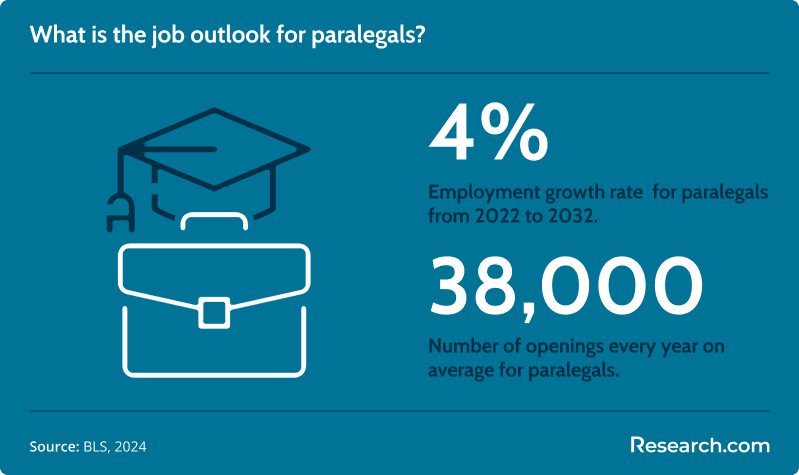
- Employment for paralegals is expected to grow by 4% from 2022 to 2032.
- About 38,000 paralegal job openings are projected each year, on average, over the next decade.
- 74% of paralegals work in legal services, including law firms and corporate legal departments.
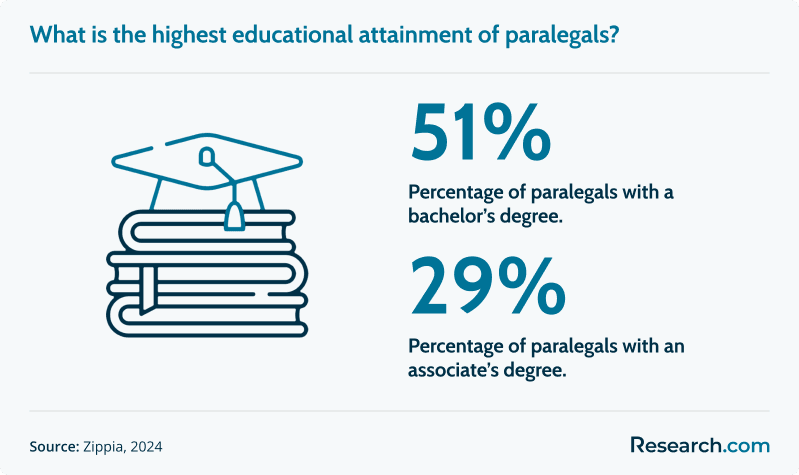
- 51% of paralegals have a bachelor’s degree in paralegal studies or a related discipline.
- The annual median salary for paralegals is $60,970.
- What does a paralegal do?
- What skills do paralegals need?
- What degree is best for becoming a paralegal?
- Which paralegal certifications are available?
- How do you earn paralegal certification?
- How should you choose a paralegal program?
- Which legal specialties hire paralegals?
- How can you balance school, work, and paralegal training?
- What is the average paralegal salary for 2027?
- Why does continuing education matter for paralegals?
- Should paralegals consider an advanced degree?
- What technology skills can strengthen a paralegal career?
- How can paralegals move up professionally?
- Is paralegal training a good financial choice compared with a criminal justice degree?
- Can paralegals move into bailiff roles?
- What ethical rules do paralegals follow?
- Is an ABA-approved paralegal program necessary?
- What related careers can paralegals pursue?
- What is the job outlook for paralegals?
- How do networking and mentorship help paralegals?
- How can you find affordable ABA-approved paralegal certificate programs?
What Graduates Often Say About Paralegal Training
Graduates commonly describe paralegal education as valuable because it connects legal theory with practical office skills. Many report that coursework in legal research, document preparation, and case organization helped them feel prepared for entry-level legal support roles.
Some students choose paralegal studies because they want to work in the justice system without becoming attorneys. For them, the appeal is direct involvement in legal work, client support, and case preparation.
Others point to the professional network they built through classmates, instructors, internships, and mentors. That support can be especially useful when looking for a first legal job or deciding which area of law to pursue.
What Does a Paralegal Do?
A paralegal, sometimes called a legal assistant, supports attorneys by handling research, drafting, organization, client communication, and case-management tasks. Paralegals do not practice law independently or give legal advice, but they play a major role in keeping legal matters moving efficiently.
| Paralegal duty | What it involves | Why it matters |
| Legal research | Finding statutes, regulations, court decisions, legal articles, and background materials using databases and other sources. | Attorneys rely on accurate research to prepare arguments, assess case strength, and advise clients. |
| Document drafting | Preparing drafts of contracts, pleadings, affidavits, discovery materials, correspondence, and other legal documents. | Well-organized drafts save attorney time and reduce avoidable errors. |
| Case preparation | Collecting evidence, organizing exhibits, summarizing records, interviewing witnesses under attorney supervision, and helping prepare trial materials. | Strong preparation can affect deadlines, strategy, and courtroom readiness. |
| File management | Maintaining physical and digital case files, tracking deadlines, and ensuring required paperwork is complete. | Legal work is deadline-driven, and missed filings can create serious problems. |
| Client communication | Scheduling meetings, gathering information, providing case updates approved by attorneys, and routing questions appropriately. | Clients often interact with paralegals throughout a case, so professionalism and clarity are essential. |
| Office administration | Managing calendars, email, phone calls, document organization, billing support, and internal coordination. | Administrative reliability helps law offices, agencies, and legal departments operate smoothly. |
The chart below shows common work settings for paralegals based on BLS data published in 2024.
What Skills Do Paralegals Need?
Strong paralegals combine legal knowledge with precision, communication, organization, and technology skills. The best fit for this career is someone who can manage details without losing sight of deadlines, client needs, and attorney instructions.
- Legal research: Paralegals must know how to locate relevant laws, cases, regulations, and procedural rules. Research quality directly affects legal strategy and document accuracy.
- Attention to detail: Legal documents require exact names, dates, citations, formatting, and filing requirements. Small mistakes can delay a matter or create legal risk.
- Clear communication: Paralegals communicate with attorneys, clients, court staff, vendors, and other professionals. This skill is useful across helping professions, including programs such as the cheapest MSW online programs, but legal communication also requires confidentiality and accuracy.
- Organization and deadline control: A paralegal may support several cases at once. Calendar management, document tracking, and prioritization are core job skills.
- Analytical thinking: Like a forensic psychologist, a paralegal must evaluate facts, identify patterns, and separate relevant information from background noise.
- Adaptability: Priorities can change quickly in legal work. Paralegals need to adjust when a court deadline, client emergency, or attorney request changes the day’s plan.
- Technology comfort: Modern paralegals often use legal research databases, e-discovery tools, document management systems, spreadsheets, case-management platforms, and secure communication tools.
| If you are strong in... | Paralegal work may fit because... | Watch out for... |
| Writing and editing | Legal offices need accurate drafts, summaries, and correspondence. | Legal writing is more structured and deadline-sensitive than general writing. |
| Research | Case preparation depends heavily on finding and organizing reliable information. | You must be comfortable with detailed sources and citation rules. |
| Organization | Case files, calendars, exhibits, and filings must stay coordinated. | The workload can become stressful if you dislike multitasking. |
| Client service | Paralegals often help clients understand procedures and next steps under attorney supervision. | You cannot give legal advice unless authorized by law and attorney direction. |
What Degree Do You Need to Become a Paralegal?
An associate degree in paralegal studies is a common starting point for this career. Students who want a shorter or more flexible route may compare an accelerated associate degree with an accelerated paralegal program. Many associate programs take about two years to complete.
Some employers prefer candidates with a bachelor’s degree, either in paralegal studies or in another field combined with a paralegal certificate. A certificate can often be completed in less than a year and is designed to provide focused training in legal terminology, research, writing, procedure, and case support.
| Education option | Best for | Typical advantage | Possible limitation |
| Paralegal certificate | Career changers or students who already have college coursework or a degree. | Can be completed in as little as six months to 1 year through some programs. | May not be enough for employers that prefer degree holders. |
| Associate degree in paralegal studies | Students seeking a direct entry path into the field. | Provides legal coursework and general education in one program. | Usually takes about two years. |
| Bachelor’s degree plus paralegal certificate | Students targeting larger firms, corporate legal departments, or competitive markets. | Can combine broad academic preparation with specialized legal training. | Usually requires a longer and potentially more expensive education path. |
| Bachelor’s degree in paralegal studies or related field | Students who want deeper academic preparation before entering legal support roles. | May align with employers that prefer four-year degrees. | Not always necessary for every entry-level paralegal position. |
Education alone is not the whole path. Internships, legal assistant roles, court clerk exposure, volunteer legal work, and document-heavy administrative jobs can help you build practical experience before applying for paralegal positions.
Which Paralegal Certifications Are Available?
Paralegal certification can help verify your knowledge and commitment, especially when you are competing with applicants who have similar education. Certification requirements vary by organization, so always review eligibility rules before choosing an exam.
- Certified Paralegal (CP): The National Association of Legal Assistants (NALA) offers the CP credential. Candidates must pass a comprehensive exam that evaluates core paralegal knowledge and skills.
- Advanced Certified Paralegal (ACP): Also offered by NALA, the ACP is designed for paralegals who already hold the CP credential and want additional specialization in specific legal areas.
- Registered Paralegal (RP): The National Federation of Paralegal Associations provides the RP credential through the Paralegal Advanced Competency Exam (PACE), which reflects advanced paralegal competency.
- Professional Paralegal (PP): The Association for Legal Professionals offers the PP credential for paralegals who meet education and experience requirements and pass the required exam.
- Paralegal CORE Competency Exam (PCCE): NFPA provides this exam for entry-level paralegals who want to demonstrate foundational paralegal knowledge.
| Credential | Organization | Who it is commonly for |
| CP | NALA | Paralegals seeking a widely recognized core credential. |
| ACP | NALA | Certified paralegals who want subject-area specialization. |
| RP | NFPA | Experienced paralegals pursuing advanced competency recognition. |
| PP | NALS | Paralegals with qualifying education and work experience. |
| PCCE | NFPA | Entry-level paralegals building early professional credibility. |
How Do You Become a Certified Paralegal?
The certification process usually follows a predictable sequence: complete education, gain experience when required, choose the right credential, study for the exam, pass it, and maintain the credential through continuing education.
- Finish the required education: Earn an associate degree, bachelor’s degree, paralegal certificate, or another qualifying academic credential based on the certification body’s rules.
- Build legal work experience: Some certifications require experience in a law firm, legal department, government office, court, or similar setting. Internships and entry-level legal assistant jobs can help.
- Select the certification that matches your level: Entry-level candidates may consider foundational options, while experienced paralegals may pursue advanced credentials such as CP, RP, PP, or ACP.
- Prepare for the exam carefully: Use official exam outlines, practice questions, study guides, and review courses when available. Focus on legal research, ethics, writing, procedure, and analytical reasoning.
- Register and sit for the exam: Follow the testing organization’s instructions, deadlines, fees, and identification requirements.
- Keep the credential active: Certification is not a one-time event. Most credentials require renewal and continuing education so your knowledge stays current.
How Should You Choose the Best Paralegal Program?
The best paralegal program is not always the most famous or the cheapest. It is the program that fits your career goal, schedule, budget, prior education, and local employer expectations.
- Accreditation and approval: Check whether the school and program meet recognized standards. Some students specifically look for programs connected to the American Bar Association (ABA).
- Curriculum quality: Look for legal research, writing, ethics, civil litigation, contracts, legal technology, and specialty electives. A program should prepare you for actual paralegal work, not just introduce legal vocabulary.
- Employer reputation: Ask whether local law firms, corporate legal departments, government agencies, and courts hire graduates from the program.
- Instructor background: Faculty with legal practice experience can help students understand how classroom concepts apply to client files, court deadlines, and attorney supervision.
- Scheduling flexibility: Working adults may need online, evening, hybrid, or part-time options. If ABA approval is important to you, confirm whether the option you are considering is a paralegal certificate online ABA-approved program.
- Total cost: Compare tuition, fees, textbooks, technology costs, exam preparation, commuting, and lost work time. Do not judge affordability by tuition alone.
- Internship access: Practical experience can make your first job search easier. Prioritize programs that help students connect with legal employers.
- Career support: Look for resume help, mock interviews, job boards, alumni contacts, and placement assistance.
| Question to ask before enrolling | Why it matters |
| Is the institution properly accredited? | Accreditation can affect transfer credits, employer recognition, and financial aid eligibility. |
| Is the paralegal program ABA-approved or otherwise respected locally? | Some employers prefer ABA-approved programs, while others focus more on skills and experience. |
| Does the program include legal research and writing? | These are core paralegal responsibilities in many legal workplaces. |
| Can I complete an internship or practicum? | Hands-on experience helps you apply classroom learning and build references. |
| What career services are available? | Job-search support can be especially valuable for students new to the legal field. |
| What is the full cost, not just tuition? | Books, fees, software, transportation, and exam costs can change the real price of a program. |
Which Areas of Law Do Paralegals Typically Work In?
Paralegals are employed across many practice areas. Your best specialty depends on your interests, writing style, tolerance for deadlines, comfort with client contact, and preferred work environment.
- Corporate law: Paralegals help with contracts, business transactions, compliance documents, regulatory filings, mergers, and company records.
- Criminal law: Paralegals may support defense attorneys or prosecutors by organizing evidence, preparing motions, contacting witnesses, and managing case materials.
- Family law: Paralegals assist with divorce, custody, support, adoption, and related filings. This area often requires strong client communication and emotional steadiness.
- Real estate law: Paralegals help prepare deeds, review title documents, coordinate closings, and support purchase, sale, and lease transactions.
- Immigration law: Paralegals work on visa applications, citizenship filings, deportation defense support, forms, evidence packets, and communication with government agencies.
| Legal area | Good fit for students who like... | Common challenge |
| Corporate law | Business documents, contracts, compliance, and structured workflows. | High document volume and complex transactions. |
| Criminal law | Evidence, court procedure, investigation, and trial preparation. | Urgent deadlines and emotionally serious cases. |
| Family law | Client contact, personal legal issues, and court filings. | High-conflict situations and sensitive information. |
| Real estate law | Transactions, property records, and closing coordination. | Precision with documents and deadlines is critical. |
| Immigration law | Forms, client support, government procedures, and detailed documentation. | Rules, forms, and evidence requirements can change and must be tracked carefully. |
How Can You Maintain Work-Life Balance While Becoming a Paralegal?
Many paralegal students are working adults, parents, or career changers. The key is to choose a training path that matches your real schedule rather than an ideal schedule you cannot maintain.
- Choose a format you can finish: Part-time, evening, hybrid, and online programs can help students keep working while studying. If flexibility is your main concern, compare resources on the best online colleges for working adults.
- Block study time before the term starts: Legal research and writing assignments can take longer than expected. Treat study blocks like appointments.
- Tell your employer when appropriate: Some employers may offer flexible hours, tuition support, or legal-office exposure if your training aligns with your current job.
- Use your support network: Family, friends, classmates, and coworkers can help with accountability, childcare coordination, study groups, or encouragement.
- Protect sleep and recovery time: Legal study requires concentration. A schedule that ignores rest often leads to missed deadlines and weak performance.
A sustainable plan is better than an aggressive one you cannot complete. If you are deciding between a shorter certificate and a longer degree, compare not only speed but also workload, cost, and job requirements in your area.
What Is the Average Salary for a Paralegal for 2027?
In 2024, the average salary for a paralegal is around $61,000 per year. Reported paralegal salaries vary widely, with some earning as much as $89,000 and others earning as little as $33,000.
Salary depends on several factors. Experience is one of the most important because paralegals who can independently manage complex files, deadlines, and specialized tasks are often more valuable to employers. Education and certification may also affect pay, particularly in competitive legal markets.
Employer type matters as well. Large law firms and corporate legal departments may offer higher compensation than some small firms or nonprofit organizations. Location also affects earnings because paralegals in high-cost legal markets such as New York or California may see higher pay than those in rural areas. Specialty can make a difference too, especially in areas such as corporate law or intellectual property.
The chart below identifies top-paying industries for paralegals using BLS data published in 2023.
Why Does Continuing Education Matter for Paralegals?
Continuing education helps paralegals stay useful as laws, court procedures, legal software, compliance expectations, and document workflows change. Workshops, seminars, and accredited online courses can strengthen skills in legal technology, research, compliance, ethics, and specialty practice areas. Students and working professionals who want focused training can compare options such as a paralegal certificate online.
Should Paralegals Consider an Advanced Degree?
An advanced degree is not required for every paralegal role, but it may be useful for professionals who want deeper legal knowledge, stronger analytical training, or opportunities in compliance, legal operations, management, or policy-related roles. Before enrolling, compare cost, time commitment, employer expectations, and likely career benefit. If graduate legal study fits your goals, review options such as online master of legal studies programs.
What Emerging Skills and Technologies Can Strengthen a Paralegal Career?
Legal work is increasingly digital. Paralegals who can manage electronic files, use legal research platforms, organize discovery materials, understand cybersecurity basics, and work with digital case-management tools may be better prepared for modern legal offices.
- Legal technology: Case-management systems, document automation, e-filing tools, and research platforms are now common in many legal workplaces.
- Data organization: Paralegals may need to sort records, summarize timelines, manage spreadsheets, and identify patterns in large document sets.
- Cybersecurity awareness: Client information is sensitive. Paralegals must understand secure communication, access control, and confidentiality practices.
- Project management: Complex legal matters require task tracking, deadline monitoring, and coordination among attorneys, clients, witnesses, and vendors.
- Technical writing: Clear summaries, memos, and document drafts help attorneys act quickly and accurately.
Paralegals exploring broader legal education can also review What can you do with a master's degree in legal studies? to understand how graduate-level legal training may apply beyond traditional paralegal work.
How Can a Paralegal Advance Their Career?
Career advancement usually comes from combining experience, specialization, certification, technology skills, and professional relationships. The right path depends on whether you want higher pay, more complex work, management responsibility, or a move into a related field.
- Take on varied casework: Exposure to different legal matters can broaden your résumé and help you identify a specialty.
- Continue your education: A bachelor’s or master’s degree may help with advancement in some legal departments. If you are comparing related legal and justice programs, review how much does a degree in criminal justice cost.
- Earn professional credentials: Certifications such as ACP can support specialization and show long-term commitment to the profession.
- Choose a specialty: Corporate law, family law, immigration, real estate, litigation, and intellectual property can lead to different types of work and compensation.
- Improve technical ability: Employers increasingly value paralegals who are comfortable with legal software, electronic discovery, databases, and digital filing systems.
- Build a professional network: Associations, conferences, alumni groups, and local bar-related events can lead to referrals and job leads.
- Seek leadership responsibilities: Senior paralegals may coordinate teams, train junior staff, manage projects, or oversee file systems.
- Keep learning: Continuing education helps you stay current on law, ethics, technology, and practice-area changes. If your long-term goal includes business leadership, you may also compare online MBA programs no GMAT requirement options.
Is Paralegal Training a Good Financial Choice Compared With a Criminal Justice Degree?
Paralegal training may appeal to students who want a faster route into legal support work, while a criminal justice degree may suit students interested in law enforcement, corrections, public safety, investigation, or justice administration. The better financial choice depends on tuition, time to completion, transfer credits, local job openings, salary expectations, and whether the program leads to the work you actually want.
Paralegal certificates and associate-level options can sometimes require less time than many broader degree pathways, which may allow earlier workforce entry. However, criminal justice programs can lead to different occupations, including some listed among high paying jobs with criminal justice degree. Compare total cost, required credentials, and the first jobs each path realistically supports before deciding.
| Choose paralegal training if... | Consider criminal justice if... |
| You want to support attorneys with research, documents, case files, and client communication. | You are more interested in justice systems, public safety, law enforcement, or corrections. |
| You want a legal-office role without attending law school. | You want broader justice-related career options beyond law firms and legal departments. |
| You are comfortable with writing, deadlines, records, and detailed procedures. | You prefer policy, investigation, administration, or field-oriented justice work. |
Can a Paralegal Transition to a Bailiff Position?
A paralegal background can be helpful for a future bailiff because it provides familiarity with court documents, legal procedures, confidentiality, and courtroom roles. However, bailiff work also involves courtroom security, order maintenance, conflict response, and specific training requirements that differ from paralegal duties.
If you are considering this transition, compare your current skills with the requirements described in resources on what do you need to become a bailiff. You may need additional preparation in security procedures, courtroom protocol, and de-escalation.
What Ethical Standards Must Paralegals Follow?
Ethics are central to paralegal work because paralegals often handle confidential client information, legal strategy, court filings, and sensitive records. Paralegals must work under attorney supervision and avoid the unauthorized practice of law.
- Confidentiality: Client information must be protected and shared only with authorized people.
- Attorney supervision: Paralegals support legal work but do not independently represent clients or give legal advice.
- Conflict awareness: Paralegals should help identify potential conflicts of interest and follow firm procedures.
- Accuracy: Documents, deadlines, citations, and client communications must be handled carefully.
- Professional conduct: Paralegals should communicate honestly, maintain boundaries, and follow applicable rules and employer policies.
Students comparing legal careers can also explore broader legal studies jobs to see how ethics and legal training apply across related roles.
Do You Need an ABA-Approved Paralegal Program?
You do not always need an ABA-approved paralegal program to become a paralegal, but some employers may prefer or recognize ABA-approved training. The decision should depend on your local job market, career goals, budget, and whether the program’s format fits your life.
- Why ABA approval can help: ABA-approved programs go through a review process focused on curriculum, faculty, administration, and educational quality. Completing one may strengthen your résumé in markets where employers value ABA approval.
- Why non-ABA options may still work: Many reputable programs are not ABA-approved but can still provide useful training. Some students choose non-ABA programs because of location, cost, schedule, online access, or transfer-credit options.
How to Decide Between ABA-Approved and Non-ABA Programs
| Program type | When it may make sense | What to verify |
| ABA-approved program | You are targeting employers that prefer ABA-approved education or want a recognized quality signal. | Confirm format, cost, curriculum, internship access, and whether the program fits your schedule. |
| Non-ABA accredited program | You need a more flexible, affordable, local, or online option and employers in your area accept it. | Check institutional accreditation, graduate outcomes, employer reputation, and coursework quality. |
Whether you choose ABA approval or another accredited route, compare length, curriculum, cost, delivery format, and career support. A resource on ABA-approved online paralegal programs can help you start comparing flexible options.
What Related Career Paths Can Paralegals Pursue?
Experienced paralegals can move into several related paths depending on education, employer needs, and personal goals. Some remain in paralegal work but specialize or become senior paralegals. Others transition into compliance, legal operations, regulatory affairs, contract administration, legal technology, court administration, or consulting.
Those who want graduate-level study may compare options such as the fastest masters degree pathways, but speed should not be the only factor. Make sure any advanced program supports the career move you want rather than simply adding another credential.
What Is the Job Market for Paralegals?
The paralegal job market offers steady opportunities for qualified candidates. About 38,000 openings are projected each year, on average, over the next decade, and employment is expected to grow by 4% from 2022 to 2032.
Demand is supported in part by employers assigning appropriate legal tasks to paralegals rather than attorneys when doing so is efficient and cost-effective. Paralegals may work in law firms, corporate legal departments, government offices, real estate, healthcare, finance, and other settings that need legal documentation and compliance support.
Paralegals who later want to move toward administrative leadership can compare broader business education options, including the cheapest online DBA programs, though that path is more relevant for long-term management goals than entry-level paralegal work.
How Do Networking and Mentorship Help Paralegals?
Networking and mentorship can make the difference between simply finishing a program and building a career. Professional contacts can help you learn which employers are hiring, which specialties are growing locally, and which skills matter most in practice.
- Join professional groups: Paralegal associations and legal community events can connect you with working professionals.
- Ask instructors for guidance: Faculty may know local employers, internship sites, and common hiring expectations.
- Use internships strategically: Treat internships as both training and networking opportunities.
- Find a mentor: A senior paralegal or attorney can help you choose certifications, avoid common mistakes, and understand workplace expectations.
- Explore complementary fields carefully: Students interested in evidence and investigations may also review affordable online forensic science programs, though this is a different academic path from paralegal studies.
How Can You Find Affordable ABA-Approved Paralegal Certificate Programs?
Affordable ABA-approved paralegal certificate programs can be a strong option for students who want recognized training without taking on unnecessary cost. Online and hybrid formats may also help students keep working while completing coursework.
When comparing ABA-approved online paralegal certificate programs, look beyond tuition. Consider total cost, schedule, internship access, technology requirements, career services, graduation support, and whether the program is respected by employers in your target market.
| Common mistake | Better approach |
| Choosing the cheapest program without checking accreditation. | Verify institutional accreditation and whether ABA approval matters for your goals. |
| Assuming every online program has the same employer value. | Ask local legal employers which programs they recognize or prefer. |
| Looking only at tuition. | Compare fees, books, software, commuting, exam costs, and lost work time. |
| Ignoring internship opportunities. | Prioritize programs that help students gain practical legal experience. |
| Assuming certification guarantees a job or salary. | Treat certification as one factor alongside skills, experience, location, and employer demand. |
| Relying only on rankings. | Use rankings as a starting point, then verify fit, cost, curriculum, and career outcomes. |
Key Insights
- Paralegal work is detail-heavy legal support: The role centers on research, drafting, case organization, client communication, and deadline management under attorney supervision.
- There is more than one entry path: You can pursue an associate degree, bachelor’s degree, paralegal certificate, or a degree-plus-certificate route depending on your prior education and target employers.
- Program choice matters: Check accreditation, ABA approval where relevant, curriculum, faculty background, internship access, career services, flexibility, and total cost before enrolling.
- Certification can strengthen credibility: CP, ACP, RP, PP, and PCCE credentials can help demonstrate competency, but they do not replace experience, strong writing, and legal judgment.
- Salary varies by market and specialty: The annual median salary for paralegals is $60,970, while reported salaries range from as little as $33,000 to as much as $89,000 depending on experience, education, employer, location, and specialization.
- The job outlook is steady: Employment is expected to grow by 4% from 2022 to 2032, with about 38,000 job openings projected each year, on average, over the next decade.
- Technology skills are increasingly important: Legal research platforms, e-filing, document management, data organization, cybersecurity awareness, and project management can make a paralegal more competitive.
- The best decision is local and practical: Before choosing a program, ask what employers in your area require, whether you need ABA approval, how much debt you can manage, and which legal specialty fits your strengths.
References:
- Bureau of Labor Statistics (BLS). (2023). 23-2011 Paralegals and Legal Assistants. Occupational Employment and Wages, May 2023. BLS occupational wage data.
- Bureau of Labor Statistics (BLS). (2024). Paralegals and Legal Assistants. Occupational Outlook Handbook. BLS Occupational Outlook Handbook.
- National Association of Legal Assistants (NALA). (2023). 2022 National Utilization & Compensation Survey Overview. NALA survey summary.
- Zippia. (2024). Paralegal Demographics and Statistics in the US. Zippia paralegal demographics.
- ZipRecruiter. (2024). What Is the Average Paralegal Salary by State. ZipRecruiter salary data.
Other Things You Should Know About Becoming a Paralegal
In 2027, the shortest path to becoming a paralegal is typically through earning an associate degree in paralegal studies, which can be completed in about two years. Alternatively, a paralegal certificate program, which may take a few months to a year, is also a quick option for those who already hold a degree.
To become a paralegal in 2027, a prospective candidate typically needs an associate degree in paralegal studies. Some positions may require a bachelor's degree. Additionally, earning a paralegal certificate from an ABA-approved program can enhance job prospects and provide specialized knowledge.
Yes, a paralegal can become a lawyer. As a paralegal, you cannot practice law independently. However, many paralegals decide to further their education and become lawyers. A paralegal can become a licensed attorney with the right qualifications and by passing the bar exam. The experience gained as a paralegal can provide valuable insights and skills that can be helpful in law school and legal practice.
In 2027, paralegals can advance their careers by pursuing specialized certifications, gaining experience in niche legal fields, or progressing to supervisory roles. Networking, continuing education, and obtaining certifications like the Certified Paralegal (CP) credential from NALA can also enhance career prospects.
Paralegals conduct legal research, draft legal documents, assist in case preparation, manage case files, communicate with clients, and perform various administrative tasks to support lawyers and contribute to the success of legal cases.
Paralegals work in various areas of law, including corporate law, criminal law, family law, real estate law, and immigration law. Each area involves specific tasks and responsibilities that paralegals handle to support legal professionals.
The job market for paralegals is promising, with about 38,000 job openings projected each year on average over the next decade. This growth is driven by the increasing demand for legal services and efforts to reduce costs by delegating tasks to paralegals.
A successful career as a paralegal requires a diverse set of skills. Strong organizational abilities are essential for managing case files, documents, and deadlines efficiently. Excellent research and analytical skills enable paralegals to gather and interpret legal information accurately. Proficiency in legal writing and communication is crucial for drafting documents and corresponding with clients and legal professionals. Attention to detail ensures accuracy in all tasks, from preparing legal documents to reviewing case facts. Additionally, technical skills, including familiarity with legal software and databases, enhance productivity. Interpersonal skills and professionalism are also important for working effectively within a legal team and with clients.