
2027 What Is Forensic Psychology? How to Become a Forensic Psychologist

Co-Founder and Chief Data Scientist
Forensic psychology is the branch of psychology that applies mental health expertise to legal questions, criminal justice settings, courts, corrections, law enforcement, and civil disputes. If you are asking how to become a forensic psychologist, the most important thing to know is this: the title usually requires a long training path, including doctoral education, supervised clinical experience, and state licensure. However, you can still work in related forensic, legal, research, advocacy, and correctional roles with a bachelor’s or master’s degree.
This guide explains what forensic psychologists do, what degrees and licenses are required, where they work, how much they can earn, and how to decide whether this career path is worth the time and cost. It also covers program accreditation, online and accelerated options, ethical challenges, technology trends, cultural competency, and practical questions to ask before choosing a forensic psychology program.
Quick Answer: How Do You Become a Forensic Psychologist?
To become a licensed forensic psychologist, you typically need to earn a bachelor’s degree, complete a doctoral degree in psychology such as a Ph.D. or Psy.D. with forensic training, complete supervised clinical experience, pass the Examination for Professional Practice in Psychology (EPPP), and meet your state’s psychology licensure rules. A master’s degree can prepare you for forensic-related roles, but it usually does not qualify you to practice independently as a licensed psychologist.
Key Things You Should Know About Becoming a Forensic Psychologist
- A bachelor’s degree in psychology, criminal justice, forensic science, sociology, or another related field is usually the starting point.
- Independent practice as a licensed forensic psychologist generally requires a Ph.D. or Psy.D. in psychology with forensic psychology coursework, research, practicum, internship, or postdoctoral experience.
- Licensure requires passing the Examination for Professional Practice in Psychology (EPPP) and satisfying state-specific requirements, which may include supervised hours, jurisprudence exams, background checks, or continuing education.
- Practical training is essential because forensic psychologists must apply clinical assessment skills in legal contexts where objectivity, documentation, and ethical boundaries matter.
- Career settings include courts, correctional facilities, government agencies, hospitals, universities, private practice, consulting firms, and law enforcement-related environments.
- What are the steps to becoming a forensic psychologist?
- What are the educational requirements for forensic psychology licensure?
- What are the types of forensic psychology licenses?
- What is the state of the forensic psychology industry?
- How much do forensic psychologists make?
- Where can I work with a forensic psychology degree?
- What do forensic psychologists do?
- Top Forensic Psychology Programs for 2027
- Is a career in forensic psychology worth it?
- What are the real-world applications of forensic psychology in the legal system?
- How Does Integrating Neuropsychology Bolster Forensic Assessments?
- What is the significance of program accreditation in forensic psychology education?
- Can Accelerated Programs Expedite a Career in Forensic Psychology?
- How can I manage the costs of a PsyD in forensic psychology?
- The Importance of Cultural Competency in Forensic Psychology
- Are affordable online programs a viable pathway for aspiring forensic psychologists?
- What Are the Best Educational Paths for Aspiring Forensic Psychologists?
- How are technological advancements reshaping forensic psychology?
- How can forensic psychologists protect their own mental well-being?
- Challenges and Opportunities in Forensic Psychology
What are the steps to becoming a forensic psychologist?
The path to becoming a forensic psychologist is longer than many psychology careers because you must build both clinical psychology competence and legal-system knowledge. The exact requirements vary by state, but the general sequence is consistent.
Typical forensic psychology career timeline
| Stage | What You Do | Why It Matters |
| Bachelor’s degree | Major in psychology or a related field; take courses in abnormal psychology, statistics, research methods, criminal justice, and human development. | This builds the academic foundation for graduate study. Students comparing undergraduate options can start with Research.com’s guide to the best colleges for a forensic science degree. |
| Master’s degree | Complete graduate coursework in forensic psychology, clinical psychology, counseling, assessment, research, or criminal justice. | A master’s can qualify you for related roles and strengthen your doctoral application, but it usually does not allow independent psychologist practice. |
| Doctoral degree | Earn a Ph.D. or Psy.D. in psychology with forensic psychology coursework, research, practicum, and internship training. | This is the standard academic requirement for licensure as a psychologist. |
| Supervised experience | Complete doctoral practica, internship, and any postdoctoral supervised hours required by your state. | Forensic work requires documented, supervised practice in assessment, report writing, ethics, and legally relevant evaluation. |
| Licensing exam | Pass the Examination for Professional Practice in Psychology (EPPP). | The EPPP is a core requirement for psychologist licensure. |
| State licensure | Meet state-specific rules, which may include additional exams, supervised hours, background checks, or continuing education. | You must be licensed in the state where you practice independently. |
| Specialization | Pursue forensic placements, continuing education, postdoctoral training, or board certification. | Specialized experience helps you qualify for evaluations, court work, expert testimony, and advanced consulting roles. |
Can you work in forensic psychology without a doctorate?
Yes, but with limits. A bachelor’s or master’s degree can prepare you for support, research, case management, victim advocacy, correctional, probation, behavioral health, or criminal justice roles. However, if your goal is to independently diagnose, evaluate, treat, testify as a psychologist, or conduct court-ordered psychological assessments, you should plan for doctoral education and licensure.
Questions to ask before choosing this path
- Do I want to become a licensed psychologist, or would a related criminal justice or mental health role satisfy my goals?
- Am I prepared for doctoral study, supervised training, licensing exams, and ongoing continuing education?
- Do I want clinical work, research, correctional treatment, expert testimony, teaching, consulting, or policy work?
- Can I tolerate emotionally difficult case material, adversarial legal settings, and careful documentation requirements?
- Does the program I am considering lead to licensure in the state where I want to work?
What Graduates Say About Working in Forensic Psychology
- Forensic psychology has given me a way to use psychological training in cases where the legal system needs careful, evidence-based interpretation. The work is demanding, but the complexity keeps it meaningful. -Abbie
- Completing an online program helped me keep gaining practical experience while studying. That balance made it easier to move into forensic assessment work with more confidence. -Caleb
- The part I value most is the intellectual challenge. No two cases are the same, and each one requires careful thinking about behavior, context, ethics, and real consequences for people’s lives. -Diana
What are the educational requirements for forensic psychology licensure?
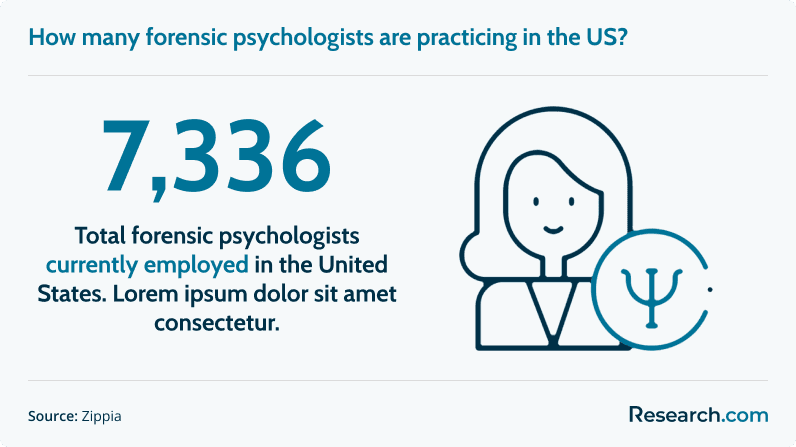
To join the 7,336 forensic psychologists currently employed in the United States, your education needs to match the level of responsibility you want. Licensure as a psychologist requires doctoral training, but related forensic psychology jobs may be available earlier in the education pathway.
- Bachelor's Degree: A four-year degree in psychology or a closely related area gives you the background needed for graduate study. Useful courses include statistics, research methods, abnormal psychology, developmental psychology, criminal behavior, counseling foundations, and ethics.
- Master's Degree: A master’s in forensic psychology, clinical psychology, counseling psychology, or a related field can prepare you for non-licensed or supervised roles in courts, corrections, victim services, research, and behavioral health. It can also improve readiness for doctoral applications. However, a master’s degree alone typically does not qualify you for independent practice as a forensic psychologist.
- Doctoral Degree: A Ph.D. or Psy.D. in psychology is the key academic requirement for psychologist licensure. Students interested in forensic psychology should look for doctoral programs with forensic coursework, assessment training, legal psychology research, practicum placements, internship options, or faculty expertise in law and psychology.
Ph.D. vs. Psy.D. for forensic psychology
| Degree | Best Fit | Common Strengths | Possible Trade-Offs |
| Ph.D. in Psychology | Students interested in research, academia, assessment, policy, or evidence development. | Strong research training, dissertation focus, potential fit for teaching and scholarly careers. | May be highly competitive and research-intensive. |
| Psy.D. in Psychology | Students who want a practice-focused clinical path with applied training. | Emphasis on clinical practice, assessment, intervention, and supervised experience. | Can be expensive, so students should compare tuition, funding, and licensure outcomes carefully. |
If you are comparing doctoral routes, Research.com’s guide to PhD in psychology options can help you understand how research-focused and practice-focused psychology degrees differ.
What are the types of forensic psychology licenses?
Forensic psychology is usually not a separate state license. In most cases, professionals become licensed psychologists first and then develop forensic specialization through training, experience, continuing education, and optional board certification.
- Licensed Clinical Psychologist: This is the standard licensure route for many forensic psychologists. It requires a doctoral degree, supervised experience, passing the EPPP, and meeting the requirements of the state psychology board. With forensic training, this license can support work in evaluations, consultation, assessment, treatment, and court-related services.
- Specialized Certifications: Some professionals pursue additional credentials in focused areas such as child custody evaluation, criminal responsibility assessment, violence risk assessment, correctional psychology, or other forensic specialties. These credentials often require additional education, supervised experience, documentation, or examinations.
Board certification in forensic psychology
- Board Certification in Forensic Psychology: The American Board of Professional Psychology (ABPP) offers board certification that recognizes advanced competence in forensic psychology. It requires a doctoral degree, postdoctoral training, significant professional experience, and passing a rigorous examination.
Licensure checklist before enrolling
- Confirm whether the program is designed to prepare graduates for psychologist licensure.
- Check whether the program’s clinical training, practicum, and internship structure align with your state’s requirements.
- Ask whether graduates are eligible to sit for the EPPP.
- Review internship match support, forensic placement availability, and faculty forensic expertise.
- Contact your state psychology board before assuming an online, hybrid, or out-of-state program will meet licensure rules.
What is the state of the forensic psychology industry?
The forensic psychology field is shaped by more than crime rates. Courts, correctional systems, family law, civil litigation, disability cases, juvenile justice, risk assessment, and mental health policy all rely on psychological expertise. That means demand can remain strong even when reported crime trends shift.
The Guardian reported declining crime trends in the United States, but Margaret Bull Kovera, PhD, of the American Psychological Association (APA), has described forensic psychology as an area where demand has exceeded supply because the legal system is using psychologists in more ways. Kovera also noted that television programs such as "Profiler" and "Law & Order: Criminal Intent" helped increase student interest in the field.
Forensic psychology has become one of the most visible careers in psychology, but students should separate entertainment portrayals from actual practice. Real forensic psychology is less about dramatic crime-solving and more about assessment, report writing, legal standards, ethics, documentation, testimony preparation, and careful interpretation of human behavior.
Current trends affecting forensic psychology
- Greater use of psychological expertise in legal decisions: Courts and agencies increasingly rely on mental health evaluations in competency, custody, sentencing, risk, trauma, disability, and correctional matters.
- More attention to ethical and cultural factors: Forensic psychologists must account for bias, language access, cultural context, and fairness in assessment.
- Technology-supported evaluation: Digital records, remote assessment tools, artificial intelligence, analytics, and neuropsychological methods are influencing how psychologists gather and interpret information.
- Competitive entry into advanced roles: Students who want expert witness, forensic assessment, or consulting roles usually need specialized placements, advanced supervision, and strong writing skills.
How much do forensic psychologists make?
Forensic psychology can be among the highest paying psychology jobs, but compensation varies by location, employer, experience, licensure status, specialization, and whether the psychologist works in government, healthcare, academia, consulting, or private practice.
According to ZipRecruiter, forensic psychologists earn an average annual salary of $92,813 in the United States. Most professionals earn between $66,500 and $117,000, while top earners make up to $146,000 annually. ZipRecruiter also identifies Santa Cruz, CA, as a high-paying city, with an average salary of $114,197 annually.
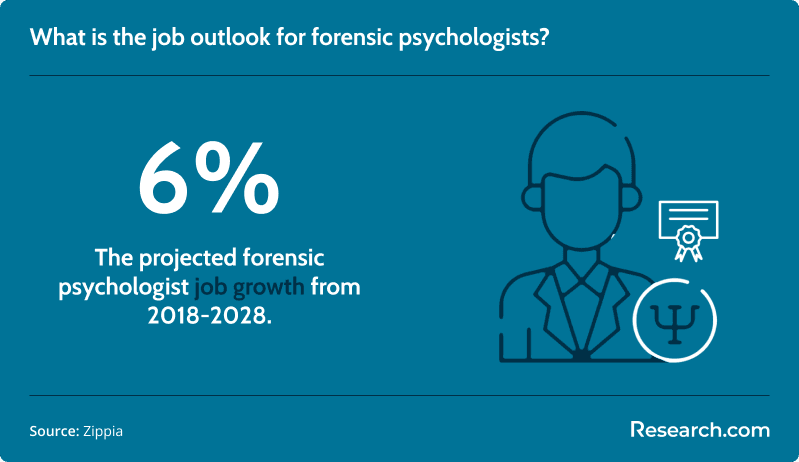
Zippia reports that over 7,336 forensic psychologists are currently employed in the U.S., and it lists Santa Rosa, CA, as having the highest average annual wage at $127,409. The field also has a projected job growth rate of 6% from 2018 to 2028.
Salary comparisons should be interpreted carefully. For example, ultrasound technicians can have similar annual earnings. If you are comparing healthcare careers, Research.com explains how much does an ultrasound tech make a week, reporting $214 or $42.8/day ($89,020 per year).
The chart below compares top-paying jobs related to forensic psychology.
Salary factors to compare before choosing this career
| Factor | Why It Affects Pay | What to Check |
| Licensure | Licensed psychologists can qualify for independent clinical, assessment, and expert roles that are not open to unlicensed graduates. | State psychology board requirements and EPPP eligibility. |
| Degree level | Doctoral training generally opens more advanced roles than a bachelor’s or master’s degree. | Whether the program supports doctoral preparation and forensic placements. |
| Work setting | Government, hospitals, courts, private practice, academia, and consulting can pay differently. | Employer type, benefits, workload, and advancement structure. |
| Location | Pay can be higher in some cities, but cost of living can also be higher. | Local wages, housing costs, licensing portability, and job availability. |
| Specialization | Advanced experience in risk assessment, custody, competency, correctional work, or expert testimony may improve opportunities. | Postdoctoral training, supervision, continuing education, and board certification options. |
Where can I work with a forensic psychology degree?
Among the many types of psychology careers, forensic psychology is especially connected to courts, corrections, law enforcement, public agencies, and legal decision-making. However, graduates can work in a wider range of settings depending on their degree level and licensure.
- Government Agencies: Forensic psychologists may work for courts, correctional systems, public defender offices, state hospitals, law enforcement-related units, or community agencies. Government roles are 48% more likely than private sector jobs, and cities such as Bakersfield, CA, show strong demand.
- Private Practice: Licensed psychologists may provide independent evaluations, litigation consultation, expert witness services, custody evaluations, or specialized assessments.
- Educational Institutions: Doctoral-level professionals may teach, conduct research, supervise students, or contribute to legal psychology scholarship.
- Hospitals and Clinics: Some work in psychiatric hospitals, mental health centers, forensic hospitals, crisis settings, or treatment programs serving justice-involved populations.
High-paying cities for forensic psychologists include Santa Cruz, CA, Sunnyvale, CA, and Arlington, VA. Before relocating for salary alone, compare licensing requirements, job concentration, cost of living, caseload expectations, and professional support in that region.
What do forensic psychologists do?
Forensic psychologists apply psychological science to legal questions. Their work may involve evaluating mental competency, assessing risk, explaining psychological evidence, supporting treatment in correctional settings, consulting with attorneys, testifying in court, or researching behavior relevant to law and public safety.
With a forensic psychology degree, professionals can pursue roles that connect behavioral science with criminal justice, civil law, family court, corrections, victim services, public policy, or research. The specific duties depend heavily on education level, licensure, and specialization.
Common forensic psychology responsibilities
| Task | What It Involves | Where It May Be Used |
| Competency evaluations | Assessing whether a defendant understands the legal process and can assist in their defense. | Criminal courts, hospitals, forensic evaluation units. |
| Criminal responsibility assessments | Evaluating mental state at the time of an alleged offense. | Courts, defense or prosecution consultation, state hospitals. |
| Risk assessment | Estimating the likelihood of future violence, self-harm, reoffending, or noncompliance. | Corrections, parole boards, hospitals, courts. |
| Expert testimony | Explaining psychological findings, methods, limitations, and opinions in legal proceedings. | Criminal, civil, family, and administrative courts. |
| Child custody or family evaluations | Assessing parenting, family dynamics, child welfare, and psychological concerns. | Family courts, custody disputes, child protection contexts. |
| Correctional treatment | Providing or designing interventions for incarcerated or justice-involved individuals. | Prisons, jails, forensic hospitals, reentry programs. |
| Research and policy | Studying legal decision-making, eyewitness reliability, jury behavior, offender rehabilitation, or assessment validity. | Universities, think tanks, government agencies. |
If you decide forensic psychology is not the right fit and want a quicker degree pathway, you may want to compare options in the best online degree completion programs.
What ethical considerations are unique to forensic psychology?
Forensic psychology carries ethical pressures that differ from traditional therapy because the “client” may be a court, agency, attorney, employer, or legal decision-maker rather than the person being evaluated. Forensic psychologists must be clear about their role, the purpose of the evaluation, and the limits of confidentiality.
- Confidentiality vs. legal reporting duties: Forensic psychologists handle sensitive information but may be required to report findings relevant to legal questions, risk, abuse, safety, or court orders.
- Dual relationships: Serving as both therapist and evaluator can create conflicts of interest. Forensic psychologists must avoid roles that undermine neutrality or objectivity.
- Informed consent: Many evaluations are court-ordered or legally motivated. Individuals must understand why the evaluation is happening, who will receive the report, and what information is not confidential.
- Competence: Forensic psychologists need training in both psychological science and legal standards. They should not accept cases outside their expertise without appropriate supervision, consultation, or referral.
- Objectivity under pressure: Attorneys, agencies, or courts may prefer a certain conclusion, but forensic psychologists must base opinions on evidence, validated methods, and professional standards.
Ethical practice protects the credibility of the psychologist, the rights of the evaluated person, and the fairness of the legal process.
Top Online Forensic Psychology Programs for 2027
The programs below can help students explore forensic psychology at the undergraduate level. Use this list as a starting point, not as the only factor in your decision. Before enrolling, verify accreditation, cost, transfer policies, online or campus requirements, internship access, and whether the program supports your long-term goal of graduate study, licensure, or related forensic work.
How do we rank schools?
This list is based on research and data analysis by our team of experts. For more details, review our methodology section. Data sources include:
- IPEDS database
- Peterson’s database
- Distance Learning Licensed Data Set, College Scorecard database
- National Center for Education Statistics
1. Embry-Riddle Aeronautical University-Prescott
Embry-Riddle Aeronautical University offers a forensic psychology degree designed for students interested in the legal system, criminal behavior, and applied research. Students study topics such as personality profiling, abnormal psychology, investigative methods, juvenile offenders, and criminal behavior. The program includes research and conference opportunities and ends with a capstone experience, along with hands-on work in Embry-Riddle's Forensic Science Laboratory.
- Program Length: Eight semesters
- Tuition: $37,512 (in-state and out-of-state)
- Required Credits to Graduate: 122
- Accreditation: Southern Association of Colleges and Schools Commission on Colleges (SACSCOC)
2. CUNY John Jay College of Criminal Justice
John Jay College in Brooklyn offers a bachelor’s in forensic psychology that emphasizes research skills and psychological theory. Students study cognitive, social, and developmental psychology while preparing to understand behavior in legal and justice-related contexts. The program includes options for a research project or field experience and concludes with a four-part capstone experience.
- Program Length: Not specified
- Tuition: $6,930 (in-state), $14,880 (out-of-state)
- Required Credits to Graduate: 120
- Accreditation: Middle States Commission on Higher Education (MSCHE)
3. Quincy University
Quincy University in Illinois offers a bachelor’s in forensic psychology with applied coursework connected to law, crime, and human behavior. Students examine police psychology, victimology, crime and delinquency, legal psychology, and correctional psychology. The program also provides professional development options, including internships with local government agencies and participation in Psi Chi Honor Society or Psych Club.
- Program Length: Two years (Online + Campus)
- Tuition: $31,160 (in-state and out-of-state)
- Required Credits to Graduate: Not specified
- Accreditation: Higher Learning Commission (HLC)
4. Corban University
Corban University offers a 120-credit bachelor’s in forensic psychology taught from a biblical worldview. Coursework includes criminal law, crisis intervention, evidence-related legal issues, and lifespan development. Students may complete internships in psychology or criminal justice, including possible placements in public defender offices and correctional divisions.
- Program Length: Four years (Online + Campus)
- Tuition: $33,688 (in-state and out-of-state)
- Required Credits to Graduate: 120
- Accreditation: Northwest Commission on Colleges and Universities (NWCCU)
5. Oklahoma Baptist University
OBU offers a bachelor’s in forensic psychology that combines criminal justice, psychology, and applied learning. Students complete 120 credits over four years, studying topics such as victimology, abnormal psychology, and basic counseling skills. The program includes research opportunities and practicum experiences with groups such as children, families, and people recovering from addiction.
- Program Length: Four years
- Tuition: $28,610 (in-state and out-of-state)
- Required Credits to Graduate: 120
- Accreditation: Higher Learning Commission (HLC)
Is a career in forensic psychology worth it?
A career in forensic psychology can be worth it if you want advanced clinical training, are interested in law and human behavior, and are prepared for the time and cost of doctoral education. It is less ideal if you want a fast entry into independent practice, dislike legal documentation, or prefer therapy settings with clearer confidentiality boundaries.
From an earnings perspective, ZipRecruiter reports an average annual salary of $92,813, with top earners making up to $146,000. The projected job growth rate is 6% from 2018 to 2028. However, salary outcomes are not guaranteed, and the cost of doctoral education, supervised training, licensing, and relocation can affect return on investment.
Cost of living also matters. The average cost of living in the U.S. is around $67,924 per year. A higher salary in a city such as Santa Cruz, CA, may not translate into better financial security if housing and other expenses are high. Students should also compare options in a state with a lower cost of living, such as Michigan.
If you want exposure to legal work before committing to years of psychology training, consider related roles first. Research.com’s guide to what does a paralegal do on a daily basis can help you compare legal support work with forensic psychology.
Who should consider forensic psychology?
- Students who are comfortable with long-term graduate education and licensure requirements.
- People who enjoy assessment, report writing, research, legal reasoning, and complex case analysis.
- Future psychologists who want to work with courts, corrections, families, attorneys, law enforcement, or public agencies.
- Professionals who can remain neutral under pressure and communicate clearly in adversarial settings.
Who may want a different path?
- Students who want to begin independent clinical practice quickly.
- People who dislike extensive writing, documentation, and legal procedures.
- Those seeking a career that resembles television portrayals of profiling or criminal investigation.
- Students who cannot commit to doctoral costs, supervised hours, and licensing exams.
What are the real-world applications of forensic psychology in the legal system?
Forensic psychology supports legal decision-making by helping courts, attorneys, correctional systems, and agencies understand behavior, mental health, cognition, risk, trauma, and capacity. Students asking what can you do with a masters in psychology should understand that some legal-system roles are available at the master’s level, while independent forensic psychological evaluation generally requires doctoral licensure.
Criminal profiling and behavioral analysis
Forensic psychologists may help law enforcement and investigative teams interpret behavior patterns, victimology, motives, and offender characteristics. While media often exaggerates profiling, behavioral analysis can support investigations by organizing case information and identifying psychologically relevant patterns.
Competency to stand trial
Courts may ask forensic psychologists to evaluate whether defendants understand the charges against them, comprehend courtroom roles, and can assist in their defense. These evaluations help protect due process for people whose mental illness or cognitive impairment may affect legal participation.
Mental state at the time of the offense
Some evaluations focus on whether a defendant’s mental condition at the time of an alleged offense affects criminal responsibility. These opinions can influence legal outcomes, including treatment-focused dispositions or verdicts such as not guilty by reason of insanity.
Juvenile offender evaluations
Forensic psychologists assess developmental maturity, family environment, trauma history, cognitive functioning, mental health concerns, and rehabilitation needs in cases involving minors. Their findings can help courts decide whether a juvenile should be handled in adult court, juvenile court, diversion, detention, or treatment settings.
Expert testimony
Forensic psychologists may testify about assessment findings, mental health diagnoses, risk, trauma, memory, competence, parental fitness, or treatment needs. Their role is to explain psychological evidence in a way that is accurate, understandable, and grounded in professional standards.
Rehabilitation and correctional treatment
In correctional and forensic treatment settings, psychologists may design or deliver interventions for incarcerated or justice-involved people. This work can include cognitive-behavioral therapy, anger management, substance use treatment, trauma-informed care, and reentry planning.
Sentencing and parole decisions
Forensic psychologists may conduct risk assessments or treatment progress evaluations that inform sentencing, release planning, parole conditions, or supervision recommendations. These assessments must be carefully documented because they can affect liberty, safety, and rehabilitation outcomes.
How Does Integrating Neuropsychology Bolster Forensic Assessments?
Neuropsychology can strengthen forensic assessments when questions involve brain injury, cognitive impairment, dementia, intellectual functioning, memory, executive functioning, malingering, or neurological factors that may affect behavior. Neuropsychological testing and, when appropriate, neuroimaging-informed interpretation can add objective data to traditional clinical interviews and record reviews.
This does not mean technology replaces professional judgment. Forensic neuropsychological opinions must still be tied to valid assessment methods, legal referral questions, cultural and language considerations, and clear limits. Students interested in this specialty can explore advanced training such as an online PhD in neuropsychology while confirming licensure and practicum requirements.
What is the significance of program accreditation in forensic psychology education?
Accreditation is one of the most important checks before enrolling in a forensic psychology program. It helps confirm that the school meets recognized academic standards, and it can affect credit transfer, financial aid eligibility, graduate admissions, internship options, and licensure preparation.
For students who plan to become licensed psychologists, accreditation should be evaluated at both the institutional and program level. Ask whether the school is institutionally accredited, whether the doctoral psychology program has the accreditation expected by licensing boards, and whether the program’s internship, practicum, and curriculum align with your state’s rules. Students comparing doctoral options can review Research.com’s guide to best online PhD psychology pathways.
Accreditation questions to ask schools
- Is the institution accredited by a recognized accreditor?
- Does the doctoral psychology program meet the accreditation expectations for licensure in my state?
- Are forensic practicum or internship placements available?
- What percentage of graduates pass the EPPP?
- What support does the program provide for internship applications and supervised experience?
- Will online coursework, hybrid requirements, or out-of-state placements create licensure issues?
Can Accelerated Programs Expedite a Career in Forensic Psychology?
Accelerated psychology programs can shorten parts of the education timeline, especially at the bachelor’s or master’s level. They may be useful for motivated students who can handle heavier course loads and want to move toward graduate study sooner. However, they do not remove doctoral, supervised experience, EPPP, or state licensure requirements for becoming a licensed forensic psychologist.
Students considering faster options should compare academic rigor, accreditation, faculty support, transfer policies, clinical placement access, and graduate school acceptance outcomes. Research.com’s guide to the fastest psychology degree online can help students evaluate accelerated psychology pathways without assuming speed alone equals career readiness.
How can I manage the costs of a PsyD in forensic psychology?
A Psy.D. can be a major investment, so cost planning should begin before you apply. Compare total tuition, fees, residency requirements, travel, internship costs, books, technology, lost income, loan interest, and time to completion. Do not judge affordability by tuition alone.
Students can reduce costs by applying for scholarships, assistantships, employer tuition support, transfer credits, in-state options, part-time enrollment, or programs with strong placement support. Research.com’s guide to cheapest online PsyD programs may help identify lower-cost options, but students should still verify accreditation, supervised training availability, and licensure alignment.
Cost-control checklist
- Calculate the full program cost, not only per-credit tuition.
- Ask whether the program offers scholarships, assistantships, grants, or employer partnership discounts.
- Check whether you can transfer graduate credits.
- Compare graduation rates, internship support, and EPPP preparation.
- Confirm whether required campus visits, practica, or internships add travel or relocation expenses.
- Estimate monthly loan payments against realistic salary ranges, not top-earner figures.
The Importance of Cultural Competency in Forensic Psychology
Cultural competency is essential in forensic psychology because evaluations often involve people from different racial, ethnic, linguistic, socioeconomic, religious, disability, immigration, and community backgrounds. A psychologist who ignores culture can misinterpret behavior, communication style, test performance, trauma responses, or attitudes toward authority.
Forensic psychologists must consider whether assessment tools are appropriate for the person being evaluated, whether interpreters are needed, and whether historical, cultural, or systemic factors may affect the case. Cultural awareness is especially important in custody disputes, asylum evaluations, juvenile cases, trauma assessments, competency evaluations, and work with marginalized communities.
Strong cultural competency also helps psychologists identify their own assumptions and reduce bias. Students comparing mental health careers may also ask, "Do you need a psychology degree to be a therapist?" The answer depends on the role, but forensic psychology generally requires advanced psychology training when the goal is licensed assessment and court-related practice.
Are affordable online programs a viable pathway for aspiring forensic psychologists?
Affordable online programs can be a practical starting point for students who need flexibility, especially at the bachelor’s or master’s level. They can help working adults complete prerequisites, change fields, or prepare for graduate study. However, online affordability should not outweigh accreditation, faculty quality, practicum access, transferability, and licensure compatibility.
Students interested in lower-cost online psychology options can review Research.com’s guide to cheapest online school psychology programs, while remembering that school psychology, forensic psychology, counseling, and clinical psychology may lead to different licenses and career outcomes.
Online program pros and cons
| Potential Advantage | Potential Risk | Best Practice |
| Flexible scheduling for working students. | Some programs may have limited forensic placements. | Ask specifically about practicum, internship, and local placement support. |
| Lower commuting or relocation costs. | Online programs may still require campus visits or local supervised training. | Request a full list of in-person requirements before enrolling. |
| Access to programs outside your region. | Out-of-state programs may not meet your state’s licensure rules. | Confirm requirements with your state psychology board. |
| Ability to keep working while studying. | Doctoral-level clinical training can be difficult to complete while working full time. | Plan your schedule around practicum, internship, and supervision obligations. |
What Are the Best Educational Paths for Aspiring Forensic Psychologists?
The best path depends on whether you want to become a licensed forensic psychologist or work in a related legal, correctional, or behavioral health role. If your goal is licensed practice, plan for a psychology doctorate. If your goal is research assistance, victim advocacy, probation, case management, or criminal justice support, a bachelor’s or master’s degree may be enough for some roles.
| Goal | Recommended Education | Important Notes |
| Licensed forensic psychologist | Ph.D. or Psy.D. in psychology with forensic training. | Requires EPPP, supervised experience, and state licensure. |
| Forensic mental health support role | Bachelor’s or master’s in psychology, counseling, social work, or criminal justice. | May require supervision and may not allow independent psychological practice. |
| Correctional treatment or case management | Bachelor’s or master’s depending on employer and state rules. | Licensure requirements vary by role and setting. |
| Academic or research career | Often Ph.D. preparation. | Research experience, publications, and statistics training are valuable. |
| Practice-focused clinical work | Psy.D. or clinically oriented Ph.D. | Compare internship outcomes, costs, and EPPP preparation. |
Students comparing practice-focused doctorates can research online PsyD program options while confirming whether each program supports the licensure pathway required in their state.
How are technological advancements reshaping forensic psychology?
Technology is changing how forensic psychologists collect records, analyze data, administer some assessments, manage documentation, and communicate findings. Digital records, telehealth tools, data analytics, neuroimaging, and artificial intelligence may support more efficient work, but they also introduce new concerns about privacy, validity, bias, explainability, and legal admissibility.
Forensic psychologists should treat technology as a tool, not a substitute for professional judgment. Any digital or AI-supported method must be evaluated for scientific support, cultural fairness, legal relevance, and appropriate use in the specific case. Students considering this evolving field can review Research.com’s broader guide to becoming a forensic psychologist.
How can forensic psychologists protect their own mental well-being?
Forensic psychologists often work with traumatic case material, violence, abuse, family conflict, incarceration, and high-stakes legal decisions. The work can be meaningful, but it can also create stress, compassion fatigue, secondary trauma, and burnout if professionals lack support.
- Use regular supervision or consultation, especially for complex or emotionally difficult cases.
- Set clear role boundaries to reduce ethical conflict and emotional overextension.
- Maintain manageable caseloads when possible and document time spent on reports, testimony, and case review.
- Build peer networks with other forensic, clinical, legal, or correctional professionals.
- Use continuing education to strengthen skills in trauma, ethics, risk assessment, and self-care.
- Seek personal therapy or wellness support when the work begins affecting sleep, relationships, mood, or functioning.
Additional mental health training can also help professionals build resilience and support clients more effectively. Students interested in clinical skill development may compare options such as a masters degree in clinical mental health counseling.
Challenges and Opportunities in Forensic Psychology
Forensic psychology offers meaningful work at the intersection of psychology and law, but it is not an easy shortcut into either field. The strongest candidates understand both the opportunities and the trade-offs before committing to graduate school.
Challenges in Forensic Psychology
- Ethical pressure: Forensic psychologists must remain objective even when attorneys, agencies, courts, or clients prefer a specific conclusion.
- Emotional strain: Cases may involve violence, trauma, abuse, severe mental illness, family conflict, or incarceration.
- Education and licensing costs: Doctoral education, supervised training, exams, and continuing education require substantial time and money.
- Competitive specialization: Advanced forensic roles often require strong assessment skills, forensic placements, expert supervision, and specialized credentials.
- Legal scrutiny: Reports and testimony may be challenged in court, making accuracy, documentation, and defensible methods essential.
Opportunities in Forensic Psychology
- Diverse career environments: Professionals may work in government agencies, private practice, hospitals, courts, universities, corrections, consulting, or research.
- Steady legal-system need: Courts and agencies continue to use psychological expertise in competency, risk, custody, trauma, sentencing, and rehabilitation matters.
- Strong earning potential: Reported average annual earnings are $92,813, with top professionals making up to $146,000, though actual pay depends on many factors.
- Social impact: Forensic psychologists can contribute to fairer legal decisions, better mental health treatment, and more informed rehabilitation planning.
Common Mistakes to Avoid When Planning a Forensic Psychology Career
| Mistake | Why It Can Hurt You | Better Approach |
| Choosing a program without checking accreditation. | It can affect licensure, credit transfer, financial aid, and graduate admissions. | Verify institutional and program accreditation before applying. |
| Assuming a master’s degree makes you a forensic psychologist. | Independent psychologist practice usually requires a doctorate and licensure. | Match your degree plan to the title and duties you want. |
| Focusing only on tuition. | Fees, travel, internship costs, lost income, and loan interest can change the real cost. | Compare total cost of attendance and likely debt. |
| Relying only on rankings. | A highly ranked school may not fit your licensure state, budget, schedule, or forensic interests. | Use rankings as one factor alongside accreditation, outcomes, placements, and cost. |
| Assuming online programs always meet licensure requirements. | State boards may have specific rules for supervised experience, internship, or program structure. | Contact the state psychology board before enrolling. |
| Expecting television-style work. | Real forensic psychology involves extensive assessment, writing, ethics, records, and legal standards. | Shadow professionals, seek internships, and learn the daily realities of the field. |
| Assuming salary outcomes are guaranteed. | Pay depends on license, location, employer, experience, and specialization. | Compare realistic salary ranges with education costs and cost of living. |
References:
- APA. (2024); Specialty guidelines for forensic psychology. (2024). American Psychological Association.
- Burylo, R. (2022, September 9). A look at the forensic psychology career field. Faulkner University.
- Clay, R. A. (2024). Postgrad growth area: Forensic psychology. American Psychological Association.
- Council on Criminal Justice. (2024, April 11). Crime trends in U.S. cities: Year-end 2023 update.
- Forensic Psychologist Demographics and Statistics [2024]: Number of forensic psychologists in the US. (2021, January 29). Zippia.com.
- Forensic Psychologists. (2024). ZipRecruiter; ZipRecruiter.
- Gabbatt, A. (2024, March 19). FBI data shows US crime plummeted in 2023 but experts warn report is incomplete. The Guardian; The Guardian.
- The Chicago School. (2017, April 17). Careers with a forensic psychology master’s degree. Insight Digital Magazine.
Key Insights
- Forensic psychology applies psychological science to legal issues, including competency, risk, custody, criminal responsibility, rehabilitation, and expert testimony.
- A bachelor’s or master’s degree can lead to related forensic, correctional, research, or legal support roles, but licensed forensic psychologist practice generally requires a Ph.D. or Psy.D.
- The core licensure path includes doctoral education, supervised clinical experience, passing the EPPP, and meeting state-specific requirements.
- Accreditation and licensure alignment matter more than speed, convenience, or rankings when choosing a program.
- Reported salary potential is strong, with ZipRecruiter listing an average annual salary of $92,813 and top earners making up to $146,000, but education cost and cost of living must be part of the ROI calculation.
- Online and accelerated programs can help some students move forward, but they must still provide the coursework, practicum, internship, and licensure preparation required for the student’s target state.
- The best candidates for forensic psychology are patient, analytical, ethical, culturally aware, strong writers, and comfortable working in high-stakes legal environments.
Other Things You Should Know About How to Become a Forensic Psychologist
To become a forensic psychologist in 2027, one typically needs a doctoral degree in psychology with a specialization in forensics. This often follows earning a bachelor's and master's degree in psychology, including coursework that covers both psychological principles and their application within legal contexts.
Forensic psychology programs help students understand the intersection of psychology and the legal system by offering a combination of theoretical coursework and practical experiences. Students engage in classes covering criminal behavior, legal ethics, and psychological assessments used in court settings. Practical experiences include internships and field placements in legal and correctional facilities, where students observe and participate in real-world applications of forensic psychology. Programs often collaborate with law enforcement agencies, courts, and mental health institutions, providing students with exposure to various aspects of the legal system. These opportunities equip students with the skills and knowledge necessary to navigate and contribute to both psychological and legal fields effectively.


