2027 What Can You Do with a Master’s Degree in Psychology?

Co-Founder and Chief Data Scientist
A master’s in psychology is useful only when it matches the work you actually want to do. The degree can support careers in counseling, school settings, organizational consulting, research support, forensic services, rehabilitation, and human resources, but it does not automatically qualify you for every psychology license or private practice role. Your specialization, state licensing rules, fieldwork hours, program accreditation, and long-term education plans all determine what you can do after graduation.
This guide is designed for students, career changers, and working professionals comparing psychology graduate programs. It explains common master’s specializations, career options, salary and job outlook, online versus campus formats, admission requirements, licensing concerns, costs, ethical responsibilities, and practical steps for choosing a program with a strong return on investment.
Quick Answer: What Can You Do With a Master’s in Psychology?
With a master’s degree in psychology, you may qualify for roles such as mental health counselor, marriage and family therapist, school counselor, human resources specialist, organizational development consultant, forensic psychology support professional, victim advocate, rehabilitation specialist, research assistant, or neuropsychology technician. The exact options depend on your specialization and whether your program meets state requirements for licensure or certification.
A master’s can also prepare you for doctoral study, leadership roles, and specialized work in areas such as clinical counseling, industrial-organizational psychology, school psychology, forensic psychology, neuropsychology, and educational psychology. However, some roles—especially licensed psychologist positions—often require a doctorate, supervised experience, and state board approval.
Key Points
- A master’s degree in psychology can help you specialize in clinical psychology, industrial-organizational psychology, school psychology, forensic psychology, neuropsychology, counseling psychology, or another applied area.
- Graduate training may improve access to advanced responsibilities, supervised clinical roles, research work, leadership tracks, or future doctoral study.
- Salary outcomes vary widely by occupation, license, location, and experience. Psychology salary references in this article include an annual average salary of $96,190 in one broad summary, while 2024 U.S. Bureau of Labor Statistics figures report an average annual salary of $102,900 for psychologists overall.
- What types of specializations are available in a master’s degree program in psychology?
- What career paths are available for master’s degree holders in psychology?
- What is the salary outlook for graduates of a master’s degree in psychology?
- What is the job outlook for graduates of a master’s degree in psychology?
- How do I choose a psychology specialization that is best for my interests and goals?
- Can I switch psychology specializations if I change my mind?
- Can I start my own therapy practice with a master’s?
- How much does a master’s program in psychology cost?
- What are the pros and cons of having a psychology-related career?
- Can a Master’s in Psychology Lead to Opportunities in Criminal Psychology?
- How do accreditation and licensing requirements shape your psychology career?
- What are the differences between online and on-campus master’s degree programs in psychology?
- What are the admission requirements for a master’s in psychology?
- Is a master’s in psychology worth it?
- What are the advantages of enrolling in an accelerated online psychology program?
- What ethical considerations should you keep in mind while pursuing a master's degree in psychology?
- What challenges do master's in psychology students commonly face?
- How can you maximize the value of a master's degree in psychology?
- What are the career development and networking opportunities in psychology?
- How can you verify the quality and accreditation of online psychology programs?
- What funding options can make a master’s in psychology more accessible?
- What are the emerging trends in psychology specializations?
What types of specializations are available in a master’s degree program in psychology?
A graduate psychology program may be offered as a Master of Arts (MA) or a Master of Science (MS). The title matters less than the curriculum, supervised experience, faculty expertise, and whether the degree aligns with your licensing or career goals. Some programs emphasize counseling and practice; others focus on research, assessment, data, organizational behavior, or preparation for doctoral study.
Common master’s in psychology specializations include the following:
| Specialization | What You Study | Best Fit For |
| Clinical Psychology | Mental health assessment, therapy methods, diagnosis, psychopathology, and clinical research. | Students interested in counseling, supervised therapy roles, or doctoral clinical psychology pathways. |
| Industrial-Organizational Psychology | Workplace behavior, employee motivation, hiring systems, training, assessment, and organizational change. | Students who want to apply psychology in business, HR, consulting, leadership development, or analytics. |
| Forensic Psychology | Psychology in legal and correctional settings, risk assessment, victim services, offender behavior, and court-related evaluations. | Students interested in criminal justice, advocacy, correctional counseling, behavioral analysis, or legal support roles. |
| Neuropsychology | Brain-behavior relationships, cognitive functioning, neurological conditions, testing, and rehabilitation. | Students drawn to healthcare, assessment support, research, rehabilitation, or future doctoral neuropsychology training. |
| School Counseling or School Psychology | Student development, learning challenges, social-emotional support, assessment, and school-based intervention. | Students who want to work with children, adolescents, families, teachers, and school systems. |
Many schools also offer concentrations in social psychology, career counseling, rehabilitation counseling, community psychology, child psychology, adolescent psychology, cognitive psychology, and experimental psychology. These tracks can lead to different outcomes, so read the program handbook carefully before enrolling.
If you are still comparing concentrations, review both campus-based and online masters of psychology options to see how each program structures coursework, fieldwork, and licensing preparation.
The chart below shows the top subfields or specializations for graduates of master’s in psychology. Counseling psychology takes the number one spot, with more than 148,000 graduates specializing in it.
What career paths are available for master’s degree holders in psychology?
The main career question is not simply “What jobs can I get?” but “Which jobs will my degree, license, and experience qualify me for in my state?” A master’s in psychology can lead to direct service, research, education, consulting, HR, or justice-related work. Some roles require state licensure; others rely more on applied skills, internships, and specialization.
Clinical Psychology
- Licensed Professional Counselor. Licensed professional counselors support individuals, couples, families, or groups dealing with emotional, behavioral, and mental health concerns. Their work may include assessment, treatment planning, individual therapy, crisis support, and evidence-based approaches such as cognitive-behavioral, psychoanalytic, and humanistic therapy. State rules determine the title, required exams, supervised hours, and independent practice privileges. Most LPCs in the United States work in the private sector, followed by education and government settings.
- Marriage and Family Therapist. Marriage and family therapists help clients address mental, emotional, and relationship concerns through the lens of couples and family systems. They often work on communication, conflict resolution, parenting stress, separation, trauma, and family functioning. According to the American Association for Marriage and Family Therapy, nearly 90% of clients reported emotional improvement after working with MFTs, and 60% reported physical health improvement after receiving professional marriage and family therapy.
- Substance Abuse Counselor. Substance abuse counselors work with clients experiencing alcohol, illicit drug, or prescription drug misuse. Their responsibilities often include screening, treatment planning, relapse prevention, coping-skills training, group counseling, family education, and coordination with medical or community services.
- Clinical Social Worker. Clinical social workers focus on the social, family, economic, and environmental factors affecting mental health. They may provide therapy, case management, advocacy, crisis intervention, and community referrals in hospitals, agencies, private practices, primary care settings, and community mental health centers. If this path interests you more than a psychology degree, compare cheap online MSW programs that prepare students for social work licensure.
Industrial-Organizational Psychology
- Human Resources Specialist. HR specialists use psychology-informed skills in recruiting, interviewing, employee relations, benefits administration, compliance, workplace culture, and performance support. A graduate background in industrial-organizational psychology can be useful in roles involving selection systems, engagement, training, and organizational behavior. Graduates of top online MBA programs may also qualify for some HR roles, especially when paired with business or management experience.
- Organizational Development Consultant. Organizational development consultants evaluate how teams, departments, and systems function. They may help employers improve communication, restructure workflows, guide change initiatives, develop leadership programs, or measure organizational performance.
- Training and Development Specialist. Training specialists identify skills gaps, create learning materials, deliver workshops, evaluate outcomes, and help employees adapt to new tools or processes. Psychology training is especially relevant when the role involves adult learning, behavior change, coaching, or performance improvement.
- Talent Acquisition Specialist. Talent acquisition specialists help employers attract, evaluate, hire, and onboard candidates. Psychology coursework can support work in structured interviewing, candidate assessment, employer branding, selection bias reduction, and retention strategy.
School Psychology
- School Counselor. School counselors guide students through academic planning, social-emotional challenges, family stress, college readiness, career exploration, and personal development. They collaborate with teachers, administrators, and parents to create a healthier learning environment.
- Education Administrator. Education administrators manage schools, colleges, departments, or student services functions. Their work may include budgeting, compliance, policy development, staffing, curriculum oversight, teacher support, and community engagement.
- School Social Worker. School social workers help students overcome academic, behavioral, family, and social barriers. They may provide counseling, connect families with community resources, address attendance concerns, contribute to intervention teams, and support mental health programming.
- Special Education Teacher. Special education teachers work with students who have learning, emotional, physical, or developmental disabilities. They develop individualized education plans, coordinate with related service providers, adapt instruction, and support inclusive learning environments.
Forensic Psychology
- Criminal Profiler. Criminal profilers, sometimes called behavioral analysts, use psychological and criminological theories to interpret offender behavior, crime scenes, victimology, and patterns across cases. They may work with law enforcement, government agencies, or private organizations. According to the FBI Law Enforcement Bulletin, consultation with criminal profilers can help investigators generate new leads, advance cases, identify offenders, and reduce the risk of wrongful convictions.
- Victim Advocate. Victim advocates support people affected by crime, abuse, trauma, or violence. Their work may include crisis intervention, emotional support, safety planning, court accompaniment, referrals to medical or counseling services, and help navigating the criminal justice system.
- Jury Consultant. Jury consultants, also known as trial consultants, help attorneys understand juror attitudes, prepare witnesses, shape trial strategy, and evaluate how evidence may be perceived in civil or criminal proceedings.
- Correctional Counselor. Correctional counselors work with incarcerated or justice-involved individuals dealing with substance use, anger, trauma, depression, anxiety, behavioral concerns, or reentry challenges. They may provide individual or group counseling, rehabilitation planning, vocational support, and transition services.
Neuropsychology
- Neuropsychology Technician. Neuropsychology technicians assist licensed neuropsychologists with assessments and research involving cognition, memory, attention, language, and brain-behavior functioning. Duties may include administering and scoring tests, collecting patient histories, organizing data, and preparing materials for reports.
- Rehabilitation Specialist. Rehabilitation specialists help people with physical, cognitive, developmental, emotional, or mental health challenges improve independence and quality of life. They may assess needs, coordinate services, deliver interventions, support families, and advocate for access to resources.
- Neuropsychology Researcher. Neuropsychology researchers study how the brain and nervous system affect cognition, behavior, emotion, and functioning. Many roles support clinical research, academic labs, hospitals, or healthcare teams rather than direct independent practice.
- Neuropsychological Assessment Specialist. Assessment specialists help evaluate cognitive, behavioral, and emotional functioning in individuals affected by brain injury, neurological conditions, or medical issues. They may administer testing and prepare data for licensed professionals who diagnose, treat, or recommend rehabilitation services.
The Impact of a Master’s Degree in Psychology on Your Career Path
A master’s in psychology can strengthen your career if it gives you the exact training your target role requires. For some students, the degree is a terminal credential leading to counseling, organizational, school-based, or applied research work. For others, it is a bridge to doctoral study. If you are considering that route, compare graduate timelines and requirements in our guide to how long is a doctorate degree in psychology.
If you are still deciding what to do with a psychology degree, start by separating licensed clinical work from nonclinical psychology careers. A master’s may move you closer to a doctorate, but it is not always necessary for every psychology-adjacent job. If you want a shorter credential before committing to graduate school, asking what jobs can I get with a child psychology certificate? may be a practical first step.
Students who want to compare broader program choices can also review the best online psychology degree programs available today before narrowing their graduate-school list.
What is the salary outlook for graduates of a master’s degree in psychology?
Psychology appears in discussions of the highest paid college majors because advanced roles in mental health, counseling, organizational psychology, assessment, and consulting can offer strong compensation. Still, a master’s degree does not guarantee a high salary. Earnings depend on your job title, license, employer, geographic area, years of experience, and whether you work in clinical practice, schools, healthcare, government, research, or business.
According to Gimel Rogers, Psy.D., ABPP, visiting clinical professor and associate director of online MAP/MACLP programs at Pepperdine University, people with a master’s degree in psychology could earn anywhere from $50,000 to $200,000.
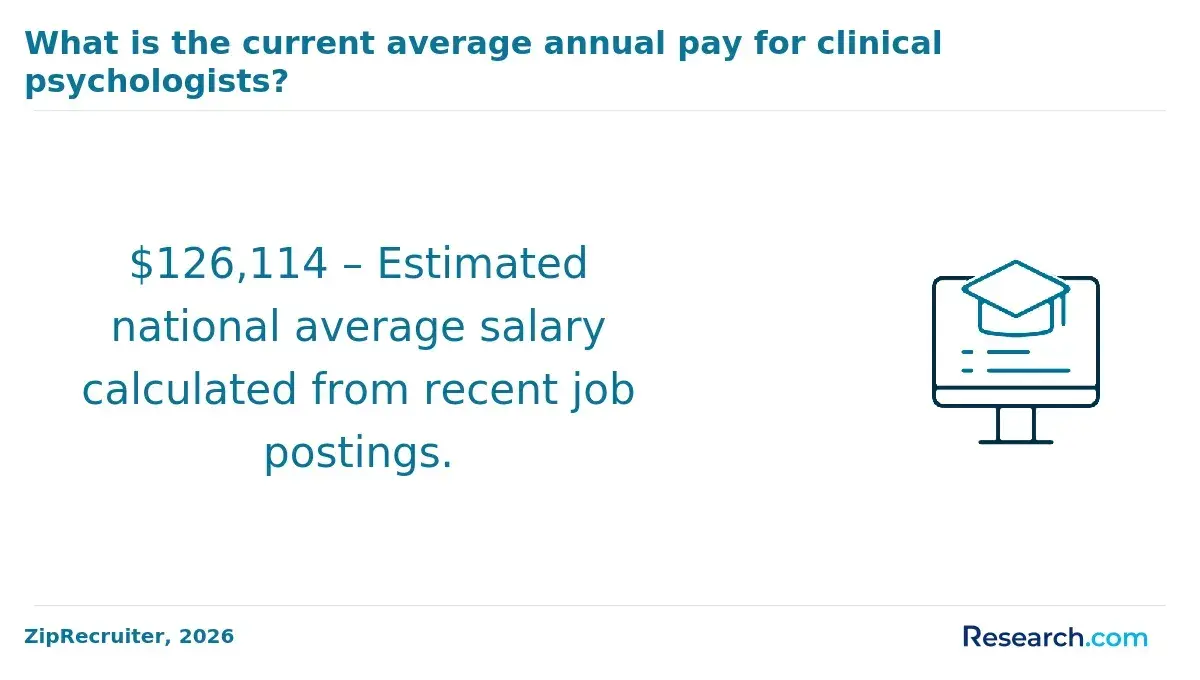
The 2024 U.S. Bureau of Labor Statistics figures cited for this guide report an average annual salary of $102,900, or $49.53 per hour, for psychologists overall. Industrial-organizational psychologists had an annual average salary of $151,000. Clinical and counseling psychologists earned an average of $105,490, while school psychologists earned an average of $89,130.
Other master’s-level mental health roles may pay less than psychologist roles. Marriage and family therapists earned an average of $63,300 per year, while substance abuse, behavioral disorder, and mental health counselors earned an average of $56,230.
When comparing programs, do not judge salary potential by the word “psychology” alone. Compare the specific occupation you want, the license required, the local labor market, and whether the degree is one of the best college majors for jobs for your goals.
| Career Area | Salary Figure Cited | What to Consider |
| Psychologists overall | $102,900 average annual salary; $49.53 per hour | Many psychologist roles require doctoral-level preparation, depending on state and role. |
| Industrial-organizational psychologists | $151,000 average annual salary | Often suited to students interested in business, consulting, analytics, HR, and workplace systems. |
| Clinical and counseling psychologists | $105,490 average annual salary | Licensure rules and degree requirements vary; many independent psychologist roles require a doctorate. |
| School psychologists | $89,130 average annual salary | State certification, school-based fieldwork, and education requirements are important. |
| Marriage and family therapists | $63,300 average annual salary | Often requires a qualifying master’s degree, supervised clinical hours, exams, and state licensure. |
| Substance abuse, behavioral disorder, and mental health counselors | $56,230 average annual salary | Licensure, setting, specialization, and reimbursement structure can affect earnings. |
Below is a summary of how much psychology master’s degree holders make, according to specialization or career path.
What is the job outlook for graduates of a master’s degree in psychology?
The job outlook for many psychology-related roles is favorable, especially in mental health counseling, substance abuse services, school support, and applied organizational work. However, job growth does not mean every graduate will have the same opportunities. Employers still consider license eligibility, supervised experience, specialization, state demand, and practical skills.
Employment of psychologists overall is projected to grow 6% from 2024 to 2034, with an estimated 12,900 job openings each year during that 10-year period. That growth rate is faster than the average for all occupations.
Clinical psychology remains a high-interest field. There are nearly 84,000 clinical psychologists in the U.S., and 20% of them have master’s degrees. Growing interest in online graduate study has also contributed to psychology’s presence among the best online healthcare degrees.
Demand is especially strong in counseling-related roles. Employment of marriage and family therapists is projected to grow 13% from 2024 to 2034, with 7700 projected job openings each year. Employment of substance abuse, behavioral disorder, and mental health counselors is projected to grow 17%, with about 48,300 annual job openings.
Schools also need more mental health and learning-support professionals. Graduates of school psychology and educational psychology degree programs help students with academic, behavioral, social, and emotional needs. The National Association of School Psychologists recommends one school psychologist for every 500-700 students, but the latest national ratio data showed approximately 1,716 students for every one school psychologist.
Neuropsychology and clinical neuropsychology have also shown positive employment patterns. Since 2004, job opportunities in this field have increased by 117.13% nationwide, with average annual growth of 7.32%. The demand for neuropsychologists and clinical neuropsychologists is projected to rise, with an estimated 6,130 new positions being filled by 2029, equal to an annual growth rate of 4.84%.
How do I choose a psychology specialization that is best for my interests and goals?
The best specialization is the one that connects your interests, strengths, required credentials, and preferred work environment. Choosing based only on salary, popularity, or a course title can lead to costly mismatches.
- Identify the population you want to serve. Decide whether you prefer working with children, adults, couples, families, employees, students, crime victims, offenders, patients with neurological conditions, or research participants.
- Clarify the setting you want. A hospital, private practice, school, court system, correctional facility, nonprofit agency, corporate office, and research lab all require different skills and credentials.
- Check licensing rules before applying. If your goal is therapy, counseling, school practice, or independent clinical work, confirm whether the curriculum meets your state’s education requirements.
- Match your strengths to the work. Strong listeners may thrive in counseling; data-oriented students may prefer I-O psychology or research; students comfortable with legal systems may fit forensic psychology.
- Review fieldwork and internship options. Practical experience can be more important than the concentration name, especially for counseling, school, forensic, and rehabilitation roles.
- Talk to people already doing the work. Ask alumni, faculty, supervisors, and licensed professionals what their daily workload, stressors, documentation requirements, and advancement options look like.
| If You Want... | Consider This Specialization | Ask This Before Enrolling |
| To provide therapy or counseling | Clinical counseling, counseling psychology, marriage and family therapy, or mental health counseling | Does the program meet my state’s licensure coursework and supervised-hour requirements? |
| To work in business or consulting | Industrial-organizational psychology | Does the curriculum include assessment, statistics, HR systems, organizational change, and applied projects? |
| To work with students | School psychology, school counseling, or educational psychology | Does the program lead to the certification or credential required by my state or school system? |
| To work near the justice system | Forensic psychology | Are internships available in courts, correctional facilities, law enforcement agencies, or victim-services organizations? |
| To study brain-behavior relationships | Neuropsychology or cognitive psychology | Will I need a doctorate for the role I ultimately want? |
Can I switch psychology specializations if I change my mind?
You may be able to change specializations during a master’s program, but the process depends on the program structure, timing, curriculum overlap, and university policy.
- Flexible programs are easier to adjust. Some programs use shared core courses and allow electives, making it possible to shift focus without losing much time.
- Fixed tracks can be harder to change. Programs designed around strict licensure, internship, or cohort requirements may require extra courses, a delayed graduation date, or even a separate application.
- University rules matter. Academic advisors and program directors can explain whether you need formal approval, a new plan of study, or additional prerequisites.
- Timing affects cost. Switching early is usually easier. Switching after practicum placement, thesis approval, or advanced coursework can increase tuition and extend the program.
Changing after graduation may require another certificate, post-master’s coursework, or a second degree. Some credits may transfer, but do not assume they will. Ask for written confirmation before making financial or academic decisions.
Can I start my own therapy practice with a master’s in psychology?
You may be able to open a therapy practice with a master’s degree, but only if your degree, supervised experience, exams, and license qualify you for independent practice in your state. A master’s degree by itself is usually not enough.
- Licensing requirements control your options. Depending on your education and state, you may pursue a credential such as Licensed Professional Counselor (LPC), Licensed Clinical Social Worker (LCSW), or another state-recognized license. A Licensed Psychologist (PsyD) path often requires doctoral education. Research-focused psychology programs may not include the clinical training required for counseling licensure.
- Supervision is often required first. Many states require graduates to complete supervised clinical experience before practicing independently. During this period, you may work in an agency, clinic, school, hospital, or group practice.
- Teletherapy has its own rules. Some states permit licensed therapists to provide teletherapy across state lines under specific conditions, but regulations vary. Always verify the rules where the client is located and where you are licensed.
If independent practice is your goal, ask each program for its licensure disclosure, supervised placement support, exam preparation resources, and graduate licensure outcomes before enrolling.
How much does a master’s program in psychology cost?
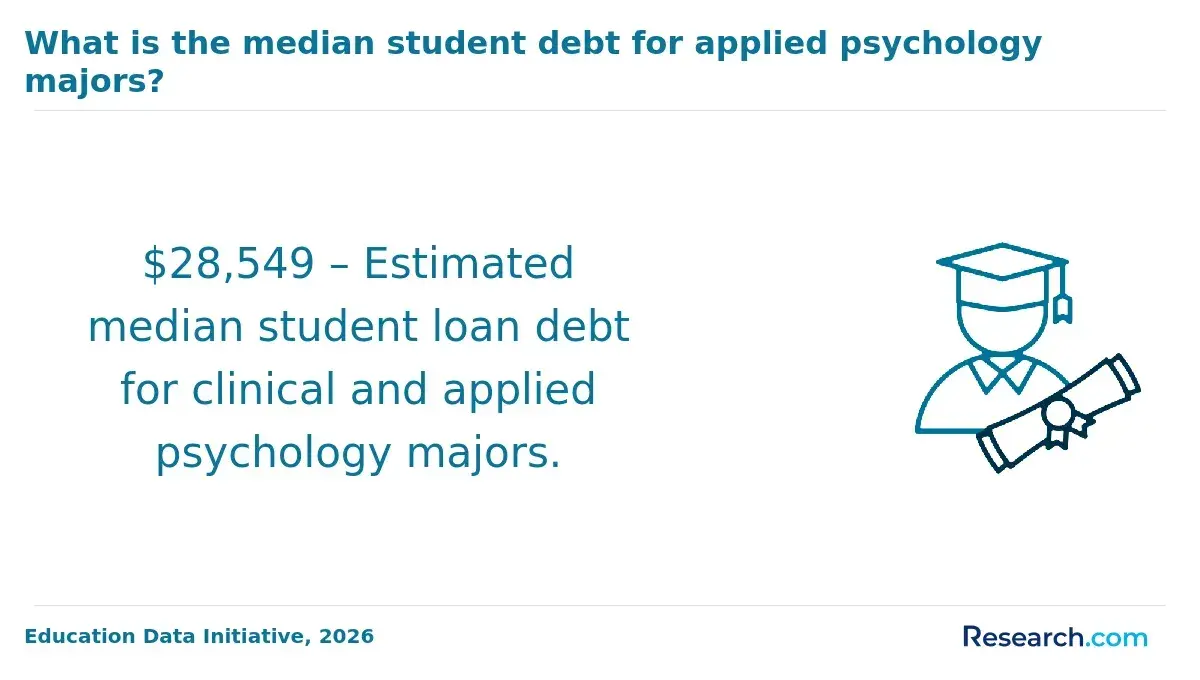
The cost of a master’s in psychology depends on the institution, residency status, program format, credit requirements, fees, fieldwork costs, and whether you attend full time or part time. Public universities often cost less than private institutions, especially for in-state students. Online programs may reduce relocation and commuting costs, but they are not automatically cheaper after fees and required in-person experiences are included.
As an example, the University of Central Missouri, a public university, offers a master’s program in psychology that costs somewhere around $5,500 annually. The program can be completed within two years, and some courses are available online.
At the other end of the range, Yale University’s master’s degree program in psychology costs more than $43,000 annually.
| Cost Factor | Why It Matters | Question to Ask |
| Tuition rate | Public, private, in-state, and out-of-state pricing can differ substantially. | What is the total tuition for the full degree, not just one year? |
| Fees | Technology, clinical placement, graduation, and student service fees can add to the bill. | Which fees are mandatory each term? |
| Fieldwork costs | Practicum and internship placements may require travel, background checks, insurance, or reduced work hours. | Will I need to complete in-person supervised experience? |
| Time to completion | A two-year program may cost less in tuition than a longer part-time route, but part-time study may let you keep working. | What is the realistic completion time for students like me? |
| Licensure alignment | A cheaper program can become expensive if it does not meet licensing requirements. | Does this degree satisfy education requirements in the state where I plan to work? |
What are the pros and cons of having a psychology-related career?
A psychology career can be meaningful, intellectually engaging, and flexible, but it can also involve emotional strain, documentation, regulation, and long credentialing timelines. The trade-offs differ by role.
| Advantages | What They Mean in Practice |
| Meaningful work | Many psychology professionals help people improve relationships, coping skills, learning outcomes, workplace functioning, or quality of life. |
| Multiple career directions | Graduate psychology training can lead to counseling, schools, HR, consulting, research, forensic services, rehabilitation, and doctoral study. |
| Potential flexibility | Private practice, consulting, telehealth, and some organizational roles may offer more schedule control than traditional office jobs. |
| Ongoing learning | The field changes as new research, therapies, technologies, and assessment methods emerge. |
| Career satisfaction | Students who choose a well-matched specialization often find the work personally and professionally rewarding. |
| Challenges | What They Mean in Practice |
| Emotional labor | Clinical, school, forensic, and crisis-related roles often involve people experiencing distress, trauma, conflict, or instability. |
| Irregular hours | Some roles require evening appointments, crisis response, court schedules, school meetings, or overtime documentation. |
| Paperwork and compliance | Progress notes, treatment plans, reports, billing documentation, IEP records, and legal forms can take significant time. |
| Credentialing pressure | Licensure, supervision, continuing education, and ethical compliance are long-term responsibilities. |
| Boundary and legal issues | Professionals must manage confidentiality, mandated reporting, dual relationships, and scope-of-practice limits. |
Can a Master’s in Psychology Lead to Opportunities in Criminal Psychology?
Yes, a master’s in psychology can help you move toward criminal psychology if you intentionally build the right coursework and field experience. Useful preparation may include forensic psychology, behavioral analysis, risk assessment, trauma, victimology, correctional counseling, ethics, and the structure of the legal system.
Look for internships or applied projects in courts, correctional facilities, law enforcement agencies, victim-services programs, juvenile justice organizations, or forensic treatment settings. A focused plan can position you for criminal psychology jobs and related roles at the intersection of psychology and criminal justice.
How do accreditation and licensing requirements shape your psychology career?
Accreditation and licensing determine whether your degree is respected, transferable, and usable for the work you want. For clinical and school-based roles, this is especially important because state boards may require specific coursework, supervised practice, exams, and institutional approval.
Before applying, confirm that the school is properly accredited and that the program publishes licensure disclosures for the states where graduates commonly work. A strong program should explain which licenses or credentials it prepares students for, which requirements it does not meet, and what additional steps are necessary after graduation. To compare professional routes, review our guide to psychology careers.
What are the differences between online and on-campus master’s degree programs in psychology?
Online and on-campus psychology master’s programs can both be rigorous, but they serve different learners. The right choice depends on your schedule, location, learning style, fieldwork needs, and licensure goals.
| Factor | Online Master’s in Psychology | On-Campus Master’s in Psychology |
| Schedule | Often better for working adults and students who need flexible pacing. | Usually more structured, with set class times and campus expectations. |
| Access | Useful if you live far from a university or need to avoid relocation. | Best if you want regular in-person interaction and local campus resources. |
| Fieldwork | May require local placements, occasional residencies, or in-person supervision. | Often has established local practicum and internship relationships. |
| Networking | Requires intentional participation in online events, faculty office hours, and professional groups. | Provides easier access to face-to-face mentoring, labs, cohorts, and campus events. |
| Cost | May reduce travel and relocation expenses, but fees and placement costs still matter. | May cost more if relocation, parking, commuting, or campus housing is needed. |
When comparing formats, focus on accreditation, licensure alignment, faculty access, field placement support, student services, and graduate outcomes. If affordability is a major factor, review online master programs for psychology.
What are the admission requirements for a master’s in psychology?
Most master’s in psychology programs require a bachelor’s degree in psychology or a related field, a competitive GPA, recommendation letters, and a statement of purpose explaining your academic interests and career goals. Some schools may request GRE scores, relevant work experience, research experience, or prerequisite coursework in statistics, research methods, abnormal psychology, developmental psychology, or behavioral science.
If your undergraduate degree is not in psychology, ask whether you can complete prerequisites before enrollment or during the first part of the program. If your long-term goal is doctoral training, compare how a master’s fits into later options such as Psy D programs online.
Is a master’s in psychology worth it?
A master’s in psychology is worth it when it leads to the credential, job, salary range, and professional identity you want at a cost you can reasonably manage. It may be a strong investment for students pursuing mental health counseling, marriage and family therapy, school psychology, industrial-organizational psychology, forensic services, rehabilitation, research support, or doctoral study.
The degree is less likely to be worth it if you choose a program that does not meet licensure requirements, borrow heavily without a clear career plan, or assume that any psychology master’s automatically qualifies you for independent clinical practice. Even as one of the best college majors for jobs, psychology requires careful planning because career outcomes vary by specialization.
Time also matters. Graduate programs typically take two years to complete, and students should consider tuition, fees, fieldwork demands, and income they may give up while studying. If you are comparing timelines, review how long it takes to get a psychology degree in graduate programs.
Use this decision rule: a master’s is most worthwhile when the program is accredited, affordable for your situation, aligned with your state’s licensing rules, connected to supervised experience, and clearly tied to the job you want after graduation.
What are the advantages of enrolling in an accelerated online psychology program?
An accelerated online psychology program may help motivated students finish coursework faster while keeping more control over their schedules. This format can be useful for working adults, career changers, military students, and learners who already have transfer credits or a clear specialization goal.
The main benefit is speed, but speed should not come at the expense of quality. Before choosing an accelerated format, confirm that the curriculum is academically rigorous, the workload is realistic, and any required clinical or practicum experiences still meet professional standards. Students seeking a shorter route can compare a fast track online psychology degree with traditional options.
What ethical considerations should you keep in mind while pursuing a master's degree in psychology?
Ethics are not only a licensing requirement; they shape how psychology students conduct research, interact with clients, handle private information, and understand professional boundaries. Graduate students should begin practicing ethical judgment before they enter the workforce.
- Informed consent. Clients and research participants must understand what services or studies involve, including potential risks, benefits, limits, and the right to withdraw when applicable.
- Confidentiality. Psychology students must protect private information and understand when disclosure is legally or ethically required, such as situations involving imminent harm.
- Competence. Students should work within their training level, seek supervision, and avoid presenting themselves as qualified to provide services beyond their preparation.
- Professional boundaries. Dual relationships, conflicts of interest, and personal involvement with clients can compromise objectivity and client welfare.
- Cultural competence. Ethical practice requires awareness of culture, identity, bias, language, power, and access barriers that affect assessment and care.
What challenges do master's in psychology students commonly face?
Psychology graduate school can be demanding because students often balance theory, research methods, statistics, writing, fieldwork, supervision, and emotional labor. Many also work part time or full time while completing the degree.
| Common Challenge | Why It Happens | Better Strategy |
| Underestimating workload | Graduate classes often require intensive reading, writing, projects, and applied assignments. | Build a weekly schedule before the term begins and protect dedicated study blocks. |
| Fieldwork stress | Practicum or internship placements can add commuting, supervision, documentation, and client-facing responsibilities. | Ask early about placement timelines, site options, and required hours. |
| Financial pressure | Tuition, fees, lost work hours, and exam costs can accumulate. | Compare total program cost and funding before committing. |
| Licensure confusion | Requirements differ by state and by professional title. | Review state board rules and program licensure disclosures before enrollment. |
| Emotional fatigue | Clinical and human-service training may expose students to trauma, crisis, or high-need populations. | Use supervision, peer support, counseling services, and healthy workload boundaries. |
Programs with strong advising, placement support, and applied training can make these challenges easier to manage. Students focused on counseling may want to compare the best schools for masters in mental health counseling.
How can you maximize the value of a master's degree in psychology?
To get the most from a master’s in psychology, treat it as a career strategy rather than just an academic credential. The strongest outcomes usually come from choosing the right specialization, building supervised experience, understanding licensure early, and developing practical skills employers can see.
If you are asking is a psychology degree worth it, the answer depends on how directly the degree supports your goals and whether the costs are reasonable compared with your expected career path.
- Plan for licensure from the beginning. If your target role requires a license, map the required coursework, supervised hours, exams, and post-graduation steps before your first semester.
- Choose internships strategically. Select placements in the settings where you want to work: clinics, schools, corporations, correctional facilities, hospitals, or research labs.
- Build evidence of skills. Save writing samples, assessment experience, research projects, training materials, presentations, or program evaluation work that can support job applications.
- Develop data and technology fluency. Psychology employers increasingly value comfort with telehealth platforms, assessment tools, data interpretation, electronic records, and ethical use of technology.
- Network before you need a job. Faculty, supervisors, alumni, classmates, professional associations, and practicum sites can become job leads, references, and mentors.
What are the career development and networking opportunities in psychology?
Career growth in psychology often depends on what you do beyond the degree. Continuing education, supervision, certifications, professional associations, research involvement, and mentorship can help you move into better roles and stay current in the field.
- Continuing education and certifications. Licensed professionals often need continuing education to maintain credentials. Specialized training in areas such as cognitive behavioral therapy, forensic psychology, health psychology, or neuropsychology can also strengthen a résumé.
- Professional associations and conferences. Organizations such as the American Psychological Association and the Association for Psychological Science offer conferences, webinars, publications, and networking opportunities that can expose you to current research and job leads.
- Research and publishing. Students interested in doctoral study, academia, or research roles should seek faculty projects, poster presentations, conference submissions, and publication opportunities.
- Practice-building relationships. If you eventually want independent practice, develop referral relationships with healthcare providers, schools, community agencies, and other clinicians while still working under appropriate supervision.
- Mentorship and career coaching. A mentor can help you choose a specialization, prepare for licensure, evaluate doctoral options, avoid common career mistakes, and navigate difficult transitions.
If you want to explore psychology before committing to a graduate degree, a lower-cost starting point may be one of the best 2 year psychology degree online programs.
How can you verify the quality and accreditation of online psychology programs?
To evaluate an online psychology program, start with accreditation, then move to outcomes and licensure alignment. A polished website is not enough. You need evidence that the program delivers credible training and supports the careers students are actually pursuing.
- Confirm institutional accreditation. Check that the school is accredited by a recognized accrediting body.
- Review licensure disclosures. If the program claims to prepare students for counseling, school, or clinical practice, verify whether it meets requirements in your state.
- Examine faculty qualifications. Look for faculty with relevant licenses, research activity, professional experience, or specialization in your area of interest.
- Ask about field placements. Online students still may need in-person practicum or internship hours, and placement support can vary widely.
- Request outcome data. Ask about graduation rates, licensure exam preparation, employment outcomes, doctoral placement, and student support services.
Students comparing doctoral pathways and cost-sensitive options may also want to review affordable PsyD programs online.
What funding options can make a master’s in psychology more accessible?
Funding can make the difference between a useful graduate degree and an unaffordable one. Compare aid before enrolling, not after the bill arrives.
- Scholarships and grants. Look for awards from universities, professional associations, nonprofits, state agencies, and community organizations.
- Assistantships. Some programs offer teaching, research, or administrative assistantships that may reduce tuition or provide a stipend.
- Federal or state aid. Eligible students should complete required financial aid forms and review loan terms carefully.
- Employer support. Working professionals may have access to tuition reimbursement, professional development funds, or paid training benefits.
- Lower-cost program formats. Online, public, or part-time programs may reduce overall cost, especially if they allow you to keep working.
If your interest is forensic psychology, comparing an affordable online master’s in forensic psychology can help you evaluate lower-cost options without losing sight of accreditation and career fit.
What are the emerging trends in psychology specializations?
Several trends are shaping psychology graduate education and career planning. Students do not need to chase every new trend, but they should understand how the field is changing before choosing a specialization.
- Telehealth and virtual care. Remote counseling and digital service delivery have expanded access, but they also require careful attention to privacy, state rules, ethics, and technology skills.
- AI-powered mental health tools. Digital screening tools, chat-based supports, and data-informed platforms are influencing care models. Psychology professionals still need human judgment, ethical oversight, and evidence-based training.
- Neuropsychology and cognitive health. Interest in brain-behavior relationships, aging, injury, and cognitive functioning continues to support demand in healthcare and research settings.
- School mental health and social-emotional learning. Shortages of school psychologists and rising student support needs make school-based specializations especially relevant.
- Culturally responsive practice. Employers and clients increasingly expect professionals to understand culture, identity, access, trauma, and bias in assessment and intervention.
- Workplace psychology. Organizations continue to focus on employee well-being, selection, leadership development, training, motivation, and organizational change.
To compare traditional and emerging options, review the different types of majors in psychology and connect each field of study to realistic job outcomes.
Common Mistakes to Avoid When Choosing a Master’s in Psychology
| Mistake | Why It Can Hurt You | Better Approach |
| Choosing a program without checking accreditation | Your degree may not be accepted by employers, doctoral programs, or licensing boards. | Verify accreditation and ask for written licensure disclosures. |
| Assuming all psychology master’s programs lead to therapy licensure | Research-focused or general psychology programs may not include required clinical coursework or supervised practice. | Match the curriculum to the exact license and state where you plan to work. |
| Looking only at tuition | Fees, travel, fieldwork, exam costs, and lost income can change the real price. | Calculate the total cost of attendance and compare funding options. |
| Ignoring internship and practicum quality | Weak field placement support can delay graduation or reduce employability. | Ask where students complete placements and who helps secure sites. |
| Relying only on rankings | A highly ranked program may not fit your state, schedule, specialization, or budget. | Use rankings as one input, then evaluate licensing fit, faculty, cost, outcomes, and support. |
| Assuming salary outcomes are guaranteed | Pay depends on role, location, license, employer, experience, and demand. | Research actual job postings and salary data for your intended occupation and region. |
Questions to Ask Before Applying
- Does this program prepare graduates for the license, credential, or certification I want?
- Is the program accepted in the state where I plan to practice?
- How many supervised hours, internships, or practicums are required?
- Who helps online students secure field placements?
- What is the total cost, including tuition, fees, books, travel, and exam expenses?
- Can I study part time while working?
- What percentage of graduates enter the jobs I am considering?
- Does the program prepare students for doctoral study if I later choose that route?
- Are faculty members active in my desired specialization?
- What academic, career, mental health, and licensing support services are available?
Key Insights
- A master’s in psychology can lead to counseling, school, organizational, forensic, rehabilitation, research, and psychology-adjacent careers, but the degree must match the job and licensing rules you are targeting.
- Clinical and therapy-oriented careers require careful planning because state licensure may involve specific coursework, supervised experience, exams, and post-graduation requirements.
- Salary varies sharply by role. The cited 2024 BLS figures include $102,900 for psychologists overall, $151,000 for industrial-organizational psychologists, $105,490 for clinical and counseling psychologists, $89,130 for school psychologists, $63,300 for marriage and family therapists, and $56,230 for substance abuse, behavioral disorder, and mental health counselors.
- Job outlook is strongest in areas tied to mental health access, student support, substance abuse counseling, marriage and family therapy, and specialized assessment or organizational work.
- Online programs can be a strong option for working adults, but accreditation, field placement support, and state licensure alignment matter more than convenience alone.
- The best program is not necessarily the cheapest, fastest, or highest ranked. It is the one that is accredited, affordable, aligned with your state and career goal, and strong in the specialization you want.
References:
- National Association of School Psychologists. (2024). School Psychologist Ratio. https://www.nasponline.org/about-nasp/publications/newsroom/press-releases/2024/01/10/nasp-releases-updated-recommendations-for-psychologist-to-student-ratios
- Education Data Initiative. (2026). Student Loan Debt by Major [2026]. https://educationdata.org/student-loan-debt-by-major
- U.S. Bureau of Labor Statistics. (2025). Psychologists: Occupational Outlook Handbook. https://www.bls.gov/ooh/life-physical-and-social-science/psychologists.htm
- ZipRecruiter. (2026). Salary: Clinical Psychologist (Feb, 2026). https://www.ziprecruiter.com/Salaries/Clinical-Psychologist-Salary
Other Things You Should Know About Having a Master’s Degree in Psychology
In 2027, emerging fields like artificial intelligence ethics, digital mental health solutions, and user experience research can significantly benefit from a Master’s in Psychology. These fields require expertise in human behavior, data interpretation, and ethical frameworks, making psychology graduates a valuable asset.
No. A master’s in psychology does not by itself meet counselor licensure requirements. Most states require a master’s in counseling, 2,000 to 4,000 supervised hours after graduation, and passage of the National Counselor Examination or a state-specific exam.