
2027 Fastest Online Master's Degree Programs in Industrial Organizational Psychology

Co-Founder and Chief Data Scientist
Business organizations rely on the company staff's outputs to achieve their financial targets and raise profits. Unfortunately, recent studies show that only 31% of employees are engaged, while 66% experience signs of burnout. Industrial-organizational (I-O) psychologists can help boost employee engagement and develop solutions to curb burnout, which is why these professionals are highly compensated.
In this guide, aspirants who aim to quickly practice will get to know the fastest online master's in industrial organizational psychology on the market along with key facts for each program. The article also explores various aspects of being industrial organizational psychologists, including the average salary, job outlook, top skills, and possible career paths.
What are the benefits of getting an online master's degree in industrial organizational psychology?
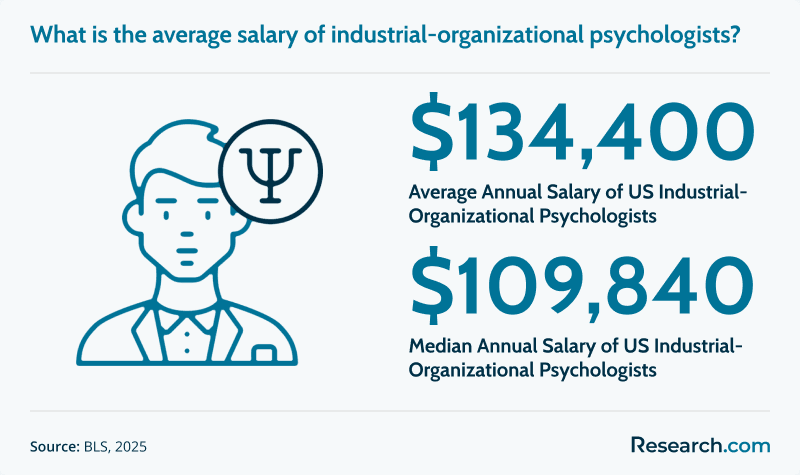
- The average yearly salary of industrial-organizational psychologists is $134,400, while their median annual salary is $109,840.
- Completing an online master's in industrial organizational psychology enables graduates to pursue careers as industrial-organizational psychologists, human resources managers, or talent development managers.
- An online master’s in industrial-organizational psychology offers a more flexible schedule, greater convenience, and dynamic learning experiences compared to traditional on-campus programs.
What can I expect from an online master's degree in industrial organizational psychology?
A student enrolled in an online master’s degree in industrial-organizational psychology can expect a curriculum that combines psychological theory with practical applications in workplace settings.
The program typically includes courses on personnel selection, performance appraisal, organizational development, leadership, motivation, and research methods. Students also gain training in data analysis and psychometrics to assess and improve organizational practices.
Most online programs offer flexible, asynchronous coursework to accommodate working professionals, along with virtual discussions, group projects, and case studies that simulate real-world challenges. While many programs are entirely online, some may include optional or required internships or capstone projects to provide applied experience.
Where can I work with an online master's degree in industrial organizational psychology?
A graduate with an online master's degree in industrial-organizational psychology can work in a variety of settings that focus on improving workplace performance, employee satisfaction, and organizational effectiveness. Their common work environments include the following:
- Corporations and Businesses: Graduates can work in roles such as human resources, employee training, or organizational development, where they design strategies to improve productivity, engagement, and retention.
- Government Agencies: I-O psychologists may assist with personnel assessment, employee satisfaction studies, and policy development to enhance the efficiency and fairness of public sector operations.
- Consulting Firms: Graduates can serve as external consultants, helping organizations navigate change, develop leadership programs, and improve overall workplace culture.
- Healthcare and Hospitals: Industrial organizational psychologists can contribute to improving team communication, managing staff burnout, and optimizing workflows to boost efficiency and care quality.
- Academic and Research Institutions: Those with a passion for research or teaching can conduct studies on workplace behavior or lecture on psychology and organizational topics, often with further academic credentials.
- Nonprofit Organizations: Graduates may work on improving volunteer engagement, evaluating program effectiveness, and strengthening internal organizational practices.
- Tech Companies: Industrial organizational psychologists can play a role in refining hiring algorithms, enhancing user-centered workplace tools, and applying behavioral science to improve company culture and performance.
How much can I make with an online master's degree in industrial organizational psychology?
Many I-O psychologists earn six-figure salaries, considering their effect on business organizations. According to the United States Bureau of Labor Statistics (BLS), the average yearly salary of industrial-organizational psychologists is $134,400, while their median annual salary is $109,840. These figures are considerably higher than the median annual pay of all jobs in the country ($49,500).
Industrial-organizational psychologists typically earn around $51,880 to $224,590 yearly in their careers. The pay of entry-level jobs usually falls on the lower end of the spectrum, while seasoned psychologists working in a high-demand industry like management services and government offices take home sums north of the average annual salary.
- Fastest Online Master's Degree in Industrial Organizational Psychology for 2027 List of Programs
- How long does it take to complete an online master's degree in industrial organizational psychology? Completion Time
- How does an online master's degree in industrial organizational psychology compare to an on-campus program? How does an online master's degree in industrial organizational psychology compare to an on-campus program?
- What is the average cost of an online master's degree in industrial organizational psychology? Average Cost
- What are the financial aid options for students enrolling in an online master's degree in industrial organizational psychology? Financial Aid
- What are the prerequisites for enrolling in an online master's degree in industrial organizational psychology? Requirements
- What courses are typically in an online master's degree in industrial organizational psychology? What courses are typically in an online master's degree in industrial organizational psychology?
- What types of specializations are available in online master's degrees in industrial organizational psychology? Specializations
- How to choose the best online master's degree in industrial organizational psychology? How to choose the best online master's degree in industrial organizational psychology?
- What career paths are available for graduates of online master's degrees in industrial organizational psychology? What career paths are available for graduates of online master's degrees in industrial organizational psychology?
- What is the job market for graduates with an online master's degree in industrial organizational psychology? Job Market
- What distinguishes online master's degrees in industrial organizational psychology from other online graduate programs? What distinguishes online master's degrees in industrial organizational psychology from other online graduate programs?
- What networking and mentorship opportunities are available in online master's programs? What networking and mentorship opportunities are available in online master's programs?
- What is the return on investment for an online master's degree in industrial organizational psychology? What is the return on investment for an online master's degree in industrial organizational psychology?
Fastest Online Master’s Degrees in Industrial-Organizational Psychology for 2027
Choosing a fast online master’s degree in industrial-organizational psychology is usually a time, cost, and career-fit decision. The right program can help you move into roles in human resources, organizational development, workforce analytics, leadership training, consulting, or applied workplace research without leaving your current job. The wrong program can cost more than expected, take longer than advertised, or lack the applied projects and career support you need.
This guide is designed for working professionals, psychology graduates, HR practitioners, and career changers comparing accelerated online I-O psychology master’s programs. You will find ranked program options, completion timelines, tuition considerations, admissions requirements, curriculum expectations, online-versus-campus trade-offs, career paths, job market data, and practical questions to ask before enrolling.
Quick Answer: What Is the Fastest Online Master’s in Industrial-Organizational Psychology?
The fastest online master’s programs in industrial-organizational psychology can often be completed in about 1 year to 16 months, depending on credit load, course sequencing, transfer policies, and whether the student studies full-time. Programs in this field commonly require 30 to 54 credits and prepare students to apply psychology, statistics, assessment, leadership, and organizational behavior concepts to workplace problems.
Students who want the quickest route should compare more than advertised program length. Review total credits, course frequency, capstone or internship requirements, asynchronous options, tuition per credit, accreditation, and whether the program’s structure fits your work schedule.
How We Rank Schools
Accelerated online master’s degrees in industrial-organizational psychology can be less expensive than some campus-based options, but they are still significant financial commitments. To help prospective students compare programs more confidently, our ranking approach emphasizes accessible institutional data, accreditation, program structure, and cost-related information.
Research.com uses information from established education data sources, including the IPEDS database, College Scorecard, Peterson's database, and the National Center for Education Statistics. Accredited institutions are prioritized because accreditation helps signal that a school meets recognized academic quality standards. You can review our ranking process on our methodology page.
Fastest Online Master’s Degree Programs in Industrial-Organizational Psychology
The programs below are structured for students who want an online graduate degree focused on workplace behavior, personnel decisions, leadership, organizational change, employee motivation, and applied research. Use the ranking as a starting point, then verify current tuition, course availability, admissions deadlines, and completion policies directly with each university.
| Rank | School and Program | Program Length | Credits | Cost Information | Accreditation |
| 1 | Missouri University of Science and Technology — Master of Science in Industrial-Organizational Psychology | 1 to 2 years | 37 | $950 per credit | Higher Learning Commission |
| 2 | Eastern Kentucky University — Master of Science in Industrial Organizational Psychology | 1 year | 36 | $649 per credit | Southern Association of Colleges and Schools Commission on Colleges |
| 3 | Park University — MA in Industrial-Organizational Psychology | 1 to 2 years | 33 | $695 per credit | Higher Learning Commission |
| 4 | Saint Peter's University — Online Master’s Degree in Industrial Organizational Psychology | 15 months | 36 | $750 per credit | Middle States Commission on Higher Education |
| 5 | National Louis University — M.S. in Industrial and Organizational Psychology | 1 year | 36 to 42 | $790 per credit | Higher Learning Commission |
| 6 | Austin Peay State University — M.S. in Industrial-Organizational Psychology | 2 years | 34 | $877.70 per credit | Southern Association of Colleges and Schools Commission on Colleges |
| 7 | George Mason University — Applied Industrial and Organizational Psychology, MPS | Less than 2 years | 30 | $815 per credit | Southern Association of Colleges and Schools Commission on Colleges |
| 8 | Colorado State University-Fort Collins — Master of Applied Industrial/Organizational Psychology | 2 to 4 years | 38 | $770 per credit | Higher Learning Commission |
| 9 | Louisiana Tech University — Industrial/Organizational Psychology (MA) | 18 months | 36 | $475 per credit | Southern Association of Colleges and Schools Commission on Colleges |
| 10 | National University — Master of Science in Industrial/Organizational Psychology | 16 months | 54 | $29,280 total cost | WASC Senior College and University Commission |
1. Missouri University of Science and Technology: Master of Science in Industrial-Organizational Psychology
The online Master of Science in Industrial-Organizational Psychology from Missouri University of Science and Technology is built for students who want to use psychological science to strengthen workplace systems, employee performance, leadership practices, and organizational culture. The 100% online, semester-based format can be completed in 1 to 2 years and uses asynchronous coursework for added flexibility. Students study human behavior at work, personnel development, leadership, data analysis, and organizational decision-making.
- Program Length: 1 to 2 years
- Concentrations: thesis, non-thesis
- Required Credits to Graduate: 37
- Cost per Credit: $950
- Accreditation: Higher Learning Commission
2. Eastern Kentucky University: Master of Science in Industrial Organizational Psychology
Eastern Kentucky University offers a 36-credit hour online Master of Science in Industrial-Organizational Psychology focused on practical workplace applications. The program is designed for students interested in performance improvement, organizational productivity, human resources, consulting, organizational development, applied research, and field-based learning.
- Program Length: 1 year
- Required Credits to Graduate: 36
- Cost per Credit: $649
- Accreditation: Southern Association of Colleges and Schools Commission on Colleges
3. Park University: MA in Industrial-Organizational Psychology
The 33-credit hour Master of Arts in Industrial-Organizational Psychology at Park University prepares students to address workplace challenges through applied psychology. Its curriculum gives particular attention to social justice, equity, diversity, and inclusion in organizations. Courses include Introduction to Social Justice, Personnel Psychology, and Organizational Attitudes and Behavior.
- Program Length: 1 to 2 years
- Required Credits to Graduate: 33
- Cost per Credit: $695
- Accreditation: Higher Learning Commission
4. Saint Peter's University: Online Master’s Degree in Industrial Organizational Psychology
Saint Peter’s University provides a fully online master’s degree in industrial-organizational psychology for working adults who want to grow into organizational leadership, HR, consulting, education, government, research, or applied psychology roles. The program emphasizes critical thinking, research, data analysis, ethical leadership, and evidence-based workplace decision-making.
- Program Length: 15 months
- Required Credits to Graduate: 36
- Cost per Credit: $750
- Accreditation: Middle States Commission on Higher Education
5. National Louis University: M.S. in Industrial and Organizational Psychology
The online M.S. in Industrial and Organizational Psychology from National Louis University combines psychology, business, and human resources coursework. Students examine workplace behavior, productivity, employee satisfaction, leadership theory, talent acquisition, work motivation, performance measurement, and research methods.
- Program Length: 1 year
- Required Credits to Graduate: 36 to 42
- Cost per Credit: $790
- Accreditation: Higher Learning Commission
6. Austin Peay State University: M.S. in Industrial-Organizational Psychology
Austin Peay State University offers a 34-credit online M.S. in Industrial-Organizational Psychology that follows the SIOP guidelines and uses a scientist-practitioner model. Students learn to design, apply, and evaluate workplace interventions while building skills for human resources, organizational development, consulting, and applied research roles.
- Program Length: 2 years
- Required Credits to Graduate: 34
- Cost per Credit: $877.70
- Accreditation: Southern Association of Colleges and Schools Commission on Colleges
7. George Mason University: Applied Industrial and Organizational Psychology, MPS
The online Master of Professional Studies in Applied Industrial and Organizational Psychology from George Mason University is a 30-credit program for HR, business, and organizational professionals who want research-based methods for improving workplace performance and culture. The curriculum highlights data analytics, evidence-based practice, communication, employee motivation, candidate evaluation, and performance systems.
- Program Length: Less than 2 years
- Required Credits to Graduate: 30
- Cost per Credit: $815
- Accreditation: Southern Association of Colleges and Schools Commission on Colleges
8. Colorado State University-Fort Collins: Master of Applied Industrial/Organizational Psychology
Colorado State University offers a 38-credit online Master of Applied Industrial/Organizational Psychology for students seeking a practitioner-focused education. The program addresses hiring, training, leadership, employee satisfaction, workplace performance, organizational culture, HR practices, research, and quantitative analysis.
- Program Length: 2 to 4 years
- Required Credits to Graduate: 38
- Cost per Credit: $770
- Accreditation: Higher Learning Commission
9. Louisiana Tech University: Industrial/Organizational Psychology (MA)
Louisiana Tech University provides a 36-credit online Master of Arts in Industrial and Organizational Psychology for students who want to apply behavioral science in organizational environments. Coursework covers employment law, leadership, training, organizational theory, research methods, and statistics. Students also complete an internship and comprehensive exam.
- Program Length: 18 months
- Required Credits to Graduate: 36
- Cost per Credit: $475
- Accreditation: Southern Association of Colleges and Schools Commission on Colleges
10. National University: Master of Science in Industrial/Organizational Psychology
National University offers a Master of Science in Industrial/Organizational Psychology that can be completed in 16 months through 10 to 12 courses. The program focuses on evidence-based responses to workplace issues and includes study in personnel psychology, organizational behavior, and occupational health. Students may choose an Occupational Health specialization and may use the FastForward pathway to transition into a doctoral program while saving time and tuition.
- Program Length: 16 months
- Concentrations: Occupational Health
- Required Credits to Graduate: 54
- Total Cost: $29,280
- Accreditation: WASC Senior College and University Commission
How Long Does an Online Master’s Degree in Industrial-Organizational Psychology Take?
Most online master’s degrees in industrial-organizational psychology take about 1.5 to 2 years for full-time students. Accelerated options may be completed in 15 months or 16 months, while part-time or self-paced programs may extend to 4 years.
Program length depends mainly on credit requirements, academic calendar, whether courses are offered year-round, and whether the degree includes an internship, thesis, comprehensive exam, applied project, or capstone. Programs with 30 to 38 credits are often structured for completion in 16 to 24 months when students maintain a full-time pace.
Students comparing accelerated online psychology degree options should pay attention to workload, not just speed. A three-credit graduate course may require 9 to 12 hours per week, and taking multiple courses while working full-time can be demanding. Faster completion is most realistic for students with predictable schedules, strong writing skills, and prior preparation in psychology, statistics, or research methods.
| Study Pace | Typical Completion Range | Best For | Main Trade-Off |
| Accelerated full-time | 15 months to 16 months | Students who can handle intensive coursework and steady deadlines | Less flexibility and heavier weekly workload |
| Standard full-time | 1.5 to 2 years | Students who want a balanced but efficient path | Still requires consistent weekly study time |
| Part-time | 2 to 4 years | Working professionals, caregivers, and students with variable schedules | Longer time before graduation and potential tuition changes over time |
According to College Board, as shown in the chart below, 57.69% of industrial-organizational psychologists in the States hold a master's or professional degree, 30.77% have a doctoral degree, 3.85% earned a bachelor's degree, 3.85% hold an associate degree, and 3.85% had some college.
Online vs. On-Campus Master’s in Industrial-Organizational Psychology: Which Is Better?
An online and an on-campus master’s in industrial-organizational psychology can cover similar academic content, including workplace behavior, research methods, assessment, leadership, motivation, and organizational change. The better choice depends on how you learn, how much schedule flexibility you need, and whether you want campus-based research, local internships, and in-person faculty access.
Students who want broader training in reasoning, ethics, argumentation, and human behavior may also compare related humanities options such as the fastest online philosophy degree, though I-O psychology is the more directly workplace-focused graduate path.
| Factor | Online I-O Psychology Master’s | On-Campus I-O Psychology Master’s |
| Schedule | Often asynchronous or flexible, which helps working adults complete coursework around job and family responsibilities | Usually follows fixed class times and campus schedules, which can provide structure but less flexibility |
| Learning style | Requires self-direction, time management, comfort with digital tools, and strong written communication | Works well for students who prefer face-to-face discussion, live lectures, and regular campus engagement |
| Access to resources | Provides virtual advising, digital libraries, online discussion spaces, and remote career support | May offer easier access to faculty offices, campus labs, in-person events, and local employer connections |
| Applied experience | May use online case studies, capstones, virtual team projects, and locally arranged internships | May provide more direct access to faculty-led research, campus partnerships, and nearby field placements |
| Cost and logistics | Can reduce commuting, housing, and relocation costs, though tuition and fees vary widely | May involve housing, transportation, campus fees, or relocation, but offers a more immersive student experience |
Students often ask, “Are online psychology degrees legitimate?” They can be, provided the institution is properly accredited and the program offers rigorous coursework, qualified faculty, meaningful applied work, and adequate student support. Employers are generally more likely to care about institutional credibility, skills, experience, and outcomes than whether every course met on campus.
How Much Does an Online Master’s Degree in Industrial-Organizational Psychology Cost?
The average cost for an online master’s degree in industrial-organizational psychology is around $11,700 per year. This figure is a useful planning benchmark, but your actual cost will depend on tuition rates, required credits, fees, transfer credits, course load, residency status, and financial aid.
Many affordable programs cost about $8,000 to $15,000 annually, with full program tuition commonly falling between $16,000 and $30,000 for a two-year path. Some public universities may charge different rates for in-state and out-of-state students, while private institutions or programs with higher per-credit tuition can exceed $30,000 in total.
Examples mentioned in affordability comparisons include Austin Peay State University and Purdue University Global near the lower end at around $8,000 to $9,000 per year, while Capella University and Albizu University are closer to $12,000 to $15,000 annually.
Like some of the most affordable online counseling degrees, online I-O psychology master’s programs often require 30 to 48 credit hours and may offer flexible pacing for working adults.
| Cost Item | Why It Matters | Question to Ask |
| Tuition per credit | A lower per-credit rate can still become expensive if the program requires more credits | What is the total tuition for all required credits? |
| Mandatory fees | Technology, graduation, online learning, and student service fees can increase the final bill | Which fees are required for online students? |
| Books and software | Statistics, assessment, and research courses may require software or specialized materials | What are the estimated course material costs? |
| Internship or capstone costs | Applied experiences may require background checks, travel, or local coordination | Are there extra costs for fieldwork, internships, or applied projects? |
| Time to completion | Taking longer may increase total fees or delay salary gains | Can I finish within the advertised timeline while working? |
The chart below shows how the median wage of industrial-organizational psychologists compares to other types of psychologists. Their pay is comparable to the average FNP salary.
Financial Aid Options for Online I-O Psychology Master’s Students
Students in online industrial-organizational psychology master’s programs may be able to reduce out-of-pocket costs through federal aid, institutional support, employer benefits, payment plans, private loans, and military or veteran education benefits. Always confirm whether your program is eligible for aid before enrolling.
- Federal Financial Aid: Eligible US students can start by completing the FAFSA. Graduate students may qualify for Direct Unsubsidized Loans or Graduate PLUS Loans.
- Scholarships and Grants: Universities, foundations, and professional associations may offer aid based on academic performance, financial need, professional goals, or field of study.
- Employer Tuition Assistance: HR, training, analytics, consulting, government, and healthcare employers may help pay for graduate education if the degree supports the employee’s role or advancement path.
- Assistantships or Fellowships: These are more common in campus programs, but some online students may find research, teaching, or fellowship opportunities that include tuition assistance or stipends.
- Payment Plans: Monthly payment options can spread tuition across a term or academic year and may help students avoid borrowing more than necessary.
- Private Student Loans: Banks and private lenders may offer graduate loans, though these may have higher interest rates, credit checks, co-signer requirements, and fewer protections than federal loans.
- Military and Veteran Benefits: Active-duty service members, veterans, and eligible dependents may qualify for tuition assistance, housing support, or GI Bill benefits.
Ways to Lower the Total Cost
- Ask whether graduate transfer credits are accepted and how many can apply to the degree.
- Compare total program cost, not only annual tuition or per-credit price.
- Choose a realistic pace to avoid withdrawing from courses or extending enrollment unnecessarily.
- Ask your employer about tuition reimbursement before applying.
- Prioritize accredited institutions so federal aid, employer benefits, and degree recognition are less likely to become problems.
Admission Requirements for an Online Master’s in Industrial-Organizational Psychology
Admission requirements vary, but most online master’s programs in industrial-organizational psychology expect applicants to show readiness for graduate-level psychology, research, statistics, and applied organizational coursework. A psychology bachelor’s degree is often helpful but not always required; applicants from business, sociology, human resources, management, or related fields may also be considered.
Students interested in organizational systems, process improvement, workflow design, or operations may also compare I-O psychology with a fastest master's in industrial engineering online, which emphasizes efficiency, production systems, and engineering-based optimization rather than workplace psychology.
- Bachelor’s Degree: Applicants usually need a bachelor’s degree from an accredited college or university. Psychology is common, but related fields may be accepted.
- Minimum GPA: Many programs set a minimum undergraduate GPA around 2.75 to 3.0 on a 4.0 scale.
- Foundational Coursework: Programs may require or recommend prior study in general psychology, statistics, or research methods. Students without this background may need prerequisite courses.
- Letters of Recommendation: Schools often ask for two or three recommendations from professors, supervisors, or professional contacts who can evaluate the applicant’s readiness.
- Statement of Purpose: Applicants typically explain their interest in I-O psychology, career goals, and reasons for choosing the program.
- Resume or Curriculum Vitae: A current resume helps admissions teams assess work history, academic preparation, leadership experience, and relevant skills.
- GRE Scores: Some programs require GRE results, but many online programs have made them optional or waived them.
- English Proficiency: International applicants whose first language is not English may need TOEFL or IELTS scores.
How to Strengthen Your Application
- Highlight experience in HR, training, management, analytics, psychology research, leadership, or organizational improvement.
- Use your statement of purpose to connect the degree to specific career goals, not vague interest in psychology.
- If your GPA is below the preferred range, emphasize recent coursework, professional achievements, certifications, or quantitative preparation.
- Ask recommenders who can discuss your analytical ability, writing, professionalism, and follow-through.
Common Courses in an Online Master’s Degree in Industrial-Organizational Psychology
An online I-O psychology master’s curriculum usually combines workplace psychology, quantitative research, assessment, HR strategy, leadership, training, ethics, and applied projects. The strongest programs teach students to diagnose organizational problems, interpret data, recommend evidence-based solutions, and communicate findings to non-psychologist stakeholders.
Professionals in healthcare leadership may also compare this degree with a fastest online nurse administrator graduate certificate, which focuses more directly on healthcare operations, finance, management, and nursing administration.
- Organizational Behavior: Explores how individuals, teams, and systems function inside organizations and how behavior affects communication, productivity, morale, and culture.
- Personnel Selection and Assessment: Covers methods for evaluating, hiring, promoting, and assessing employees using structured and defensible tools.
- Training and Development: Teaches students to design, deliver, and evaluate employee learning programs that support organizational goals.
- Work Motivation and Job Satisfaction: Examines the psychological drivers of engagement, motivation, satisfaction, commitment, and performance.
- Psychological Research Methods: Builds skills in study design, data collection, research interpretation, and evidence-based decision-making.
- Statistics for Behavioral Science: Introduces statistical tools used in workplace research, including correlation, regression, and ANOVA.
- Performance Management: Focuses on goal setting, evaluation systems, feedback methods, and continuous performance improvement.
- Leadership and Organizational Change: Reviews leadership theories and change strategies, including how to manage resistance and guide organizational transitions.
- Ethics and Professional Practice: Addresses ethical responsibilities in assessment, research, consulting, data use, employee privacy, and workplace interventions.
Students who plan to continue into advanced psychology practice or doctoral-level study may compare accredited cheapest online PsyD programs, though a PsyD serves different goals than a terminal master’s in I-O psychology.
Specializations in Online Industrial-Organizational Psychology Master’s Programs
Some online I-O psychology master’s programs offer formal concentrations, while others allow students to tailor electives, applied projects, or capstones toward a career goal. Specializations are most useful when they align with the role you want after graduation.
| Specialization | What It Emphasizes | Best Fit |
| Human Resource Management | Recruiting, employee relations, compensation, HR strategy, and workforce planning | Students targeting HR leadership or HR business partner roles |
| Talent Development and Training | Learning design, employee development, training evaluation, and skills improvement | Students interested in learning and development or corporate training |
| Organizational Leadership | Leadership theory, coaching, change management, team dynamics, and executive development | Students preparing for leadership development or internal consulting roles |
| Workplace Diversity and Inclusion | Bias reduction, inclusive policy, cultural competence, equity strategy, and organizational climate | Students interested in DEI management, culture work, or employee experience |
| Data Analytics for I-O Psychology | Statistical modeling, people analytics, data visualization, and predictive workforce insights | Students who want analytics-heavy HR or workforce research roles |
| Consulting and Coaching | Client diagnosis, intervention design, leader coaching, and organizational problem-solving | Students aiming for external consulting, internal consulting, or coaching work |
| Occupational Health Psychology | Employee well-being, stress, burnout, work-life balance, safety, and health-related workplace behavior | Students interested in well-being, employee assistance, or workplace health programs |
Professionals specifically focused on executive roles in healthcare may also consider accelerated online nurse executive leadership MSN programs, which are designed for nursing leadership rather than general organizational psychology.
Burnout remains an important workplace issue for I-O psychology practitioners. According to Moodle, common causes include feeling overwhelmed by the amount of work available (24%), a lack of necessary tools and resources to complete the job (24%), and the perception of a poor economy (20%).
How to Choose the Best Online Master’s Degree in Industrial-Organizational Psychology
The best program is not automatically the fastest or cheapest. It is the program that matches your career goal, budget, academic background, preferred learning format, and need for applied experience. Use the checklist below before applying.
- Verify Accreditation: Choose a regionally accredited institution. Accreditation affects financial aid eligibility, employer recognition, transfer options, and graduate school opportunities.
- Match the Curriculum to Your Goal: If you want people analytics, look for statistics, research methods, data visualization, and workforce analytics. If you want HR leadership, look for staffing, compensation, performance management, and employee relations.
- Review Faculty Backgrounds: Faculty with research and applied experience can help connect theory to real workplace decisions.
- Evaluate Online Flexibility: Check whether courses are asynchronous, synchronous, cohort-based, self-paced, accelerated, or part-time.
- Calculate Total Cost: Include tuition, fees, textbooks, software, travel for any in-person requirements, and potential lost income if you reduce work hours.
- Look for Applied Work: Internships, consulting projects, capstones, research portfolios, and case-based assignments can help demonstrate skills to employers.
- Ask About Career Support: Strong programs may offer alumni networks, career coaching, résumé review, employer connections, and internship guidance.
Questions to Ask Before Enrolling
- Is the university regionally accredited?
- How many students finish within the advertised program length?
- Are courses asynchronous, live, or a mix of both?
- Does the program include a thesis, capstone, internship, comprehensive exam, or applied project?
- Can working adults realistically complete the accelerated track?
- What software, statistics, or research tools will students use?
- What career services are available to fully online graduate students?
- Are there alumni outcomes, employer partnerships, or internship placement examples?
- What is the full estimated cost, including fees?
- Can credits transfer into a doctoral program later?
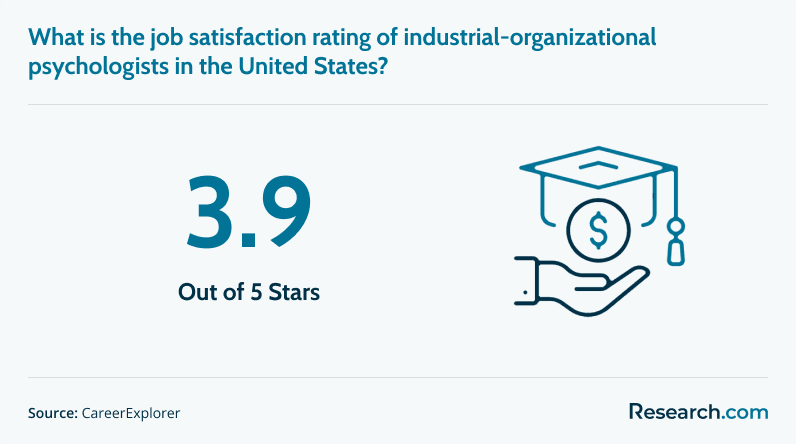
According to CareerExplorer, industrial-organizational psychologists in the country rated their career happiness 3.9 out of 5, which is a high score.
Common Mistakes to Avoid When Choosing an Online I-O Psychology Master’s Program
| Mistake | Why It Can Hurt You | Better Approach |
| Choosing only the fastest program | A compressed schedule may be difficult to manage with full-time work or family obligations | Compare program length with weekly workload, course format, and support services |
| Looking only at tuition per credit | A low per-credit rate may not mean the lowest total cost if the program requires more credits or fees | Calculate the full program cost from start to graduation |
| Ignoring accreditation | Unaccredited or poorly recognized programs may limit financial aid, employment credibility, or further study | Confirm institutional accreditation before applying |
| Assuming all online programs offer the same experience | Some programs are interactive and applied; others may be mostly reading and discussion posts | Ask for sample syllabi, applied project examples, and student support details |
| Overlooking quantitative requirements | I-O psychology often involves statistics, assessment, research design, and data interpretation | Prepare for graduate-level quantitative work before enrolling |
| Relying only on rankings | A highly ranked program may not fit your schedule, budget, or career goal | Use rankings as a shortlist, then evaluate fit personally |
Career Paths for Graduates of Online Master’s Degrees in Industrial-Organizational Psychology
Graduates can pursue roles that improve how organizations hire, train, manage, motivate, retain, and support employees. Many roles are found in corporations, consulting firms, healthcare organizations, government agencies, nonprofits, education, and research settings.
- Industrial-Organizational Psychologist: Applies psychology and research methods to workplace issues such as hiring, training, productivity, motivation, assessment, and employee well-being.
- Human Resources Manager: Oversees recruiting, employee relations, HR policy, performance evaluation, and workforce planning. Students interested in HR outside psychology can review how to how to become an HR officer.
- Talent Development Specialist: Designs and evaluates training programs that help employees build job skills and improve performance.
- Organizational Development Consultant: Diagnoses organizational challenges and recommends research-informed strategies for culture, change, communication, and efficiency.
- People Analytics Specialist: Uses workforce data to guide decisions related to hiring, retention, performance, engagement, and workforce planning.
- Employee Relations Specialist: Helps resolve workplace conflict, supports communication between employees and management, and assists with policy compliance.
- Compensation and Benefits Analyst: Designs and evaluates pay and benefits systems that are competitive, fair, and aligned with organizational goals.
- Workplace Diversity and Inclusion Manager: Leads programs and policies that support equity, inclusion, belonging, and inclusive workplace practices.
- Industrial-Organizational Researcher: Studies workplace behavior, leadership, motivation, assessment, or organizational systems and applies findings to practice or academic work.
- Executive Coach or Leadership Development Specialist: Helps managers and leaders improve communication, decision-making, team performance, and strategic leadership skills.
Employee engagement is one major issue I-O professionals may address. Gallup reported that engaged employees declined from 36% in 2020 to 31% in 2024, while actively disengaged employees rose from 13% in 2019 to 17% in 2024.
Job Market for Graduates with an Online Master’s in Industrial-Organizational Psychology
According to the BLS, employment of industrial-organizational psychologists from 2023 to 2033 is projected to grow by 6%, slightly faster than the national average of 4%. The number of these professionals is expected to rise from 8,600 in 2023 to 9,100 by 2033.
Indeed reports over 50 current job openings for industrial-organizational psychologists and over 500 openings for industrial-organizational psychology roles. These postings do not fully capture adjacent positions in HR, talent development, people analytics, organizational development, compensation, employee relations, training, and management consulting.
The industries that employ the most I-O psychologists, as shown in the visual below, are management, technical, and scientific consulting services (470); state government offices (60); local government offices (50); and the management of companies and enterprises (50).
While state-level employment data is limited, the BLS reports that California employs 240 I-O psychologists, and North Carolina is home to 40.
What Makes an Online Master’s in Industrial-Organizational Psychology Different from Other Graduate Programs?
An online master’s in industrial-organizational psychology is distinctive because it combines psychology, statistics, research design, assessment, leadership, HR strategy, and organizational change. Unlike many general management programs, I-O psychology emphasizes evidence-based analysis of workplace behavior. Unlike clinical or counseling programs, it focuses on organizations rather than therapy or direct mental health treatment.
Students comparing psychology-related graduate paths should note the difference between I-O psychology and programs such as the best MFT programs, which prepare students around therapeutic frameworks, family systems, and clinical relationship dynamics rather than workforce systems and organizational performance.
| Program Type | Primary Focus | Typical Career Direction |
| Industrial-organizational psychology | Workplace behavior, assessment, motivation, leadership, selection, training, analytics, and organizational change | HR, consulting, people analytics, organizational development, talent management |
| Human resource management | Employment law, HR operations, recruiting, benefits, employee relations, and workforce policy | HR generalist, HR manager, employee relations, compensation, benefits |
| Organizational leadership | Leadership development, strategy, team management, communication, and change leadership | Management, leadership development, operations leadership, nonprofit or corporate leadership |
| Clinical or counseling psychology | Mental health assessment, counseling, diagnosis, treatment, and therapeutic practice | Clinical, counseling, therapy, behavioral health roles depending on licensure |
What Graduates Say About Online Master’s Degrees in Industrial-Organizational Psychology
- : "Completing my I-O psychology master’s online helped me move into organizational development without putting my career on hold. The virtual team assignments felt similar to real consulting work, and they showed me how workplace psychology can be used to solve practical business problems. My professors were accessible, and I felt supported even though the program was remote. — Gary"
- : "The online format gave me access to experienced faculty and current research while I was changing fields. The discussions and applied assignments helped me understand leadership, motivation, and workplace dynamics in a deeper way. The program fit my schedule, but it also pushed me to think like a consultant. — Esther"
- : "Studying online let me stay in my community while learning with instructors and classmates from different regions. The projects and discussions kept the experience interactive, and I was able to connect course concepts to real workplace situations. — Ariel"
Networking and Mentorship in Online I-O Psychology Master’s Programs
Online students should not assume that distance learning means studying alone. Many graduate programs now include virtual networking, alumni communities, faculty office hours, group projects, career coaching, employer events, and mentorship opportunities. These supports can be especially important in I-O psychology, where many roles are built through professional credibility, applied projects, consulting experience, and referrals.
When comparing programs, ask whether online students have the same access to alumni networks, career services, internship advising, faculty mentoring, and industry events as campus students. Students comparing affordable related graduate options may also review the most affordable BCBA online masters program, though BCBA training focuses on behavior analysis rather than organizational psychology.
Is an Online Master’s Degree in Industrial-Organizational Psychology Worth It?
An online master’s in industrial-organizational psychology may be worth it if it helps you qualify for roles in HR, people analytics, organizational development, consulting, talent management, leadership development, or workplace research and if the total cost is reasonable compared with your expected career benefits. ROI depends on tuition, fees, time to completion, current salary, future role, employer support, and how effectively you build applied experience during the program.
The degree may be a strong fit for students who enjoy research, data, workplace behavior, employee selection, leadership, and organizational systems. It may be a poor fit for students who want to become licensed therapists, avoid statistics, or prefer purely clinical psychology work. Students seeking lower-cost psychology pathways can compare online psychology degree cheap options, but affordability should be weighed against accreditation, curriculum quality, faculty support, and career outcomes.
Who Should Consider This Degree?
- HR professionals who want stronger research, analytics, assessment, and organizational behavior training.
- Psychology graduates who prefer workplace applications over clinical practice.
- Managers or trainers who want evidence-based tools for leadership, learning, performance, and change.
- Career changers interested in consulting, employee experience, workforce analytics, or talent development.
- Professionals who need an online format because of work, family, location, or schedule constraints.
Who May Want a Different Path?
- Students seeking licensure as counselors, therapists, or clinical psychologists.
- Students who strongly dislike statistics, research design, or data interpretation.
- Students who want a broad MBA-style business degree rather than a psychology-based workplace degree.
- Students who need extensive in-person research lab access or campus-based assistantships.
Key Insights
- The fastest online master’s programs in industrial-organizational psychology can be completed in about 1 year to 16 months, but accelerated study requires a serious weekly time commitment.
- Program quality depends on more than speed. Accreditation, applied projects, faculty expertise, career support, curriculum depth, and total cost should all be part of the decision.
- Online I-O psychology programs are best for students who want to apply psychology to hiring, training, leadership, motivation, organizational change, employee well-being, and workforce analytics.
- The average cost for an online master’s degree in industrial-organizational psychology is around $11,700 per year, but total program costs vary based on credits, tuition rates, fees, and pacing.
- According to the BLS, industrial-organizational psychologist employment is projected to grow by 6% from 2023 to 2033, increasing from 8,600 in 2023 to 9,100 by 2033.
- Students should avoid choosing a program only because it is fast or inexpensive. The best choice is the program that fits your career goal, schedule, budget, and preferred learning style.
- Before enrolling, confirm accreditation, total cost, workload, admissions requirements, applied experience options, online student support, and whether the program’s outcomes align with the jobs you want.
References
- BLS (2024, April 3). 19-3032 Industrial-Organizational Psychologists. BLS
- BLS (2025, July 10). Industry: Cross-industry, Private, Federal, State, and Local Government Period: May 2024. BLS
- BLS (2025, April 18). Psychologists. BLS
- CareerExplorer. Are industrial organizational psychologists happy? CareerExplorer
- College Board. Industrial-Organizational Psychologists. College Board
- Harter, J. (2025, January 14). U.S. Employee Engagement Sinks to 10-Year Low. Gallup
- Karmali, M. (2025, January 28). Over half of American employees have used AI to take workplace training, according to new data. Moodle
Other Things You Should Know About Online Master's Degrees in Industrial Organizational Psychology
Students typically need a reliable internet connection, a computer with a webcam, and essential software like Zoom and Microsoft Office. Specific programs may recommend or require additional tools or platforms, such as SPSS for statistical analysis, to participate effectively in online coursework for 2027.
The average completion time for the fastest online master's degree programs in industrial-organizational psychology in 2027 is approximately 12 to 18 months. This time frame allows students to rapidly gain necessary skills while accommodating flexible schedules.
Most programs require a completed application, official transcripts, a résumé, a statement of purpose, and two letters of recommendation. Some schools also ask for a minimum 3.0 GPA, but GRE scores are often waived for online industrial-organizational psychology master’s programs.


