
2027 BA vs. BS in Psychology: Similarities and Differences in Curriculum, Career Paths & Salary

Co-Founder and Chief Data Scientist
Choosing between a Bachelor of Arts and a Bachelor of Science in Psychology is not just a naming issue. The degree label can shape your electives, research exposure, graduate school preparation, and the kinds of entry-level roles you can realistically pursue after graduation. If you are comparing BA vs. BS psychology programs, the key question is not which degree is “better,” but which one fits your career plan, learning style, and next educational step.
This guide explains how a BA and BS in Psychology differ, where they overlap, what each degree can prepare you to do, and how to evaluate programs before you commit. You will also find cost ranges, career options, financial aid considerations, online-versus-campus trade-offs, and practical questions to ask admissions advisors.
Quick Answer: BA vs. BS in Psychology
A BA in Psychology usually fits students who want a broader liberal arts education and may be interested in counseling-adjacent work, social services, education, human resources, communication, or graduate programs such as social work or counseling. A BS in Psychology usually fits students who want more coursework in statistics, biology, neuroscience, research methods, or preparation for research-heavy graduate study, clinical psychology, neuropsychology, forensic psychology, or data-focused roles.
Both degrees typically include core psychology courses, and either can support graduate study. The stronger choice depends on your long-term goal: choose the BA if you want more flexibility across people-centered fields, and choose the BS if you want a stronger science and research foundation.
Key Things You Should Know About BA and BS in Psychology
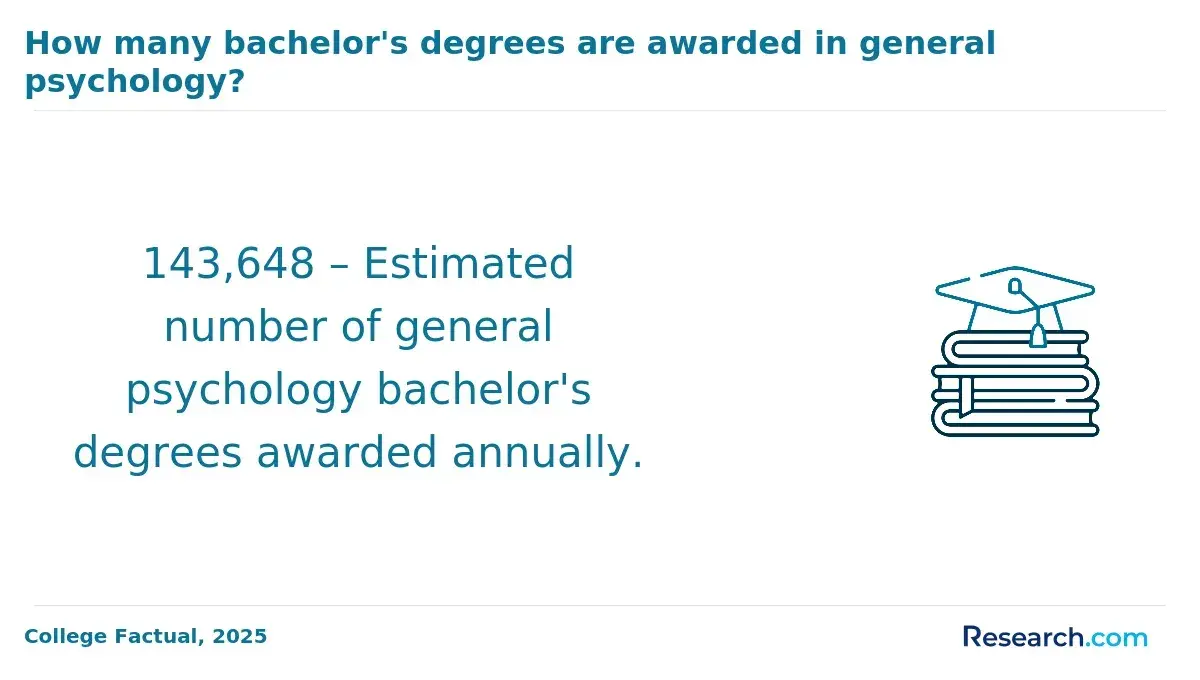
- Nearly 150,000 graduates earned their bachelor's degrees in psychology in 2024.
- Both a BA and BS in Psychology require students to complete the same core courses, but the BA places more focus on the social sciences, while the BS program has more emphasis on natural sciences.
- Bachelor's degree programs in psychology can cost anywhere between $50,000 and $150,000.
- Master's degree in psychology students can expect to pay $8,600 in in-state tuition and $20,000 in out-of-state tuition.
- Doctorate in psychology students can expect to pay an in-state tuition of $11,000 and an out-of-state tuition of $24,000.
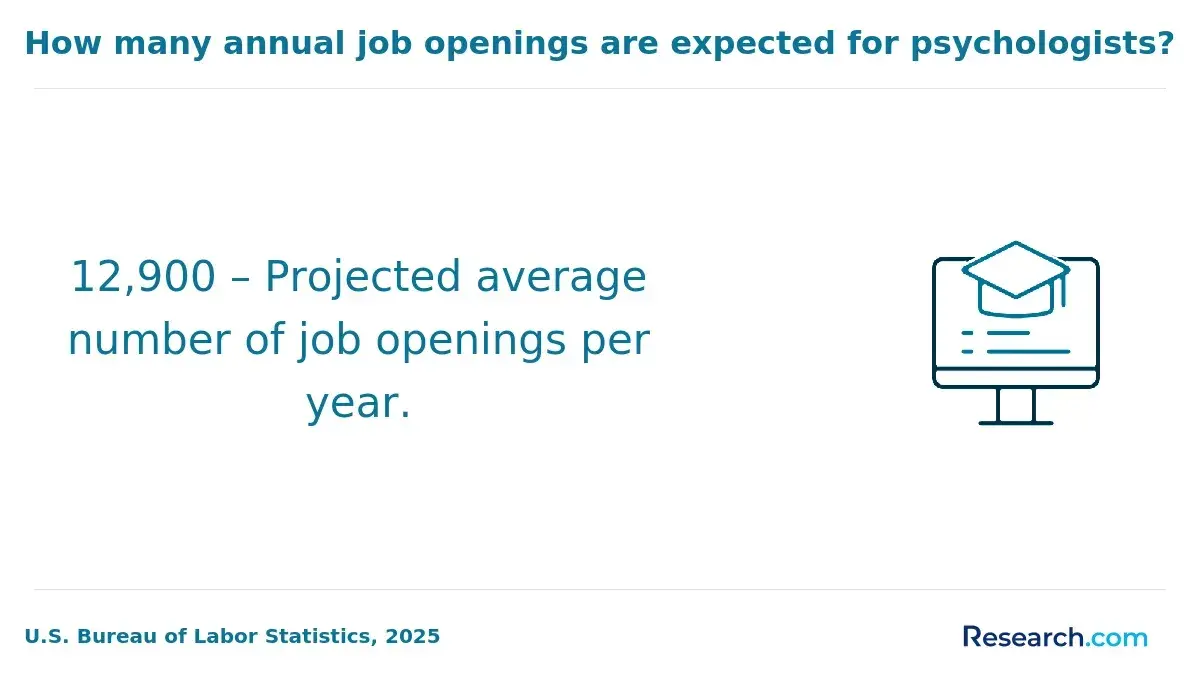
- The overall employment of psychologists in the U.S. is expected to grow 6% through 2034, which translates to about 12,900 projected openings for the job each year over the same decade.
- Why study psychology?
- What is a BA in Psychology?
- What is a BS in Psychology?
- How do BA and BS psychology degrees differ?
- What jobs can BA and BS psychology graduates pursue?
- How much does a psychology degree cost?
- What financial aid options are available?
- What is the job outlook for psychology graduates?
- Should you study psychology online or on campus?
- How should you choose a BA or BS in Psychology program?
- When do integrated degree pathways make sense?
- How can networking support a psychology career?
- How can research experience support neuropsychology goals? Related networking guidance
- Do you need a psychology degree to become a therapist?
- Which certifications can strengthen psychology career options?
- How do internships and field placements help? Program selection checklist
- Which extracurricular activities help psychology students?
- What are the long-term benefits for psychology graduates?
- Which career paths should psychology graduates compare?
- How should you evaluate an online forensic psychology program?
- Can certifications improve forensic psychology opportunities?
- What are affordable paths to advanced psychology degrees? Field experience program fit next steps extracurricular planning
What Graduates Say About Studying Psychology
- My BA in psychology gave me more than a list of theories to remember. The research methods classes taught me how to question assumptions and interpret behavior, which I now use in marketing. Understanding what motivates people has helped me build stronger campaigns and make better strategic decisions. - Carla
- My BS in psychology pushed me hard, especially in statistics, but the support from faculty made the difficult parts manageable. Abnormal psychology changed the way I think about mental health, empathy, and crisis support. I now volunteer at a crisis hotline, and the degree gave me both useful knowledge and a deeper sense of responsibility. - Jim
- My BA in psychology helped me understand how varied human experiences can be. Social psychology was especially valuable because it made me more aware of group behavior, social influence, and my own biases. It prepared me for graduate study in social work and also helped me become a more thoughtful person. - Claire
Why should I pursue a degree in psychology?
A psychology degree is useful for students who want to understand behavior, decision-making, emotion, development, mental health, social interaction, and learning through a structured academic lens. It can lead directly to entry-level roles in people-focused fields, but it is also a common foundation for graduate programs in counseling, social work, psychology, education, business, public health, and related areas.
The degree is especially valuable because it builds transferable skills. Psychology students learn to read research, evaluate evidence, communicate clearly, analyze data, recognize patterns in behavior, and think critically about complex human problems. These skills are relevant in human resources, marketing, education, social services, case management, research support, healthcare administration, and law-related work.
Students also choose psychology because there are now more flexible study options, including affordable psychology degree pathways and online formats. However, psychology is not the only helping-profession major to consider. Students who are more certain they want social service licensure or community-based practice may also compare psychology with an online degree in social work.
A psychology major can also help students explore several subfields before specializing. If you are still asking what you can do with a psychology degree, the BA-versus-BS decision is a good starting point because it forces you to clarify whether your interests lean more toward social, applied, and human-service topics or toward science, research, and biological foundations. Students comparing campus options with flexible formats may also want to review online school for psychology degrees options before deciding.
What is a BA in Psychology?
A Bachelor of Arts in Psychology is an undergraduate degree that combines core psychology coursework with a broader liberal arts foundation. Students usually study areas such as developmental psychology, social psychology, abnormal psychology, personality, counseling theories, research methods, and human behavior. Compared with a BS, the BA often leaves more room for electives in the humanities, social sciences, communication, education, sociology, business, or related fields.
The BA is a strong fit for students who want psychology training but also want flexibility to connect the major to another discipline. For example, a student interested in counseling, social work, public policy, nonprofit work, student affairs, marketing, or human resources may benefit from the broader course selection. The multidisciplinary nature of a BA in psychology can be useful when students want to combine psychology with another academic or career interest.
When a BA in Psychology Makes Sense
- You want a psychology major with room for electives outside the natural sciences.
- You are considering graduate study in counseling, social work, education, public health, or a related applied field.
- You are interested in people-centered work such as advising, case management, human services, training, or human resources.
- You prefer qualitative, social, cultural, developmental, or applied topics over lab-heavy science coursework.
- You want a flexible undergraduate degree that can support several career directions.
Possible Limitations of a BA in Psychology
- It may include fewer advanced science, statistics, laboratory, or neuroscience courses than a BS.
- Students targeting research-intensive graduate programs may need to add research assistantships, statistics electives, or lab experience.
- Some psychology careers require graduate education, supervised experience, and licensure, so a BA alone may not be enough for clinical practice.
What is a BS in Psychology?
A Bachelor of Science in Psychology is an undergraduate degree that emphasizes the scientific study of behavior and mental processes. Like the BA, it includes core psychology courses, but it typically adds more coursework in statistics, experimental design, biological psychology, neuroscience, sensation and perception, and natural science subjects such as biology, chemistry, or physics. Students considering research-heavy fields or high paying degrees often compare the BS route because it may provide a stronger quantitative and scientific foundation.
When a BS in Psychology Makes Sense
- You are interested in neuroscience, cognitive science, forensic psychology, clinical psychology, health psychology, or research.
- You want stronger preparation in statistics, experimental methods, data analysis, and biological bases of behavior.
- You plan to apply to graduate programs where research experience and quantitative preparation matter.
- You are comfortable with science courses and want a more technical undergraduate path.
- You may want to work in research support, behavioral data, healthcare research, or lab-based settings before graduate school.
Possible Limitations of a BS in Psychology
- It may offer less room for electives in humanities, communication, sociology, education, or business.
- The science and statistics requirements may be demanding for students who do not enjoy quantitative coursework.
- Like the BA, a BS does not by itself qualify graduates for most licensed psychologist or therapist roles.
What are the differences between a BA and a BS in psychology?
The BA and BS overlap more than many students expect. Both usually include foundational psychology courses, general education requirements, research methods, and exposure to major areas of the field. The main difference is emphasis: the BA tends to be broader and more interdisciplinary, while the BS tends to be more science- and research-oriented.
| Decision Factor | BA in Psychology | BS in Psychology |
| Academic emphasis | Social sciences, humanities, communication, culture, and applied human behavior | Natural sciences, research methods, statistics, biology, and neuroscience |
| Best fit for | Students seeking flexibility across counseling-adjacent, social service, education, business, or human resources paths | Students preparing for research, clinical psychology, neuropsychology, forensic psychology, or data-oriented graduate study |
| Elective flexibility | Often broader, with more room to combine psychology with another field | Often more structured, with additional science or quantitative requirements |
| Graduate school preparation | Strong for applied fields when paired with relevant experience and prerequisites | Strong for research-heavy or science-focused programs when paired with lab and faculty research experience |
| Common risk | Assuming the degree alone leads to therapist licensure | Choosing the science track without wanting advanced statistics or lab work |
Curriculum
Both degree types commonly require introductory psychology, abnormal psychology, developmental psychology, social psychology, research methods, and general education coursework. The difference appears in the supporting courses and electives. BA students may take more courses connected to sociology, anthropology, philosophy, education, communication, or counseling. BS students may take more biology, statistics, experimental psychology, neuroscience, sensation and perception, and other science-based courses.
Common BA in Psychology courses include:
- Introduction to Psychology
- Abnormal Psychology
- Developmental Psychology
- Social Psychology
- Research Methods in Psychology
- Personality Psychology
- Cognitive Psychology
- Psychopathology
- Theories of Counseling and Psychotherapy
- Group Dynamics
Common BS in Psychology programs may include many of the same courses, plus additional requirements such as:
- Biological Psychology
- Statistics in Psychology
- Experimental Design
- Neuroscience
- Sensation and Perception
Graduate Studies
Both BA and BS graduates can pursue graduate study in psychology or related fields. Students may apply to master’s, doctoral, counseling, social work, education, public health, or business programs depending on prerequisites and career goals. For example, students comparing location-specific options may research a master's in psychology degree online Texas students can access, while students pursuing social service licensure may compare MSW online programs affordable schools offer.
Admissions decisions usually depend on more than the degree title. Graduate programs may review GPA, prerequisite courses, research experience, letters of recommendation, personal statements, internship history, and fit with faculty or specialization. A BS can be helpful for research-intensive programs, but a BA student with strong grades, research work, statistics coursework, and relevant field experience can also be competitive.
BA in Psychology graduates often consider graduate programs in:
- Psychology
- Social Work (MSW)
- Counseling
- Education
- Public Health (MPH)
- Business Administration (MBA)
BS in Psychology graduates often consider graduate programs in:
- Clinical Psychology
- Cognitive and Behavioral Neuroscience
- Industrial-Organizational Psychology
- Forensic Psychology
- Developmental Psychology
- Health Psychology
Simple Rule for Choosing Between the BA and BS
- Choose the BA if you want breadth, flexibility, and stronger ties to social sciences or applied people-focused work.
- Choose the BS if you want depth in science, statistics, research, and biological or experimental approaches to psychology.
- If you are unsure, compare the actual course plans at each school. Degree labels vary, and one university’s BA may look similar to another university’s BS.
What career paths are available for graduates of BA and BS in psychology?
Psychology graduates work in many fields, but it is important to separate entry-level options from licensed professional roles. A bachelor’s degree can support roles in social services, human resources, research support, marketing research, behavioral health support, probation services, case management, education support, and administration. Licensed psychologist, clinical therapist, school psychologist, and many counseling roles usually require graduate education, supervised practice, and state licensure.
Students interested in specialized fields, including sports psychology programs, should check whether their intended career requires a master’s, doctorate, certification, or supervised experience. The undergraduate degree is often the foundation, not the final credential.
For BA graduates, common paths tend to involve communication, advising, service coordination, support roles, workplace behavior, or community-based work. For BS graduates, common paths may include research assistantships, data analysis, behavioral health support, laboratory exposure, or graduate preparation in science-oriented psychology fields.
Students asking what can you do with a forensic psychology degree should be especially careful. Forensic psychology careers may involve legal systems, assessment, behavioral analysis, research, or correctional settings, but advanced roles often require graduate education and relevant supervised experience.
Career Opportunities for BA in Psychology Graduates
The following roles show how a BA in Psychology may connect to work in social services, business, education, and support services. Salary figures are presented exactly as stated in the source material and should not be read as guaranteed outcomes.
| Position | What the Role Involves | Average Annual Salary (Entry-Level) |
| Social Worker | Supports individuals and families, connects clients with resources, and helps people address difficult life circumstances. | $61,330 |
| Human Resources Specialist | Helps recruit, screen, interview, and place employees while also supporting employee relations, benefits, and training functions. | $72,910 |
| Marketing Research Analyst | Studies consumer behavior, market trends, and customer preferences to guide product and marketing decisions. | $76,950 |
| Probation/Parole Officer | Works with people on probation or parole, monitors compliance, and connects individuals with support that can aid successful reentry. | $64,520 |
| Career Counselor | Guides people through career decisions, goal setting, job-search planning, and career transitions. | $65,140 |
| Case Manager | Coordinates services and resources for individuals or families who need care, advocacy, or support across systems. | $78,240 |
| Administrative Assistant | Provides office and operational support, including scheduling, phone communication, records management, and coordination tasks. | $47,460 |
Career Opportunities for BS in Psychology Graduates
A BS in Psychology can support roles that use research, data, observation, and behavioral science. Some roles listed below may require additional education, certification, or licensure beyond the bachelor’s degree, so students should confirm requirements in their state and intended workplace.
| Position | What the Role Involves | Average Annual Salary (Entry-Level) |
| Research Assistant | Helps collect data, organize research materials, analyze findings, prepare reports, and support faculty or organizational research projects. | $38,000 - $52,000 |
| Behavioral Health Technician | Supports clients with mental health needs, observes behavior, communicates with clinical staff, and assists with care routines. | $28,000 - $50,000 |
| Data Analyst | Collects, organizes, and analyzes data; identifies trends; builds reports or visualizations; and presents findings to decision-makers. | $48,000 - $95,000 |
| Occupational Therapist | Helps patients build or regain skills for daily life and work, develops therapy plans, and collaborates with healthcare professionals; this path typically requires additional professional preparation. | $63,000 - $100,000+ |
What is the average cost of pursuing a degree in psychology?
The cost of a psychology degree depends on school type, residency status, delivery format, transfer credits, program length, fees, housing, transportation, books, and whether the student attends full time or part time. Students asking how much it is to get a bachelor's degree should compare the total cost of attendance, not just advertised tuition.
Bachelor's degree programs in psychology can cost anywhere between $50,000 and $150,000. Graduate study can add substantially to the total investment, especially for students who continue into master’s or doctoral programs.
Undergraduate psychology students attending a university in their home state can expect to pay an average tuition of $7,500, while out-of-state students can expect to pay an average tuition of $15,000.
Master's degree in psychology students can expect to pay $8,600 in in-state tuition and $20,000 in out-of-state tuition. Doctorate in psychology students can expect to pay an in-state tuition of $11,000 and an out-of-state tuition of $24,000.
These figures are broad estimates. A student with transfer credits, employer tuition support, scholarships, or a lower-cost public option may pay less, while students attending higher-cost private programs or relocating for school may pay more.
Cost Factors to Compare Before Enrolling
| Cost Factor | Why It Matters | Question to Ask |
| Tuition and fees | Fees can materially increase the total price beyond tuition. | What is the total cost per year, including required fees? |
| Transfer credits | Accepted credits can shorten the time to graduation. | How many of my prior credits will apply to the psychology major and general education requirements? |
| Online versus campus expenses | Online students may save on relocation or commuting, while campus students may have housing and meal costs. | What costs are different for online, commuter, and residential students? |
| Graduate school plans | Many advanced psychology roles require graduate education. | How much additional education will my target career require? |
| Financial aid renewal | Award packages may change after the first year. | Which grants or scholarships are renewable, and what GPA is required? |
What financial aid options are available for students pursuing psychology degree programs?
Financial planning matters because education costs affect where students apply, whether they can study full time, and how much debt they may carry after graduation. In the most recent school year, 33.9% of students cited financial concerns as a source of anxiety in their lives.
Psychology students may be eligible for several types of aid, including federal financial aid, Pell Grants, subsidized and unsubsidized loans, state grants, university scholarships, psychology-related scholarships, military benefits, employer tuition reimbursement, and work-study. Students should complete the FAFSA, review scholarship deadlines, and ask each school for a complete aid estimate before comparing offers.
How to Reduce the Cost of a Psychology Degree
- Start at a community college if your intended bachelor’s program accepts transfer credits efficiently.
- Compare in-state, online, and public university options before choosing a higher-cost school.
- Ask whether scholarships are one-time awards or renewable for multiple years.
- Look for paid research assistant, resident assistant, tutoring, or campus employment options.
- Choose electives strategically so you do not pay for extra credits that do not count toward graduation.
- If graduate school is likely, avoid using all available borrowing capacity during the bachelor’s degree unless necessary.
What is the job outlook for psychology graduates?
The job outlook depends on the role, degree level, specialization, location, and licensure status. The United States Bureau of Labor Statistics predicts a 6% increase in demand for psychologists through 2034. The same outlook translates to about 12,900 projected openings for psychologists each year over the same decade.
Students should note that “psychologist” is not the same as “psychology bachelor’s graduate.” Most psychologist roles require advanced education and licensure. Bachelor’s graduates often begin in adjacent roles, then decide whether to pursue graduate training in psychology, counseling, social work, school psychology, organizational psychology, or another field. Students comparing professional options can review counseling vs psychology career paths to understand how requirements differ.
How does an online psychology program compare to an on-campus psychology program?
Online and on-campus psychology programs can both be legitimate options when the institution is properly accredited and the curriculum fits your goals. The better choice depends on schedule, learning style, cost, access to faculty, internship needs, and whether you need campus-based research or lab opportunities.
| Comparison Area | Online Psychology Program | On-Campus Psychology Program |
| Flexibility | Often better for working adults, caregivers, military students, or learners who need schedule control. | Often better for students who prefer fixed class times and a structured academic routine. |
| Cost | May reduce commuting, relocation, or housing costs, though tuition varies by school. | May include housing, meal plans, transportation, and campus fees in addition to tuition. |
| Interaction | Relies heavily on discussion boards, video meetings, email, and virtual office hours. | Offers in-person discussions, campus events, faculty access, study groups, and lab participation. |
| Learning style | Works best for self-directed students who can manage deadlines independently. | Works best for students who benefit from classroom accountability and face-to-face support. |
| Research and field experience | Can be strong if the program helps students find local placements or remote research opportunities. | May provide easier access to labs, faculty research teams, clinics, and campus-based internships. |
| Accreditation | Should be offered by an institution with recognized accreditation and clear student support systems. | Should also be institutionally accredited and aligned with your career or graduate school goals. |
Do not assume an online program is easier or less rigorous. Also do not assume a campus program is automatically better. Compare outcomes, faculty access, internship support, transfer policies, and total cost.
How do you choose the best BA or BS in Psychology program?
The best psychology program is the one that matches your academic goals, budget, schedule, and next step after graduation. A well-known school is not always the best fit if it lacks the courses, research options, field placements, or affordability you need.
Step 1: Clarify Your Goal
- If you want counseling, social work, student support, or community service: compare BA programs, applied electives, internship access, and pathways into counseling or MSW programs.
- If you want neuroscience, clinical psychology, forensic psychology, or research: compare BS programs, statistics depth, research labs, faculty specialties, and graduate school placement support.
- If you want business or workplace roles: look for electives in human resources, organizational behavior, marketing, analytics, or communication.
- If you are undecided: choose a program with flexible electives, strong advising, and early exposure to multiple psychology subfields.
Step 2: Check Accreditation and Academic Quality
At the bachelor’s level, start by verifying that the institution is properly accredited. For professional psychology careers, also ask how the bachelor’s program prepares students for graduate education, research, internships, and prerequisites. Do not rely only on a school’s marketing language.
Step 3: Compare the Actual Course Plan
- How many statistics and research methods courses are required?
- Does the program offer biological psychology, neuroscience, cognition, or experimental design?
- Are there counseling, social psychology, developmental, multicultural, or community-focused electives?
- Can you complete a minor or second major without delaying graduation?
- Will online students have access to the same courses and advising as campus students?
Step 4: Ask About Experience Outside the Classroom
- Can undergraduates work with faculty on research?
- Are internships required, optional, or difficult to access?
- Does the school help students find placements in mental health agencies, schools, labs, nonprofits, or HR departments?
- Are there career services specifically familiar with psychology-related roles?
Step 5: Compare Cost, Time, and Support
- What is the full cost after grants and scholarships?
- How many transfer credits will count toward the major?
- What are the graduation requirements?
- Are tutoring, writing support, mental health services, library access, and academic advising available to online and campus students?
- What happens if you switch from BA to BS, or from BS to BA?
Common Mistakes to Avoid
| Mistake | Why It Can Hurt You | Better Approach |
| Choosing based only on BA or BS label | Degree names vary by school, and the curriculum matters more than the title alone. | Compare required courses, electives, research options, and graduate school preparation. |
| Ignoring accreditation | Credits, financial aid, graduate admission, and employer recognition can be affected. | Verify institutional accreditation before enrolling. |
| Assuming a bachelor’s degree qualifies you to be a therapist | Therapy and psychologist roles usually require graduate education, supervision, and licensure. | Research licensure rules for your state and target profession early. |
| Looking only at tuition | Fees, housing, books, transportation, and lost work hours can change affordability. | Compare the full cost of attendance and net price after aid. |
| Waiting too long to get experience | Graduate programs and employers often value research, internships, or field exposure. | Seek research assistantships, volunteer work, and internships by the second or third year. |
What advantages do integrated degree pathways offer for advancing your psychology career?
Integrated degree pathways can help students who already know they want advanced psychology training. These programs may connect undergraduate study with graduate-level preparation, creating a more planned route into clinical, counseling, research, or professional psychology education. The main benefits are structured advising, earlier exposure to advanced expectations, and potential time or cost efficiencies.
These pathways are not ideal for every student. They work best when you are confident about your specialization, understand the credential required for your target role, and have compared total program cost carefully. Students exploring accelerated or linked graduate options can review combined masters and PsyD programs to understand how these routes may be structured.
What professional networking strategies can propel your psychology career?
Networking matters in psychology because many opportunities come through faculty recommendations, lab involvement, internships, professional associations, conferences, alumni contacts, and supervised field placements. Students should begin building relationships before senior year, especially if graduate school, research, or clinical experience is part of the plan.
Useful networking steps include joining a psychology club, attending department events, asking faculty about research openings, connecting with alumni, participating in professional webinars, and seeking mentors in your area of interest. Graduate-bound students should also ask current students and alumni about program culture, funding, advising, and outcomes. If cost is a major concern, comparing options such as the cheapest psychology masters programs can help you discuss realistic next steps with mentors and advisors.
How do specialized research opportunities boost neuropsychology expertise?
Students interested in neuropsychology should prioritize research experience early. Coursework in biological psychology, statistics, neuroscience, cognition, and experimental methods is useful, but hands-on research can make a student more prepared for graduate study and more credible when applying to advanced programs.
Strong research experiences may include assisting with data collection, conducting literature reviews, learning research software, helping with participant recruitment, preparing posters, or contributing to faculty-led projects. Students considering advanced neuropsychology training can explore options such as PhD neuropsychology online pathways while confirming whether the program format, supervision, and clinical requirements match their goals.
Do you need a psychology degree to become a therapist?
A psychology degree can be a strong foundation for therapy-related graduate study, but it is not always the only undergraduate path. Therapist requirements depend on state rules, the license type, the graduate program, supervised clinical hours, and required exams. Some people enter counseling, social work, marriage and family therapy, or related fields after earning undergraduate degrees in areas other than psychology.
Students considering a nontraditional route should check state licensure boards and graduate admissions requirements before assuming their background will qualify. For a deeper look at alternative pathways, review this guide on whether you have to have a psychology degree to be a therapist.
What additional certifications can enhance your psychology career?
Certifications can help psychology graduates develop specialized skills, but they should be chosen carefully. A certificate is most valuable when it connects directly to a target role, employer requirement, licensure pathway, or graduate specialization. It should not be treated as a substitute for a required degree or license.
Applied behavior analysis is one example of a structured specialization that may be relevant in clinical, educational, or behavioral support settings. Students comparing cost-conscious credential options can explore most affordable online BCBA programs while checking eligibility rules, supervision requirements, and state expectations.
How can internships and field experiences strengthen your psychology career?
Internships, practicums, volunteer roles, and research placements help students turn classroom knowledge into practical ability. They also give students a clearer sense of which psychology-related settings they enjoy and which ones they may want to avoid.
Field experience can take place in counseling centers, schools, hospitals, community mental health organizations, human resources departments, nonprofit agencies, crisis lines, research labs, or educational programs. A BA student might look for roles involving client support, advocacy, advising, or community services. A BS student might prioritize lab work, data collection, behavioral observation, or healthcare research exposure.
These experiences can strengthen graduate school applications and entry-level resumes because they show initiative, maturity, and exposure to real-world systems. Students exploring broader options can use this overview of psychology degree careers to identify which internships best align with their goals.
What extracurricular activities can enhance your psychology education and career prospects?
Extracurricular activities help psychology students build community, test career interests, and develop evidence of commitment beyond coursework. The best activities are not random resume fillers; they connect directly to your intended career or graduate school plan.
- Psychology clubs and student organizations: These groups can provide guest speakers, peer networks, workshops, and leadership experience.
- Research assistantships: Faculty-led research can build skills in methods, data analysis, literature review, and academic writing.
- Volunteer work in mental health or social services: Service roles can help students develop empathy, communication skills, and familiarity with client-facing environments.
- Internships and practicums: Practical placements can expose students to counseling-adjacent work, human resources, research, schools, or community programs.
- Conference participation: Presenting or attending psychology events can help students understand current research and meet potential mentors.
Long-Term Benefits and Career Progression for Psychology Graduates
The long-term value of a psychology degree depends on how intentionally students use it. A BA or BS can build durable skills in communication, analysis, cultural awareness, research literacy, and problem-solving. Those skills can support career movement across healthcare, education, business, social services, public agencies, and research environments.
Personal and Professional Growth
- Interpersonal ability: Psychology graduates often develop stronger listening, communication, empathy, and conflict-resolution skills.
- Adaptability: Because psychology connects to many fields, graduates may be able to shift among industries as interests and labor markets change.
- Analytical thinking: Training in research and behavior helps graduates evaluate claims, interpret evidence, and make more informed decisions.
Career Progression Opportunities
- Advanced roles with graduate degrees: Many psychology graduates pursue graduate education to qualify for clinical, counseling, school psychology, neuropsychology, organizational psychology, or research careers. Students asking is a psychology degree worth it should evaluate the cost of both undergraduate and graduate study against their intended role.
- Leadership pathways: With experience, psychology graduates may move into program coordination, HR management, research leadership, training, advising, or nonprofit administration.
- Independent or consulting work: Some graduates later move into coaching, consulting, organizational training, or private practice, depending on credentials and legal requirements.
Earning Potential Over Time
Entry-level pay for psychology bachelor’s graduates can vary widely by role, location, experience, and industry. Earnings may grow with specialization, graduate education, licensure, leadership responsibility, or technical skills such as data analysis. Students should avoid assuming that a degree automatically guarantees a specific salary; instead, compare realistic job postings, licensure requirements, and graduate school costs for their intended path.
What Career Paths Should You Consider After Graduating With a Degree in Psychology?
After graduation, psychology majors should compare roles by required education, daily responsibilities, licensure expectations, salary potential, and fit with their strengths. Some students prefer direct service, while others prefer research, data, workplace behavior, education, or legal settings.
Students interested in K-12 environments may want to explore careers in school psychology, while others may compare clinical support, counseling-adjacent roles, human resources, social work, research assistance, market research, probation services, or graduate training. The key is to match your first job with your longer-term credential plan.
What are the key factors to consider when selecting an online forensic psychology program?
An online forensic psychology program should be evaluated on accreditation, curriculum depth, faculty expertise, research opportunities, student support, course delivery, cost, and alignment with legal or behavioral science career goals. Students should also ask whether the program includes practical assignments, case-based learning, research methods, and exposure to forensic assessment topics.
Cost matters, but the lowest price is not always the best value if the program lacks advising, faculty access, or career relevance. Students comparing budget-conscious graduate options can review the cheapest forensic psychology master's programs online while confirming that each program fits their career and education requirements.
Can additional certifications boost opportunities in forensic psychology?
Certifications can help forensic psychology students demonstrate focused training in areas such as behavioral analysis, forensic assessment, legal systems, or investigative procedures. However, certificates should complement—not replace—the degree, supervision, and licensure requirements for advanced forensic or clinical roles.
Students should choose credentials that match their intended workplace and verify whether employers recognize them. Additional training can be especially useful when paired with internships, research, and coursework connected to forensic psychology careers.
Affordable Paths to Advanced Degrees in Psychology
Many psychology-related careers require education beyond the bachelor’s degree. Students who expect to pursue a master’s, Ph.D., or PsyD should consider affordability early so they do not make undergraduate choices that limit future options.
- Master's in Psychology: A master’s degree can help students specialize in areas such as clinical, experimental, or industrial-organizational psychology. Online options may provide flexibility, but students should still compare accreditation, faculty access, curriculum, and field experience.
- Master's in Organizational Psychology: This option may appeal to students interested in workplace behavior, employee performance, leadership, and organizational culture. Cost-conscious students can compare the cheapest online Master's in Organizational Psychology programs while checking curriculum quality and employer relevance.
- Ph.D. in Psychology: A Ph.D. may be appropriate for students interested in research, academia, or some clinical pathways. Funding opportunities such as assistantships, fellowships, and grants can affect affordability.
- PsyD: A PsyD may fit students focused on professional psychological practice, but students should compare total cost, clinical training, internship match support, and licensure alignment.
- Alternative funding options: Scholarships, grants, work-study, employer tuition support, military benefits, and assistantships may reduce out-of-pocket costs.
Key Insights
- A BA in Psychology is usually better for students who want flexibility, liberal arts breadth, and pathways into social services, counseling-adjacent work, education, HR, or interdisciplinary graduate study.
- A BS in Psychology is usually better for students who want more statistics, science, neuroscience, experimental methods, research preparation, or graduate study in research-heavy psychology fields.
- The degree title matters less than the curriculum. Always compare required courses, electives, research access, internships, faculty expertise, and graduate school preparation.
- A bachelor’s degree in psychology can open entry-level roles, but most therapist, psychologist, and advanced clinical careers require graduate education, supervised experience, and licensure.
- Psychology degree costs vary widely, so compare full cost of attendance, transfer policies, financial aid renewal, and likely graduate school expenses before choosing a program.
- Online programs can be a strong option for flexible learners, but students should verify accreditation, support services, internship access, and research opportunities.
- The best choice is practical: pick the BA or BS that aligns with the next step you are most likely to take after graduation.
References:
- College Factual. (2025). 2025 Psychology Degree Guide. https://www.collegefactual.com/majors/psychology/
- Related research citation. https://doi.org/10.1177/0894845321995571
- Psychology.org. (2024). What Can You Do With A Psychology Degree? https://www.psychology.org/resources/alternative-careers-for-psychology-majors/
- U.S. Bureau of Labor Statistics. (2025). Psychologists: Occupational outlook handbook: U.S. bureau of labor statistics. https://www.bls.gov/ooh/life-physical-and-social-science/psychologists.htm
Other Things You Should Know About Pursuing a BA or BS in Psychology
Most accredited psychology bachelor’s programs require about 30 to 40 semester credit hours in psychology, plus a 120-credit total for the degree. BS tracks often add more lab science or statistics credits, while BA tracks usually leave more room for humanities or language electives.
In 2027, a BA in Psychology often focuses on the broader liberal arts aspects, offering more flexibility with electives and humanities courses. A BS, meanwhile, emphasizes the scientific method, statistics, and research, preparing students for technical and clinical roles in psychology.
In 2027, a BA in Psychology typically includes more humanities and social science courses, while a BS focuses more on natural sciences and mathematics. For instance, BS students might take more lab-based science courses, emphasizing empirical research methods.


