
2027 Best Online Bachelor’s Degree in Psychology Programs

Co-Founder and Chief Data Scientist
An online bachelor’s degree in psychology can be a practical first step if you want to study human behavior, prepare for graduate school, or move into people-focused roles without relocating or pausing your job. The decision is not as simple as choosing the lowest tuition or the most recognizable school, however. Psychology is a broad field, and many clinical titles require graduate education, supervised experience, and state licensure.
This guide explains what an online psychology bachelor’s degree includes, how online programs compare with campus programs, what they may cost, which careers are realistic with only a bachelor’s degree, and when graduate study becomes necessary. It also reviews ranked programs, admission requirements, common courses, specializations, financial aid options, and mistakes to avoid before enrolling.
Quick answer: Is an online bachelor’s degree in psychology worth it?
An online bachelor’s degree in psychology can be worth it for students who want a flexible, accredited undergraduate program that builds research, communication, analytical, and human-behavior skills. It is especially useful for careers in human resources, social services, research support, training, market research, case management, and preparation for graduate psychology or counseling programs. It is not usually enough by itself to become a licensed psychologist, therapist, or clinical counselor.
What are the benefits of getting an online bachelor’s degree in psychology?
- Career flexibility: Psychology graduates can apply their understanding of behavior, motivation, communication, and decision-making in healthcare, government, education, business, nonprofit, and human services settings.
- Graduate school preparation: A psychology bachelor’s degree can provide the academic foundation needed for future study in counseling, clinical psychology, industrial-organizational psychology, behavioral psychology, social work, or related fields.
- Flexible learning format: Online delivery can make it easier for working adults, caregivers, military students, and transfer students to complete coursework around other responsibilities.
- Strong long-term relevance: With over 57 million Americans reported to experience mental illness in 2024, professionals who understand behavior, mental health, research, and social systems continue to play an important role across industries.
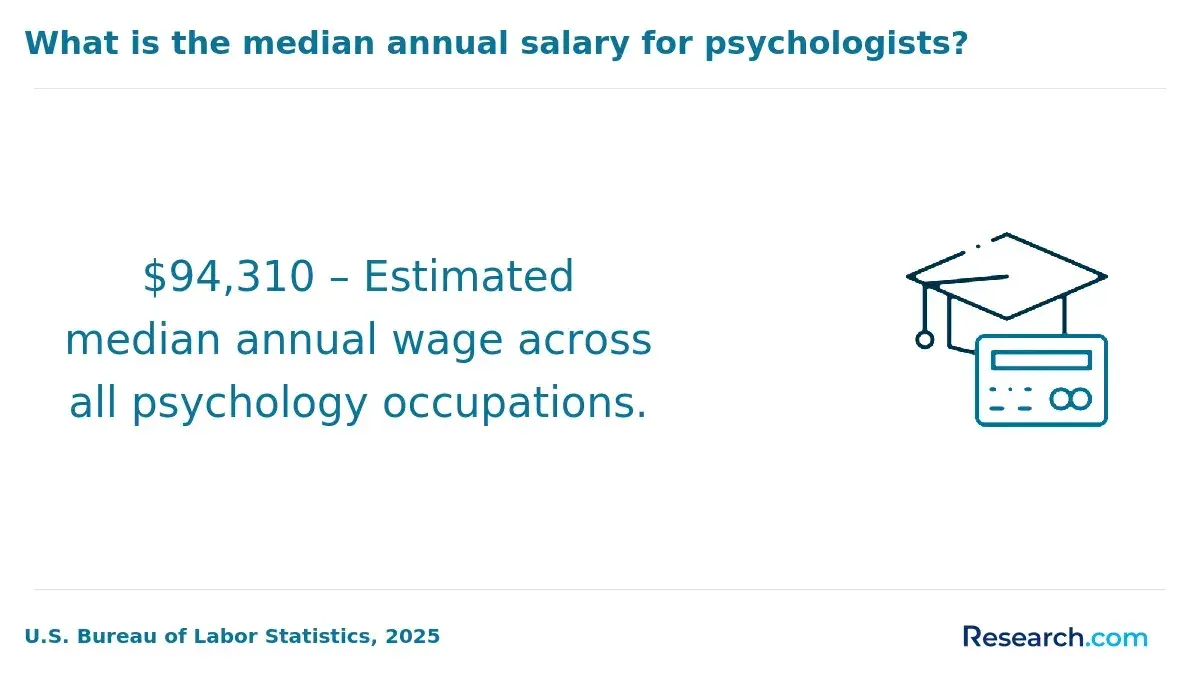
- Potential for advanced earnings with additional credentials: According to the Bureau of Labor Statistics (BLS), psychologists can earn an annual median salary of $85,330, though most psychologist roles require graduate education and licensure rather than only a bachelor’s degree.
What can I expect from an online bachelor’s degree in psychology?
An online bachelor’s degree in psychology introduces students to the scientific study of behavior, thought, emotion, development, personality, mental health, and social interaction. Most programs combine general education courses, core psychology classes, statistics, research methods, electives, and a final capstone, internship, or research-based project.
A typical full-time student completes the degree in about four years. Students who transfer credits, enroll year-round, or choose accelerated formats may finish sooner, while part-time students may need more time. Costs vary by institution, residency status, transfer credits, and fees, with many programs falling in an average range of $15,000 to $30,000.
| What to expect | What it means for students |
| Core subject matter | Human development, abnormal psychology, social psychology, cognition, personality, biological psychology, statistics, and research design. |
| Learning format | Courses may be asynchronous, synchronous, or hybrid. Some programs include live discussions, group work, proctored exams, or scheduled presentations. |
| Applied experiences | Depending on the school, students may complete internships, fieldwork, research projects, community-based learning, or a capstone course. |
| Best fit | Students who are self-directed, comfortable with online tools, and interested in careers involving people, data, organizations, or future graduate study. |
| Important limitation | A bachelor’s degree alone generally does not qualify graduates for licensed psychologist or independent therapist roles. |
Where can I work with an online bachelor’s degree in psychology?
A psychology bachelor’s degree can lead to entry-level and support roles in organizations that need people who can interpret behavior, communicate clearly, work with diverse populations, and use evidence to solve problems. Graduates often work in human services, healthcare support, human resources, education support, research assistance, business operations, market research, and nonprofit programs.
According to data published in 2024 by the BLS, the largest employers of psychologists are healthcare providers, educational institutions, and government agencies. These employer categories are most relevant to licensed and advanced psychology roles, but they also show where psychology knowledge is commonly applied.
- Self-Employment (28%)
- Elementary and Secondary Schools (27%)
- Ambulatory Healthcare Services (21%)
- Government (8%)
- Hospitals (4%)
How much can I make with an online bachelor’s degree in psychology?
Salary depends heavily on job title, location, industry, experience, and whether you continue into graduate education. The BLS reported that psychologists can earn an annual median salary of $85,330, compared with the median salary for all occupations at $46,310. However, that psychologist salary should not be treated as a typical bachelor’s-level outcome because many psychologist roles require a master’s or doctoral degree, supervised experience, and state licensure.
Entry-level positions such as human resources assistant or social services coordinator may start around $40,000 annually. Bachelor’s degree graduates may also pursue roles that use psychology-related skills in business, training, research, and behavioral health support.
| Potential role | Salary figure provided | How psychology training helps |
| Market Research Analysts | $68,230 | Understanding consumer behavior, survey design, motivation, and data interpretation. |
| Training and Development Specialists | $63,080 | Applying learning theory, communication strategies, and employee development principles. |
| Substance Abuse, Behavioral Disorder, and Mental Health Counselors | $49,710 | Supporting clients, understanding behavioral health concepts, and working within treatment teams. Requirements vary by state and role. |
- 2027 ranked online psychology bachelor’s programs
- Completion time for an online psychology bachelor’s degree
- Online psychology degree versus campus psychology degree
- Average cost of online bachelor’s programs in psychology
- Financial aid options for online psychology students
- Admission requirements for online psychology bachelor’s programs
- Common courses in an online psychology degree
- Psychology specializations available online
- How to choose the right online psychology program
- Continuing education for psychology graduatesProgram selection checklist
- Career paths with a bachelor’s degree in psychology
- Challenges of online psychology programs
- Job market for psychology bachelor’s graduates
- Do you need a psychology degree to become a therapist?
- Professional certifications after an online psychology degree
- Specialized certifications for psychology careers
- Forensic psychology options with an online degree
- Research pathways after an online psychology bachelor’s degree
- Moving from an online bachelor’s degree to graduate psychology study
- Psychology and technology career opportunities
- Online psychology degrees and neuropsychology preparationPsychology technology careers
- Emerging career trends for psychology graduatesGraduate degree planningPsychology job marketCareer trend considerations
2027 List of the Best Online Bachelor’s Degree in Psychology Programs
How do we rank our schools?
Research.com evaluates online bachelor’s programs using data-focused and quality-focused criteria so readers can compare schools with greater confidence. The ranking process draws from sources such as the IPEDS database, Peterson’s database, the College Scorecard database, and the National Center for Education Statistics. These sources help compare institutional data, program availability, cost factors, and student outcomes where available.
Rankings should be used as a starting point, not the only basis for enrollment. Students should also verify accreditation, transfer policies, faculty support, field experience options, technology fees, and whether the program aligns with graduate school or career goals. More detail on Research.com’s ranking approach is available on our methodology page.
| Rank | School | Tracks or concentrations | Cost per credit | Credits required | Accreditation listed |
| 1 | University of Central Florida | Clinical Psychology, Experimental Psychology, Human Factors Psychology, Industrial-Organizational Psychology, Neuroscience, General Psychology | $179.19 per credit hour for in-state students, $715.80 per credit hour for out-of-state students | 120 semester units | Southern Association of Colleges and Schools Commission on Colleges (SACSCOC) |
| 2 | Oregon State University | Psychology BA or BS | $350 | 180 quarter units | Northwest Commission on Colleges and Universities (NWCCU) |
| 3 | National University | Psychology | $370 per quarter unit | 180 quarter units | Western Association of Schools and Colleges (WASC) |
| 4 | Pennsylvania State University | Business, Life Sciences | $632 to $678 | 123 semester units | Middle States Commission on Higher Education (MSCHE) |
| 5 | University of Florida | Psychology | $129.18 for in-state students, $552.62 for out-of-state students | 120 semester units | SACSCOC |
| 6 | CUNY School of Professional Studies | Organizational Psychology, Psychological Development, Psychopathology | $305 for in-state students, $350 for out-of-state students | 120 semester units | MSCHE |
| 7 | John Brown University | Psychology | $315 | 120 semester units | Higher Learning Commission (HLC) |
| 8 | Loyola University New Orleans | Psychology | $450 | 120 semester units | APA Commission on Accreditation (APA-CoA) |
| 9 | University of Louisville | Psychology | $527 | 121 semester units | SACSCOC |
| 10 | St. Andrews University | Psychology | $484 | 120 semester units | SACSCOC |
How to use this ranking wisely
- Match the curriculum to your goal: Students interested in workplace behavior may prefer industrial-organizational coursework, while future graduate students may need strong statistics and research methods preparation.
- Check total cost, not just credit price: Technology fees, textbooks, proctoring, residency status, and transfer credit limits can change the final bill.
- Verify accreditation directly: Institutional accreditation matters for federal aid, transfer credits, and graduate admissions. Programmatic psychology accreditation is a separate issue and should be checked carefully.
- Ask about field experience: Internships, research assistantships, and service learning can make a psychology degree more useful after graduation.
- Confirm graduate school alignment: If you plan to become a counselor, psychologist, or researcher, ask whether the program prepares students for graduate admissions requirements.
Key Findings
- Online bachelor’s degree in psychology programs typically take four years for full-time students.
- Online psychology programs range from $200 to $700 per credit hour.
- Core courses often include Introduction to Psychology, Abnormal Psychology, Social Psychology, Developmental Psychology, Research Methods, and Statistics.
- Common specialization areas include Clinical Psychology, Counseling Psychology, Developmental Psychology, Forensic Psychology, Industrial-Organizational Psychology, and related fields.
- Bachelor’s-level career options may include Substance Abuse and Mental Health Counselor, Human Resources Specialist, Social Services Assistant, Case Management Aide, Research Assistant, Recruitment Coordinator, Market Analyst, and Training Coordinator.
- The job market for graduates with an online bachelor’s degree in psychology is expected to grow by 6% from 2024 to 2034, according to recent projections, which is faster than the national average for all occupations.
How long does it take to complete an online bachelor’s degree in psychology?
Most full-time students need about four years to finish an online bachelor’s degree in psychology. The exact timeline depends on enrollment status, transfer credits, course availability, academic calendar, and whether the school offers accelerated terms.
| Student situation | Likely timeline impact | Best strategy |
| First-time, full-time student | Usually about four years | Follow the recommended course sequence and complete statistics and research methods on time. |
| Transfer student | May finish faster if credits apply | Request a formal transfer credit evaluation before committing to a school. |
| Part-time working adult | May take longer than four years | Choose programs with flexible pacing, predictable course rotation, and strong advising. |
| Accelerated student | May shorten time to graduation | Confirm whether accelerated terms are manageable with work and family responsibilities. |
How does an online bachelor’s degree in psychology program compare to an on-campus program?
Online and campus-based psychology degrees can cover similar academic content, but the student experience can differ significantly. The better choice depends on your schedule, learning style, budget, need for in-person support, and access to internships or research opportunities.
| Factor | Online psychology degree | On-campus psychology degree |
| Schedule | Often better for students who need evening, weekend, or asynchronous coursework. | Usually follows fixed class times and campus schedules. |
| Learning style | Requires independence, organization, and comfort with digital platforms. Students exploring distance learning programs should be realistic about self-management. | Provides more regular face-to-face structure, classroom discussion, and campus-based routines. |
| Interaction | May include discussion boards, virtual meetings, online group projects, and remote advising. | Offers easier access to in-person faculty conversations, labs, student organizations, and campus events. |
| Cost | May reduce commuting and housing costs, but can include technology, online course, and proctoring fees. | May involve higher housing, transportation, and campus fee expenses. |
| Employer perception | Most credible when earned from an accredited and reputable institution. Students can compare broader online psychology degree programs before deciding. | May be preferred by students who want a traditional campus experience or extensive in-person research access. |
What is the average cost of an online bachelor’s degree in psychology?
Online bachelor’s degrees in psychology can range from $200 to $700 per credit hour. According to data published in 2024, an online degree from a public university costs about $55,780 in tuition, while the same degree earned in person costs about $87,420. Private universities and colleges often cost more than public institutions, although scholarships, transfer credits, employer support, and residency rules can change the final price.
Do not choose a program only because it has the lowest advertised tuition. A low-cost program is a good value only if it is accredited, transferable, academically credible, and aligned with your next step. Students considering workplace-focused psychology careers may also compare long-term pathways and earnings, such as industrial organizational psychology salary, which can range from $68,000 to $99,000 for middle-management positions.
| Cost factor | Why it matters |
| Tuition per credit | The most visible cost, but not the only one. |
| Transfer credit policy | Generous transfer policies can reduce the number of credits you must pay for. |
| Residency status | Some public universities charge different rates for in-state and out-of-state students. |
| Fees | Online learning, technology, graduation, proctoring, and course material fees can add up. |
| Internship or fieldwork requirements | Travel, background checks, and placement expenses may affect total cost. |
| Graduate school plans | If your career requires a master’s or doctorate, evaluate the cost of the full education path, not only the bachelor’s degree. |
What are the financial aid options for students enrolling in an online bachelor’s degree in psychology program?
Online psychology students may qualify for many of the same financial aid options as campus students if they attend an eligible accredited institution. The right mix often includes federal aid, school-based scholarships, grants, employer tuition assistance, and careful borrowing.
- Federal Aid: Complete the Free Application for Federal Student Aid (FAFSA) to be considered for federal grants, work-study opportunities, and low-interest federal loans.
- Scholarships: Look for awards from universities, private foundations, psychology-related organizations, and community groups. Psychology students may find opportunities through organizations such as the American Psychological Association (APA), which offers Graduate Student Scholarships and the Minority Fellowship Program, and Psi Chi, The International Honor Society in Psychology.
- Grants: Explore federal, state, and institutional grants because these funds usually do not need to be repaid.
- Employer Assistance: Ask your employer whether tuition reimbursement, professional development funding, or education benefits are available.
- Private Loans: Use private loans cautiously. Compare interest rates, repayment terms, deferment options, and total repayment cost before borrowing.
- Psychology Associations: Professional and advocacy organizations related to psychology and mental health may offer scholarships or grants. Examples include the National Alliance on Mental Illness (NAMI) and the APA.
Questions to ask before using financial aid
- Is the school accredited and eligible for federal financial aid?
- Will my aid change if I enroll part time instead of full time?
- Are scholarships renewable, or do they apply only for one term?
- What GPA must I maintain to keep institutional aid?
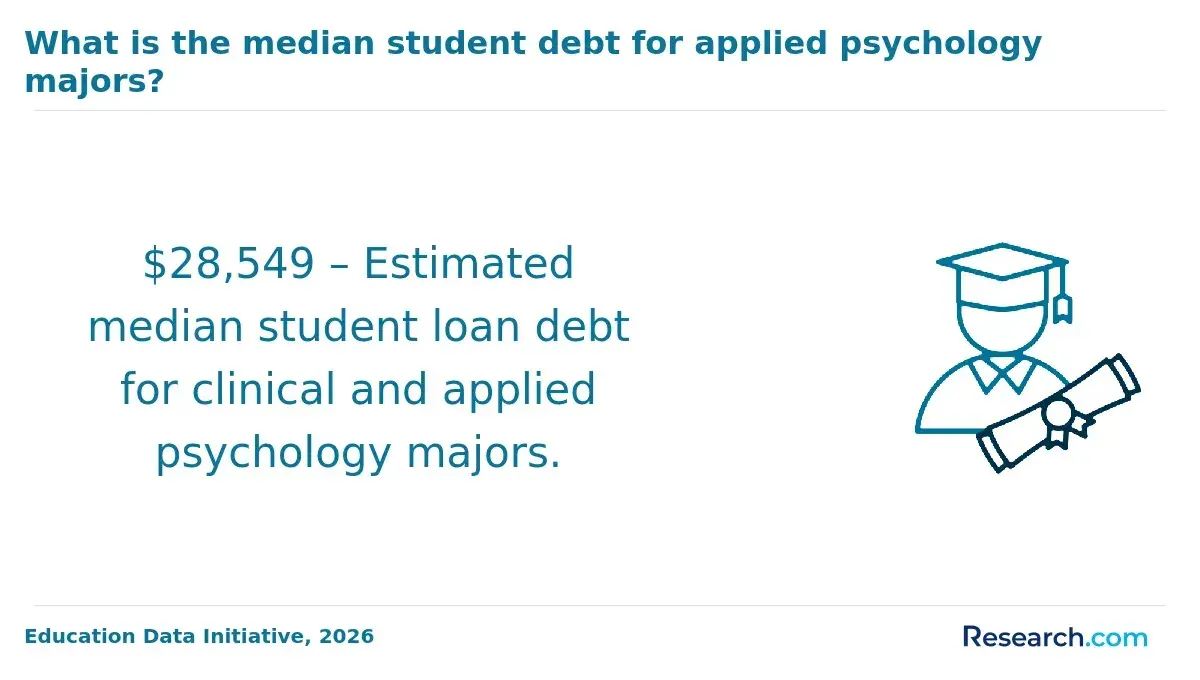
- How much debt will I have if I later need a master’s or doctoral degree?
What are the prerequisites for enrolling in online bachelor’s degree in psychology programs?
Admission requirements vary by school, but online psychology bachelor’s programs usually ask for proof of high school completion or the equivalent, transcripts, and a completed application. Transfer students may need college transcripts from every institution previously attended.
| Requirement or skill | What applicants should prepare |
| High School Diploma or equivalent | Most programs require a high school diploma, GED, or comparable credential. |
| Transcripts | Applicants typically submit high school transcripts and transcripts from any college previously attended. |
| Standardized Test Scores | Some schools may request SAT or ACT scores, although many online programs place more emphasis on transcripts, experience, and other materials. |
| Recommendation Letters | Letters from teachers, counselors, supervisors, or employers may help show academic readiness and professionalism. |
| Statement of Purpose | Some programs ask applicants to explain their interest in psychology and long-term goals. |
| Work Experience | Relevant experience in healthcare, human services, education, business, or community work can strengthen an application. |
| Critical Thinking | Psychology students need to evaluate evidence, identify bias, and connect theory to real-world behavior. |
| Communication | Clear writing and speaking matter in research papers, discussions, presentations, and human-service settings. |
| Research Skills | Students should be ready to read studies, analyze data, and understand research design. |
| Empathy | Because psychology focuses on people, students should be prepared to approach human issues with sensitivity and respect. |
| Organization | Online students must track deadlines, assignments, exams, advising tasks, and technology requirements. |
| Reliable Internet Connection | A stable connection is essential for lectures, exams, discussions, advising, and course materials. |
| Computer or Laptop | Students need a device that can run the school’s learning platform and required software. |
| Relevant Software | Common tools include a word processor, web browser, video conferencing software, and sometimes statistical software. |
| Webcam and Microphone | Live sessions, presentations, advising appointments, and proctored exams may require audio and video. |
| Learning Management System | Students must be able to use online platforms for assignments, quizzes, discussion boards, grades, and messages. |
Device preferences vary by student schedule and study habits. A recent study of undergraduates showed that up to 45% of students in remote programs use both laptops and smartphones, as illustrated by the chart below.
What courses are typically in an online bachelor’s degree in psychology program?
Online psychology bachelor’s programs usually combine foundational psychology classes with methods, statistics, writing, electives, and general education requirements. Some students also compare related options, including counseling courses online, especially if they are considering future counseling programs.
- Introduction to Psychology: A broad overview of the field, including major theories, core concepts, and research traditions.
- Abnormal Psychology: A study of psychological disorders, symptoms, diagnosis concepts, and treatment approaches.
- Social Psychology: An examination of how groups, relationships, culture, and social settings shape behavior and attitudes.
- Developmental Psychology: A look at physical, cognitive, emotional, and social development across the lifespan.
- Research Methods in Psychology: Training in experiments, surveys, observation, ethics, measurement, and study design.
- Statistics for Psychology: Instruction in analyzing and interpreting psychological data.
- Theories of Personality: A comparison of psychodynamic, humanistic, trait, and other personality theories.
- Cognitive Psychology: A course focused on perception, attention, memory, reasoning, language, and problem-solving.
- Industrial-Organizational Psychology: A study of psychology in workplace settings, including motivation, hiring, training, leadership, and productivity.
- Biopsychology: An introduction to how the brain, nervous system, hormones, and biological processes relate to behavior.
What types of specializations are available in online bachelor’s degree in psychology programs?
Specializations help students tailor a broad psychology degree toward a career interest or graduate school plan. Not every online bachelor’s program offers formal concentrations, so students should compare elective choices, faculty expertise, and research or internship options. Students interested in graduate-level study may also explore pathways such as behavioral psychology graduate programs.
| Specialization | Best for students interested in |
| Clinical Psychology | Mental health assessment, diagnosis, treatment concepts, and future graduate clinical training. |
| Counseling Psychology | Helping individuals manage personal, educational, career, and emotional challenges. |
| Developmental Psychology | Human growth, aging, child development, lifespan change, and family or educational settings. |
| Forensic Psychology | The connection between psychology, law, criminal justice, corrections, and legal processes. |
| Industrial-Organizational Psychology | Workplace behavior, employee motivation, organizational effectiveness, and talent development. |
| Neuropsychology | Brain-behavior relationships, cognition, neurological conditions, and future advanced clinical training. |
| Sports Psychology | Athletic performance, motivation, resilience, coaching, and well-being in sports environments. |
| Health Psychology | How behavior, stress, habits, and psychological factors relate to physical health and healthcare use. |
| Educational Psychology | Learning processes, student development, instructional strategies, and school-based support roles. |
| Social Psychology | Group behavior, identity, persuasion, prejudice, social influence, and interpersonal relationships. |
How to choose the best online bachelor’s degree in psychology program?
The best online psychology program is the one that fits your career goal, schedule, budget, academic background, and future education plans. With up to 36.2% of students planning to continue their programs in a hybrid capacity, students should also consider whether they want a fully online program or one with optional in-person components.
- Confirm accreditation first: Choose an institution with recognized accreditation. For psychology-related accreditation questions, review resources from the American Psychology Association and verify details directly with the school.
- Compare total cost: Look beyond tuition. Add fees, textbooks, software, transfer credit limits, graduation charges, and any in-person requirements.
- Review curriculum depth: Strong programs should include statistics, research methods, writing, ethics, and electives connected to your goals.
- Ask about support services: Online students benefit from accessible advising, tutoring, library access, career services, mental health resources, and technical support.
- Check internship and research opportunities: Practical experience can be valuable for employment and graduate school applications.
- Understand course delivery: Decide whether asynchronous courses, live classes, group projects, or hybrid requirements match your schedule and learning style.
- Evaluate graduate school preparation: If your goal requires licensure, make sure the bachelor’s degree prepares you for appropriate graduate programs.
Common mistakes to avoid when choosing a program
| Mistake | Better approach |
| Choosing only by ranking | Use rankings as one data point, then compare accreditation, cost, curriculum, support, and outcomes. |
| Looking only at tuition | Calculate total program cost, including fees and remaining credits after transfer evaluation. |
| Assuming online means easier | Expect substantial reading, writing, statistics, research assignments, and independent time management. |
| Ignoring licensure rules | Check state and career requirements before assuming a bachelor’s degree leads to therapy or psychologist licensure. |
| Skipping field experience | Seek internships, volunteer work, research projects, or community placements to build a stronger resume. |
| Assuming all credits transfer | Get transfer credit decisions in writing before enrolling. |
How does continuing education help psychology graduates stay competitive?
Continuing education can help psychology graduates move from broad undergraduate preparation into specialized professional roles. Many psychology-related careers require graduate study, professional certification, supervised practice, or continuing education to qualify for advancement.
A master’s degree can help graduates study areas such as cognitive neuroscience, organizational psychology, counseling, behavioral analysis, or clinical practice in greater depth. Students who want a shorter route to advanced study may compare accelerated psychology masters programs, but they should still evaluate accreditation, workload, field requirements, and licensure alignment.
Certifications can also strengthen a resume when they match a specific career direction. Examples include applied behavior analysis, workplace training, forensic psychology, mental health support, user experience research, and data-oriented behavioral roles. The key is to choose credentials that employers or graduate programs actually value rather than collecting certificates without a plan.
What career paths are available for graduates with an online bachelor’s degree in psychology?
A psychology bachelor’s degree can qualify graduates for entry-level roles that involve communication, client support, behavior analysis, research assistance, training, recruiting, and program coordination. Some clinical or counseling titles may require additional education, supervised experience, or licensure, and the BLS notes that some positions may require additional education or licensure.
| Career path | Typical work | When it makes sense |
| Substance Abuse and Mental Health Counselor | Support individuals facing substance use, behavioral health, or mental health challenges under applicable role and state requirements. | Best for students interested in helping professions and future counseling-related study. |
| Human Resources Specialist | Assist with recruiting, employee relations, training, benefits, and workplace communication. | Best for students interested in business, organizations, and employee behavior. |
| Social Services Assistant | Help connect clients with resources, support case documentation, and assist social workers or counselors. | Best for students who want community-focused work and direct service exposure. |
| Case Management Aide | Coordinate services, maintain records, follow up with clients, and support case managers. | Best for students considering social work, counseling, or human services graduate programs. |
| Research Assistant | Collect data, organize study materials, assist with literature reviews, and support research teams. | Best for students considering graduate research, academic psychology, or data-focused roles. |
| Recruitment Coordinator | Schedule interviews, communicate with candidates, coordinate hiring processes, and support talent acquisition. | Best for students interested in human resources and organizational psychology. |
| Market Analyst | Study consumer behavior, analyze survey results, and help organizations understand markets. | Best for students who enjoy psychology, business, statistics, and data interpretation. |
| Training Coordinator | Plan employee learning programs, orientations, workshops, and development activities. | Best for students interested in learning theory, communication, and workplace development. |
What challenges and limitations should you consider with an online bachelor's degree in psychology?
Online psychology programs can be flexible, but they also require self-discipline and careful planning. Students may have fewer spontaneous networking opportunities, less in-person faculty contact, and more responsibility for finding internships, volunteer work, or research experiences in their local area.
The biggest limitation is career scope. A bachelor’s degree can open doors to entry-level roles, but it usually does not qualify graduates to practice independently as therapists, psychologists, or clinical counselors. Students who expect to pursue graduate school should plan early for GPA requirements, research experience, recommendation letters, prerequisites, and future costs. Reviewing resources such as How much does it cost to get a master's degree in psychology? can help students understand the broader investment.
What is the job market for graduates with an online bachelor’s degree in psychology?
Employment for graduates with a bachelor’s degree in psychology is expected to increase at a rate of 5% from 2024 to 2034, which the BLS reports as about as fast as average for all occupations nationwide. This means that from the 202,000 full-time positions open in 2024, psychologists will see more than 212,000 by 2034.
Demand varies by role and specialization. Bachelor’s graduates may find opportunities in human services, research support, human resources, training, market research, and healthcare administration support. Students who want to become licensed psychologists, clinical counselors, school psychologists, or advanced researchers should expect to continue into graduate education.
Do You Really Need a Psychology Degree to Become a Therapist?
A psychology degree is not the only possible starting point for a therapy-related career, but becoming a licensed therapist typically requires meeting state-specific education, supervised experience, exam, and licensure rules. Some students enter therapy careers through counseling, social work, marriage and family therapy, or related graduate programs rather than a psychology major.
If you are considering a nontraditional route, verify the exact requirements in the state where you plan to practice. Do not assume that a certificate, bachelor’s degree, or life experience alone is enough for licensure. For a closer look at alternative routes, review this guide on the degree needed to be a therapist.
What Professional Certifications Can Bolster Your Career After an Online Psychology Degree?
Certifications can add practical skills to a psychology bachelor’s degree, especially when they connect directly to a target role. Examples may include applied behavior analysis, human resources, training and development, research methods, crisis support, forensic psychology, or mental health advocacy. Students interested in behavior analysis can compare options such as the cheapest BCBA degrees online while reviewing eligibility, supervised experience, and exam requirements.
Before enrolling in any certification program, ask whether employers recognize it, whether it requires a graduate degree, whether it supports licensure, and whether the cost is justified by the career benefit.
Can Specialized Certifications Enhance Your Online Psychology Career?
Specialized certifications can help online psychology graduates signal focused skills in competitive fields. Forensic psychology, applied behavior analysis, digital mental health, human resources, data analysis, and user experience research are examples of areas where additional training may complement an undergraduate psychology foundation.
Students interested in the legal system and behavioral assessment may eventually consider graduate study, including the cheapest online master's degree in forensic psychology. The best option depends on whether the student wants an entry-level support role, a graduate degree, or a licensed professional pathway.
Is a Career in Forensic Psychology a Viable Option with My Online Degree?
An online bachelor’s degree in psychology can introduce students to forensic psychology, but most advanced forensic psychology roles require graduate education and specialized experience. At the bachelor’s level, students may pursue related experience in victim services, corrections support, case management, research assistance, law enforcement support, or court-connected human services.
Students interested in this path should choose electives in criminal behavior, abnormal psychology, assessment, research methods, and ethics where available. They should also look for internships or volunteer work connected to courts, corrections, advocacy, or community justice programs. To evaluate potential outcomes, compare forensic psychology salary information before investing in further education.
How Can You Pursue Specialized Research Within Psychology After an Online Bachelor’s Degree?
Students who want research careers should use the bachelor’s degree to build a strong academic record, learn statistics, understand research design, and gain hands-on experience. Online students may need to be proactive because research assistant roles can be easier to find on campus than online.
Good steps include contacting faculty about remote research tasks, volunteering for local research projects, completing an honors thesis if available, presenting student research, and developing strong writing samples. Students interested in developmental science or academic research can later compare options such as the best developmental psychology PhD programs.
Transitioning from an Online Bachelor’s in Psychology to Advanced Degrees
An online bachelor’s degree in psychology can be the first stage of a longer education path. Many specialized careers in clinical psychology, counseling, school psychology, neuropsychology, and research require a master’s, doctorate, supervised practice, and licensure or certification.
Preparing for Graduate School
- Build a strong GPA: Graduate programs often look closely at psychology, statistics, research methods, and writing-intensive coursework.
- Gain research or applied experience: Research projects, internships, volunteer work, and relevant employment can strengthen applications.
- Choose prerequisites carefully: Some graduate programs expect courses in statistics, research design, abnormal psychology, developmental psychology, or biological psychology.
- Develop faculty relationships: Strong recommendation letters usually come from instructors or supervisors who know your work well.
- Compare graduate outcomes: Look at accreditation, licensure alignment, practicum placement support, faculty expertise, and graduate career paths.
Students comparing undergraduate options can also review accredited online bachelor degree programs to understand what credible online study looks like across fields.
What Career Opportunities Exist at the Intersection of Psychology and Technology?
Psychology and technology increasingly overlap in areas such as user experience research, behavioral data analysis, digital mental health tools, workplace analytics, online learning design, and app-based wellness support. A psychology graduate who understands research methods, motivation, cognition, and behavior can contribute to teams designing products, services, and systems for real users.
Students interested in organizations and technology may also explore the business psychology major, which connects psychological principles with workplace performance, employee experience, and business decision-making. To prepare for these roles, students should consider electives or certificates in statistics, data analysis, UX research, human factors, organizational behavior, and technology ethics.
Can an Online Bachelor's in Psychology Pave the Way for a Career in Neuropsychology?
An online bachelor’s degree can help students begin preparing for neuropsychology by building knowledge in cognition, biology, research methods, statistics, abnormal psychology, and brain-behavior relationships. However, neuropsychology is an advanced clinical and research-oriented field, so students should expect to pursue graduate education and professional training beyond the bachelor’s degree.
Students interested in this path should seek research experience, clinical exposure where appropriate, neuroscience-related electives, and strong preparation for doctoral study. Advanced options such as online neuropsychology programs can help students understand later-stage academic and professional requirements.
What are the emerging career trends for graduates with a bachelor’s degree in psychology?
Several trends are shaping how psychology graduates use their degrees. Mental health awareness remains high, and many organizations need employees who understand behavior, stress, communication, and support systems. Telehealth and digital mental health tools have also expanded the settings where psychology-related knowledge can be applied, although licensed clinical care still requires appropriate credentials.
Technology is another important area. Mental health apps, wearable devices, AI-supported health tools, and behavioral analytics have created opportunities for graduates who can combine psychology with data, design, ethics, and user research. These roles may not be traditional psychology jobs, but they often value psychological insight.
Employers are also paying more attention to employee well-being, burnout, engagement, and workplace culture. Psychology graduates may find opportunities in wellness coordination, human resources, employee relations, training, and organizational development. Research and public health roles can also benefit from psychology training, especially when programs emphasize statistics, survey design, and behavioral science.
Students who want advanced clinical, counseling, research, or leadership roles should evaluate graduate education early. If you are asking what can you do with a masters in psychology, the answer depends on specialization, accreditation, licensure alignment, and supervised experience requirements.
Key Insights
- An online bachelor’s degree in psychology is best viewed as a flexible foundation, not a direct path to becoming a licensed psychologist or therapist.
- Full-time students usually complete the degree in about four years, but transfer credits, accelerated terms, and part-time study can change the timeline.
- Costs vary widely, with online psychology programs ranging from $200 to $700 per credit hour and public online degree tuition reported at about $55,780.
- The strongest programs include research methods, statistics, writing, ethics, applied learning, and advising for either employment or graduate school.
- Bachelor’s-level outcomes are often in human resources, social services, training, research support, market research, and behavioral health support roles.
- The BLS psychologist median salary of $85,330 applies to psychologist roles, many of which require graduate education and licensure, so students should not treat it as a guaranteed bachelor’s-level salary.
- Before enrolling, verify accreditation, total cost, transfer credit acceptance, online support services, internship options, and whether the curriculum supports your long-term career plan.
- If your goal is therapy, clinical psychology, neuropsychology, school psychology, or independent practice, plan for graduate school and state-specific licensure requirements from the beginning.
References:
- U.S. Bureau of Labor Statistics. (2025). Psychologists. https://www.bls.gov/ooh/life-physical-and-social-science/psychologists.htm
- BLS psychology occupational data. U.S. Bureau of Labor Statistics. (2025). Psychologists: Occupational Outlook Handbook. https://www.bls.gov/ooh/life-physical-and-social-science/psychologists.htm
- BLS Occupational Outlook Handbook. Education Data Initiative. (2026). Student Loan Debt by Major [2026]. https://educationdata.org/student-loan-debt-by-major
Other Things You Should Know About Online Bachelor’s Degrees in Psychology
Most programs require a laptop or desktop computer, a stable broadband connection, a webcam, a microphone, and an updated browser. Many also use learning platforms such as Canvas or Blackboard, plus office software for papers and presentations. Some courses require proctored exam software or live video sessions.
Absolutely! Many online psychology programs recognize the value of your prior education. Generally, colleges allow the transfer of relevant credits, ensuring you don’t retake courses unnecessarily. To maximize transferability, choose an accredited program and contact the admissions office early. They will evaluate your transcripts and guide you through the process, helping you transition smoothly. Remember that policies vary, so inquire about the maximum number of transferable credits and specific course requirements. By leveraging your existing education, you can expedite your online psychology degree, saving time and tuition costs while focusing on advancing your expertise in this dynamic field.
The typical student-to-faculty ratio in the best 2027 online bachelor’s psychology programs ranges from 15:1 to 20:1. This ratio allows for personalized attention and interactive learning experiences during the course of the program.
Students typically need a reliable internet connection, a computer with updated operating systems, and access to specific educational software platforms. Some programs also require webcams and microphones for virtual classes or assessments, ensuring smooth participation in 2027's best online psychology programs.


