2027 Best Online Industrial-Organizational Psychology Degree Programs

Co-Founder and Chief Data Scientist
Choosing an online industrial-organizational psychology degree is not just a question of convenience. The bigger decision is whether a program will help you build practical workplace psychology skills, qualify for the roles you want, and justify the cost. This guide is for working professionals, psychology graduates, HR employees, career changers, and students comparing flexible graduate programs in industrial-organizational psychology.
Industrial-organizational psychology, often called I-O psychology, applies psychological science to hiring, leadership, training, employee performance, workplace culture, organizational change, and worker well-being. The field matters in 2026 because employers are dealing with remote and hybrid work, AI-assisted hiring tools, employee burnout, retention challenges, and stronger expectations around fairness and inclusion. This article explains what online I-O psychology programs teach, how much they cost, how long they take, what careers they can support, and how to compare programs before enrolling.
Quick Answer: Is an Online Industrial-Organizational Psychology Degree Worth Considering?
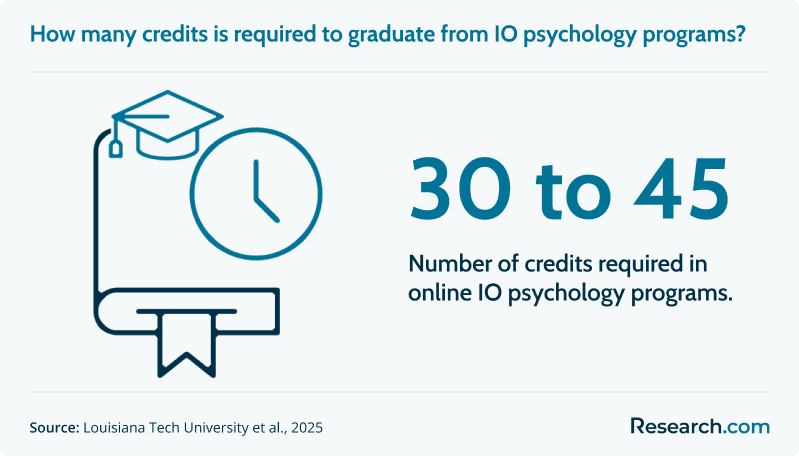
An online industrial-organizational psychology degree can be a strong option if you want to work in human resources, organizational development, talent analytics, training, consulting, or workforce research. Most online master’s programs require 30 to 45 credit hours and are designed for students who need flexibility while continuing to work. The best choice is usually a regionally accredited program with applied projects, research training, career support, and coursework aligned with your target role.
The degree is not the best fit for everyone. Students who want to provide clinical therapy, pursue child counseling, or become licensed clinical psychologists generally need a different graduate pathway. Students aiming to use the title “psychologist” should also check state rules and employer expectations, because requirements can vary by role and jurisdiction.
What are the benefits of getting an online industrial-organizational psychology degree?
- Broader workplace career options: Graduates may pursue roles such as HR manager, organizational consultant, executive coach, training specialist, talent management professional, or workforce researcher across major industries.
- Applied online learning: Many programs use case studies, workplace simulations, collaborative projects, and research assignments to help students practice solving real organizational problems.
- Strong earning potential in specialized roles: The BLS reports a median annual salary of $147,420 for industrial-organizational psychologists, although actual earnings depend on role, employer, location, experience, and credentials.
What can I expect from an online industrial-organizational psychology degree?
An online industrial-organizational psychology degree teaches students how to use psychological research to improve workplaces. The curriculum usually blends psychology, business, statistics, research methods, leadership, and human resources. Instead of focusing on clinical treatment, I-O psychology programs examine how people behave at work and how organizations can make better decisions about selection, development, motivation, performance, culture, and change.
Common subjects include organizational behavior, employee motivation, leadership development, workplace diversity, assessment design, personnel selection, training evaluation, occupational health, and research methods. Strong programs also teach students how to interpret data, evaluate evidence, and communicate findings to business leaders who need practical recommendations.
Applied work is especially important. In a typical project, you might audit a hiring process, design an employee engagement survey, evaluate a training program, recommend a leadership development strategy, or analyze turnover patterns. These assignments help connect theory to workplace decision-making, which is what employers usually expect from I-O psychology graduates.
Program pricing varies widely. Depending on the school, average cost per credit hour ranges from $400 to $1,000. A full program typically requires 30 to 45 credit hours, placing tuition in a broad range of $12,000 to $45,000 before fees, books, technology costs, and other expenses. Financial aid, scholarships, employer tuition assistance, and transfer policies can change the final amount a student pays.
| What to Review | Why It Matters | Questions to Ask |
| Curriculum | Determines whether the program prepares you for HR, consulting, analytics, training, or research roles. | Does the coursework include personnel selection, research methods, organizational behavior, and data analysis? |
| Applied experience | Employers often value project work that shows you can solve workplace problems. | Are there consulting projects, capstones, internships, case studies, or portfolio assignments? |
| Faculty background | Faculty with research and industry experience can provide stronger career guidance. | Do instructors publish, consult, or work in I-O psychology, HR, analytics, or organizational development? |
| Student support | Online students need advising, technical support, library access, and career services. | What support is available outside business hours? |
| Total cost | Tuition alone does not show the full price of attendance. | What are the required fees, books, residency costs, and graduation costs? |
Where can I work with an online industrial-organizational psychology degree?
Graduates can work in organizations that need better hiring systems, stronger leadership pipelines, healthier workplace cultures, evidence-based training, and more effective employee performance strategies. The degree is especially relevant in roles that sit at the intersection of psychology, people operations, analytics, and organizational strategy.
Many graduates enter management, scientific, and technical consulting services, where they advise employers on training, leadership, employee assessment, performance improvement, or organizational change. State and local governments also employ professionals who can evaluate workforce policies, improve operations, and support employee engagement initiatives.
Based on 2024 BLS data, the industries with the highest levels of employment for industrial-organizational psychologists are:
- Management, Scientific, and Technical Consulting Services
- State Government, excluding Schools and Hospitals
- Local Government, excluding Schools and Hospitals
- Management of Companies and Enterprises
- Colleges, Universities, and Professional Schools
Possible job titles include talent management specialist, organizational development consultant, training coordinator, research analyst, human resources manager, workforce analytics associate, employee experience specialist, and executive coach. Some positions may require experience beyond the degree, and some research or senior consulting roles may prefer doctoral-level preparation.
How much can I make with an online industrial-organizational psychology degree?
According to the BLS, the annual median salary for industrial-organizational psychologists is $147,420 as of 2025. This figure reflects a specialized occupational category and should not be treated as a guaranteed outcome for every graduate. Salary depends on job title, employer, industry, experience, geography, degree level, and whether the role is in consulting, corporate HR, government, education, or research.
- Entry-level roles: Research analyst, HR specialist, or training-related positions may begin in a lower range, around $60,000 to $80,000 per year.
- Mid-level roles: Organizational consultant, talent development professional, or training manager positions may earn between $90,000 and $120,000 annually.
- Senior roles: Executive coach, director of talent management, senior consultant, or organizational strategy leader roles can exceed $150,000 per year.
Higher-paying opportunities are often found in management consulting and larger corporations, while education and government roles may offer different compensation patterns along with stability, benefits, or mission-driven work. Students should compare salary expectations by role rather than assuming that every I-O psychology graduate enters the same occupation.
- Best Online Industrial-Organizational Psychology Degree Programs for 2027
- How long does it take to complete an online industrial-organizational psychology program?
- Online vs. on-campus industrial-organizational psychology programs
- What is the average cost of online industrial-organizational psychology programs?
- What financial aid is available for online industrial-organizational psychology students?
- What are the admission requirements for online industrial-organizational psychology programs?
- What courses are typically included in an online industrial-organizational psychology program?
- What specializations are available in online industrial-organizational psychology programs?
- What trends are changing industrial-organizational psychology?
- How should I choose the best online industrial-organizational psychology program?
- What career paths are available after an online industrial-organizational psychology degree?
- How can online programs build real-world experience and professional networks?
- What is the job market for graduates?
- What advanced degree options can strengthen an I-O psychology career?
- Is an online industrial-organizational psychology degree a sound investment?
- What career support outcomes should students review?
- How do programs address ethical and legal workplace issues?
- How does the cost compare with a PsyD program?
- Should I choose an accelerated online program?
- How do I-O psychology programs use cross-disciplinary training?
- Can extra certifications expand career options?
- What are the limitations of an online I-O psychology degree?
- What questions should I ask before enrolling?
List of the Best Online Industrial-Organizational Psychology Degree Programs for 2027
How do we rank schools?
Research.com evaluates schools using data from recognized education sources, including IPEDS, Peterson’s, the College Scorecard, and the National Center for Education Statistics. These sources help compare institutions using available information on academic quality, affordability, student outcomes, and program characteristics. Readers can review the full ranking process on the Research.com methodology page.
1. Louisiana Tech University
Louisiana Tech University offers an online Master of Arts in Industrial and Organizational Psychology with coursework connected to leadership, decision-making, and workforce development. The program emphasizes research skills and applied workplace analysis, helping students understand training, motivation, organizational change, and human behavior in business settings. Graduates may use the degree in human resources, consulting, corporate learning, and leadership-related roles.
- Required Credits to Graduate: 36
- Cost: $475 per credit hour
- Accreditation: Southern Association of Colleges and Schools Commission on Colleges (SACSCOC)
2. Missouri University of Science and Technology
Missouri University of Science and Technology delivers an online Master of Science in Industrial-Organizational Psychology focused on evidence-based approaches to workplace productivity, employee engagement, and leadership. Students build skills in data analysis, psychological assessment, workforce development, and applied research. The program can support careers in talent management, organizational consulting, and corporate strategy.
- Required Credits to Graduate: 37
- Cost: $950 per credit hour
- Accreditation: Higher Learning Commission (HLC)
3. Colorado State University
Colorado State University provides an online Master’s in Industrial and Organizational Psychology that trains students to study workplace behavior, strengthen employee performance, and support leadership initiatives. Coursework addresses recruitment, training design, assessment, and workforce evaluation. Graduates can apply these skills in HR, consulting, and corporate training environments.
- Required Credits to Graduate: 38
- Cost: $770 per credit hour
- Accreditation: HLC
4. Southern New Hampshire University
Southern New Hampshire University offers an online Master of Science in Psychology with a focus on Industrial and Organizational Psychology. The curriculum explores leadership, employee motivation, workplace culture, conflict resolution, training, and performance improvement. Students learn to apply psychological concepts to organizational challenges in HR and consulting contexts.
- Required Credits to Graduate: 36
- Cost: $637 per credit hour
- Accreditation: New England Commission of Higher Education (NECHE)
5. Arizona State University
Arizona State University features an online Master of Science in Psychology with a concentration in Industrial and Organizational Psychology. Students study workplace motivation, leadership assessment, decision-making, data analysis, research methods, and employee behavior. The program can prepare graduates for roles in human resources, management, and business consulting.
- Required Credits to Graduate: 30
- Cost: $765 per credit hour
- Accreditation: HLC
6. Liberty University
Liberty University offers an online Master of Arts in Applied Psychology with a focus on Industrial and Organizational Psychology. Students examine workforce psychology, leadership development, organizational change, employee motivation, and workplace culture. Graduates may apply the training in human services, corporate training, and consulting-related positions.
- Required Credits to Graduate: 36
- Cost: $565 per credit hour for full-time students, $615 per credit hour for part-time students
- Accreditation: SACSCOC
7. Michigan State University
Michigan State University provides an online Master’s Degree in Work and Organizational Psychology. The program focuses on talent management, workplace psychology, leadership, performance assessment, and workplace dynamics. Students complete practical assignments that can support careers in HR, business consulting, and talent acquisition.
- Required Credits to Graduate: 30
- Cost: $1,000 per credit hour
- Accreditation: HLC
8. Bellevue University
Bellevue University offers an online Master of Science in Industrial and Organizational Psychology with attention to employee assessment, leadership development, and business analytics. Students complete workplace assessments and research-based projects tied to employee satisfaction and performance. The degree can support careers in HR, organizational management, and consulting.
- Required Credits to Graduate: 36
- Cost: $660 per credit hour
- Accreditation: HLC
9. Eastern Kentucky University
Eastern Kentucky University offers an online Master of Science in Industrial and Organizational Psychology that follows SIOP training guidelines and includes applied research and fieldwork. Students study training, leadership, organizational consulting, and workplace assessment. Graduates may pursue opportunities in human resources and business strategy.
- Required Credits to Graduate: 36
- Cost: $649 per credit hour
- Accreditation: SACSCOC
10. Auburn University
Auburn University provides an online Master of Science in Industrial and Organizational Psychology. Coursework covers workplace behavior, personnel selection, leadership strategies, research, ethics, and organizational development. The program can prepare graduates for roles in corporate leadership, HR, and consulting.
- Required Credits to Graduate: 30
- Cost: $850 per credit hour
- Accreditation: SACSCOC
How long does it take to complete an online industrial-organizational psychology program?
Most online industrial-organizational psychology programs take about two years for full-time students. Programs generally require 30 to 45 credit hours and include a combination of core psychology coursework, workplace-focused classes, research training, and applied projects. Students taking fewer courses each term may need three or four years, depending on school policies and course availability.
Some schools offer accelerated options. While a 1 year online masters in human resources is usually more narrowly focused on HR practice, accelerated I-O psychology programs may be completed in as little as 18 months. This can work well for students with strong time management skills, predictable schedules, and a clear career plan. It may be difficult for students balancing full-time work, caregiving, or other major commitments.
| Enrollment Pace | Typical Fit | Main Trade-Off |
| Full-time | Students who can commit significant weekly study time | Faster completion but heavier workload |
| Part-time | Working professionals and students with family responsibilities | More manageable schedule but longer time to graduation |
| Accelerated | Highly organized students seeking faster career movement | Shorter timeline but intensive pacing and less recovery time between courses |
How does an online industrial-organizational psychology program compare to an on-campus program?
Online and on-campus I-O psychology programs can cover similar academic material, but the learning experience differs. The better choice depends on your schedule, learning style, location, networking goals, and need for structure.
| Factor | Online Program | On-Campus Program |
| Access | Allows students to study without relocating or commuting. | Requires attendance at a physical campus and may involve relocation. |
| Schedule | Often better for working adults because courses may be asynchronous or offer flexible pacing. | Usually follows set class times and campus calendars. |
| Networking | Uses discussion boards, video meetings, virtual events, group projects, and online career services. | Provides more spontaneous face-to-face interaction with classmates, faculty, and campus employers. |
| Learning environment | Requires self-direction, reliable technology, and proactive communication. | Provides more built-in structure and in-person accountability. |
| Applied work | May include virtual consulting projects, case studies, capstones, and local field experiences. | May provide campus-based labs, in-person research teams, and nearby internship networks. |
Choose online if flexibility is essential and you are comfortable managing deadlines independently. Choose campus-based study if you want daily in-person interaction, easier access to faculty research labs, and a more traditional graduate school experience.
What is the average cost of online industrial-organizational psychology programs?
The cost of an online industrial-organizational psychology degree depends on tuition rate, number of credits, fees, course materials, residency requirements, and whether you qualify for aid or employer support. According to 2024 data from the Education Data Initiative, a master's degree typically costs between $44,640 and $71,140. Program reputation, institution type, credit requirements, and student residency rules can all affect where a school falls within that range.
Students seeking a lower-cost pathway may want to compare an affordable online master's in organizational psychology program with higher-priced options. Lower tuition does not automatically mean lower quality, but students should verify accreditation, faculty expertise, curriculum depth, and career services before choosing based on price.
Look beyond tuition. Online students may still pay technology fees, graduation fees, books, proctoring fees, background check fees, or short residency costs. Some schools bundle textbooks into tuition, while others require separate purchases. Payment plans, scholarships, assistantships, and employer tuition benefits can make the degree more manageable.
| Cost Item | Why Students Miss It | How to Check |
| Mandatory fees | They may be listed separately from tuition. | Ask for a full cost-of-attendance estimate. |
| Books and materials | Online courses may require digital texts, software, or assessment tools. | Request a sample course materials list. |
| Residency or travel | Some online programs include campus visits or in-person components. | Confirm whether any travel is required before applying. |
| Course load changes | Part-time enrollment can affect aid eligibility and total time in school. | Ask how tuition, aid, and fees change by enrollment status. |
| Transfer credit limits | Not all graduate credits transfer, even from accredited institutions. | Request a written transfer evaluation policy. |
The chart below illustrates the most common degree levels for industrial-organizational psychologists, as reported by Zippia in 2025.
What are the financial aid options for students enrolling in an online industrial-organizational psychology program?
Online graduate students may qualify for several types of funding, but availability depends on school participation, enrollment status, citizenship or residency status, academic progress, and program eligibility. Apply early, compare award letters carefully, and calculate the amount you would need to borrow after scholarships and employer support.
- Federal Student Aid: Eligible students can apply for federal loans and other aid by completing the Free Application for Federal Student Aid (FAFSA).
- Scholarships and fellowships: Psychology organizations, professional associations, universities, and private foundations may offer awards for graduate students. The American Psychological Association and the Society for Industrial and Organizational Psychology are common places to research opportunities.
- Institutional aid: Universities may provide grants, scholarships, tuition discounts, or graduate funding. Students comparing broader psychology options can also review schools offering some of the cheapest psychology degree online pathways.
- Employer tuition assistance: HR, training, consulting, healthcare, government, and corporate employers may help pay for job-related graduate education. Ask whether reimbursement requires minimum grades, continued employment, or approved programs.
- Private loans: Banks and credit unions may offer loans when other aid does not cover all costs. Compare interest rates, repayment terms, fees, and borrower protections before accepting private debt.
What are the prerequisites for enrolling in an online industrial-organizational psychology program?
Admission requirements vary by school, but most online I-O psychology master’s programs expect applicants to show academic readiness, writing ability, and interest in workplace psychology. Some programs are designed for psychology majors, while others welcome applicants from business, human resources, sociology, communication, or related fields.
- Bachelor’s degree: Most programs require a completed bachelor’s degree from an accredited institution. A psychology background may help, but many schools consider related academic and professional experience.
- Minimum GPA: Many programs look for a minimum undergraduate GPA of 3.0 or higher. Some may review applicants holistically if they have strong work experience, graduate coursework, or other evidence of readiness.
- GRE scores: Some competitive programs may request GRE results, but many online programs have waived the requirement or provide alternatives.
- Relevant work experience: Experience in HR, management, organizational development, training, analytics, or business can strengthen an application, even when it is not mandatory.
- Recommendation letters: Programs commonly ask for recommendations from professors, supervisors, or professional contacts who can describe your analytical skills, writing ability, professionalism, and readiness for graduate study.
- Statement of purpose: Many schools ask applicants to explain their career goals and why I-O psychology is the right fit.
What courses are typically in an online industrial-organizational psychology program?
Online I-O psychology programs usually combine core psychological science with workplace application. The strongest curricula teach students how to evaluate evidence, design assessments, measure employee outcomes, and recommend changes that are ethical, legally defensible, and useful to organizations.
- Introduction to Industrial-Organizational Psychology: Presents the field’s major theories, research traditions, historical development, and workplace applications.
- Personnel Psychology: Covers employee selection, performance appraisal, job analysis, testing, and talent decision-making.
- Organizational Behavior: Examines motivation, leadership, teams, communication, culture, and group dynamics inside organizations.
- Training and Development: Teaches students how to design, deliver, and evaluate employee training and leadership development programs.
- Psychological Assessment and Measurement: Explores test construction, validity, reliability, personality measures, cognitive assessments, and workplace assessment tools.
- Occupational Health Psychology: Focuses on job stress, burnout, work-life balance, employee well-being, and healthier work environments.
- Research Methods and Data Analysis: Builds skills in research design, data collection, statistics, interpretation, and reporting for organizational settings.
- Ethics and Legal Issues: Addresses confidentiality, fairness, assessment bias, employment law considerations, and responsible use of employee data.
What types of specializations are available in online industrial-organizational psychology programs?
Specializations help students align their degree with a specific career direction. Not every program offers formal tracks, but many allow elective choices, capstone topics, or applied projects that create a focused skill set.
| Specialization | Best For | Typical Focus |
| Human Resources Management | Students targeting HR leadership, employee relations, and people operations roles | Hiring, training, performance, policy, and workforce planning |
| Organizational Development | Students interested in change management and culture improvement | Organizational effectiveness, leadership, culture, and transformation |
| Talent Management | Students focused on recruitment, succession planning, and retention | Assessment, employee growth, engagement, and career development |
| Occupational Health Psychology | Students interested in well-being, burnout prevention, and healthier workplaces | Stress, wellness, work-life balance, and employee support systems |
| Consumer Psychology | Students interested in marketing, behavior, and decision-making | Consumer behavior, market trends, and psychological drivers of choice |
| Advanced Research and Analytics | Students aiming for research, analytics, or doctoral study | Statistics, research design, data interpretation, and measurement |
Students who want deeper research preparation, senior consulting roles, or academic careers may eventually compare online PhD programs in industrial organizational psychology. A specialization can strengthen your positioning, but it should match the roles you actually plan to pursue.
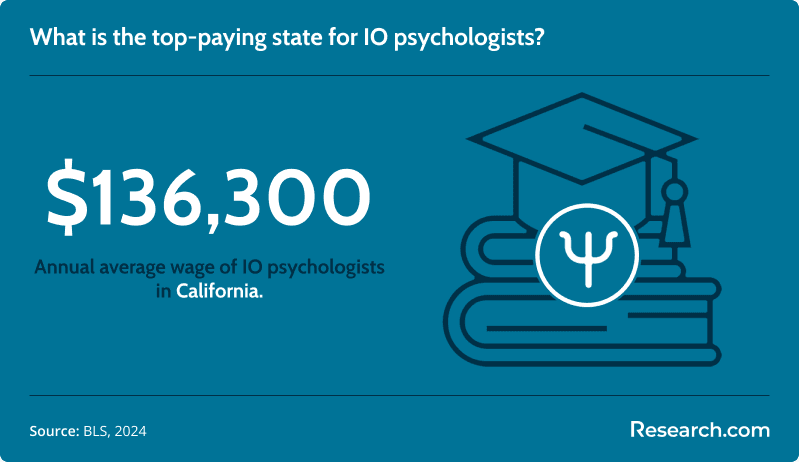
The chart below lists the top-paying industries for industrial-organizational psychologists, as reported by the BLS in 2024.
What are the emerging trends shaping the future of industrial-organizational psychology?
I-O psychology is changing as workplaces rely more heavily on technology, data, and flexible work models. Graduate programs are increasingly expected to prepare students for remote and hybrid team dynamics, AI-supported talent analytics, employee monitoring questions, diversity and inclusion work, and ethical use of workplace data. These developments make research literacy and ethical judgment more important, not less.
AI is especially relevant in recruiting, assessment, workforce planning, and employee analytics. I-O professionals may be asked to evaluate whether tools are valid, fair, explainable, and appropriate for the workforce being assessed. Students who want a deeper career roadmap can review Research.com’s guide on how to become an IO psychologist.
How to choose the best online industrial-organizational psychology program?
The best online industrial-organizational psychology program is the one that matches your career goal, budget, schedule, learning style, and need for applied experience. Rankings can help you build a shortlist, but they should not be the only basis for your decision.
- Verify accreditation: Confirm that the institution is accredited by a recognized accreditor, such as the Higher Learning Commission or another appropriate regional accrediting body.
- Read the curriculum closely: Look for personnel psychology, organizational behavior, research methods, statistics, assessment, ethics, and applied projects.
- Match electives to your goal: HR, analytics, consulting, organizational development, training, and research paths require different strengths.
- Review faculty expertise: Faculty with I-O psychology research, consulting, HR, analytics, or organizational leadership experience can offer more relevant guidance.
- Compare flexibility honestly: Ask whether courses are asynchronous, synchronous, accelerated, part-time, or cohort-based.
- Calculate total cost: Include tuition, fees, books, transfer credits, travel requirements, and the income impact of your study schedule.
- Assess career support: Look for résumé help, alumni mentoring, employer connections, internship support, career coaching, and applied capstone opportunities.
Common mistakes to avoid when choosing a program
- Choosing only by tuition: A cheap program may become costly if it lacks support, applied learning, or employer recognition.
- Ignoring accreditation: Accreditation affects financial aid eligibility, transferability, employer confidence, and future graduate study.
- Assuming online means easier: Online graduate programs require disciplined time management and strong independent learning habits.
- Skipping career outcome questions: Ask where graduates work, what support students receive, and whether the program tracks outcomes.
- Overlooking licensure and title issues: I-O psychology is not the same as clinical psychology, and rules for using the title “psychologist” can vary.
- Relying only on rankings: A highly ranked program is not automatically the right fit for your schedule, budget, or career target.
What career paths are available for graduates with an online industrial organizational psychology degree?
An online industrial-organizational psychology degree can support careers in HR, organizational development, employee assessment, workforce analytics, consulting, training, and research. The best role depends on your prior experience, degree level, technical skills, and whether you want to work internally for one employer or advise multiple organizations as a consultant.
- Human Resources Manager: HR managers oversee employee relations, recruitment, compliance, workforce planning, and organizational policies. Students interested in this route can learn more about how to become a human resources manager.
- Organizational Development Specialist: These professionals improve culture, structure, change processes, employee engagement, and team effectiveness.
- Talent Acquisition Specialist: Talent acquisition professionals design recruiting strategies, evaluate selection tools, structure interviews, and improve candidate assessment.
- Training and Development Manager: This role focuses on learning programs, leadership development, performance improvement, and training evaluation.
- Employee Well-Being Specialist: Professionals in this area support stress reduction, wellness initiatives, burnout prevention, and healthier work design.
- Consultant: Consultants advise organizations on hiring systems, engagement, leadership, culture, change management, and productivity.
- Researcher or Academic: Students with strong research interests may work for research organizations or continue into doctoral study for academic and advanced research careers.
| Career Goal | Useful Program Features | Skills to Build |
| HR leadership | HR electives, employment law exposure, applied people operations projects | Employee relations, policy, communication, analytics |
| Consulting | Capstone projects, client-style case studies, organizational development coursework | Problem framing, presentation, data interpretation, change management |
| Talent analytics | Statistics, research methods, assessment, measurement courses | Survey design, data analysis, reporting, ethical data use |
| Training and development | Instructional design, leadership development, evaluation projects | Needs analysis, facilitation, learning assessment, program design |
| Doctoral study | Research-heavy curriculum, thesis option, faculty mentorship | Research design, statistics, academic writing, measurement |
How can online programs enhance real-world experience and networking?
Strong online I-O psychology programs do more than deliver recorded lectures. They create structured ways for students to practice workplace problem-solving, build professional relationships, and demonstrate skills to employers. Examples may include virtual consulting projects, group case studies, employer-sponsored projects, capstones, practicum-style assignments, alumni events, and mentoring sessions.
Students should ask how the program connects online learners with faculty, alumni, employers, and professional organizations. Some students also pursue complementary credentials to broaden their applied skills. For example, certain learners may explore ABA certification if their career goals involve behavior analysis, training systems, or specialized behavior-focused work.
What is the job market for graduates with an online industrial organizational psychology degree?
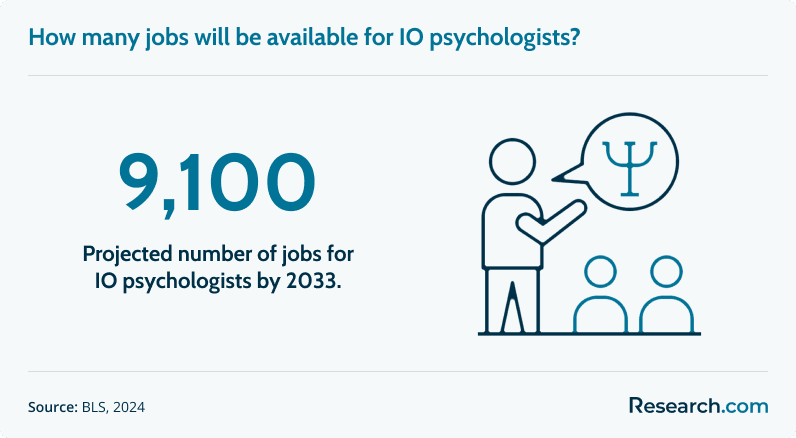
According to 2024 BLS data, demand for industrial-organizational psychologists is expected to grow by 6% from 2023 to 2033, faster than the average for all occupations. This projection reflects continued employer interest in workforce effectiveness, employee well-being, performance, leadership, and organizational improvement.
Demand is influenced by several workplace needs. Employers want better hiring systems, stronger retention strategies, more effective training, valid assessment tools, and evidence-based approaches to employee engagement. I-O psychology graduates can contribute by translating research into practical recommendations that improve decision-making.
Remote work, hybrid teams, diversity, equity, inclusion, organizational change, and employee well-being are also shaping opportunities. Graduates who can combine psychological science with data analysis, communication, ethics, and business understanding may be better positioned for competitive roles.
What Advanced Degree Options Can Enhance My Industrial-Organizational Psychology Career?
Advanced study can be useful for professionals who want research-intensive roles, faculty positions, senior consulting work, or deeper expertise in measurement and organizational strategy. A master’s degree may be enough for many HR, training, analytics, and organizational development roles, but doctoral training can matter for academic careers and some high-level research positions.
Students interested in broader doctoral pathways can compare an online doctorate in psychology with I-O-specific doctoral programs. Before applying, ask whether the doctorate is research-oriented, practice-oriented, clinically oriented, or designed for leadership roles, because these paths can lead to very different outcomes.
Are There Any Limitations to an Online Industrial-Organizational Psychology Degree?
Online I-O psychology programs are flexible, but they are not without drawbacks. Students must manage deadlines, participate actively in virtual environments, and seek out networking opportunities rather than relying on campus interaction. Some learners may also miss the informal mentorship and spontaneous professional connections that happen more easily in person.
Technology can also affect the experience. Students need reliable internet, a quiet study environment, comfort with learning platforms, and the ability to collaborate virtually. In addition, online I-O psychology is not the same as clinical training. Students who want counseling, therapy, or specialized work with children should research separate pathways, including options connected to psychology careers with children.
Is an Online Industrial-Organizational Psychology Degree a Sound Investment?
An online industrial-organizational psychology degree can be a sound investment when the program cost is reasonable, the curriculum fits your target role, and the degree helps you qualify for advancement or a career transition. The return depends heavily on your starting point. A working HR professional may use the degree to move into talent strategy or organizational development, while a recent graduate may need additional entry-level experience before reaching higher-paying roles.
Compare the total cost of attendance with your realistic job targets, not only the highest salaries in the field. Students comparing psychology master’s options can review the broader master's in psychology cost context to understand how tuition differs across related programs.
What Are the Job Placement and Career Support Outcomes for Graduates?
Career support can make a major difference for online students. Before enrolling, ask whether the program publishes job placement information, tracks graduate outcomes, supports internships or applied projects, and connects students with alumni or employers. If a school does not publish placement data, request examples of recent graduate roles and industries.
Useful career services may include résumé reviews, LinkedIn feedback, mock interviews, alumni mentoring, employer webinars, internship databases, and guidance on professional associations. Students comparing adjacent psychology career paths may also review options such as cheap forensic psychology masters online to understand how career outcomes differ by specialization.
How Do Online Industrial-Organizational Psychology Programs Address Ethical and Legal Challenges?
Ethics and legal awareness are central to I-O psychology because professionals may influence hiring, promotion, assessment, employee data, performance evaluation, and organizational policy. Online programs increasingly use case studies to examine confidentiality, informed consent, fairness, bias, privacy, and responsible data use.
Students should look for coursework that addresses employment discrimination, assessment validity, workplace data privacy, and professional standards. Those interested in counseling-related ethics can compare the training expectations in fields such as counseling, including resources on the cheapest online LPC programs.
How does the cost of an online industrial-organizational psychology degree compare with a PsyD program?
Online I-O psychology programs usually focus on workplace behavior, research methods, organizational systems, and applied business problems. PsyD programs generally focus more on professional psychology practice and may include clinical training, placements, and in-person requirements that can affect total cost. The right comparison depends on whether your goal is workplace consulting and organizational strategy or clinical practice.
Students weighing these paths should compare curriculum, practicum requirements, licensure relevance, time commitment, and total price. For additional context, review information on the average cost of PsyD program.
Should I Consider an Accelerated Online Industrial-Organizational Psychology Program?
An accelerated online I-O psychology program can be helpful if you want to finish sooner and can manage a compressed workload. It may be a good fit for students with stable schedules, strong study habits, relevant professional experience, and a clear plan for using the degree immediately.
It may not be ideal if you need more time for research projects, networking, internships, or deep skill development in statistics and assessment. Students considering faster psychology pathways can also explore an online accelerated psychology degree, but they should compare workload, support, and long-term fit before committing.
How Do Online Industrial-Organizational Psychology Programs Integrate Cross-Disciplinary Approaches?
I-O psychology sits between psychology, business, data analysis, human resources, leadership, ethics, and organizational strategy. Many online programs now include cross-disciplinary coursework so graduates can communicate with executives, HR teams, analysts, legal teams, and employees.
This broader training can help students solve problems that do not fit neatly into one discipline. For comparison, students can review how education requirements differ in related helping professions, such as the education requirements for a substance abuse counselor. Understanding these distinctions helps students avoid choosing a psychology path that does not match their intended role.
Can Supplementary Certifications Broaden My Career Opportunities?
Supplementary certifications can help graduates add focused skills without completing another full degree. Useful credentials may relate to HR, analytics, project management, coaching, mediation, leadership development, organizational change, or specialized behavioral methods. The best certification depends on the job you want, not on the credential’s popularity alone.
Some professionals may also explore adjacent training, such as MFT programs online, when their interests involve relationships, communication, family systems, or conflict dynamics. Before pursuing any additional credential, check whether employers in your target field recognize it and whether it fills a real gap in your skill set.
What questions should I ask before enrolling?
Before choosing an online industrial-organizational psychology program, contact admissions, faculty, or program advisors with specific questions. A strong program should be able to provide clear answers about cost, curriculum, support, applied learning, and career outcomes.
- Is the institution regionally accredited, and is the program recognized by employers in my target field?
- Does the curriculum include research methods, statistics, assessment, ethics, organizational behavior, and personnel psychology?
- Are there capstones, consulting projects, internships, portfolios, or applied workplace assignments?
- Can I study part-time, full-time, or in an accelerated format?
- What is the total cost, including tuition, fees, books, technology, and any travel?
- How many credits can transfer, and what is the transfer review process?
- What career services are available to online students?
- Where have recent graduates worked after completing the program?
- Does the program prepare students for my intended role, or would a different psychology, HR, business, or counseling degree fit better?
- Are there any state-specific rules, employer requirements, or title restrictions I should understand before enrolling?
Key Insights
- An online industrial-organizational psychology degree is best suited for students who want to improve workplaces through research, assessment, leadership, training, talent strategy, and organizational change.
- Most online master’s programs require 30 to 45 credit hours, and many full-time students finish in about two years, while part-time and accelerated formats change the timeline.
- Program costs vary widely, with average cost per credit hour ranging from $400 to $1,000 and full program tuition ranging from $12,000 to $45,000 before additional expenses.
- The BLS reports a median annual salary of $147,420 for industrial-organizational psychologists, but graduates should evaluate salary expectations by job title, industry, experience, and location.
- According to 2024 BLS data, employment for industrial-organizational psychologists is expected to grow by 6% from 2023 to 2033.
- The strongest programs combine accreditation, applied projects, research training, data analysis, ethics, faculty expertise, and career support for online learners.
- Students should avoid choosing a program based only on rankings or tuition; the better decision is the program that fits your career target, schedule, budget, and learning needs.
References:
- Bureau of Labor Statistics (BLS). (2024a). 19-3032 Industrial-Organizational Psychologists. Occupational Employment and Wages. BLS.
- Bureau of Labor Statistics (BLS). (2024b). Psychologists. Occupational Outlook Handbook. BLS.
- Hanson, M. (2024). Average Cost of a Master’s Degree. Education Data Initiative.
- National Center for Education Statistics (NCES). (2023). Average and percentiles of graduate tuition and required fees in degree-granting postsecondary institutions, by control of institution: Academic year 1989-90 through 2021-22. Digest of Education Statistics. NCES.
- Zippia. (2025). Industrial/Organizational Psychologist Demographics and Statistics in the US. Zippia.
Other Things You Should Know About Online Industrial-Organizational Degree Programs
Graduates usually do not need a state license to work in industrial-organizational psychology. Some pursue the Society for Industrial and Organizational Psychology’s organizational psychologist credential, while others earn the SHRM-CP or PHR to strengthen HR-related roles. Certain jobs may still require a master’s degree and supervised experience.
Admission requirements for 2027's top online industrial-organizational psychology programs often include a bachelor's degree from an accredited institution, a minimum GPA, and GRE scores. Some programs may also require letters of recommendation, a statement of purpose, and relevant work experience.